
Error code 0x80070005 means an operation was denied access. It may appear during a Windows Update, software activation, application installation, or a file operation. The code itself does not identify which permission, service, or resource caused the failure. To fix it, first note the application and the full message, then follow the appropriate path instead of changing Windows permissions across the system.
If you see Windows Update error 0x80070005, start with the Windows Update troubleshooter. If the problem persists, use the supported Windows repair tools described below. If the error appears in Outlook, Microsoft 365, or a specific application, check the context table before making system-wide changes.
In This Article
Part 1. What Does Error Code 0x80070005 Mean?

The hexadecimal code 0x80070005 is commonly associated with Access Denied. You may also see Exception from HRESULT: 0x80070005 or an application-specific message. It indicates that a process could not perform a requested operation with the access available to it; it does not, by itself, prove that Windows is corrupt, the disk is damaged, or your account must become an administrator.
Use the wording around the error to choose the relevant troubleshooting path:
| Where the error appears | What to check first | Appropriate next step |
| Windows Update or Settings | Update history, available updates, Windows Update service state and the built-in troubleshooter | Follow Part 3, using supported Windows tools before advanced servicing changes |
| Microsoft 365 or Office activation | Activation status, subscription/account and the specific Office error prompt | Use the Microsoft Office activation troubleshooting instructions; do not apply Windows Update fixes blindly |
| Outlook sending mail | The sending account, mailbox permissions and exact non-delivery message | Investigate that mail account or organization's Exchange permissions rather than resetting Windows |
| An installer, a shared folder or another application | The named file or resource, whether the path exists, account policy and app-specific logs | Use the application's official support or ask your administrator to review the minimum necessary access |
For Windows Update, Microsoft's 0x80070005 troubleshooting guidance discusses access-related causes during update servicing. The exact corrective action depends on which update and component are affected.
Part 2. Protect Your Work Before Troubleshooting
Most first-line checks below do not intentionally delete personal documents. However, changing permissions, removing software, resetting Windows, or modifying an unhealthy drive can create new risks. Preserve important work before proceeding.
- Copy accessible files: Save important local documents and photos to a separate, healthy storage location. Check that the copies open before making further changes.
- Record the exact error: Note whether it appeared in Windows Update, an installer, Outlook or an Office application, along with any update KB number or log entry.
- Use a supported account: For commands requiring elevation, use an authorized administrator account. On a work or school device, contact IT instead of bypassing organization policies.
- Avoid broad permission changes: Do not grant the Everyone group access to Windows folders, take ownership of system files, disable Windows protections or edit registry permissions as general fixes.
- Stop if storage looks unhealthy: If the system drive frequently disconnects, makes unusual noises or stops appearing in BIOS/Windows, prioritize qualified hardware diagnosis and data preservation over repeated repair scans.
For encrypted devices, make sure the appropriate recovery key is available before considering recovery-environment or reset operations. A regular account access error is not a reason to turn off encryption.
Part 3. Four Ways to Fix Windows Update Error 0x80070005
Use these methods when the message appears while downloading, installing, or completing a Windows Update. Apply them in order, retrying the affected update after each relevant check; you do not need to perform every method if the update succeeds.
Run the Windows Update Troubleshooter
Best for: A failed Windows 11 or Windows 10 update when Windows still starts normally. This is the lowest-risk first step because it uses Microsoft's built-in diagnostic workflow.
Step 1. On Windows 11, open Settings > System > Troubleshoot > Other troubleshooters and look for Windows Update if it is available. Microsoft may redirect you to the Get Help troubleshooter. Follow the prompts. On Windows 10, the available troubleshooters and Settings path can differ by release.
Step 2. Apply only the recommended fixes, restart if requested, and return to Settings > Windows Update.
Step 3. Select Check for updates and retry the affected update. This picture shows that final check in Windows 11, not the Get Help diagnostic itself.
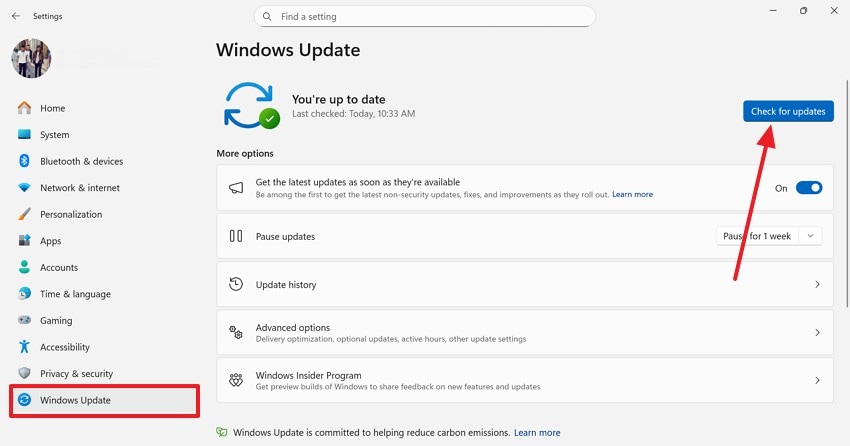
If it still fails: Note the updated message and the KB number. Microsoft's Windows Update troubleshooter explains the currently supported Get Help experience. Continue to the system file checks only if the same problem persists.
Repair Windows Components with DISM and SFC
Best for: Repeated Windows Update failures where the troubleshooter did not help and Windows is stable enough to run an elevated command window. DISM services the Windows image; System File Checker then checks protected Windows system files. Neither command proves that a permissions problem is solved.
Step 1. Save your work. Search for Command Prompt, select Run as administrator, and confirm the Windows permission prompt using an authorized administrator account.
Step 2. Enter DISM.exe /Online /Cleanup-Image /RestoreHealth and allow the operation to finish. Some repairs need access to Windows Update or another valid repair source. The screenshot depicts the DISM command in a Windows command window.
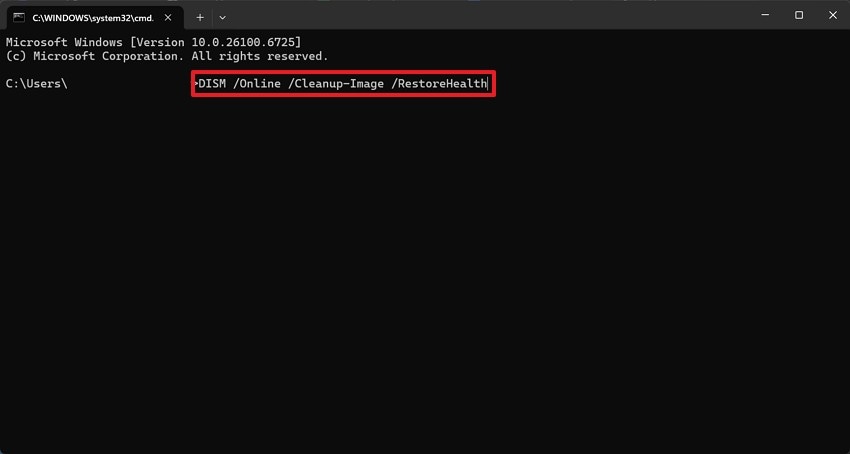
Step 3. When DISM completes, enter sfc /scannow. Do not add a space between the slash and scannow. Wait for the result, then restart as instructed. The image below shows the separate SFC command.

Step 4. Try the Windows Update again. If DISM reports a missing source or SFC cannot repair files, record the exact output and use Microsoft's DISM and System File Checker instructions. Do not repeatedly execute unrelated commands without identifying the reported failure.
Check for Malware with Windows Security
Best for: A system showing unexpected security alerts, suspicious software behavior, or signs of unwanted changes. A malware scan is a diagnostic check, not evidence that malware caused every 0x80070005 error.
Step 1. Open Windows Security from the Start menu. Select Virus & threat protection, then choose Scan options if the option is available on your device.

Step 2. Choose Full scan and select Scan now. Allow enough time for the scan and review any findings before allowing Windows Security to take action.

Step 3. After handling any genuine alerts, restart if necessary and retry the affected update. If your PC uses another managed antivirus product, follow your organization's security policy rather than trying to bypass it. Microsoft's Windows Security guidance describes the available scan options.
Test for Conflicting Software with a Clean Boot
Best for: A recurring failure that began after installing an application or service and persists after the previous checks. A clean boot temporarily reduces third-party startup interference. It is a diagnostic test, not a permanent recommendation to disable protection.
Step 1. Save your work and confirm you can restore your normal startup configuration. Press Windows + R, enter msconfig, and open System Configuration.
Step 2. On the Services tab, select Hide all Microsoft services before selecting Disable all. Do not disable Microsoft services. The screenshot shows the Services tab and the safeguard checkbox.
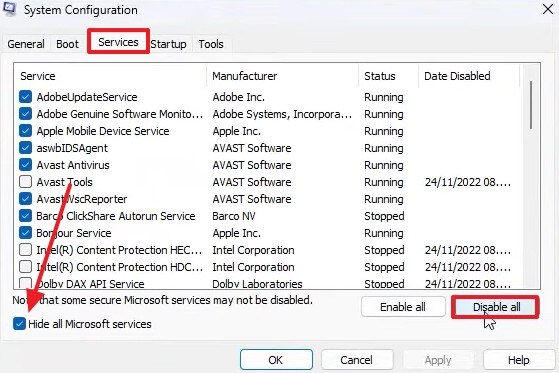
Step 3. Follow Microsoft's clean-boot procedure for disabling third-party startup items in Task Manager, restart, and retry the specific failed update once.
Step 4. If the error disappears, re-enable items systematically to identify the conflicting software. Restore normal startup when the test is complete; do not leave your computer in a diagnostic startup state. On a managed computer, ask IT before changing startup services.
If it still fails: Restore the original settings and review the exact update's error history. Microsoft's clean boot procedure provides the complete restore steps.
Part 4. What If 0x80070005 Appears in Another App?
Do not repeat the Windows Update steps just because another application reports the same hexadecimal code. 0x80070005 identifies an access-related failure, not a universal root cause.
| Situation | Safer next decision |
| Office or Microsoft 365 activation fails | Verify the signed-in account, licensing and activation status, then follow Microsoft's Office activation-specific help |
| Outlook cannot send using a shared mailbox | Review the exact send-as or send-on-behalf permission with the mailbox owner or administrator; use Exchange mailbox permission guidance only when the error matches that scenario |
| An installer or shared directory reports Access Denied | Identify the specific installer, file path and account policy. Ask IT or the application vendor to correct only the necessary access rather than opening system folders to Everyone |
| An error persists after Windows Update checks | Capture the exact KB or application message, consult its support documentation and avoid registry resets, broad ACL edits or an OS reset without a verified backup |
On managed PCs, administrator rights and security settings are controlled intentionally. An error message alone is not authorization to override those controls. Similarly, a Windows Update error does not mean that mail files, photos or other documents have been deleted.
Part 5. Recover Files Only If They Are Missing
Recoverit does not remove error code 0x80070005, repair Windows Update permissions or fix mailbox access. It becomes relevant only if files were actually deleted, lost during a separate operation or became inaccessible on a logically damaged but still detectable storage device.
If that has happened, stop saving new data to the affected disk to reduce the chance of overwriting lost content. First check your existing backups, Recycle Bin, OneDrive version history or application-specific recovery options. For a stable, visible local disk with missing files, you can then consider a recovery scan.
Step 1. Install and run Recoverit from a different healthy drive when practical. Select the original storage location. On supported Windows installations that already include Recoverit's File Explorer integration, you may alternatively right-click a folder and choose Scan for deleted files with Recoverit. The next picture shows this optional context-menu entry; it is not a required step in every version.
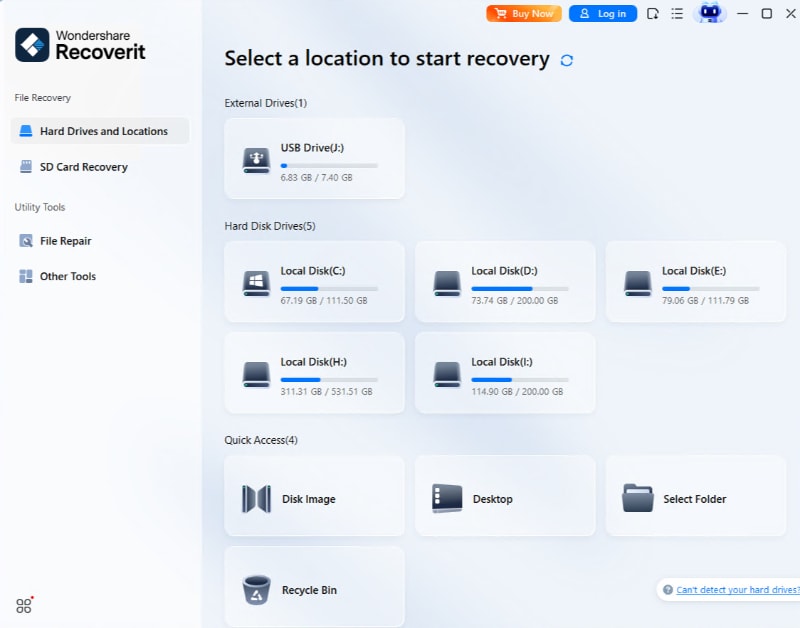
Step 2. Let the scan complete, filter or search for the missing files, and preview recoverable content where supported. Do not assume every listed file will be usable.
Step 3. Recover selected files to a different healthy drive. Open the saved copies to verify their content before changing the original disk. For the supported workflow and limitations, refer to the Recoverit data recovery guide.

Missing Files While Fixing 0x80070005? Look Before Resetting
Error 0x80070005 means Access Denied, not data loss. But if important documents or photos have genuinely disappeared, Recoverit can scan stable, detectable local storage for recoverable files. Preview supported results and save recovered copies to another drive before making further system changes.
Important: If your disk makes unusual noises, disconnects repeatedly or has obvious physical damage, stop using it and consult a professional data recovery service. Do not keep scanning an unstable disk. If you have no missing files, skip this recovery section and continue with the official Windows or application troubleshooting path.
Conclusion
To fix error code 0x80070005, identify which application was denied access before taking action. For Windows Update, try the built-in troubleshooter first, then DISM/SFC, a security scan or a clean boot when their conditions apply. For Office activation, Outlook permissions or a specific installer, use that product's targeted instructions instead.
Protect files before making higher-risk changes, avoid granting overly broad permissions, and reserve file recovery software for cases where data is genuinely missing or inaccessible. The best outcome is not simply making the error dialog disappear; it is restoring the affected operation while keeping Windows and personal files safe.
FAQ
-
Is 0x80070005 always a Windows Update error?
No. It is an access-related error that can arise in Windows Update, Office activation, Outlook or other applications. The full error text and the application identify the next troubleshooting path. -
Should I change my Windows account to administrator?
Not automatically. Some Windows repair tools need an authorized elevated session, but making an everyday account an administrator or changing system-wide folder permissions is not a general fix. Follow organizational policies on managed devices. -
Can DISM and SFC fix 0x80070005?
They can repair certain Windows servicing and protected system file problems, but they do not resolve every access-denied condition. Run them when Windows Update troubleshooting indicates system-file or component issues, and review the actual command results. -
Does this error mean my files were deleted?
No. The code itself does not indicate file deletion. Check whether your files are still available. If important files have genuinely gone missing, protect the source disk and review backups or appropriate recovery options. -
Can Recoverit fix Windows Update error 0x80070005?
No. Recoverit is file recovery software, not a Windows permissions or update repair utility. It may help when files have been deleted or become inaccessible on compatible, detectable storage, subject to the condition of the source and any overwritten data.


