

Cleanroom Recovery refers to controlled particulate environments used when opening certain hard disk assemblies. The term appears in storage, troubleshooting, and recovery discussions, but its exact meaning depends on the device, software, and circumstances. Understanding the underlying process helps you decide what to check before changing the original data.
Try Recoverit to Perform Data Recovery
 Security Verified. 3,591,664 people have downloaded it.
In this article
What Is Cleanroom Recovery
Cleanroom Recovery refers to controlled particulate environments used when opening certain hard disk assemblies. The term appears in storage, troubleshooting, and recovery discussions, but its exact meaning depends on the device, software, and circumstances. Understanding the underlying process helps you decide what to check before changing the original data.
For a practical assessment, separate the symptoms you can observe from assumptions about recoverability. A file that is not visible in its usual location may still exist elsewhere, while a storage device that fails to respond can have a hardware fault beyond ordinary software repair.
How Does Cleanroom Recovery Work
In practice, cleanroom recovery involves controlled particulate environments used when opening certain hard disk assemblies. Its behavior depends on how the host system addresses blocks, stores metadata, and responds to errors. A useful first check is whether the source is accessible, whether there is an independent backup, and whether the issue affects only files or the underlying device.
Before taking action, identify whether the problem is occurring at the application, file-system, virtual disk, controller, or physical-media layer. This distinction matters because a write-based fix can destroy evidence or remaining recoverable data.
Types and Common Scenarios of Cleanroom Recovery
Typical Situations and Components
One common scenario involves controlled particulate environments used when opening certain hard disk assemblies. Another is a storage or software failure that makes previously accessible files difficult to read. The correct response changes depending on whether data is missing, corrupted, inaccessible, or physically damaged.
Key Limits and Distinctions
Distinguish cleanroom recovery from a full backup or a guarantee of recovery. The presence of a file name, array member, disk image, or preview does not establish that every underlying byte is intact. If sectors were overwritten, encrypted without a key, or lost to hardware damage, software cannot reconstruct the original data reliably.
Practical Tips for Cleanroom Recovery
- If a drive clicks, does not spin up, smells burnt, or shows physical damage, power it off. Repeated scans and DIY opening can permanently worsen the failure; contact a qualified recovery laboratory.
- Confirm the device, disk image, or file you are examining before running any repair command.
- Check whether a recent independent backup or earlier copy can restore the needed files.
- Document error messages, drive identifiers, and changes made so far; avoid unnecessary retries.
- Use a separate healthy storage destination for recovered files and verify their contents.
- If results are incomplete or the device is unstable, stop and seek appropriate specialist help.
How to Use Recoverit to Recover Lost Data
Recoverit can scan accessible storage for deleted or lost files when the device is stable and supported. Visit the Recoverit official website for supported devices and current capabilities. It is not a substitute for a cleanroom, a forensic acquisition system, or a specialist RAID reconstruction service. For suspected mechanical or electronic damage, do not attempt the steps below until a specialist has made a safe readable copy.
Key Features Offered by Recoverit
- Scan supported accessible drives and locations for recoverable files.
- Filter discovered files by type and review available previews before saving.
- Save recovered files to a separate destination to avoid overwriting source data.
Step-by-Step Guide on How To Recover Lost Data
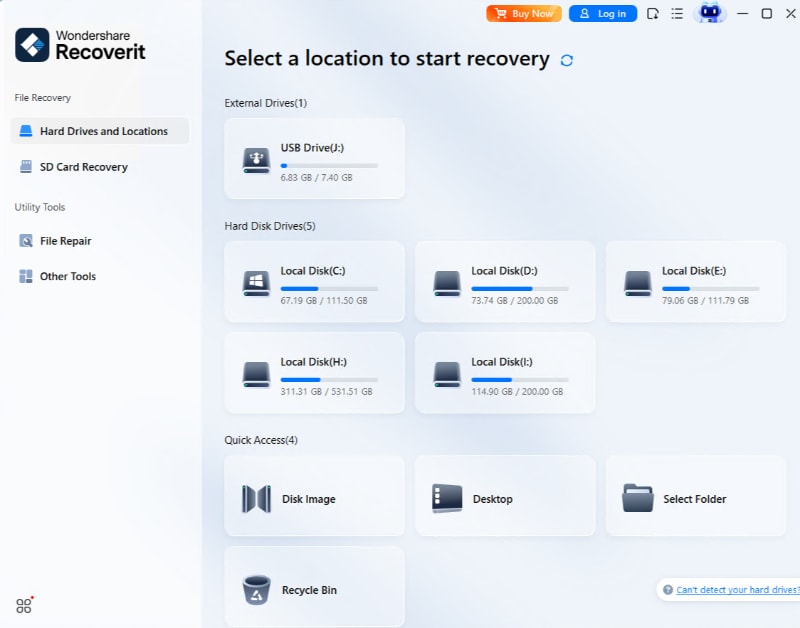
1. Choose a Location to Recover Data
Connect a stable, readable device or prepare an accessible copy. Select the correct source in Recoverit. If hardware is failing or an array or VM requires reconstruction, stop and use an appropriate specialist workflow first.
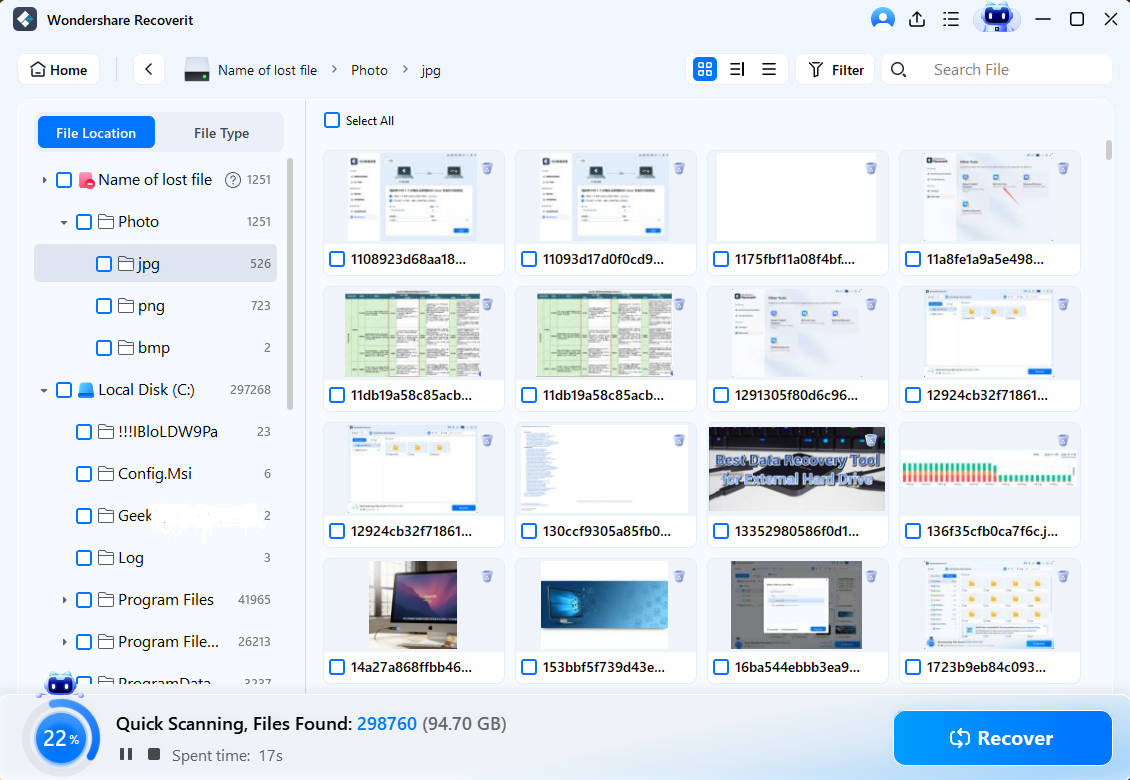
2. Deep Scan the Location
Allow the software to inspect the selected accessible location. Avoid writing new files to the source. A scan may find deleted or lost content, but cannot reverse overwritten sectors or repair a drive that is physically inaccessible.
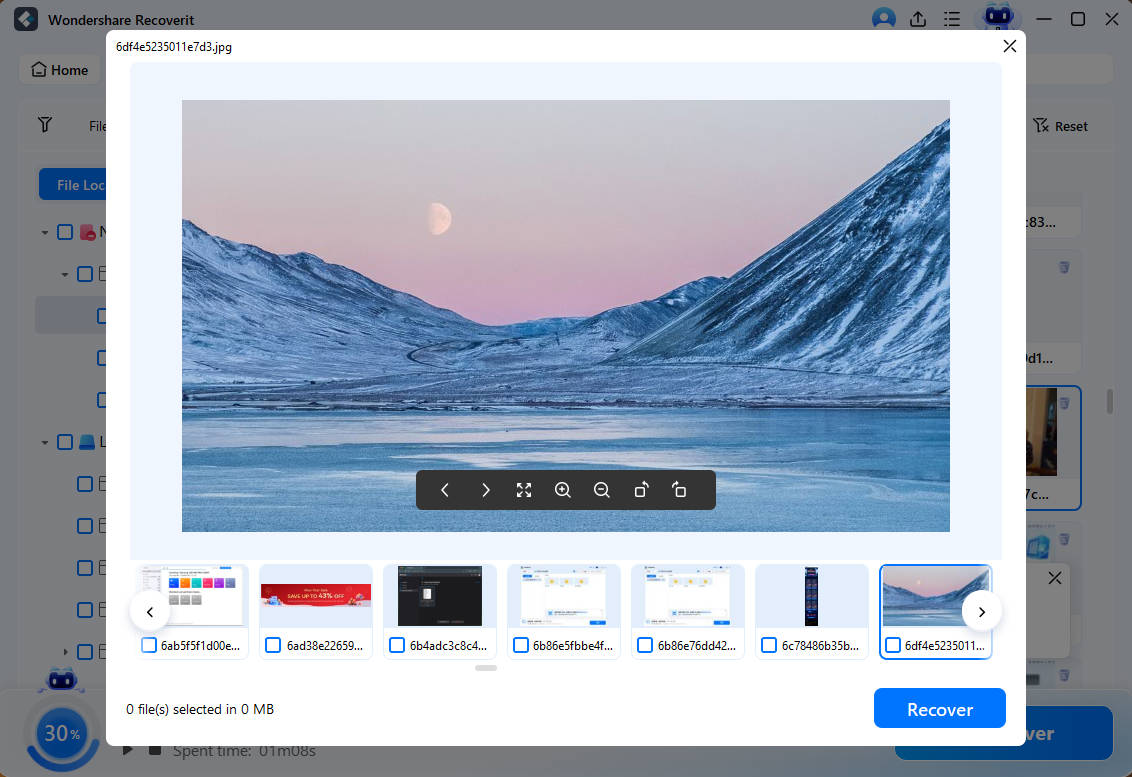
3. Preview and Recover Your Desired Data
Preview available files, select the ones you need, and save them to a different healthy disk. Open the results to verify integrity; previews and file names do not guarantee complete recovery.
Conclusion
Cleanroom Recovery concerns controlled particulate environments used when opening certain hard disk assemblies. Identifying the storage layer and preserving original data are more important than attempting repeated fixes. Choose software recovery only for stable, accessible sources and seek specialist assistance when hardware, array reconstruction, or evidentiary integrity is involved.
Next: Professional Data Recovery Service
FAQ
What does Cleanroom Recovery mean?
Cleanroom Recovery refers to controlled particulate environments used when opening certain hard disk assemblies. The practical implications depend on the device and the data involved.Can data be recovered after cleanroom recovery?
Sometimes, if the underlying content still exists and the source can be read safely. Recovery is not guaranteed, especially after overwriting or severe physical damage.What should I avoid when dealing with cleanroom recovery?
If a drive clicks, does not spin up, smells burnt, or shows physical damage, power it off. Repeated scans and DIY opening can permanently worsen the failure; contact a qualified recovery laboratory.Does Cleanroom Recovery replace a backup?
No. Maintain independent verified backups; recovery methods are last-resort options rather than substitutes for prevention.


