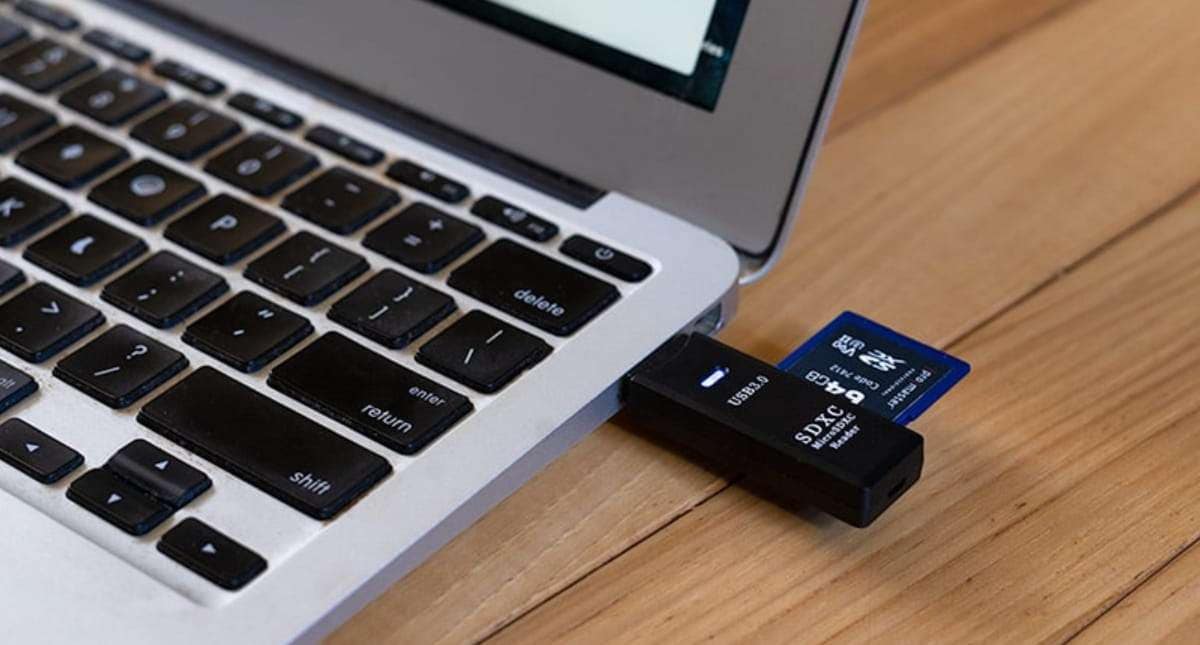


 TL;DR:
You must prioritize data recovery software before using logical repair utilities such as CHKDSK or Mac First Aid, because file-system fixes and formatting will alter data structures and cannot resolve physical hardware failures.
● Cancel any operating system prompts to format or initialize a RAW or unallocated card, as these symptoms indicate file-system damage where data is often still recoverable if you prevent new write operations.
● Run Windows Error Checking, the CHKDSK /f command, Mac First Aid, or the SD Memory Card Formatter only after your important files are secured elsewhere, as these utilities modify metadata to restore drive access but do not protect existing data.
● Stop repeated software scans and disconnect the media if the card displays 0 bytes, No Media, a fluctuating capacity, or unusual heat, because these behaviors point to a failed controller or broken flash memory that requires professional lab intervention.
Ask AI for a summary
 ChatGPT
 Perplexity
 Gemini
 Claude
 Grok
Grok
Quick Answer
● If your files are missing: Stop writing to the SD or microSD card and recover the files before you run repair, format, initialize, or reset commands.
● If the card is detected normally: Use Recoverit or another recovery tool first when the data matters, then use Windows Error Checking, CHKDSK, Mac First Aid, or the official SD Memory Card Formatter.
● If the card is RAW, unallocated, or asking to format: Cancel the prompt. Those symptoms can indicate file-system or partition damage, so formatting is not the first repair step.
● If the card shows 0 bytes, No Media, a changing capacity, or physical damage: Stop repeated scans. A software tool cannot repair a failed controller, flash memory, or broken card body.
When you search for an SD card repair tool, you may be looking for four different things: a way to show a missing card, a file-system repair utility, a data recovery program, or a tool that can fix hardware. These jobs are not interchangeable.
You should first protect your files, then identify the failure layer. If your computer still detects the card with a stable capacity, you may be able to recover the data and restore access. If the card is physically damaged or does not present usable media, repeated software repairs can make the situation worse.
In This Article
Part 1. Choose The Right SD Card Repair Path
You can choose a safer memory card repair tool when you first decide whether your problem is access, file-system damage, lost data, or hardware failure. A recovery tool finds and copies data. A repair utility changes file-system structures. Neither can replace a failed controller or repair broken flash memory.
Repair, Recovery, And Hardware Failure Are Different
| Tool category | What it can do | What it cannot do |
| Data recovery software | Scan a detected card for deleted, formatted, or inaccessible files and save readable results elsewhere. | Repair a cracked card, replace a failed controller, or guarantee recovery after overwrite. |
| File-system repair utility | Check or repair logical errors on a stable card after your important files are safe. | Recover every deleted file or fix failing flash memory. |
| SD formatting utility | Rebuild the card's file system for reuse when you no longer need the current contents. | Preserve files that were not backed up or repair physical damage. |
| Professional recovery service | Assess media that is physically damaged, unstable, or not presenting readable storage. | Guarantee a result when the flash memory or controller has failed. |
For a card that is detected and contains important files, recovery comes before repair. For an empty card that you only need to reuse, a standards-based formatter may be appropriate. For a card that is not detected as usable media, do not keep trying random SD card fix software.
Match The Symptom To The Safe First Move
| What you see | What it may indicate | Safe first move |
| The card opens, but files are missing | Deletion, hidden files, directory damage, or an interrupted write. | Stop writing and recover the missing files before repair. |
| The card asks you to format | The file system or partition information may be unreadable. | Cancel the prompt and recover data before formatting. |
| The card appears as RAW or unallocated | The operating system cannot interpret the current file system or partition layout. | Do not initialize or create a new volume while files still matter. |
| The card is detected with the wrong capacity | Reader trouble, counterfeit storage, controller failure, or severe corruption. | Try one known-good reader once, then stop repeated tests. |
| The card shows 0 bytes or No Media | The computer is not receiving usable storage media from the card. | Do not force a scan or format. Consider professional recovery. |
Part 2. Protect Your Files Before You Repair The Card
Before you use an SD card fix tool, make the source card as inactive as possible. Every new photo, video, format, or repair operation can change metadata or overwrite space that may still contain recoverable files.
- Stop recording: Remove the card from your camera, phone, drone, dash cam, or recorder after the current write has finished.
- Cancel destructive prompts: Cancel format, initialize, repair, erase, and repartition prompts while you still need the files.
- Use one stable connection: Connect the card through a reliable reader directly to the computer. Avoid repeatedly switching between hubs, phones, cameras, and readers.
- Prepare a different destination: Keep enough space on the computer or another healthy drive for the recovered files.
- Record the symptoms: Note the card capacity, drive letter, error message, and whether the card disconnects or becomes hot.
Note: Do not save recovered files back to the same SD or microSD card. If the card becomes unstable during a scan, stop and protect the original rather than restarting the scan over and over.
Part 3. Recover Files From A Readable SD Card
If your SD card is detected by Windows or macOS with a stable capacity, you can try data recovery before running an SD card repair software workflow. Wondershare Recoverit for Windows and Recoverit for Mac can scan readable SD and microSD cards for deleted, formatted, or inaccessible files, then let you save selected results to another location.

Recoverit is a data recovery tool, not a hardware repair tool. It cannot repair a cracked card, replace a failed controller, bypass encryption, guarantee recovery, or restore data that has already been overwritten. The card must be presented to the operating system or recovery environment as readable storage.
Recover Data With Recoverit
Step 1. Connect The Card And Select It
Insert the SD or microSD card into a stable reader. If Windows or macOS asks you to format or initialize the card, cancel the prompt. Open Recoverit and choose the connected SD card or removable storage location.
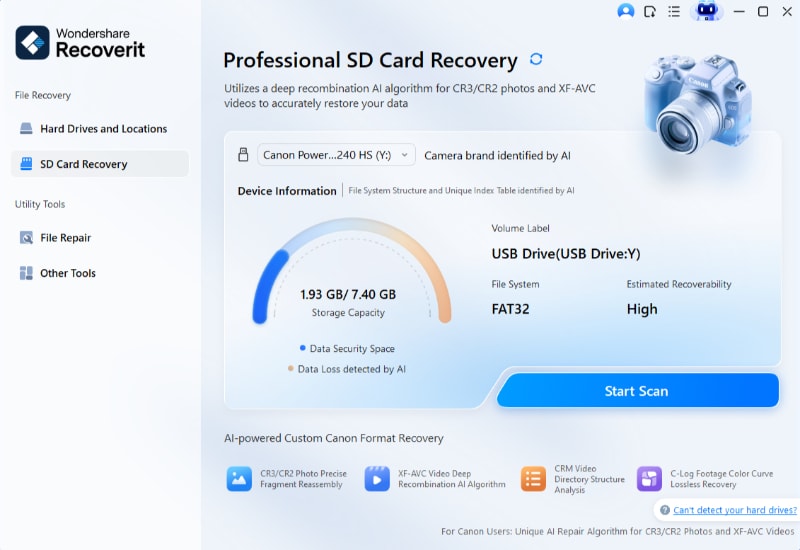
Step 2. Scan The Card
Start the scan and keep the reader connected. A large camera card or a damaged file system may take longer than a simple deleted-file scan. Do not record, copy, format, or disconnect the card during the scan.
Step 3. Filter And Preview The Results
Filter the results by file type, path, or search term. For a camera card, look for formats such as JPG, JPEG, RAW, ARW, NEF, MP4, MOV, MTS, or M2TS when your device uses them. Preview important photos and documents where supported. For videos, check the file size and playback after recovery.

Step 4. Save The Files To Another Drive
Select the files you need and choose a folder on your computer or another healthy drive. Do not choose the source SD card as the destination.
Try Wondershare Recoverit to Perform Data Recovery
 Security Verified. Over 7,302,189 people have downloaded it.
Verify Recovered Photos, Videos, And Documents
Open representative photos and documents, play important videos from beginning to end, and compare file sizes with any thumbnails or previews. A recovered file name does not prove that the entire file is intact. Keep the original card untouched until you have checked the files you care about most.
If Recoverit cannot see the card at all, return to the detection checks in Part 6. If the card repeatedly disconnects, shows a changing capacity, or becomes unusually hot, stop software attempts and read Part 7.
Part 4. Repair A Stable SD Card In Windows
Use the following Windows methods only after you have copied or recovered the files you need. These tools can change the card's file-system metadata. They are useful for a stable card that you want to make accessible again, not for protecting an unrecovered card.
For a visual overview of SD card troubleshooting, you can also watch the embedded Recoverit guide below. The labels in the video may differ from the current Windows interface, so follow the safety order and current steps in this article.
Check The Reader And Assign A Drive Letter
First test the simple causes. Remove and reinsert the card, check the microSD-to-SD adapter lock, try one known-good reader, and connect directly to another USB port. If Disk Management shows the volume without a drive letter, assigning a letter may make it visible in File Explorer.
Step 1. Open Disk Management from the Windows power-user menu. Confirm the disk number and capacity before selecting anything.
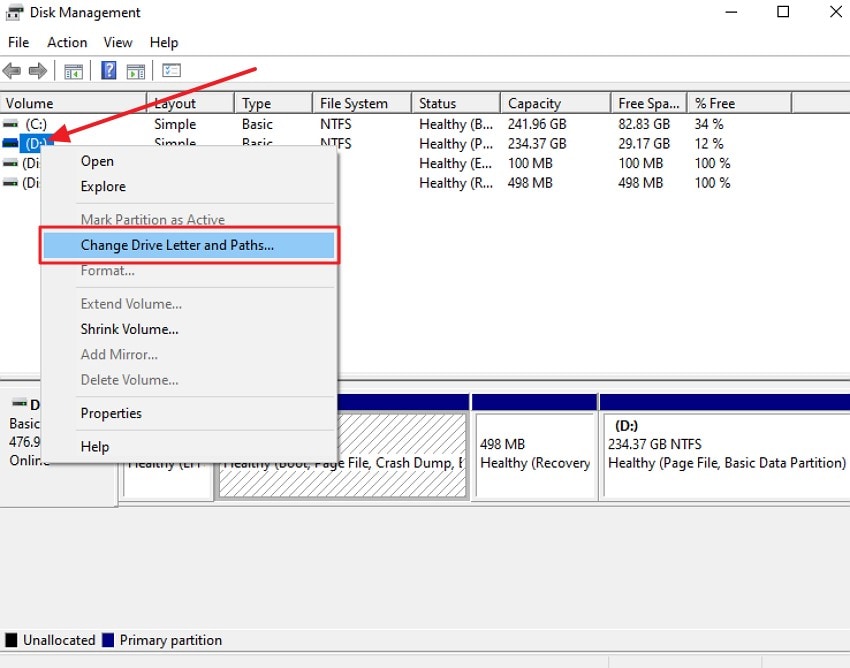
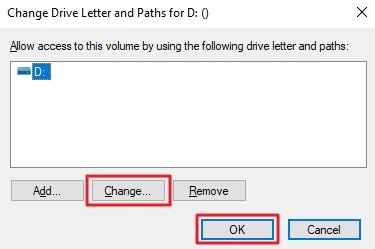
Step 2. Right-click the correct volume, choose Change Drive Letter And Paths, select Change, and assign an unused letter. Do not assign a letter to a RAW, 0-byte, or No Media entry and assume that this repaired the card.
Use Windows Error Checking After Recovery
Windows Error Checking provides a graphical file-system check. Use it only when the card is stable and your important files are already safe.
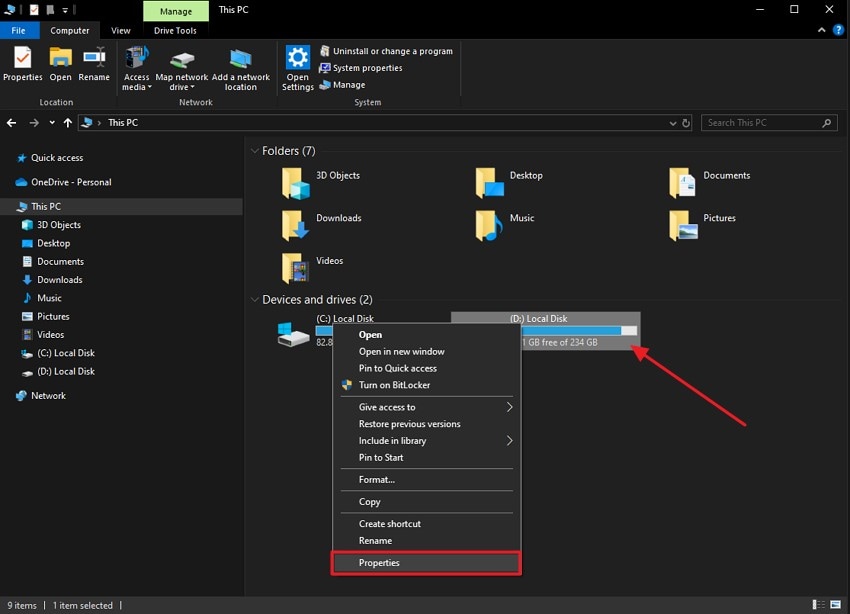
Step 1. In File Explorer, right-click the SD card, choose Properties, and open the Tools tab.
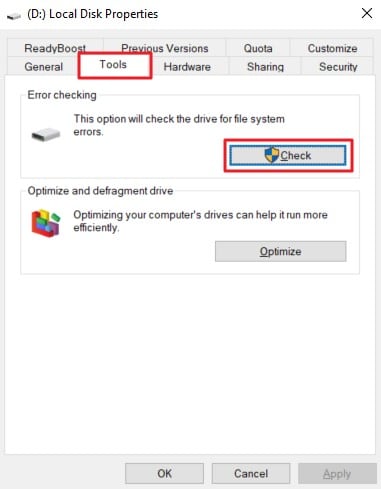
Step 2. Select Check and follow the Windows prompts. Stop if the card disconnects, reports a hardware error, or starts showing a different capacity.
Run CHKDSK Only When The Data Is Safe
Microsoft documents CHKDSK as a command that checks a volume's file system and metadata. The /f parameter tells Windows to fix logical errors. Because the fix can change the file system, you should use it after recovery or backup rather than as your first response to missing files.
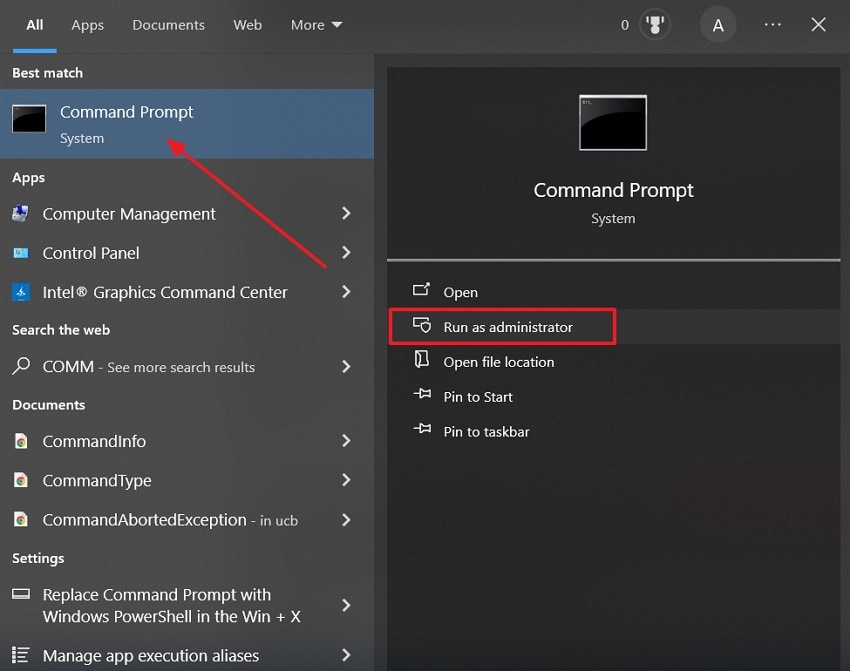
Step 1. Search for Command Prompt, right-click it, and choose Run As Administrator.
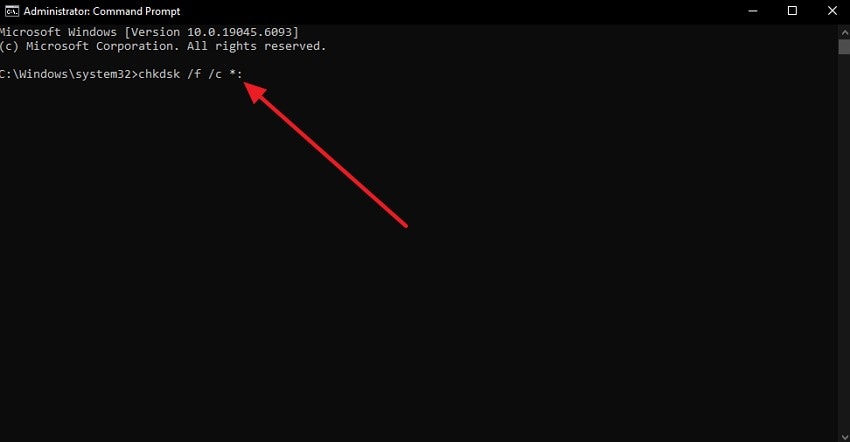
Step 2. Replace E: with the actual SD card letter and run chkdsk E: /f. Confirm the letter carefully before you press Enter.
Do not keep forcing CHKDSK when Windows reports that the volume is RAW, inaccessible, or not present. For the command's current syntax and parameter behavior, see Microsoft's CHKDSK documentation.
Format The Card As A Last Resort
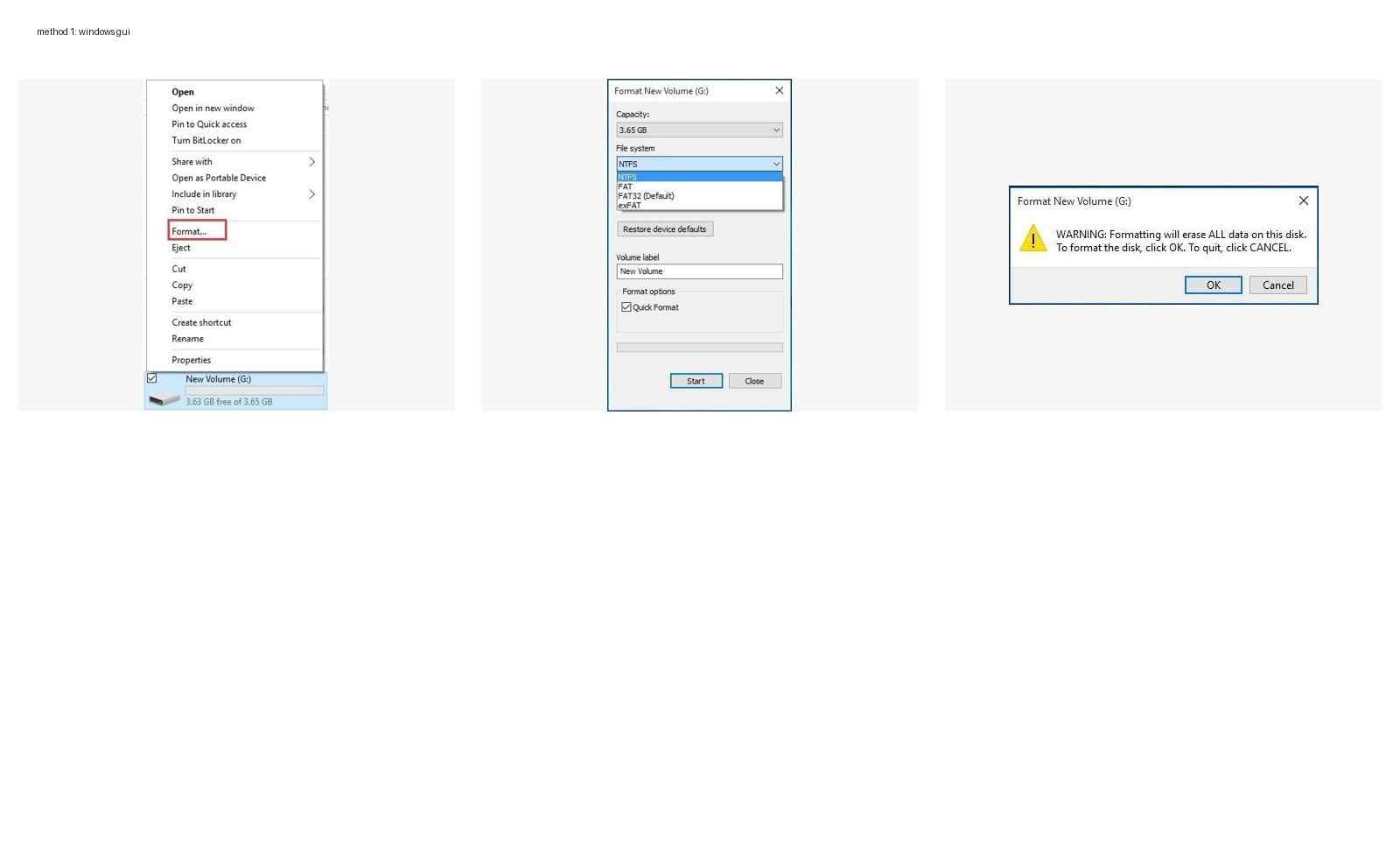
Formatting removes the current file-system structures. Use it only when your files are backed up or recovered and you have decided that the card is safe enough to reuse. If you need an SD-family formatter, the SD Association SD Memory Card Formatter is designed for SD, SDHC, SDXC, and SDUC cards.
Choose a file system that the destination device supports. For a camera, formatting a healthy card in the camera is often the most compatible way to recreate the camera's folders and settings. Do not use DiskPart clean, initialize the card, or create a new partition while you still need files from the original layout.
Part 5. Repair Or Reformat An SD Card On Mac
On macOS, you can use Finder and Disk Utility to check whether the reader, physical card, volume, and file system are visible. Keep the same safety order: copy or recover important files before First Aid or Erase.
Mount And Inspect The Card In Disk Utility
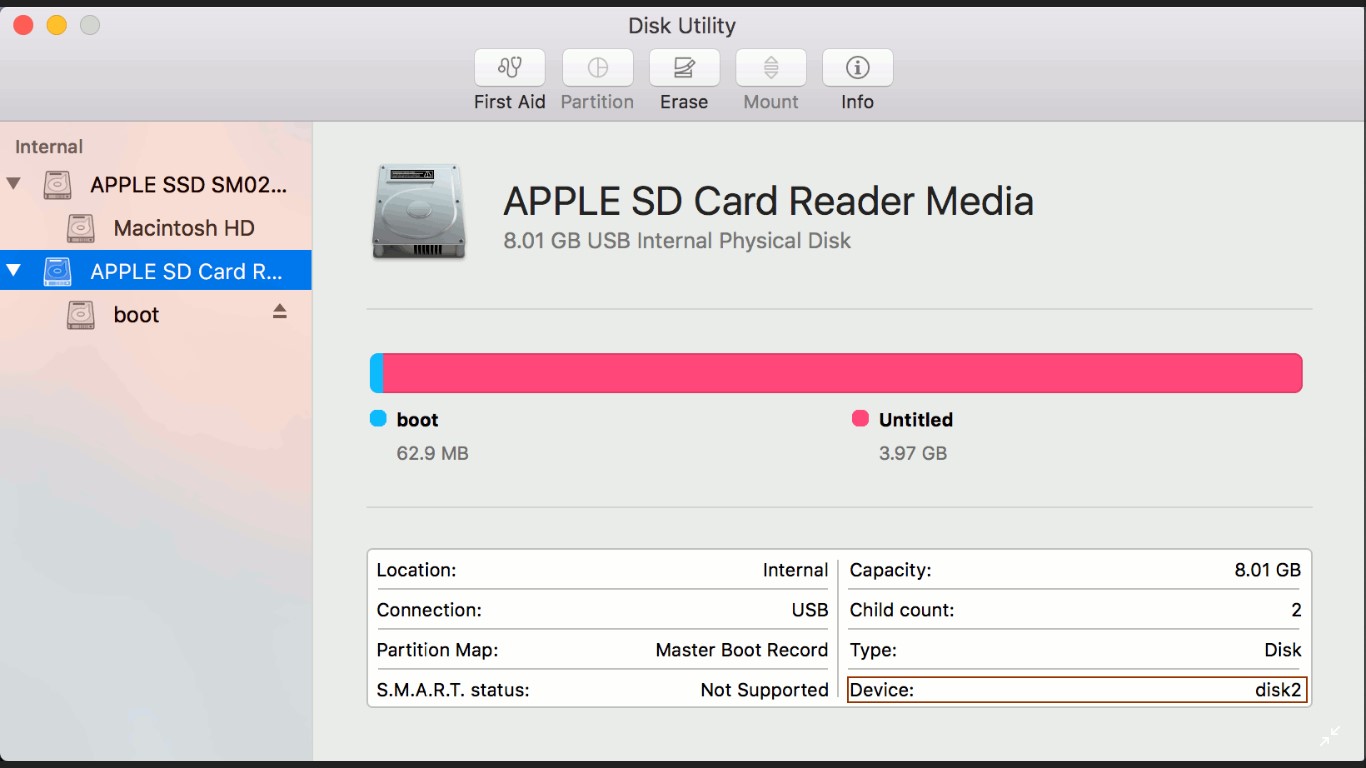
Open Applications > Utilities > Disk Utility. Choose View > Show All Devices so you can see the physical card and its volumes. If Disk Utility lists the volume but Finder does not, select the volume and choose Mount. Copy accessible files immediately. If the volume is visible but files are missing, go to Part 3 before First Aid.
Run First Aid After Recovery
Use First Aid only after the files are safe and only when the card remains stable. Apple explains that Disk Utility can check and repair some storage problems but cannot detect or repair every problem. In Show All Devices view, follow Apple's current order for the volume, container, and physical storage device.
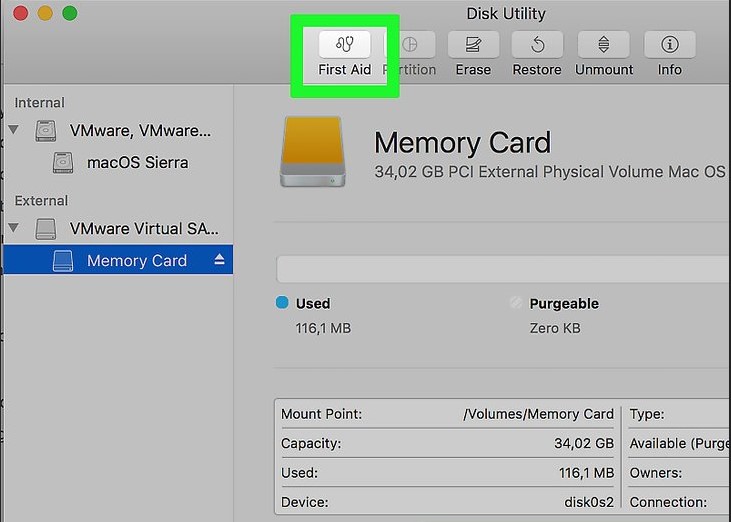
See Apple's First Aid and storage repair instructions for the current Disk Utility workflow.
Erase The Card Only After Your Files Are Safe
When you no longer need the current contents, select the physical card in Disk Utility, choose Erase, select a file system supported by the device, and confirm. Apple states that erasing a storage device deletes everything on it, so do not use this step to test whether missing files will return.
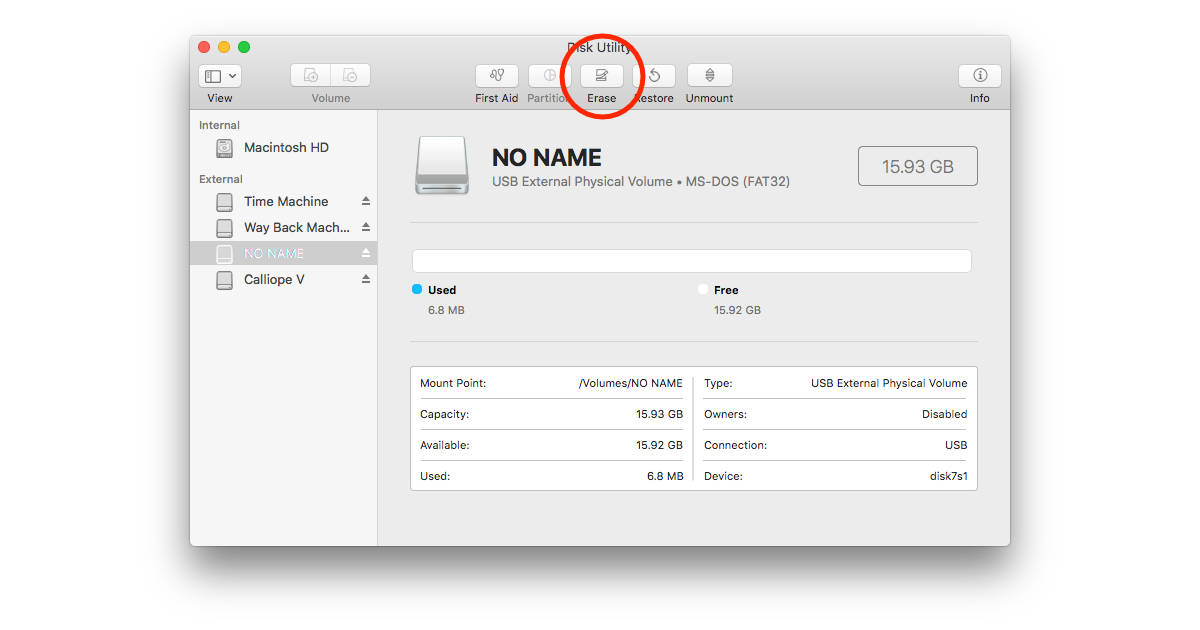
For Apple's current steps, see erase and reformat a storage device. If the card repeatedly fails after a clean erase, replace it instead of trusting it with another important shoot.
Part 6. Handle RAW, Write-Protected, And Undetected Cards
RAW Or Unallocated Card
A RAW or unallocated status means that Windows cannot use the current file-system or partition information normally. It does not automatically mean that every file is gone. Cancel format and initialization prompts, stop writing to the card, and try recovery while the card still has a stable capacity.
Use Recoverit's corrupted SD card recovery guide for a narrower recovery path. If you already formatted the card, use the formatted SD card recovery guide and avoid recording new data.
Write-Protected Card
If you use a full-size SD adapter, check its physical lock switch. A write-protected adapter can prevent changes even when the card is healthy. If the switch is unlocked but the card remains read-only in multiple readers, the controller may be forcing read-only behavior because the media is failing.
Do not treat a write-protection error as proof that a formatting tool can safely repair the card. Recover the files first. If the card becomes read-only again after a successful format, replace it.
0 Bytes, No Media, Or Changing Capacity
When a card shows 0 bytes, No Media, or a wildly changing capacity, the computer may be seeing the reader but not usable flash storage. Try one known-good reader and one direct port to separate a connection problem from a card problem. Do not initialize, format, or run repeated scans when the card still presents no stable media.
Software recovery generally requires the operating system to expose readable storage. If the card is cracked, bent, wet, burned, unusually hot, or repeatedly disconnecting, stop powering it and read the next section.
Part 7. Know When To Replace The Card Or Use A Lab
Stop using an SD card repair tool when the symptoms point to physical failure. Every additional connection can add power, heat, or mechanical stress without improving the underlying condition.
| Situation | Safer response |
| Cracked, snapped, bent, burned, or water-exposed card | Do not straighten, glue, heat, wash, or repeatedly reconnect it. Contact a professional recovery service. |
| 0 bytes or No Media in more than one known-good reader | Stop software attempts. The controller, contacts, or flash interface may not be presenting readable media. |
| Repeated disconnects or unusual heat | Stop the scan or copy. Continued operation can reduce the remaining recovery options. |
| The card works after formatting but corrupts files again | Replace the card. A format can rebuild a file system but cannot restore unreliable flash memory. |
| The card is stable and your files are already safe | Try the appropriate Windows, Mac, or SD Association formatting path and test the card with non-critical data. |
Part 8. Prevent The Same SD Card Problem
You can reduce repeat failures by treating an SD card as working media, not as your only copy of important data.
- Finish the write: Wait for the camera, phone, drone, or recorder to finish writing before you remove the card or battery.
- Eject safely: Use the operating system's eject command before removing a reader from the computer.
- Use the required card: Match capacity, speed class, and endurance rating to the device manual and recording mode.
- Verify imports: Open important photos and play important clips before you format the card for the next use.
- Keep two copies: Store important files on the computer and a separate backup drive or supported cloud service.
- Retire unreliable cards: Replace cards that become slow, read-only, unstable, or repeatedly corrupted.
- Protect the card: Keep it away from moisture, heat, dust, bending, damaged slots, and loose adapters.
For a broader recovery workflow, use Recoverit's memory card recovery guide. For camera media, you can also review the camera recovery resources.
Conclusion
The best SD card repair tool depends on what you need to fix. If files are missing, use a recovery workflow first. If the card is stable and the data is safe, Windows Error Checking, CHKDSK, Mac First Aid, or the official SD Memory Card Formatter can help with logical access or reuse.
Do not format, initialize, repartition, or repeatedly scan a card that still contains important files. A RAW, 0-byte, No Media, physically damaged, or repeatedly disconnecting card needs a different response, and software cannot repair failed hardware. Once your files are verified, replace unreliable media and keep more than one backup copy.
FAQ
-
What Is The Best SD Card Repair Tool?
The best tool depends on the failure. Use recovery software when your files are missing, Windows or Mac repair tools when the card is stable and the data is safe, and the SD Association Formatter when you only need to reformat a compatible card. No software tool repairs failed hardware. -
Can I Repair A Corrupted SD Card Without Formatting It?
Sometimes. If the card is detected with a stable capacity, recover or back up important files first, then try a logical repair such as Windows Error Checking, CHKDSK, or Mac First Aid. Do not run those tools first when the card contains unrecovered files. -
Should I Run CHKDSK Before Recovering SD Card Files?
No, not when the files matter. CHKDSK can change file-system metadata while it repairs logical errors. Recover or back up the files first, then consider CHKDSK for a stable card that you want to make accessible again. -
How Do You Fix A RAW SD Card Without Formatting?
Cancel the format prompt, stop writing to the card, and check whether it appears with a stable capacity. Recover the files first. After your data is safe, you can format the card or try another logical access step. -
Can Recoverit Repair An SD Card?
Recoverit can scan a readable SD or microSD card for deleted, formatted, or inaccessible files and save recoverable results to another drive. It does not repair cracked cards, failed controllers, damaged flash memory, or overwritten data. -
Why Does My SD Card Show 0 Bytes Or No Media?
The reader, contacts, controller, power path, or flash memory may be failing. Try one known-good reader and a direct port once. If the card still shows 0 bytes or No Media, stop repeated software attempts and consider professional recovery. -
Can A Write-Protected SD Card Be Repaired?
Check the lock switch on a full-size SD adapter first. If the card remains read-only in different readers after the switch is unlocked, the controller may be forcing read-only behavior. Recover important files before you format or replace the card. -
Should You Replace An SD Card That Keeps Getting Corrupted?
Yes. Repeated corruption, slow writes, random disconnects, changing capacity, read-only behavior, or recurring format prompts are reliability warnings. After recovery, replace the card and test the replacement with non-critical data.


