

 TL;DR:
To resolve an Android phone failing to read a microSD card, first attempt to remount it within the storage settings or wipe the gold contacts dry, and if detection still fails, connect the card to a PC to recover existing files before reformatting.
● Android natively supports FAT32 for capacities up to 32 GB and exFAT for larger sizes, requiring cards formatted as NTFS or ext4 to be wiped and correctly configured using the PC-based SD Memory Card Formatter.
● Devices running Android 11 and later restrict third-party file managers from viewing mounted storage until the user manually navigates to app settings and grants the Allow management of all files permission.
● Data retrieval with Recoverit via a USB card reader bypasses RAW or 0-byte errors but must occur prior to running CHKDSK or formatting, and it cannot decrypt drives previously configured as Adoptable internal storage on another handset.
Ask AI for a summary
 ChatGPT
 Perplexity
 Gemini
 Claude
 Grok
Grok
Quick answer: To make an Android phone read the microSD card, open Settings > Storage, tap the card, and select Mount. If it is not listed at all, power off, reseat the card, and wipe the gold contacts with a dry cloth. If it still fails, plug the card into a PC card reader — confirm the file system is FAT32 or exFAT, then reformat on the PC or with the SD Memory Card Formatter. Recover files with Recoverit before any format.
Fact-checked on August 29, 2026: Menu paths, file-system rules, and Samsung-specific behavior were verified against current Google Android Help, Samsung Support (TSG10004910), the SD Association standard, and community-tested fixes from Reddit and XDA in 2024–2026.
In This Article
Part 1. Why An Android Phone Stops Reading The SD Card
An Android phone that suddenly reports "SD card not detected," "unsupported SD card," or shows nothing at all in Storage is almost always failing for one of eight reasons. Match the symptom to the cause below and jump to the matching method in Part 2.
| Root Cause | How You Will Notice | Fix Path |
| Card is unmounted (software-ejected) | Card appears in Settings > Storage as "Unmounted" or grayed out | Method 1. Tap Mount |
| Dirty or oxidized gold contacts | Card worked yesterday, detects intermittently today | Method 2. Reseat and clean |
| Card formatted as NTFS or ext4 | Card works on a PC but the phone refuses it | Method 4. Reformat to exFAT or FAT32 |
| File-system corruption | Card mounts as 0 bytes or the phone prompts to format on insertion | Method 3 to confirm, then Method 4 (after recovering data) |
| Card capacity exceeds the phone's limit | A brand-new 512 GB or 1 TB card is rejected on first boot | Check the phone manual; try a smaller card |
| Slot or tray physically damaged | No card of any brand is detected; the tray feels loose | Use USB-C OTG with a card reader; consult a repair shop |
| File manager lacks storage permission (Android 11+) | Card mounted in Settings but invisible in the app | Method 5. Grant "All files access" |
| Card itself is dead or counterfeit | Not detected on any device; reader gets warm | Replace the card; try recovery through a reader first |
Work through the methods in Part 2 from cheap to invasive. Method 1 and Method 2 resolve most cases without any data risk. Method 3 and Method 4 involve a PC and may destroy data — always recover with the flow in Part 4 first.
Part 2. 5 Methods To Fix Android Not Recognizing SD Card
These five methods cover the full path from cheap software fixes to a computer-level reformat. Each method includes the operation steps and the actual screen for that step.
Method 1. Remount The SD Card From Storage Settings
Android sometimes unmounts an SD card after a system update, a crash, or improper removal. Remounting takes ten seconds and fixes roughly a third of "sd card not showing in mobile" cases.
- Open Settings and tap Storage. On some phones the path is Settings > Device care > Storage.
- Scroll to the SD card. If it shows Unmounted, Ejected, or a grayed-out name, tap the card.
- Tap Mount. On Google Pixel and stock Android, the button sits beside the card name; on One UI, open the three-dot menu.
- Wait 10–30 seconds for Android to re-scan storage. The card should now appear as available space with its files listed.
- Open Files by Google or My Files and confirm the folders are visible.
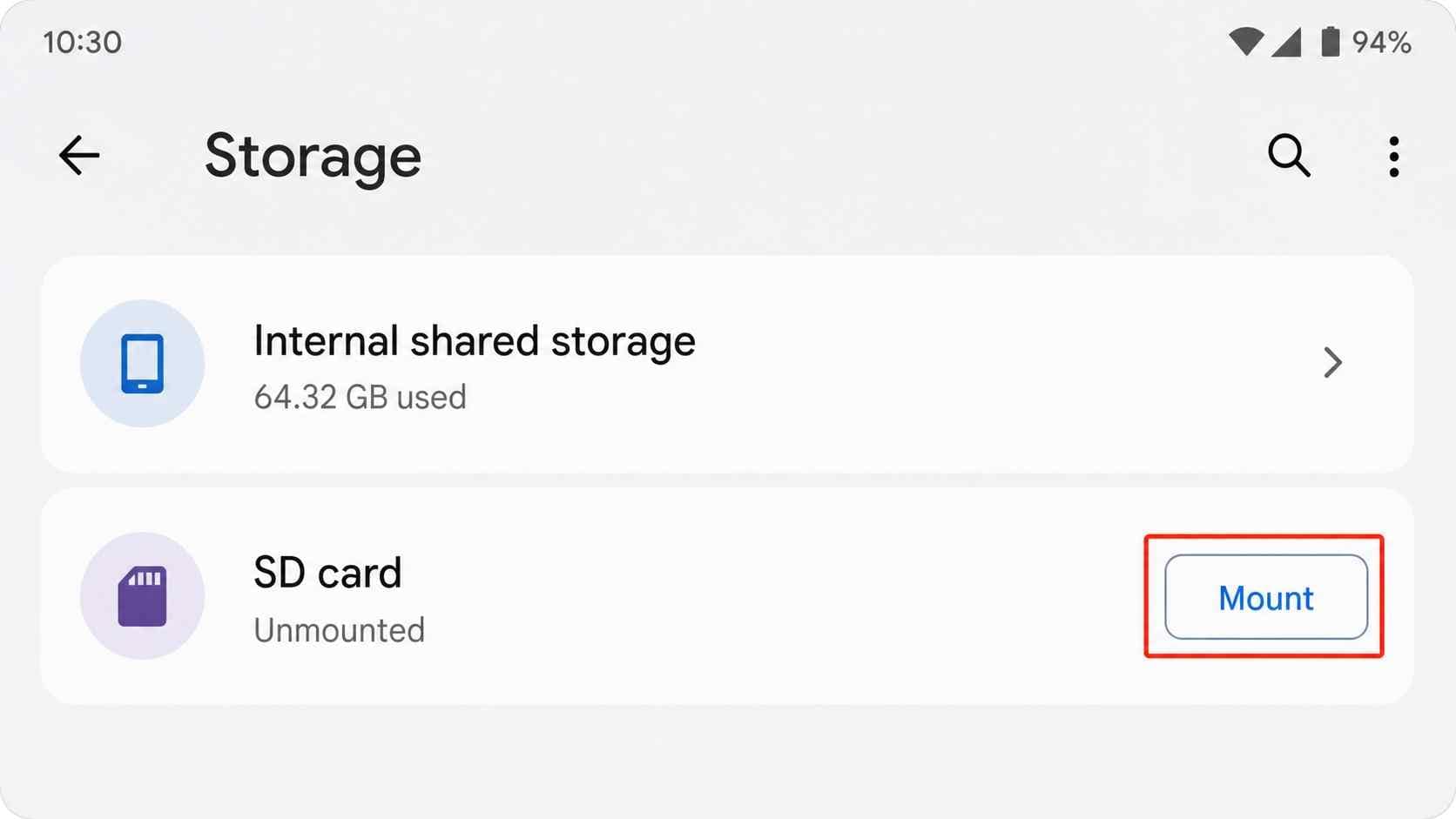
If the card is not listed in Storage at all, remounting is not the answer. Proceed to Method 2.
Method 2. Reseat And Clean The Gold Contacts
Physical contact problems are the second most common cause of "phone does not read sd card." Dust, fingerprint oil, or slight oxidation on the gold pins interrupts the electrical connection.
- Power the phone off completely (not just screen off).
- Use the SIM tray ejector tool to open the microSD tray. On phones where the slot sits under the back cover (Samsung Galaxy S-series legacy models, some Motorola devices), remove the cover carefully.
- Remove the microSD card and examine the gold contacts on its underside for visible dirt or discoloration.
- Wipe the contacts with a dry cotton swab, microfiber cloth, or a clean pencil eraser tip. Do not use water or alcohol on a phone's SD contacts — moisture can cause corrosion inside the phone slot.
- Reinsert the card firmly, close the tray, and power on. Wait 30 seconds, then open Settings > Storage to confirm detection.
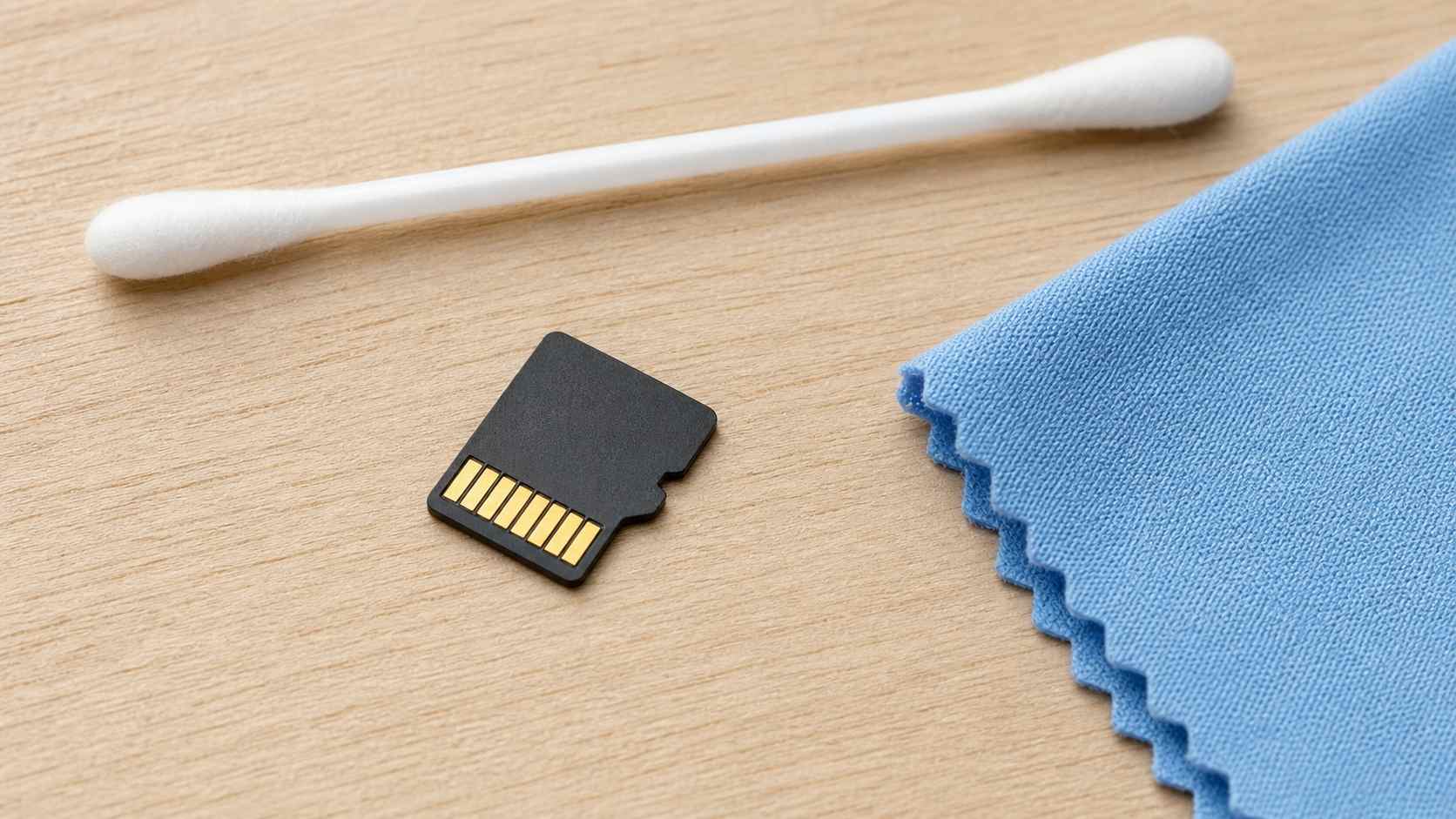
If a second known-good SD card is available, insert it briefly to confirm whether the phone's slot itself is functioning. If neither card is detected after cleaning, the slot may be damaged — skip to Method 3 to test on a PC.
Method 3. Test The Card On A Computer And Check The File System
If neither remounting nor cleaning works, move the card to a PC or Mac through a USB card reader. This step confirms whether the card is alive and whether Android is refusing it because of a file-system mismatch. Android natively reads only FAT32 and exFAT; a card formatted as NTFS on Windows or ext4 on Linux is invisible to the phone even though the PC shows it fine.
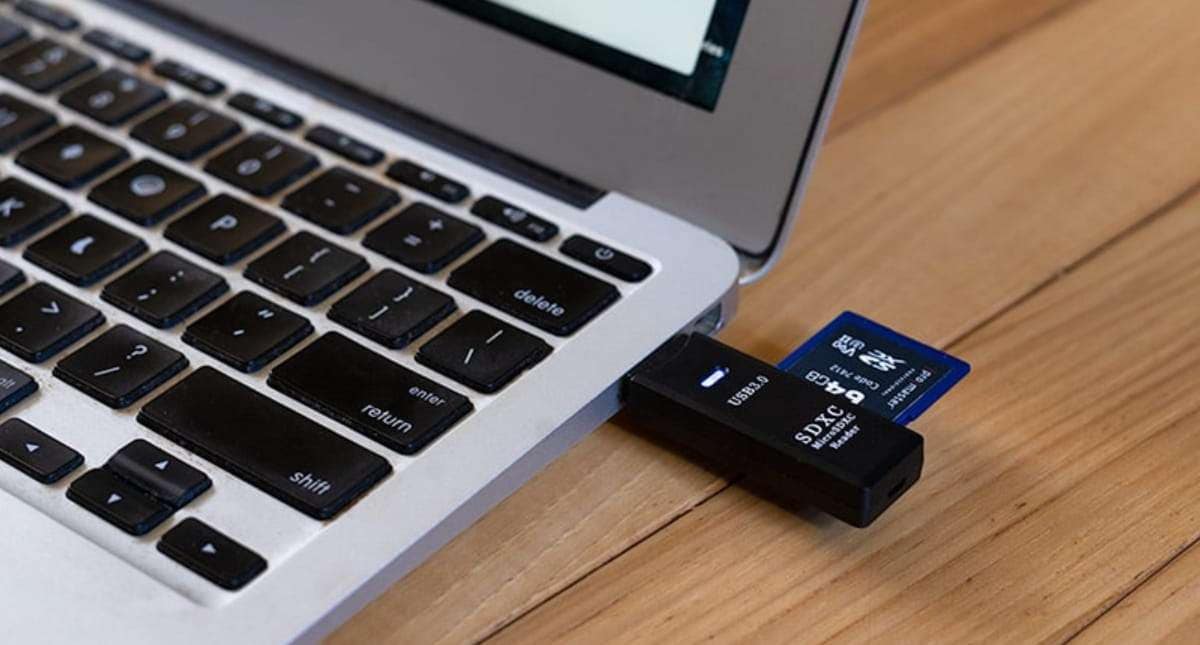
- Remove the SD card from the phone and insert it into a USB card reader connected to a Windows PC or Mac.
- On Windows, open File Explorer. Right-click the card's drive letter and open Properties. Read the File system field.
- Confirm the file system is FAT32 (cards ≤32 GB) or exFAT (cards >32 GB). If it shows NTFS or ext4, jump to Method 4 to reformat.
- If the PC also cannot see the card, the card is likely dead — try another reader to rule out a bad reader before writing off the card.
- If the PC reads it but the phone does not, the file system is wrong. Recover files with Part 4 first, then reformat with Method 4.
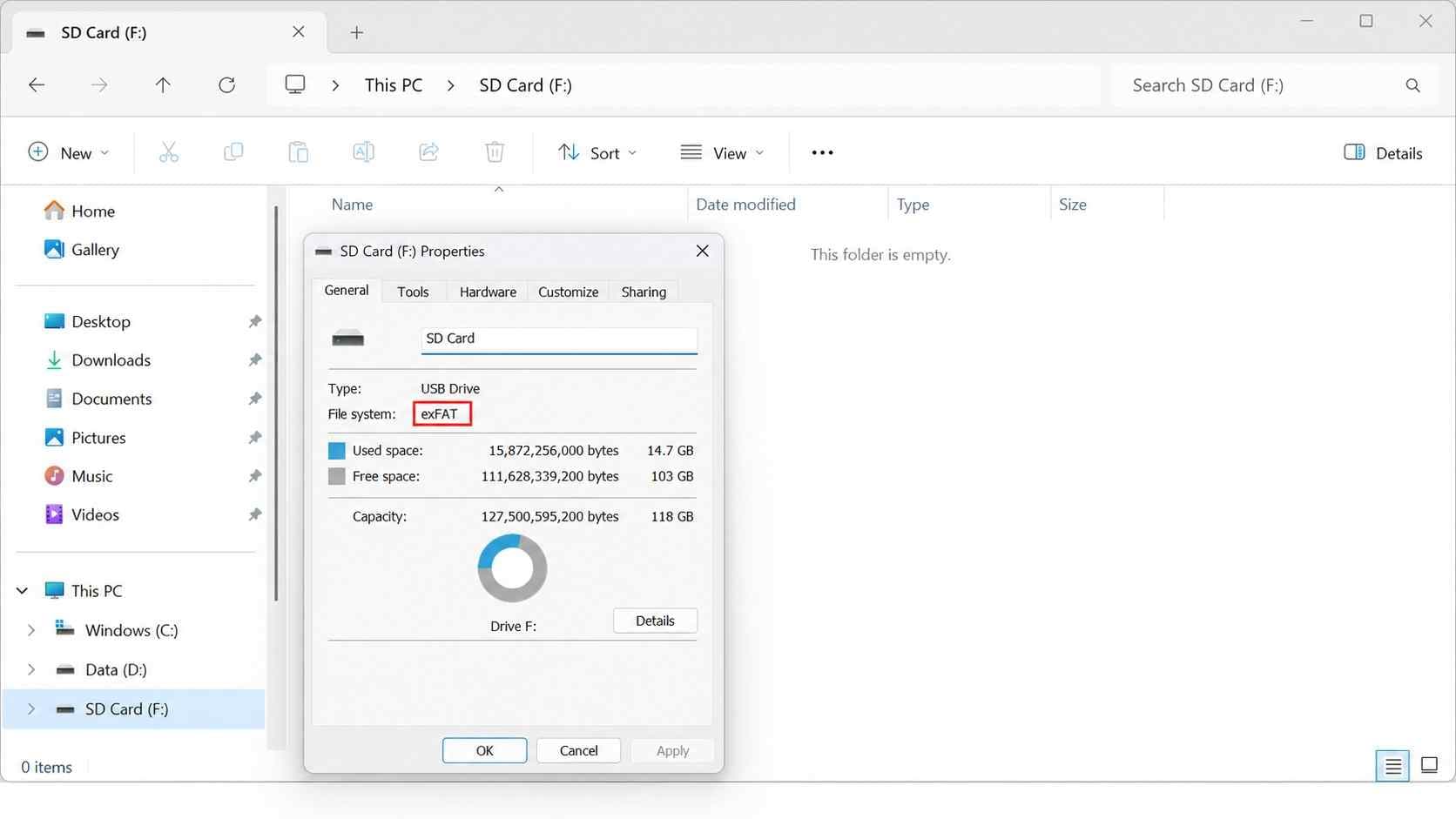
Do not run CHKDSK yet if any file on the card matters. CHKDSK writes changes to the card and can move damaged file-index entries into FOUND.000, where recovery software cannot easily find them.
Method 4. Reformat To exFAT Or FAT32 With The SD Memory Card Formatter
The SD Association recommends its official SD Memory Card Formatter for SD, SDHC, SDXC, and SDUC cards because Windows' built-in formatter is not always optimized for SD standards and refuses FAT32 on cards larger than 32 GB.
Warning: reformatting wipes every file on the card. Recover important data first using the Recoverit SD card recovery flow in Part 4.
- Insert the card in a USB reader on a Windows PC or Mac and note the drive letter or mount point.
- Download and install the SD Memory Card Formatter from the SD Association website. Launch it with administrator rights.
- Select the card by verifying both the drive letter and the displayed capacity — do not mistake it for the system disk.
- Choose Quick format for ordinary reuse. Choose Overwrite format only if you are securely erasing the card and no longer need recovery — it takes much longer.
- Enter a short volume label such as
PHONEand click Format. The tool automatically selects FAT32 for ≤32 GB cards and exFAT for larger cards, matching the SD standard. - Eject the card, reinsert it in the phone, and confirm detection in Settings > Storage.
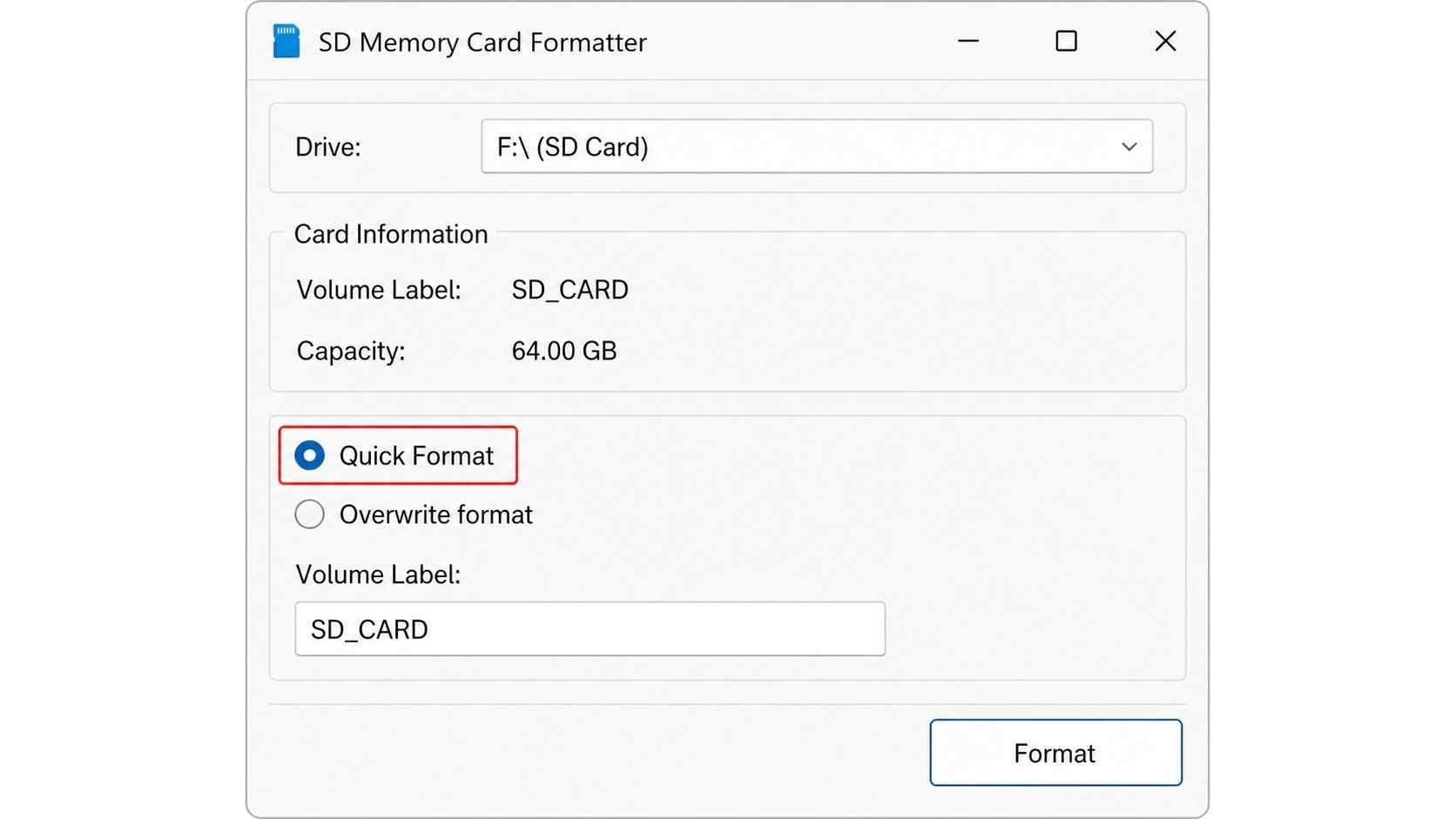
For a broader computer-side workflow (Windows, Mac, camera, and other host devices), see the SD Memory Card Formatter guide.
Method 5. Grant File Manager Permission On Android 11+
Android 11 introduced Scoped Storage, and Android 13 tightened it further. Third-party file-manager apps such as Solid Explorer, X-plore, or a downloaded Cx File Explorer cannot see the SD card until the user explicitly grants "All files access" — a common cause of "sd card not showing up on phone" reports on 2024–2026 devices.
- Open Settings > Apps and tap the file-manager app.
- Tap Permissions, then Files and media.
- Select Allow management of all files. On some phones the toggle is labeled Allow access to manage all files and lives at the top of the file-manager's permission page.
- Return to the file manager. The SD card should now appear in its sidebar. If not, tap the SD card entry — on the first open the system's folder-picker asks for one-time access. Navigate to the SD card root and tap Use this folder.
- Reopen the app. Full read and write access is now granted.
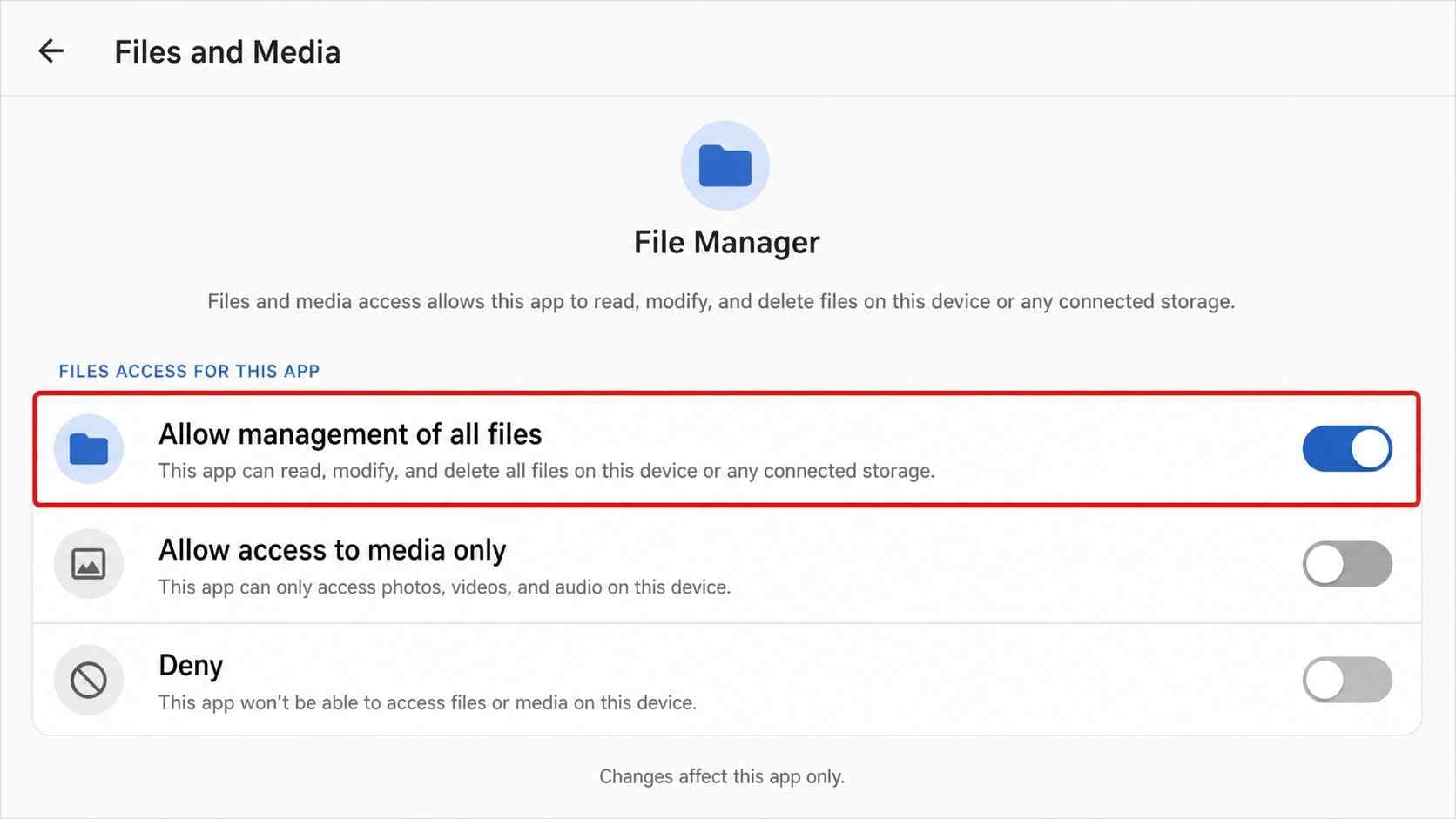
Google's built-in Files by Google app is exempt from this prompt because it is preinstalled with the storage permission granted. If Files by Google reads the card but the third-party app does not, the fix is always Method 5.
Part 3. Samsung Galaxy Specific Path (Device Care)
Samsung One UI hides Storage under Device care, and Samsung explicitly disables Adoptable storage. If a Samsung Galaxy phone shows only a plain Format command and no Format as internal option, that is expected — use the card as portable storage.
- Open Settings and tap Battery and device care (older One UI versions: Device care).
- Tap Storage, then the three-dot More options menu at the top right.
- Select Advanced. Confirm the SD card status: Mounted, Unmounted, or missing.
- Tap the SD card row. If the card is Unmounted, tap Mount. If it needs formatting, tap Format and confirm.
- If the menu is missing entirely, open My Files, locate the SD card under Storage, open its three-dot menu, and tap Format from there — this path is documented in Samsung's official troubleshooting page (TSG10004910).
Samsung's support page also notes that if neither the card nor the tray responds after cleaning and reseating, the card should be tested in another device before assuming the phone slot is broken. If both a known-good card and the original card fail on the same phone, book a repair — Samsung Walk-in Service or an approved third-party technician.
Part 4. Recover Files Before Or After Formatting With Recoverit
Method 4 (reformat) is destructive to any files the phone was refusing to hand over. Recover the card first — three steps in Recoverit are enough for most SD cards.
Method 6. Recover Phone SD Card Files With Recoverit

Wondershare Recoverit reads the card block-by-block through a USB card reader without writing anything back. It works on cards that Windows shows as RAW or 0 bytes, but it cannot decrypt a card configured as Adoptable internal storage on a different phone.
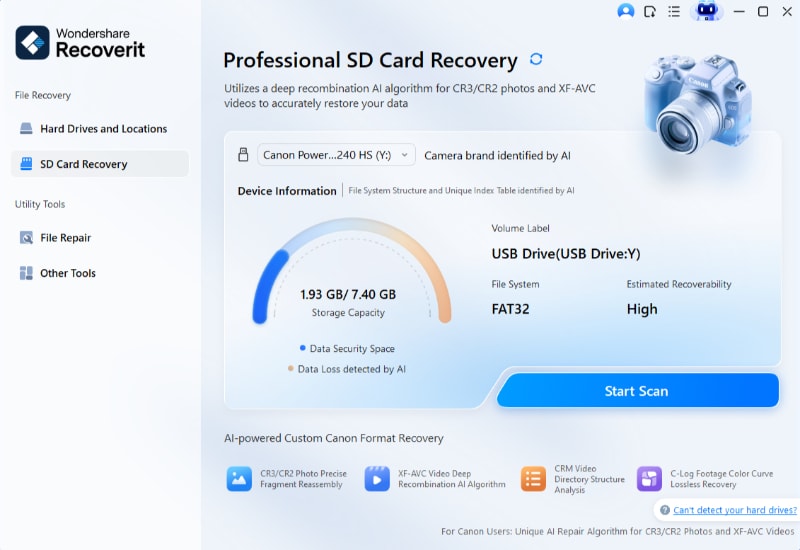
- Connect And Select The Card: Power off the phone, remove the SD card, and connect it through a reliable USB card reader. Launch Recoverit and choose SD Card Recovery under External Drives. Verify the capacity before starting.
- Run The Deep Scan: Start the scan and let Recoverit search for indexed, deleted, formatted, and inaccessible files. Filters by file type, path, date, and size narrow the results as the scan progresses.
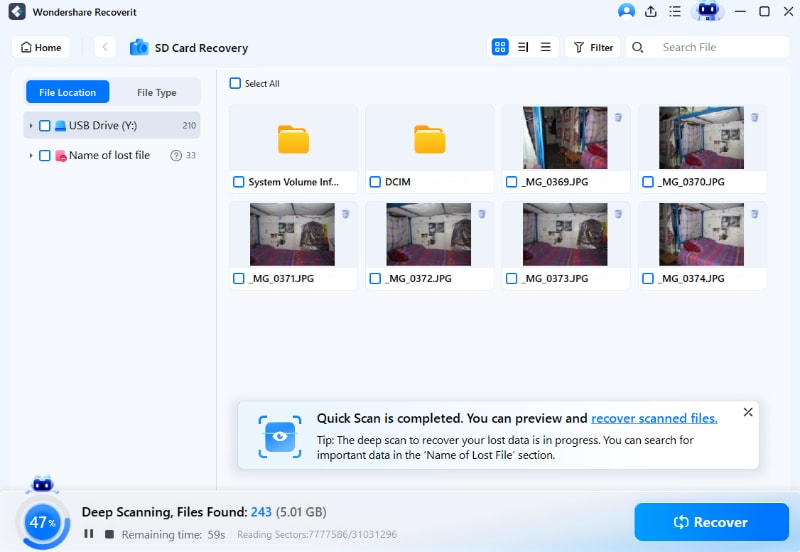
- Preview And Recover Elsewhere: Preview photos, videos, and documents, select what to keep, click Recover, and save the results to the PC's internal disk or another external drive. Never save recovered files back to the same SD card.

Recovery chances are best before any format or CHKDSK, and lower after overwrite formatting, encryption changes, or new writes. For a deeper decision tree by scenario, see the formatted SD card recovery guide.
Conclusion
Almost every "android not recognizing sd card" report resolves inside Part 2 — remount, clean the contacts, test on a PC, reformat to the SD-standard file system, or grant the Android 11+ file-manager permission. The one absolute rule is to recover data first: no reformat can repair failing hardware, and a card that keeps failing after a clean phone-side format should be replaced rather than reformatted a fourth time.
If Android cannot mount or format the card, Recoverit lifts the data through a USB card reader while the card is still readable at the block level. Once the files are safe on another drive, Method 4 rebuilds the file system in one pass. Keep at least one other copy of important photos and videos; a microSD card is working storage, not the only backup.
FAQ
-
Why Is My SD Card Not Showing In My Phone Anymore?
Open Settings > Storage. If the card appears as "Unmounted," tap Mount (Method 1). If it is missing entirely, power off, reseat the card, and clean the gold contacts (Method 2). If nothing changes, test the card on a PC to determine whether the card or the phone slot has failed. -
Why Does My Phone Say "SD Card Not Detected" After A Reboot?
Reboots occasionally leave the card unmounted. Remount from Settings > Storage. If the card was fine before the reboot and is now missing entirely, the tray may not have re-seated properly on power-up — power off, open the tray, reinsert, and boot again. -
Can I Fix A Corrupted SD Card Without Losing Data?
Recover the files first with Recoverit through a USB card reader (Part 4), copy them to a PC, then reformat the card. A phone-side format alone erases everything. If any file matters, recovery must precede the format. -
Why Does A New SD Card Not Work In My Android Phone?
The card may exceed the phone's supported capacity (some 2019–2021 budget phones cap at 512 GB), or it may have shipped preformatted as NTFS. Confirm the phone's manual and reformat to exFAT with the SD Memory Card Formatter (Method 4). -
Why Doesn't My Samsung Galaxy See The SD Card?
Samsung One UI hides Storage under Battery and device care > Storage > More options > Advanced. Samsung also disables Adoptable storage entirely — if a card was set as internal storage on another Android, Samsung will not read it. Reformat the card on a PC first. -
Can Recoverit Recover An SD Card That My Phone Cannot Read?
Yes, if the card can be seen by a PC through a USB card reader. Recoverit's Lost Partition Recovery reads the raw block device without a partition table, so RAW, 0-byte, and unmounted cards still return recoverable files. Cards formatted as Adoptable internal storage on another phone are encrypted and generally not recoverable as ordinary removable storage. -
Is It Safe To Keep Using An SD Card That Repeatedly Fails?
No. A card that repeatedly becomes unmounted, read-only, or slow after a clean reformat is failing hardware. Copy any readable files and replace it. Reformatting cannot repair worn flash cells or a broken controller. -
What File System Should An Android SD Card Use In 2026?
Under SD standards, cards ≤32 GB use FAT32 and cards >32 GB use exFAT. Let the phone or the SD Memory Card Formatter decide — do not force NTFS or ext4, as most Android phones cannot read them natively.


