

 TL;DR:
To fix memory card format errors and prepare an SD card for devices, disable the physical lock switch and rebuild the file system using Windows File Explorer or Disk Management.
● Choose FAT32 for standard compatibility on small to mid-size cards with a 4 GB file size limit, exFAT for large SDXC cards to bypass capacity restrictions, or NTFS primarily for Windows environments.
● If the card remains unreadable or refuses to format, run the `chkdsk X: /f` command to bypass physical bad sectors and repair logical errors, or use the Windows Diskpart utility to execute low-level cleaning and remove read-only attributes.
● Because formatting only deletes visible file paths without immediately erasing raw data, lost files can be retrieved using tools like Recoverit, but only if you perform the recovery before writing new files and permanently overwriting the storage blocks.
Ask AI for a summary
 ChatGPT
 Perplexity
 Gemini
 Claude
 Grok
Grok
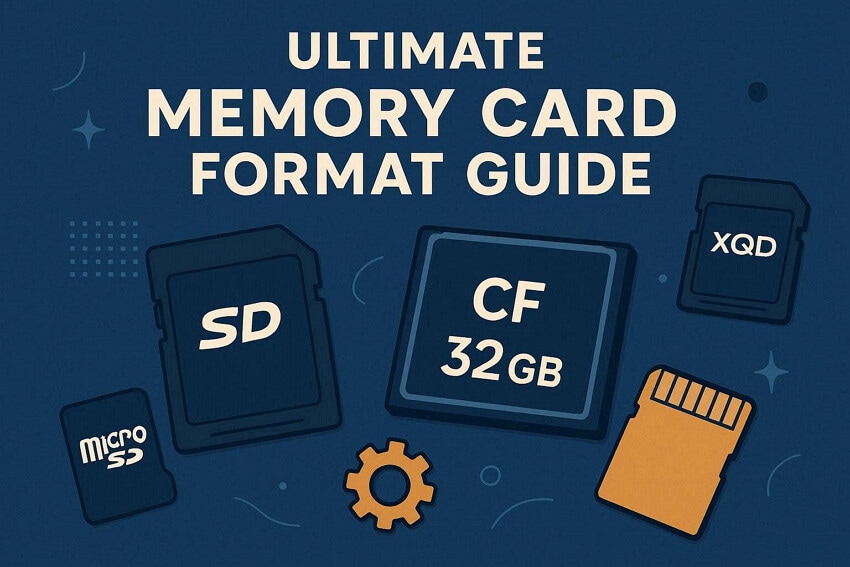
The memory card format process is actually needed when your SD card stops working. It helps clear hidden errors and prepares the card to store new files again. Many people face confusing messages like "card not formatted" or "format error" without knowing why. Therefore, understanding how formatting works and doing it safely can prevent data loss. So, this guide explains simple ways to fix memory card errors and use formatting without hassle.
Try Recoverit to Perform Memory Card Data Recovery
 Security Verified. 3,591,664 people have downloaded it.
In this article

Part 1. What Does Memory Card Formatting Really Mean?
Formatting a memory card means resetting its system so it feels new again. This process clears old file paths and prepares space for storing new data. During formatting, the card rebuilds its structure so devices can read files. Although files disappear after formatting, the raw data is not erased immediately. Because of this, a memory card format error can happen if the structure rebuild fails.
Quick formats only remove references, allowing possible recovery if the card stays unused. Once new files overwrite that space, old photos and videos are usually gone forever. Therefore, understanding formatting helps users decide when to back up data before proceeding. To understand formatting better, it helps to know why different file systems exist:
| File System | Compatibility | Main Advantages | Limitations | Best For |
|---|---|---|---|---|
| FAT32 | Works with most cameras, TVs, and computers. | Very compatible and simple to use on many devices. | File size limit of about 4 GB and system-dependent partition limits. | Small or mid-size SD cards for general use. |
| exFAT | Supported by Windows, macOS, cameras, and consoles. | Handles large files and capacities without a 4 GB limit. | Slightly less universal on older devices. | Large SDXC cards and high-resolution video files. |
| NTFS | Built for Windows systems primarily. | Offers data protection, security, and crash recovery features. | Limited writing support on non-Windows devices. | Drives used mainly with Windows computers. |
Part 2. Common Memory Card Format Errors You Might See
Common memory card format errors often show when a device cannot read the card. When you see errors like "Card not formatted" or "Format card?" It means the system detects corruption. As a result, it cannot understand the current format and prompts you to format before use. Another error, "Bad format," appears when the card uses an unsupported layout or type.
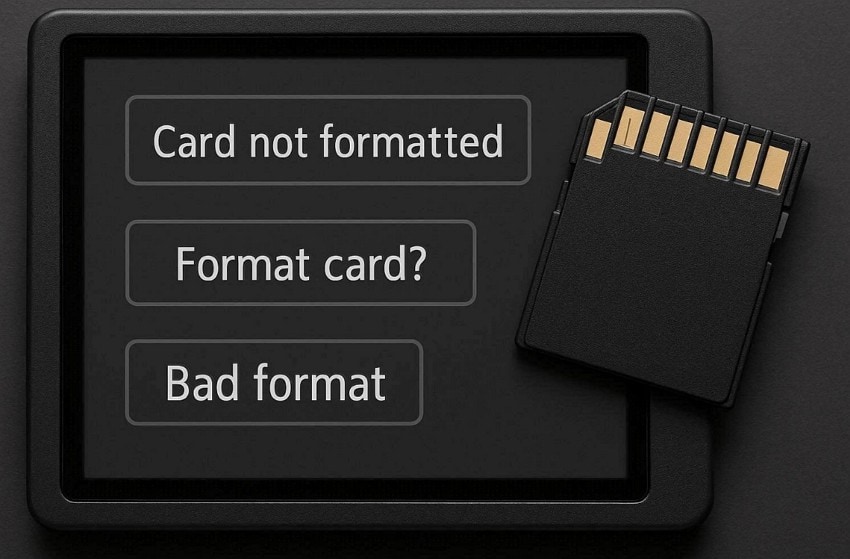
This happens with mismatched SDHC and SDXC support in different devices. These issues usually stop normal data access, but using a trusted sd card formatter can restore compatibility. Moreover, always check compatibility before formatting to avoid repeated error messages on devices. Also, you can learn how to unformat the sd card and recover data.
Why Your SD Card Might Fail to Format
Many times, your SD card refuses to format, even after several attempts on different devices. Thus, understanding the given causes helps prevent data loss and guides you to the right solution:
- Write Protection: The lock switch on your SD card or adapter can block any formatting. When set to "lock," the card becomes read‑only, stopping all rewriting or editing actions.
- File Corruption: Sudden removal or crashes can corrupt FAT32/exFAT structures beyond repair. Cards may show as RAW, requiring low-level tools or special utilities for formatting.
- Bad Sectors: Faulty memory cells also cause reading or writing failures during formatting. These physical defects make the device unable to rebuild proper file system structures.
- Device Incompatibility: Older devices may not support SDXC capacities or certain speed classes. Plus, using unsupported file systems like NTFS on incompatible devices can make formatting fail.
- Read‑Only State: Sometimes, software settings mark a card as read‑only within your system. You must remove that restriction before any format attempt can be completed.
Part 3. How to Safely Format Your Memory Card - Simple Steps
The memory card format process is simple when done using a native PC's feature. This solution rebuilds the card's structure while keeping it compatible with devices. While formatting, it allows choosing the right file system for your card, like exFAT or FAT32. The task also helps restore performance for corrupted or slow SD and microSD cards. So, go through the given steps to format your memory card without hassle:
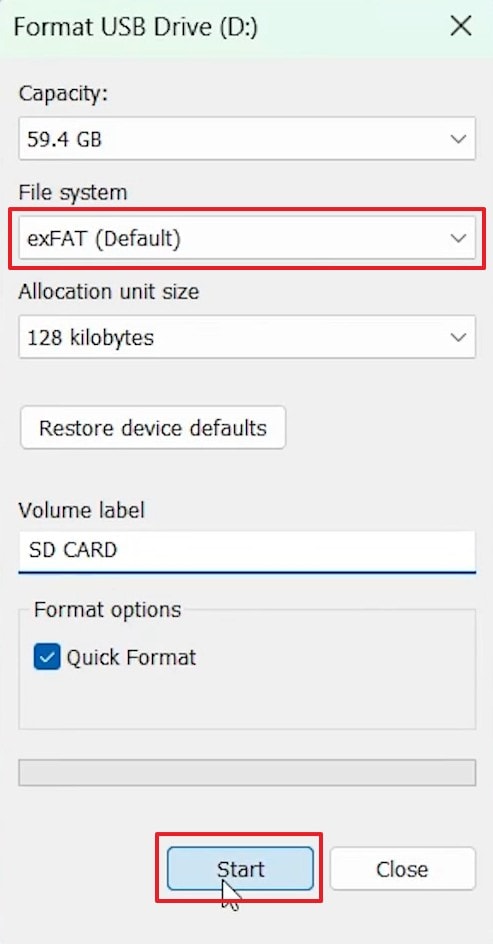
- Connect your "SD Card" to your PC and navigate to the "File Explorer." After that, right-click the "Memory Card Drive" section and opt for the "Format…" option.
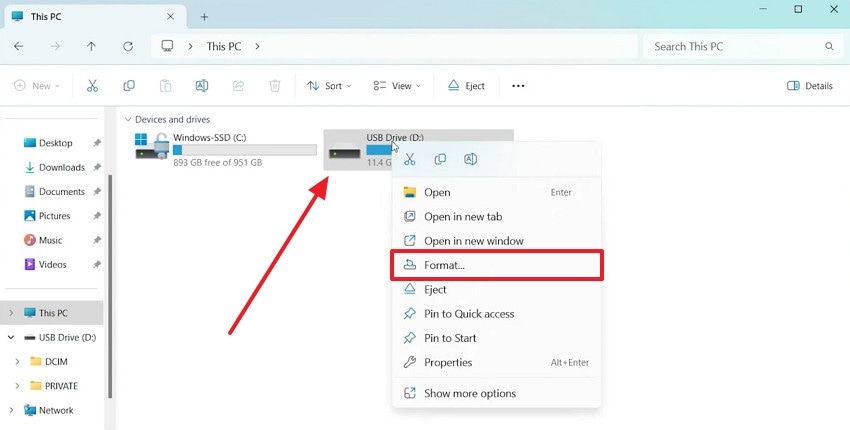
- Upon seeing a new prompt, make sure you select the "File System" as "exFAT" and press "Start."
Pro Tip: Don't Lose Data: Recover Lost Data Before Permanently Formatting Your Card
Before using an sd card formatter, it is crucial to recover important deleted data. Formatting always deletes visible files, and recovery becomes harder once new data overwrites old blocks. In such cases, Recoverit serves as an effortless and powerful recovery solution. It retrieves data from every brand and format of SD, microSD, and SDHC. Plus, this software supports 1000+ file types, ensuring nothing important remains unrecovered.
Its advanced scanning modes locate deleted or deeply buried files effectively within minutes. Recoverit works with major brands like SanDisk and even Sony, with strong compatibility. While recovering, the tool's Quick Scan helps locate recently deleted files in a few minutes. Alongside, its Deep Scan option thoroughly searches the card for older or hidden files. This data recovery tool also allows recovered files to be saved to custom locations or external drives.
Key Features
- AI‑Powered System: Uses advanced algorithms to identify and recover lost or damaged data.
- High Accuracy: Delivers precise scanning to ensure maximum recovery of lost or formatted files.
- File Filtering: During recovery, it lets users filter searches by type, size, or file modification date.
Detailed Guide to Recover Lost Data from an SD Card via Recoverit
Adhere to the following guide to learn how you can recover deleted data from your memory card:
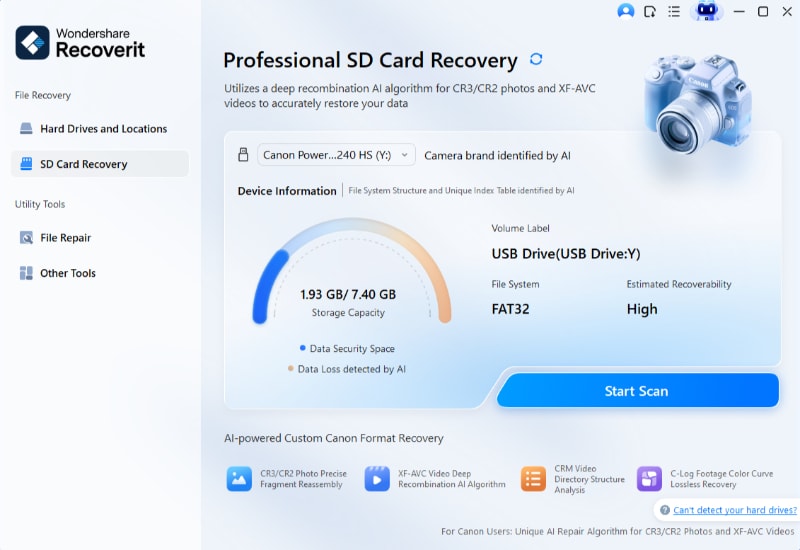
1. Access the Program to Recover Deleted Data
As you access the "SD Card Recovery" tab, connect your memory card to the PC. When the tool recognizes and prepares your memory card for recovery, click "Start Scan."
2. Scan the Memory Card to Recover Data
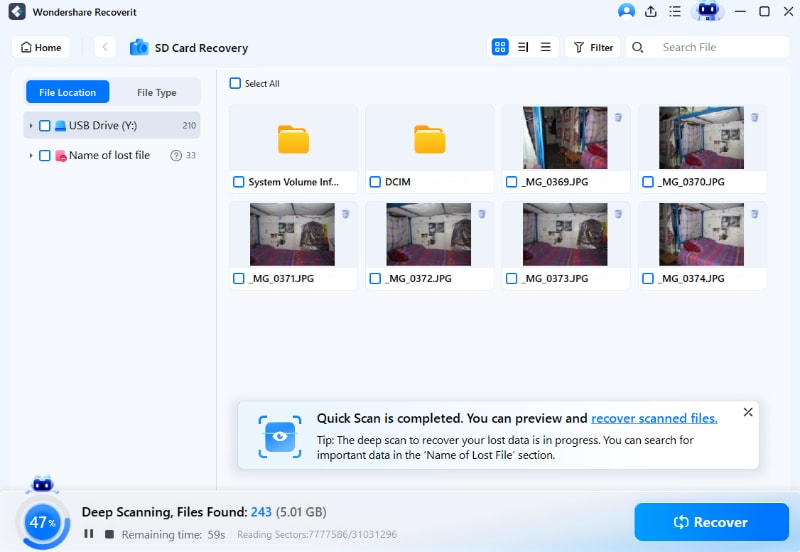
After an advanced AI-accelerated scanning, the tool will show all the deleted data files.
3. Retrieve and Save Your Preferred Data
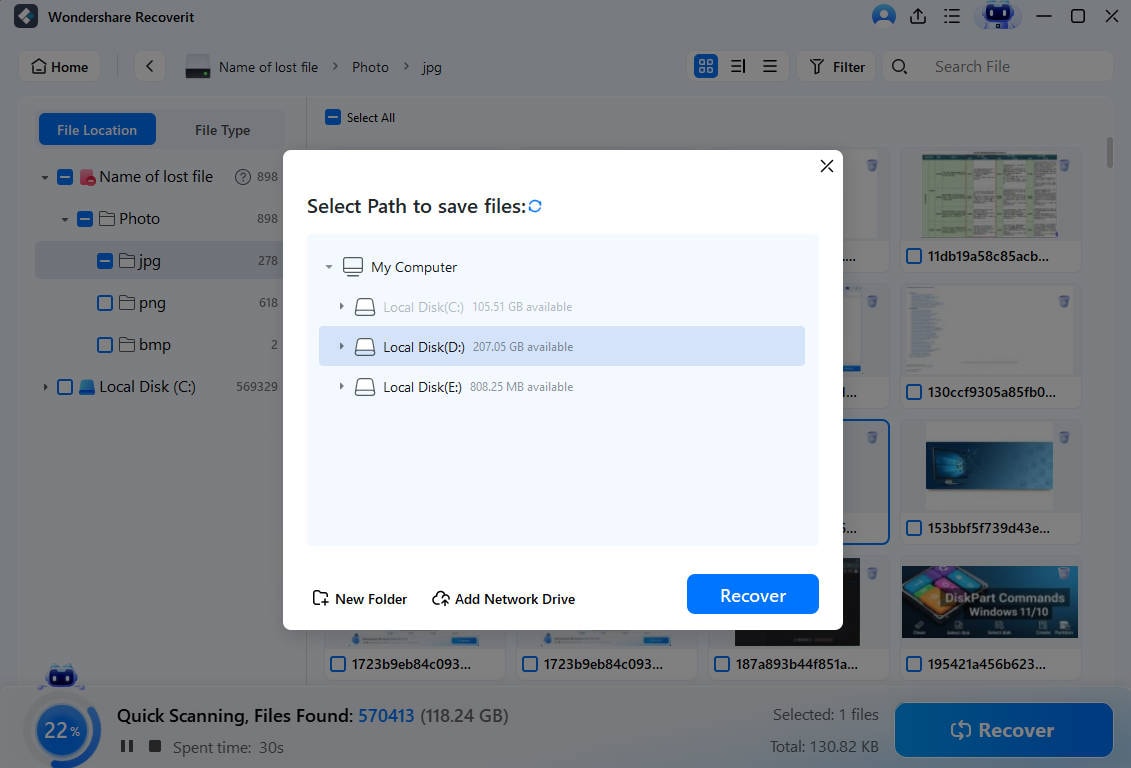
Now, choose your desired file to preview its content and press "Recover" to export it to your preferred location.
Video Tutorial on How to Format an SD Card on Mac and Windows?
Part 4. SD Card Won't Format? Try These 6 Quick Fixes
Apart from the above, your SD card may fail due to a memory card format error. So, these 6 quick fixes help resolve issues and make formatting your card simple:
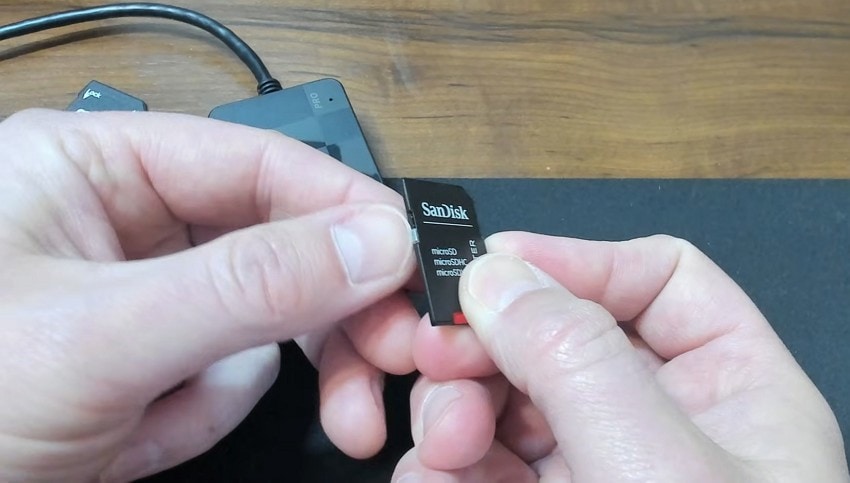
Fix 1. Check the Lock Switch of the SD Card
Before starting the memory card format, always check your SD card's physical lock switch. A locked card prevents saving or formatting, making it appear corrupted or unreadable. So, move the tiny switch on the card's side toward the unlock position. After unlocking, reinsert the card into your device to confirm it allows data changes. This simple check fixes formatting issues without using any technical process.
Fix 2. Use Diskpart to Clean and Format the SD Card
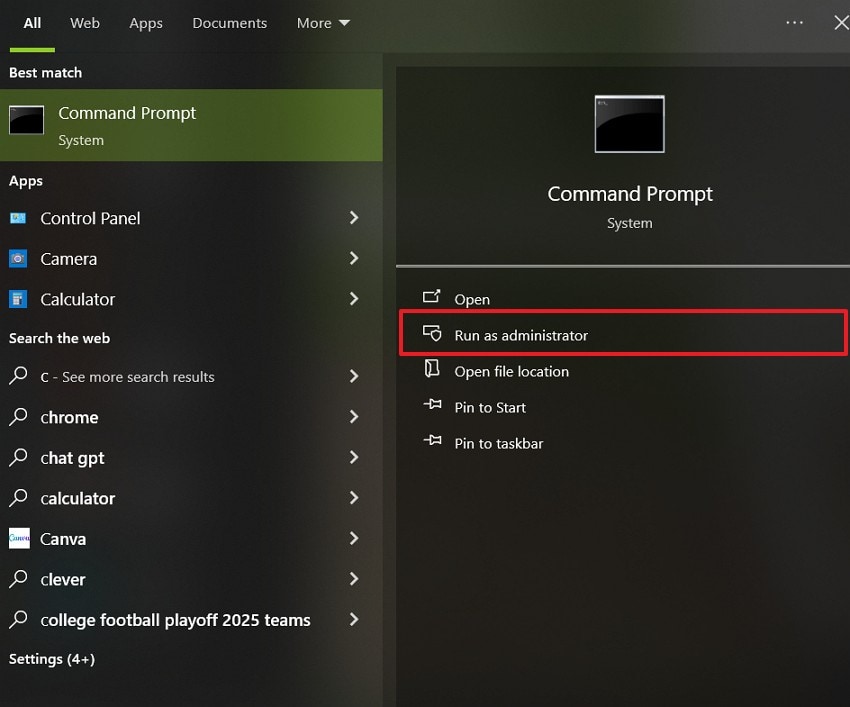
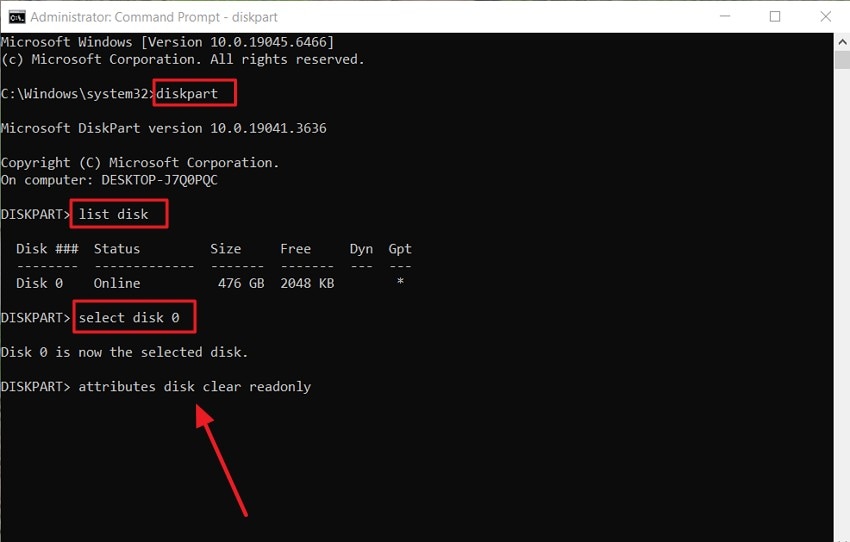
Diskpart also provides a powerful way to clean and reformat problematic SD cards. This Windows tool deeply removes all hidden corruption and restores the drive's full usability. It works like a native sd card formatter but provides stronger low‑level cleaning control. Plus, Diskpart lets you assign new partitions and file systems for full device compatibility. Thus, let's learn how you can format your memory card via this fix:
- Press "Windows + S" together to search "Command Prompt" and opt for "Run as Administrator."
- Type "diskpart" and press Enter, then input the "list disk" command to view connected drives. Locate your SD card drive number and enter "select disk X," replacing X with the correct number. Next, execute "attributes disk clear readonly" and press Enter to remove write protection. Finally, type "Exit" and press Enter to close the Diskpart utility.
Fix 3. Run CHKDSK to Repair SD Card Errors
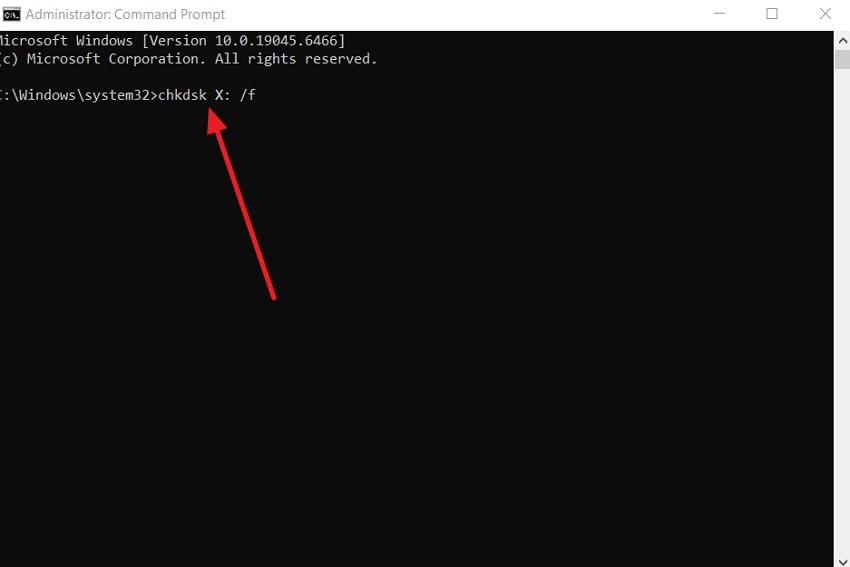
Running this specific command is another smart way to repair your SD card without losing data. This native Windows tool scans for corrupted files and damaged storage areas. Therefore, it corrects logical errors that can cause freezing or memory card format failures. CHKDSK also marks bad sectors, so your device avoids storing new data there. Hence, take guidance from the steps to run this command and fix the memory card error:
Instructions. Upon running "Command Prompt," type "chkdsk X: /f," replacing X with your memory card letter.
Fix 4. Change Drive Letter If SD Card Isn't Detected
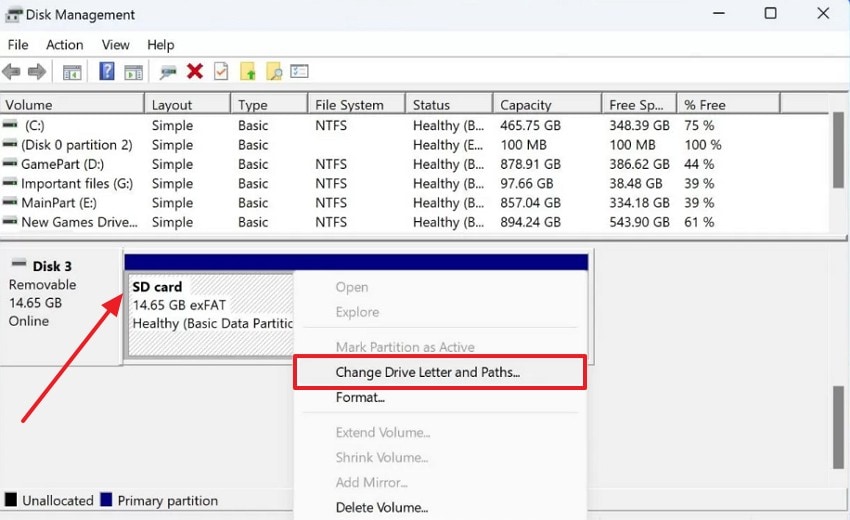
This solution helps your Windows recognize SD cards that remain hidden. By assigning a new letter, Windows refreshes the connection and rebuilds its access path. As a result, it resolves issues related to unreadable cards or a memory card format error. After updating the letter, your device can recognize and safely format the card. So, you can review the given guide to change the drive letter of your memory card:
- When you insert the memory card into your PC, press "Win + S" to open "Disk Management." Afterward, right-click the memory card and choose "Change Drive Letter and Paths…"
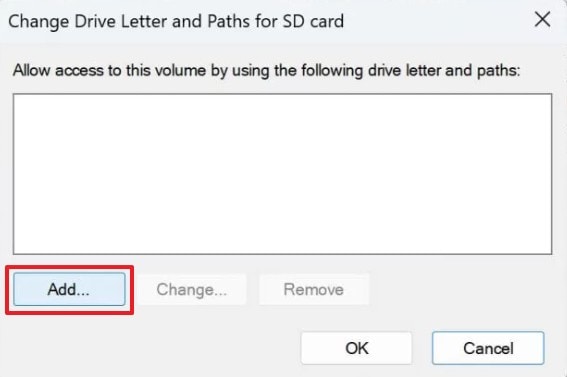
- As the new dialog box appears, click the "Add" button to continue.
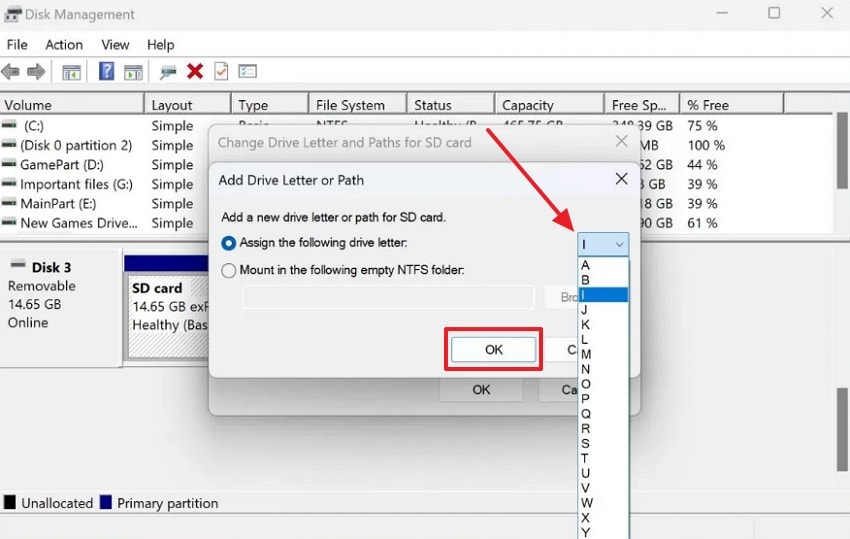
- Select a new letter from the "Assign the Following Drive Letter" drop-down, then click "OK" twice to save changes.
Fix 5. Format SD Card in Windows Disk Management
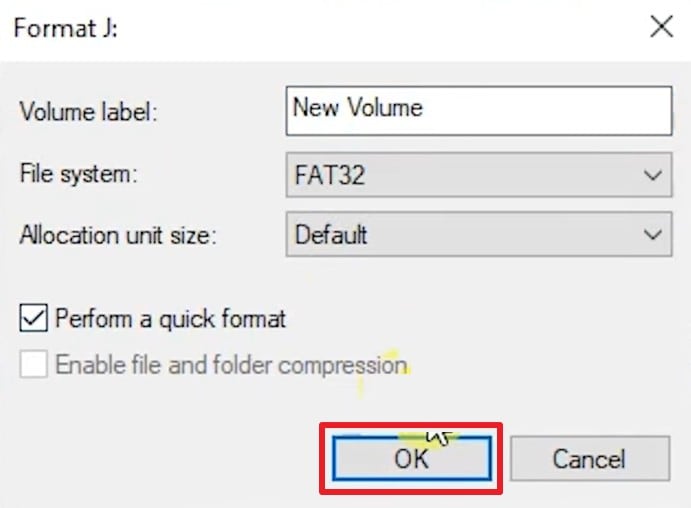
Formatting through Disk Management provides complete control over your SD card's partitions and structure. This method helps when the regular right‑click formatting option fails in File Explorer. It allows users to delete, recreate, and format partitions with higher precision and safety. Acting like an advanced sd card formatter, it ensures proper setup for smoother device performance. Hence, adhere to the steps below to learn how you can utilize this solution:
- Upon right-clicking the memory card drive from "Disk Management," opt for "Format…"
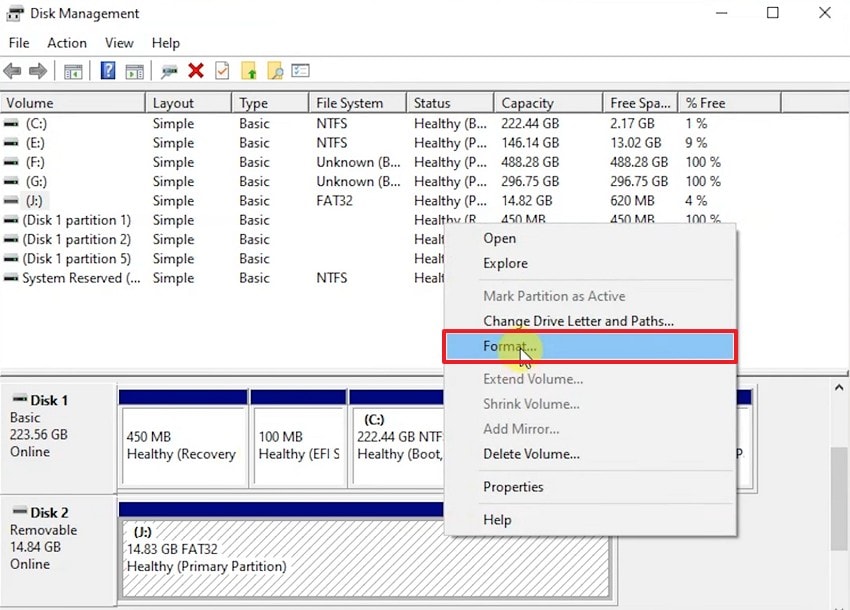
- Here, tick the "Perform a Quick Format" box and press the "OK" button.
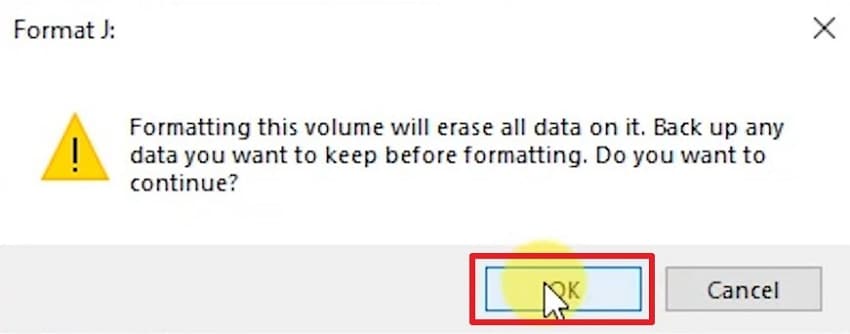
- When you see the confirmation prompt, click "OK" again to finish the process.
Part 5. Tips to Avoid Memory Card Format Errors in the Future
Preventing future issues is easier than fixing a serious memory card format error. Hence, following simple habits and care routines keeps your SD card reliable and long-lasting:
- Safe Removal: Always turn off your device before removing the card to avoid corruption. Therefore, pulling the card mid-write triggers a format error or even loss of files.
- Frequent Format: Reformat your card after saving photos instead of deleting hundreds of files. Doing this helps maintain its health and prevents leftover file fragments.
- Avoid Fullness: Never fill your memory card or exceed its suggested capacity limit. Leaving some free space keeps data writing stable and avoids random storage corruption.
- Physical Protection: Store cards in cases away from heat or static electricity hazards. Rough handling and water exposure increase failure risks for memory cards.
- Avoid Device Switching: Do not constantly use one card in multiple cameras or devices without formatting. Mismatched metadata and folder structures can also trigger format errors.
Conclusion
To conclude, understanding the memory card format process helps fix errors and keep your storage reliable. Following proper steps reduces the risks of corruption and unexpected memory card format error. Moreover, always back up your essential files before formatting to avoid data loss. In case you have deleted some essential data, recovering it before formatting is important. In such a case, using Recoverit is highly recommended for complete and safe recovery.
FAQ
-
1. Why does my SD card show as RAW on my computer?
Your SD card shows RAW when its file system structure becomes unreadable or corrupted. This happens due to sudden removal or damaged internal memory sectors. Yet, reformatting the card restores usability, but data recovery may be needed before formatting. -
2. Can formatting fix slow performance on my memory card?
Yes, it helps by clearing unnecessary fragments and rebuilding a cleaner file system. Over time, constant rewriting slows cards, so proper formatting refreshes speed and stability. Plus, always back up data before formatting, as performance repair deletes all stored files. -
3. Can I recover deleted videos after using a memory card format?
Deleted videos remain recoverable unless overwritten by new data fragments already saved. You can use Recoverit to restore them with high recovery accuracy and reliability. Also, avoid using the card again before attempting recovery to improve success chances.


