

 TL;DR:
You can successfully recover files from a formatted SD card if the device performed a quick format and you immediately stop using it to prevent new data from overwriting the hidden files.
● Save your rescued data to a completely different computer drive or external disk, ensuring you never run CHKDSK, Disk Utility First Aid, or save files back to the formatted card before the recovery is complete.
● Choose Recoverit for a visual workflow that allows previewing specific camera file types before saving, Windows File Recovery in Extensive mode for a free Windows command-line alternative, or PhotoRec if you accept losing original file names and folder structures.
● Cease all DIY software attempts and consult a professional recovery lab if the card is physically damaged, entirely undetected by devices, or underwent an intentional overwrite format or secure erase.
Ask AI for a summary
 ChatGPT
 Perplexity
 Gemini
 Claude
 Grok
Grok
Formatted an SD or microSD card by mistake? Stop using it now. This guide explains when recovery is still possible, which method to try first, and how to recover photos, RAW files, 4K/8K videos, documents, and other files on Windows or Mac before you repair, erase, or reuse the card.
Quick answer: you can often recover files from a formatted SD card if the card was quick formatted and has not been used again. The most important rule is simple: do not take new photos, copy files to the card, run CHKDSK, format it again, or save recovered files back to it. Those actions can overwrite the data you are trying to recover.
A formatted SD card is a high-intent recovery case because users usually need an immediate next step, not theory. This guide separates quick format, overwrite format, camera format, unreadable cards, and backed-up files, then shows the safest recovery path for Windows and Mac users.
Recover Files From a Formatted SD Card With Recoverit
 Security Verified. Over 7,302,189 people have downloaded it.
In this article
Part 1. Can You Recover Files From a Formatted SD Card?
Yes, but the answer depends on the type of format and whether new data has been written to the card. A quick format usually resets the file system records and makes the files invisible to Windows, macOS, cameras, and phones. The underlying data may still remain on the card until it is overwritten by new photos, videos, downloads, app cache, or another format.
An overwrite format, secure erase, or heavy reuse after formatting is different. In those cases, the old file data may already be replaced. No consumer recovery tool can reliably recover overwritten data. If the card is physically cracked, overheats, makes a reader disconnect repeatedly, or is not detected by any device, stop DIY scans and consider a professional recovery lab.
| SD card situation | What it usually means | Recovery outlook | Safest next step |
| Quick formatted on Windows | File entries were reset, but data may still be in the storage area. | Often recoverable if not reused | Scan the card and recover files to another drive. |
| Erased on Mac with normal options | The volume was recreated and files disappeared from Finder. | Often recoverable if not overwritten | Scan the physical card before saving anything to it. |
| Formatted in a camera, drone, dash cam, or phone | The device prepared the card for its own file system and folder structure. | Recoverable in many quick-format cases | Remove the card from the device and use a computer card reader. |
| Full, overwrite, or secure erase | Data areas may have been overwritten intentionally. | Low to very low | Check backups or consult a lab for high-value files. |
| Formatted and reused for new shooting | New media may overwrite older files, especially large 4K/8K videos. | Mixed | Stop using the card immediately and scan what remains. |
| SD card asks to format | The file system may be RAW, damaged, or unreadable. | Possible if the card is detected | Recover first, then repair or format later. |
The SD Association formatter FAQ distinguishes Quick format from Overwrite format and warns users to copy wanted data before formatting. That difference matters: quick format is the scenario where formatted SD card recovery is most realistic.
Part 2. Do This First Before You Scan or Format Again
The first five minutes after accidental formatting can decide whether your files remain recoverable. Follow these steps before trying any recovery method.
- Stop using the SD card: remove it from the camera, phone, drone, dash cam, Nintendo Switch, or card reader.
- Lock the adapter if available: if you use a full-size SD adapter with a write-protect switch, slide it to lock before inserting it into a computer.
- Use a stable card reader: connect the card directly to a PC or Mac through a reliable SD/microSD reader. Avoid unstable hubs during scanning.
- Do not run repair commands first: CHKDSK, Disk Utility First Aid, repartitioning, and another format can change file system structures. Recover important files first.
- Never save recovered files back to the card: choose your computer drive or another external drive as the recovery destination.
- Check backups quickly: if the files were copied to a computer, cloud folder, NAS, or camera import library before formatting, restoring a backup may be faster than scanning.
This article focuses on the formatted SD card recovery intent. If your card is not formatted but shows RAW, corrupted, or not recognized symptoms, recover important data first, then use a more specific guide such as memory card recovery or the SD Memory Card Formatter guide after your files are safe.
Part 3. Choose the Right Recovery Method
Not every method works for the same situation. Backups restore previous copies. Windows File Recovery and PhotoRec are command-line or text-interface tools. Recoverit is a visual recovery option for users who want to preview photos, videos, documents, and other files before saving them.
| Your situation | Best first method | Why this order is safer |
| Quick formatted SD or microSD card, not reused | Recoverit scan | Gives a visual workflow, file filters, preview, and a separate save location. |
| You prefer a free command-line Windows tool | Windows File Recovery | Microsoft recommends Extensive mode for FAT, exFAT, formatted disks, and corrupted disks. |
| You are comfortable with terminal-style tools | PhotoRec | It ignores the file system and searches file signatures, but may lose original names and folder paths. |
| The files were copied or backed up before formatting | File History, Windows Backup, Time Machine, or iCloud | Backup restore avoids writing to the formatted SD card and can be faster than scanning. |
| The SD card has logical errors after recovery | CHKDSK, Disk Utility, or reformat | Use repair tools after important files are already recovered. |
| The card is physically damaged or not detected anywhere | Professional recovery lab | Repeated DIY scans can stress unstable media. |
Part 4. Recover Files From a Formatted SD Card With Recoverit
For most non-technical users, Wondershare Recoverit Memory Card Recovery is the most direct first step after accidental formatting because it is built for readable storage devices, including SD, microSD, SDHC, SDXC, CF, CFexpress, and camera memory cards. It can scan for photos, RAW files, videos, audio, documents, archives, and other local files that still exist on the card.
Recoverit is not a hardware repair tool and cannot recover overwritten data. Its role here is to scan a card that is still detectable by Windows or macOS, let you filter and preview found files, and save recoverable files to a different drive before you format or troubleshoot the card.
Related video: How to recover deleted or corrupted files from an SD card.
How to recover formatted SD card files with Recoverit
- Connect the formatted SD card: insert the SD or microSD card through a reliable card reader. Wait until Windows or macOS detects it. If the system asks you to format the card, cancel the prompt.
- Open Recoverit: launch Recoverit and choose the formatted SD card from SD Card Recovery or the external drive list.
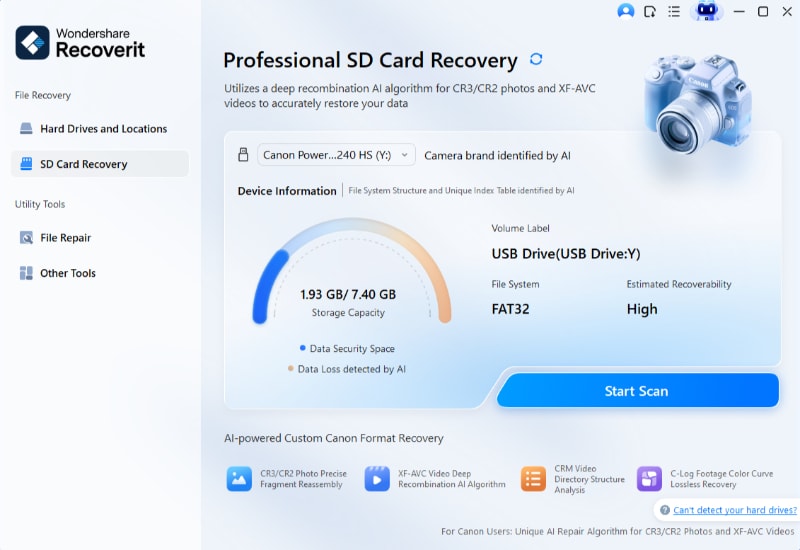
- Start scanning: click Scan. Keep the card connected until the scan finishes. A formatted card with many 4K/8K videos or RAW photos may take longer.
- Filter results: narrow results by type or extension, such as
.jpg,.cr2,.cr3,.nef,.arw,.dng,.mov,.mp4,.docx, or.pdf.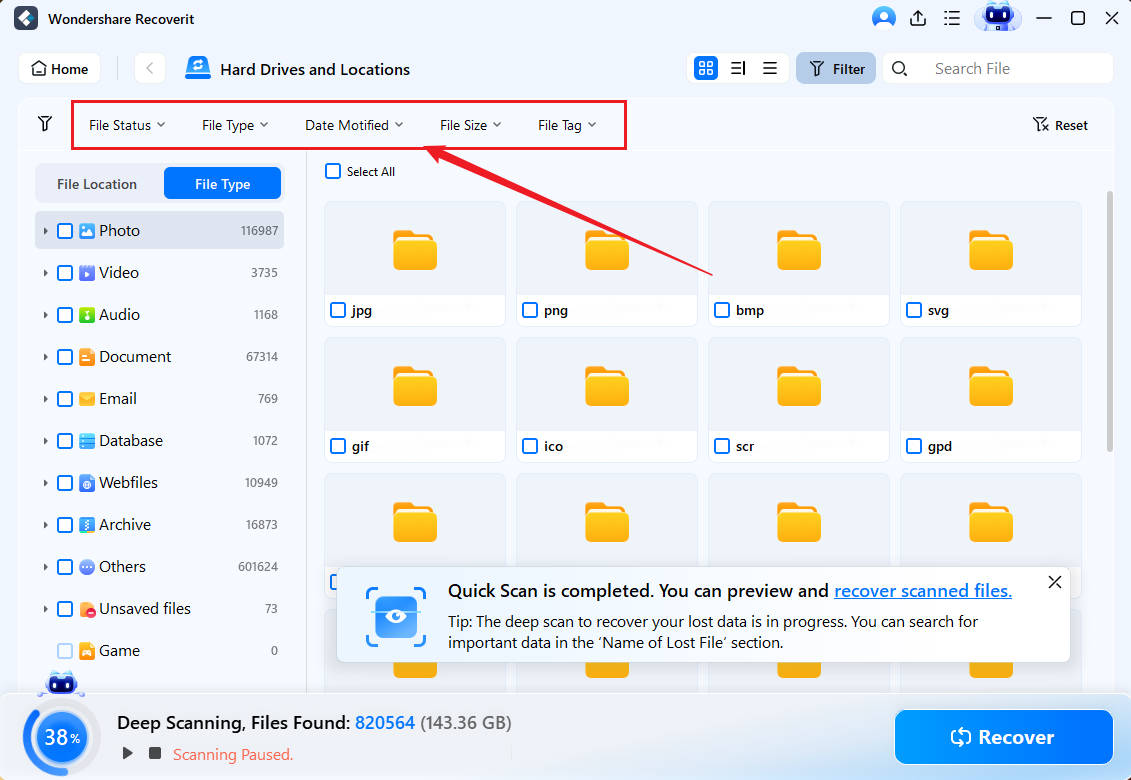
- Preview before recovery: preview photos, videos, and documents where available. Prioritize irreplaceable camera files and project files first.
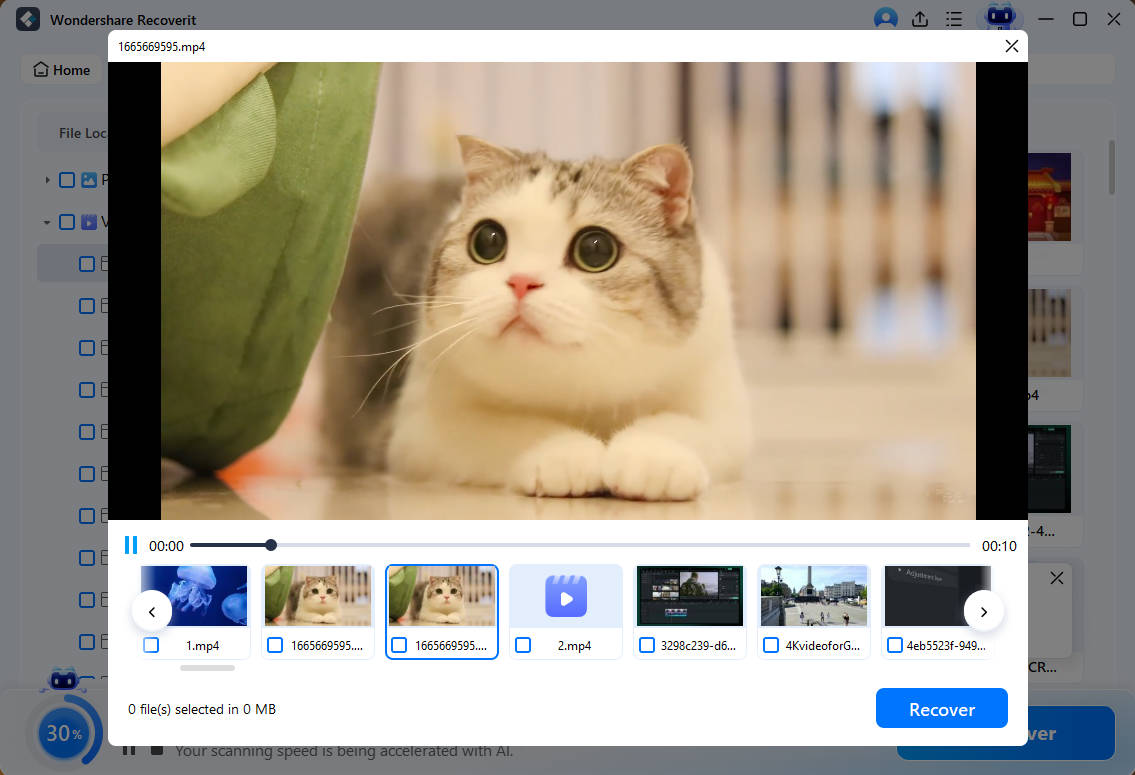
- Save to another location: click Recover and save files to your computer drive or another external drive. Do not save them back to the formatted SD card.
- Back up the recovered folder: after checking the files, copy the recovered data to a second location before formatting or reusing the card.
Recover Files From a Formatted SD Card With Recoverit
Security Verified. Over 7,302,189 people have downloaded it.
When Recoverit is a good first step
| Good fit | Why it fits |
| You formatted a camera SD card and need photos or videos back. | Recoverit can scan readable memory cards and filter by media types used by cameras and creator devices. |
| You need to recover mixed file types, not only photos. | The scan can look for documents, archives, audio, videos, RAW files, and standard image formats. |
| You want to preview files before saving them. | Preview helps you avoid recovering thousands of irrelevant files when the card had old shoots or repeated formats. |
| You are not comfortable with command-line tools. | A visual scan is easier than building Windows File Recovery commands or using PhotoRec's text interface. |
| The SD card is physically cracked, burned, water-damaged, or not detected anywhere. | Not a good fit. Stop scanning and consult a professional lab for high-value data. |
If you mainly need camera photos, also see Recoverit's photo recovery page. If the formatted card held large MOV, MP4, drone, action-camera, or 4K/8K footage, the video recovery page is a closer fit.
Part 5. Recover a Formatted SD Card on Windows Without Recoverit
Windows users have three realistic non-Recoverit paths: Microsoft's Windows File Recovery, an existing backup, or CHKDSK after recovery. The order matters. Use recovery or backup restore first; run repair commands later.
Use Windows File Recovery for formatted SD cards
Windows File Recovery is Microsoft's command-line recovery app for Windows 11 and Windows 10. Microsoft states that the source and destination drives must be different, and that non-NTFS file systems such as FAT and exFAT use Extensive mode. That is important because SD and microSD cards commonly use FAT32 or exFAT.
- Install Windows File Recovery: get it from Microsoft Store if it is not already installed.
- Connect the SD card: insert the formatted card and confirm its drive letter in File Explorer, such as
E:. - Prepare another destination drive: choose a different drive, such as
D:or an external drive. Do not recover to the SD card. - Run an Extensive mode command: open Windows File Recovery and use a command like
winfr E: D: /extensive /n *.jpg /n *.mov /n *.mp4 /n *.docx. ReplaceE:andD:with your actual source and destination drives. - Confirm the scan: type Y when prompted.
- Check the recovery folder: Windows File Recovery creates a folder such as
Recovery_YYYYMMDD_HHMMSSon the destination drive.
Use this method when: you are comfortable with commands, know the file types you need, and can provide a separate destination drive. If you need original folder browsing or preview before recovery, a visual recovery tool is usually easier.
Restore from File History or Windows Backup
File History and Windows Backup can help only if the SD card files were copied to a backed-up Windows folder before formatting. They do not scan the formatted SD card itself.
- Open backup settings: open Settings or Control Panel, then look for File History, Backup and Restore, or your configured backup app.

- Choose restore personal files: browse older versions from before the SD card was formatted.
- Select the lost files: look in folders where the card contents were imported, such as Pictures, Videos, Documents, or a project folder.
- Restore to a safe folder: restore files to your computer or another external drive.

If no backup contains the formatted SD card files, do not spend more time here. Scan the card directly with recovery software while the data has not been overwritten.
Run CHKDSK only after recovery
CHKDSK checks a volume's file system and metadata for errors. With repair parameters such as /f, it can modify the file system. That is why CHKDSK is not the best first move for a formatted SD card that contains important files.
- Recover important files first: save recovered files to another drive and confirm that they open.
- Open Command Prompt as administrator: search for Command Prompt, right-click it, and choose Run as administrator.

- Run CHKDSK: type
chkdsk X: /fand replaceX:with the SD card drive letter.
- Review the result: if Windows reports repaired errors, copy any newly visible files before reusing the card.
Important: if CHKDSK reports many bad sectors, repeated disconnections, or severe read errors, retire the card after recovery. Do not keep using unreliable media for camera work or backups.
Part 6. Recover a Formatted SD Card on Mac
Mac users can restore from Time Machine, scan with PhotoRec, check iCloud copies, or use a visual recovery tool. As on Windows, do not erase the SD card again before recovery.
Restore from Time Machine
Time Machine restores files that were backed up from your Mac. It can help if you imported SD card files to your Mac before formatting the card. It cannot restore files that only existed on the SD card and were never backed up.
- Connect the backup disk: make sure your Time Machine disk is attached or reachable on the network.
- Open the original folder: open the Mac folder where SD card files were copied, such as Pictures, Movies, or a client project folder.
- Enter Time Machine: open Time Machine from Spotlight or the menu bar.

- Choose a backup date: use the timeline to find a version before the accidental format.
- Restore the files: select the needed files or folder and click Restore.

Use PhotoRec for formatted SD card recovery
PhotoRec is a free, open-source file recovery utility from CGSecurity. It ignores the file system and searches for file signatures, so it can work even when a memory card is reformatted or the file system is severely damaged. The tradeoff is usability: PhotoRec often recovers files without original names and folder structure.
- Download PhotoRec: get TestDisk and PhotoRec from CGSecurity, then extract the package.
- Open Terminal: go to Applications > Utilities > Terminal.

- Launch PhotoRec: navigate to the extracted folder and run
sudo ./photorec. - Select the SD card: choose the formatted SD card from the device list and select Proceed.

- Select the partition: choose the partition that contained the lost files.
- Choose scan scope: select Whole for a formatted SD card so PhotoRec searches the entire selected space.

- Pick a destination: choose a folder on your Mac or another external drive. Do not choose the formatted SD card.

- Wait for recovery: PhotoRec shows recovered file counts during the scan.

Best for: technical users, reformatted cards, and cases where file names are less important than recovering the data itself. For photographers and video creators, plan time after recovery to sort files by extension, size, and creation clues.
Check iCloud copies
iCloud does not scan an SD card, but it can help if the missing files were uploaded, imported, synced, or deleted from iCloud Drive. Apple says deleted iCloud Drive files can be recovered on iCloud.com within 30 days, unless they were permanently removed.
- Open iCloud Drive: go to iCloud.com, sign in, and open iCloud Drive.
- Search imported folders: check folders where SD card files may have been uploaded from your Mac, iPhone, iPad, or camera workflow.
- Download copies: select files and use the download button.

- Check Recently Deleted: if files were deleted from iCloud too, open Recently Deleted before the 30-day window expires.
Part 7. Format the SD Card Safely After Recovery
Formatting belongs after recovery, not before it. Once your files are recovered and backed up, formatting can prepare the card for a camera, drone, phone, dash cam, or computer. It can also clear file system errors or compatibility problems. If the card produced read errors during recovery, replace it instead of trusting it again.
Format an SD card on Windows
- Insert the SD card: connect it through a stable card reader.
- Open File Explorer: right-click the SD card and choose Format.

- Choose a file system: select the file system required by your device. Many large SDXC cards use
exFAT.
- Select Quick Format for normal reuse: do not use overwrite options unless you intentionally want to erase data more thoroughly.

- Start formatting: click Start and wait until Windows finishes.

Format an SD card on Mac
- Connect the card: insert the SD or microSD card through a reader.
- Open Disk Utility: go to Applications > Utilities > Disk Utility.

- Show all devices: choose View > Show All Devices so you can select the physical card or the correct volume.
- Erase the card: click Erase, select the file system required by your camera or device, and confirm.

Use SD Memory Card Formatter
The SD Association SD Memory Card Formatter is designed for SD, SDHC, SDXC, and SDUC cards. The SD Association recommends it over general operating system format tools because OS formatters are not always optimized for SD card standards. Use it only after your files are recovered and backed up.
- Use Quick format for normal reuse after recovery.
- Use Overwrite format only when you intentionally want to erase data and do not need recovery later.
- Unlock BitLocker To Go first if the card is encrypted; the SD formatter page notes that encrypted SD cards must be unlocked before formatting.
- Format inside the target device when needed: cameras, drones, and dash cams often create their own folders and settings after formatting.
Part 8. Prevent SD Card Format Loss Next Time
Formatted SD card recovery is possible in many cases, but prevention is cheaper than rescue. Use these habits for camera, drone, action-camera, phone, and field recording workflows.
- Use a two-copy rule before formatting: keep one copy on your computer and one copy on an external drive, NAS, or cloud service.
- Verify imports before clearing the card: open several files, check file counts, and confirm large videos finished transferring.
- Do not format in a hurry during shoots: label used cards, keep empty cards separate, and avoid reusing a card until delivery files are backed up.
- Retire unreliable cards: repeated format prompts, slow writes, missing clips, or reader disconnects are warning signs.
- Use the right card for high-bitrate video: 4K, 8K, RAW, Log, and high-frame-rate footage can stress slow or counterfeit cards.
- Eject safely: remove the card only after the camera, computer, or reader finishes writing.
- Keep a recovery drive ready: if formatting happens by mistake, you need another destination drive immediately.
Part 9. Final Verdict
Formatted SD card recovery is most realistic when the card was quick formatted and has not been reused. Your safest order is: stop using the card, scan or restore from backup, save recovered files to another drive, verify the results, and only then format or repair the SD card.
Use Recoverit if you want a visual recovery workflow for photos, videos, RAW files, documents, and mixed file types from a readable SD or microSD card. Use Windows File Recovery or PhotoRec if you prefer free command-line tools and can accept their usability limits. Use Time Machine, File History, Windows Backup, or iCloud only when the files existed in those backups before formatting.
If the SD card was securely erased, overwritten, physically damaged, or undetected by every reader and device, software recovery may not be appropriate. Check backups or contact a professional recovery lab for high-value data.
FAQ
-
Can I recover files from a formatted SD card?
Yes, formatted SD card recovery is often possible after a quick format if the card has not been reused. Recovery is much less likely after overwrite format, secure erase, heavy new recording, or physical damage. -
How long do files stay recoverable after formatting an SD card?
There is no fixed time limit. Files remain recoverable only until new data overwrites their storage space. A card formatted months ago may still contain recoverable files if it was not reused, while a card reused for one long 4K or 8K recording may overwrite important data quickly. -
Can CHKDSK recover formatted SD card files?
No. CHKDSK checks and repairs file system errors. It is not designed to recover files removed by formatting, and repair parameters can change the card structure. Recover important files first, then run CHKDSK if the card still needs checking. -
Can Windows File Recovery recover an exFAT SD card?
Yes, Windows File Recovery supports non-NTFS file systems such as FAT and exFAT through Extensive mode. The source SD card and destination drive must be different, and results depend on overwriting and card condition. -
Is PhotoRec safe for formatted SD card recovery?
PhotoRec is a legitimate open-source recovery tool from CGSecurity and uses read-only access for the source media. However, it is less beginner-friendly and may recover files without original names or folder structure. -
Can I recover a formatted microSD card from a phone?
If the microSD card is removable, take it out and scan it with a computer card reader. If the data was stored in the phone internal storage, SD card recovery methods do not apply because phone internal storage uses different access and encryption models. -
Should I format the SD card again if files disappeared?
No. Do not format again before recovery. A second format can reduce the chance of recovery, especially if it overwrites data. Recover or back up the files first, then format the card only after the data is safe. -
Where should I save recovered SD card files?
Save recovered files to your computer, another external drive, or a different memory card. Never save recovered files back to the same formatted SD card because that can overwrite data that has not yet been recovered.


