

 TL;DR:
Successfully obtaining a true 8K (7680 × 4320) standalone YouTube video requires direct distribution from the creator, because third-party downloaders frequently capture lower-resolution streams and YouTube Premium strictly limits offline access to its own app interface.
● YouTube Premium does not export shareable MP4 files, and downloading your own original uploads via YouTube Studio is often constrained to 360p or 720p resolutions, making Google Takeout the required native alternative for full-quality account exports.
● Always inspect downloaded files using FFprobe to confirm the video stream explicitly reports a 7680 width and 4320 height, as many third-party tools apply deceptive 8K badges to upscaled 4K downloads or extractions lacking separated audio tracks.
● If a confirmed 8K file delivers choppy or black playback, diagnose your system's hardware decoder and AV1, VP9, or HEVC compatibility before assuming media corruption, reserving tools like Recoverit Video Recovery exclusively for retrieving deleted local files rather than attempting to fix unavailable YouTube streams.
Ask AI for a summary
 ChatGPT
 Perplexity
 Gemini
 Claude
 Grok
Want to download a YouTube video in 8K? Start by checking what the video and your account actually allow. YouTube can stream certain videos at 4320p, but that does not mean an 8K MP4 is available to save to your computer. YouTube Premium offline access, saving your own uploaded video, and obtaining a permitted file from a creator are separate options.
This guide compares those options, shows how to confirm an 8K stream and inspect a downloaded file, and explains when a broken or lost local video needs a different workflow. It does not promise that third-party tools can extract every 8K video or bypass a creator’s permissions.
In This Article
Part 1. What Does an 8K YouTube Download Actually Mean?
Before choosing a download button, distinguish streaming resolution, an offline entitlement, and an independent video file. They are different outcomes, even if all are described online as an 8K download.
8K Resolution Versus a Downloadable File
An 8K UHD frame is 7680 × 4320 pixels. A YouTube player may offer “4320p” for certain uploads on supported devices, but the source may not expose the same codec, container, or resolution through a permitted download path. Changing an exported file extension to .mp4 does not turn a smaller picture into 8K.
Some 8K videos use high-efficiency codecs and separate audio streams. If a file appears to contain no sound, identify whether the tool saved only a video stream rather than concluding that its audio data is corrupt. The practical question is not whether a thumbnail says 8K. Ask: does the video offer 4320p during playback, does the owner have permission to supply the original file, and does the downloaded item contain a true 7680 × 4320 stream? These checks prevent low-quality downloads disguised as premium 8K media.
Choose the Right Download Route
The safest route depends on who owns the content and whether a standalone file is needed. The following table separates YouTube-supported features from tool-specific promises that may change.
| Goal | Relevant route | Main limitation |
| Watch offline within YouTube | Eligible YouTube Premium download feature | App/browser-managed offline playback; not an independent MP4 |
| Save a video you uploaded | YouTube Studio export or Google Takeout | Studio download may be reduced in quality; Takeout availability and original format can vary |
| Obtain another creator’s video as a file | Creator-provided file or explicitly authorized download | Permission and original-file availability determine what you receive |
| Verify a saved file | Media metadata/FFprobe | Checks actual pixels; cannot increase resolution |
Avoid entering Google credentials into unknown converter sites or installing an unsigned 8K downloader APK. A service that advertises “unlimited 8K MP4” cannot guarantee that the source video is supplied in that form. This is particularly important when a tool offers several similarly named resolutions but no technical stream details. The highest selectable pixel count is not a promise of codec support, correct sound or successful playback on your computer. A downloader can sometimes save video and audio tracks separately because streaming platforms deliver them independently. A silent download should therefore be inspected for audio streams before being described as a corrupted video.
Part 2. How to Watch and Obtain YouTube 8K Video Legally
These workflows address the two real needs behind “YouTube 8K download”: finding an actual 8K stream and obtaining an authorized copy. Each route has its own success test and a clear stopping point.
Method 1. Confirm 8K Playback Before You Download
Use this check when a search result claims an 8K video but its advertised resolution may be inaccurate. It is non-destructive and applies before any download choice.
Step 1. Open the chosen YouTube video in a supported browser or app. Select the player gear icon and open Quality.
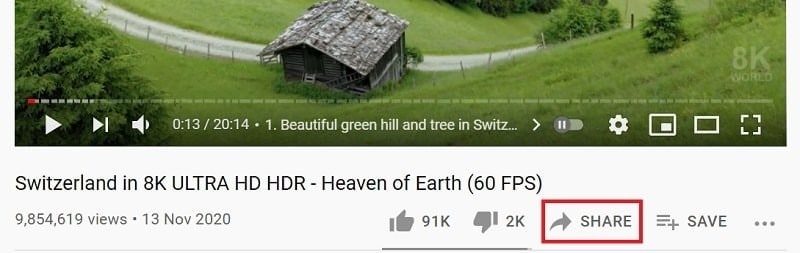
Step 2. Look for 4320p or 4320p60 in the available quality menu. Select it only if offered, and allow extra time for buffering. On some platforms the available maximum may be lower.
Step 3. Check playback stability and, when available, Stats for nerds. A player choosing 4320p is a streaming observation, not proof that an exporter provides a downloadable 8K file.
Success check: the current playback stream shows a 4320p quality selection. If it fails: test another genuine 8K upload, check browser/device codec support, and do not label a 2160p version as 8K. For related codec compatibility, see AV1 video codec requirements.
Method 2. Request an Authorized Copy from the Video Owner
When you need an editable 8K master from someone else's YouTube channel, the creator's own export or a licensed distribution link is more reliable than an unofficial scraping service. This method is appropriate only for content you have permission to obtain.
Step 1. Open the video and click Share, then copy the link for the video you want to license or request.
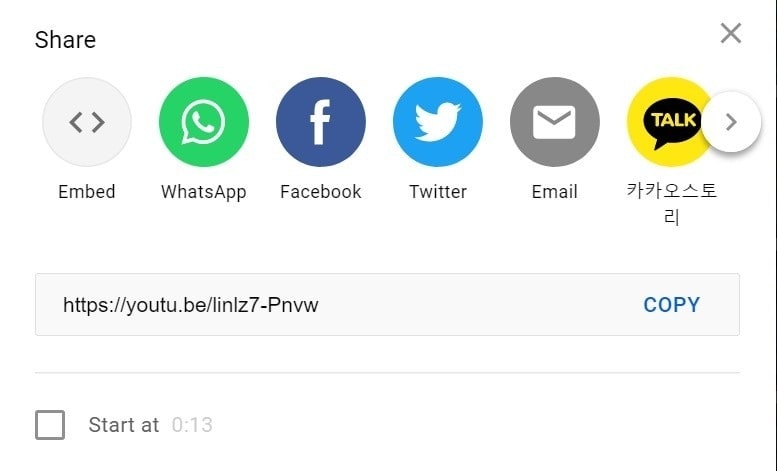
Step 2. Contact the uploader through an authorized channel and request the original export or a licensed download link. Specify the needed resolution (7680 × 4320), codec, frame rate, container, intended use, and whether you need audio.
Step 3. Download the file using the creator's authorized link and record the license terms. Do not assume that the YouTube watch URL is itself a download entitlement.
Success check: the rights holder supplies a file and permission for your intended use. If it fails: choose a different licensed stock/test source rather than trying a credential-harvesting converter.
For your own uploads: YouTube Studio's Content > More > Download can provide a copy, but official guidance says this may be limited to 720p or 360p. Google Takeout is another available account-export route; preserve your original master separately. The historical image above is specifically the Share interface, not a YouTube Studio screenshot.
Method 3. Evaluate a Third-Party 8K YouTube Downloader Carefully
Some desktop programs advertise 8K output. Their capabilities, paid tiers, and compatibility change as YouTube updates delivery formats. Use this route only when you have the creator’s permission and the tool’s terms permit the activity.
Step 1. Check the software developer’s official download page, operating-system support, recent updates, security reputation and current feature list. Avoid mirrors, cracked software and bundled browser extensions.
Step 2. For content you own or are authorized to download, compare the resolutions actually offered after the tool analyzes the link. Do not select “8K” based only on a marketing badge.
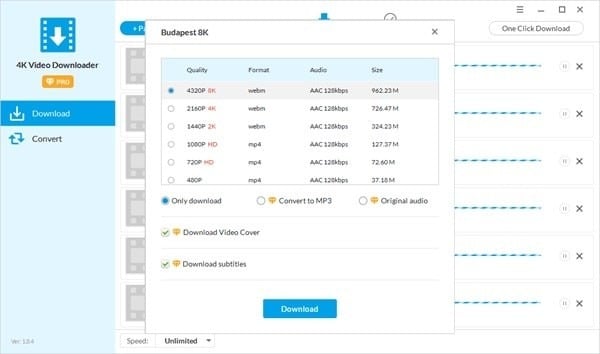
Step 3. Choose an available format and verify whether it exports a real separate video file with audio. If an 8K option is missing, stop; never claim that choosing 4K or converting the file name creates genuine 8K.
Success check: a playable independent file exists and its measured dimensions match the expected download. If it fails: ask the rights holder for a direct file. The pictured downloader UI is a historical Wondershare article screenshot, not a verified current feature or an endorsement.
Method 4. Verify Whether the Saved MP4 Is Really 8K
Use this verification whenever you save a file from YouTube, export your own uploads or receive a file from a creator. It is the strongest check against misleading “8K MP4” claims.
Step 1. Install a trusted FFmpeg distribution for your platform. Open Terminal or Command Prompt in the folder containing the video. Keep the original unchanged.
Step 2. Run ffprobe -v error -select_streams v:0 -show_entries stream=codec_name,width,height,r_frame_rate -of default=noprint_wrappers=1 "video.mp4" on your own file.
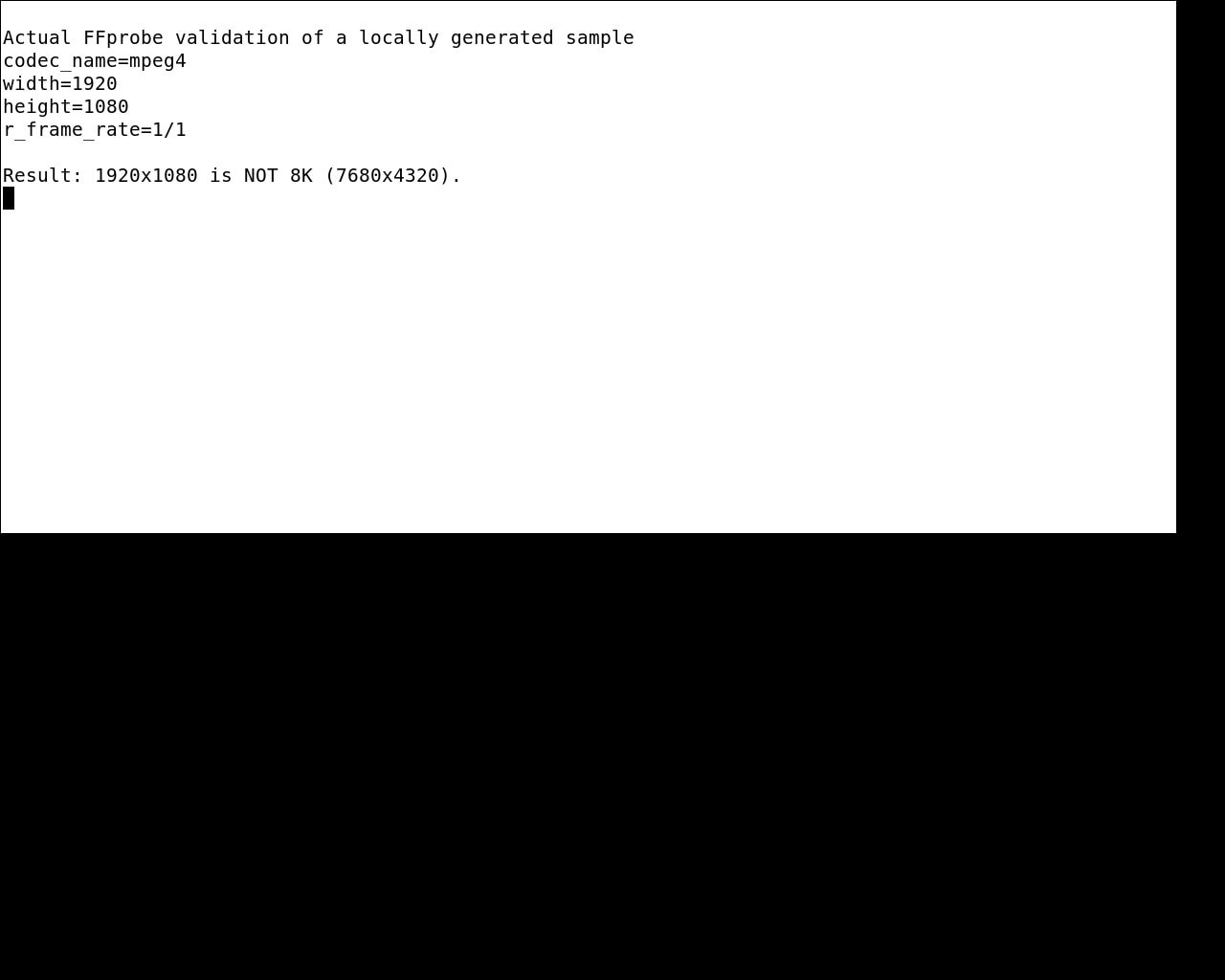
Step 3. Read width, height, the codec name and frame rate. For 8K UHD expect 7680 and 4320; an example that says 1920 and 1080 is Full HD, not 8K. Test playback separately.
Success check: the video stream reports the required dimensions and the file opens correctly. If it fails: obtain a genuine higher-resolution source. The included terminal screenshot documents a locally generated 1080p test, deliberately not mislabeled as a YouTube 8K sample.
Part 3. YouTube Premium, 8K MP4, and Device Limitations
Even when a video plays in 8K, the delivery method may not provide a reusable file. Knowing these limits before downloading saves time and avoids unsafe workarounds.
Is YouTube Premium the Same as an 8K MP4 Download?
No. Premium’s eligible offline feature is designed to allow offline watching inside the YouTube app or supported browser experience. It is not an export of a standard MP4 that you can freely move to another editor or device. Quality choices and availability depend on the video, region and supported environment.
If you require an editable archival file, return to the original owner or your own source footage. For long-term storage, keep a record of the clip title, licensing contact, permitted usage, codec, frame rate, audio track and the directory holding the actual master. Offline playback permission does not automatically grant permission to distribute or remix footage. Keep any Premium offline download within the supported YouTube interface and its policies.
Why an “8K” Video May Download at 4K or Lower
The original upload, YouTube processing, device hardware, codec availability and downloader support are separate constraints. A downloader may extract only a subset of the adaptive streams that YouTube serves. The result can lack audio, use WebM instead of MP4, or have a lower maximum than playback.
AV1, VP9 and HEVC have different compatibility profiles. A container such as MP4 does not establish picture size. For a related local playback issue, the VLC 4K playback troubleshooting guide explains how to distinguish performance lag from damaged media.
PC, Mac, Android, and 8K120 Expectations
On PCs and Macs, a real 8K file may require fast storage, substantial memory bandwidth and a compatible video decoder. Some devices can store an 8K file without being able to decode it smoothly. Android download-app claims are also device- and software-dependent; do not assume every app store listing or APK supports native 4320p.
If playback is smooth at 4K but fails at 8K, test a short sample that your machine is permitted to download before obtaining a multi-gigabyte master. Storage, bandwidth and hardware decoding often limit the experience more than the filename or player branding. Similarly, “8K 120fps” is an especially demanding claim. Confirm both 7680 × 4320 and approximately 120 fps in file metadata. A “120fps” filename, artificially generated intermediate frames or 4K upscaling does not establish genuine 8K120 source capture.
Part 4. What If the Downloaded 8K File Is Missing or Cannot Play?
The next action depends on whether you still have the file. Recovery software does not change YouTube permissions and cannot resolve an unavailable 8K stream.
The File Exists but Playback Is Choppy or Black
First try another known-good local video. Confirm the saved 8K file’s codec, dimensions and size; then test it with an updated player and the appropriate hardware decoder. A sluggish CPU or unsupported codec can look like corruption even when the file is intact.
If the same local file fails in multiple supported players and media inspection reports structural errors, review the FFmpeg damaged video troubleshooting steps before considering a repair tool. Work on a copy and never discard your only original.
The Local Video Was Deleted or the Storage Device Is Inaccessible
This is a different problem from downloading from YouTube. If a permitted local video has been lost from a hard drive, SD card or removable device, stop writing to that drive and evaluate Recoverit Video Recovery for scanning the affected storage.
Use the software only for files you own or may lawfully access. Select the correct source, review the detected files, preview when supported, and restore to a different storage location. Recovery success depends on the file system, storage device and whether lost sectors have been overwritten; no tool can guarantee restoration of a deleted original or a YouTube server file.
Keep a Reliable 8K Backup After Export
Store the original camera/master footage and the authorized downloadable copy separately. Retain at least one additional backup on another drive, note the video codec and original dimensions, and keep an intact copy before editing, transcoding or experimenting with recovery utilities.
If a creator only supplied a lower-resolution file, ask for the native master rather than upscaling and relabeling it. For a broader list of format trade-offs, see best video formats for sharing and editing.
Part 5. Final Checks Before You Choose an 8K Downloader
A successful result is an authorized, playable file with the expected codec and dimensions. Treat a downloader advertisement as a claim to verify rather than proof of quality.
Where to Find an Authentic 8K Sample
For testing display and codec handling, consider a provider that explicitly licenses downloadable demonstration clips or standards test assets. Read the distribution and reuse terms before copying footage. This avoids relying on third-party rips of movies, music videos or anime while still letting you check whether your system can handle UHD.
Some independently licensed samples are created specifically for codec conformance testing and may be too demanding for everyday devices. Test whether your player correctly handles the codec and frame rate, not merely whether the file can be copied. A sample that lists 7680 × 4320 at 50 or 60 fps is not an 8K120 test. The difference matters when evaluating displays, video players and compression performance.
Conclusion
For an 8K YouTube download, first identify whether you need offline viewing, a copy of your own upload, or an independent video file obtained with permission. Confirm 4320p at the source and then inspect any downloaded copy; the word “8K” on a downloader button is not a substitute for a real width-and-height check.
Keep source files and backups separate. If a permitted local video is missing, handle that as data loss rather than trying repeated online downloads. If the file exists but does not play, diagnose its codec and structure before treating it as damaged.
FAQ
-
Can I download an 8K YouTube video as MP4 for free?
Only if an authorized source makes such a file available. YouTube Premium offline downloads are not interchangeable standalone MP4 files, and third-party services cannot guarantee 8K availability. -
Does YouTube Premium download in 8K?
Do not assume so. Offline quality availability varies; Premium provides access within YouTube, not an unrestricted 8K MP4 export. -
Can I download my own uploaded 8K video?
YouTube Studio can provide a copy of your own uploads but may deliver a reduced resolution. For originals, also inspect Google Takeout or your original master files. -
Why does a YouTube-to-MP4 downloader show only 4K?
The downloader may not support the stream codec, the source may lack a 4320p rendition, or platform delivery has changed. An MP4 extension does not confirm resolution. -
How do I know whether a downloaded file is really 8K?
Inspect the video stream with FFprobe or an equivalent media inspector. Standard 8K UHD is 7680 by 4320 pixels; check the frame rate separately. -
Can Recoverit download an 8K YouTube video?
No. Recoverit is data recovery software for lost files on supported storage devices, not a YouTube downloader or an 8K extraction service.


