

 TL;DR:
A pen drive is regionally synonymous with a USB flash drive, providing affordable NAND-based storage for everyday file transfers, whereas an external SSD is required for performance-heavy tasks like directly editing video.
● Dual pen drives include a secondary USB-C or micro-USB connector specifically for smartphone and tablet backups, and are best formatted in exFAT to support files larger than 4 GB across Windows and macOS.
● Never defragment a pen drive, as the process offers no performance benefits for flash memory and actively degrades the device by adding unnecessary write wear to the cells.
● If utilizing Wondershare Recoverit to scan the raw flash for formatted or corrupted data, you must save the restored items to an internal computer drive rather than the original pen drive to avoid overwriting the lost files.
Ask AI for a summary
 ChatGPT
 Perplexity
 Gemini
 Claude
 Grok
Grok
Known as a pen drive in much of the world and a USB flash drive elsewhere, this pen-sized device is probably the most-handled storage you own - ferrying documents to the office, photos to a friend's laptop, and installers to a fresh PC. It works instantly, everywhere, with no cables or setup, which is exactly why it also lives a risky life of drops, unsafe ejections, and accidental formats. This article explains how a pen drive stores your data, which types and speeds to choose, and the simple habits that prevent most corruption. And because files sometimes disappear anyway, you will find a complete step-by-step recovery guide using Wondershare Recoverit at the end.
Try Recoverit to Perform Data Recovery
 Security Verified. 3,591,664 people have downloaded it.
In this article
What Is a Pen Drive
A pen drive is a small portable storage device that stores data in NAND flash memory and connects to computers through a USB port. The name comes from its pen-sized shape - and in most of the world, "pen drive" is simply another name for a USB flash drive, popular especially across Asia, Europe, and Latin America.
A pen drive plugs in, appears as a removable disk, and carries documents, photos, music, and installers between devices. Modern capacities range from 16 GB to 1 TB, with the 64-256 GB range covering most everyday needs at friendly prices.
Because pen drives travel constantly - pockets, bags, shared offices - they suffer frequent data loss: accidental deletion, formatting on the wrong computer, file-system corruption from unsafe removal, and simple physical damage. Wondershare Recoverit supports pen drive recovery, scanning the raw flash and restoring deleted or corrupted files in the vast majority of logical cases.
How Does a Pen Drive Work
Every pen drive contains the same three building blocks: NAND flash memory for storage, a controller chip that manages it, and a USB connector for power and data. The controller runs wear leveling to spread writes evenly across cells, error-correcting code to fix aging-bit errors, and the translation layer that presents the flash as a normal disk to the operating system.
When you save a file, the host computer writes it over the USB bus; the controller programs it into flash pages and records the location in the file system - usually FAT32, exFAT, or NTFS. When you delete a file, only the index entry disappears; the flash pages keep their content until overwritten. That gap between "deleted" and "erased" is exactly what recovery software exploits.
Performance depends on the USB generation and the quality of the flash inside. A USB 2.0 pen drive tops out around 30-35 MB/s, USB 3.x models reach 100-400 MB/s, and premium USB 3.2 drives with fast NAND exceed 500 MB/s read speeds. Write speed is almost always slower than read speed, especially on budget models.
What are the Types of Pen Drives
Standard, Dual, and High-Speed Pen Drives
The everyday standard pen drive has a single Type-A connector and offers the best price per gigabyte. Dual pen drives add a second connector - USB-C or micro-USB - so they plug directly into smartphones and tablets for backing up photos on the go. High-speed models use USB 3.2 and quality flash for professional file transfer, and rugged or waterproof variants survive field conditions.
| Type | Key Feature | Best For |
|---|---|---|
| Standard | Low price, single USB-A | Everyday file transfers |
| Dual connector | USB-A + USB-C/micro-USB | Phone and tablet backups |
| High-speed | USB 3.2, fast NAND | Large files, frequent transfers |
| Rugged/waterproof | Reinforced casing | Outdoor and industrial use |
Pen Drive vs. USB Flash Drive vs. External SSD
The terms pen drive and USB flash drive describe the same product; usage is regional. An external SSD, by contrast, is a full SSD behind a USB bridge - faster sustained writes, better controllers, and DRAM caching, at several times the price. For carrying documents and photos, a pen drive is plenty; for regularly editing video off the drive, choose an external SSD.
Practical Tips for Pen Drives
- Eject before pulling it out. Unsafe removal mid-write is the leading cause of pen drive corruption.
- Treat it as a copy, not the master. Keep originals on your computer or in cloud storage.
- Scan for malware after shared use. Pen drives pick up viruses on public and office computers easily.
- Carry a spare. They are small, cheap, and famously lost - redundancy costs little.
- Do not defragment a pen drive. Flash needs no defragmentation; it only adds wear.
- Recover before reformatting. If the drive asks to be formatted, scan it with recovery software first.
How to Use Recoverit to Recover Lost Data
Files gone from your pen drive after an accidental format or an unsafe unplugging? Wondershare Recoverit can scan the drive's raw flash and rebuild what the file system lost. Download it from the Recoverit official website, install it on your computer, and follow the three steps below.
Key Features Offered by Recoverit
- Pen drive recovery for all brands: works with any USB flash device, FAT32/exFAT/NTFS alike.
- Formatted and corrupted drive support: deep-scans drives that appear empty, RAW, or unreadable.
- Preview before recovery: check each document, photo, and video before restoring it.

Step-by-Step Guide on How To Recover Lost Data
1. Choose a Location to Recover Data
Insert the pen drive, open Recoverit, and select it from the External Devices list. Verify it is the correct removable disk, then click Start to launch the scan.

2. Deep Scan the Location
After a quick scan, Recoverit deep-scans the raw flash for recognizable file signatures. This recovers files from formatted, corrupted, and partially overwritten drives. Results stream in as it works, and you can filter and preview at any moment.
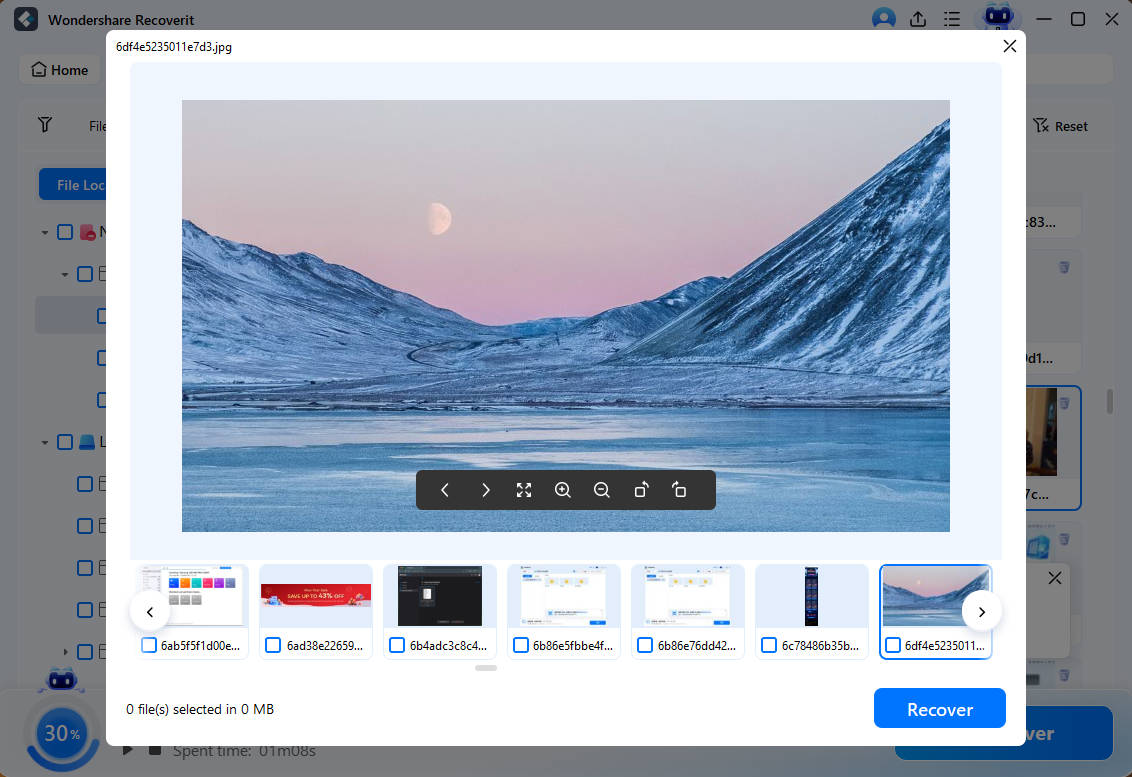
3. Preview and Recover Your Desired Data
Preview the recovered items, select what you need, and click Recover. Save the files to your computer's internal drive - not back onto the pen drive - and they are ready to use again.
Conclusion
A pen drive is the friendliest storage device ever made: tiny, cheap, and universally compatible. The name varies by region, but the job is the same - moving your files safely between devices.
Its small size also makes it the most frequently lost storage medium, so keep duplicates and eject safely. Should files vanish anyway, Wondershare Recoverit scans the drive's flash directly and recovers deleted, formatted, or corrupted data - usually in minutes, with no technical skill required.
Next: Data Loss
FAQ
-
Is a pen drive the same as a USB flash drive?
Yes - the two names describe the same device. "Pen drive" is the common term in many regions, while "USB flash drive" or "thumb drive" is used elsewhere. -
Can data be recovered from a physically broken pen drive?
If the connector is broken but the chip is intact, moving the flash chip to a new board - a lab job - usually recovers the data. If the computer still detects the drive, software recovery alone often works. -
What file system should a pen drive use?
exFAT is the best default: it supports files over 4 GB and works on Windows, macOS, and most TVs and consoles. FAT32 remains useful for older devices but caps files at 4 GB. -
Why is my pen drive write-protected?
Causes include a physical lock switch on some models, a corrupted file system, or controller failure triggering read-only mode. Check the switch, run error checking, and recover data before attempting a low-level format.


