
 TL;DR:
To delete stubborn files stuck on a USB drive, you must remove read-only restrictions or fix directory corruption using built-in Windows tools like Diskpart, Command Prompt, or the Registry Editor.
● Clear software-level read-only restrictions by executing the attributes disk clear readonly command in Diskpart, or disable write protection by changing the WriteProtect value to 0 in the Windows Registry.
● Command-line deletions and Safe Mode cannot bypass hardware-level blocks, which occur if a physical write-protect switch is locked or if the USB controller permanently defaults to read-only mode due to severe hardware wear.
● Running CHKDSK repairs logical errors holding files hostage, while formatting completely rebuilds the directory structure to force deletion, though the latter requires a recovery tool like Wondershare Recoverit to retrieve erased data.
Ask AI for a summary
 ChatGPT
 Perplexity
 Gemini
 Claude
 Grok
Grok
Many people face issues when they cannot delete files from USB drive easily. This problem often causes frustration because stubborn files continue to occupy space. Sometimes, these files are protected or locked, making removal difficult. Many wonder if their data is permanently stuck. Therefore, understanding why this happens helps to fix the issue properly. So, this article explains simple, practical methods for deleting stubborn USB files.
Try Recoverit to Perform USB File Recovery
 Security Verified. 3,591,664 people have downloaded it.
In this article
- Restart And Try Other Ports/PC
- Check For Physical Write‑Protect Switch
- Scan For Viruses and Malware
- Remove Read‑Only Attribute In File Properties
- Check USB Drive Security Permissions
- Disable Write Protection Via Registry (Windows)
- Clear Read‑Only Attributes With Diskpart
- Delete Stubborn Files With Command Prompt
- Boot Into Safe Mode To Delete
- Run Check Disk (CHKDSK) On The USB
- Try Formatting The USB Drive
- Consider Hardware Failure Or Read‑Only Mode

Part 1. What Causes "Can't Delete Files from Flash Drive"
Multiple things can stop a USB from letting you remove items normally. This section explains why you sometimes cannot delete file from a flash drive:
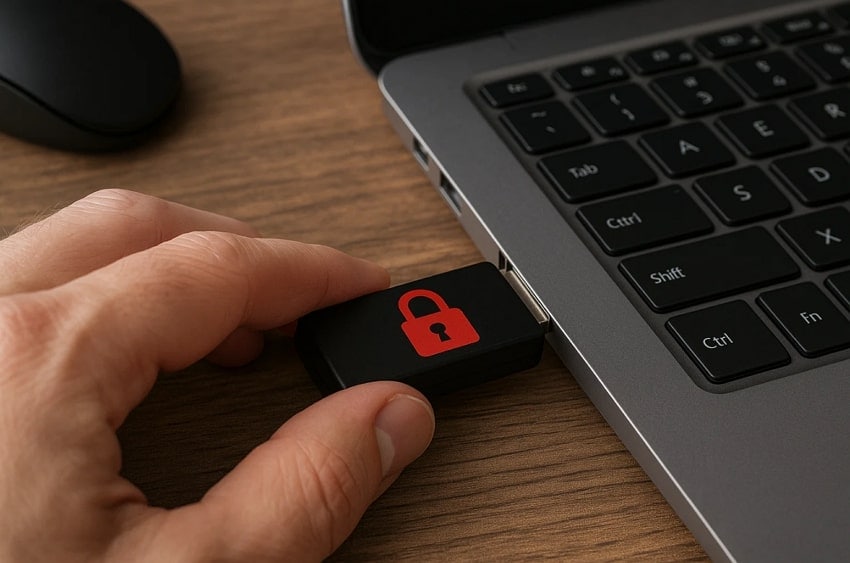
- Write Protection: A small lock switch on the USB drive body can block all attempts to remove files. When the switch is enabled, the drive becomes read-only and refuses delete actions.
- File Flags: Some files carry a read-only mark that blocks simple deletion requests. This mark stops the system from processing changes, causing deletion attempts to fail.
- Wrong Permission: Your user may not have the rights to remove files safely. Without proper rights, the system denies deletion and stops further write actions.
- File Lock: The Open program can hold files in use, preventing deletion tasks. Applications holding control over files prevent normal deletion, blocking system operations.
- Malware Block: Malicious software can interfere with delete commands on many USB devices. Infections may disrupt normal file operations, causing USB devices to behave unpredictably.
Part 2. A Simple Fix to Delete Stubborn USB Files Without Losing Your Data
Sometimes, simple steps can quickly solve the problem without risking your essential files. The following methods help you remove stuck items when file deletion failed earlier:
1. Restart And Try Other Ports/PC
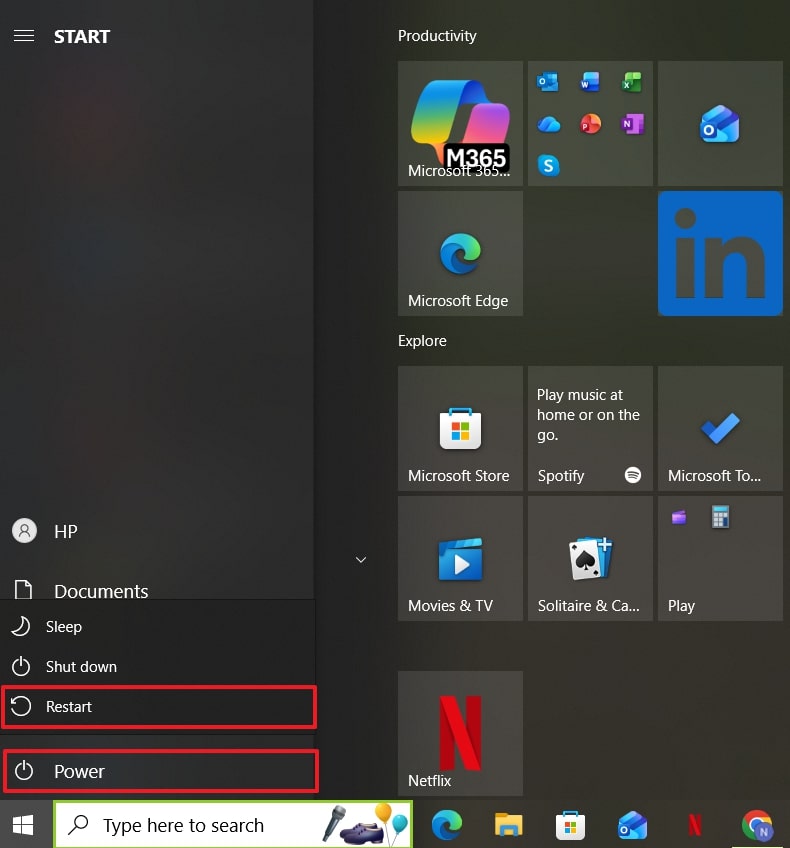
You should first restart the computer to reset temporary errors that cause file lock problems and driver glitches. A reboot clears minor glitches that sometimes trigger the "cannot delete files from USB drive" issue. Furthermore, trying a different USB port can bypass flawed connections that disrupt data commands. Thus, follow the instructions below to restart your PC to solve the issue:
Instructions. Head to the "Windows" icon and hit the "Power" button, then choose "Restart."
2. Check For Physical Write‑Protect Switch
Some USB drivers have a physical write-protect switch that controls file deletion access. When this switch is set to lock, the drive becomes read-only, meaning you "cannot delete file in pendrive." This tiny slider forces the USB into a safe read-only state that protects data. Thus, unlocking the switch restores full access, allowing regular file removal.
3. Scan For Viruses and Malware
Scanning your USB for malware helps reveal hidden, stubborn threats that often cause cannot delete file issues. Moreover, malicious programs sometimes lock items or force the drive into read-only mode. At this point, a clean scan removes these blockers and restores normal file behaviour. Additionally, eliminating infections prevents damaged shortcuts from reappearing repeatedly. Follow the steps below to scan for a virus in the PC:
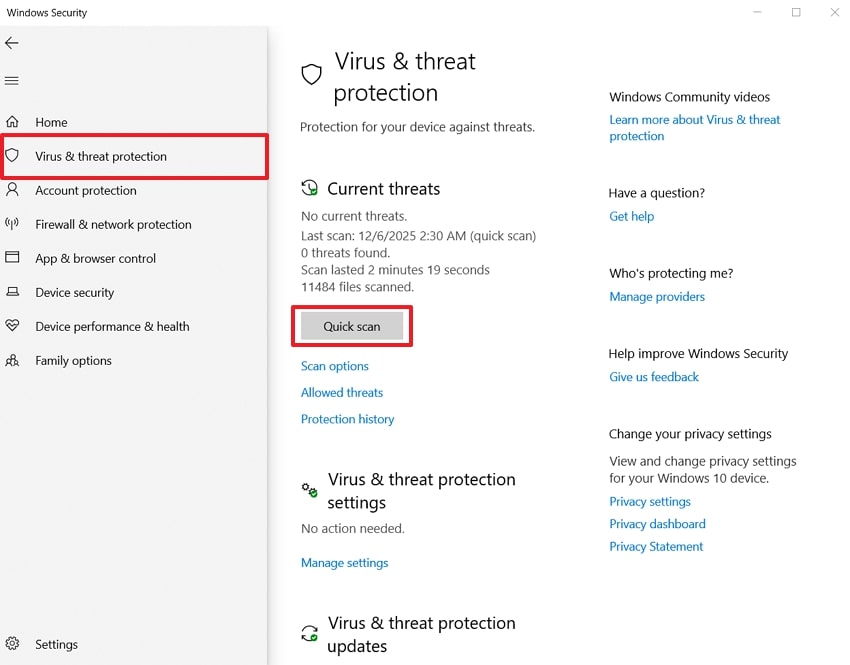
- Type "Window Security" on the "Start" menu and then click "Open" to access it.
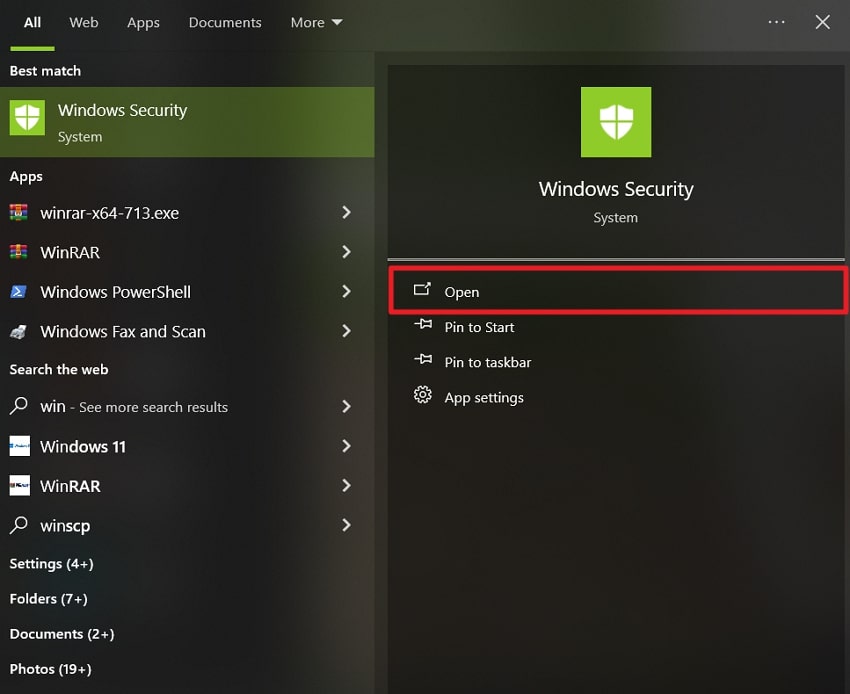
- Upon accessing it, open the "Virus & Threat Protection" section and click "Quick Scan" to begin. Once the scan finishes, restart your PC to finish the cleanup and refresh system processes.
4. Remove Read‑Only Attribute In File Properties
Sometimes, files on a USB just won’t delete because they are read‑only. Removing the read-only attribute from file properties allows Windows to modify files again, resolving many "file deletion failed" errors. Once writable, you can delete or rename the files. However, this won’t work if the USB is hardware-locked, so go through the given guide to remove the read‑only attribute:
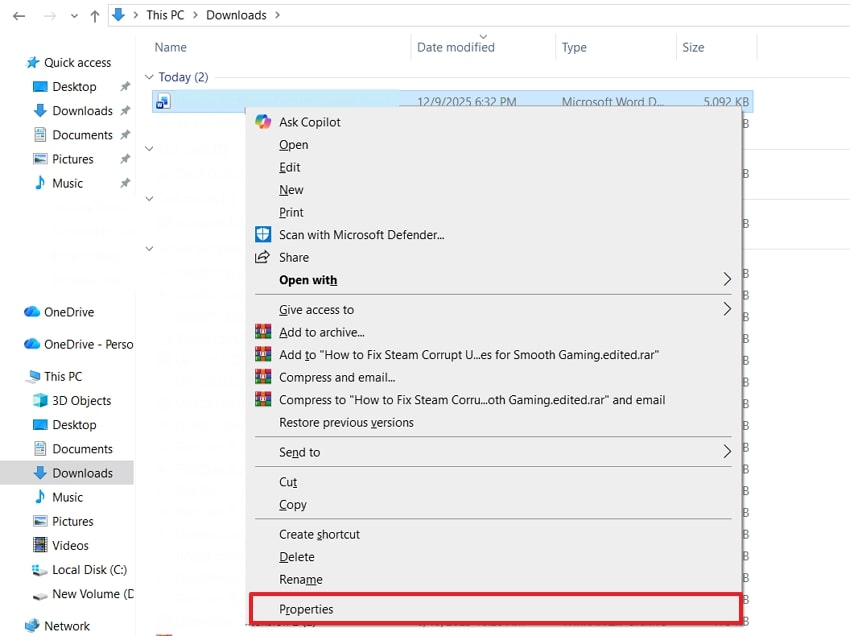
- Firstly, right-click the file or folder that you want to modify and click "Properties."
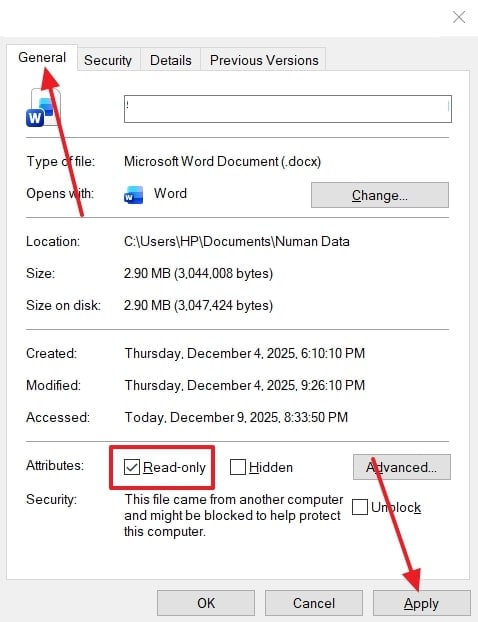
- After accessing it, go to the "General" tab and look for the "Attributes" section. Uncheck the "Read-only" box to allow changes and click the "Apply" button.
5. Check USB Drive Security Permissions
Many times, you cannot delete files from USB drive due to restricted security permissions. Windows uses access control lists (ACLs) to regulate read and delete permissions for a file. This means that it is possible to grant complete control so that deletions of other files do not occur. Still, if the drive is in hardware read-only mode, permission changes may not take effect. Adhere to the guide to check USB Drive Security Permissions:
- Head to the drive causing the issue and right-click it to select "Properties."
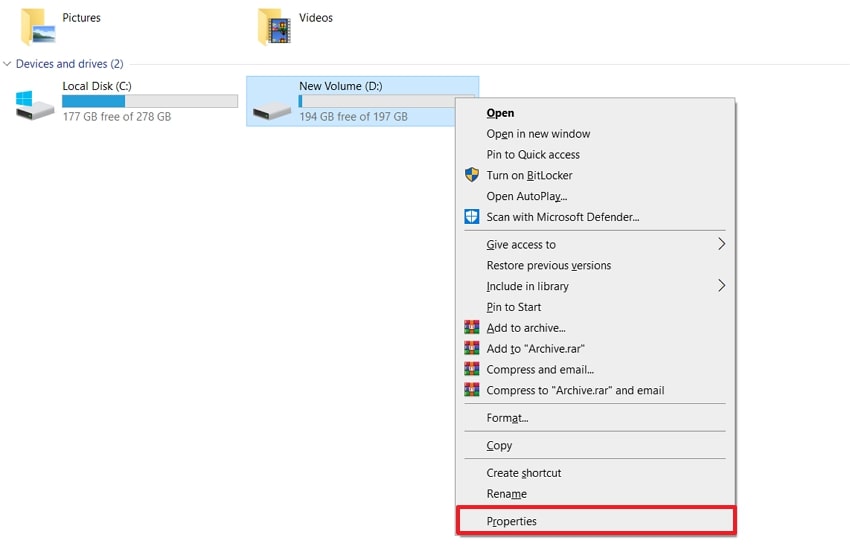
- Upon accessing it, go to the "Security" tab and choose "Advanced" to see detailed permission settings.
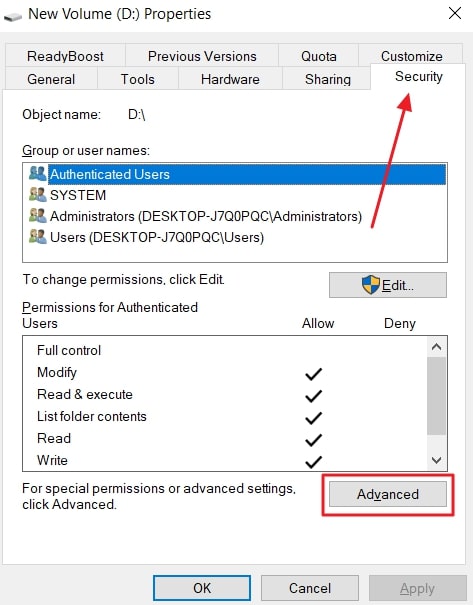
- Finally, you can see all permissions in the "Permission" area and the "Owner" name, too.

6. Disable Write Protection Via Registry (Windows)
Disabling write protection through the Windows registry helps remove stubborn files on USB drives by restoring normal delete and edit access when the write-protect is set to 0. This method is safe for data, but it cannot bypass hardware switches or firmware-level locks. The main risk comes from incorrect registry edits that may affect system stability or weaken security. Follow the steps below to turn off write protection properly:
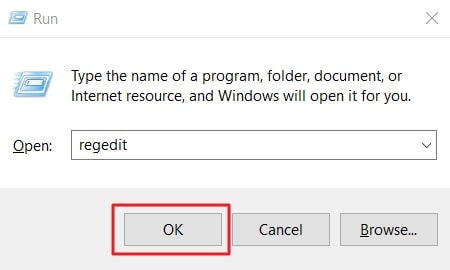
- To initiate, press "Windows + R" to open the Run dialogue box. Afterward, type "regedit" and hit the "OK" button.
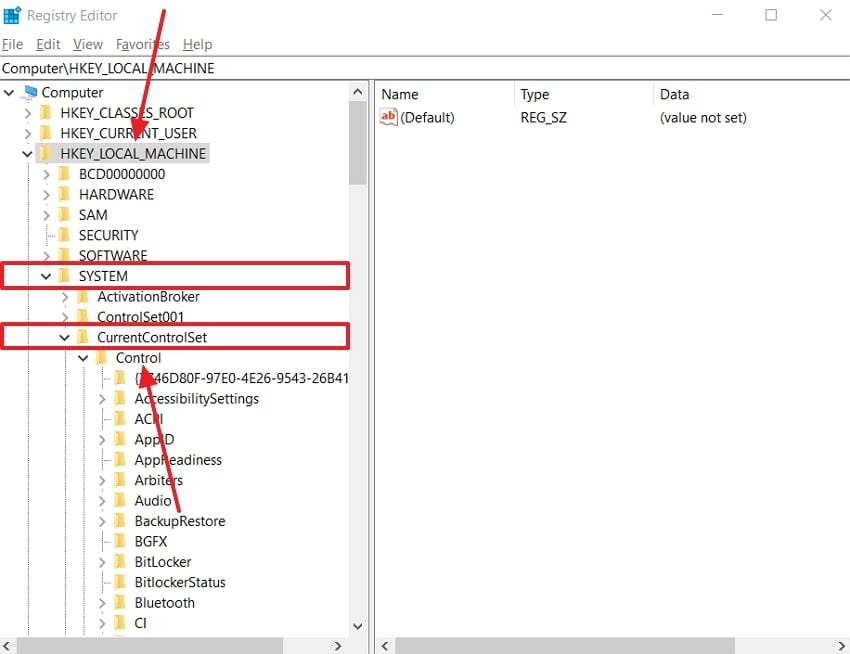
- Afterward, navigate to "HKEY_LOCAL_MACHINE," then choose "System." Next, in the "System" section, go to "CurrentControlSet" then select "Control."
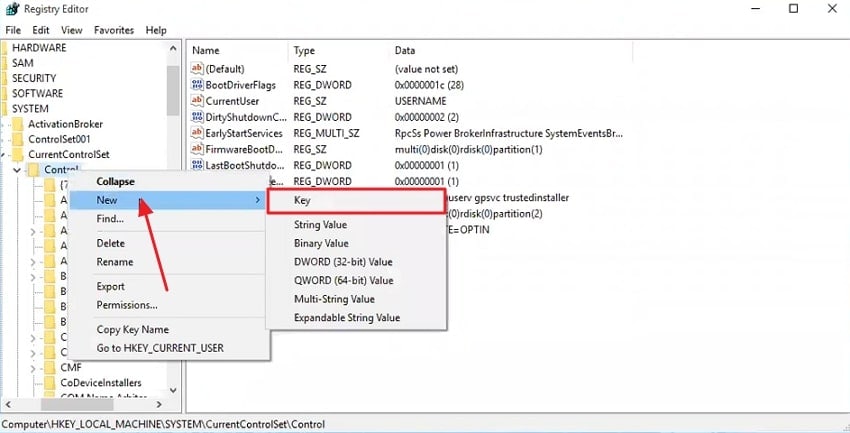
- Later, right-click on the "Control" and press the "Key" to add "StorageDevicePolicies".
- After adding it, right-click on the "StorageDevicePolicies" and choose "New" section. Next, either select "DWORD(32-bit)" or "QWORD(64-bit)" according to your device specification.
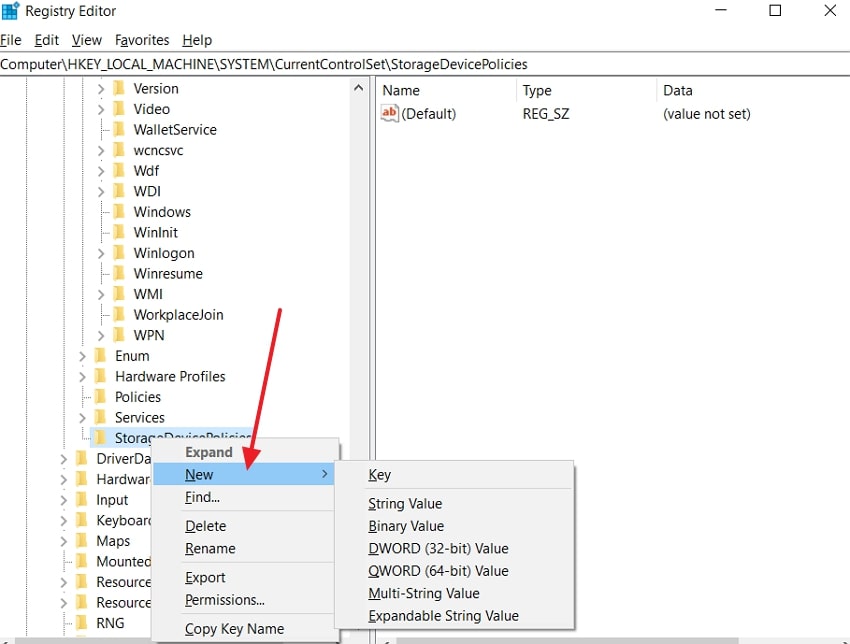
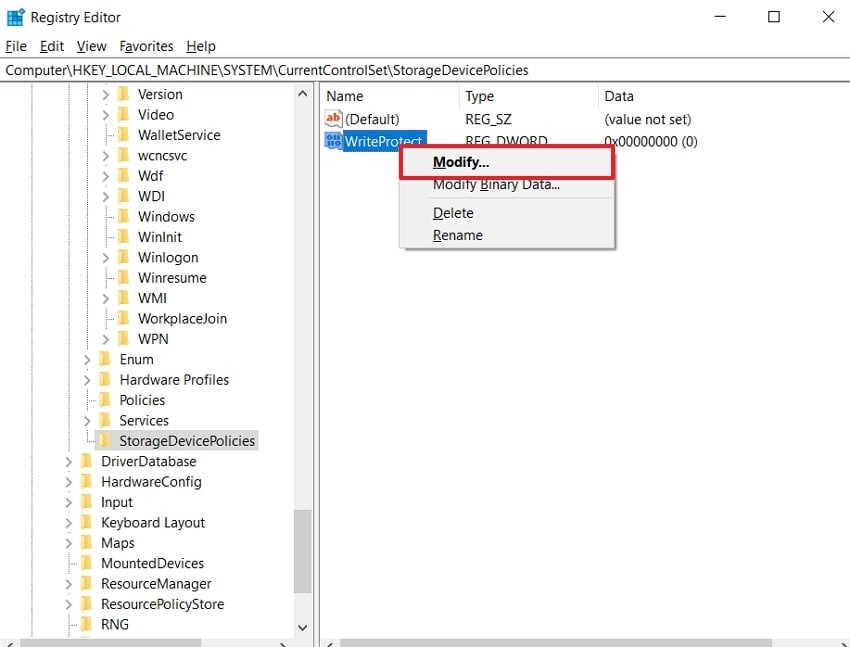
- On the right side, double-click "WriteProtect" and choose "Modify".
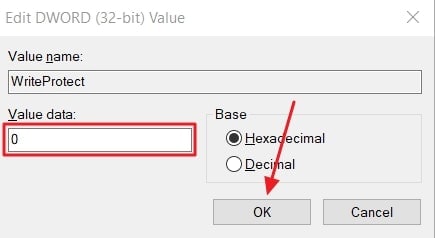
- Finally, set the value of data from 1 to 0, then click the "OK" button.
7. Clear Read‑Only Attributes With Diskpart
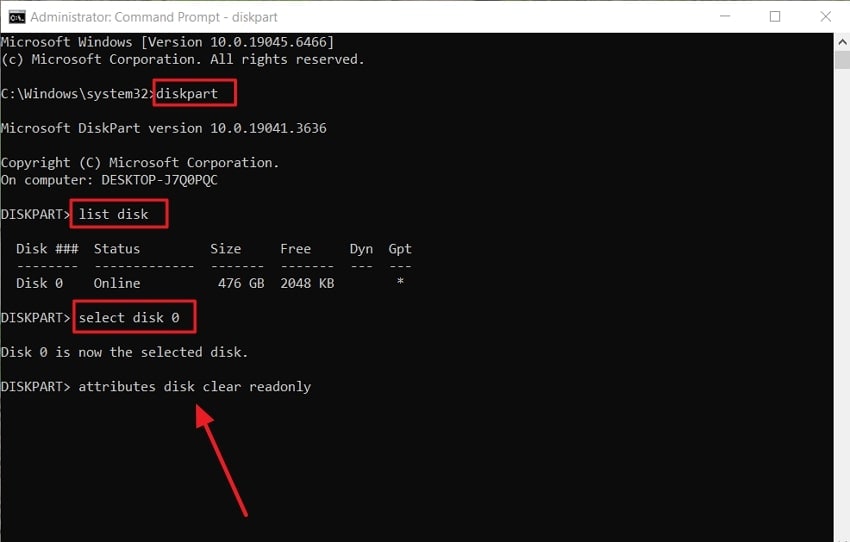
Sometimes, read-only attributes with Diskpart unlock software-level protection, causing file deletion failures. Many users "cannot delete file" due to a read-only flag blocking write and delete actions on the USB drive. Diskpart removes this flag, restoring regular file access without erasing data. However, if the USB drive has hardware issues or a controller-level lock, Diskpart may not entirely remove the read-only status. Review the instructions to clear read‑only attributes:
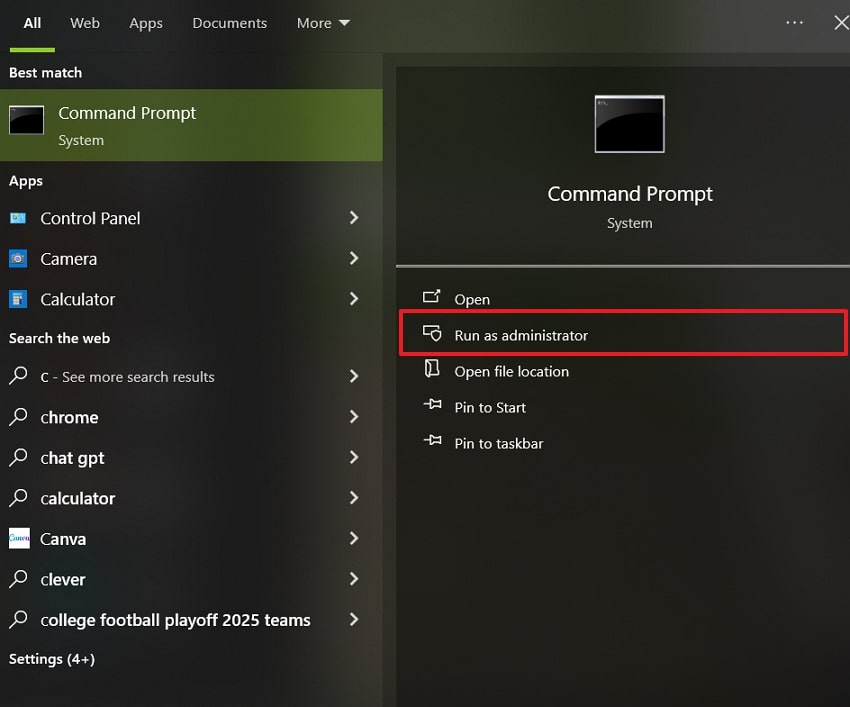
- To initiate, press "Windows + S" to search for Command Prompt and select "Run as administrator."
- Next, type "diskpart" and press "Enter." Afterward, type "list disk" and press "Enter "to see all connected drives. Identify your USB drive and type "select disk X" (replace X with your USB number), then press "Enter." Afterward, type "attributes disk clear readonly" and press "Enter" to remove read-only protection. Finally, type "exit" and press "Enter" to close Diskpart.
8. Delete Stubborn Files With Command Prompt
Using CMD lets you delete stubborn files when you "cannot delete from a USB drive." By clearing hidden, system, or read-only attributes, CMD forces removal without affecting other data. Additionally, it can repair minor file system errors, restoring access to locked files. However, CMD can’t bypass actual hardware write protection or severe USB damage. Thus, go through the given steps below to delete stubborn files with CMD:
- Access the Command Prompt and enter your drive name, such as "J:", and then "Enter." After that, type "cd" and press "Enter."

- Afterward, copy the file address and paste it into the CMD and press "Enter."
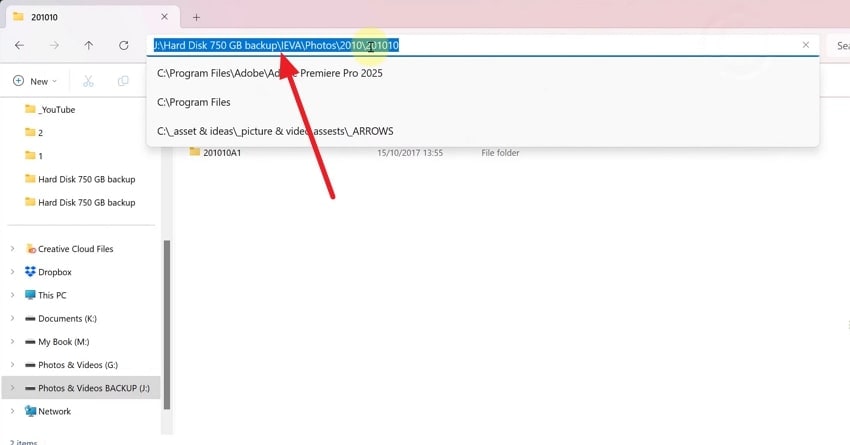
- Lastly, type "rmdir /s" and the name of the folder you want to delete, then press "Enter".

9. Boot Into Safe Mode To Delete
Booting into Safe Mode can also solve the "file deletion failed" issue on USB drives. Further, it starts Windows with only essential drivers, preventing background apps or malware that lock files. This ensures most stubborn files can be removed without harming other data. However, safe mode can’t bypass hardware write protection or fix severe USB hardware or file system damage. Thus, take guidance below to delete files in safe mode:
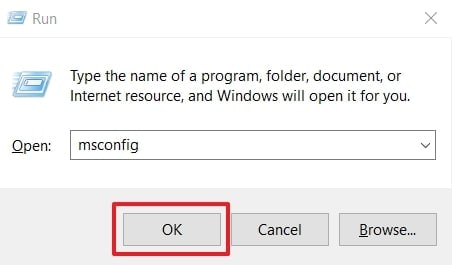
- To initiate, open the "Run" dialog box, type "msconfig," and press the "OK" button.
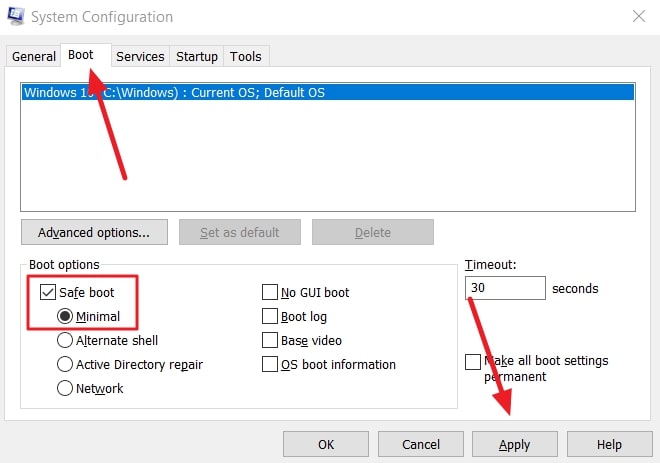
- Upon accessing it, go to the "Boot" tab, check the "Safe Boot" option, and choose "Minimal," then press the "Apply" button.
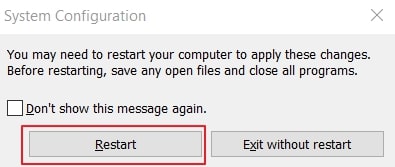
- Following this, click the "Restart" button to enter safe mode.
10. Run Check Disk (CHKDSK) On The USB
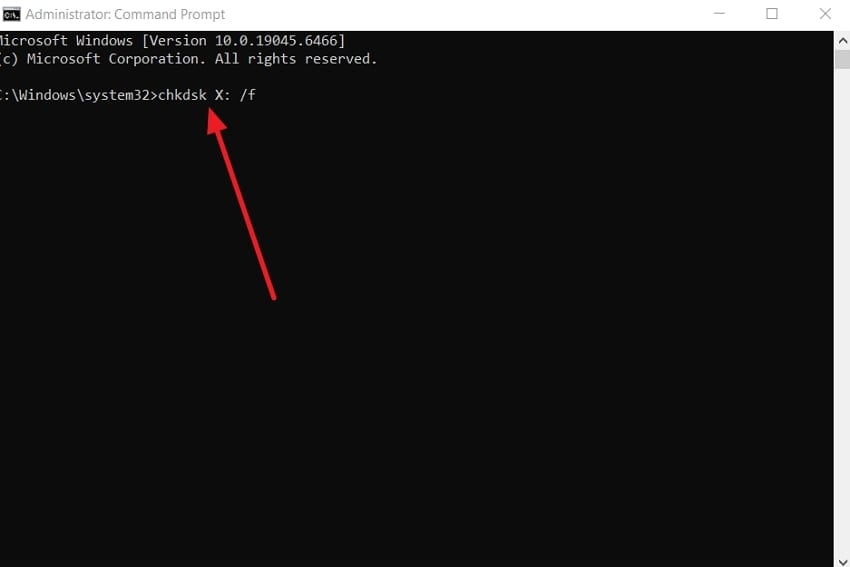
When dealing with a stubborn USB drive, running CHKDSK can also help repair logical issues that cause a "cannot delete file" error. This tool scans for logical problems like cross-linked files and metadata, which let you open, move, or delete files. By fixing file system errors, CHKDSK usually makes files usable again and keeps your data safe. Hence, you can adhere to the instructions below to solve the issue via CHKDSK:
Instructions. Access the "Command Prompt" and choose "Run As Administrator." Following this, type "chkdsk X: /f" and replace "X" with your USB drive letter, then press "Enter."
11. Try Formatting The USB Drive
Sometimes formatting the USB drive clears damaged file systems, blocking stubborn file access. Also, this process rebuilds directory structures, removing corruption that causes users "cannot delete files from USB drive" easily. In addition, it is also capable of concealing malware or system locks upon files. Take guidance from the steps below to reformat your drive:
- To initiate, open "File Explorer," locate the drive you want to format, then right-click it. Next, select the "Format" option from the right-click menu.
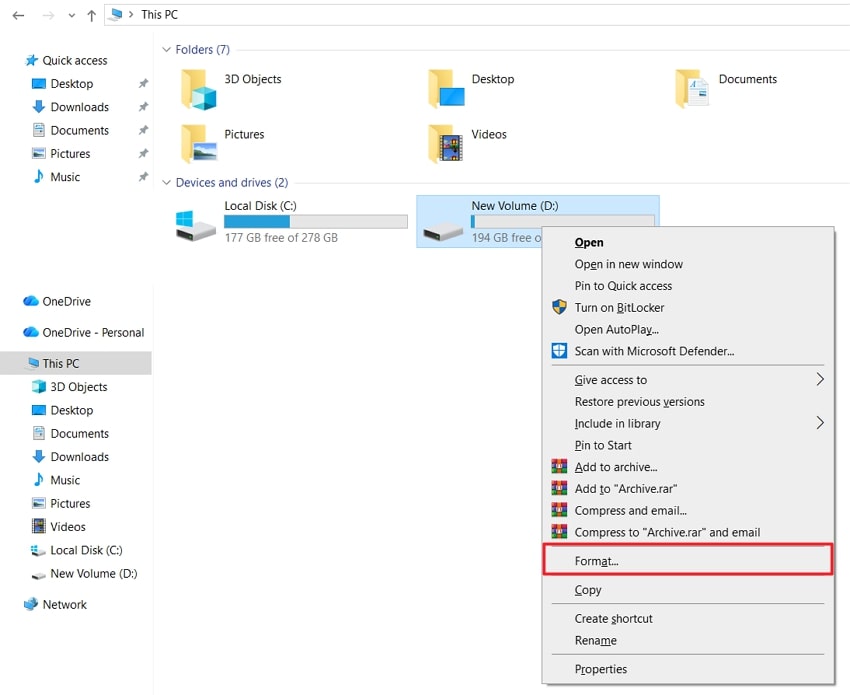
- After accessing it, choose a file system (NTFS, FAT32, or exFAT) from the options. Next, check or uncheck "Quick Format" as you prefer, then hit the "Start" button.

12. Consider Hardware Failure Or Read‑Only Mode
If the above fixes fail, consider hardware failure, as it can trigger permanent read-only mode on USB drives, blocking all changes. Moreover, controllers enter this mode when detecting serious wear, keeping files readable despite "file deletion failed" errors. Handling the drive lets you back up important data before attempting risky repairs. Still, damaged memory chips can make some files unreadable even in read-only mode.
Pro Tip: Recoverit: The Simple Tool to Fix USB Files You Can’t Delete
In addition to the above, your stubborn files may have been deleted mistakenly. In case you want to recover them, you should use Recoverit. It can recover files deleted by mistake from your USB drives even without prior backups. The tool also supports recovering over 1000+ file types, including documents and media of multiple formats. Plus, Recoverit provides a thorough deep scan for formatted or long-lost files.
You can also retrieve files from portable SSDs connected through USB without data loss. It also gives a preview of file recoveries instantly after the restoration of files, allowing proper data recovery. In addition, the tool does not alter the original USB disk and, hence, does not cause further data loss. It may even be used to recover files in external hard drives that may have physical or logical failures.
Key Features
- Pause Scan: Allows pausing scans anytime when the desired files are found to save time.
- Data Loss Scenarios: Handles 10,000+ data loss situations such as deletion, formatting, virus, or corruption.
- Scan USB: Automatically scans the selected USB drive to locate deleted or lost files quickly.
Detailed Guide to Recover Data from External Devices
Go through the guide below to recover your files from the external device via Recoverit:
- Select the External Device
Choose the removable storage device where your files were deleted. After selecting it as the target location, click the "Start" button to continue.
- Scan the External Device
The software will begin a thorough scan of the external storage media. Allow a few minutes for the process to complete. You can also search for specific files and pause or stop the scan whenever needed.
- Preview and Recover Files
When the scan finishes, you can preview all discovered files freely. To restore them, simply click "Recover" and save the recovered data to a different, secure location.
Conclusion
Many users face situations where they cannot delete files from USB drive easily. These stubborn errors often appear due to corruption, permissions, malware, or hardware limitations. Solving these issues quickly becomes important when essential storage space keeps getting blocked. A reliable tool becomes necessary when manual methods fail to remove locked items. That’s why Recoverit offers a complete and safe solution for recovering and repairing USB data.
FAQ
1. Why does my USB show files missing but storage full?
Hidden attributes sometimes hide files while still consuming available storage space. Corrupted directories may block visibility, even though the data remains on the drive. Running system scans usually restores visibility by repairing essential file references.2. Does changing the file system format improve deletion reliability?
Reformatting rebuilds damaged tables that prevent successful deletion. Older drives sometimes function better after switching to newer formats. Formatting helps, but all stored data is completely erased.3. Should I scan for viruses before trying recovery steps?
Malware sometimes locks files, preventing deletion and causing repeated failures. A virus scan removes blockers, restoring normal USB behaviour quickly. Using Recoverit afterwards ensures deeper recovery from difficult corruption.4. Is continued USB use risky when deletion errors appear?
Repeated usage can worsen existing corruption inside the USB drive. Damaged sectors may spread, making recovery of files more difficult. Stopping usage protects data and improves the final recovery success rate.


