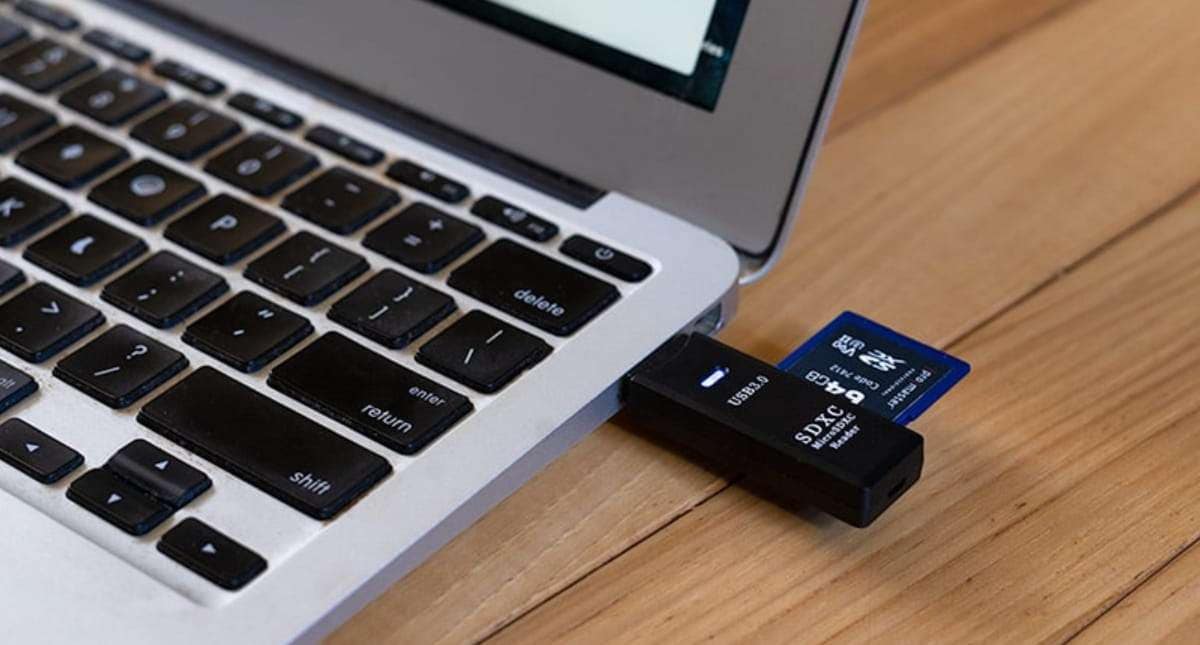


 TL;DR:
To safely format a GoPro SD card, verify your media backup on another drive first, then reformat directly in the camera by navigating to Preferences > Reset > Format SD Card on current touch-screen models.
● On newer cameras like the MAX2, do not confuse the Manage SD Card option, which only deletes media, with the actual Format SD Card command required to prepare the file system.
● If a computer fallback is necessary, use the official SD Memory Card Formatter and apply the SD standard of FAT32 for SDHC cards up to 32GB or exFAT for SDXC cards, then format the card inside the GoPro again before shooting.
● If a card is formatted by mistake, stop recording immediately to prevent new writes from overwriting the original data, and use recovery software to extract the files to a separate drive before attempting another format.
Ask AI for a summary
 ChatGPT
 Perplexity
 Gemini
 Claude
 Grok
Grok
The safest way to format a GoPro SD card is to save any footage you still need and then format the card inside the GoPro. On current touch-screen models, the format control is normally under the camera's Preferences or Reset area. Formatting erases the media that the camera can see, so do not use it as the first troubleshooting step when your videos or photos are still only on the card.
If the card is new or already backed up, start with the in-camera method below. If the GoPro cannot format the card, use the failure branch instead of jumping straight to DiskPart or repeated formats.
In This Article
Part 1. Before You Format a GoPro SD Card
Formatting is destructive to the file system. GoPro's current manuals tell users to save their media before reformatting, and the safest workflow is simple: protect the footage first, then format. If the card is already empty and you do not need anything from it, you can go straight to Part 2.
| Your Situation | Do This First | Format Now? |
| New or empty microSD card | Confirm the card meets the requirements for your exact GoPro model. | Yes. Format it in the GoPro. |
| Card still contains footage you need | Copy the original files to a computer or another drive and verify that important videos open. | No. Format only after the copy is verified. |
| Card was formatted accidentally | Stop recording and stop copying new files to the card. | No. Recover first if the footage matters. |
| GoPro says there is an SD card error | Check detection, reader, card specification, and whether the files are still accessible. | Only after data is safe. |
| Card is not detected by any reader or computer | Try one known-good reader and port. If the card is physically damaged or remains undetected, stop repeated DIY attempts. | No. |
Current GoPro requirements vary by camera. For example, GoPro lists microSD, microSDHC, or microSDXC cards rated V30/UHS-3 or higher and capacities up to 1TB for HERO13 Black. The newer MAX2 manual specifies A2 and V30 or higher, also up to 1TB. Always check the exact model rather than assuming that every old GoPro accepts the same card.
If the camera keeps showing a card warning, use the dedicated GoPro SD card error troubleshooting guide to separate card compatibility, file-system corruption, and failing-media symptoms before formatting again.
Part 2. How to Format an SD Card in GoPro
Use the GoPro itself as the final formatting device whenever possible. This avoids guessing which desktop file-system settings the camera expects and is the shortest path for a healthy card.
Current GoPro Touch-Screen Models
On current models such as MAX2 and HERO12 Black, GoPro's own documentation uses the same core path. HERO13 Black follows the same current Dashboard/Preferences structure, although menu wording can change with firmware. If your screen differs, use the manual for your exact model.
Step 1. Save the footage you still need.
Remove or connect the card only when it is safe to do so, copy the original media to another drive, and open several important clips or photos. A copy that has not been checked is not a verified backup.
Step 2. Insert the microSD card and power on the GoPro.
Make sure the card is seated correctly. If the camera reports a card error immediately and you still need files from it, do not keep formatting attempts going; use Part 5 or Part 6 instead.
Step 3. Open the Dashboard and Preferences.
Swipe down on the rear display to open the Dashboard. On the current interface, swipe left and tap Preferences.
Step 4. Open Reset and choose Format SD Card.
Tap Reset, then Format SD Card. Confirm the format only after you are certain the card does not contain the only copy of needed footage. The current GoPro MAX2 manual explicitly says reformatting erases all media and gives this path. GoPro's official HERO13 Black reset guidance also shows Format SD Card inside the Reset menu.
Step 5. Verify the camera is ready to record.
After the format finishes, return to the capture screen. Confirm the card warning is gone and the camera shows available recording capacity. If the format fails again, stop retrying and go to Part 5.
Older GoPro Models
Do not force the newest menu path onto every older camera. GoPro changed the navigation across generations.
| Model / Generation | Verified Format Path | Important Note |
| HERO7 White | Dashboard > Preferences > Reset > Format SD Card | GoPro's official HERO7 White manual lists this path and a maximum card capacity of 128GB for that model. |
| HERO (2018) | Swipe down > Preferences > Format SD Card > Delete | The official HERO (2018) manual uses Delete as the final confirmation. |
| Other older HERO / Session models | Check the exact GoPro manual. | Button navigation, trash/delete wording, and formatting availability differ across older models. |
For older cameras, the model manual is more reliable than a universal step list. GoPro's HERO7 White manual and HERO (2018) manual show how the menu wording changed between generations.

Manage SD Card Vs. Format SD Card
Deleting media and formatting the card are not always the same command. This distinction matters on newer GoPros. In the MAX2 manual, Manage SD Card is described as a way to delete media, while Preferences > Reset > Format SD Card is the separate reformat command. HERO12 documentation also separates manual media deletion from reformatting.
If your goal is to prepare the card's file system for the camera, use the actual Format SD Card command. If you only want to remove selected clips, use the gallery or media-management controls instead. This avoids treating a bulk-delete shortcut as if it were a full card reformat.
Part 3. What Format Should a GoPro SD Card Use?
When the GoPro formats the card itself, you normally do not need to choose a file system manually. The FAT32/exFAT question matters mainly when you prepare the card on a computer.
The SD Association capacity standard maps card families to file systems as follows:
| SD Family | Capacity Range | Standard File System | GoPro Relevance |
| SDHC / microSDHC | More than 2GB to 32GB | FAT32 | Relevant to older or smaller-capacity cards. |
| SDXC / microSDXC | More than 32GB to 2TB | exFAT | Common for current high-capacity GoPro cards. |
| SDUC / microSDUC | More than 2TB to 128TB | exFAT | Outside the 1TB maximum documented for current HERO13 Black and MAX2. |
That is why a 32GB SDHC card normally uses FAT32, while a 64GB, 128GB, 256GB, 512GB, or 1TB SDXC card normally uses exFAT. Avoid converting a GoPro recording card to NTFS or APFS just because your computer supports those formats. If you format on a computer, return the card to the GoPro and use the camera's format command before an important shoot.
File system alone is not enough. The card must also meet the speed and capacity requirements for the exact camera. GoPro's current HERO13 page specifies V30/UHS-3 or higher and up to 1TB; MAX2 additionally specifies A2 and V30 or higher. Older models can have lower capacity limits.
Part 4. Format a GoPro SD Card on Windows or Mac as a Fallback
Use a computer only when the GoPro cannot complete the format, when you are preparing a card before putting it into the camera, or when you need a standards-based reset after the data is already safe. The SD Association recommends its SD Memory Card Formatter instead of generic operating-system format tools because the utility is designed specifically for SD, SDHC, SDXC, and SDUC media.
Step 1. Back up or recover needed files first.
If you can still open the card, copy the original media to another drive and verify the copies. If the card looks empty or was formatted accidentally, skip to Part 6 before doing another format.
Step 2. Connect the microSD card with a reliable reader.
Confirm the computer detects the correct removable card. If several drives are connected, double-check the capacity and device name before formatting.
Step 3. Use the latest SD Memory Card Formatter from the SD Association.
Download it only from the official SD Association site. For a normal reset after backup, use the formatter's standard quick option. The SD Association Formatter FAQ explains that Quick Format initializes file-system parameters without overwriting the entire user-data area, while Overwrite Format erases the user-data area by writing over it.

If the SD Association utility is unavailable, Recoverit's memory card formatting guide covers File Explorer and Disk Utility alternatives. Put the card back in the GoPro and run the in-camera format afterward.
Step 4. Return the card to the GoPro and format it in-camera.
After the computer format succeeds, put the card back in the GoPro and run the camera format once more. This is the final compatibility check before recording.
When not to use this fallback: do not use a computer format to "test" a card that still contains the only copy of important footage. Do not use an overwrite format if you intend to attempt data recovery.
Part 5. What to Do If GoPro Will Not Format the SD Card
A format failure is a symptom, not a reason to try more destructive commands. First decide whether the problem is the card, the reader, the file system, or the camera.
| Symptom | Safest Next Check | Next Action |
| GoPro sees the card but format fails | Power-cycle the camera, reseat the card, and verify the card meets the model requirements. | Try the official SD Formatter after files are safe; replace the card if the failure repeats. |
| Windows can see the card but cannot format it | Try another reader and check whether the adapter lock switch is engaged. | Protect needed files first, then follow the Windows unable to complete the format guide instead of expanding this GoPro page into DiskPart steps. |
| Computer asks to format the card before use | Cancel the prompt if footage still matters. | Use the SD card not formatted guide to protect and recover files before writing changes. |
| Card repeatedly disconnects or disappears | Try one known-good reader and port. | If folders become unreadable or the volume turns RAW, use the corrupted SD card recovery guide before reusing or retiring the card. |
| Card is not detected through a known-good reader | Run the checks in the SD card not recognized guide once. | If the card is cracked, burnt, water-damaged, overheating, or still absent everywhere, stop DIY formatting and consider a professional recovery service. |
Do not use DiskPart clean as a routine GoPro formatting method. It removes partition information and adds unnecessary risk when the reader's actual task is simply to format a healthy GoPro card. Keep Windows-specific partition repair on the dedicated Windows troubleshooting page.
Part 6. Recover GoPro Files Before Formatting Again
If you formatted the card by mistake, the safest next step is to stop using it. Do not record a test clip, copy files to the card, run an overwrite format, or repeat the GoPro format. New writes can replace data that recovery software would otherwise have a chance to find. The broader formatted SD card recovery guide explains why recovery should happen before another format.
If the footage was deleted rather than formatted, check the focused guide to retrieve accidentally deleted GoPro files. When the microSD card is still detected by Windows or macOS, Recoverit GoPro Recovery can scan the card for deleted, formatted, or inaccessible GoPro media.

Step 1. Connect the GoPro microSD card to the computer.
Power off the GoPro, remove the card, and connect it through a stable reader. Do not initialize, repair, or format the card when the operating system prompts you.
Step 2. Select the detected GoPro microSD card.
Open Recoverit, choose the SD Card section, identify the card by its name and capacity, and start the scan.
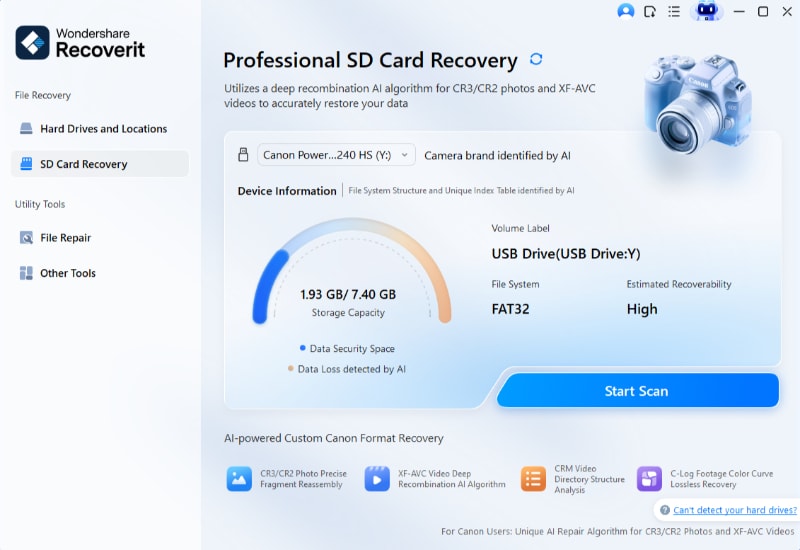
Step 3. Scan and narrow the results.
Let the scan continue while files appear, then filter by file type, date, size, or path. For GoPro footage, look for the original MP4, HEVC, MOV, JPG, LRV, and THM files that match your workflow.
Step 4. Preview the files you need.
Preview supported photos and videos where available, and verify the filename, size, date, and content before selecting files for recovery.
Step 5. Recover to a different healthy drive.
Save the selected files to the computer or another external drive, never back to the same GoPro card. Writing to the source card can overwrite data that has not yet been recovered.
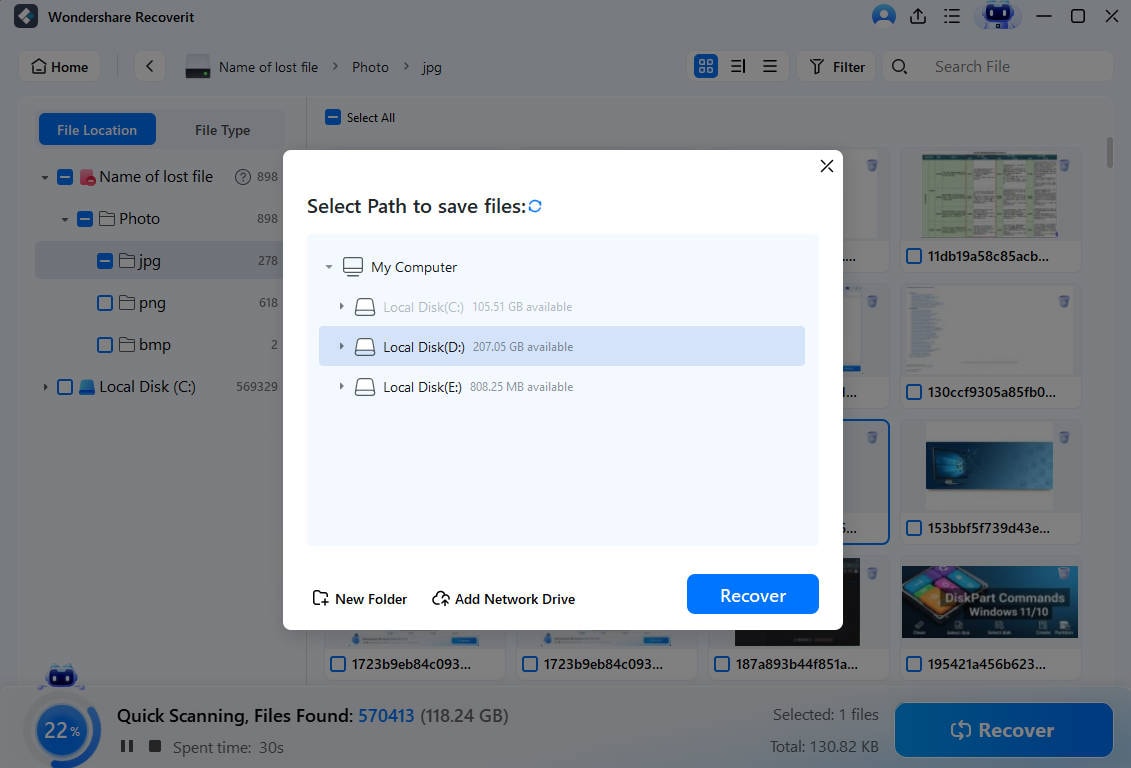
Step 6. Verify the recovered files before reusing the card.
Open representative videos and photos from the destination drive. Only after the recovered files work should you return to the in-camera formatting workflow.
No recovery tool can guarantee a result after data has been overwritten. Software recovery also normally requires the card to be detected by the operating system or recovery environment. If the card is physically damaged or cannot be detected through a known-good reader, repeated software scans are not the right next step.
Recover GoPro Files Before Formatting Again
 Security Verified. Over 7,302,189 people have downloaded it.
Part 7. GoPro SD Card Formatting Checklist
- Back up before formatting: keep the only copy of important GoPro footage off the card before you erase it.
- Verify the backup: open representative MP4/JPG files or the formats used by your camera before formatting the original card.
- Use the exact model requirements: check GoPro's current microSD recommendations for capacity and speed instead of assuming every HERO generation is identical.
- Prefer in-camera formatting: use the GoPro's own Format SD Card command as the final preparation step.
- Use FAT32/exFAT by SD standard when a computer is necessary: SDHC uses FAT32 and SDXC uses exFAT.
- Do not confuse delete with format: on models such as MAX2, Manage SD Card deletes media while Format SD Card is the actual reformat command.
- Replace a repeatedly failing card: after data is safe, retire a card that continues to disconnect or fail formats instead of trusting it with a new shoot.
Conclusion
To format a GoPro SD card safely, protect the footage first and then use the camera's Format SD Card command. For current GoPro touch-screen models, the path is generally Dashboard > Preferences > Reset > Format SD Card. If a computer fallback is necessary, use the SD Association's formatter after backup and follow the SDHC/FAT32 or SDXC/exFAT standard mapping.
If the card has already been formatted or files are missing, stop recording and recover to another drive before formatting again. If the card repeatedly fails to format after the data is safe, replacing the card is safer than continuing to trust unstable media.
FAQ
-
Should I format a new SD card for GoPro?
Yes. If the card is empty and compatible with your exact GoPro model, formatting it in the camera is a sensible final setup step. Use the camera's Format SD Card command so the card is prepared for that GoPro. -
Should a GoPro SD card be FAT32 or exFAT?
If you must format on a computer, the SD standard uses FAT32 for SDHC cards over 2GB through 32GB and exFAT for SDXC cards over 32GB through 2TB. For normal GoPro use, let the camera perform the final format. -
Does formatting a GoPro SD card delete all videos?
Formatting removes the media from normal camera and file-system access, so treat it as destructive and save needed files first. A quick format does not necessarily overwrite every user-data area immediately, but recovery is never guaranteed and new recordings can overwrite old data. -
Is Manage SD Card the same as Format SD Card on GoPro?
Not always. GoPro's MAX2 manual describes Manage SD Card as a media-deletion control and separately provides Preferences > Reset > Format SD Card for reformatting. Use the actual Format SD Card command when you intend to reformat the card. -
What should I do if my GoPro will not format the SD card?
Protect any accessible footage first, reseat the card, try a known-good reader, confirm the card meets the model's requirements, and use the official SD Memory Card Formatter only after the data is safe. If the card keeps failing, replace it rather than relying on repeated destructive resets. -
Can I recover GoPro videos after accidentally formatting the SD card?
Recovery may be possible when the card is still detectable and the old data has not been overwritten. Stop recording immediately, scan the microSD card from a computer, and save recovered files to another drive. No recovery software can guarantee a result.


