
 TL;DR:
Determine exactly where your SD card fails to mount by checking File Explorer, Disk Management, and Device Manager sequentially before attempting any destructive file-system repairs or formatting.
● Isolate hardware issues first by testing a known-good reader, adapter, and USB port; assign a new drive letter if the storage appears in Disk Management, or update the reader driver if a warning appears in Device Manager.
● Prioritize data extraction using recovery software and save files to a separate drive before running the CHKDSK /f command or accepting a Windows format prompt for RAW or unallocated volumes.
● Halt all DIY software repair attempts and seek professional data recovery if the card is completely undetected across multiple host devices, gets unusually hot, or repeatedly disconnects.
Ask AI for a summary
 ChatGPT
 Perplexity
 Gemini
 Claude
 Grok
Grok
An SD card not detected error does not always mean the card is dead. The card may disappear only from File Explorer because it has no drive letter, while Disk Management can still see it. A reader warning in Device Manager points to a different layer. A card that is invisible in every known-good reader and device may have a controller or physical failure.
If the card contains important photos, videos, game saves, or work files, stop writing to it before running CHKDSK, formatting, initializing, cleaning with DiskPart, or creating a new volume. First test the card, reader, adapter, port, and host. Then recover or copy important files while the card is still detectable.

Part 1. Diagnose Where the SD Card Disappears
Do not start with a repair command. First determine whether the card disappears at the file-browser, volume, reader, or hardware layer. That diagnosis decides whether you need a drive-letter change, a reader fix, data recovery, or professional help.
| What You See | Likely Layer | Safest Next Action |
| Card opens normally in File Explorer | The card is detected; the issue may be missing files or a folder problem | Stop writing to the card and check for data loss before changing the file system |
| Card is in Disk Management but has no drive letter | Mounting or drive-letter problem | Assign an unused drive letter without formatting |
| Card is in Disk Management as RAW or Unallocated | File-system or partition damage | Recover important files first; format only after recovery |
| Reader appears in Device Manager but the card is absent from Disk Management | Reader, adapter, port, driver, or contact problem | Cross-test another reader, port, and card before changing the card file system |
| Card is absent from File Explorer, Disk Management, and Device Manager | Host, reader, adapter, controller, or physical card failure | Try one known-good reader and compatible host, then stop repeated attempts if the data matters |
On Windows, check File Explorer, then Disk Management, then Device Manager. A card that is visible in Disk Management can still be recoverable even when Windows cannot open it normally.
Which SD Card Recovery Path Fits Your Case?
| Your Situation | Best First Move | Reason |
| Card has a drive letter and opens | Copy or recover important files immediately | The card is detected, so protect the data before any repair |
| Card appears in Disk Management as RAW or Unallocated | Recover files before formatting or creating a volume | Repair actions can change the metadata needed for recovery |
| Card appears in Disk Management without a drive letter | Assign a drive letter if the volume status is usable | This is a mounting issue and does not require formatting |
| Reader appears in Device Manager with a warning | Test another port and update or reinstall the official reader driver | The reader or driver may be failing before Windows reaches the card volume |
| No reader or host detects the card | Stop software repair after one controlled cross-test | Recovery software may have no storage device to scan |
Part 2. Protect Important Files Before Repairing the Card
If the card stores anything you cannot replace, protect the data before you try to make the card usable again.
- Stop writing to the card: Do not take new photos, record video, copy files to it, or install software on it.
- Cancel format prompts: If Windows shows RAW or Unallocated storage, do not format or create a new volume while recovery is still needed.
- Do not run CHKDSK first:
CHKDSK /fchanges file-system metadata. Use it only after important files are recovered or backed up. - Use a stable connection: Prefer a direct USB port and a known-good reader over an unstable hub or adapter.
- Save recovered files elsewhere: Use the computer's internal drive or another healthy drive, never the problem card.
- Stop for physical symptoms: Heat, cracks, water damage, repeated disconnections, or total invisibility across devices can indicate hardware failure.
Part 3. Run Quick Checks for SD, SanDisk, and TF Cards
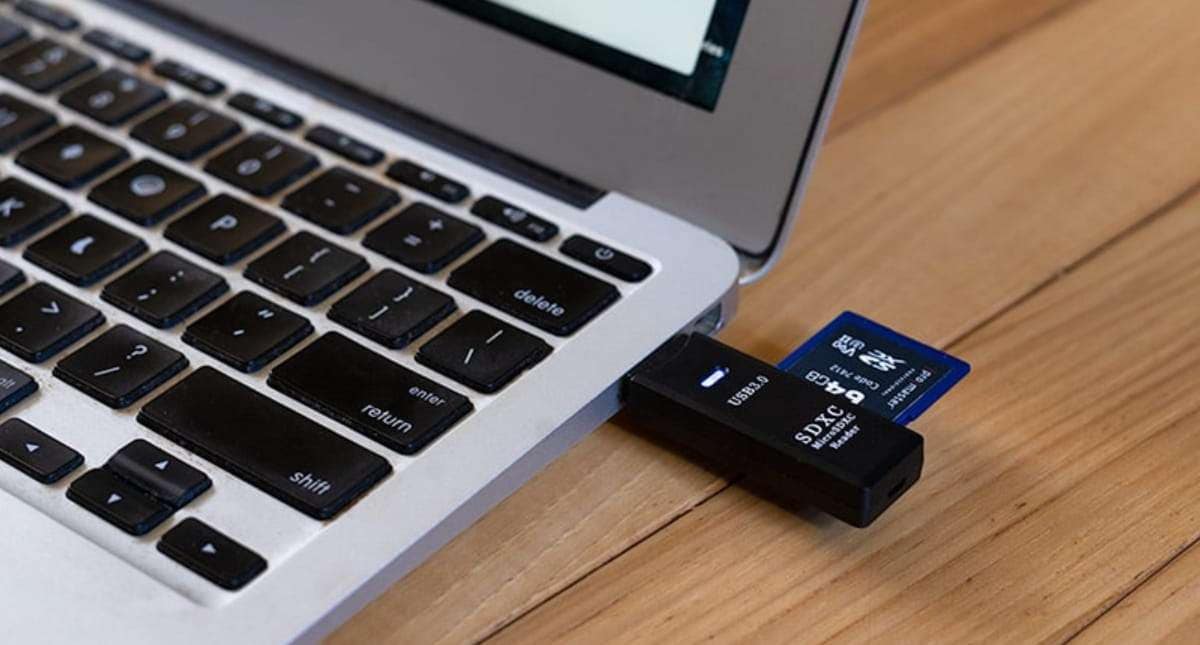
Before changing Windows settings, isolate the physical connection. The same checks apply to a full-size SD card, microSD card, SanDisk card, or a card labeled TF.
- Reseat the card: Power off the camera or handheld when its manual requires it, remove the card, inspect the contacts, and insert it fully.
- Try another reader or adapter: A failed USB reader or microSD-to-SD adapter can look exactly like a dead card.
- Try another USB port: Connect the reader directly instead of through an unpowered hub.
- Cross-test once: Try the problem card in a second compatible host and a known-good card in the original reader.
- Check host compatibility: Older cameras, consoles, and phones may reject a card capacity, generation, or file system they do not support.
A TF card is a microSD card using older TransFlash terminology. The same reader, adapter, host-compatibility, and file-system checks apply. A lock switch is different from detection: it controls writing on a full-size SD card or adapter, while a card can remain visible and read-only.
Part 4. Recover Files First When the Card Is Still Detectable
When Windows or recovery software can still detect the card but you cannot browse the files normally, recover important data before repairing the file system. Recoverit can be useful when the card has a missing drive letter, a RAW or inaccessible volume, a format prompt, missing files, or intermittent detection that lasts long enough to scan.
| Recoverit May Help When | What to Do |
| Card appears in Disk Management but not File Explorer | Select the detected card in Recoverit and scan before changing the volume |
| Card appears as RAW or asks to be formatted | Cancel formatting and recover important files first |
| Files disappeared while the card still mounts | Scan and filter by file type, path, date, or name |
| Card disconnects during normal browsing but appears in a stable reader | Stop other access and attempt one controlled scan; stop if the card becomes hot or repeatedly disconnects |
Recoverit cannot repair a broken reader, revive a physically failed flash controller, or guarantee a result when no device detects the card. Software needs a detectable storage device to scan.
- Connect the card through a stable reader and open Recoverit.
- Choose SD Card Recovery or the detected memory card under Hard Drives and Locations.
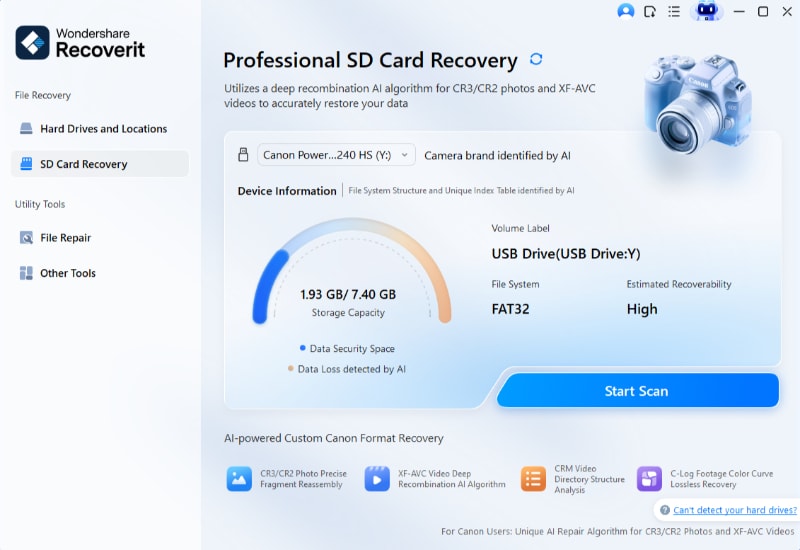
- Start the scan and use file type, path, size, date, or search filters when needed.
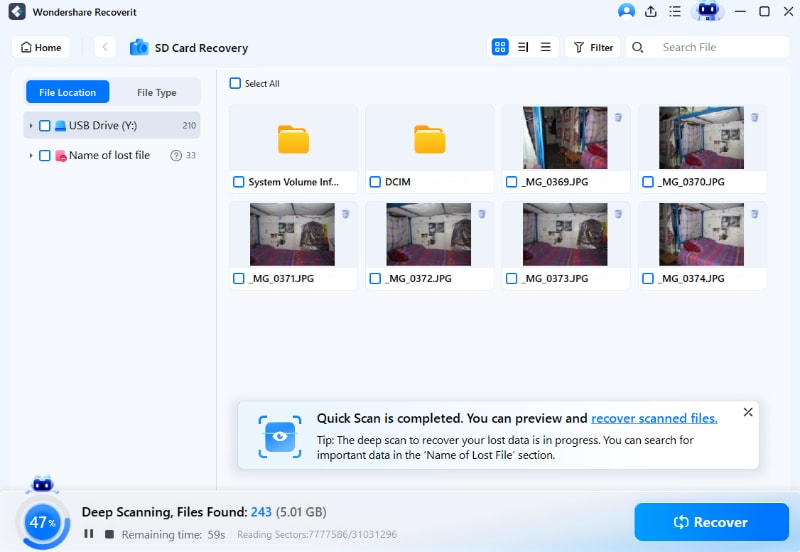
- Preview the files when available.

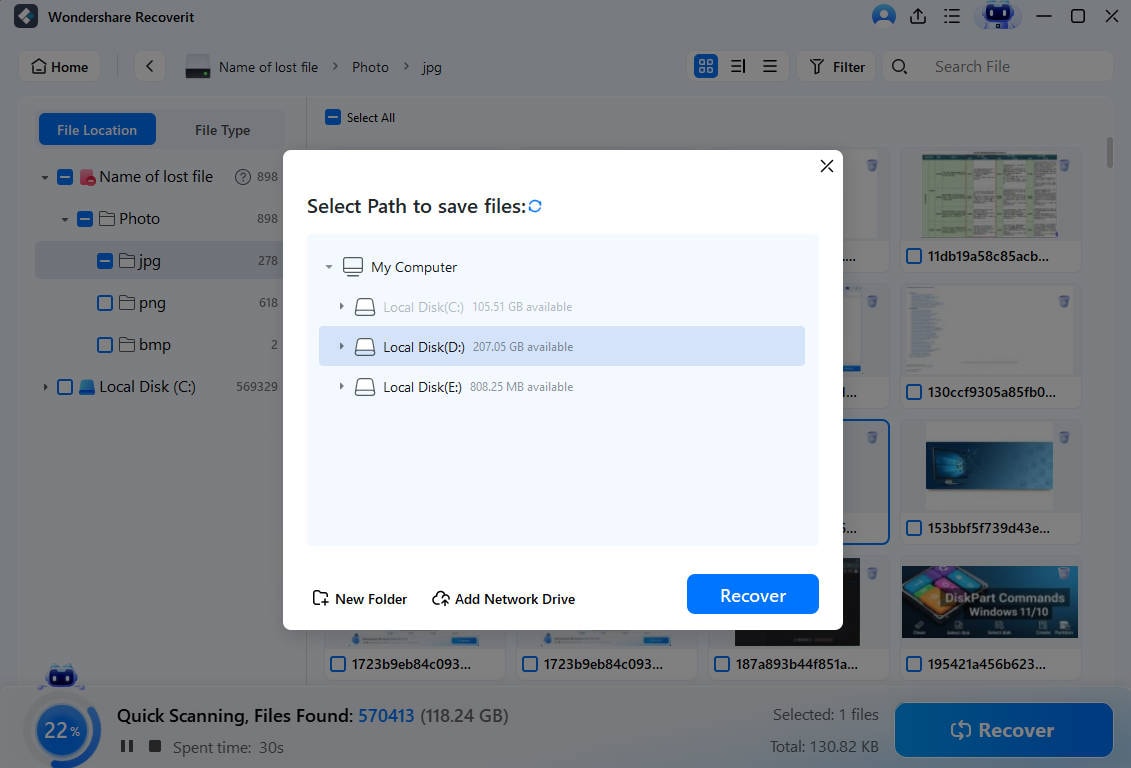
- Click Recover and save the results to the computer or another healthy drive.
Recover Files First When the Card Is Still Detectable
 Security Verified. Over 7,302,189 people have downloaded it.
Part 5. Fix a Card Windows Can Still Detect
Use the fix that matches what Windows can still see. If important files are not protected, pause here and recover them first.
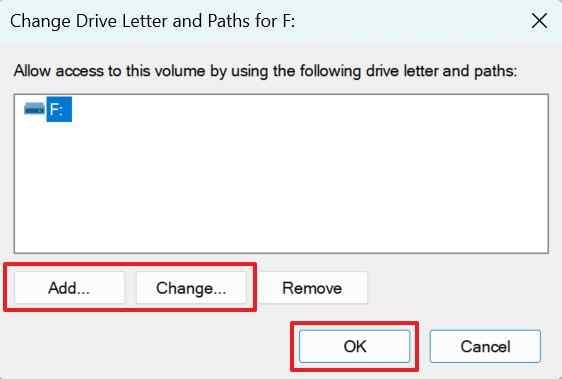
Assign or Change the Drive Letter
Use this when the card appears as a usable volume in Disk Management but is missing from File Explorer or has no drive letter.
- Right-click Start and open Disk Management.
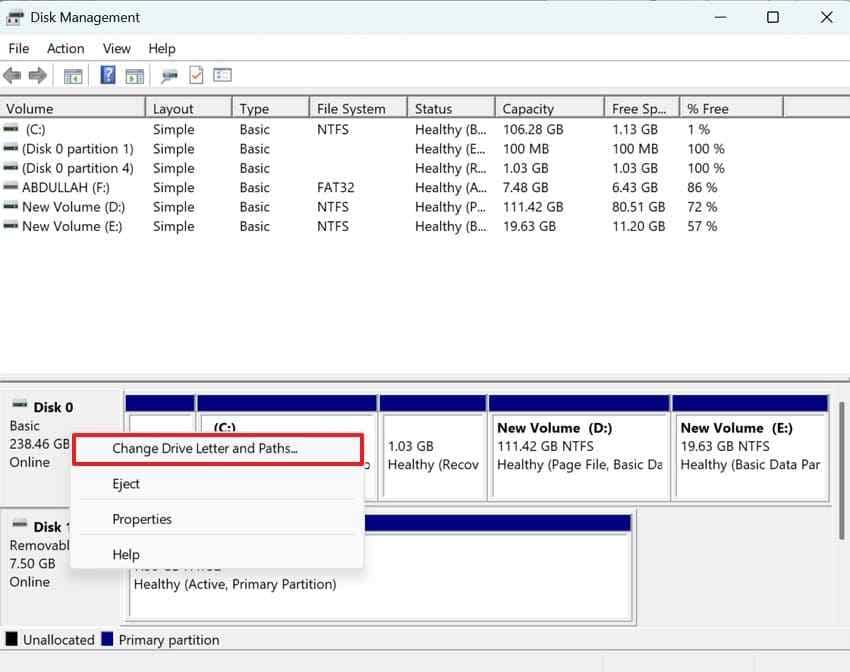
- Right-click the correct SD card volume and choose Change Drive Letter and Paths.
- Choose Add if no letter exists, or Change to select an unused letter.
Update or Reinstall the Card Reader Driver
Use this when the reader appears in Device Manager with a warning icon, stopped working after an update, or does not expose the card to Disk Management.
- Open Device Manager and expand Disk drives, Memory technology devices, or Universal Serial Bus controllers.
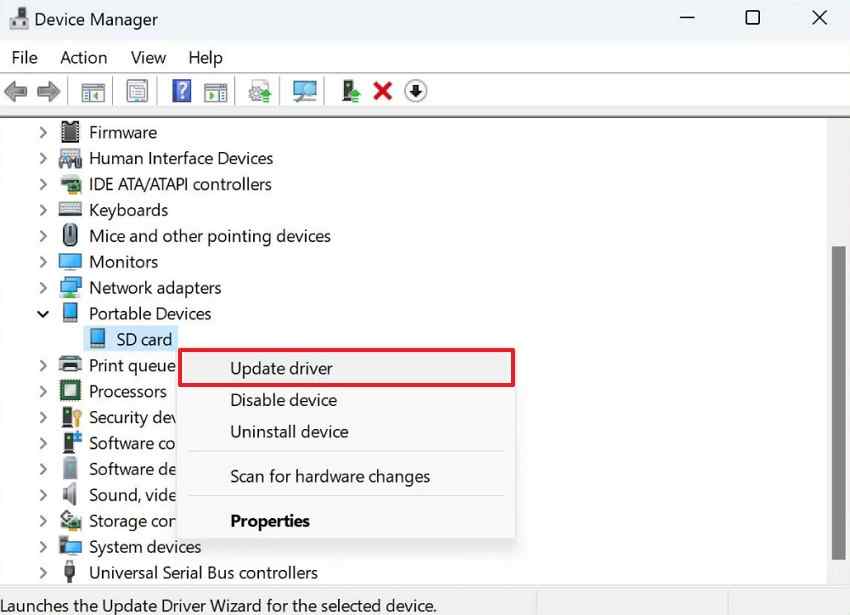
- Right-click the reader and choose Update driver.
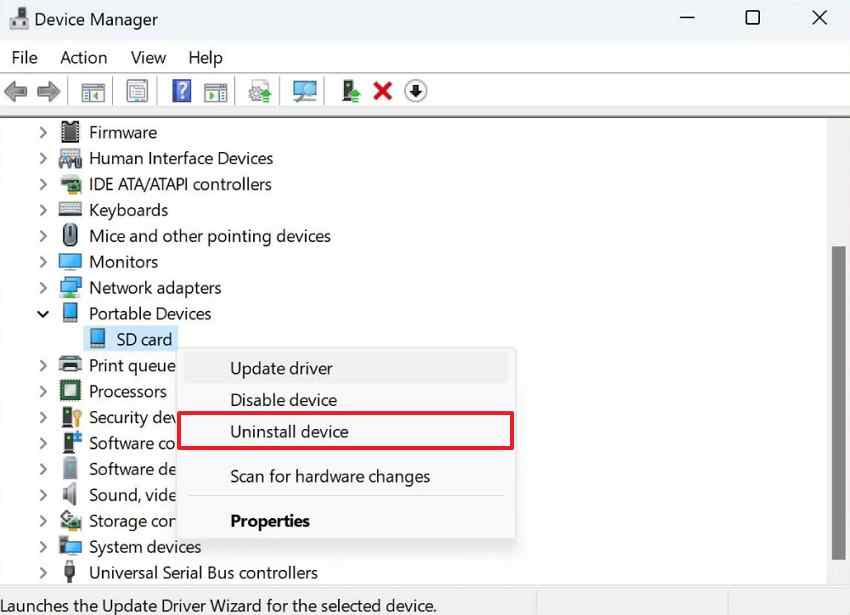
- If needed, choose Uninstall device, restart Windows, and let Windows reinstall it. Use the reader or computer manufacturer's official driver page if Windows cannot supply the driver.
Run CHKDSK Only After Recovery
Use CHKDSK X: /f only when the card has a drive letter and important files have already been recovered or backed up. The /f switch repairs file-system errors, so it can modify metadata.
Format Only After Recovery
Formatting is a last-resort usability fix. Use it only after the files are safe and you have confirmed the correct disk identity. Choose a file system supported by the device that will use the card.
CHKDSK, format, initialize, clean with DiskPart, or create a new volume on a card that still contains unrecovered data.Part 6. What to Do When the Card Is Not Detected Anywhere
A completely undetected card is different from a card that is merely missing from File Explorer. If the card does not appear in Disk Management, does not create a storage entry in Device Manager, and also fails in another known-good reader or compatible host, Windows may have no logical storage device to scan.
- Try one known-good reader or direct slot: Avoid repeatedly using the same adapter, hub, or damaged port.
- Cross-test once: Try the card on a second computer or compatible camera, phone, or console.
- Inspect for physical symptoms: Heat, visible damage, water exposure, repeated disconnects, or sudden disappearance across all devices can indicate hardware failure.
- Stop DIY repair: Do not initialize, clean with
DiskPart, create a new volume, or repeatedly format the card. - Escalate important cases: A professional recovery service may be needed for controller, NAND, or connector failure.
Part 7. Use the Right Device-Specific Guide
Generic SD card troubleshooting should stop when the host device becomes the real issue. Use a narrower workflow when the error comes from a specific operating system, camera, phone, or console.
| Your Situation | Use This Path | Why |
| SD card not detected in Windows 11 | Windows detection, Disk Management, Device Manager, and recovery steps | Windows 11 exposes reader, driver, volume, and file-system status in different places |
| SD card not detected in Windows 10 | Windows 10 reader, port, driver, and storage checks | The same detection layers apply, but the settings path can differ |
| SD card not showing on Mac | macOS Disk Utility, Finder, card-reader, and backup workflow | Windows commands such as Device Manager and CHKDSK do not apply to Mac |
| 3DS says it could not detect an SD card | Nintendo's device-specific support path | Console compatibility and power-off handling matter more than generic PC repairs |
| Camera, drone, or phone cannot detect the card | Check the host's supported card capacity, format, and insertion procedure | The host may reject the card even when a computer can read it |
Part 8. Why an SD Card Stops Being Detected
| Possible Cause | Typical Sign | What It Affects |
| Reader or adapter failure | A known-good card also fails in the same reader | The connection fails before Windows can read the card |
| Dirty or incomplete contact | The card works only at a certain angle or disconnects when touched | The electrical connection is unstable |
| Missing drive letter | Disk Management sees a healthy volume, but File Explorer does not | The volume is detected but not mounted under a letter |
| Reader or chipset driver problem | Device Manager shows a warning or the reader stopped after an update | Windows cannot use the reader correctly |
| Unsupported card combination | A camera, phone, or console rejects a card that works on a PC | The host may not support the capacity, generation, or file system |
| File-system or partition damage | RAW, Unallocated, inaccessible, or format prompt | Windows detects storage but cannot interpret its structure |
| Flash or controller failure | The card disappears across multiple known-good devices | The physical storage may need professional recovery |
Do not treat every detection problem as corruption. If another reader fixes the issue, changing the file system was unnecessary. If no known-good device detects the card, a drive-letter fix cannot help because Windows has not reached the volume layer.
Part 9. Prevent the Problem From Coming Back
- Eject safely: Let camera writes, imports, and transfers finish before removing the card.
- Use a reliable reader: Replace readers or adapters that disconnect, feel loose, or work only at certain angles.
- Format in the target device when appropriate: Back up the files first, then use the camera or host's supported format workflow.
- Keep more than one copy: Move important photos, videos, and documents off removable storage regularly.
- Retire unstable cards: A card that repeatedly becomes RAW, disappears, corrupts files, or needs repair should not hold the only copy of important data.
Conclusion
When an SD card is not detected, first ask where it is still visible. If it appears in Disk Management, check the volume and drive-letter status. If only the reader appears in Device Manager, troubleshoot the adapter, port, and driver. If the card is detectable but inaccessible and the files matter, recover them before CHKDSK, formatting, initialization, or partition changes.
For a microSD, SanDisk, or TF card, the same detection-first logic prevents unnecessary changes. If no known-good reader, computer, phone, camera, or console detects the card, stop software fixes and consider professional recovery for irreplaceable data.
FAQ
-
Why is my SD card not detected?
The cause can be the card, adapter, reader, USB port, missing drive letter, reader driver, unsupported file system, damaged partition, or physical card failure. Check another reader and then see whether the card appears in Disk Management or Device Manager before choosing a fix. -
What if my micro SD card is not detected but appears in Disk Management?
If the microSD card appears in Disk Management, Windows is detecting the storage. Check whether it is Offline, missing a drive letter, RAW, unallocated, or inaccessible. If important files are on it, recover or back them up before CHKDSK, formatting, or creating a new volume. -
Why is my SanDisk card not detected?
A SanDisk card can fail detection for the same reasons as other SD or microSD cards: a bad reader or adapter, incomplete insertion, unsupported file system or capacity, card damage, or a host-slot problem. Cross-test the card and reader before changing the file system. -
Is a TF card the same as a microSD card?
TF, TransFlash, and T-Flash are older names associated with the format that became microSD. If a device says no TF card detected, use the same microSD detection checks unless the device manual specifies a different storage requirement. -
Can Recoverit recover an SD card that is not detected anywhere?
Recovery software generally needs the storage to be detectable enough to scan. If no computer, reader, phone, camera, Disk Management view, or recovery tool can detect the card, software recovery may not work. For important data, stop repeated attempts and consider professional recovery. -
What should I do if a 3DS says it could not detect an SD card?
Use a Nintendo 3DS-specific troubleshooting path rather than generic Windows fixes. Power the system off before removing or inserting the card, verify compatibility and seating, and use the dedicated Recoverit 3DS guide for the full workflow.


