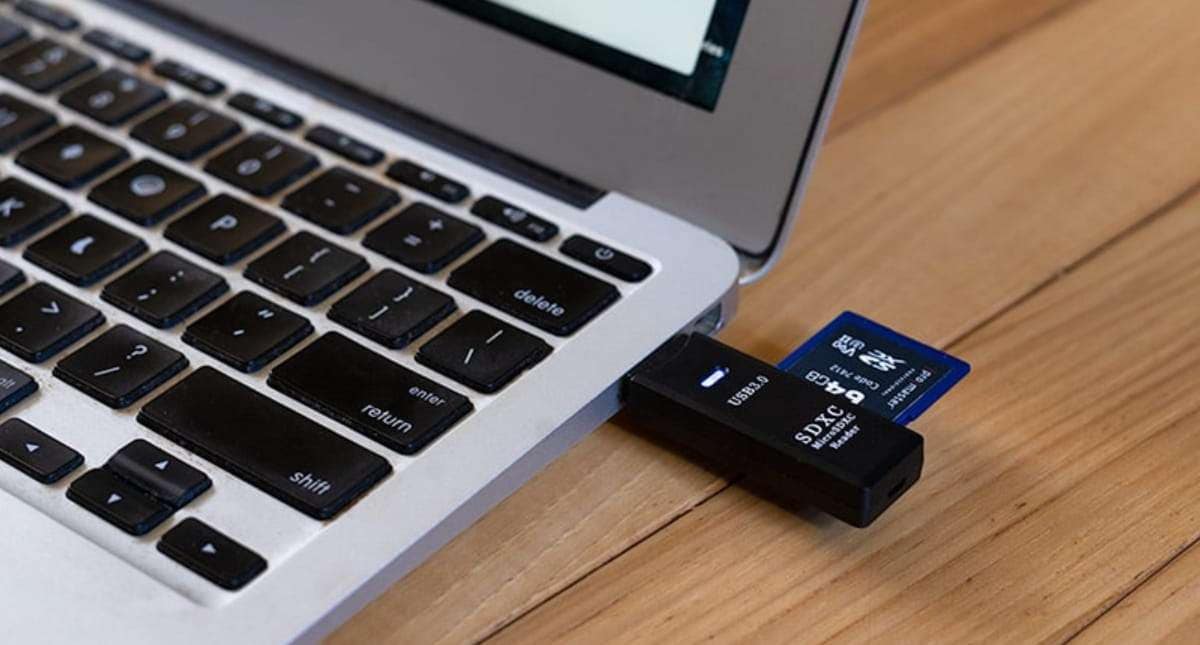

 TL;DR:
To safely fix an unreadable SD card, isolate hardware issues using a known-good reader, verify the card's exact capacity in Windows Disk Management or Mac Disk Utility, and recover valuable files before attempting any formatting or file-system repairs.
● SDXC cards require exFAT support and an SDXC-compatible host, meaning an older SDHC-only reader or device may fit the card physically but fail to address it or incorrectly trigger a format prompt.
● Do not run CHKDSK or Disk Utility First Aid if the operating system detects the card as RAW or unallocated, because these utilities write metadata changes to the drive and cannot fix RAW volumes.
● Stop software troubleshooting and consider professional hardware recovery if the card reports 0 bytes, shows as No Media, becomes noticeably hot, or remains invisible across multiple compatible devices.
Ask AI for a summary
 ChatGPT
 Perplexity
 Gemini
 Claude
 Grok
Grok
Quick answer: When an SD card is not reading, first stop using it, then test the card, reader, adapter, port, and host separately. If Windows Disk Management or Mac Disk Utility detects the card with the correct capacity, protect the files before assigning a drive letter, reinstalling the reader driver, running a file-system repair, or formatting. If no compatible device detects the card at all, software cannot access it; valuable data may require a professional recovery service.
“SD card not reading” can describe several different failures. The card may be absent from the computer, visible but missing from File Explorer or Finder, detected as RAW, rejected by a phone or camera, or readable only through another adapter. The safest fix depends on which layer fails. Treating every case as corruption—and immediately formatting the card—can erase the evidence needed to recover photos, videos, documents, or recordings.
Fact-checked in 2026: The compatibility rules and repair paths in this guide were checked against current SD Association, Microsoft, Apple, Google Android, and SanDisk documentation.
Recover An Unreadable SD Card With Recoverit
 Security Verified. Over 7,302,189 people have downloaded it.
In This Article
Part 1. What “SD Card Not Reading” Actually Means
A missing card icon does not identify the cause by itself. Start by observing where the SD card appears and what the device reports. This prevents a reader problem from being mistaken for data corruption and prevents a damaged file system from being treated as a dead card.
| What You See | What It Usually Indicates | Safest Next Action |
| No sound, notification, device entry, disk, or capacity | Reader, adapter, port, compatibility, contact, controller, or physical failure | Test one known-good compatible reader and device. Do not format or repeatedly reconnect an unstable card. |
| The card appears in Disk Management or Disk Utility but not File Explorer or Finder | Missing drive letter, unmounted volume, unsupported file system, or damaged file-system metadata | Confirm the capacity and condition. Copy or recover files before repair if they matter. |
| Windows shows RAW; Mac cannot mount the volume | The operating system cannot interpret the current file system | Recover files first. CHKDSK does not repair a RAW volume, and formatting erases its current structure. |
| A phone or camera says “Unsupported,” “Card error,” or “Format card” | Incompatible capacity or file system, damaged metadata, or a card previously configured for another device | Do not accept the prompt if files matter. Test the card with a compatible computer and reader first. |
| The card is readable but cannot save, delete, or format | Adapter lock, read-only controller state, permission issue, or failing media | Check the adapter lock. Copy readable data immediately; persistent read-only mode can be a failure symptom. |
| The card disconnects, slows dramatically, or becomes hot | Unstable reader connection, controller failure, electrical damage, or worn flash | Stop repeated tests. Use professional recovery for irreplaceable data. |
A card that appears with the correct capacity is different from a card that shows 0 bytes or No Media. Correct capacity means the host is communicating with at least part of the card. A 0-byte or No Media result often means the controller is not exposing the flash memory, so drive-letter changes, CHKDSK, and formatting are unlikely to help.
Also distinguish an unreadable card from an unreadable file. If the folders open but one photo or video will not, the storage is being read; that individual file may be damaged or use an unsupported codec. Copy the card first, then troubleshoot the file. Do not format a working card to fix one corrupt item.
Part 2. What To Do Before Any Repair
If the card holds replaceable files, you can move directly to the hardware checks. If it holds the only copy of important photos, recordings, work, or evidence, make data preservation the first decision.
- Stop New Writes: Do not take more photos, copy test files to the card, record video, install apps, or save recovered files back to it.
- Decline Format And Initialize Prompts: Windows, macOS, Android, and cameras may offer to prepare a volume they cannot read. Those actions change or replace the current structure.
- Do Not Create A New Simple Volume: An unallocated card may still contain recoverable data. Creating a partition is not a recovery step.
- Do Not Use DiskPart Clean: The Clean command removes partition information and is unnecessary for diagnosing a card that will not read.
- Delay CHKDSK And First Aid: Repair utilities write changes to file-system metadata. Recover or copy important files before using them on a damaged volume.
- Avoid Repeated Power Cycles On An Unstable Card: One controlled test in another reader is useful. Dozens of reconnects can worsen an intermittent electrical or controller fault.
- Record The Original State: Note the printed capacity, error message, device where the card was last working, and whether the card was encrypted or configured as Android internal storage.
If all files are accessible, copy the entire card to another physical drive and open several copied files before making repairs. The dedicated SD card backup guide covers file copies and image-based backup options. If files are missing or the card will not mount, use a recovery-first path instead.
Part 3. Rule Out The Card Reader, Adapter, And Device
A healthy card may fail in an incompatible or damaged reader. This is especially common when a microSD card is used through a full-size SD adapter, when an older reader does not support SDXC, or when a USB hub cannot provide a stable connection.
Method 1. Isolate The Card, Reader, And Host
- Power Down The Original Device: Turn off a phone or camera before removing the card. On a computer, eject the volume first if it is visible.
- Inspect Without Scraping: Look for a cracked shell, missing plastic ribs, corrosion, bent adapter contacts, or debris in the slot. Use dry air around the slot if needed; do not use liquids, metal tools, erasers, or abrasive cleaning.
- Remove The Adapter From The Test: Insert a microSD card into a known-good direct microSD USB reader when possible. A passive SD adapter adds another set of contacts and can be the only failed component.
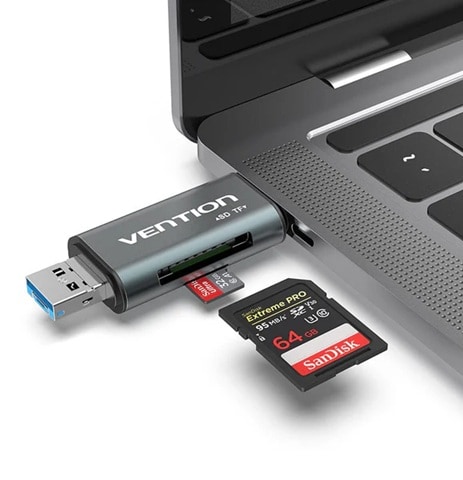
- Change One Variable At A Time: Test another USB port without a hub, then another compatible reader, then another compatible computer or device. Do not format the card in any of them.
- Cross-Test The Reader: Insert a different known-good card that the reader supports. If the second card also fails, the reader, port, or driver is the likely problem.
- Cross-Test The Card: Insert the problem card into another device known to support its capacity class. If it works there, copy the data immediately and investigate the original host.
- Check The Lock Switch: A full-size SD card or adapter has a mechanical lock tab. Move it to the unlocked position. The tab can block writing but should not normally prevent reading; a loose tab can still confuse some readers.
The SD Association's current host compatibility rules are backward-compatible, not forward-compatible. An older device may fit a newer card physically but still be unable to address it.
| Card Type | Capacity Range | Compatible Host Types | Common Read Failure |
| SD | Up to 2 GB | SD, SDHC, SDXC, and SDUC hosts | Legacy file-system or reader condition |
| SDHC | More than 2 GB through 32 GB | SDHC, SDXC, and SDUC hosts | An original SD-only reader cannot read SDHC |
| SDXC | More than 32 GB through 2 TB | SDXC and SDUC hosts | An SD or SDHC-only host cannot read SDXC; exFAT support may also be missing |
| SDUC | More than 2 TB through 128 TB | SDUC hosts | Most existing consumer devices do not support SDUC |
Check the exact phone, camera, dashcam, game console, computer, or reader manual for its maximum supported capacity. Do not assume that a microSD slot accepts every microSDHC or microSDXC card. SanDisk's current not-detected guidance likewise recommends checking the adapter, seating, host compatibility, and drive letter before formatting.
Part 4. Recover Files Before Writing To The Card
Recovery software is appropriate only when the operating system or the recovery application can communicate with the card. It cannot repair broken contacts, a dead controller, or a card that no compatible reader detects.
| Detection Result | Can Software Help? | Next Step |
| The card appears with the correct capacity but files are missing, RAW, or inaccessible | Often worth scanning | Avoid repair writes and scan the card through a stable reader. |
| The card appears as unallocated with the correct capacity | Often worth scanning | Do not create a new volume. Recover the data first. |
| The card opens and every needed file is readable | Recovery software is unnecessary | Copy the files to another drive and verify them. |
| The card shows 0 bytes or No Media | Usually not through ordinary software | Stop repeated attempts and consider a professional service. |
| The card is absent in every compatible reader and device | No | Software has no addressable device to scan. Seek hardware-level recovery for valuable data. |
| The card was Android adoptable/internal storage | Severely limited | Keep the original phone. The card is generally encrypted and tied to that device. |
Method 2. Recover An Unreadable SD Card With Recoverit
Wondershare Recoverit can scan an SD, SDHC, SDXC, or microSD card when a Windows PC or Mac detects it through a card reader. Use it when photos or files were deleted, the card appears RAW or unformatted, a partition disappeared, or a device asks for formatting before access. For a completely undetected or physically damaged card, use a professional recovery service instead.
- Connect And Verify The Card: Use a stable reader, close any format prompt, open Recoverit, and select SD Card Recovery. Confirm the device name and capacity before starting.
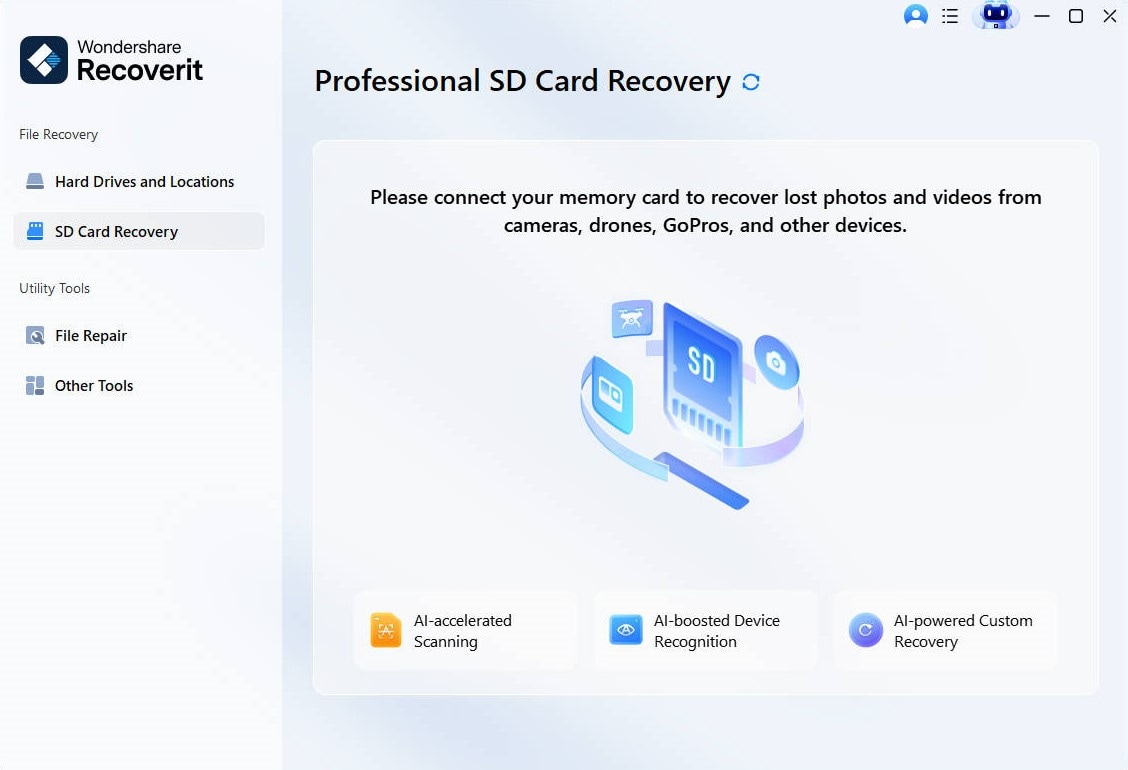
- Scan The Card: Start the scan without writing anything to the source card. Browse by file location or file type, search by name, and use filters to narrow large result sets.
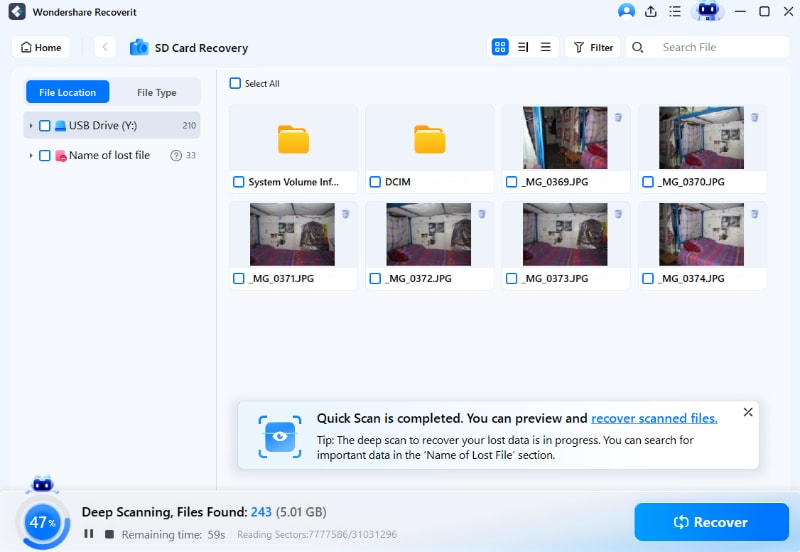
- Preview The Results: Open supported photos, videos, documents, and other files to confirm that the content is usable.
- Recover To Another Drive: Select the files, click Recover, and save them to the computer or a separate external drive. Never save recovered data to the problem SD card.
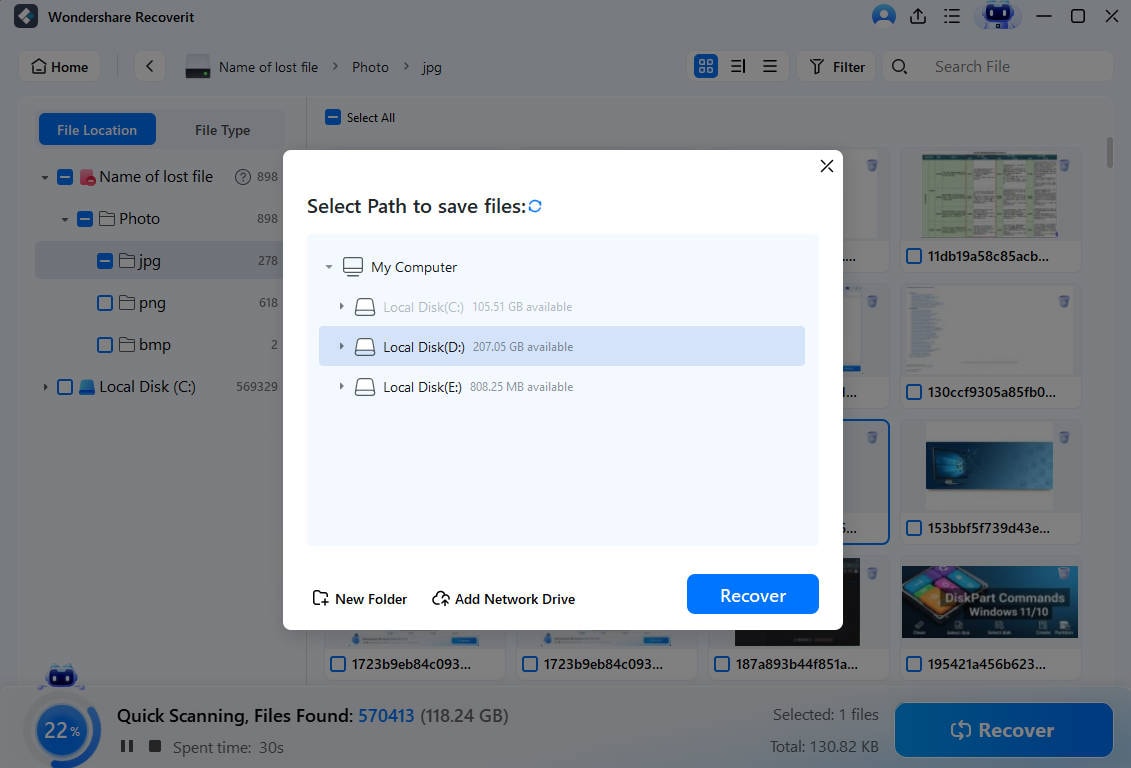
No recovery tool can guarantee every file. Results depend on whether new data overwrote the old content, the extent of file-system damage, encryption, and the card's physical condition. Keep the card idle until the scan and recovery are complete. The broader memory card recovery guide explains supported loss scenarios and recovery limits.
Recover An Unreadable SD Card With Recoverit
Security Verified. Over 7,302,189 people have downloaded it.
Part 5. Fix An SD Card Not Reading On Windows
Windows can detect the physical device even when File Explorer cannot mount its volume. Start with Disk Management, which shows more information than File Explorer. Use Device Manager only when the reader itself is missing or malfunctioning. Reserve CHKDSK for a detected, lettered FAT, exFAT, or NTFS volume after important data is safe.
Method 3. Check Disk Management And Assign A Drive Letter
- Connect the card directly to the computer, preferably without a USB hub.
- Press Windows + X and select Disk Management.
- Find the removable disk by matching its displayed capacity to the card. Never identify it by drive number alone.
- Read the result before taking action: a healthy partition without a letter may only need a letter; RAW or unallocated space requires recovery first; 0 bytes or No Media points away from a simple file-system fix.
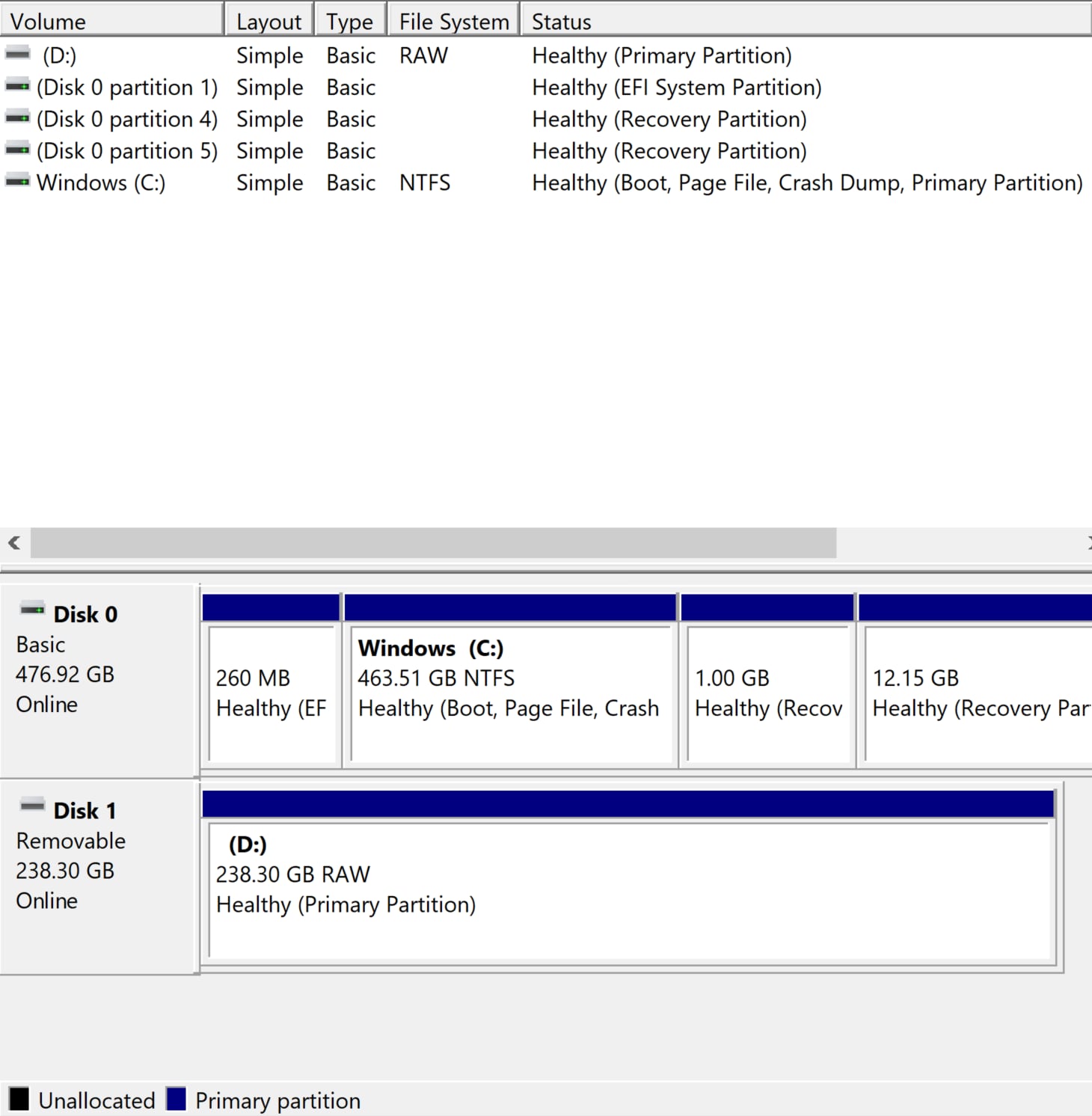
If the partition is healthy and has a recognized file system but no letter, assigning a letter is a non-formatting fix. It tells File Explorer where to mount the existing volume.
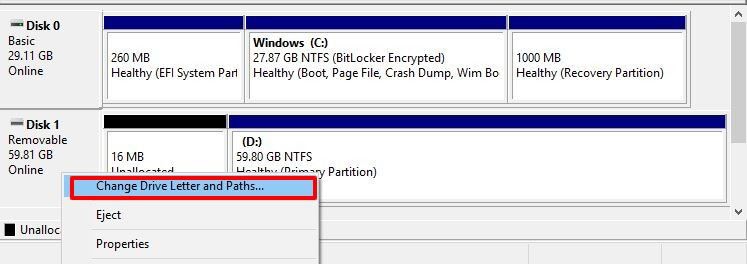
- Right-click the card's existing partition and choose Change Drive Letter and Paths.
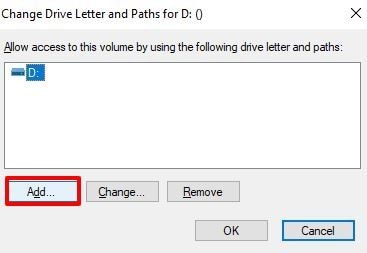
- Click Add if no letter exists, choose an unused letter, and click OK.
Do not use Initialize Disk, New Simple Volume, Delete Volume, or Format when files are still needed. Those options create new storage structures; they do not restore the missing directory. For deeper Windows-only detection issues, continue with the dedicated SD card not detected in Windows guide.
Method 4. Update Or Reinstall The Card Reader Driver
Use this method when Disk Management does not refresh after insertion, Device Manager shows a warning symbol, or another known-good card also fails in the same built-in reader. It repairs the Windows-to-reader connection; it does not repair data stored on the card.
- Install pending driver updates from Settings > Windows Update, including relevant optional driver updates, and restart.
- Right-click Start and open Device Manager.
- Expand Memory technology devices, Disk drives, or Universal Serial Bus controllers. The category depends on the reader.
- Right-click the card reader and choose Update driver.
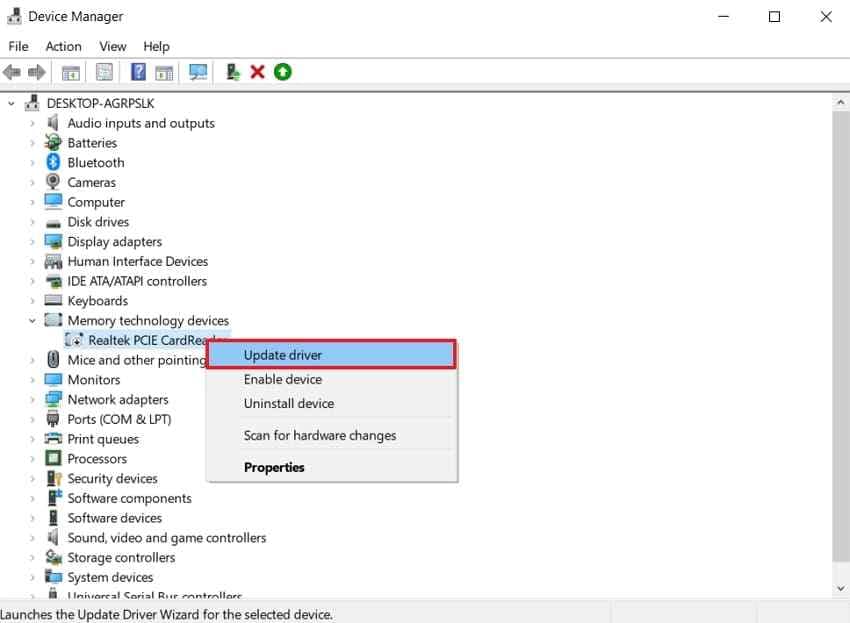
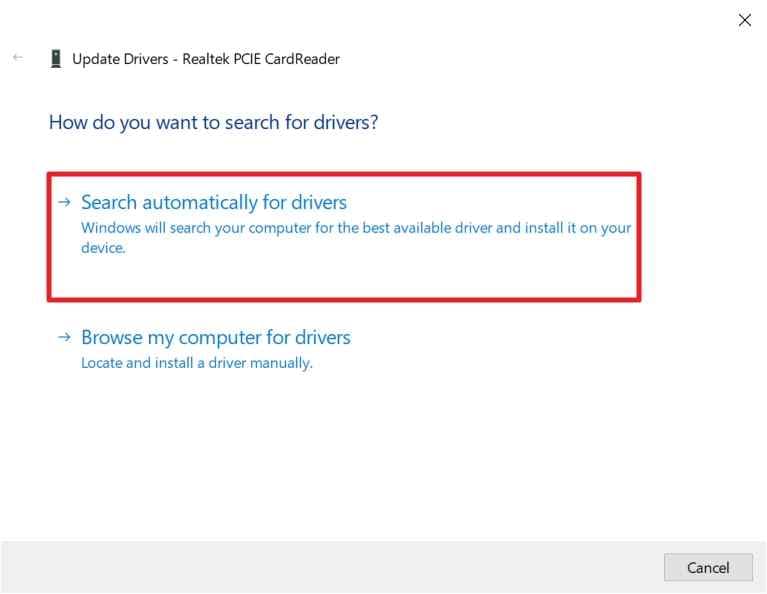
- Select Search automatically for drivers. If Windows finds nothing, check the computer or reader manufacturer's support page for a driver matching the exact model and Windows version.
- If the reader still fails, return to Device Manager, right-click it, select Uninstall device, and restart the computer. Windows should attempt to reinstall the device.
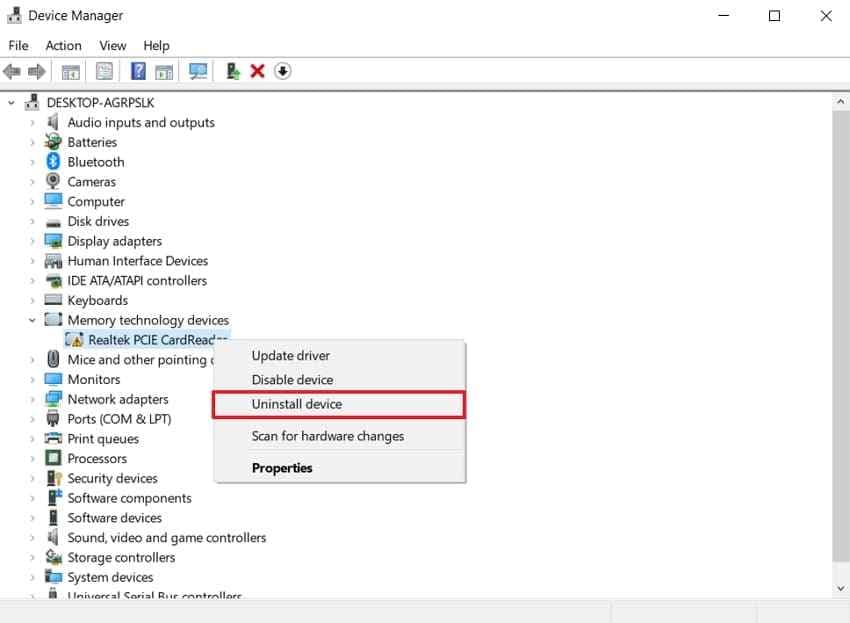
Microsoft's current Device Manager guidance recommends Windows Update, automatic search, or the device manufacturer's site. Avoid third-party driver-download sites. If an external USB reader works while the built-in reader does not, the card itself may be healthy.
Method 5. Run CHKDSK After The Files Are Safe
CHKDSK checks a Windows-readable volume and can correct logical file-system errors. It writes repairs to the card, can remove damaged directory entries, and cannot repair cracked contacts, a failing controller, worn flash, or a RAW volume. Run it only after copying or recovering important data.
- Confirm that the SD card has a drive letter and is shown as FAT, FAT32, exFAT, or NTFS—not RAW—in Disk Management.
- Type cmd in Windows Search, right-click Command Prompt, and choose Run as administrator.
- Enter chkdsk X: /f, replacing X with the SD card's actual drive letter.
- Press Enter and allow the process to finish. Do not remove the card or shut down the computer during the check.
- Reopen the card and copy any newly accessible files to another drive. Retire the card if errors or disconnections return.
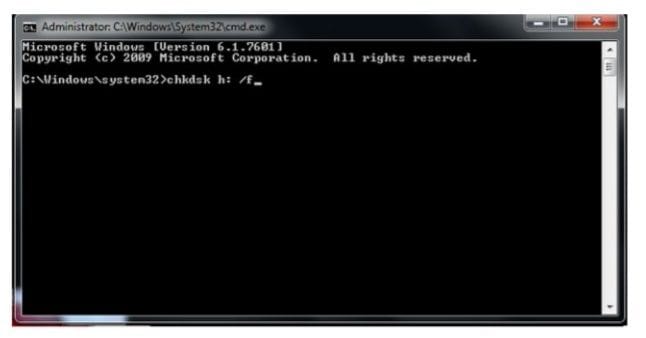
The Command Prompt window can look different across Windows versions, but the current Microsoft syntax remains chkdsk X: /f. The /f parameter fixes logical errors; /r performs a much longer readable-sector search and includes /f. Do not add /r to a failing flash card merely as a stronger first attempt. Microsoft's CHKDSK documentation describes the supported parameters and administrative requirements.
If Windows says CHKDSK is not available for RAW drives, stop. Do not format the card if files matter; return to recovery. If the card is healthy and already backed up, skip repair and reformat it for its destination device.
Part 6. Fix An SD Card Not Reading On Mac
On a Mac, a card may be detected by the hardware but not mounted in Finder. First open Disk Utility, choose View > Show All Devices, and look under External. If the card appears with the expected capacity, protect its data before using First Aid. If it is absent, test the reader, adapter, port, and another compatible device.
Apple notes that Macs with an SD card slot support specific SD standards and that microSD cards require a passive adapter. UHS-II support is limited to listed Mac models, and SDIO cards are not supported. Review Apple's current SD card slot compatibility page when an SDHC or SDXC card fails only on one Mac.
Method 6. Use Disk Utility First Aid After Recovery
- Copy or recover important files before repair if the card is unstable or will not mount.
- Open Applications > Utilities > Disk Utility.
- Choose View > Show All Devices.
- Select the card's volume under External. Verify its capacity so you do not select the Mac's internal drive.
- Click First Aid, then Run.
- If the card has multiple volumes, run First Aid on each volume first, then on the card's container or device, moving upward in the sidebar.
- When the check finishes, try mounting the volume and copy accessible data to another drive.
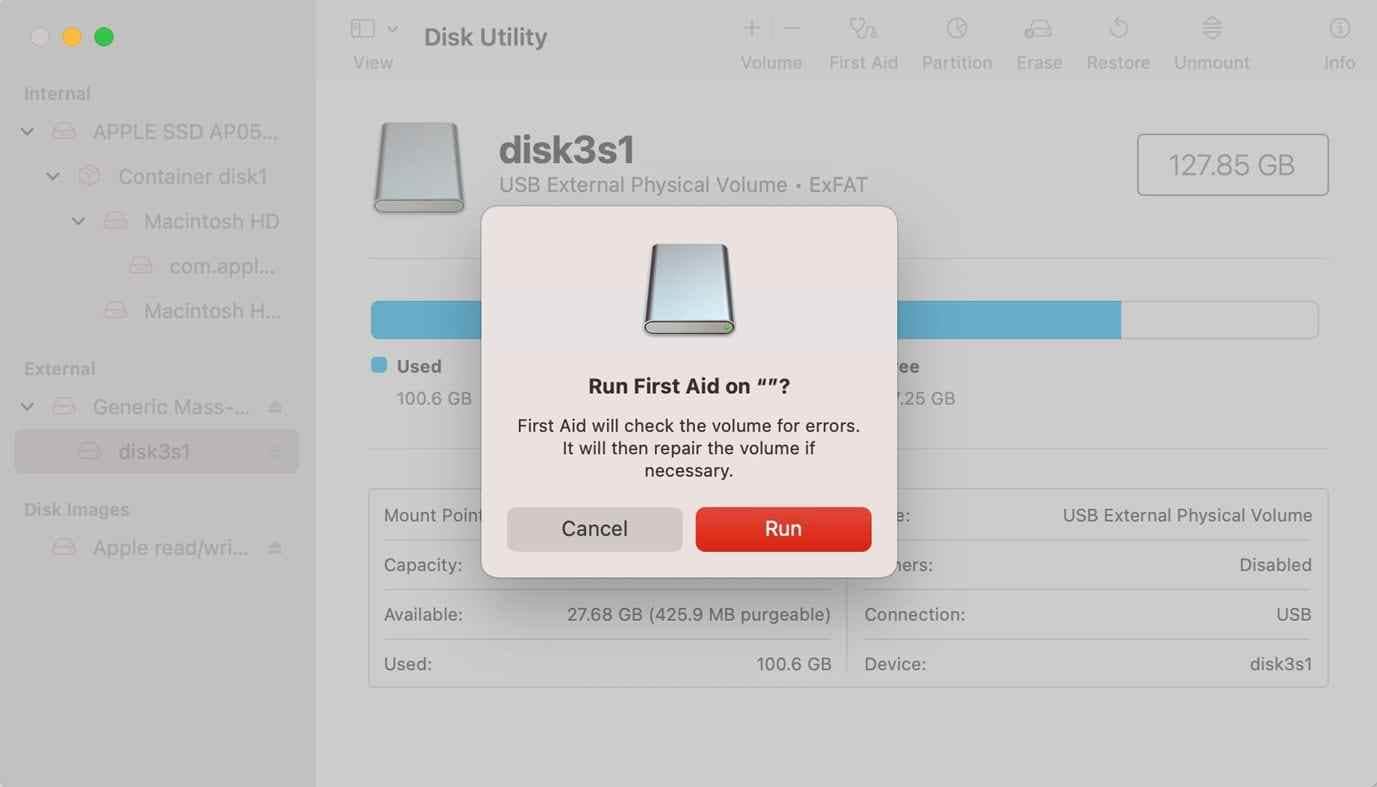
Apple states that First Aid can repair some formatting and directory-structure errors but cannot detect or repair every problem. If Disk Utility cannot repair the card, recover the files and reformat only if the card remains stable. Replace media that repeatedly fails. The separate Mac SD card error guide includes Terminal verification and capacity-testing options.
Part 7. Fix A MicroSD Card Not Reading On A Phone Or Camera
A phone or camera error can come from the host rather than the card. Check the exact model's supported card type, capacity, speed requirements, and file system. A device may support SDHC but not SDXC, or it may require its own directory structure after formatting.
Method 7. Check The Device And Reformat Only As A Last Resort
- Power Off Before Reseating: Turn the phone or camera off, remove the card, check its orientation, and reinsert it fully without force.
- Confirm Compatibility: Check the manufacturer's manual for the maximum capacity and supported SD, SDHC, or SDXC class. For cameras and recorders, also check minimum speed requirements.
- Try A Direct Reader: If a microSD card fails through a full-size adapter, connect it to a computer with a direct microSD reader.
- Protect The Data: If the computer detects the card, copy readable files or scan for missing files before accepting any phone or camera format prompt.
- Restart The Host: Power the device on once without the card, shut it down, reinsert the card, and start it again.
- Format In The Destination Device Only After Recovery: A phone or camera format can recreate the file system and folders the device expects, but it erases the card.
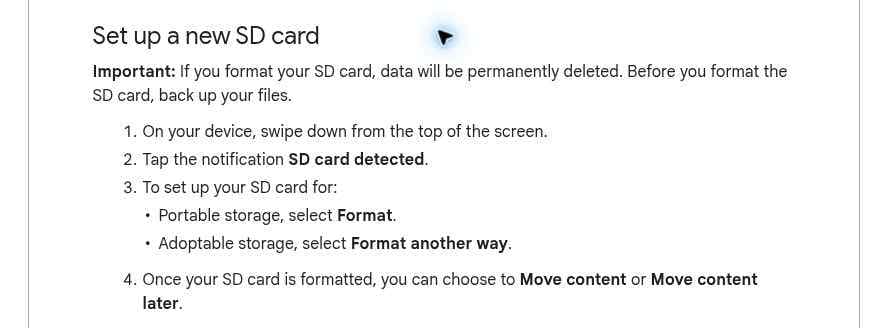
Google's current Android SD card instructions explicitly warn that formatting permanently deletes the data on the card. A card previously formatted as Android internal or adoptable storage is generally encrypted and tied to the original phone; a computer may ask to format it even when nothing is physically wrong.
For a camera, do not use a phone or computer format as the first fix. After recovery, format the card in the camera that will record to it. If the same card fails again, replace it. A card that intermittently disappears is not reliable media for a wedding, flight, dashcam, security camera, or other irreplaceable recording.
Part 8. Reformat A Readable Card For Reuse
Formatting is appropriate when all needed files are backed up or recovered, the card is stably detected with its correct capacity, and you intentionally want to erase it or rebuild its logical file system. Formatting cannot repair physical damage or make an unsupported card compatible with a host.
Method 8. Use The Official SD Memory Card Formatter
The SD Association recommends its SD Memory Card Formatter for SD, SDHC, SDXC, and SDUC cards because general operating-system tools may not be optimized for SD standards.
- Recover or verify every needed file before continuing.
- Connect the card with a stable, compatible reader and close applications using it.
- Open SD Memory Card Formatter and select the card by matching both its drive letter and capacity.
- Choose Quick format for ordinary reuse. Choose Overwrite format only when you deliberately want a longer erasure and do not need further recovery.
- Enter a volume label if desired, click Format, and confirm.
- Eject the card safely, insert it into the destination phone or camera, and let that device perform any additional setup it requires.
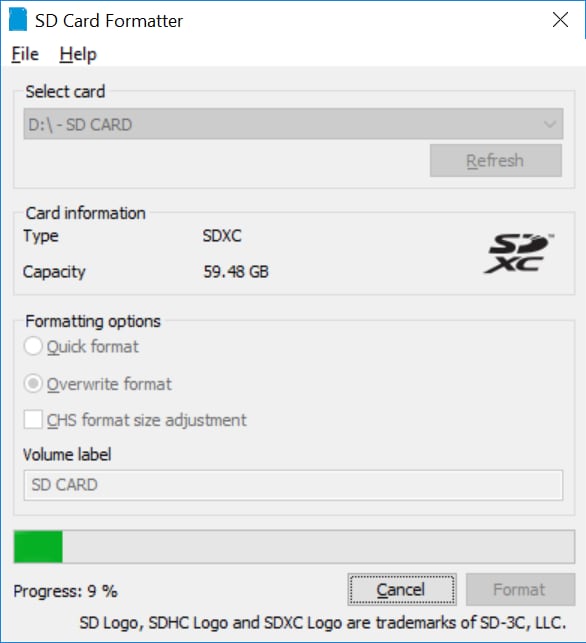
Use the device's own format command after recovery when the card will live in a camera, Android phone, dashcam, or console. Under SD standards, SDHC normally uses FAT32 while SDXC and SDUC use exFAT. Forcing NTFS or a nonstandard FAT32 layout can make a card unreadable to another device. The microSD card formatting guide compares current Windows, Mac, Android, and official formatter paths.
If the format fails, the reported capacity changes, the card becomes read-only again, or errors return soon afterward, retire the card. Repeated formatting is not maintenance and does not restore worn flash memory.
Part 9. When To Stop DIY Repair
Software fixes require a stable device. Stop home troubleshooting when the card shows signs of electrical, controller, or physical failure. More scans and repair writes can reduce the chance of recovering irreplaceable data.
- The card is missing from Disk Management, Disk Utility, and every compatible device after one controlled reader test.
- Windows shows No Media, 0 bytes, or a wildly incorrect capacity.
- The card gets noticeably hot, disconnects during reads, or repeatedly resets the reader.
- The shell is cracked, the contacts are missing, the card is bent, or it has liquid, fire, or impact damage.
- The card contains irreplaceable data and is making unusual behavior worse with each attempt.
- The card was part of a legal, medical, business, or forensic matter where preserving evidence and chain of custody matters.
Do not freeze the card, bend it, heat it, sand the contacts, open the plastic shell, solder it without specialist equipment, or follow “short the pins” tricks. A professional lab may use controller-specific procedures or direct flash-memory access that ordinary software cannot perform. Ask about evaluation fees, confidentiality, return of the original media, and what happens if recovery is unsuccessful.
Part 10. Why SD Cards Become Unreadable
| Cause | Typical Clue | What Actually Helps |
| Reader, adapter, or port failure | The card works in another compatible reader; a known-good card also fails in the original reader | Replace the adapter or reader, change the port, or repair the host driver. |
| SDHC or SDXC incompatibility | The card fails only in an older phone, camera, or reader | Use a host that supports the card type and capacity. Formatting cannot add hardware support. |
| Missing drive letter or unmounted volume | The card appears with a healthy recognized partition but not in File Explorer or Finder | Assign a Windows drive letter or mount the volume after checking its condition. |
| Unsupported file system | One device reads the card while another requests formatting | Copy the files, then format in the destination device using its supported file system. |
| Interrupted write or unsafe removal | The card failed after battery loss, removal, crash, or cable disconnection | Recover first; then repair or reformat if the media is stable. |
| Logical file-system corruption | RAW volume, mount error, missing folders, or format prompt with correct capacity | Recover data before CHKDSK, First Aid, or formatting. |
| Read-only failure mode | Files can be read but changes never persist, even with the adapter unlocked | Copy the files and replace the card; the controller may be protecting failing flash. |
| Counterfeit or capacity-manipulated media | Files disappear after a threshold, capacity changes, or old data returns after formatting | Stop using the card, recover what remains, verify capacity, and buy replacement media from a reliable seller. |
| Physical or controller failure | No Media, 0 bytes, heat, repeated disconnections, or no detection anywhere | Stop DIY writes and use a professional recovery service if the data is valuable. |
A virus scan is not a universal SD card repair. Malware can hide or alter files when the card is readable, but it does not explain an undetected controller, unsupported SDXC card, broken adapter, or damaged connector. Scan recovered files and the host computer when malware is a realistic concern; do not treat formatting as proof that physical media is healthy.
Part 11. How To Prevent Another Read Failure
- Keep More Than One Copy: An SD card is working media, not the only backup. Move irreplaceable files to another drive or trusted cloud service promptly.
- Eject Before Removal: Stop recording, wait for the activity light, and use the device's eject or unmount command before opening a tray or disconnecting a reader.
- Avoid Power Loss During Writes: Keep cameras, phones, and laptops adequately charged when recording, transferring, repairing, or formatting.
- Use A Compatible Card And Reader: Match SDHC, SDXC, or SDUC support, capacity limits, speed requirements, and the destination device's file system.
- Format For A Purpose, Not A Schedule: Reformat in the destination device when changing use or rebuilding a backed-up card. Routine repeated formatting does not extend flash life.
- Replace Unstable Media: Random unmounts, repeated read-only mode, corrupted new files, or recurring format prompts are retirement signals.
- Verify Important Transfers: Open a sample of copied photos, videos, and documents before erasing or reusing the original card.
- Protect The Contacts: Store cards in cases, keep them dry, avoid static and extreme heat, and do not force them into a slot.
The safest sequence for an SD card that will not read is: identify where detection stops, isolate the reader and host, protect the files, apply only the repair that matches the diagnosis, and replace unreliable media. A format prompt is a decision point—not the diagnosis.
Conclusion
When an SD, SDHC, SDXC, or microSD card is not reading, begin with detection and compatibility rather than repair commands. Test the adapter, reader, port, and one other supported device. Then check Disk Management or Disk Utility to learn whether the card is absent, detected without a mount point, RAW, or visible with a normal file system.
If files matter, copy or recover them before CHKDSK, First Aid, partition changes, or formatting. Recoverit can scan a removable card that Windows or macOS can detect, but no software can scan a device that is not addressable. Stop DIY attempts when the card reports No Media or 0 bytes, overheats, disconnects repeatedly, or remains invisible across compatible readers.
FAQ
-
Why Is My SD Card Not Reading?
An SD card may not read because of a faulty reader or adapter, an unsupported SDHC or SDXC capacity, a missing drive letter, an unmounted or unsupported file system, logical corruption, read-only controller mode, or physical failure. Check whether the card appears in Disk Management or Disk Utility before choosing a fix. -
Why Is My SD Card Reader Not Reading Any Card?
If multiple known-good compatible cards fail in the same reader, test another USB port without a hub, restart the computer, install Windows or macOS updates, and try another reader. On Windows, update or reinstall the card-reader device through Device Manager. A reader problem does not require formatting the cards. -
Can I Fix An SD Card That Cannot Be Read Without Formatting?
Sometimes. A different reader, a compatible host, a missing Windows drive letter, a reader-driver reinstall, or mounting the volume can restore access without formatting. If the file system is damaged, recover important files first. CHKDSK and First Aid modify metadata, so they are not risk-free substitutes for backup. -
Why Is My SDXC Card Not Reading In An Older Reader?
An SDXC card requires an SDXC or SDUC host. An original SD or SDHC-only reader may accept the card physically but cannot address it correctly. SDXC also uses exFAT under the SD standard, so an older operating system or embedded device without exFAT support may request formatting. -
Why Does My MicroSD Card Work In My Phone But Not My Computer?
The full-size adapter or computer reader may be faulty or incompatible, the Windows volume may lack a drive letter, or the card may use a file system the computer does not mount. If Android formatted it as adoptable internal storage, it is generally encrypted and tied to that phone. -
Should I Run CHKDSK When My SD Card Won't Read?
Only after important files are copied or recovered and only when Windows shows a lettered FAT, FAT32, exFAT, or NTFS volume. Do not run CHKDSK on a RAW, 0-byte, No Media, unstable, or physically damaged card. CHKDSK writes repairs and cannot fix hardware failure. -
What Should I Do If Windows Says The SD Card Is RAW?
Do not format, initialize, create a volume, or run CHKDSK if files matter. Confirm that Disk Management shows the expected capacity, then scan the card through a stable reader and save recovered files to another drive. After recovery, reformat the card only if it remains stable. -
Why Does My Phone Say The MicroSD Card Is Unsupported?
The phone may not support the card's capacity or file system, the card may have damaged metadata, or it may have been configured as internal storage in another phone. Decline the format prompt if files matter, then test the card in a compatible computer and reader. -
Can Recoverit Recover An SD Card That Is Not Detected?
Recoverit can scan a card when Windows or macOS detects it as an addressable device, including some RAW or unallocated cases. It cannot scan a card that is absent in every compatible reader, reports No Media or 0 bytes, or has a dead controller. Those cases may require professional recovery. -
Should I Keep Using A Card That Became Readable Again?
Copy and verify the files immediately. A one-time adapter or drive-letter issue may not implicate the card, but recurring disconnections, read-only mode, corrupted new files, format prompts, or capacity changes are reasons to replace it. Do not trust repeatedly unstable media with the only copy of important data.


