
 TL;DR:
Resolve Fujifilm camera SD card recognition errors by ensuring the physical lock switch is disengaged, gently wiping the gold contacts to remove connection-blocking residue, and formatting the card directly within the camera setup menu to establish a native file structure.
● Perform a full, rather than quick, format on a computer to repair deeply corrupted storage sectors if the camera repeatedly prompts a Memory Full or Card Error message and native formatting fails.
● Installing patches for hardware communication failures requires downloading the correct firmware .DAT file to an SD card, inserting it, and holding the DISP/BACK button while powering on the Fujifilm body.
● Data recovery tools like Recoverit can reconstruct fragmented videos and restore Fujifilm RAF RAW images from formatted or inaccessible cards, but they cannot bypass mechanical camera slot failures.
Ask AI for a summary
 ChatGPT
 Perplexity
 Gemini
 Claude
 Grok
Grok
A photographer depends entirely on the reliability of their digital storage media. Yet nothing disrupts a professional workflow faster than a sudden technical equipment failure. Your production may halt when you encounter a specific Fujifilm camera card error.
This critical issue prevents the system from indexing your media files. Still, various techniques can often resolve these common hardware communication failures. Thus, this guide will help you restore access, along with preventing future SD card issues.
Try Recoverit to Perform Data Recovery
 Security Verified. 3,591,664 people have downloaded it.
Part 1. Fujifilm Camera Card Error – Overview
A Fujifilm card error occurs when the camera cannot read or write data. To understand these problems better, explore the common errors, causes, and symptoms below:
Common Fujifilm Camera Card Errors You Should Know About
Finding a proper Fujifilm card not initialized fix often begins with identifying messages. The following table summarizes the most frequent error codes faced by your cameras:
| Error Message | What It Means |
|---|---|
| Card Not Initialized | The card is not formatted properly or has logical corruption |
| Card Error/Memory Card Error | The camera failed to access the card due to damage or connection issues |
| Card Not Recognized/No Card | The camera cannot detect any usable card |
| Read/Write Error | Data corruption or failing storage cells on the SD card |
| Protected Card | SD card lock switch is enabled |
| Busy/Memory Full | The card is incorrectly formatted, or the storage is full |
Fujifilm Camera Card Error - Why It Happens
It is also vital to understand why a “Fujifilm camera SD card not recognized” error occurs. Thus, below are a few common causes why you face this specific dilemma:
- Logical Corruption: Software glitches often damage the file system structure on your memory storage card.
- Physical Damage: Some kind of scratches on the card surface prevent the camera from reading data.
- Dirty Contacts: A few dust particles or oils on the metal pins also block the necessary electrical connection.
- Incompatible Format: The camera cannot process a card formatted using an unsupported computer system.
- Power Failure: Many times, a low battery or sudden shutdown during a save operation can corrupt the entire directory.
Common Symptoms of a Fujifilm Camera SD Card Not Recognized
When your camera cannot read the card, it shows clear warning signs quickly. Below are common signs that help you understand this problem easily:
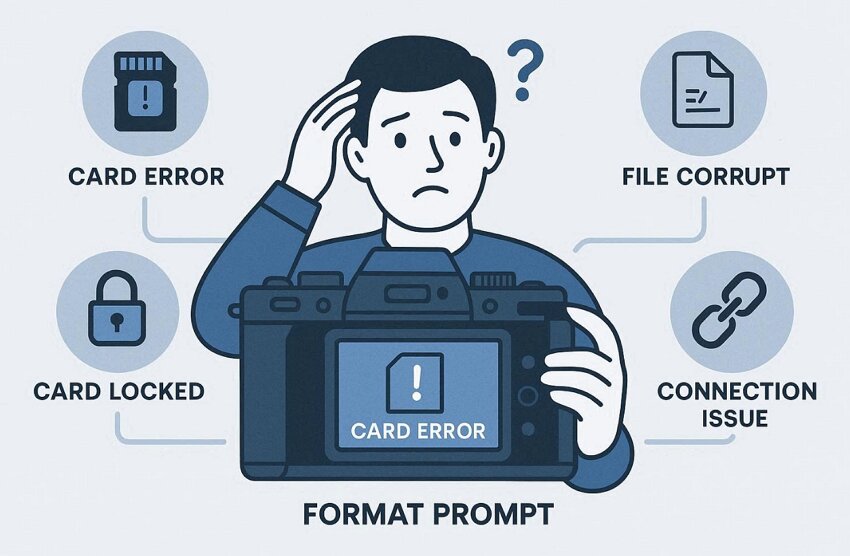
- Card Error: The camera shows a card error message when it cannot read or write data properly.
- File Corrupt: Some images appear broken or cannot open due to file damage issues.
- Connection Issue: The card may not fit properly or lose connection inside the camera slot often.
- Locked Warning: Fujifilm camera shows card locked warning even when the lock switch is not enabled.
- Format Prompt: Camera keeps asking to format the card again and again after each restart.
Part 2. How to Fix Fujifilm Card Not Initialized and SD Card Issues
As a Fujifilm camera card error stops your workflow, several reliable methods can resolve it. Yet, the given 9 solutions provide practical ways to restore your device to full working order:
Fix 1. Restart the Camera and Reinsert the Card
Restarting your digital camera can often clear temporary system communication errors. This simple action resets the internal software responsible for reading memory storage. You must then perform a Fujifilm card not initialized fix by reinserting the media. Alongside that, remove the SD card and then slide it back into the slot. Thus, this method resolves minor glitches without risking your important image data.
Fix 2. Check the SD Card Lock Switch Is Unlocked
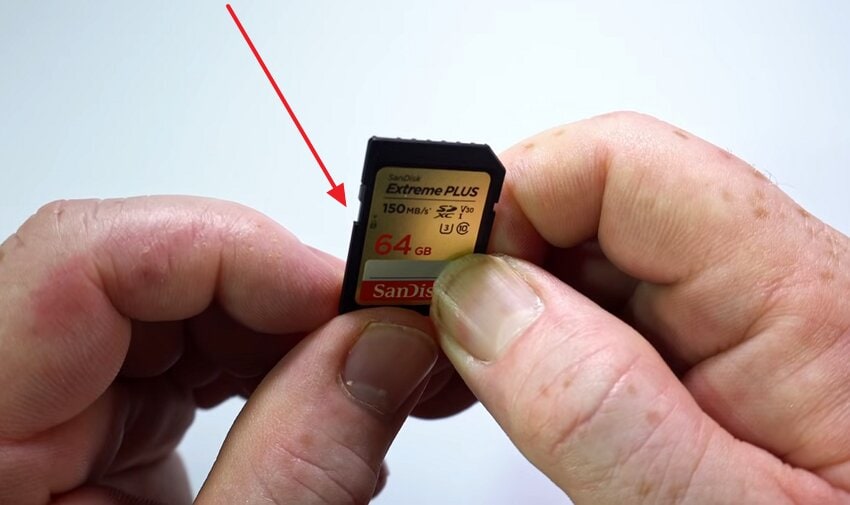
Every standard SD card features a small plastic switch on the left side. This physical slider controls the ability of your camera to write new data. Yet, a locked card might also trigger a Fujifilm camera memory card error message. Therefore, you must ensure the switch is pushed toward the gold contact pin end. This simple check prevents the camera from blocking your essential image-saving process.
Fix 3. Clean SD Card Contacts and Slot Gently
Dust or oily residue on the metal pins often causes a Fujifilm camera card error. These particles block the electrical signals required for consistent data transfer operations. You should use a clean microfiber cloth to wipe the gold contacts with care. A soft cotton swab can also reach deep inside the camera card slot. Therefore, ensure you do not leave any loose lint behind during this cleaning process.
Fix 4. Try a Different Compatible SD Card
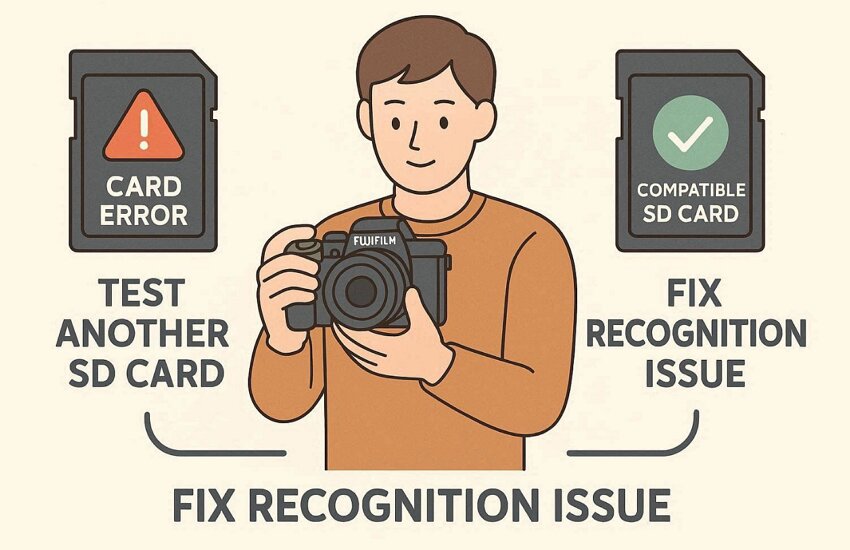
You should also test a secondary memory card to determine if the original storage is faulty. Sometimes, repeated Fujifilm camera SD card not recognized errors come from damaged storage cards. Thus, using a new, quality card allows smooth communication with your device’s firmware. So, this diagnostic step narrows down the source of your technical storage problem.
Fix 5. Test Card in Another Camera or Card Reader
Apart from the above, you can test or insert the memory card into a separate camera or computer. This action helps determine if the specific camera slot has a mechanical failure. Moreover, a separate device may bypass a false Fujifilm camera memory card full error message. So, this approach is quick, reliable, and requires no advanced technical knowledge or tools.
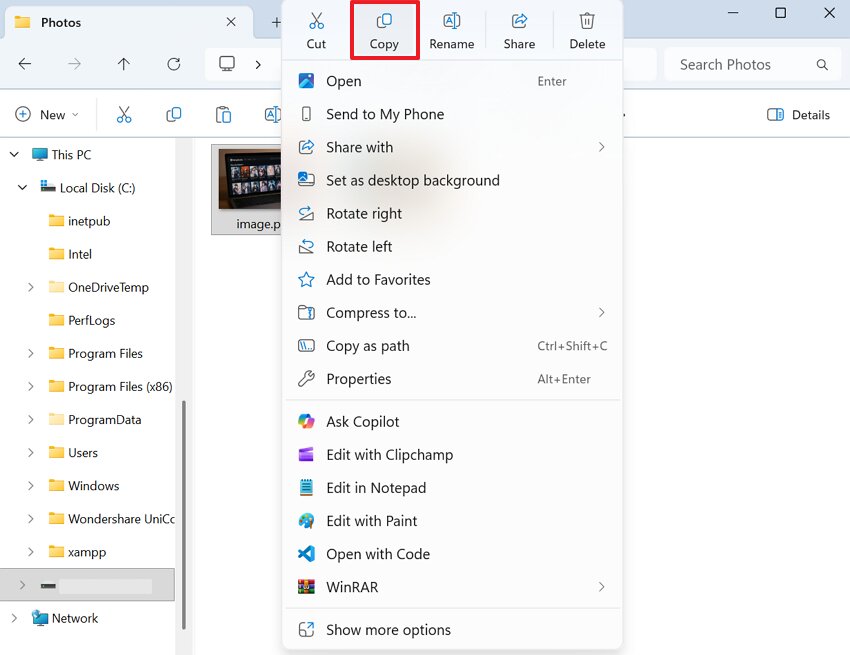
Fix 6. Backup Photos to Computer Immediately (If Readable)
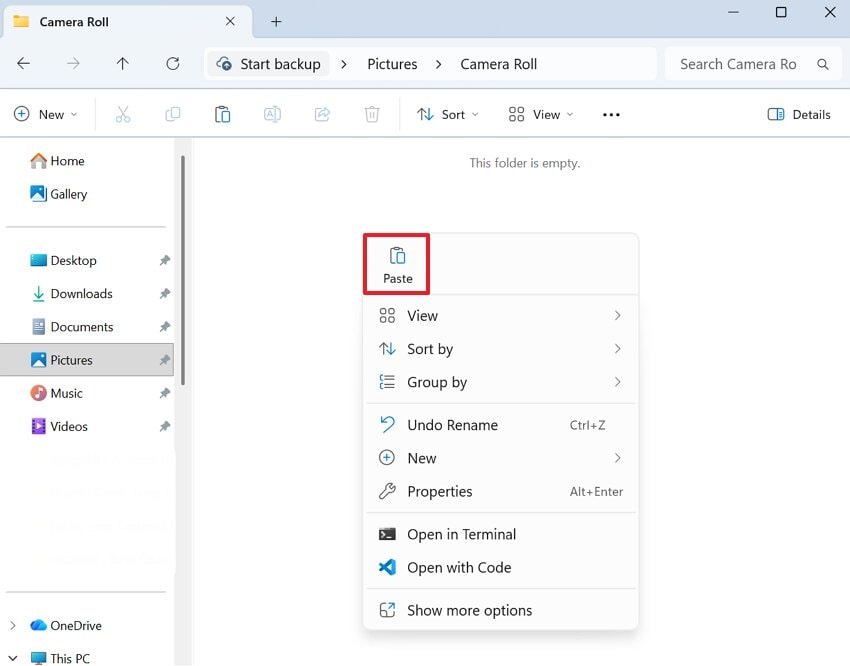
Photographers should prioritize saving their digital images before attempting repair procedures. A reliable computer connection allows you to secure your work against permanent loss. Even if it is partially readable, files can still be copied to another device. It’s an essential part of any Fujifilm card not initialized fix process, helping preserve your work. Thus, adhere to the instructions given below to transfer your media to a new location:
- Upon connecting your memory card to the PC, navigate to its storage from “File Explorer.” Then, right-click the media files and opt for the “Copy” option.
- After that, access your computer storage and right-click the empty area to choose “Paste.”
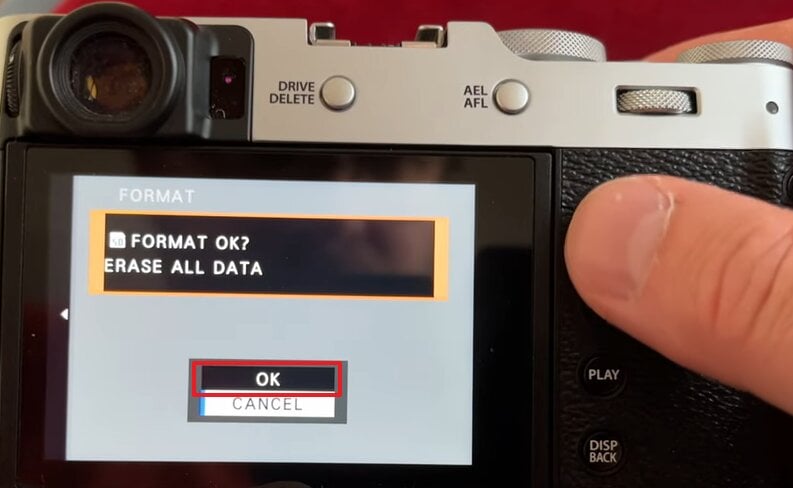
Fix 7. Format SD Card in Fujifilm Camera Menu
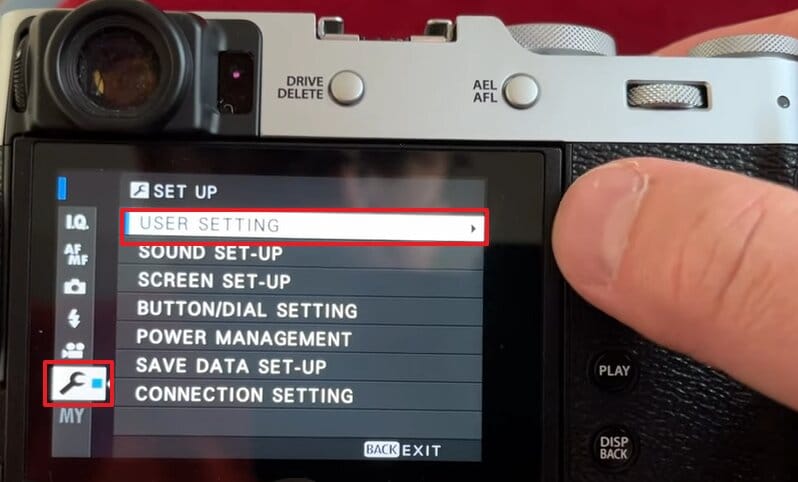
Formatting your memory card within the camera ensures maximum compatibility with the system. This process builds a fresh file structure that the internal firmware understands. Besides, a clean format can resolve the " Fujifilm camera SD card not recognized error. It also optimizes the storage space for high-speed data writing during your professional shoots. So, follow these simple menu navigation steps to format your storage media:
- Press the “MENU/OK” button to access the menu display and head to the “Set Up” tab. Going ahead, you need to go to the “User Setting” section.
- Now, navigate to the “Format” option.
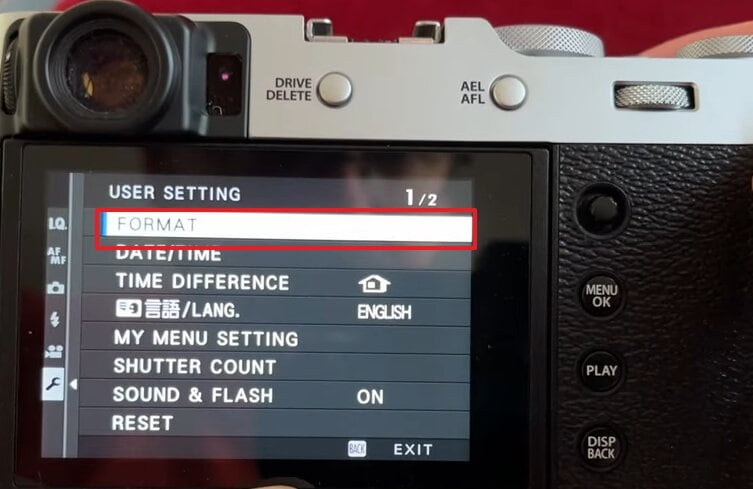
- As you see a new display, press the “OK” button to complete the task.
Fix 8. Format SD Card on Computer (Full, Not Quick)
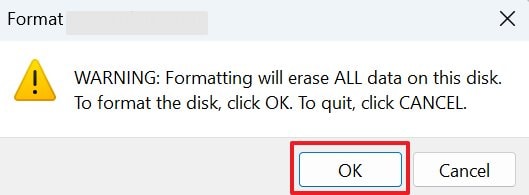
A full format on your computer helps repair deeply corrupted file system sectors. This process erases residual data that causes issues like the Fujifilm camera memory card full error. Moreover, such a complete format rebuilds the file structure, ensuring a reliable storage foundation. It’s ideal when the camera’s native formatting fails to fix recurring errors. Anyhow, review these detailed steps to perform a full format on your computer:
- To initiate, access your connected memory card storage on your “File Explorer.” Next, you need to right-click on it and choose “Format.”
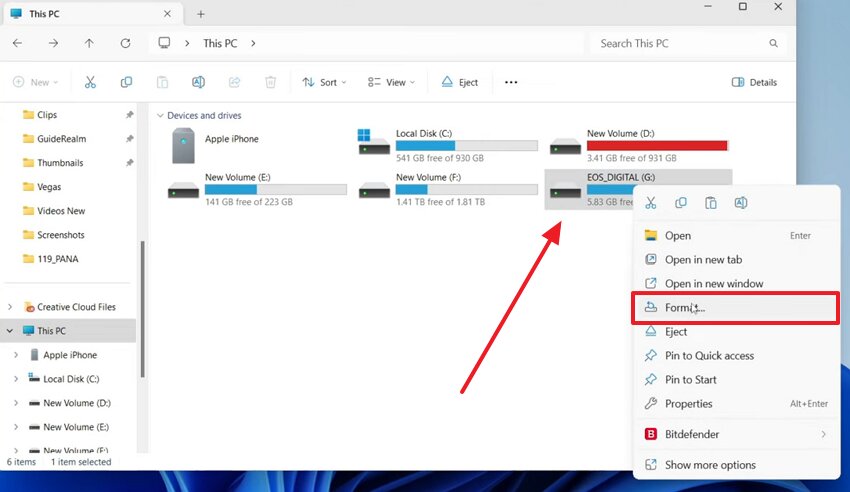
- Go ahead and disable the “Quick Format” box, then click “Start.”
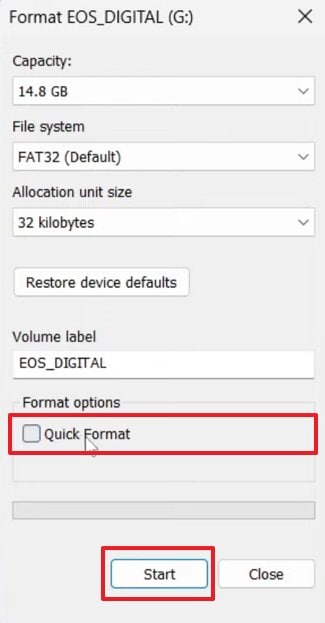
- Upon seeing a small prompt, click the “OK” button to initiate formatting.
Fix 9. Update Fujifilm Camera Firmware
Installing the latest camera firmware can also resolve various internal software communication bugs. Manufacturers often release updates to fix a persistent Fujifilm camera card error. This technical process improves how the device interacts with modern SD cards. Along with that, newer software versions often include patches for common data writing failure issues. So, take guidance from the steps to download and install the latest firmware update:
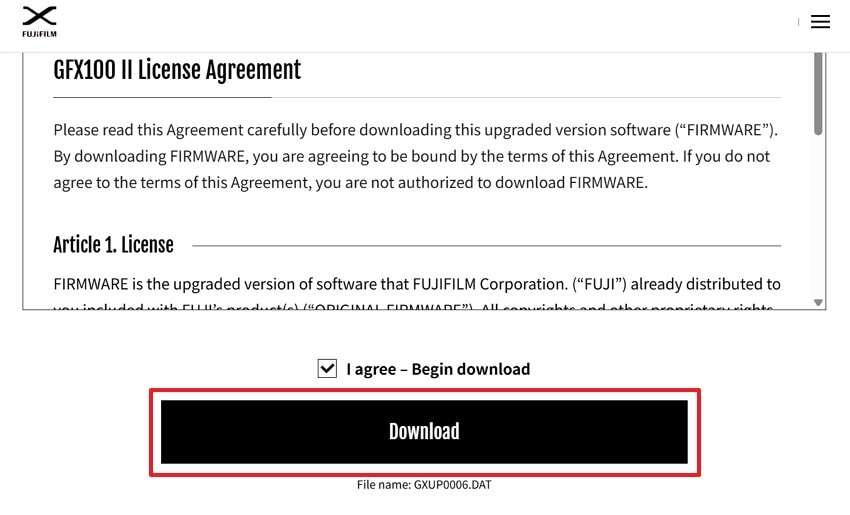
- Go to the “Fujifilm’s Official Support/Firmware” page on your computer for your camera model. After that, scroll down to check the “I Agree - Begin Download” box and press “Download.”
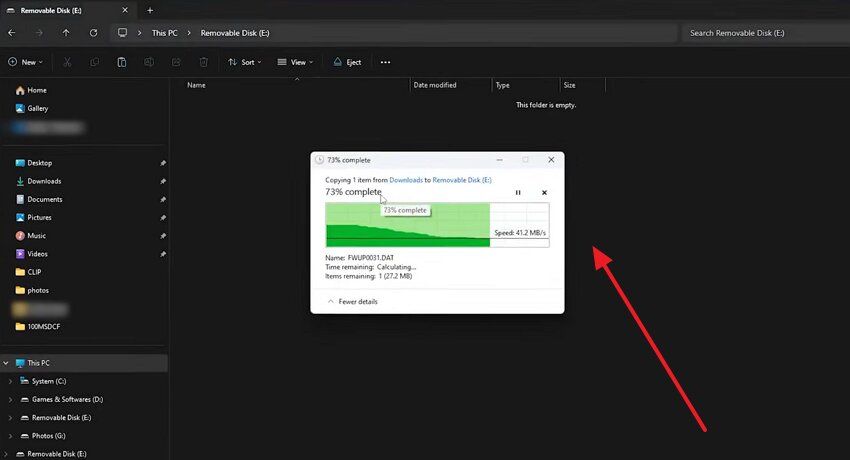
- Next, insert your camera’s memory card into the PC and move the downloaded “.DAT” file to it.
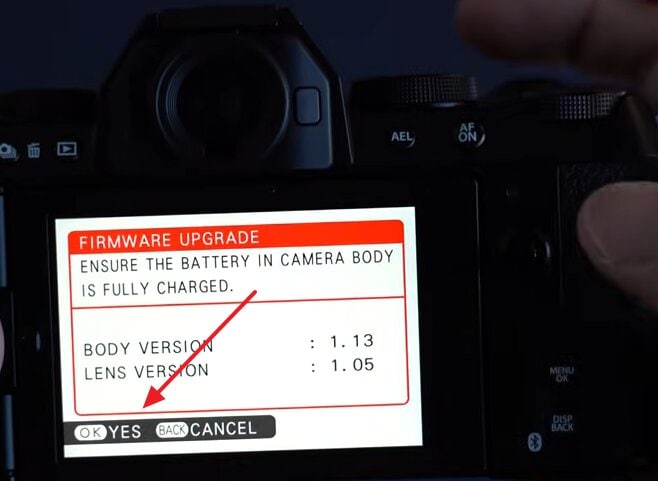
- Going ahead, reinsert the memory card into the camera, and keep pressing “DISP/BACK” while turning it on. Upon seeing the firmware screen, choose the “Yes” option.
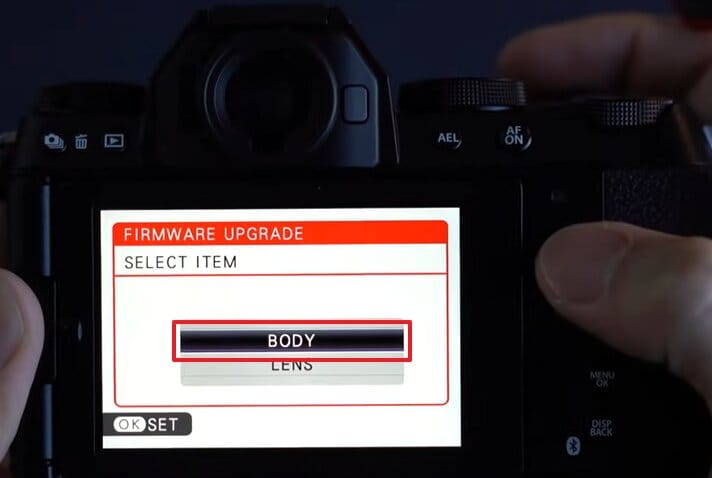
- You need to opt for “Body” on the upcoming display.
- As you head to the confirmation prompt, press the “OK” button.
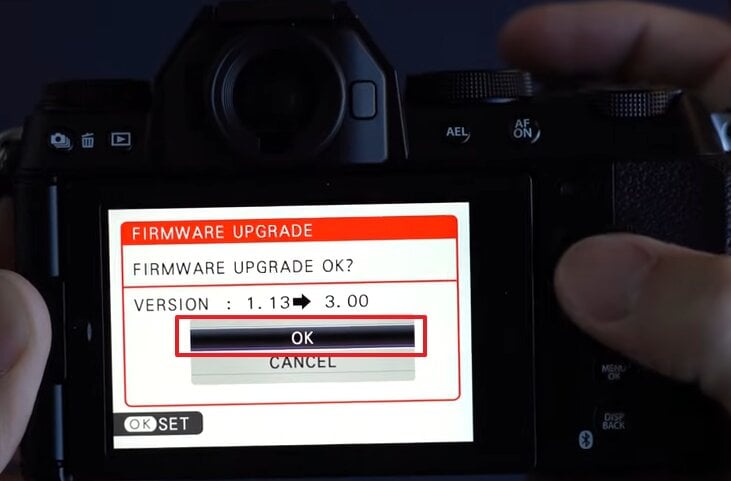
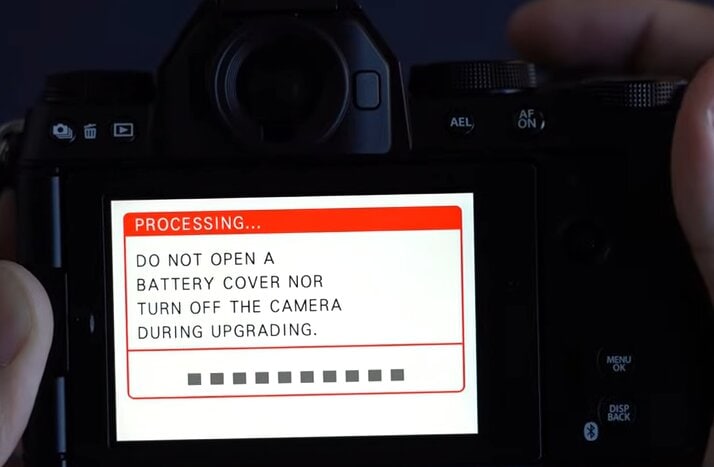
- When the update process starts, don’t press buttons or turn off the camera until the progress bar completes.
Pro Tip. Restore Lost Files from a Fujifilm Memory Card Using Recoverit
When a critical Fujifilm camera card error leads to missing media, data recovery becomes just as important as fixing the hardware issue. To address this need, Recoverit helps users rescue media from corrupted or even formatted Fujifilm SD cards. It supports a wide range of memory card types and brands, including SD and CF. Alongside that, the program can handle over 1000 file formats, including Fujifilm RAF RAW images.
Moreover, patented technology scans and matches fragmented video files for a complete recovery. A native preview lets you check media before restoring, allowing selective recovery. In addition, powerful filtering and search tools help you locate specific shoots or file types among libraries. Along with that, this powerful tool can recover 500MB of data for free regardless of the specific cause of your card failure.
Key Features
- Deep Scanning: Runs advanced scans to detect hidden and severely corrupted files with higher recovery accuracy.
- RAW Recovery: Can restore data from RAW file systems when memory cards become inaccessible or unreadable.
- Video Fragment Repair: Reconstructs fragmented videos from extended Fujifilm shoots to ensure smooth playback.
Guide to Retrieve Lost Files from a Fujifilm Memory Card via Recoverit
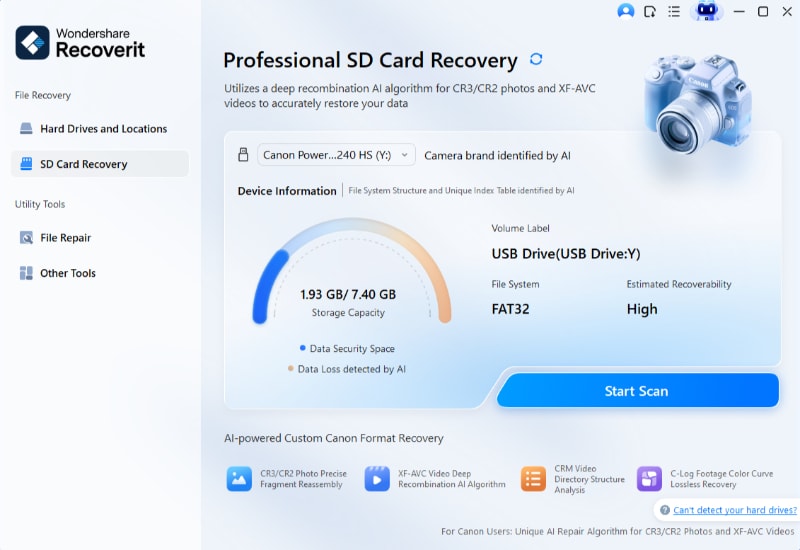
Recoverit provides a straightforward process to retrieve lost Fujifilm memory card files. So, the following instructions will guide you through the entire data restoration process:
- Select the Fujifilm SD card in Recoverit
- Scan the Card for Lost Media Files
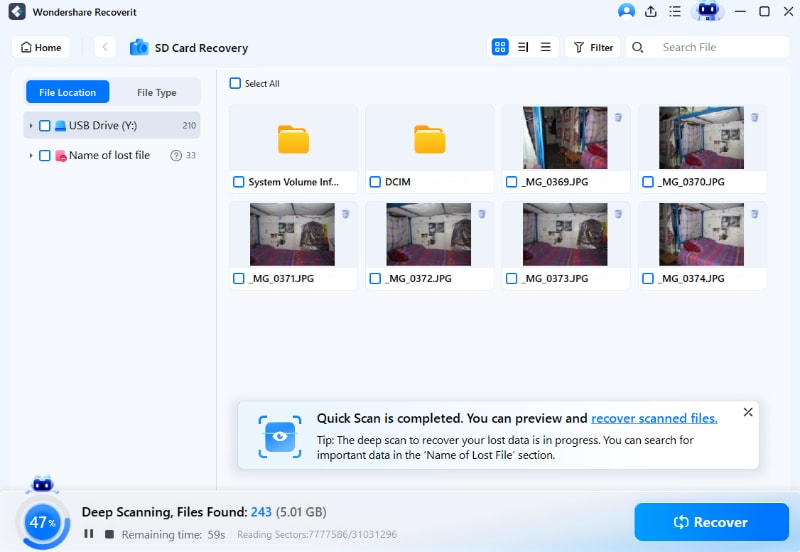
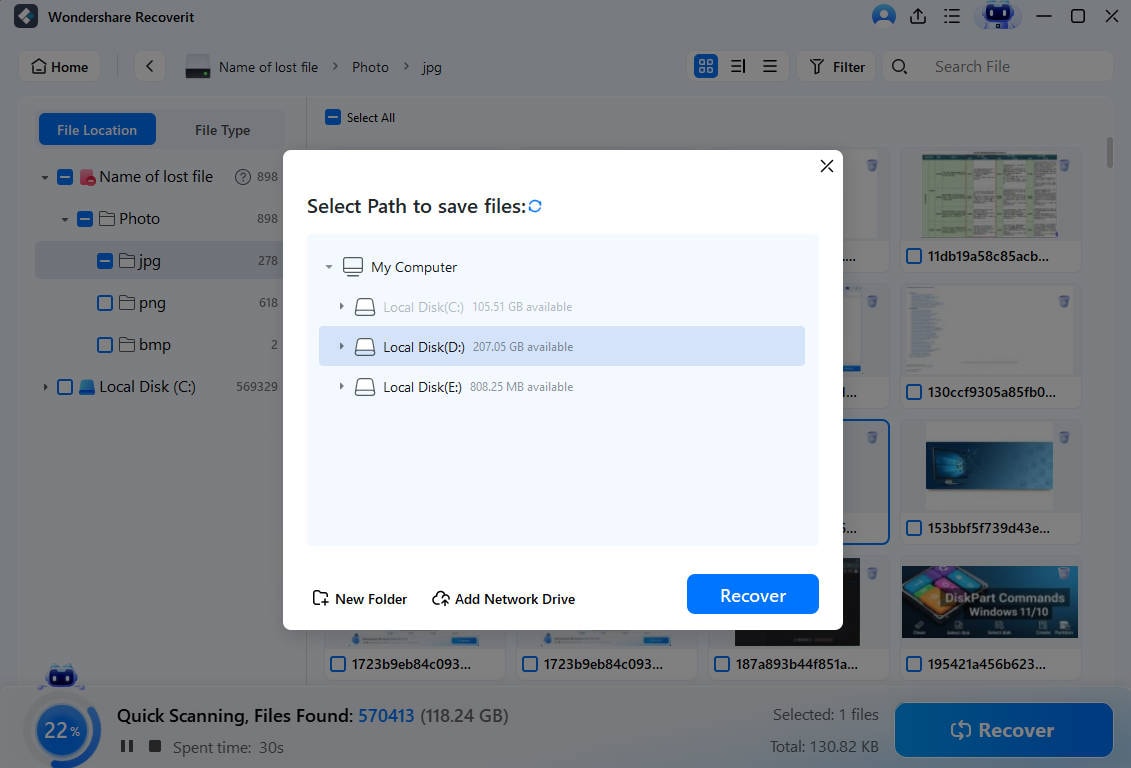
- Preview and Recover Files to a Safe Location
Part 3. 5 Useful Tips to Avoid Fujifilm Camera SD Card Problems
Proper maintenance helps you ensure that the Fujifilm camera SD card is not recognized error never occurs. So, below are essential tips that help maintain card health and ensure reliable performance:
- Quality Cards: Choose reputable brands like SanDisk or Samsung from very trusted retail sellers. Using quality cards reduces the risk of sudden hardware failure during shoots.
- In-Camera Formatting: You must format your memory card inside the Fujifilm camera body. This practice creates a fresh file structure that matches your specific device.
- Careful Handling: Turn the camera off before you remove the card or the internal battery. Plus, waiting for the access light to stop blinking prevents severe logical data corruption.
- Physical Protection: Store your SD cards in a protective plastic case when not in use. Avoid keeping them loose in pockets, as this can cause physical damage or contaminate the contacts.
- Capacity Management: Never fill your storage card to the absolute maximum limit of zero megabytes. Leaving a little extra space helps the camera process and index files.
Conclusion
To conclude, resolving a persistent Fujifilm camera card error requires a very careful approach. By following this detailed guide, you can restore your professional photography storage media. Yet, remember to maintain your SD cards to avoid future technical failures. Consistent formatting and safe handling will keep your digital files secure during shoots. If you still face data loss, use Recoverit to recover your important photographs.
FAQ
-
Q1. Should I use different SD cards for photo and high-resolution video?
High-speed video recording requires specific cards with a V30 or V60 speed rating. Thus, using a slow memory card will definitely cause recording to stop and data corruption. Always check your Fujifilm manual to find the best compatible storage for your needs. -
Q2. Can I recover my files if I mistakenly formatted the wrong card?
Formatting removes the file directory, but the actual data still remains on the chips. In such cases, you can use Recoverit to perform a deep scan and rescue your deleted images. This advanced tool is perfect for recovering work after a mistaken format operation happens. -
Q3. Why does my camera show a card-protected message when unlocked?
The small sensor inside the camera slot might be stuck or damaged by dust. This mechanical failure often prevents the camera from writing new data onto the card. So, try cleaning the slot gently with compressed air to resolve such a hardware problem. -
Q4. Is it safe to use the same SD card across multiple devices?
Using one card across devices may cause compatibility issues and file system conflicts. Different systems may format cards differently, causing recognition problems in Fujifilm cameras later. Users should format the card in the camera before reusing it to maintain proper structure and performance.