

 TL;DR:
If a Fujifilm camera displays a CARD NOT INITIALIZED warning, immediately power off the device and decline all formatting prompts until you have copied or recovered your RAF, JPG, and video files using a computer.
● Connect the card to a stable reader; if Windows or macOS detects the expected capacity but the volume is RAW or inaccessible, scan the physical media with recovery software like Recoverit and save the files to a separate drive.
● Stop software recovery attempts and consider a professional lab if the card becomes hot, repeatedly disconnects, reports an incorrect capacity, or is completely invisible to the operating system.
● Once your data is safely stored elsewhere, resolve the error by wiping the contacts with a soft dry cloth and formatting the card through the camera's USER SETTING menu, or test a known-good compatible card to rule out camera slot failures.
Ask AI for a summary
 ChatGPT
 Perplexity
 Gemini
 Claude
 Grok
Grok
⚡ Quick Answer: Fix Fujifilm Card Not Initialized Safely
Protect Existing Photos: stop using the card and cancel every format, initialize, repair, or partition prompt until important RAF, JPG, and video files are copied or recovered.
Identify The Failure: test the card with a reliable reader and test a known-good compatible card in the camera; this separates a card problem from a camera-slot problem.
Recover Before Repair: if the card appears at its expected capacity but its files are inaccessible, scan the physical card with Recoverit and save the results to another drive.
Use Fujifilm's Fix Order: after the files are safe, clean the card contacts with a soft dry cloth, reinsert it, format it in the camera, and replace it or contact Fujifilm service if the warning persists.
If a Fujifilm camera says CARD NOT INITIALIZED, do not format the card immediately when it contains photos or videos you still need. Power off the camera, remove the card, and stop writing to it. If a computer can detect the physical card, copy readable files or recover the inaccessible files first. Format the card in the Fujifilm camera only after the data is safe.
Fujifilm's current manuals associate this warning with a card that is not formatted for the camera, was formatted in a computer or another device, has dirty contacts, or is involved in a camera malfunction. The exact menu and supported media vary across X Series, GFX, and FinePix models, so use the manual for your camera body when a step differs.
Recover Fujifilm Photos And Videos With Recoverit
 Security Verified. Over 7,302,189 people have downloaded it.
In this article
Part 1. What Does Fujifilm Card Not Initialized Mean?
CARD NOT INITIALIZED means the camera cannot use the memory card in its current state. It does not by itself prove that the stored photos have been erased, and it is not the same message as PROTECTED CARD, NO CARD, or a generic CARD ERROR.
The current Fujifilm warning-message guide provides a useful distinction:
| Camera message | What Fujifilm documents | Safe first response |
| CARD NOT INITIALIZED | The card is not formatted, was formatted in a computer or another device, needs its contacts cleaned, or the camera may have a malfunction. | If files matter, recover them first. Then clean, reinsert, and format in the camera. |
| CARD ERROR | The card may be unformatted, dirty, damaged, incompatible, or affected by a camera malfunction. | Use the broader Fujifilm camera card error guide. |
| PROTECTED CARD | The physical write-protection switch is locked. | Power off the camera, remove the SD card, and move the switch to the unlocked position. |
| NO CARD | The camera does not detect an inserted card. | Reseat the card and test a compatible known-good card. |
| BUSY | The card is incorrectly formatted. | Back up or recover files, then format the card in the camera. |
This distinction matters because a locked SD card is officially associated with PROTECTED CARD, not specifically with CARD NOT INITIALIZED. It is worth checking the switch, but it should not replace the recovery-first workflow for an inaccessible card containing valuable files.
Part 2. Protect The Card Before Trying A Fix
The correct first action depends on whether the card is empty. A brand-new or disposable test card can be formatted in the camera. A card containing an unbacked-up wedding, trip, client shoot, or video session should be treated as a recovery case before it is treated as a formatting case.
- Power Off The Camera: stop recording and wait for the card-access light to stop before opening the card compartment.
- Remove And Label The Card: keep it separate from blank cards so it is not accidentally reused or formatted during the shoot.
- Cancel Destructive Prompts: do not choose Format, Initialize, Erase, New Simple Volume, or DiskPart Clean.
- Do Not Test By Taking Photos: a successful new exposure can overwrite recoverable photo or video data.
- Prepare Another Destination: recovery files must be saved to the computer or a healthy external drive, never to the affected card.
- Stop If The Card Is Unstable: if it becomes hot, disconnects repeatedly, reports the wrong capacity, or is physically cracked, avoid repeated scans and consider a recovery lab.
Formatting is a repair step, not a recovery step. Even when a quick format leaves some old data physically present, it changes the file system and creates unnecessary risk. Recover first whenever the files have value.
Part 3. Diagnose The Card Without Changing It
Use a reliable card reader to determine whether the computer can communicate with the physical media. The goal is observation, not repair.
- Connect The Card Directly: use a stable SD or CFexpress reader that supports the card type used by your Fujifilm model.
- Cancel Format Or Initialize: if Windows or macOS asks to prepare the disk, cancel the prompt.
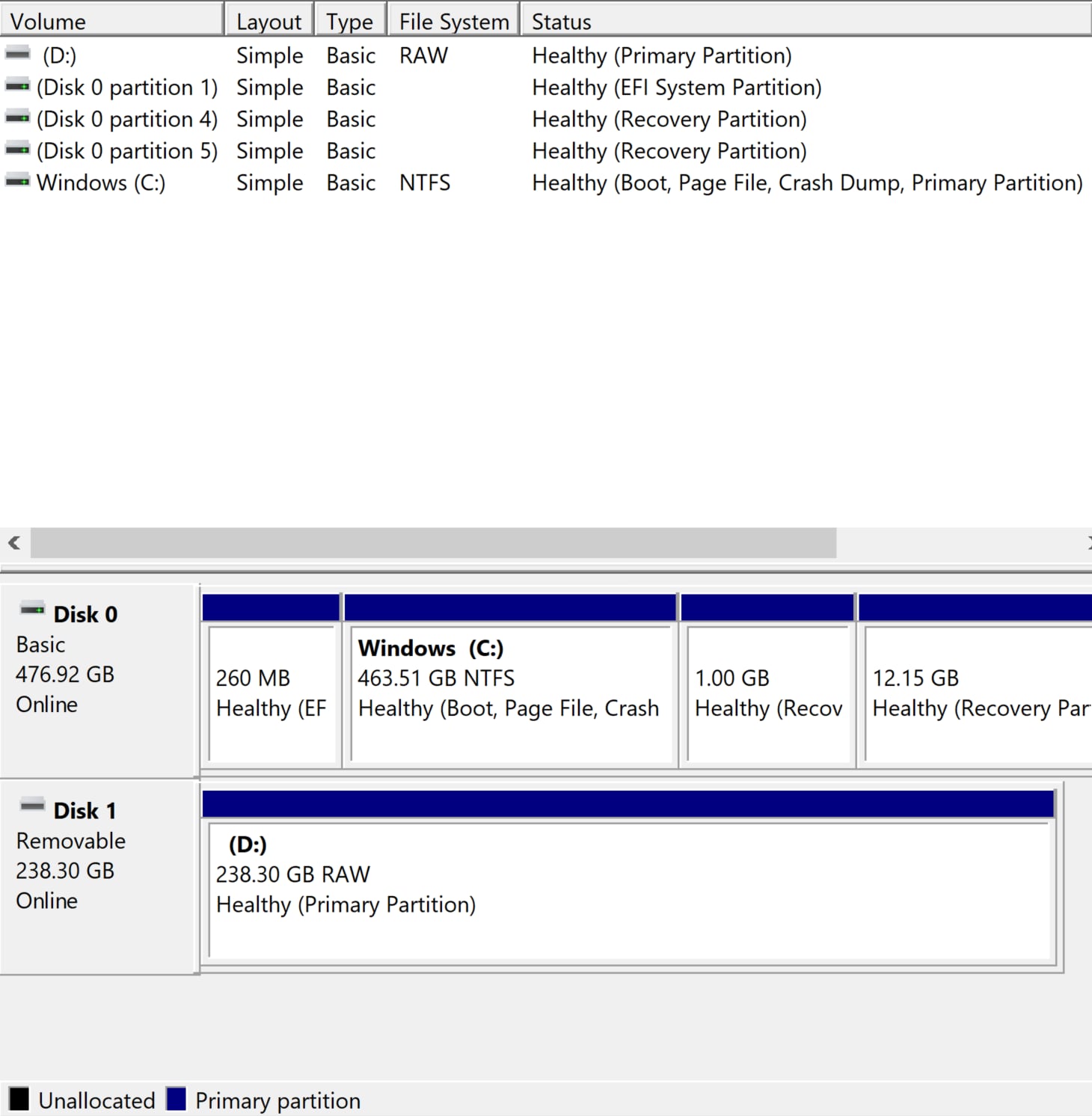
- Check Windows: right-click Start, open Disk Management, and locate the removable card by capacity. Do not initialize it or create a volume.
- Check Mac: open Disk Utility, choose View > Show All Devices, and look for the physical card in the sidebar. Do not run First Aid or Erase yet.
- Record What You See: note whether the card shows the expected capacity, a normal volume, RAW or unallocated space, repeated disconnections, or no device at all.
| Diagnostic result | What to do next |
| The files open normally in File Explorer or Finder. | Copy the complete DCIM and movie folders to another drive, verify representative RAF, JPG, MOV, and MP4 files, then format the card in the camera. |
| The card appears at approximately the correct capacity, but the volume is RAW, unmounted, or inaccessible. | This is a reasonable software-recovery case. Scan the physical card before formatting or repairing it. |
| The card appears, disappears, freezes the computer, or reports a clearly incorrect capacity. | Stop repeated reads. The card may be unstable or failing at the controller level; valuable media may require a professional lab. |
| No computer or known-good reader detects the card. | Consumer recovery software cannot scan a device the operating system cannot see. Test one other reader and computer, then escalate if it remains absent. |
| A known-good compatible card works in the camera. | The original card is the likely fault. Recover its data if possible, then retire it if the error returns. |
| Several known-good compatible cards fail in the same slot. | The camera slot, contacts, or internal electronics may need Fujifilm inspection. |
Part 4. Recover Fujifilm Photos And Videos With Recoverit
If the computer detects the Fujifilm card at its expected capacity but the files cannot be copied or the volume appears RAW, the next step is to recover the media before changing the card. The first recovery method below uses Recoverit because its SD Card Recovery workflow lets Windows and Mac users scan a readable physical card, filter a mixed camera shoot, preview supported media, and save selected results to another drive.
Method 1. When Recoverit Is The Right First Step

| Good fit | Why |
| The Fujifilm camera rejects the card, but Windows or macOS detects it at the expected capacity. | A scan can search the readable media without requiring an in-camera format first. |
| The volume is RAW, unmounted, formatted, or missing its normal folders. | Recoverit can search beyond the normal directory view when the file-system structure is unavailable. |
| The card contains mixed Fujifilm photos and videos. | Recoverit's current specifications list RAF preview and recovery support along with JPG, JPEG, MOV, MP4, and other photo and video formats. |
| You need filters and preview before saving a large shoot. | Filtering by type, extension, date, size, and path can reduce the time spent reviewing many recovered files. |
| The card is physically damaged or absent from every reader and computer. | Not a good fit. Software needs a detected, readable device; stop and consider a professional recovery service. |
See the current Recoverit technical specifications for supported formats and operating systems. For a broader removable-media overview, visit Recoverit Memory Card Recovery. No recovery tool can restore sectors that have already been overwritten or read data from a card that the computer cannot detect.
How To Recover Files From The Fujifilm Card
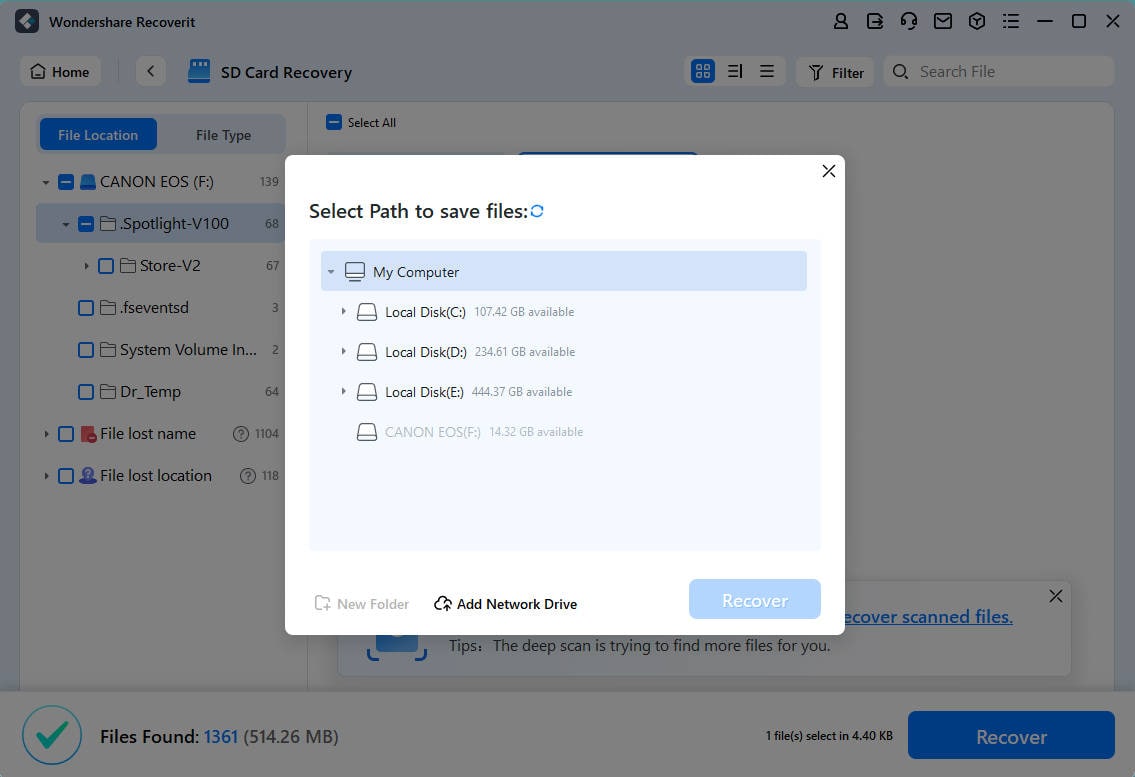
- Connect The Physical Card: insert the card into a compatible reader, connect it to the computer, and cancel any operating-system format or initialize prompt.
- Select The Card: open Recoverit, choose SD Card Recovery, confirm the card by model and capacity, and start the scan.
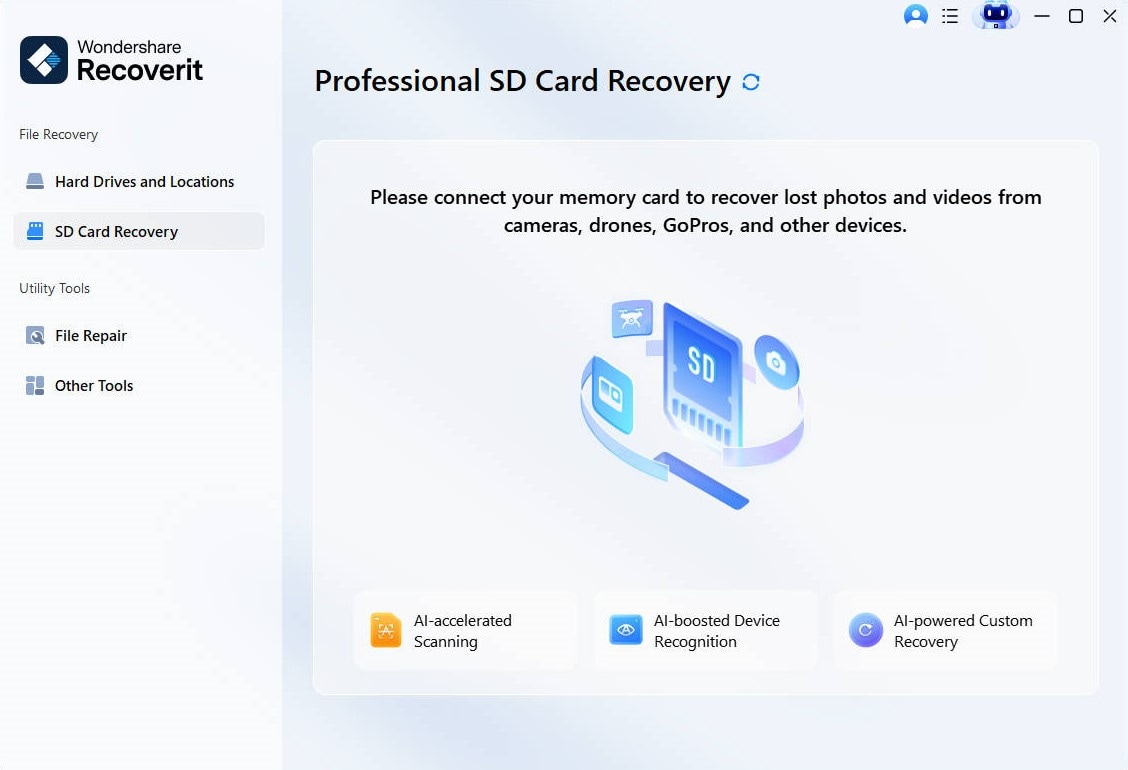
- Let The Scan Continue: keep the reader connected. Review results as they appear, but allow the scan to finish if the required shoot is still missing.
- Filter The Shoot: check Pictures and Videos, then search for Fujifilm RAF files, JPG or JPEG companions, and the MOV or MP4 extension used by the camera.
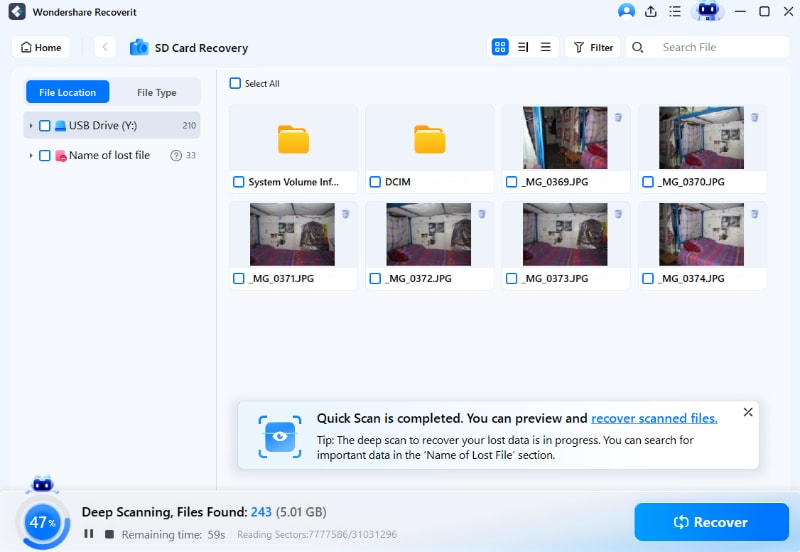
- Preview Representative Files: inspect supported images and videos before recovery. A missing preview is not always proof that a file is unusable because the operating system may lack the required codec or RAW decoder.
- Recover Somewhere Else: choose the required files, click Recover, and save them to the computer or another healthy external drive—not to the Fujifilm card.
Recover Fujifilm Photos And Videos With Recoverit
Security Verified. Over 7,302,189 people have downloaded it.
Open several recovered RAF, JPG, and video files from the destination drive before repairing or reusing the card. For a large shoot, verify full-resolution files rather than relying only on thumbnails. If RAF-specific recovery or preview needs more detail, use the dedicated RAW photo recovery guide.
Part 5. Fix Card Not Initialized After Your Files Are Safe
Once the important files have been copied or recovered, move from non-destructive checks to corrective action. Follow the order below so that each result tells you whether the problem belongs to the card, the camera, or the way the media was prepared.
Method 2. Reinsert The Card And Clean Its Contacts
Fujifilm specifically recommends cleaning the memory-card contacts with a soft, dry cloth when this warning appears. Avoid liquids and do not push tools or swabs into the camera slot.
- Power Off The Camera: wait for all recording activity to stop.
- Remove The Card: open the compartment and release the card without touching the gold contacts unnecessarily.
- Inspect The Card: look for cracks, bent plastic, corrosion, residue, or damaged contacts.
- Clean The Contacts: wipe the card contacts lightly with a clean, soft, dry cloth.
- Reinsert Correctly: follow the orientation shown for your camera and push the card in until it latches.
- Restart And Observe: if the same message returns, continue to the card-isolation test instead of repeatedly reinserting it.
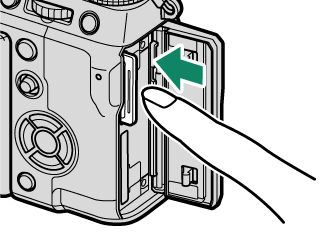
The illustration above comes from the official X-T5 manual. Other Fujifilm bodies can position or orient the slot differently, so confirm the diagram in the manual for your exact model.
Method 3. Check The Lock And Test A Compatible Card
The lock switch normally explains a PROTECTED CARD warning rather than CARD NOT INITIALIZED, but checking it prevents the two problems from being confused. The more useful diagnostic is a known-good card that meets the capacity, card type, and speed requirements of the exact camera model and slot.
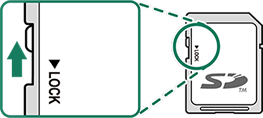
- Inspect A Full-Size SD Card: move its side switch toward the unlocked position. A microSD adapter has its own switch, so test a different adapter if one is being used.
- Check The Exact Camera Manual: confirm whether the slot accepts SD, SDHC, SDXC, UHS-I, UHS-II, or CFexpress and whether video modes require a particular speed class.
- Use A Known-Good Card: choose a card with no needed files and insert it while the camera is off.
- Format The Test Card In Camera: if prompted, format only the disposable test card—not the card holding unrecovered files.
- Interpret The Result: if the test card works, retire or reformat the original after recovery. If multiple compatible cards fail, investigate the camera slot or service.
Method 4. Format The Card In The Fujifilm Camera
Only continue after every important file is safely stored elsewhere. Fujifilm states that formatting deletes all data, including protected pictures. In-camera formatting is the documented fix when the card is unformatted or was formatted in a computer or another device.
- Charge The Battery: use a sufficiently charged battery and do not open the battery-compartment cover during formatting.
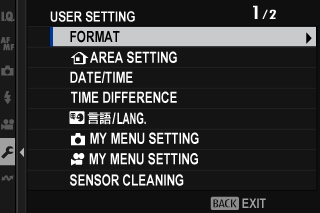
- Open User Setting: press MENU/OK, open the D SET UP tab, choose USER SETTING, and select FORMAT.
- Select The Correct Slot: on dual-slot bodies, highlight the slot containing the card you intend to erase and press MENU/OK.
- Confirm The Erase: verify the slot again, highlight OK, and press MENU/OK.
- Wait For Completion: do not turn off the camera, remove the battery, or open the card door while formatting.
- Run A Controlled Test: take a small number of test photos, play them back, power the camera off, and confirm that the files can be copied through a reader.
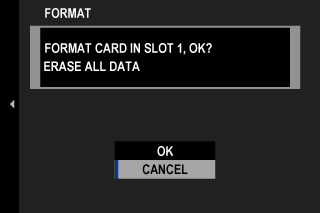
These images show the official X-T5 interface. X-H2, X-H2S, X100, GFX, and older FinePix menus can differ. Check the model manual before selecting a slot or card. If the camera cannot format an empty SD card, the official SD Memory Card Formatter is preferable to a generic operating-system formatter for SD, SDHC, and SDXC media; format the card in the camera again afterward. The memory card format error guide covers that separate scenario in more detail.
Method 5. Check Firmware For Your Exact Camera Model
A firmware update is not a universal cure for a failing card. Use it only after the card data is safe, the camera is stable, and the official Fujifilm camera firmware page lists a newer version for the exact body. Read the release notes instead of assuming every update changes card compatibility.
- Identify The Exact Model And Current Version: do not use firmware intended for a similar-looking Fujifilm body.
- Read Fujifilm's Model-Specific Instructions: supported update paths can include the camera menu, a Fujifilm app, or a prepared memory card, depending on the model and firmware generation.
- Use Stable Media: never place an update on the failing card that still contains unrecovered files. Use a known-good card when the official procedure requires one.
- Charge The Battery Fully: an interrupted firmware write can make the camera unusable.
- Follow Every On-Screen Warning: do not power off the camera, press unrelated buttons, remove the card, or open the battery compartment until Fujifilm's procedure is complete.
- Retest The Original Card Carefully: if the error remains after recovery and in-camera formatting, replace the card rather than continuing to trust it for important shoots.
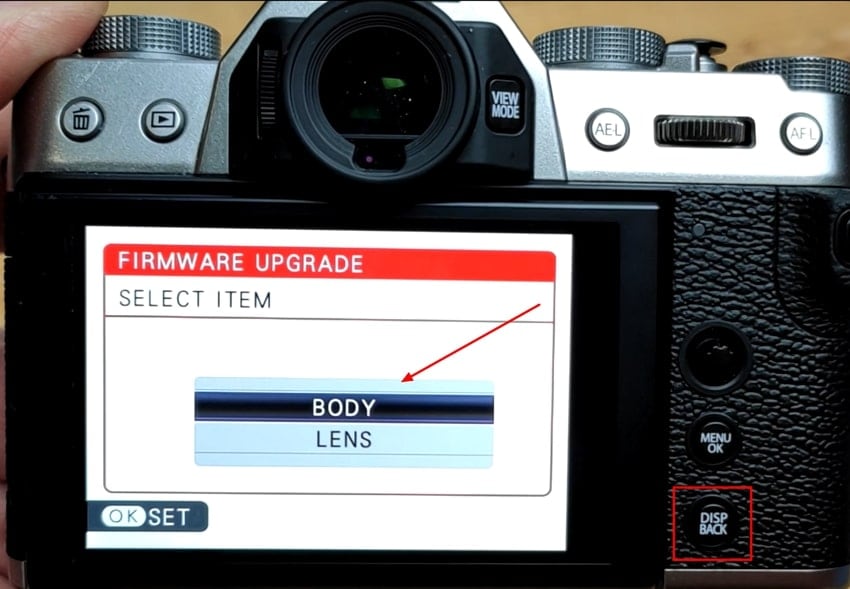
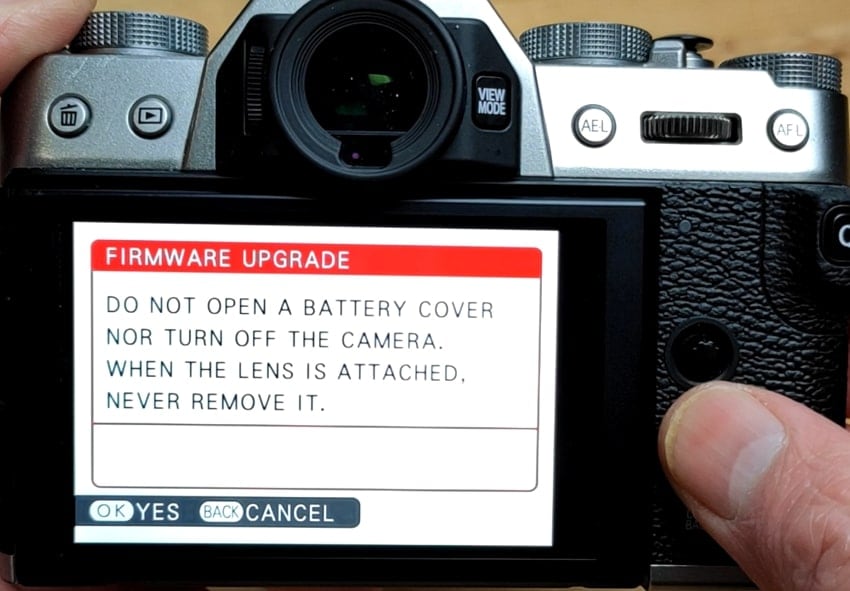
The two screens above show an SD-card firmware workflow used by applicable Fujifilm models. They are not a substitute for the current instructions supplied for your exact camera.
Part 6. Avoid These Unsafe Or Irrelevant Fixes
| Action to avoid | Why it is a problem | When it may be considered |
| Formatting before recovery | It changes the file system and can complicate recovery from a card containing unbacked-up media. | Only when the card is new, empty, or all required files are already safe. |
| DiskPart Clean, partition creation, or initialization | These operations erase or replace partition information. They are not Fujifilm's documented first fix. | Only for deliberate card rebuilding after recovery, with the correct disk positively identified. |
| Formatting the card as NTFS | The live article's DiskPart/NTFS sequence is a Windows storage workflow, not the in-camera format Fujifilm documents. | Do not use it as the Fujifilm camera fix; let the camera create the format it requires. |
| CHKDSK or Disk Utility First Aid before recovery | Repair tools can write file-system changes and are not designed to undelete or safely extract all inaccessible camera files. | Only after important files are copied or recovered and only if repair is still required. |
| Updating Windows drivers or scanning for malware as a primary camera fix | A camera-side CARD NOT INITIALIZED warning occurs before Windows drivers or antivirus tools are involved. | Troubleshoot the computer separately only when several known-good cards fail in that computer's reader. |
| Repeatedly reconnecting an unstable card | Disconnects, heat, freezes, or incorrect capacity can indicate worsening electronic or controller failure. | Stop after one controlled cross-check and use a recovery lab for irreplaceable data. |
Part 7. When To Replace The Card Or Service The Camera
Do not return a questionable card to a paid shoot simply because one format completed. Use the results of the controlled tests:
- Replace The Original Card: a known-good compatible card works, but the original card fails again after data recovery and in-camera formatting.
- Retire A Card With Read Instability: it disconnects, becomes read-only unexpectedly, reports inconsistent capacity, corrupts new tests, or becomes unusually hot.
- Use A Recovery Lab: the card contains irreplaceable media and is cracked, burned, corroded, unstable, or undetected by multiple readers and computers.
- Contact Fujifilm Service: multiple known-good compatible cards show the same warning in the same camera slot.
- Test Both Slots Separately: on supported dual-slot bodies, a failure isolated to one slot points more strongly to the camera than to the card.
If the problem is broader than this exact warning—such as CARD ERROR, NO CARD, READ ERROR, WRITE ERROR, or repeated missing-card behavior—use the general Fujifilm card error guide instead of repeating unrelated fixes here.
Part 8. Prevent Fujifilm Memory Card Errors
- Buy From A Traceable Seller: counterfeit or relabeled flash media can report false capacity and fail unpredictably.
- Check The Exact Model Requirements: match the card type, capacity, bus interface, and video speed class to the camera and slot.
- Format In The Main Camera: after two verified copies exist, format the card in the Fujifilm body that will use it.
- Do Not Move A Live Card Between Devices: back it up and reformat it in the destination camera before reuse.
- Wait For The Access Light: never remove the card or battery while photos or videos are still being written.
- Use Dual-Slot Backup When Available: configure redundant recording for assignments that cannot be repeated, while remembering that two cards in one camera do not replace an off-camera backup.
- Verify Before Formatting: open representative RAF, JPG, and video files from both backup destinations.
- Rotate And Retire Cards: label media, track recurring errors, and remove unreliable cards from professional use.
The safest sequence is simple: stop writes, identify whether the card is readable, recover or copy the files, verify them elsewhere, then clean, format, replace, or service the failing component.
FAQ
-
Does Fujifilm Card Not Initialized mean my photos are gone?
No. The message means the camera cannot use the card in its current state; it does not prove that every file has been erased. Stop using the card, check whether a computer detects it, and copy or recover important files before formatting. -
Should I format the Fujifilm card when the camera asks?
Only if the card is new, empty, or all important files are already backed up. If it contains unbacked-up photos or videos, cancel the prompt and recover the files first because formatting deletes the camera's accessible directory structure. -
Why does a new SD card say Card Not Initialized on Fujifilm?
A new card may not yet have the structure the camera expects, or it may have been prepared by another device. Confirm that its type and capacity are supported by the exact Fujifilm model, then format the empty card through the camera's User Setting menu. -
Can the SD card lock switch cause Card Not Initialized?
Fujifilm's manuals associate a locked switch with the separate PROTECTED CARD warning. Checking the switch is still useful, but CARD NOT INITIALIZED more directly points to formatting, card-contact, or camera issues. -
Can Recoverit recover Fujifilm RAF photos from an uninitialized card?
Recoverit's current specifications list RAF among its supported recovery and preview formats. The card still needs to be detected and readable by Windows or macOS, and recovery depends on physical condition, file-system damage, fragmentation, and overwriting. -
Should I use DiskPart or CHKDSK on the Fujifilm card?
Not before recovery. DiskPart Clean removes partition information, while CHKDSK changes file-system structures. Neither is Fujifilm's documented first response to CARD NOT INITIALIZED. Recover or copy valuable files before any repair or rebuilding operation. -
What if the Fujifilm card is not detected by any computer?
Try one other known-good reader, USB port, and computer. If the card remains absent, repeatedly disconnects, reports the wrong capacity, or becomes hot, stop DIY attempts. Consumer software cannot scan an undetected device, so valuable media may require a professional recovery lab. -
Is the formatting path the same on X-T5, X-T4, X100V, X-S10, and GFX cameras?
The general path is often D SET UP > USER SETTING > FORMAT, but slot selection, shortcuts, supported media, and menu labels can vary. Use the current manual for the exact camera model before formatting or updating firmware. -
What if Card Not Initialized returns after an in-camera format?
Test a known-good compatible card. If only the original fails, retire it. If several compatible cards fail in the same camera or slot, contact Fujifilm service because the slot or camera electronics may be responsible. -
Should I save recovered RAF photos back to the Fujifilm card?
No. Save recovered files to the computer or another healthy external drive. Writing to the source card can overwrite other recoverable files, and the card should not be trusted again until the recovery is verified and the hardware is tested.


