


 TL;DR:
Format an SD card to FAT32 only if your target device explicitly rejects exFAT, using native OS graphical menus for 32GB or smaller SDHC cards and command-line tools for 64GB or larger SDXC media.
● On Windows 11, format 32GB or smaller cards directly via File Explorer or Disk Management, but for 64GB or larger cards, you must run Windows Terminal or Command Prompt as an administrator to apply the FAT32 formatting syntax.
● On macOS, open Disk Utility, reveal all devices to select the physical SD card, and choose MS-DOS (FAT), which is Apple's built-in label for FAT32 compatibility.
● Formatting removes existing file records but cannot repair counterfeit storage or a failing controller, meaning you must recover important files first and replace the card entirely if it continues to disconnect or display incorrect capacities.
Ask AI for a summary
 ChatGPT
 Perplexity
 Gemini
 Claude
 Grok
Grok
⚡ TL;DR: Quick Fix
● Choose FAT32 Only When The Device Needs It: FAT32 is still common for older cameras, handhelds, 3D printers, retro devices, and firmware-update workflows.
● Windows 11 Makes Small Cards Easy: A 32GB or smaller SD card can usually be formatted to FAT32 directly in File Explorer or Disk Management.
● Large Cards Need A Different Decision: Many 64GB and larger cards are SDXC and normally use exFAT. Force FAT32 only if the destination device explicitly requires it.
● Protect Files First: If the card still contains important files, copy or recover them before formatting because formatting removes the current file-system records.
Quick answer: If you need to format an SD card to FAT32, first confirm that the destination device really requires FAT32. For a 32GB or smaller card on Windows 11, right-click the card in File Explorer, choose Format, select FAT32, and start. On a Mac, use Disk Utility and choose MS-DOS (FAT). For a large SD card, only force FAT32 when the device manual clearly says it needs FAT32 instead of exFAT.
Most people searching this topic are not trying to learn file-system theory. They are trying to make a card work in a device that rejects exFAT, fails to read the card, or insists on FAT32 for setup, firmware, or media playback. That is why this guide is built around the real decision first: should this card be FAT32 at all, and if yes, which path gets there safely.
Fact-checked on September 8, 2026: This page was checked against current Microsoft formatting syntax, Apple Disk Utility guidance, and the SD Association capacity standard for SD, SDHC, SDXC, and SDUC media.
In This Article
Start Here. Should This SD Card Be FAT32?
Use FAT32 when compatibility is the priority and the target device clearly expects it. That is still common with older cameras, legacy game systems, 3D printers, car stereos, trail cameras, media players, and embedded devices. If the device manual, firmware instructions, or support page says FAT32, follow that requirement.
Do not assume every SD card should be switched to FAT32 just because FAT32 is widely compatible. A large modern card often works better as exFAT unless the destination hardware specifically rejects exFAT. Changing a perfectly suitable card to FAT32 can create unnecessary limits or confusion.
| Your situation | Best next move |
| A 32GB or smaller card needs broad compatibility | Format it to FAT32 if the device supports that card size. |
| A 64GB or 128GB card is for an older console, printer, or legacy device that explicitly wants FAT32 | Format it to FAT32, but only for that device's workflow. |
| A 64GB or larger card will be used in a modern camera, phone, or recorder | Keep exFAT unless the device manual says FAT32 only. |
| You are not sure what the device supports | Check the manual before formatting. |
| The card already contains files you need | Back up or recover them first, then format. |
The same logic applies whether you are using a full-size SD card, a miniSD card, or a microSD card in an adapter. The device requirement matters more than the card shape.
Before You Format Anything
A wrong format is usually worse than a slow format. Take one minute to protect the files and confirm the target.
- Check The Drive Letter And Capacity: Make sure you are selecting the SD card and not another removable drive.
- Copy Readable Files First: If the card opens normally, copy the whole card to your computer before you erase it.
- Stop If Files Are Missing: If the card shows up empty, asks to be formatted, or looks RAW, do not keep writing to it. Use this formatted SD card recovery guide first.
- Check The Adapter Lock: If you are using a microSD-to-SD adapter, confirm that the lock switch is not set to write-protect.
- Check The Destination Device Requirement: If you are formatting for one specific device, follow its current manual instead of general internet advice.
Formatting removes the current file-system structure. It does not repair worn flash memory, a failing controller, or a counterfeit card that reports the wrong capacity.
Path A. Format A 32GB Or Smaller Card To FAT32 On Windows 11
This is the cleanest route when you have a standard SDHC card or any SD, miniSD, or microSD card up to 32GB and Windows 11 already detects it normally.
- Insert the card into a stable reader and open File Explorer.
- Find the SD card under This PC, right-click it, and choose Format.
- Set File system to FAT32.
- Leave allocation size at the default setting unless the target device manual says otherwise.
- Choose Quick Format for ordinary reuse, then click Start.
- If the card is visible in Windows but not in File Explorer, open Disk Management and format the partition there instead.
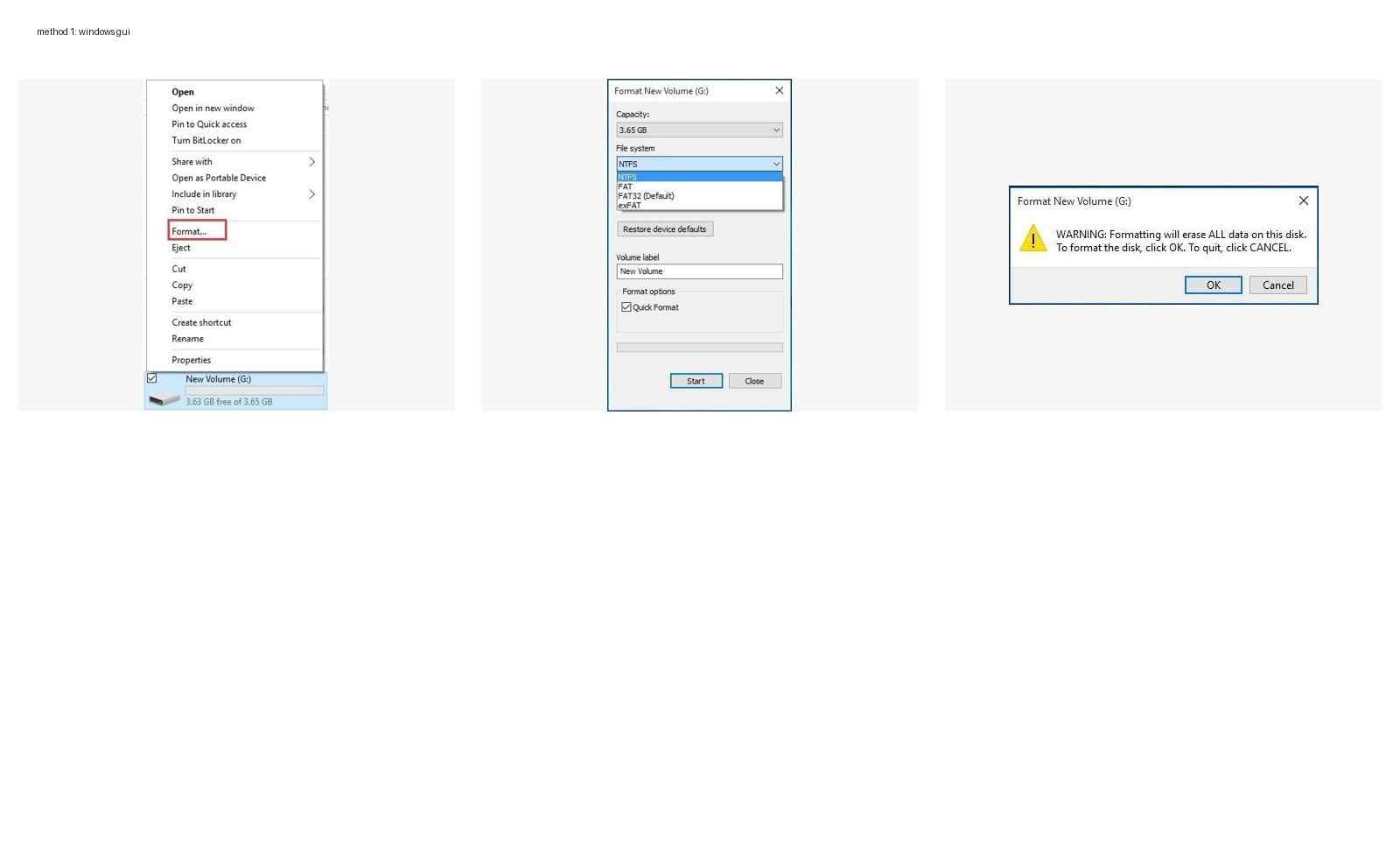
If FAT32 appears normally in the menu, this is the easiest and safest built-in Windows path. There is no reason to force a command-line or third-party workflow for a healthy 32GB-or-smaller card.
Path B. Format A Large SD Card To FAT32 When A Device Requires It
This path is for a different problem: the card is large, but the destination device still insists on FAT32. That is common with older handhelds, retro systems, some 3D printers, and some embedded hardware workflows.
- Confirm that the destination device really requires FAT32. If it supports exFAT, stop here and use exFAT instead.
- Connect the SD card to a Windows PC and verify the drive letter and displayed capacity.
- Open Windows Terminal or Command Prompt as administrator.
- Use the Windows formatting syntax with the FAT32 file system for the correct removable drive.
- Wait for the process to finish fully before ejecting the card.
- Test the card in the destination device immediately after formatting.
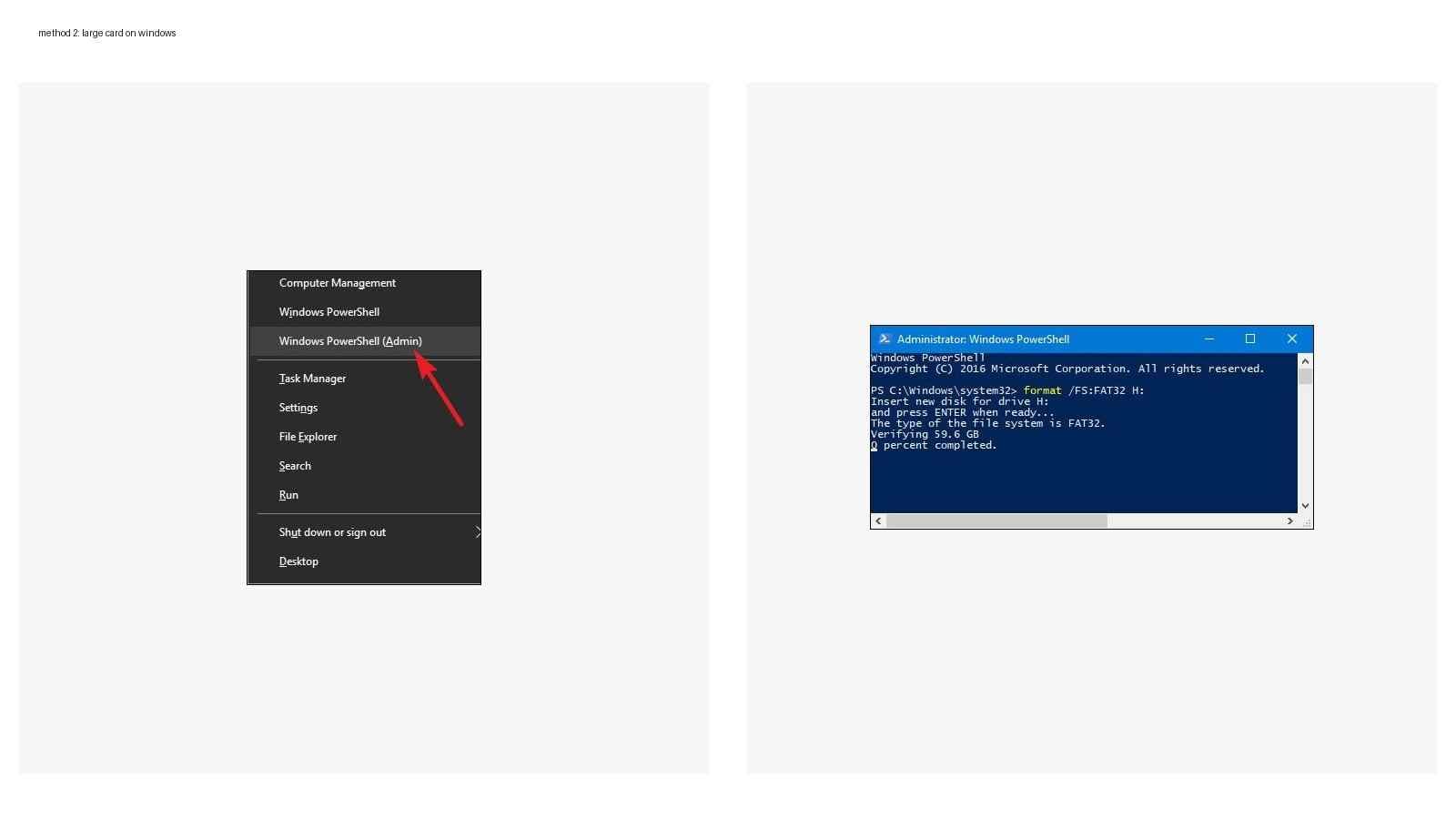
Microsoft's current documentation still supports the format volume /FS:FAT32 syntax, but users should verify the target volume carefully before pressing Enter. If you also need a wider Windows-only formatting reference, this Windows SD card formatter guide covers the built-in routes in more detail.
Path C. Format An SD Or microSD Card To FAT32 On Mac
On macOS, FAT32 appears as MS-DOS (FAT) in Disk Utility. That is the correct built-in choice when you need FAT32-style compatibility.
- Insert the SD or microSD card and open Disk Utility.
- Choose View > Show All Devices.
- Select the physical SD card in the sidebar, then click Erase.
- Enter a volume name.
- Choose MS-DOS (FAT) as the format.
- Choose the partition scheme required by the target device, then click Erase.
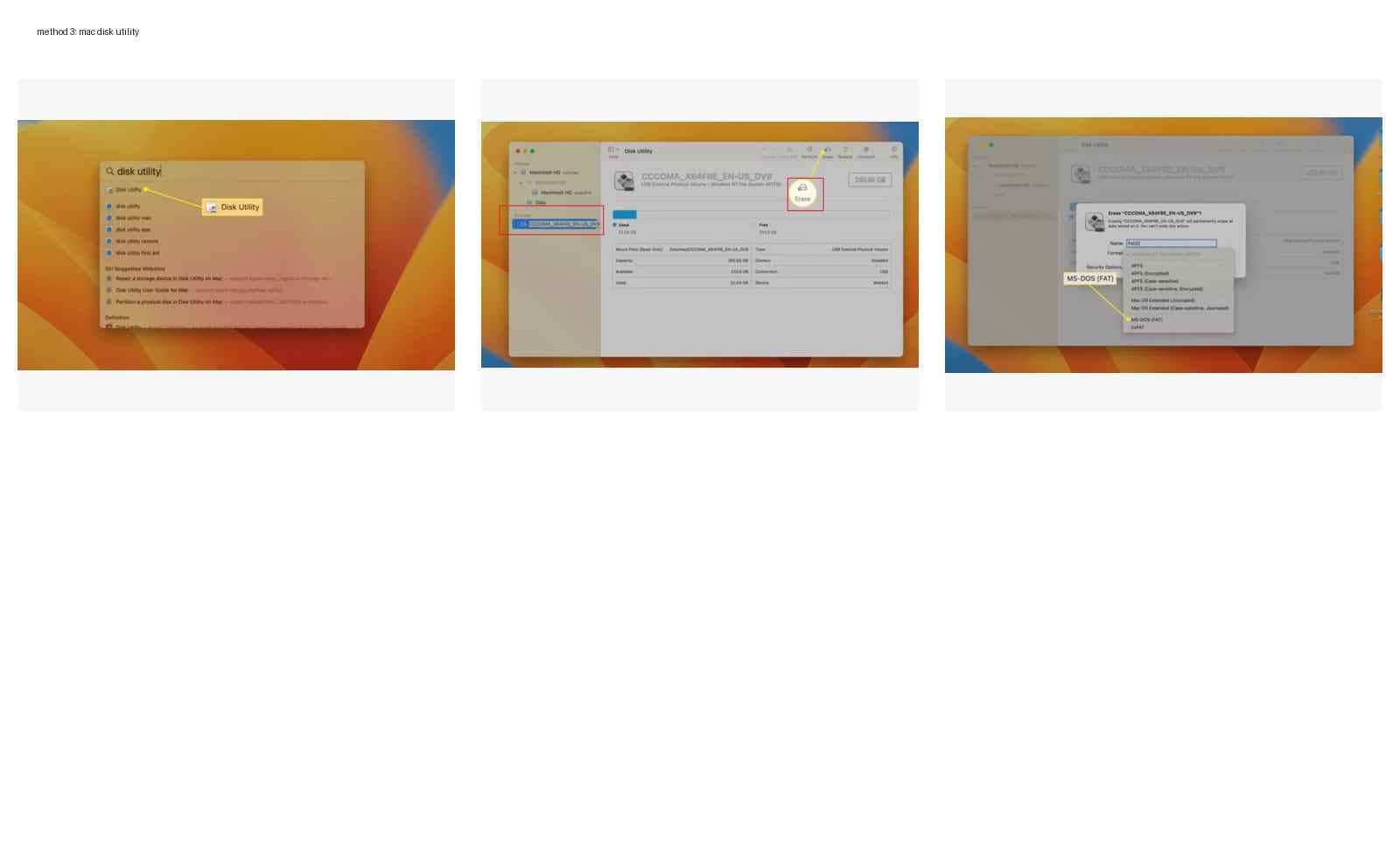
Apple's current Disk Utility guidance labels MS-DOS (FAT) for Windows-compatible volumes of 32GB or less and points larger Windows-compatible volumes toward exFAT. That means a Mac user should only push a large card to FAT32 when the target device truly needs FAT32.
Why Windows Often Refuses FAT32 On Large Cards
This is the point that confuses most users. The issue is not that FAT32 suddenly stopped existing. The issue is that large removable cards are often sold and expected to run as SDXC with exFAT, so the normal Windows graphical formatting menu often does not offer FAT32 for those larger capacities.
That is why searches like format large sd card to fat32, micro sd card fat32 formatter, and format sd card to fat32 windows 11 usually come from users whose devices reject exFAT even though the card itself is modern and healthy.
If the target device accepts exFAT, exFAT is usually the cleaner choice for a large card. If the device explicitly says FAT32 only, then use the FAT32 route for that one workflow and keep that requirement tied to the device, not as a universal rule for every reader and every operating system.
FAT32 Or exFAT: Which One Should You Actually Use?
| Question | Choose FAT32 | Choose exFAT |
| What device are you targeting? | Older or legacy hardware that explicitly asks for FAT32 | Modern cameras, phones, PCs, and recorders that support exFAT |
| What card type is most common? | SDHC and many smaller removable cards | SDXC and larger-capacity cards |
| What matters most? | Maximum older-device compatibility | Modern large-file workflow and current default behavior |
| When is it the wrong choice? | When the destination device already supports exFAT and you do not need FAT32 specifically | When the destination device rejects exFAT and clearly requires FAT32 |
The SD Association's current capacity standard places SDHC in the FAT32 range and SDXC/SDUC in the exFAT range. That makes the practical rule simple: use FAT32 for compatibility-driven workflows, and use exFAT for modern large-card workflows unless the device manual says otherwise.
If You Formatted Too Early: Recover The Files First
If you formatted the wrong card, accepted a format prompt too quickly, or realized afterward that the card still contained important files, stop using it immediately. Do not copy new files, do not record media, and do not reformat it again.
Wondershare Recoverit is the practical choice when the SD card is still detected through a Windows PC or Mac card reader and you need to recover deleted or formatted files before they are overwritten.

- Select The SD Card: Connect the card through a reliable reader, open Recoverit, and choose SD Card Recovery.
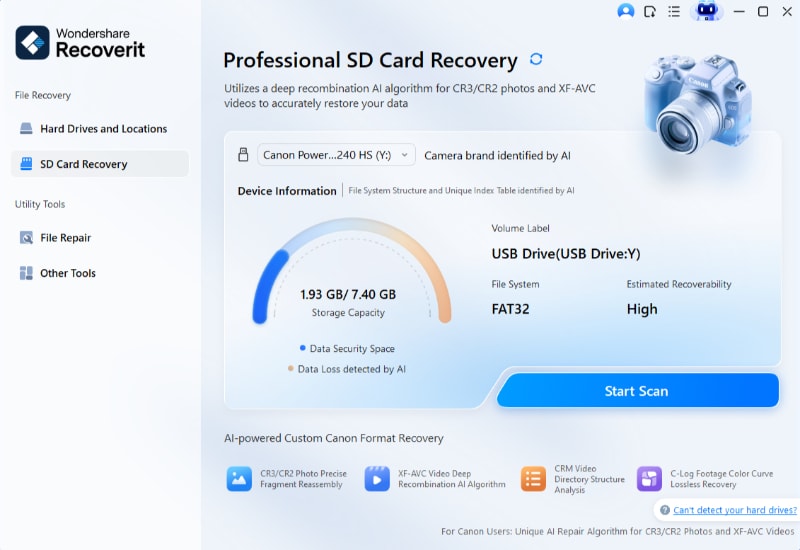
- Scan The Card: Start the scan and let Recoverit search for photos, videos, documents, and other lost files.
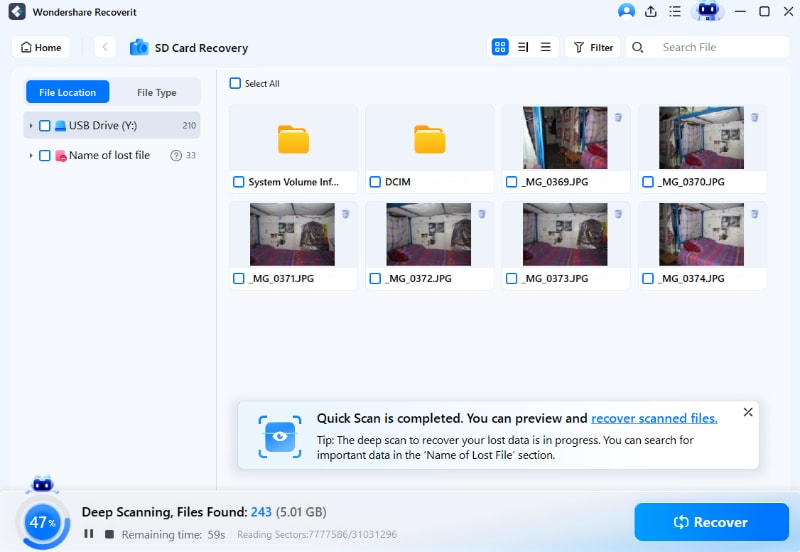
- Preview And Recover To Another Drive: Preview the results, select the files you need, and save them to your computer or another external drive, not back to the same SD card.

Recovery is usually more likely after a quick format and less likely after repeated formatting, overwrite formatting, or continued use. If the card disconnects, gets hot, or shows the wrong capacity, stop repeated DIY attempts and protect the remaining data first.
Try Wondershare Recoverit to Perform Data Recovery
 Security Verified. Over 7,302,189 people have downloaded it.
What Formatting Will Not Fix
Formatting can rebuild a file system, but it does not turn a bad card into a good one.
| Problem | What it usually means | What to do |
| The card becomes read-only again | The adapter lock is engaged or the controller is failing | Check the adapter first, then replace the card if the issue returns |
| The capacity looks wrong | Counterfeit storage, partition damage, reader trouble, or hardware failure | Stop trusting the card with important data until it is verified |
| The destination device still rejects the card after formatting | The wrong file system, wrong partition scheme, or unreliable hardware | Follow the device manual exactly and replace the card if errors continue |
| The card disconnects during copy or format | Unstable reader, bad contacts, or failing flash memory | Use one stable reader, recover important files, and retire the card |
| Corruption returns after a successful format | The file system was reset, but the hardware problem remains | Replace the card instead of repeating more formats |
If you want a standards-based SD-family formatting utility instead of a random download, use the official SD Memory Card Formatter from the SD Association.
Conclusion
The real question is not just how to format an SD card to FAT32. The real question is whether FAT32 is the correct format for your device and your card size. For a 32GB-or-smaller card, Windows 11 and macOS make the process straightforward. For a large card, only force FAT32 when the destination device clearly requires it.
Protect the files first, choose the format that matches the destination hardware, and stop trusting any card that keeps failing after a clean format. FAT32 is still useful in 2026, but only when compatibility is the real goal.
FAQ
-
How Do I Format An SD Card To FAT32 On Windows 11?
Insert the card, open File Explorer, right-click the SD card, choose Format, select FAT32, and start the format. This is the easiest built-in path when the card is 32GB or smaller and Windows shows FAT32 as an option. -
Can I Format A 64GB SD Card To FAT32?
Yes, but only when the destination device explicitly requires FAT32. Many 64GB cards are SDXC and normally use exFAT, so forcing FAT32 only makes sense for specific legacy hardware workflows. -
What Does MS-DOS (FAT) Mean On Mac?
In Disk Utility, MS-DOS (FAT) is the Mac label for the Windows-compatible FAT format used in FAT32-style workflows. That is the built-in option Mac users choose when they need FAT compatibility. -
Should I Use FAT32 Or exFAT For A microSD Card?
Use FAT32 for older devices that require it. Use exFAT for many modern 64GB-and-larger cards unless the device manual says FAT32 only. -
Why Does Windows Not Show FAT32 For My Large Card?
Large cards are often treated as SDXC or newer media that normally use exFAT, so the standard Windows graphical formatting menu often does not present FAT32 for those capacities. -
Will Formatting Fix A Corrupted SD Card Permanently?
No. Formatting can rebuild a logical file system, but it does not repair failing flash memory, a damaged controller, counterfeit storage, or a bad reader. -
Can Recoverit Recover Files After I Format The SD Card?
Often yes, especially after a quick format with no further use. Stop writing to the card immediately, scan it through a reliable reader, and save the recovered files to another drive.


