

 TL;DR:
Always unlock your iPhone before connecting an SD card reader and verify the storage in the Files app under Locations, rather than relying on Photos which is restricted to importing supported camera media.
● Approve the physical connection by keeping the device unlocked and checking Settings > Privacy & Security > Wired Accessories, ensuring you use a direct Lightning or USB-C reader instead of stacking multiple adapters.
● Never format the card as a first step to fix detection issues; iPhones natively read exFAT, FAT32, APFS, and Mac OS Extended formats with a single data partition, but will not mount Windows-formatted NTFS cards.
● Vivitar readers may fail to mount directly in the native iOS file system because specific models strictly require installing the official Vivitar Mobile Reader app to access your files.
Ask AI for a summary
 ChatGPT
 Perplexity
 Gemini
 Claude
 Grok
Grok
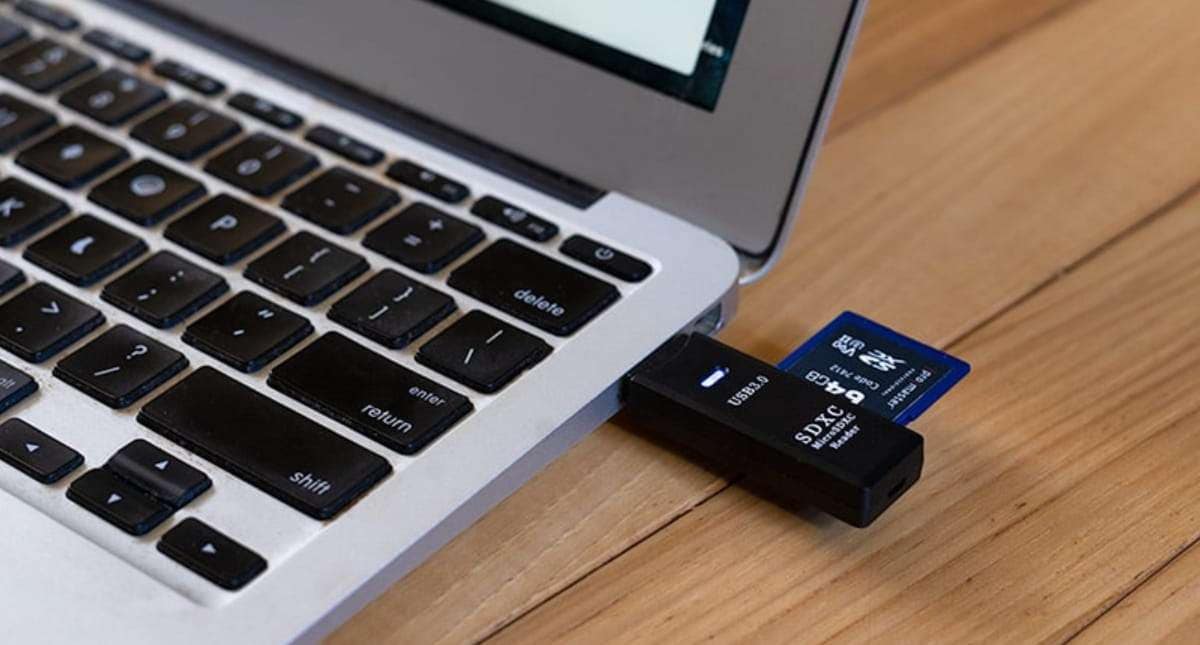
An iPhone SD card reader not working does not automatically mean the SD card is damaged. The failure can happen at four different points: the reader or connector, iPhone accessory permission, the SD card itself, or the app you are using to view the card.
Start with the safest checks first. Do not factory-reset the iPhone or format the SD card just to see whether the reader starts working. If the card contains photos or videos you do not have elsewhere, protect those files before any erase, repair, or reformatting step.
Quick answer:
● Check Files first: Open Files, tap Browse, and look under Locations. If the SD card appears there, the reader connection is working even if Photos does not show an import option.
● Unlock before reconnecting: Apple requires an iPhone to be unlocked before a storage accessory can be used. Reconnect the reader while the iPhone is unlocked.
● Cross-test the hardware: Try another known-good SD card in the same reader, then try the original card in another reader or computer. This separates a reader problem from a card problem.
● Do not format first: Apple supports several file systems for external storage, including exFAT and FAT32. If the card is unreadable and contains important files, recover or copy the data before reformatting.
In This Article
Part 1. Diagnose Why the iPhone SD Card Reader Is Not Working
Find the Failure Point Before Changing Anything
The fastest way to fix an SD card reader for iPhone not working is to identify where the connection breaks. Files and Photos do different jobs on iPhone: Files is the better first check for whether external storage mounted at all, while Photos is mainly for importing supported camera media.
| What You See | Most Likely Area to Check | Best First Action |
| The card is missing from both Files and Photos | Reader, connector, permission, or SD card detection | Unlock the iPhone, reconnect, then cross-test the reader and card |
| The card appears in Files but not Photos | Photos import workflow or media compatibility | Use the Photos device/import view and check how the files were created |
| Another SD card works in the same reader | Original SD card or its file system | Test the original card on a computer before formatting |
| The same SD card works with another reader | Original reader or adapter | Replace the reader or use a reader designed for your iPhone connector |
| The card works on a computer but not on iPhone | Reader compatibility, partition layout, file system, or iPhone accessory permission | Check Files, Wired Accessories, and the card format without erasing it |
| Only a Vivitar reader fails | Vivitar hardware or app-specific workflow | Use the Vivitar checks in Part 5 and compare with a reader that mounts in Files |
Important: The old advice to factory-reset an iPhone or immediately format an SD card is too destructive for first-line troubleshooting. A reader problem can usually be isolated without erasing either device.
Part 2. Fix an iPhone SD Card Reader Not Detected in Files
Match the Reader to Your iPhone Connector
Use a reader or adapter that matches the physical connector on your iPhone. Apple states that iPhone 15 and later use USB-C and can connect to SD cards through compatible SD card adapters. Lightning iPhones need a Lightning-compatible SD card reader or camera adapter.
For a USB-C iPhone, a reader designed to connect directly over USB-C is the simplest path. For a Lightning iPhone, use a Lightning SD card reader or a compatible Lightning camera adapter. Avoid stacking several third-party adapters unless the manufacturer explicitly supports that combination, because each added connection creates another failure point.
Apple's current guidance on USB-C connections also notes that cables and accessories that do not comply with the USB-C standard might not work as expected. See Apple's USB-C connection guidance for iPhone.
Unlock the iPhone and Check Wired Accessories
Before reconnecting the card reader, unlock the iPhone. Apple says a storage accessory always requires the iPhone or iPad to be unlocked before use. If the reader is not recognized, disconnect it, unlock the iPhone, and reconnect it.
Step 1. Open Settings > Privacy & Security.
Step 2. Scroll to Security and tap Wired Accessories.
Step 3. If your setting requires approval for a new accessory, approve the reader while the iPhone is unlocked. Apple's default on supported models is to allow accessories automatically when the device is unlocked.

Apple documents the current accessory security behavior in Allow USB and other accessories to connect to iPhone or iPad.
Look for the SD Card in Files
Do not use Photos as the only test. Apple's iPhone User Guide says an SD card connected through a compatible reader can appear in Files.
Step 1. Connect the reader and insert the SD card.
Step 2. Open Files and tap Browse.
Step 3. Look under Locations for the name of the storage device. If Locations is not visible, tap Browse again.

If the SD card appears under Locations, the iPhone has mounted the storage. At that point, a missing Photos import option is a different problem; go to Part 3 instead of replacing the reader.
For the supported external-storage workflow, see Apple's guide to connecting external storage to iPhone.
Reconnect and Cross-Test the Reader and Card
Use controlled tests instead of changing several things at once.
- Reseat the card: Remove the SD card and insert it again in the correct orientation. Do not force it into the reader.
- Reconnect the reader: Disconnect the reader, wait about 30 seconds, unlock the iPhone, and reconnect it. Apple recommends this reconnect sequence when camera media is not detected.
- Test another known-good SD card: If another card mounts, the original card needs further checking.
- Test the original card elsewhere: Try a computer, camera, or another known-good reader. If the card works elsewhere, the iPhone reader or adapter is the more likely problem.
- Test another reader: If the original card mounts through a different reader on the same iPhone, replace the first reader.
This matrix is more useful than assuming the SD card is corrupt after a single failed connection.
Restart the iPhone and Update iOS
If the reader and card pass the hardware tests but the card still does not appear, restart the iPhone and check for a current iOS update under Settings > General > Software Update. Apple includes restart and iOS update among its recommended steps when the Photos device/import view does not appear.
Do this after the basic connection checks. Updating iOS can resolve software compatibility issues, but it will not repair a defective reader or a physically failing SD card.
Part 3. If the SD Card Appears in Files but Not Photos
Use the Photos Import Path for Camera Media
If the SD card is visible in Files, the iPhone card reader is working at the storage level. The next question is whether Photos can import the media on the card.
Apple's current camera-adapter support page says to connect the adapter, insert the SD card, and open Photos. The exact Photos layout depends on the iOS version. Apple's published guidance describes a Devices section or Import view rather than guaranteeing that Photos always opens automatically.
If the SD card does not appear in the Photos import workflow, Apple recommends updating iOS, disconnecting and reconnecting the adapter and card after about 30 seconds, restarting the iPhone, and testing a different card. See Apple's camera-adapter import instructions.
Check Whether the Media Was Captured by a Camera
Files access and Photos import are not the same thing. Apple notes that its camera-adapter import workflow is intended for content captured by digital cameras. Photos or videos that were renamed, edited, or copied onto the SD card later might not import through the same camera workflow even though the card itself is readable.
This is why moving files into a folder named DCIM is not a universal fix. If Files can see the card and its files, use Files for normal file access. Use Photos when you are importing supported camera media.
Part 4. Check the SD Card Format Without Erasing It
Know Which File Systems iPhone Can Read
The advice to format every iPhone SD card as FAT32 is outdated. Apple's current iPhone User Guide says external storage must have one data partition and can use several supported file systems.
| File System | Apple Lists It for iPhone External Storage? | What This Means |
| APFS | Yes | Supported for external storage access in Files |
| APFS (encrypted) | Yes | Supported according to Apple's current external-storage guide |
| Mac OS Extended (HFS+) | Yes | Supported for external storage |
| exFAT | Yes | You do not need to convert an otherwise healthy exFAT card to FAT32 just for iPhone Files access |
| FAT32 | Yes | Supported, but not the only supported choice |
| FAT | Yes | Supported according to Apple's guide |
| NTFS | Not listed | Do not assume a Windows-formatted NTFS card will mount as supported external storage on iPhone |
If a card works on Windows or Mac but never appears in Files on iPhone, check the partition layout and file system on the computer. Do not reformat yet if the card contains the only copy of important files.
Format Only After the Data Is Safe
Formatting is a last-step compatibility or reuse action, not a first-step reader fix. Before formatting:
- If the files are accessible on a computer: Copy them to another healthy drive and verify that the copies open.
- If the card is detected but files are missing, RAW, inaccessible, or the computer asks to format it: Recover the files before repair or formatting.
- If the card came from a camera: After the files are safely copied or recovered, formatting the card in the camera is often the cleanest way to return it to that camera's expected layout. Apple's support page explicitly warns that reformatting erases the images.
If the card itself shows corruption symptoms, use the dedicated corrupted SD card recovery guide rather than turning this iPhone reader article into a full repair workflow.
Part 5. Fix a Vivitar SD Card Reader Not Working on iPhone
The keyword Vivitar SD card reader not working iPhone needs a separate branch because some Vivitar mobile readers rely on the Vivitar Mobile Reader app instead of behaving exactly like a reader that mounts directly in Files.
As of September 12, 2026, the App Store listing shows Vivitar Mobile Reader version 1.0.14, dated November 6, 2023. Its version history also shows prior compatibility fixes for iOS 15 and an iOS 16 crash. The listing does not provide a current iOS 26 compatibility statement, so it would be inaccurate to say that Vivitar definitely supports or definitely fails on iOS 26.
Use these checks:
- Confirm whether your Vivitar model requires the Vivitar Mobile Reader app: If it does, install or update the official app from the App Store rather than relying only on Files.
- Reconnect while the iPhone is unlocked: The same Apple wired-accessory rule still applies to storage accessories.
- Test the same SD card in another reader: If a different USB-C or Lightning reader sees the card, the Vivitar reader or its app workflow is the likely bottleneck.
- Test another SD card in the Vivitar reader: If no known-good card works, replace the reader or contact the vendor rather than formatting multiple cards.
- Treat an app-only failure as an app/vendor issue: If the card mounts in Files through another reader but the Vivitar app path fails, formatting the card is not the first fix.
If you use a Moultrie reader rather than Vivitar, see the separate Moultrie SD card reader not working on iPhone guide so brand-specific instructions do not get mixed together.
Part 6. Recover SD Card Files Before Formatting or Repair
When Recoverit Is the Right Next Step
Use recovery software only when the problem has moved beyond the iPhone reader itself. A good recovery case is an SD card that is still detected by a Windows or Mac computer but has missing files, inaccessible folders, RAW status, a format prompt, or another logical data-loss symptom.
If the SD card is cracked, badly corroded, overheating, or not detected by any reader or computer, stop repeated DIY attempts. Software recovery depends on the card remaining detectable; severe physical or controller-level damage can require professional recovery.
Wondershare Recoverit Memory Card Recovery runs on Windows and Mac and can scan a detected SD or microSD card for recoverable photos, videos, documents, and other files. It does not repair a broken iPhone reader, so use it only after your tests point to the card or its data.
Recover the SD Card on Windows or Mac

Step 1. Connect and Select the SD Card
Stop using the card in the camera or iPhone. Connect it to a Windows or Mac computer with a stable card reader, open Recoverit, and select the memory card as the scan location.
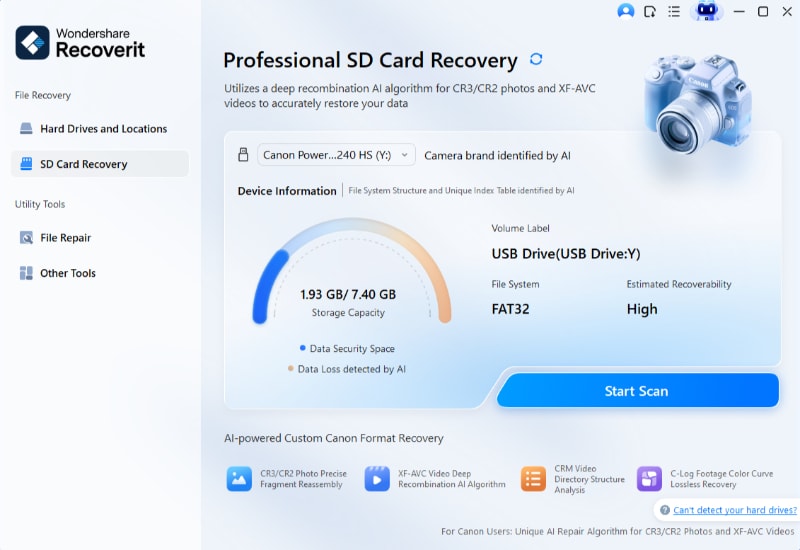
Step 2. Scan and Narrow the Results
Start the scan. Use file type, date, size, search, and preview tools to narrow the results when available. Avoid writing anything new to the original SD card during this process.
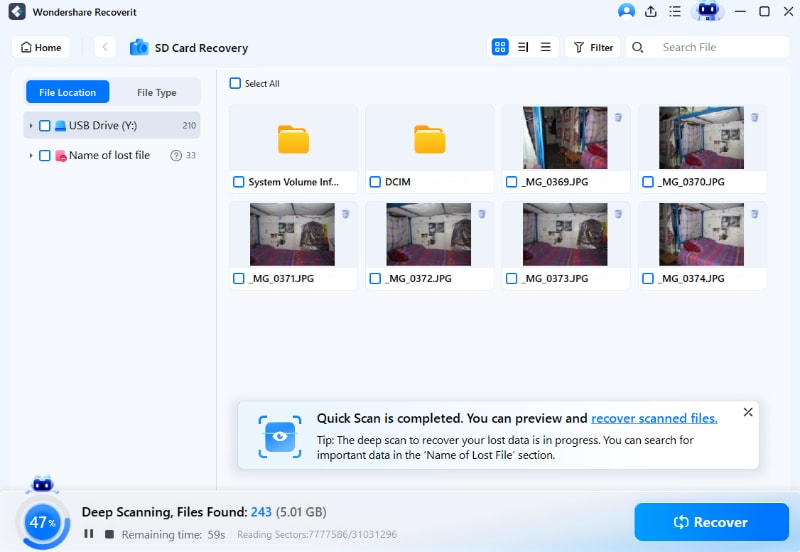
Step 3. Preview and Recover to Another Location
Preview the files you need, select the recoverable items, and save them to a healthy computer drive or another storage device. Do not save recovered files back to the problem SD card.

After you verify the recovered files, you can decide whether to reformat and reuse the card or replace it. For a card that repeatedly corrupts, disconnects, or produces read errors, replacement is usually the safer long-term choice.
Recover SD Card Files Before Formatting or Repair
 Security Verified. Over 7,302,189 people have downloaded it.
Part 7. Know When to Replace the Reader or SD Card
| Test Result | Likely Problem | Next Move |
| The same card works on the same iPhone with a different reader | Reader or adapter | Replace the failing reader |
| Multiple known-good cards fail only in one reader | Reader | Replace or warranty the reader |
| The card fails in iPhone, camera, and multiple computers | SD card hardware or controller | Stop repeated attempts; consider professional recovery if the data matters |
| The card mounts on a computer but shows RAW, missing folders, or a format prompt | Logical card corruption | Recover files first, then repair or reformat |
| The card mounts in Files but not Photos | Photos import or media compatibility | Use Files or follow the camera-media import checks in Part 3 |
A clean replacement test is often more conclusive than repeated resets. If a second reader immediately sees the same card on the same iPhone, you have strong evidence that the original reader is the problem.
Conclusion
When an SD card reader is not working on iPhone, check detection in Files before anything destructive. Match the reader to the iPhone's connector, unlock the phone and review Wired Accessories, then cross-test the reader and SD card. If Files sees the card but Photos does not, troubleshoot the import workflow rather than the hardware.
Most importantly, do not factory-reset the iPhone or format an SD card as a first response. If the card contains important data and is still detectable on Windows or Mac, copy or recover the files to a different healthy location before repair or reformatting.
FAQ
-
Why Is My SD Card Not Showing Up in Files on iPhone?
The most common areas to check are the reader or adapter, the iPhone connector, Wired Accessories permission, the SD card itself, and the card's partition or file system. Unlock the iPhone, reconnect the reader, then test another card and another reader before formatting anything. -
Why Does Files See My SD Card but Photos Does Not?
That usually means the storage connection is working but the Photos import workflow cannot use the media as expected. Apple notes that camera-adapter importing is designed for supported camera-captured content; renamed, edited, or copied files might not import the same way. Use Files for normal file access. -
Does iPhone Support exFAT SD Cards?
Yes for external-storage access in Files. Apple's current iPhone User Guide lists exFAT, FAT32, FAT, APFS, APFS encrypted, and Mac OS Extended among supported file systems, with a single data partition required. -
Do I Need to Format an SD Card to FAT32 for iPhone?
No. FAT32 is supported, but it is not the only supported file system. Apple also lists exFAT and several Apple file systems for external storage. Do not reformat a working card just to follow old FAT32-only advice. -
How Do I Fix a Vivitar SD Card Reader Not Working on iPhone?
First confirm whether your Vivitar model requires the Vivitar Mobile Reader app. Reconnect the reader while the iPhone is unlocked, test the same SD card in another reader, and test another card in the Vivitar reader. If only the Vivitar app or reader path fails, treat it as a vendor-specific problem rather than formatting the SD card first. -
Can Recoverit Fix an iPhone SD Card Reader?
No. Recoverit is data recovery software for Windows and Mac. It is relevant only when testing shows that the SD card itself has missing, inaccessible, formatted, or logically corrupted data and the card is still detected by a computer. -
Should I Factory-Reset My iPhone if the SD Card Reader Is Not Working?
Not as a normal troubleshooting step. A factory reset is far more destructive than necessary for a reader problem. First check the connector, Wired Accessories setting, Files, a different card, and a different reader, then restart and update iOS if needed.


