

 TL;DR:
To fix an SD card that shows used space but no visible files, immediately stop using the card to prevent data overwriting and rule out display settings or connection errors before attempting any structural repairs.
● Enable "Hidden Items" under the "View" menu in Windows File Explorer and reassign the drive letter via Disk Management to reveal files obscured by accidental setting changes, malware, or system conflicts.
● Run the native Windows Error Checking tool to repair minor file system damage automatically, but strictly use data recovery software like Recoverit to extract unreadable files before proceeding to more drastic measures.
● Reserve Command Prompt formatting using the diskpart and format fs=exfat quick commands strictly as a final solution to rebuild severely damaged file systems, as this action permanently erases all existing data on the card.
Ask AI for a summary
 ChatGPT
 Perplexity
 Gemini
 Claude
 Grok
Grok
The issue of an SD card not showing files represents a serious concern for users who rely on removable storage for professional data. When an SD card appears accessible but shows no files, it may indicate underlying issues, such as file system corruption. This situation creates uncertainty because the data may still be present but unreadable to the operating system.
In this context, delayed action or incorrect troubleshooting methods could result in irreversible data loss. A structured understanding of the causes and appropriate recovery approaches will be highlighted in this ultimate guide.
Try Recoverit to Perform SD Card Recovery
 Security Verified. 3,591,664 people have downloaded it.
Part 1. How to Know If Your SD Card Has Missing or Hidden Files
You can usually distinguish the missing or hidden files when an SD card shows used space but no files. For instance, File Explorer in your phone or computer storage settings might indicate the card is full but only show a few folders. Another sign is when certain folders suddenly become shortcuts or their icons appear strange, which can happen due to a virus attack.
Precisely, if your card shows less data than expected or some important folders are missing, it may indicate card corruption. Users can also notice error messages when opening files, such as "file not found" or "folder is empty." In some cases, the SD card may appear normal on one device but show fewer files on another.
Part 2. 5 Common Reasons SD Card Files Disappear or Become Hidden
All the possible causes behind the SD card not showing files are discussed in this section, helping you apply fixes promptly:
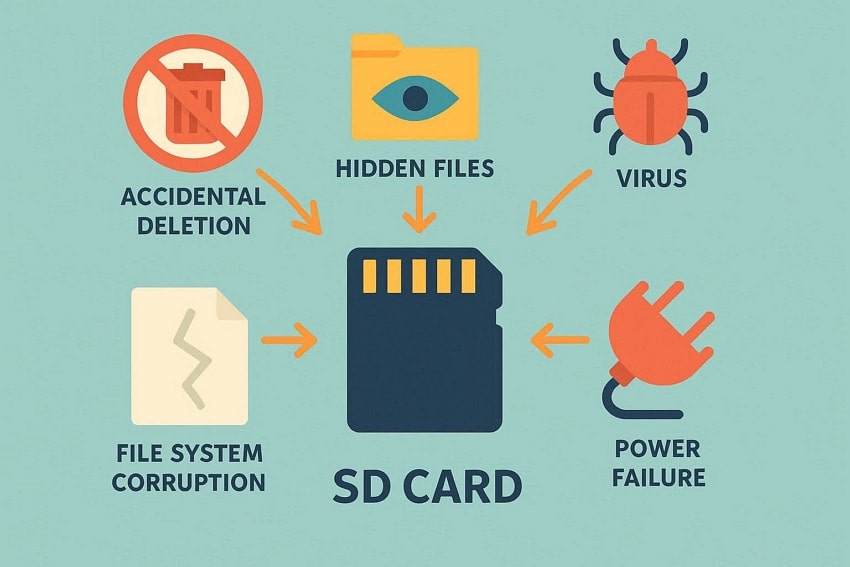
- Accidental Deletion or Formatting: Files can vanish if someone deletes them by mistake or formats the SD card without a backup. This often happens when cleaning storage quickly or pressing the wrong option on the phone or PC.
- Due to Virus or Malware Infection: Some viruses hide files by changing their attributes or even delete or corrupt them. This is why you may see only shortcuts, strange folders, or fewer files, even though the card's used space looks the same.
- Corrupted File System: If the SD card is removed while files are being copied, or the device loses power, the file system can become corrupted. When this happens, files may become unreadable or appear as 0 KB, even though they still occupy space.
- Improper Ejection or Sudden Removal: SD cards removed without a safe eject can corrupt file records, especially during transfers. This causes recent photos, videos, or folders to go missing or appear empty the next time you plug in.
- Fake, Damaged, or Worn-Out Card: Cheap or counterfeit cards often report a higher capacity than they really have, so new data overwrites old files. Physical damage or wear over time can also create bad sectors, making some files disappear or fail to open.
Part 3. SD Card Not Showing Files? Easy Fixes for Connection Problems
When an SD card is not showing files, it is linked to connection or detection issues; the actual cause is often external rather than data-related. Thus, the section below focuses on restoring a stable connection with each solution elaborated with clear steps:
Solution 1. Check the SD Card for Physical Damage
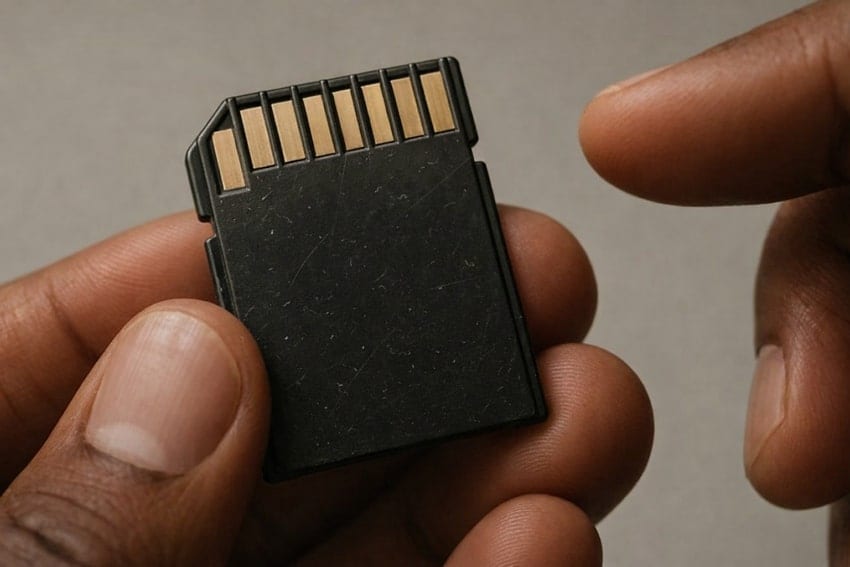
Any slight damage, such as dust built up or bending, can interrupt data transmission between the card and the reader. For this, safely eject and remove the SD card from your device to inspect the metal contacts for dust or fingerprints. Gently clean and check if the card is physically cracked, as the device may fail to read it at all.
Solution 2. Try a Different Card Reader or Device
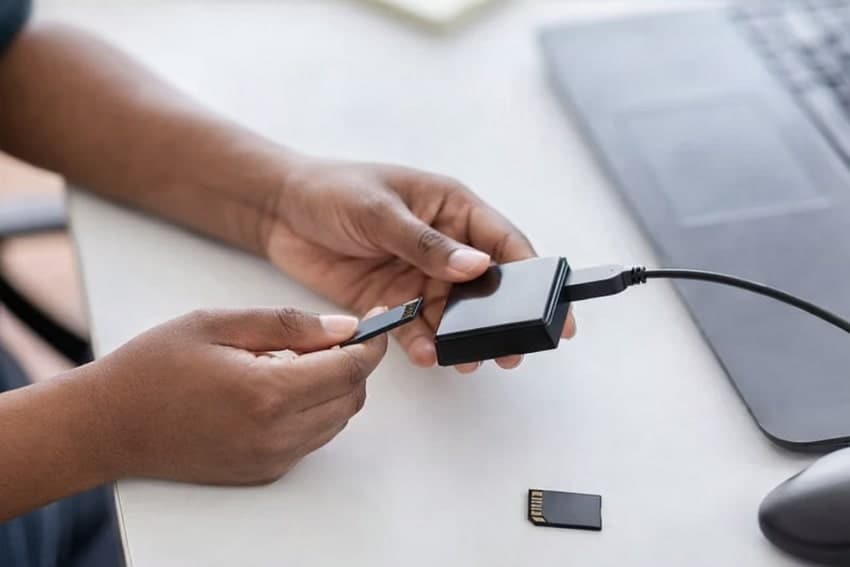
Card readers and USB ports are prone to wear, compatibility issues, and power inconsistencies. A malfunctioning reader may detect the SD card but fail to display its files, leading users to assume the card is damaged. For better analysis, remove the SD card from the current card reader or device and insert it into a different reader. If possible, test the SD card on another computer and verify that the files are present.
Solution 3. Update or Reinstall Device Drivers
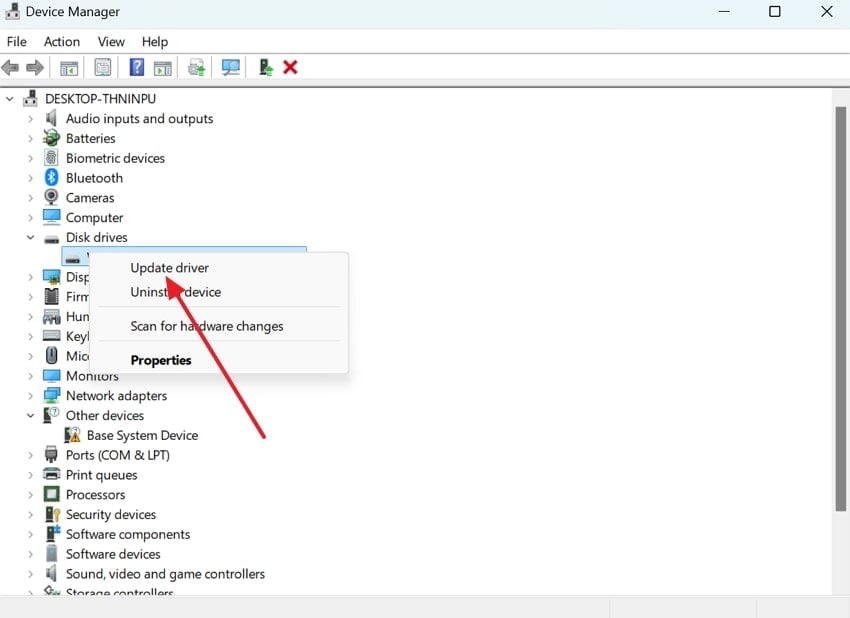
Outdated or incompatible drivers may misinterpret the SD card, resulting in questions such as How do I view photos on SD card? Once you update or reinstall drivers, compatibility issues after system updates are resolved, and normal access is restored. To do so, follow the provided guidelines and learn how to update your device drivers:
- Open "Device Manager" on Windows, locate Disk Drives, and right-click your SD card reader. Here, choose the "Update Driver" option from the menu and install the updated version.
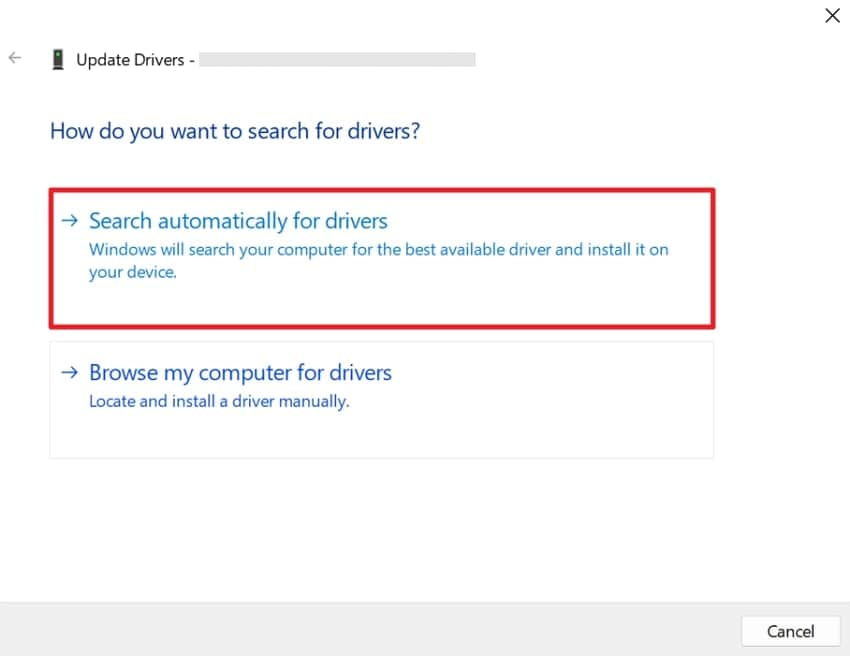
- Next, press the "Search Automatically for Drivers" option and allow Windows install the latest driver.
Part 4. When the SD Card Doesn't Show Files? Easy Fixes to Try
Another possibility for the SD card not showing files is that your card is detected but appears empty. From this perspective, the section covers easy fixes to reveal existing data rather than repairing or recovering it:
Solution 1. Enable Hidden Files in File Explorer
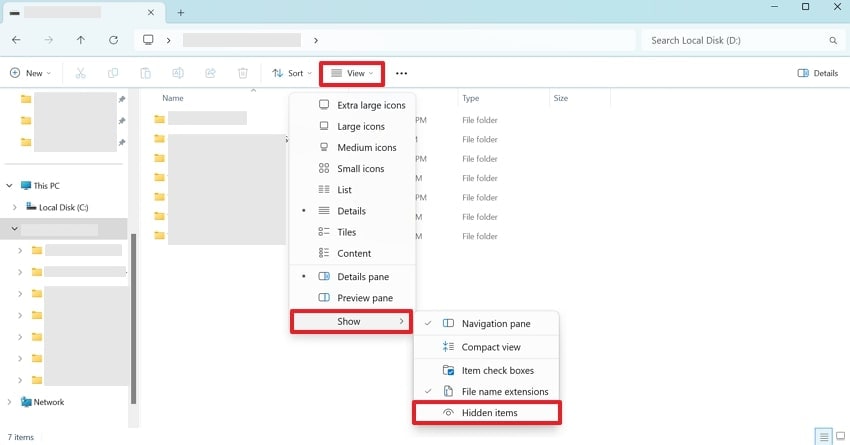
Files on an SD card can be marked as hidden due to accidental setting changes, file system errors, or virus activity. Enabling hidden files lets you view content that remains on the card but isn't displayed by default. Simply follow the instructions and disclose the data that isn't visible at first in your File Explorer:
Instructions. Insert the SD card into your PC and open File Explorer to view its content. From the top, expand the menu for "View" and navigate to the "Show" option. After this, select the "Hidden Items" option to enable it and reveal all hidden folders on the SD card.
Solution 2. Search for Parts or Segments of the Files
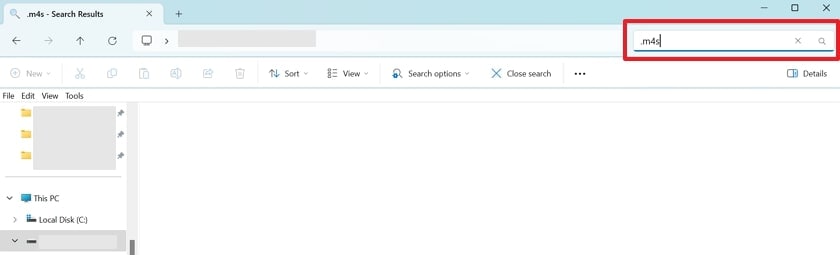
At times, file names, extensions, or folder structure become corrupted, making them difficult to locate manually. You can, however, search for partial filenames or keywords to uncover data stored on the SD card. Follow the instructions and recover certain missing files rather than the entire contents of the card:
Instructions. Access File Explorer and click on your SD card so the search is limited to that drive. Now, use the search box and type a part of the file name you're looking for. After this, review the search results and open any files that appear.
Part 5. If the SD Card Data is Lost? Use Data Recovery Software to Restore Files
For an SD card showing used space but no files, a recovery program can be the difference between permanent loss and getting things back. Recoverit, with a 99.5% success rate, is the best option for complete file recovery. Not only that, but it can also restore deleted or corrupted files from SD cards. This robust data recovery program uses deep learning to scan your SD card sector by sector, even if it was formatted.
It works with SD cards used in cameras, drones, and phones, including brands such as GoPro. To handle complex loss scenarios, such as accidental formatting, corruption, or file-system damage, on SD cards. It's available on both Windows and macOS, so SD cards can be recovered on whichever system is more convenient. Aims to restore visual quality and playability, so footage from cameras or drones becomes usable again.
Key Features
- Supports Multiple File Formats: The program facilitates more than 1000 file formats, such as videos, photos, and documents.
- Memory Card Data Recovery: It can retrieve data from all types and brands of memory cards through deep scanning to restore lost data.
- Preview Files After Scan: Once the scan completes, you can preview your recovered data, including videos and audio files.
Simple Guide to Recover Missing Files from SD Cards Using Recoverit
Follow the provided tutorial to get sorted with the SD card not showing files panic once and for all:
- Choose the Connected SD Card to Scan
Initially, connect your SD card to your computer, and the program will automatically identify your device type. After this, press the "Start Scan" button to begin a comprehensive scan.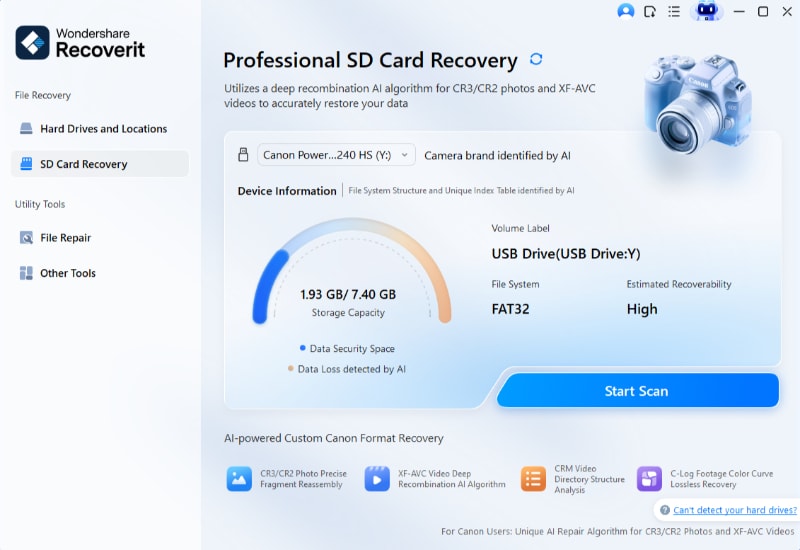
- Begin the Scan on Your SD Card
Once the scan begins, you can pause or stop the process at any time if you locate your files in between.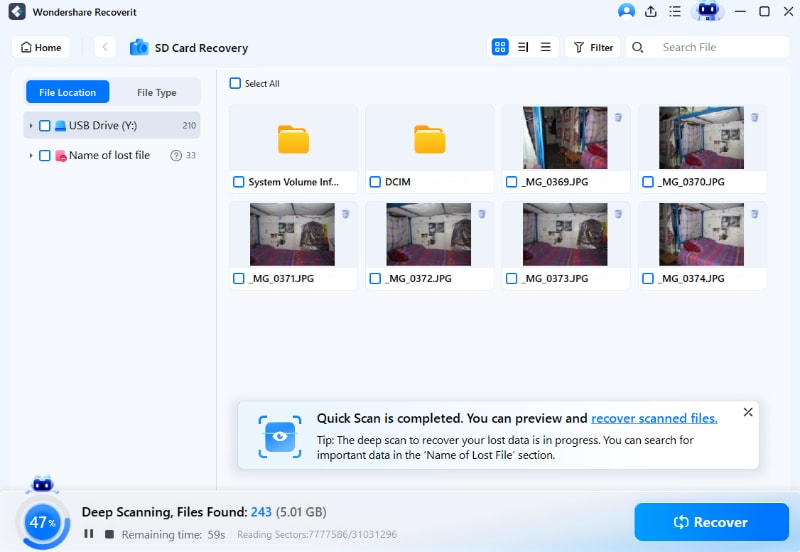
- Review and Recover Your Desired Files
After the scan completes, preview your files and press the "Recover" button to save them locally to your device.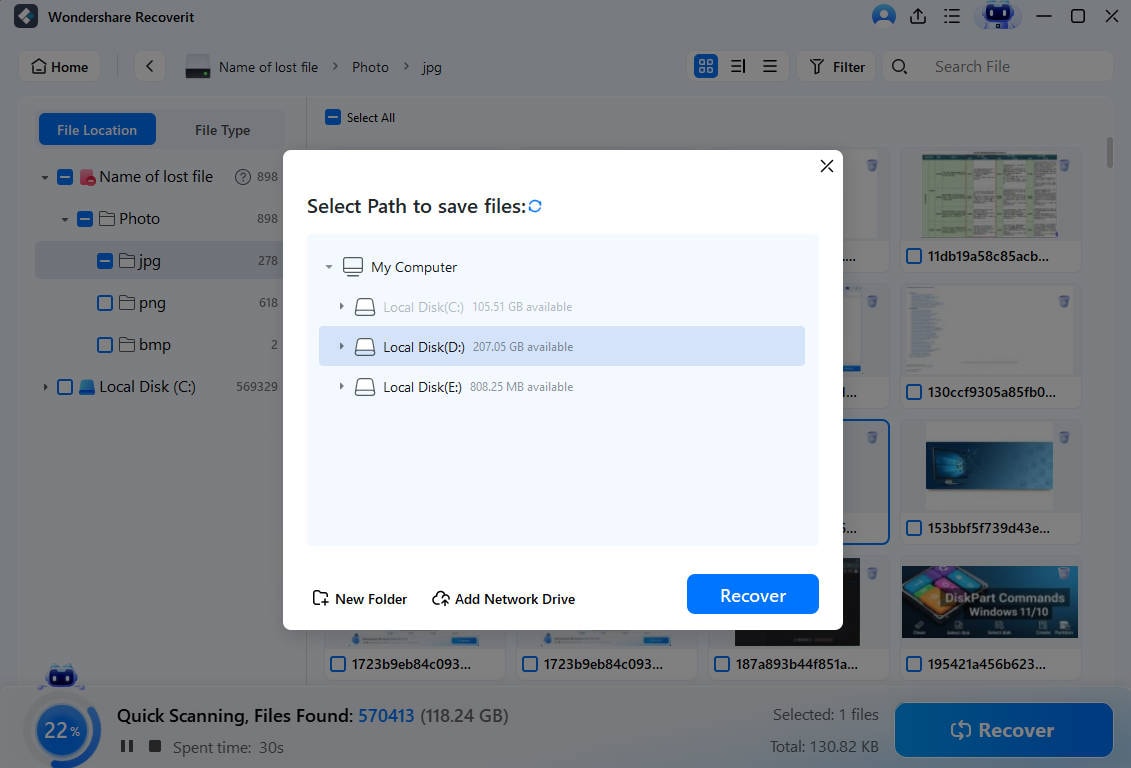
Part 6. Face SD Card Corruption? Recover Your Data Without Losing Anything
Once corruption is suspected, many issues, such as an SD card not showing files, can be resolved using built-in system tools. Considering this, each method below includes a clear explanation with stepwise instructions to minimize permanent data loss:
Solution 1. Scan SD Card for Virus or Malware
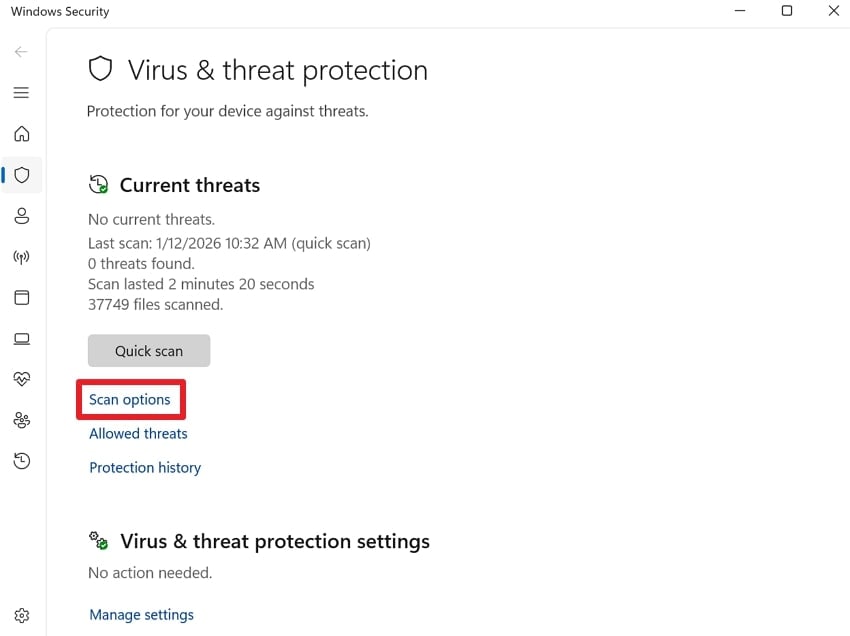
Malware or virus infections are a common but often hidden cause of SD card corruption. Therefore, a thorough virus scan can eliminate malicious processes that continuously interfere with file access. This not only helps restore hidden files but also prevents further corruption, ensuring subsequent recovery steps remain effective. To recover your data without losing anything, follow the guided tutorial and scan the SD card:
- At first, connect the SD card, then open "Windows Security" in Windows Settings. Here, choose the "Virus & Threat Protection" option and press the "Scan Options" for further possibilities.
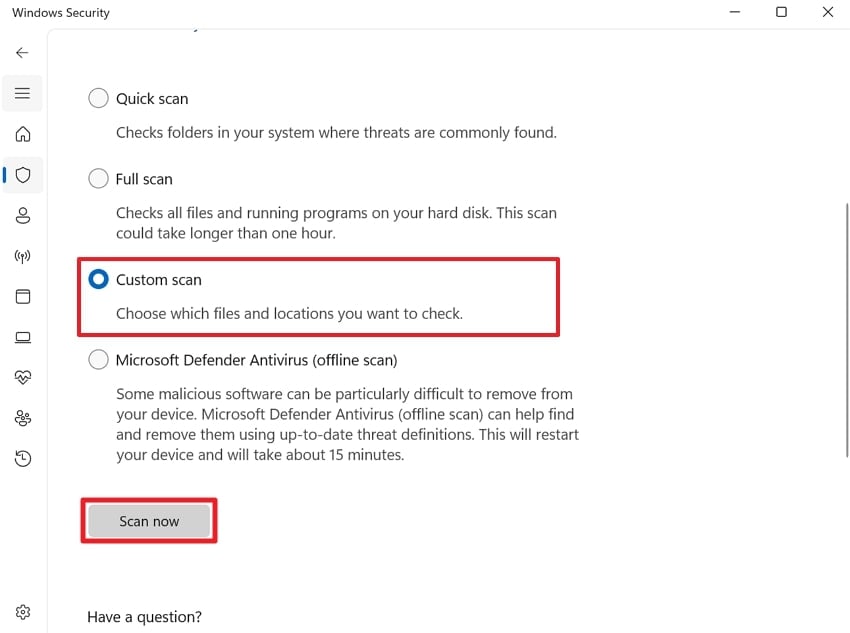
- Now, check the "Custom Scan" option and click the "Scan Now" button to choose a location for scanning. Next, select the SD card drive to start the scan, and wait until it finishes.
Solution 2. Change the SD Card Drive Letter
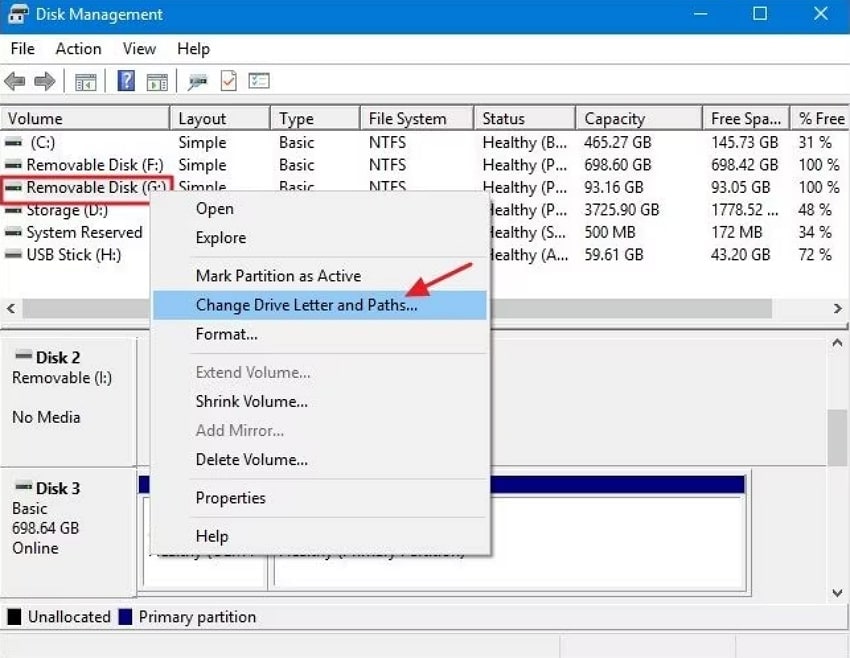
Drive letter conflicts occur when multiple storage devices use the same drive letter, causing the operating system to misidentify them. This can result in missing files, access errors, or the SD card showing used space but no files. Here, changing the drive letter refreshes how the system references the card, often restoring complete access without further alteration. Follow the manual and know how to change the SD card drive letter:
Instructions. Press the "Windows and X" keys together to open the Disk Manager, then locate the SD card volume. Once done, right-click it and select the "Change Drive Letter and Paths" option to assign an unused letter. Confirm your action and recheck File Explorer to verify file visibility.
Solution 3. Check the SD Card for Errors
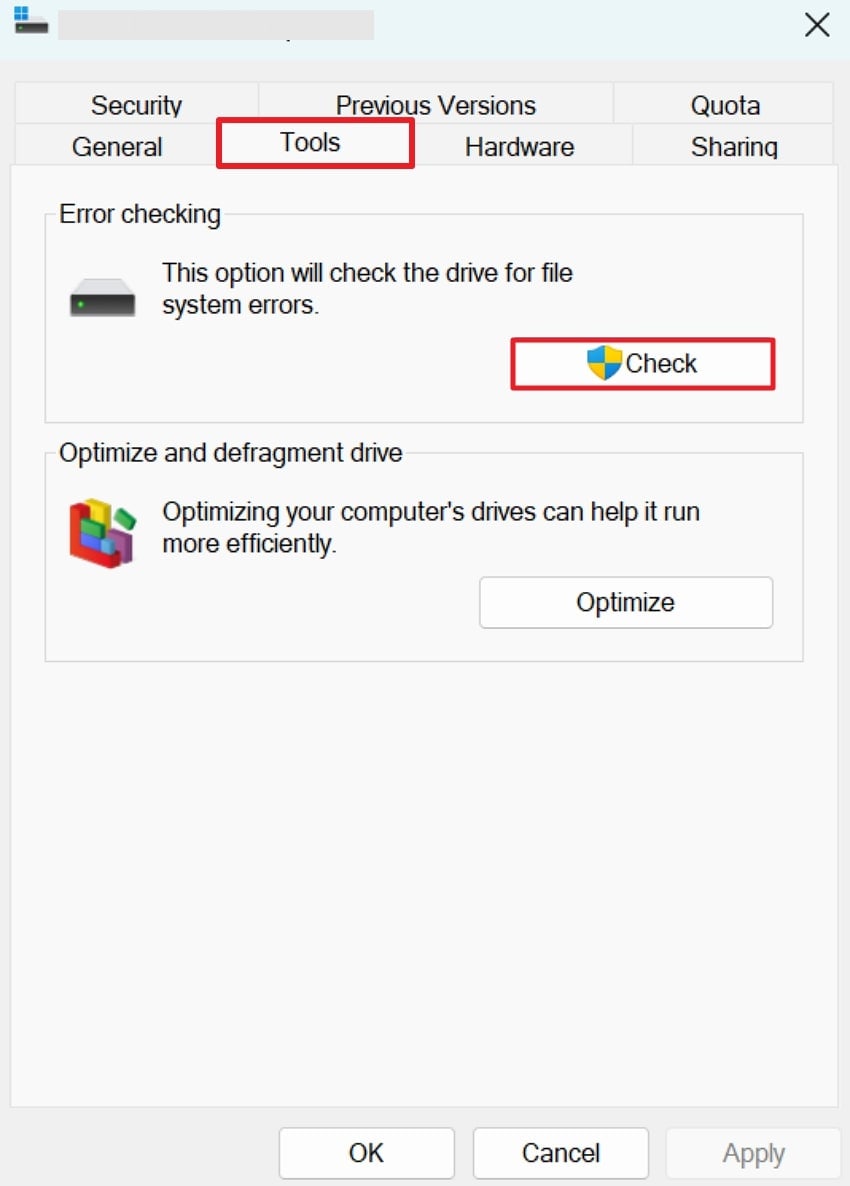
Improper ejection and an interrupted write process can damage the SD card's file system structure. In this condition, error-checking scans the card for inconsistencies, broken file links, or minor corruption, then repairs them automatically. To restore access and prevent small issues from escalating into severe ones, follow and check the SD card for errors:
Instructions. Enter the File Explorer, right-click the SD card drive, and select the "Properties" option. Afterward, switch to the "Tools" tab and under the Error Checking section, click the "Check" button. Now, let Windows scan the SD card for errors and address any detected issues.
Solution 4. Format the SD Card Using Disk Management
Soon, when how do I view photos on SD card becomes recurring, formatting the SD card through Disk Management can be effective. This way, you can clear damaged structures, remove lingering errors, and restore the card to a usable state. Remember, formatting erases visible data, yet it's often necessary to regain functionality and view your hidden files. For more clarity, read the guided manual and follow the steps to format the SD card:
- Access the "Disk Management," find your SD card volume, and right-click it to select the "Format" option.
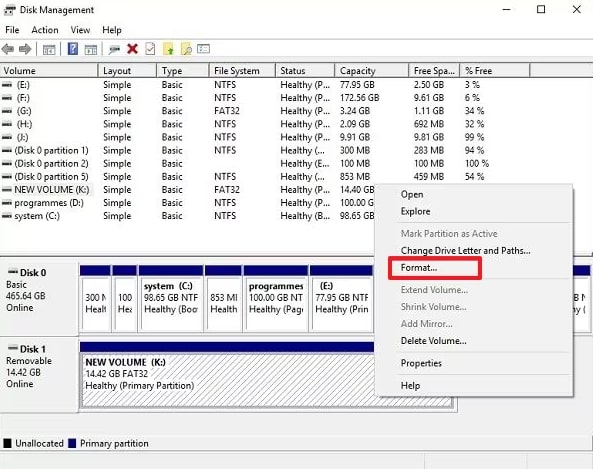
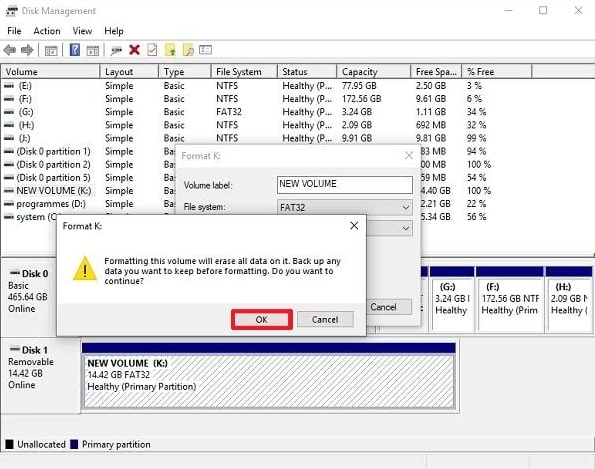
- Now, choose a "File System," type a "Volume Label," and check the "Perform a Quick Format" option. Once done, click the "OK" button to confirm and allow the formatting to complete.
Solution 5. Format the SD Card Using Command Prompt
Command Prompt formatting provides greater control and can resolve corruption that graphical tools may not resolve. It even removes damaged partitions, resets the SD card structure, and creates a clean file system. For persistent SD card issues or failed format attempts, explore the manual and learn formatting using Command Prompt:
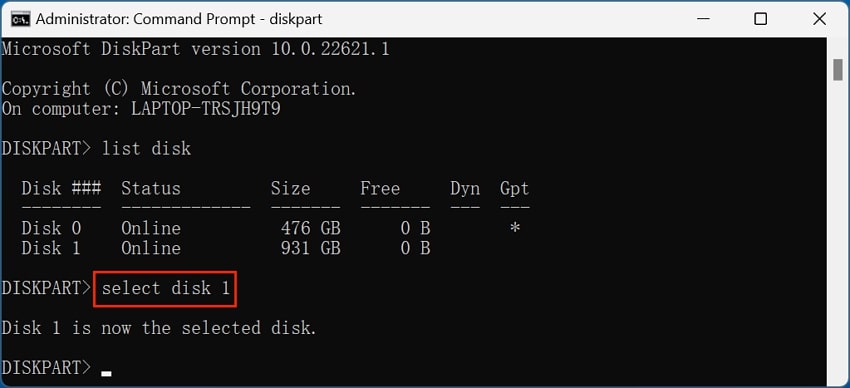
- Run Command Prompt as an administrator, then type "diskpart." Now, run "list disk" to see all drives, and select the disk you want by its number. Next, type "select disk N" (replace N with its number), then run the "clean" command.
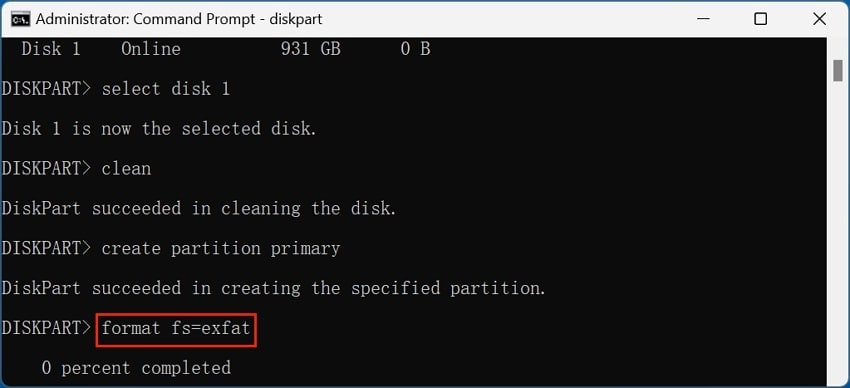
- Finally, run the "create partition primary" command and then the "format fs=exfat quick" command to assign a drive letter and format your SD card.
Related Video >>: How to Recover Lost Files from SD Card?

Part 7. 5 Tips to Prevent Missing Files on SD Cards in the Future
Consider the listed tips and reduce the chances of files going missing or confusion, like an SD card showing used space but no files:
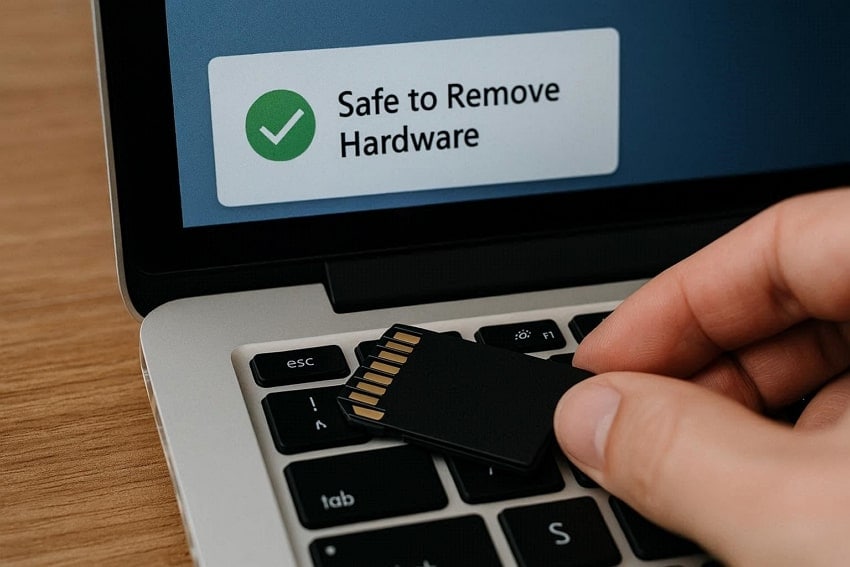
- Always Eject the SD Card Safely: Use "Safely Remove Hardware" on a PC or the proper eject/remove option on a phone before pulling the card out. This prevents sudden breaks in reading and writing, which can corrupt the file system and then disappear.
- Never Remove the Card During Transfers: Do not remove the SD card or turn off the device while copying, moving, or saving the files. Any interruption during the transfer can leave files half-written, damaged, or missing from the card.
- Keep the Card Away from Damage: Protect the SD card from water, dust, and bending, and store it in a small case when not in use. This is important because physical damage and wear can create bad sectors on the card, which may cause some files to vanish.
- Scan for Viruses Frequently: Always scan the SD card with trusted security software periodically, as malware can hide files. Keep your PC and phone clean viruses can help stop malware from changing or hiding files on the card.
- Backup Important Files Often: After taking photos or videos, copy them to a PC or cloud storage instead of leaving everything on the SD card. Even if the card fails or files go missing, you still have secure copies and don't lose your important data.
Conclusion
In conclusion, the problem of an SD card not showing files can be stressful, especially when it contains your valuable or irreplaceable data. For your reference, each solution discussed in the article can help you restore access to your file without further damaging the card. However, when manual fixes fail, only Recoverit can help you perform a deep scan and uncover all hidden items.
FAQ
-
1. Why do SD card files show on one device but not on another?
This can occur due to file system compatibility issues, outdated drivers, or device-specific limitations. When you try the SD card on another device, it helps identify whether the problem is system-related. -
2. Does SD card capacity affect file visibility issues?
In general, higher-capacity SD cards are more susceptible to file system errors if used on older or incompatible devices. Also, frequent read/write operations on large-capacity cards increase the risk of file corruption if transfers are interrupted. Collectively, all of this further contributes to file visibility issues or eliminates them completely. -
3. Should I stop using the SD card if files are missing?
Absolutely, once your SD card shows used space but no files, simply stop using the same card again. Continued use may overwrite the existing data, reducing the chances of successful recovery at the right time.


