 TL;DR:
To fix YouTube Server Error 400 on Android, first test video playback in a mobile browser to confirm it is not an ongoing server outage before clearing app storage or reinstalling, as these official workarounds will permanently delete your offline downloads.
● YouTube acknowledged that its initial November 1, 2026 fix did not resolve the error for all Android users, meaning device-level resets cannot bypass an active server-side outage.
● Safe preliminary troubleshooting steps that leave your offline library intact include updating the app, switching between Wi-Fi and mobile data, and clearing the temporary app cache instead of storage.
● The 400 error message exclusively indicates a server communication failure and does not mean your local MP4 camera recordings or previously uploaded channel videos are deleted or corrupted.
Ask AI for a summary
 ChatGPT
 Perplexity
 Gemini
 Claude
 Grok
If your Android phone shows "There was a problem with the server [400]" when you open YouTube or play a video, check whether YouTube itself is having trouble before resetting the app. YouTube announced a fix on November 1, 2026, but on November 3 acknowledged that some Android users were still affected and that work on a fix was continuing.
Try YouTube in a browser, check another network, and update the app first. If the problem is affecting other users too, changing settings on your phone may not resolve it.
Do not clear YouTube's storage or reinstall it without checking your downloads. YouTube warns that both actions remove videos saved inside the app for offline viewing. Clearing the cache is a different, less disruptive step.
In This Article
Part 1. Why YouTube Shows Server Error 400
Error 400 can appear when YouTube cannot load a video or complete a request. The cause may be an issue affecting YouTube's service, the app on your phone, or your connection.
YouTube's November 1 and 3, 2026 Updates
On November 1, YouTube acknowledged that Android users were seeing "Server Error 400" or "There was a problem with the server [400]" while opening the app or playing videos. The company subsequently labeled the incident fixed in its official support notice.
That was not the final update. On November 3, YouTube acknowledged that some Android users still saw the error and said its team was continuing to work on a solution. The November 3 report quoting the latest YouTube statement explains the change. The problem was not reported as affecting every Android device, and no universal device-side fix was confirmed for those still affected.
YouTube's November 1 workaround for a phone that remained affected was to reinstall the app or clear app storage, not just cache. Both remove offline downloads. If you need to keep those downloads, check the safer steps first and follow the official status rather than repeatedly erasing app data.
What Does Error 400 Mean?
In HTTP, 400 means Bad Request: a server cannot process a request as received. But an error labeled "400" in the YouTube app is not enough to diagnose corrupted cookies, a faulty phone, or a specific network setting. The November 2026 incident affected YouTube's service for some Android users.
You may also see "There was a problem with the network [400]." Try the same basic checks for either message. Neither error indicates that a video you recorded on your phone, computer, or camera has been deleted.
Part 2. Check YouTube Before Changing Settings
You can narrow down the problem without removing your account, reinstalling YouTube, or resetting network settings. A successful video playback test is more useful than the wording of the error alone.
Try the Browser and Another Connection
- Open YouTube in your browser. Use Chrome or another mobile browser and play a video. If it works there but not in the app, continue with the app fixes below.
- Switch between Wi-Fi and mobile data. If YouTube works on one connection but not the other, check the connection that fails. Mobile-data charges may apply.
- Try another device. If the error affects multiple devices and networks, check the latest YouTube service update. If only the Android app fails while a browser works, start with an app update and restart.
Choose a Fix Based on What Works
| What Happens | What to Try |
| YouTube works in a browser but not in the Android app | Restart and update the app, then try clearing cache |
| YouTube works on mobile data but not Wi-Fi | Check the Wi-Fi connection, VPN, proxy, or DNS settings |
| Several devices or connections fail at the same time | Check YouTube's latest service status; wait if the problem is widespread |
| Only one video fails while others play | Check whether that video is available to your account or region |
Part 3. How to Fix YouTube Server Error 400 on Android
These steps address common device-specific problems. They may not overcome a service issue that YouTube is still investigating. Start with actions that leave your offline downloads intact; menu names may vary by Android version and phone manufacturer.
Restart and Update the YouTube App
Step 1. Close YouTube. If it will not close properly, open Settings > Apps > YouTube and choose Force stop, then reopen the app.
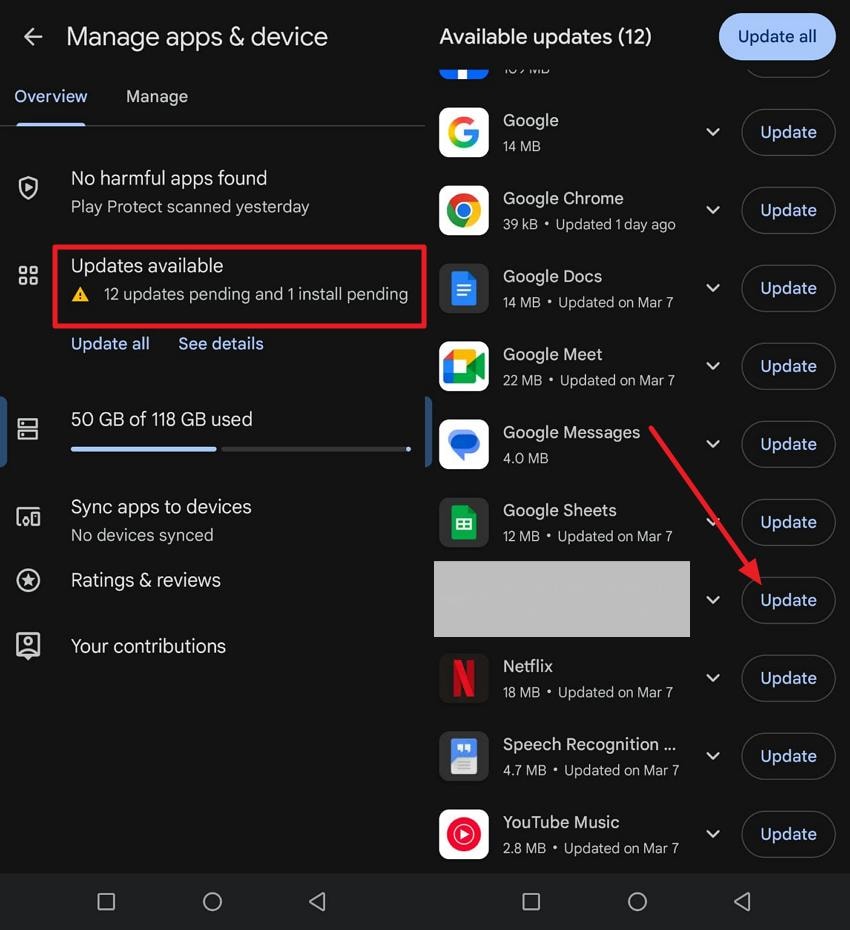
Step 2. Open Google Play Store, tap your profile picture, and select Manage apps & device > Updates available. If YouTube has an update, install it. Google's app update guide explains this process.
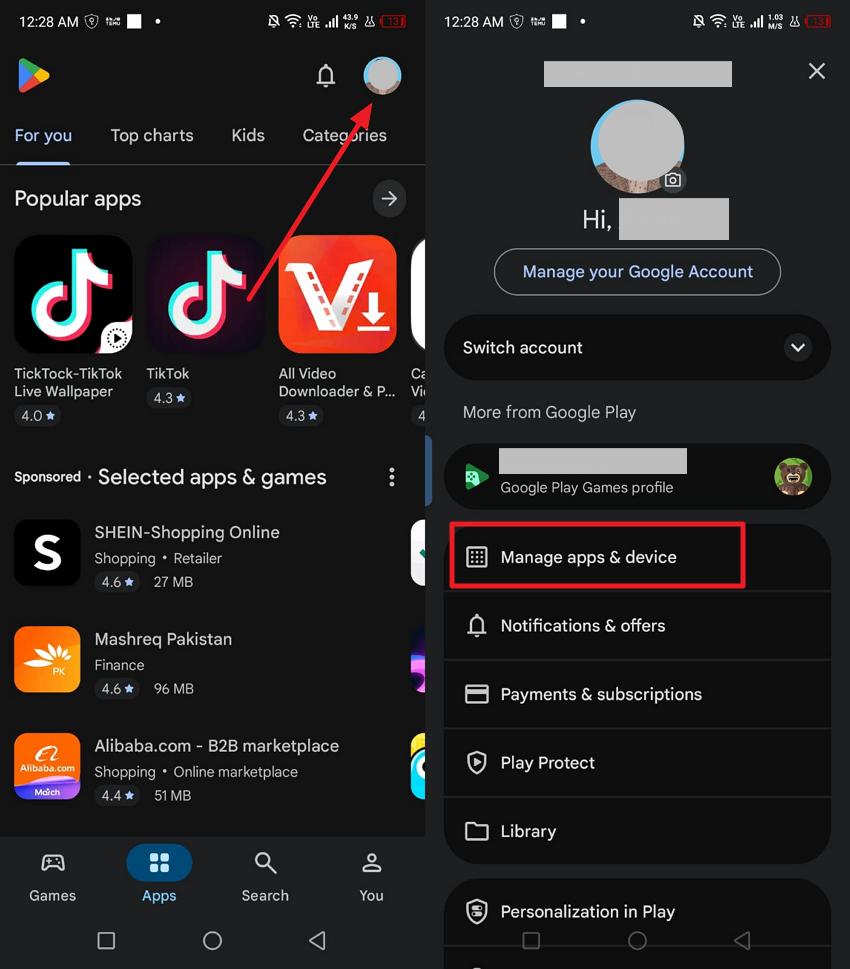
Step 3. Restart your phone. Open several videos to see whether the error returns. If it does, check your connection next.
Check Wi-Fi, Mobile Data, and VPN Settings
Step 1. Try YouTube on Wi-Fi and mobile data. If one works and the other does not, the failing network may need attention.
Step 2. If you use a VPN or custom Private DNS, temporarily disable it and test again. Restore your original setting afterward. If your network is managed by a school or employer, ask the administrator instead of changing managed settings.
Step 3. If the problem affects only one network, restart that connection or ask its administrator for help. Google's video playback troubleshooting guidance covers connection and app problems more generally. Reopen YouTube and play several videos to check the result.
If YouTube works on mobile data but not your usual Wi-Fi, check the router or ask the network administrator for help. There is no need to reset all of your phone's network settings at this stage.
Clear YouTube's Cache
If YouTube works in your browser but the app still fails, clearing temporary cache is a reasonable low-risk check. It is not the same as YouTube's incident-specific instruction to clear app storage, and it may not fix the ongoing November issue. You can try it without intentionally deleting your offline-download library.
Step 1. Open Settings > Apps > YouTube.
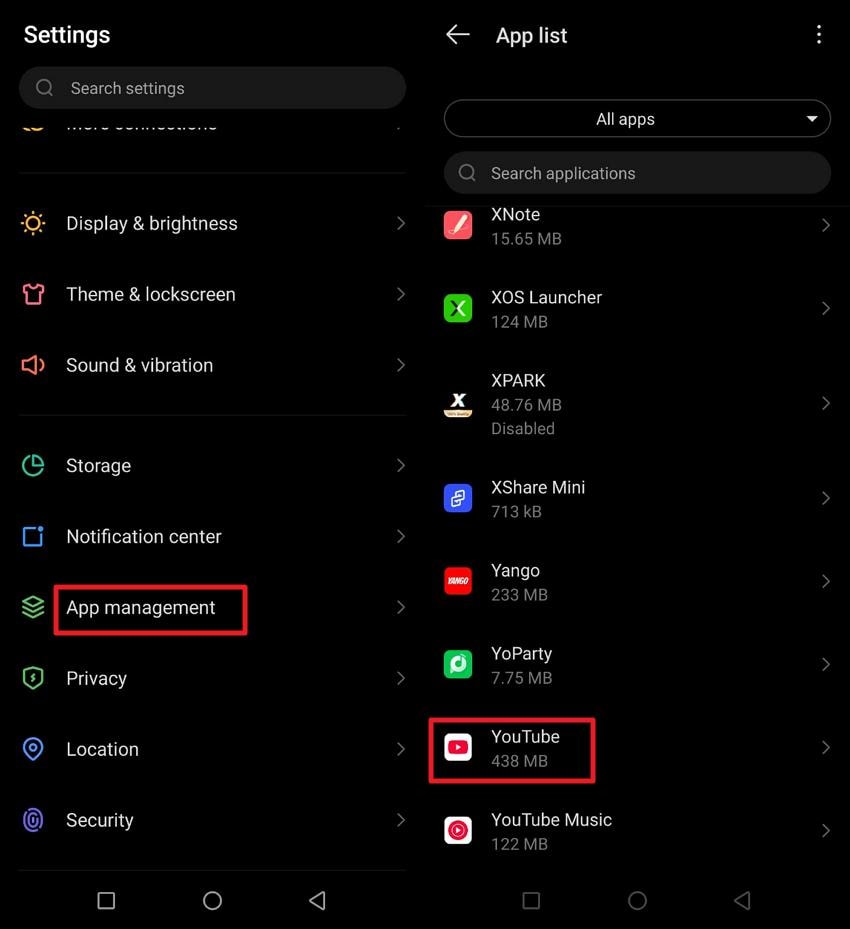
Step 2. Open Storage & cache or Storage, and tap Clear cache. Do not choose Clear storage or Clear data by mistake.
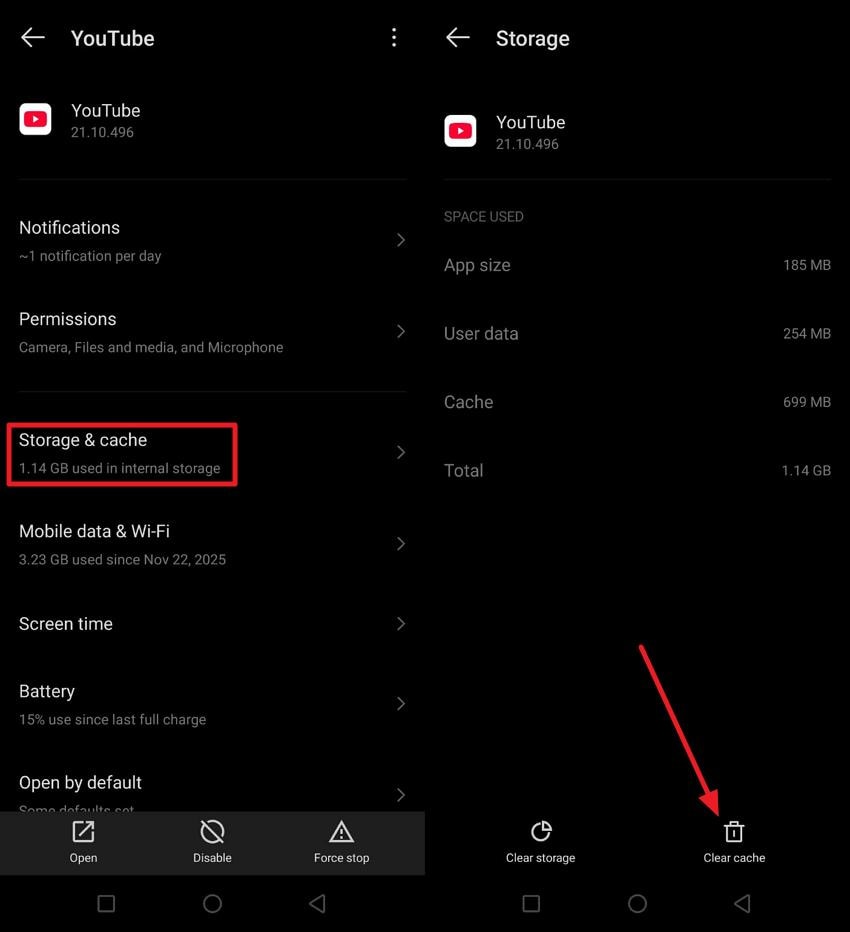
Step 3. Reopen YouTube and play a video. Google's Android storage guide explains the difference between clearing cache and deleting stored app data.
Clear App Storage or Reinstall YouTube
For Android devices that still showed Error 400 after the initial November 1 fix, YouTube recommended clearing the app's storage or reinstalling the app. Both actions remove videos downloaded for offline viewing. The company later acknowledged that some users were still affected, so neither action is guaranteed to work while the service problem continues.
Before proceeding, open YouTube > Downloads if possible. If those offline videos matter, wait for a further official update rather than deleting the downloads. Resetting the app does not delete ordinary MP4 recordings stored separately in your camera or computer folders, but you should still keep copies of anything important.
Option 1: Clear app storage. On Android, open Settings > Apps > YouTube > Storage & cache (or Storage) and select Clear storage or Clear data. Confirm only after accepting the loss of offline downloads. Open YouTube again and sign in if asked.
Option 2: Reinstall YouTube. If your phone allows uninstalling the YouTube app, uninstall it, then install the current version from Google Play. On devices where YouTube is a preinstalled system app, you may see Uninstall updates instead; if you use that option, reinstall available YouTube updates from Google Play. These menus vary by device.
After either option, open multiple videos. If they play normally, the app is working again. If Error 400 persists, stop repeating data-deleting actions and check the latest YouTube update or report the issue.
Part 4. What Happens to Your YouTube Downloads?
Videos downloaded inside YouTube and video files saved separately on a computer or memory card are not stored in the same way.
Offline Downloads Inside YouTube
According to YouTube's offline video help page, downloaded videos are encrypted and played through the YouTube app. They are not ordinary MP4 files that you can copy from the phone to a computer.
If those downloads are removed, check whether the videos are still available to download again through YouTube and your account still permits offline access. A deleted encrypted app download is not equivalent to a deleted MP4 stored in an ordinary computer folder.
Videos You Recorded or Uploaded Yourself
A video you recorded with your camera or exported from an editing app may still be stored in its original folder, even when YouTube will not load. Check your phone's local video library, computer, camera SD card, or external drive before assuming the file is missing.
If you uploaded the video to your own channel but no longer have the original file, you can check whether YouTube Studio lets you download your uploaded video. That download may differ in quality from your original recording or export.
Part 5. How to Recover Deleted Local Video Files
If a recording or exported video was deleted from your computer, camera SD card, or external drive, check for another copy before using recovery software. This is separate from YouTube's Server Error 400.
Check for an Existing Copy First
Look in the original recording folder, export folder, Windows Recycle Bin, macOS Trash, cloud backups, and any external drive you use for media backups. If you find the file, copy it to a safe location and check that it plays.
If there is no other copy, stop writing to the drive or SD card that held the original. New files can overwrite deleted content; on some SSDs, TRIM can also reduce the chance of recovery. A drive that repeatedly disconnects, makes unusual noises, or is physically damaged needs professional assessment before repeated scans.
Recover Videos from a Computer, SD Card, or External Drive
If you truly deleted a recorded or exported video from a Windows PC, Mac, SD card, or external drive that a computer can still detect, Wondershare Recoverit can scan supported storage for possible recoverable copies. This only addresses the missing local file; it does not resolve YouTube's Server Error 400 or restore encrypted downloads inside the YouTube app.
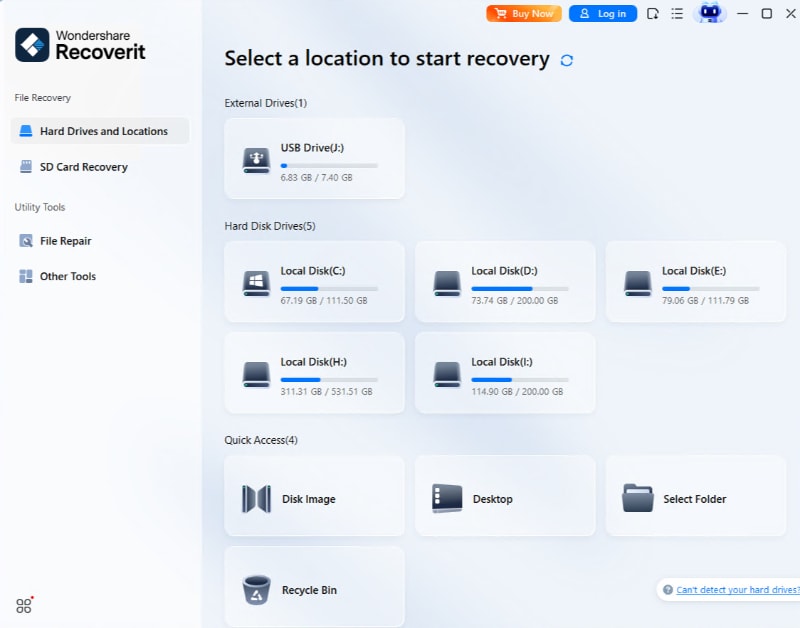
Step 1. Connect the SD card or external drive to a computer if needed. Avoid installing recovery software on the drive containing the missing video. Open Recoverit and select the affected storage location. You can follow the official Recoverit guide for the current controls.
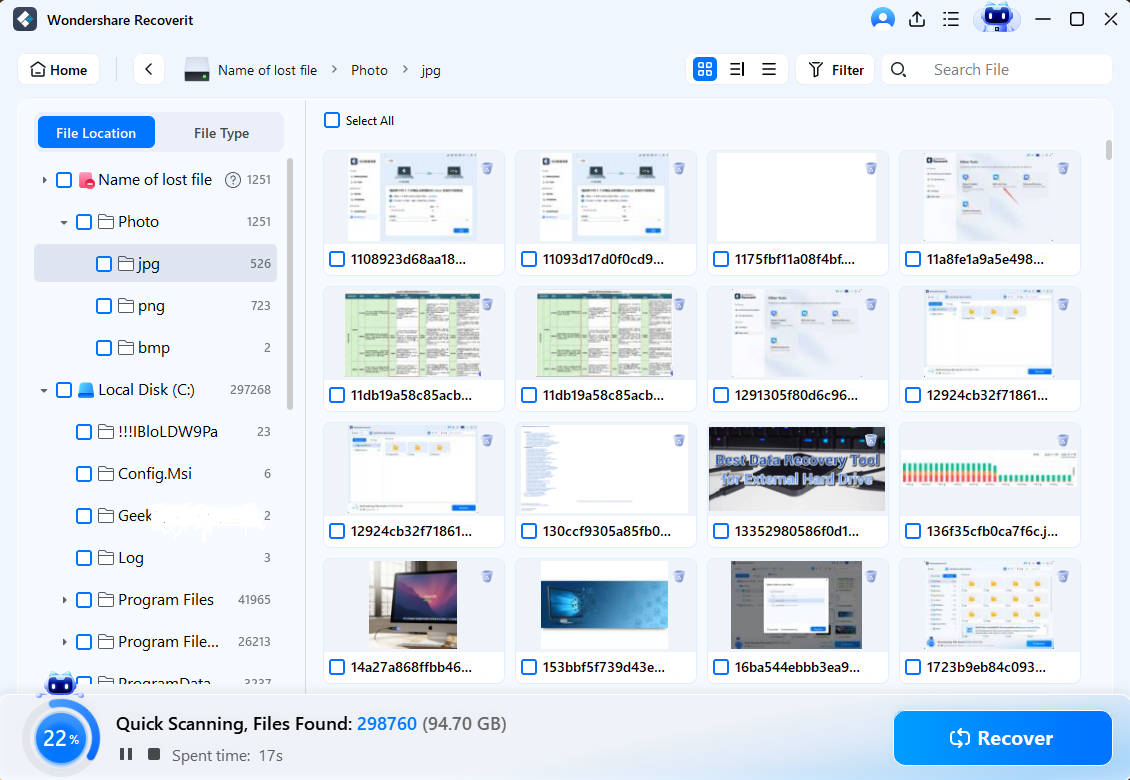
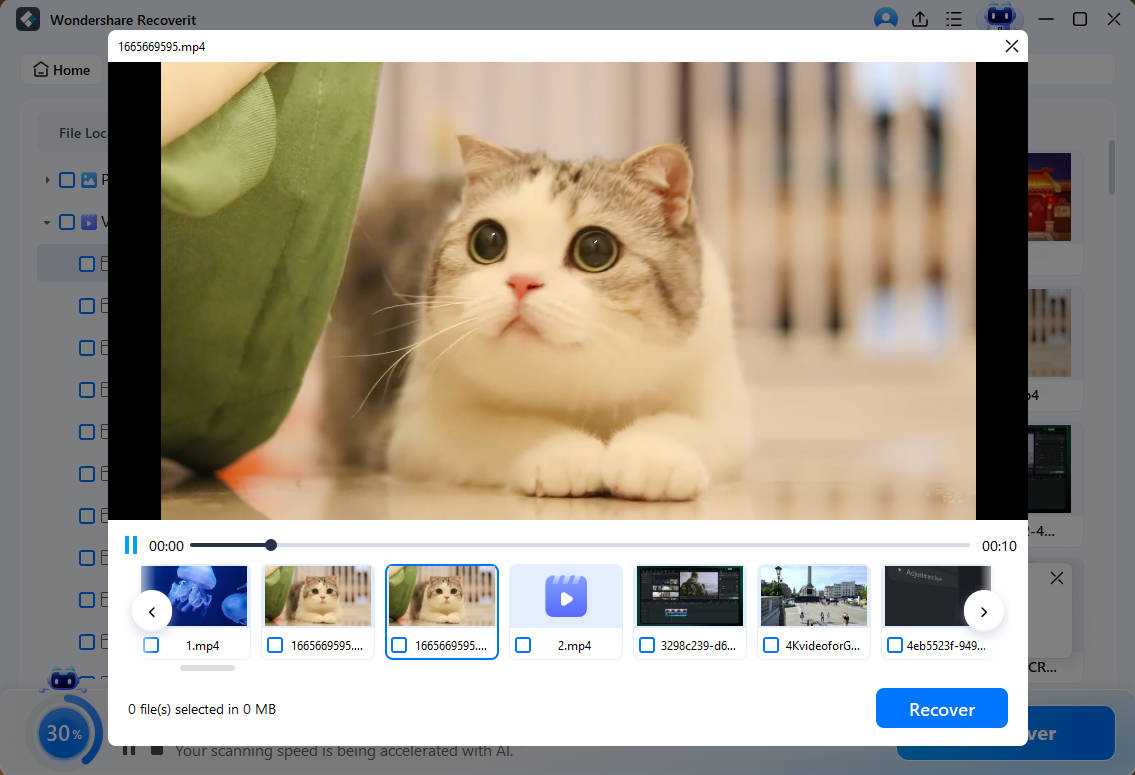
Step 2. Scan the location and look for the deleted video. Filter the results by file type or name when available, and preview a file if the program supports it.
Step 3. Recover any usable file to a different healthy drive. Open the saved file to check playback before reusing or repairing the original storage device.
Recovery depends on the condition of the drive and whether deleted data has been overwritten. A file appearing in scan results does not guarantee that it can be restored or played successfully.
Part 6. If YouTube Error 400 Still Appears
Repeatedly clearing data is unlikely to help if the problem is still on YouTube's side. Collect the details below so you can distinguish an ongoing service issue from a problem limited to your device.
On an Android Phone
Note your phone model, Android version, YouTube app version, the exact message, and whether a browser or second network works. Send those details through YouTube's in-app Help & feedback option when available. If other devices are affected too, follow the current service announcement and avoid a factory reset or repeated account removal.
Other Phones and Computers
On an iPhone, restart YouTube, check for an App Store update, and test another connection. Check your offline downloads before reinstalling the app. On a computer, try YouTube in another browser or a private window. If that works, check browser extensions and settings before deleting cookies or resetting the browser.
For buffering, black screens, or playback errors without a Server 400 message, see the separate YouTube videos not playing guide.
Conclusion
YouTube's November 1 fix did not resolve Server Error 400 for every Android user; the team acknowledged continuing problems on November 3. Check the official status, then try an app update, restart, and connection test. Clearing storage or reinstalling removes offline downloads, so weigh that cost before proceeding. A YouTube playback error does not by itself mean your original recordings were deleted.
FAQ
-
Has YouTube fixed Server Error 400 on Android?
Not for everyone as of November 3, 2026. YouTube announced a fix on November 1, then acknowledged that some Android users were still affected. Check the latest official status before clearing app storage or reinstalling. -
What does "There was a problem with the network [400]" mean?
The message means YouTube could not complete the request. Try playing a video in your browser, switching connections, and updating the app. The wording alone does not identify the cause. -
Will clearing the YouTube cache delete downloaded videos?
Clearing cache removes temporary app data. Clearing app storage or reinstalling YouTube is different: YouTube warns that these actions remove offline downloads. Read your phone's confirmation before erasing data. -
Can I restore YouTube Premium offline downloads after clearing storage?
You may be able to download available videos again through the YouTube app if your account still has access. Encrypted app downloads cannot simply be restored as playable MP4 files with desktop recovery software. -
Does Error 400 mean a video I uploaded was deleted?
No. Check the video in YouTube Studio and look for your original recording or export. An app loading error does not by itself mean your uploaded video or local file was deleted.


