 TL;DR:
Diagnose Kodi playback and startup failures by first testing a known-good local video; if it plays, the issue stems from an offline add-on or service provider, whereas a local playback failure indicates a broken storage path, incompatible hardware decoder, or app corruption.
● Fix Fire TV Stick startup crashes by navigating to Settings > Manage Installed Applications and selecting Clear Cache rather than Clear Data to preserve your user profile, ensuring you run the stable Kodi 21.3 Omega release instead of the Kodi 22 Piers RC1 prerelease.
● Resolve "No Stream Available" errors by verifying the independent provider's server status or updating the failing extension from its original repository; enabling "Unknown sources" is a security setting that cannot restore offline third-party streams like Scrubs V2.
● Enable debug logging to capture exact crash triggers in the platform-specific kodi.log file before resetting the application, noting that tools like Wondershare Recoverit can only retrieve deleted local media from readable Windows or external drives, not fix broken streams or scan Fire TV internal storage.
Ask AI for a summary
 ChatGPT
 Perplexity
 Gemini
 Claude
 Grok
If Kodi will not open or a movie will not play, the first fix depends on what failed. Check whether the app starts, whether a video saved on your device plays, and whether the problem affects only one add-on or stream. A Fire TV app crash, a missing online source and a disconnected movie drive need different solutions.
Try a short, personally owned video that works in another player before deleting anything. If it plays in Kodi, check the add-on or service; if not, inspect the file path, device and decoder. Keep your Kodi profile and original videos backed up before changing app data or reinstalling.
In This Article
Part 1. Why Kodi Stops Working: Identify the Failure Before Changing Settings
Start with the symptom, not a reset. Kodi can open normally even when a particular add-on has no playable source, while a disconnected storage drive can leave old movie posters visible in the library.
Kodi plays media you provide or obtain through compatible services; it does not control independent streams. Check whether the app opens, whether your local test video plays, and whether another legitimate add-on works. Each result points to a different next step.
| Symptom | Probable scope | First reversible check |
| Kodi won’t open or repeatedly crashes | App state, Fire OS storage, update or problematic add-on | Restart device, inspect application details, preserve userdata |
| Known-good local MP4 fails only in Kodi | Decoder, file path, permissions or hardware capability | Test second known-good clip and compare another player |
| No Stream Available in one add-on | Add-on source or account authorization | Try a legitimate local control file and an official add-on |
| Scrubs V2 alone stopped working | Independent third-party provider or extension | Disable the add-on; review its maintainer status |
| Library poster is present but movie will not play | Stale path or offline NAS/external drive | Verify storage path and actual file access |
| Video buffers or stutters on Fire Stick | Network, thermal limits, Wi-Fi, codec demands | Test a local low-bitrate clip and network conditions |
When a known-good local video works but an add-on says No Stream Available, focus on the provider or add-on. If no local video opens, investigate source access and playback settings before trying a repair tool.
- Before you proceed: Record your Kodi version, device model, Fire OS/Android/Windows version and the exact error message.
- Protect the profile: Do not choose Clear Data, uninstall, remove the userdata folder or reset a build without a backup.
- Avoid false fixes: Disabling security features, enabling unknown repositories or promising free access to unavailable licensed streams is not a diagnostic repair.
Part 2. Fix Kodi Startup Problems on Fire TV Stick
On Fire TV, check the app and device before touching Kodi library databases. Menu labels can differ by Fire OS generation; choose the equivalent installed-app control.
Method 1. Clear the Kodi App Cache Without Deleting Its Profile
Try this if Kodi freezes or closes during startup on a Fire TV Stick and you can still open Fire TV Settings.
Clear Cache removes temporary app files; Clear Data can erase the Kodi profile and library settings. The Kodi cache guide says cache clearing is an occasional startup check, not routine maintenance.
Step 1. Return to the Fire TV home screen and navigate to Settings > Applications > Manage Installed Applications. On some interfaces, choose Manage Installed Applications from the Applications screen.
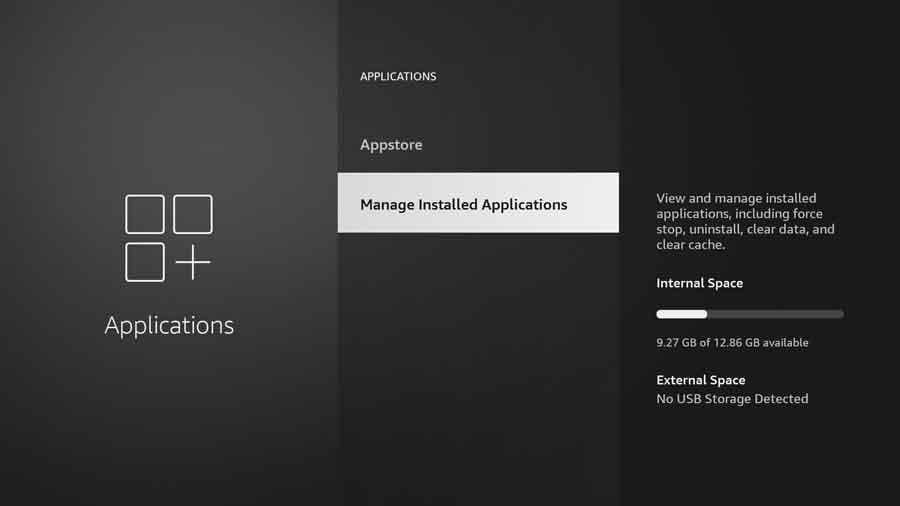
Step 2. Select Kodi and choose Clear Cache, not Clear Data. Note the app version and available storage while you are on this screen.
Step 3. Choose Force Stop if offered, return to the main screen and reopen Kodi. Test the same symptom without installing new add-ons.
Reopen Kodi and repeat the action that caused the crash. If it works, leave your other settings unchanged.
If Kodi still closes, restart the Fire TV device and inspect free storage before Method 2. Back up Kodi data before considering an uninstall.
Method 2. Inspect Kodi Version, Device Storage and Safe Update Options
Use this branch when Kodi began failing after an update, a device change or a low-storage warning.
First confirm the installed build and device architecture. An unsupported build or insufficient storage may cause failures, but installing a prerelease is not a routine fix.
Step 1. From Fire TV Settings > Applications > Manage Installed Applications, open the Kodi entry and record the installed app version. If Kodi launches, Settings > System information provides application and platform information.
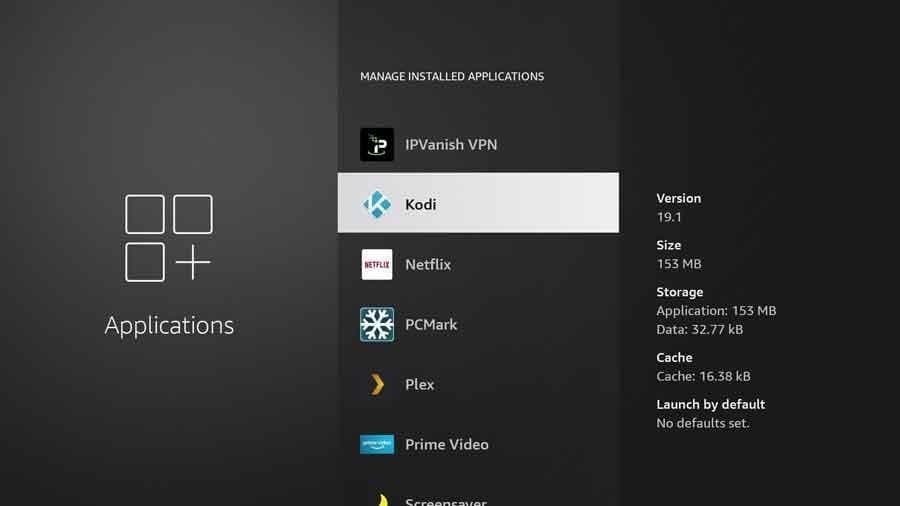
Step 2. Compare the installed version and device architecture with the official Kodi downloads. At the November 2026 check, Kodi 21.3 Omega is the stable release, while Kodi 22 Piers RC1 is explicitly a prerelease. Use a compatible stable build unless you are deliberately testing a release candidate; verify the download page again before upgrading.
Step 3. Check free storage and preserve your Kodi profile, add-ons and personal videos first. The Kodi backup guide describes what to copy. Update only through a trusted distribution channel and reopen the app.
If Kodi starts with your profile intact, test the previously failing action. No further update is needed if the issue is resolved.
If it still fails, stop reinstalling repeatedly. Record the exact version and error, then use the log checks in Part 5.
Part 3. Fix Kodi Add-ons and No Stream Available Errors
If Kodi opens but one stream fails, examine the add-on and its service before changing Kodi-wide settings. The official Add-on manager explains how to inspect installed add-ons, dependencies and repository updates.
Method 3. Inspect the Failed Add-on and Update from Its Original Repository
Use this when one add-on fails to load or stopped working after a version change, but Kodi itself still opens.
Add-ons are maintained separately from Kodi. If a local video and another supported add-on work, the failing extension or its source is the more likely place to investigate.
Step 1. From the Kodi home screen, open Add-ons, then My add-ons (or the package/box icon in the Add-on browser, depending on your skin). Select the affected add-on rather than updating every extension.
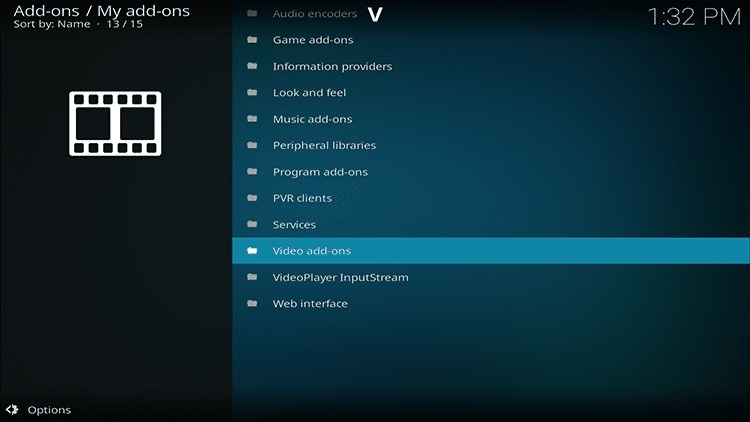
Step 2. Open its information screen and inspect version, status, dependencies and updates from its original trusted repository. Note whether the extension is disabled and whether a compatible update is available.
Step 3. If the extension recently failed, temporarily disable it and test another supported add-on plus a known-good local file. If a legitimate update exists, install it and test again.
Retest the affected add-on. If a supported update fixes it, keep the other working extensions unchanged.
If local video works but the add-on still fails, check its maintainer or the legitimate service provider. Avoid unverified replacement ZIP files and do not treat an online-source error as a damaged personal video.
Method 4. Check Repository and Add-on Browser Status
Check this when several add-ons fail to install, update or appear, or when Kodi reports No Stream Available for a particular source.
An unavailable repository, incompatible dependency or expired service login will not be fixed by switching hardware acceleration or deleting the video library.
Step 1. Open Kodi Add-ons > Install from repository or the Add-on browser in your skin. Confirm the intended official or trusted repository is listed.
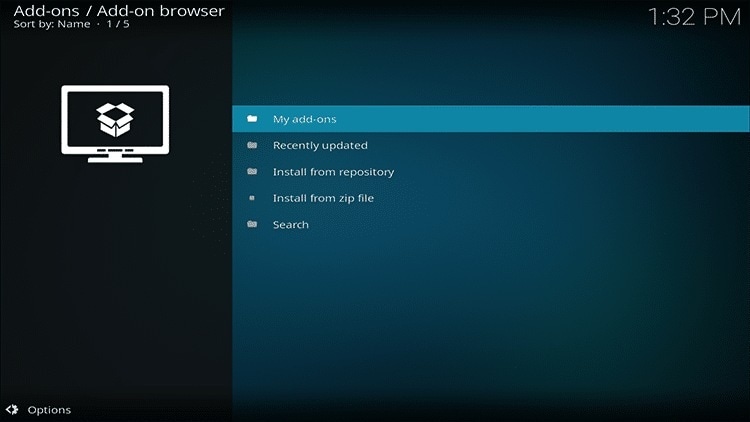
Step 2. Inspect My add-ons and repository update information, including whether the extension is disabled or reports dependency problems. If a service requires sign-in, verify access in its legitimate app or provider portal.
Step 3. Temporarily disable a recently added incompatible extension, restart Kodi and test an official add-on. If the repository is unavailable, wait for its operator or choose a legitimate alternative.
A working repository loads its add-ons and can show available updates. Keep the failing extension disabled while comparing behavior.
If multiple legitimate repositories fail, check the clock, network and Kodi log before changing any databases. Unknown sources is an installation-security control, not a playback fix.
No Stream Available: An add-on could not supply a playable source at that moment. The service may be offline, require authorization or have changed its interface. Kodi does not guarantee independent streaming sources; a VPN, cache utility or file-recovery tool cannot create one.
Scrubs V2: This is a third-party add-on rather than a Kodi project service. If it fails but local videos and supported add-ons work, check the maintainer status instead of resetting Kodi or installing an unknown replacement.
Part 4. Fix Kodi Videos Not Playing: Local Files, Libraries and Decoders
If Kodi opens but cannot play a movie you own, check whether the file can still be opened at its source. A stale library path is different from a codec problem. If your video plays but is silent, use the separate Kodi no-sound troubleshooting guide.
Method 5. Test a Known-good Local Video and Verify the Library Source
Use this when a movie poster still appears but playback fails, or when your file lives on a USB drive, NAS or shared folder you are allowed to access.
Kodi can retain a library entry after its drive is unplugged or a network path changes. Confirm that the actual file is accessible before changing decoding or library settings.
Step 1. From the Kodi home screen, choose Videos > Files or the equivalent file/source browser for your skin. Identify the drive or network share that holds the original movie.
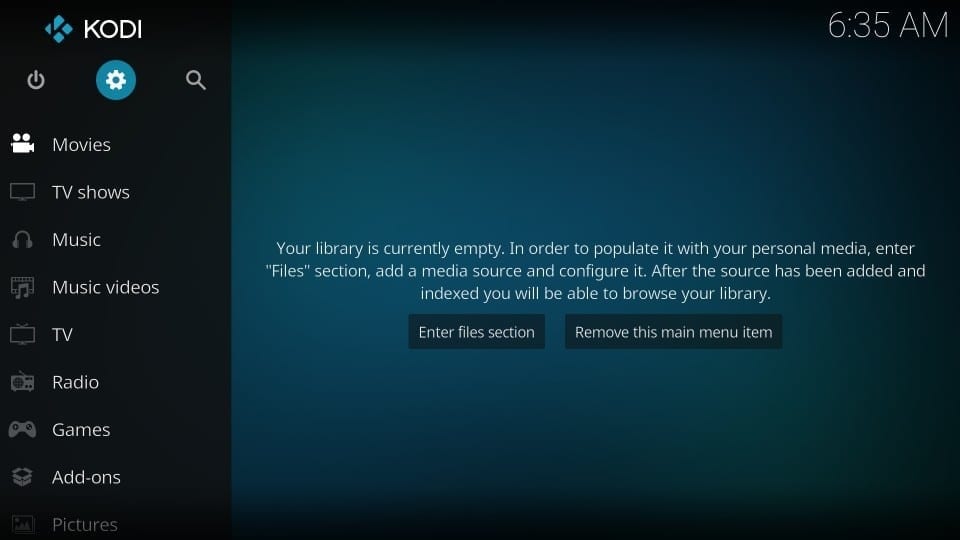
Step 2. Use the Add videos / browse source workflow if you need to verify the source path, without removing the existing library. Locate a small known-good file on the same storage device.
Step 3. Play that control file in Kodi, then open the original in a second local player where available. If the shared folder is missing, verify network mounting, credentials and drive connection rather than editing the video.
Success means you can browse the intended path and play a known-good clip. If the source cannot be opened, fix the mount or share access first.
If neither Kodi nor another player can open the file, inspect the storage connection and permissions. For Synology-specific source setup, see Kodi with Synology NAS, but keep share permissions restricted. If one physical file fails in multiple players, preserve the original and check its integrity.
Method 6. Test Platform-appropriate Hardware Video Decoding
Try this only if a locally stored, known-good video works in another player but stutters, freezes or shows a black screen in Kodi.
Hardware decoders depend on your device and Kodi build. DXVA2 is a Windows option; it is not a Fire TV setting. Turning off decoding can also overload a low-powered device.
Step 1. In Kodi open Settings > Player > Videos. Switch the settings level to Expert only if a required control is hidden, and record the initial values before changing them.
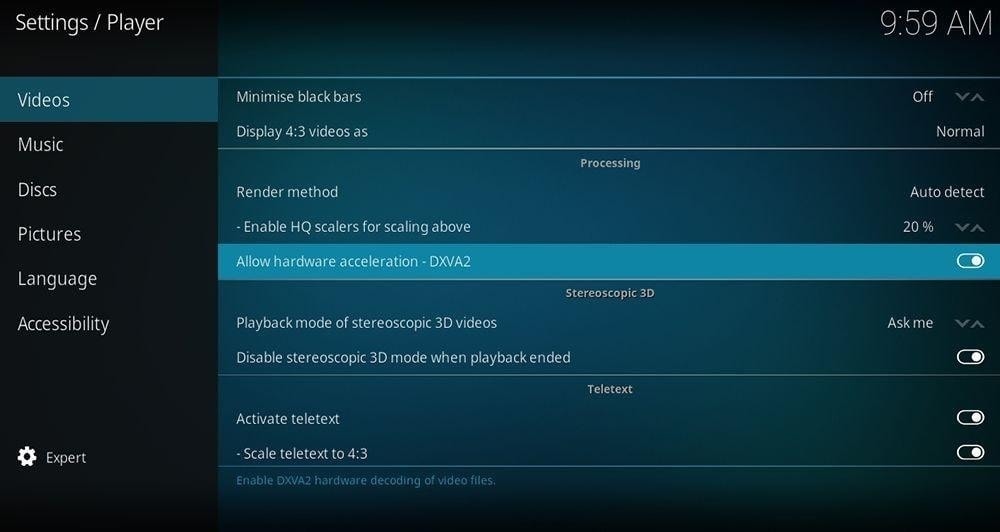
Step 2. On Windows, review available settings such as DXVA2. On Android or Fire TV, use the platform-specific hardware acceleration controls, if present; their exact names and availability vary. The Kodi Player settings reference identifies the platform differences.
Step 3. Change only one compatible setting as a temporary A/B test, replay the same short segment, and restore the previous value if performance gets worse or the symptom does not change.
If the same short clip plays better after one change, note the setting. Otherwise restore the prior value.
For remaining 4K stutter, compare the device codec support, source bitrate and storage or network speed. If all local files fail, move to the log check rather than repeatedly toggling decoders.
Part 5. Capture Kodi Logs and Restore Startup Safely
If Kodi continues to crash, or Playback Failed offers no useful explanation, record the app version and reproduce the error once with debug logging. A short, relevant log is more useful than another blind reinstall.
Method 7. Find the Device and Kodi Version in System Information
Use this if Kodi stays open long enough to record the version and device details for troubleshooting.
The same error can come from a different cause on Fire TV, Windows or a NAS-connected library. Record your own platform before following a platform-specific setting.
Step 1. Open Kodi Settings > System information while the application is responsive. In older skins this appears as System info in the System hub.
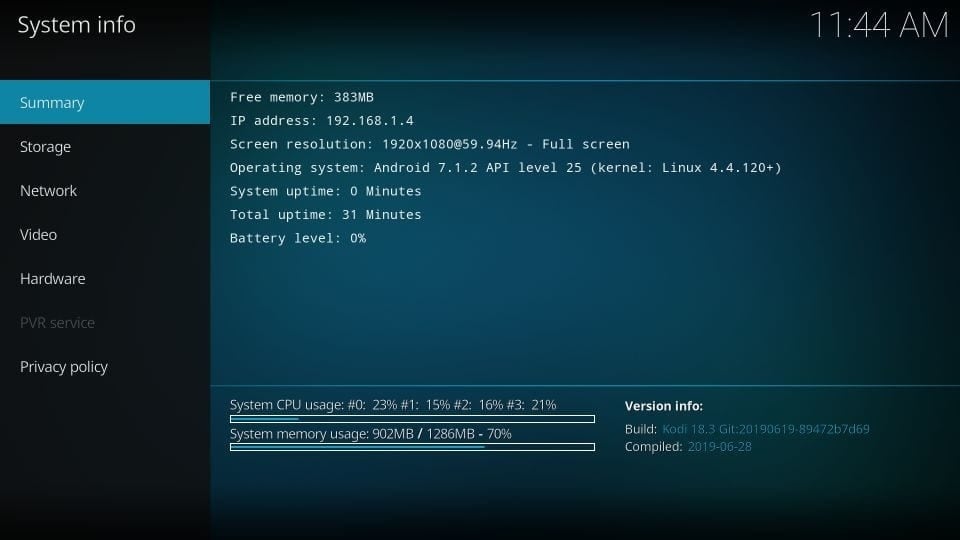
Step 2. Record the visible Kodi version, operating system, memory status and device details. Do not share network addresses, usernames or other private identifiers.
Step 3. Compare the installed build with your device support requirements and reproduce the error once so your report contains the exact trigger and time.
You should now have the version, platform and a reproducible symptom. Include the exact action and time when asking for help.
If Kodi crashes before you can open System information, consult the official platform log paths instead of repeatedly restarting the app.
Method 8. Isolate a Problematic Add-on Before a Full Kodi Reset
Use this if Kodi started failing after you installed an add-on, changed a skin or altered the profile. Back up the Kodi data folder first.
Disabling one recent extension is easier to reverse than clearing the Kodi profile. It also gives you a clear comparison to identify the trigger.
Step 1. Inside Kodi open Settings > Add-ons > My add-ons and identify recently installed or updated entries. If the interface differs, use the official Add-on manager navigation for your skin.
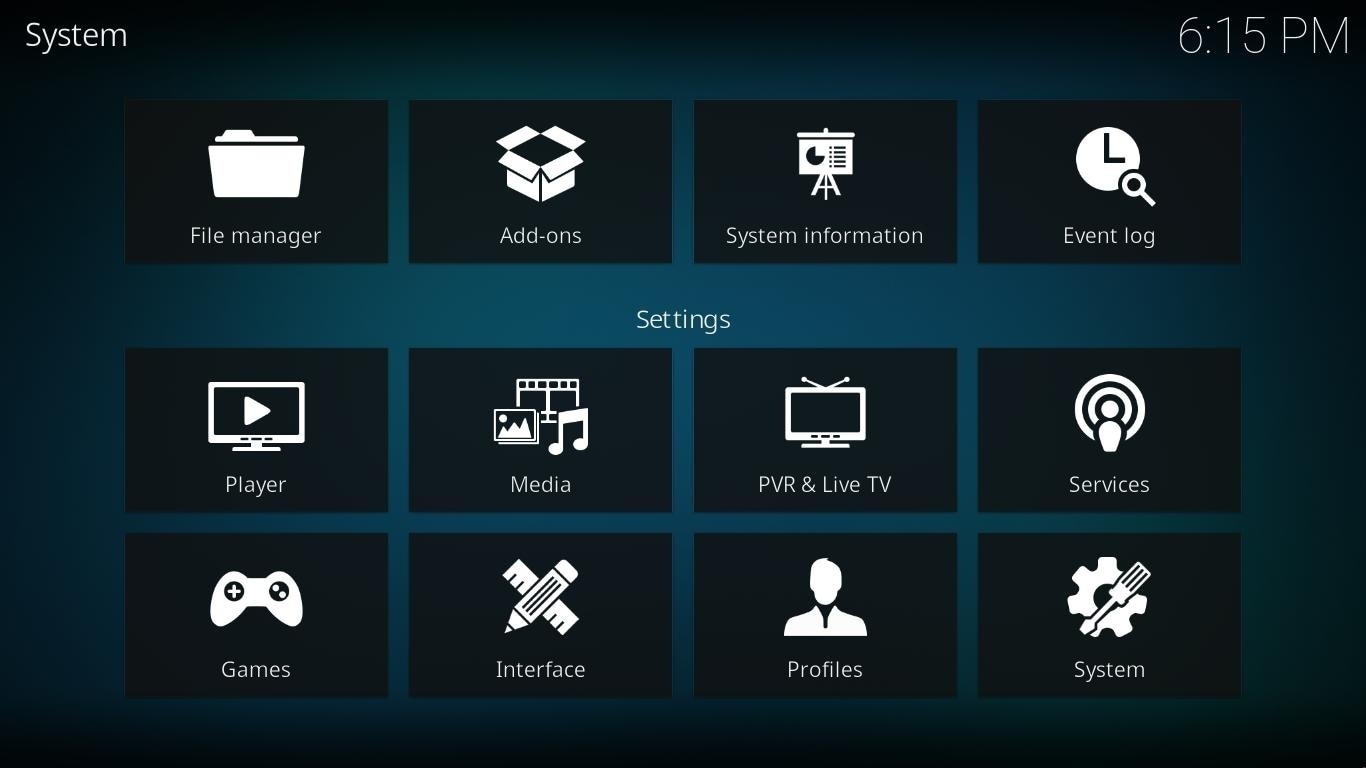
Step 2. Disable the most recently changed extension, note its version, and restart Kodi without altering the other add-ons.
Step 3. Retest the same action. If behavior is stable, re-enable extensions one at a time until the trigger is identified, and keep a backup of the profile before larger repairs.
Repeat the failing action with the suspect add-on disabled. If Kodi is stable, test extensions one by one rather than resetting all settings.
If the problem continues even after isolating recent extensions, collect a short debug log before deciding whether to reinstall.
Collect a Kodi log without resetting your library: Follow the official Kodi debug logging procedure when the menu is accessible.
- Open Settings > System > Logging (the menu may read System Settings) and enable Debug logging. Use the appropriate settings level if the option is hidden.
- Restart Kodi from its on-screen power menu, not by unplugging the device. Check that debug logging is active.
- Reproduce the exact error once, such as opening the same local clip or supported add-on, and note the time.
- Collect kodi.log using the official platform-specific location. For standard Windows desktop installs the documented path is %APPDATA%\Kodi\kodi.log; Android and Fire TV file access differs by device.
- Turn debugging off and review entries around the failure. A network or add-on error points to a different next step than a missing file path or codec message; a log message by itself is not a guaranteed diagnosis.
Before sharing a log: Check for passwords, access tokens, personal file paths, addresses, account names and device identifiers. The official Kodi forum asks for a full debug log with personal information redacted, shared through an approved paste link rather than pasted directly into a post. If Kodi never opens, use the advanced collection instructions instead of installing unknown cleanup add-ons.
Only consider a clean installation after backing up the profile. Reinstalling Kodi cannot restore a discontinued stream or fix a disconnected storage device.
Part 6. When Recoverit Can Help and When It Cannot
Recoverit is relevant only when a personally owned local file is missing, not when Kodi itself fails or a streaming add-on reports no source.
If Kodi shows a movie from an external drive that is now disconnected, reconnect the drive and verify the file path first. If the file exists but fails to play in another player, investigate its format or integrity. A remote No Stream Available message does not require a recovery scan.
If a saved family video, MP4 or MOV was accidentally deleted from a Windows PC or a readable external drive, stop adding files to that drive and check backups. Wondershare Recoverit for Windows can scan supported storage for potentially recoverable files, let you preview supported results and save selected files to a different healthy destination. See the Recoverit recovery guide for the scan and save workflow; recovery depends on remaining data and is never guaranteed.
Do not install recovery software on the same drive you need to recover from, and do not try to scan Fire TV internal storage as though it were an attached Windows disk. Recoverit does not repair Kodi, restore a server-side stream, bypass an add-on restriction or decode an unsupported movie format.
Part 7. How to Prevent Recurring Kodi Playback Problems
Once playback works again, keep the source and device predictable: save a known-good test clip, back up Kodi configuration, and update add-ons only from trusted sources.
- Keep a known-good test file: Save a small video you are entitled to use so you can quickly distinguish playback faults from a streaming provider problem.
- Document changes: Note the Kodi release, skin, newly installed add-ons and the date a problem began before changing advanced settings.
- Keep backups outside the affected device: Store Kodi profile backups and irreplaceable home videos on a separate drive or reputable backup service.
- Prefer trusted add-ons: Obtain updates through legitimate repositories and avoid unknown archives that claim to guarantee streams or bypass restrictions.
- Check resource limits: A Fire TV Stick can run out of storage or struggle with demanding codecs; lower-bitrate local tests help isolate that bottleneck.
Test the previously failing action again after each meaningful change. A temporary service recovery is not proof that changing Kodi settings fixed the underlying problem.
Conclusion
When Kodi stops working, find out whether the app, local file path, decoder, add-on or remote service failed. A known-good test video, preserved Kodi profile and controlled settings comparison usually tell you which fix belongs next. Use the debug log when the error remains unclear.
If the missing item is a stream, check its legitimate provider. If you actually deleted a personal video from accessible storage, protect that drive and assess backups or file recovery instead. These are separate problems with different solutions.
FAQ
-
Why does Kodi say No Stream Available?
The selected add-on could not provide a playable source. Check the service or add-on, then compare with a known-good personal video. A remote source failure does not mean your local file is damaged. -
Why does Kodi fail to open on a Fire TV Stick after an update?
Check the installed build and free storage, restart the device, then try Clear Cache rather than Clear Data. Protect your Kodi profile before uninstalling or switching major versions. -
How can I read a Kodi Playback Failed error?
Enable debug logging in Settings > System > Logging, restart Kodi properly, reproduce the error once and review kodi.log at the official platform-specific location. Remove passwords and account information before sharing any log excerpt. -
Why will Kodi not play a movie stored on my NAS or USB drive?
Confirm the drive or share is connected and that the actual file path remains accessible. Test a small local clip and try the same file in another player before changing Kodi's decoder. -
Is Kodi 22 required to fix Kodi 21 playback problems?
No. At the November 2026 check, Kodi 21.3 Omega is the stable release and Kodi 22 Piers RC1 is a prerelease. Use the official download page to confirm the currently recommended stable version for your device. -
Should I turn on Unknown sources to fix an add-on?
No. Unknown sources controls installations from third-party locations; enabling it does not create a missing video stream and may increase security risk. -
What if Kodi plays video but has no sound?
Check the mute and output settings, audio track and passthrough configuration. For device-specific instructions, see the separate Kodi no-sound guide rather than resetting the player. -
Can Recoverit fix a broken Kodi add-on or missing stream?
No. Recoverit is for eligible local file-loss cases, such as a personal video deleted from supported storage. It cannot fix Kodi software, a remote service, an add-on or a missing stream.


