
 TL;DR:
To restore missing sound in Kodi, press the F8 key to unmute and the + key to increase the application's independent playback volume, verify the correct physical hardware is selected under the Audio output device settings, and temporarily disable audio passthrough to test decoded PCM playback.
● Match the Number of channels setting directly to your hardware capabilities (e.g., 2.0 for built-in TV speakers) and only enable Allow Passthrough if your connected soundbar or AV receiver explicitly supports decoding formats like AC3 or TrueHD.
● If a single movie is silent or has extremely quiet dialogue, select an alternative audio stream via the on-screen display or adjust the Downmix - Center Mix level, keeping in mind that Kodi's volume amplification feature does not work on passthrough audio.
● Limit troubleshooting steps like disabling DXVA2 hardware acceleration exclusively to Windows installations where Kodi completely freezes, and only resort to file-repair tools like Recoverit if a locally stored video remains silent in multiple independent media players.
Ask AI for a summary
 ChatGPT
 Perplexity
 Gemini
 Claude
 Grok
Does Kodi show video but play no sound? Before resetting the app or replacing a file, check whether Kodi is muted, sending sound to the wrong output device, or passing an audio format your TV cannot decode. Those situations can look identical on screen but require very different fixes. Start with a short comparison: play a local video you know has working audio, then play sound in another app on the same device.
If every Kodi video is silent while another app works, start with Kodi volume and audio output. If only one movie lacks sound, inspect its selected audio stream before changing global settings. If the TV is also silent in other apps, inspect the operating system, HDMI or speaker route. The steps below cover Kodi on Windows, Android TV and Fire TV, while noting where settings are device-dependent.
In This Article
-
- Fix 1. Unmute Kodi and Raise Its Playback Volume
- Fix 2. Select the Correct Kodi Audio Output Device
- Fix 3. Match the Number of Audio Channels to Your Speakers
- Fix 4. Disable Incompatible Audio Passthrough
- Fix 5. Check the Audio Stream and Quiet Dialogue in a Movie
- Fix 6. Investigate Crashes or Decoder Failure Only When Kodi Also Freezes
Part 1. Why Is There No Sound on Kodi?
A silent picture does not identify the failing part of the audio chain. Kodi decodes or forwards an audio stream, sends it to a device selected in its settings, and depends on your TV, soundbar, receiver or computer to produce the actual sound. Compare the results below to choose a meaningful starting point.
Identify the Symptom Before Changing Settings
Use a known-good local file that has audible dialogue in another player as your control. A local test reduces confusion caused by an unavailable streaming source, a third-party add-on or a particular movie track. Keep the original volume and device settings in mind so you can reverse any trial change.
| What happens | Most useful first check | Likely area |
| All Kodi videos are silent; another app plays audio | Check Kodi mute and audio output device | Kodi-specific volume or routing |
| Sound disappears only with certain movies | Disable passthrough and inspect the video's audio stream | Unsupported encoded audio or wrong track |
| Dialogue is quiet but effects are loud | Check downmix, channel count and the center-channel mix | Multichannel-to-stereo playback |
| TV is silent in all apps after an HDMI change | Check the TV, receiver and OS audio output | Physical or system-wide audio path |
| Kodi freezes when a movie starts | Identify a decoder or app problem separately | Playback failure, not ordinary mute |
| One locally stored file has no usable audio in two players | Check whether an audio stream exists | Source file or track, not necessarily Kodi |
Important distinction: Kodi may also play interface click sounds when video audio is silent, or stay quiet in menus while movies work. Interface sound settings are separate from movie volume, so the presence or absence of menu clicks alone does not prove the underlying cause.
Understand the Three Audio Paths That Matter
The first path is decoded PCM audio, which Kodi converts and sends to the selected output device. The second is passthrough audio, which sends compatible encoded audio to a receiver or television for decoding. The third is the file's original audio stream; a movie can contain several languages, incompatible formats or no audio stream at all.
These are not interchangeable controls. Increasing Kodi's amplification will not boost an encoded stream that is being passed through unchanged. Similarly, turning on every surround codec can silence a receiver that does not support them. Kodi's official audio quickstart guide treats stereo TV speakers and multi-format HDMI receivers as different setups.
Part 2. How to Fix Kodi No Audio or Volume
Try the fixes in sequence when Kodi runs normally but is silent. They start with reversible adjustments and progress to receiver compatibility and player-specific controls. The screenshots show authentic, previously published Kodi Estuary interfaces; the look of menus can vary by skin, version and device.
Fix 1. Unmute Kodi and Raise Its Playback Volume
This is the fastest check when Kodi was working a moment ago or the sound stopped after pressing a remote or keyboard shortcut. A muted Kodi player can remain silent even while the computer's master volume looks normal, so examine both levels independently.
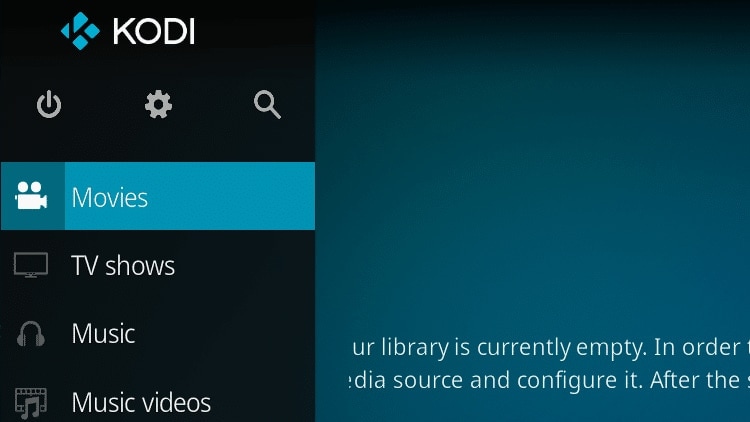
Step 1. Open Kodi and confirm you are using the app itself rather than a different player launched by an add-on. From the home screen, you can open Settings using the gear icon if you need to review other controls afterward.
Step 2. Play the known-good local video. On a keyboard, press F8 once to toggle Kodi mute, then press + several times to raise the Kodi playback volume. On a TV remote, first check the physical television or soundbar volume; media remote key mapping differs between devices.
Step 3. Check the system volume, speakers and Bluetooth destination. If headphones or another Bluetooth device are still connected, temporarily disconnect them and play the same clip through the intended speakers. Do not assume that a remote controls Kodi's software volume when an external receiver is handling audio.
Success check: Dialogue from the test clip becomes audible without changing the media file. If the Kodi volume indicator changes but silence remains, select the correct audio output in the next method. Kodi's official audio troubleshooting documents the F8 and volume-key checks.
Fix 2. Select the Correct Kodi Audio Output Device
If Kodi is audible through headphones but not the TV, or stopped working after a monitor, HDMI cable or receiver change, its selected output may no longer represent the connected hardware. Windows PCs can expose multiple DirectSound or WASAPI endpoints, while Android and Fire TV devices may present a simpler list.
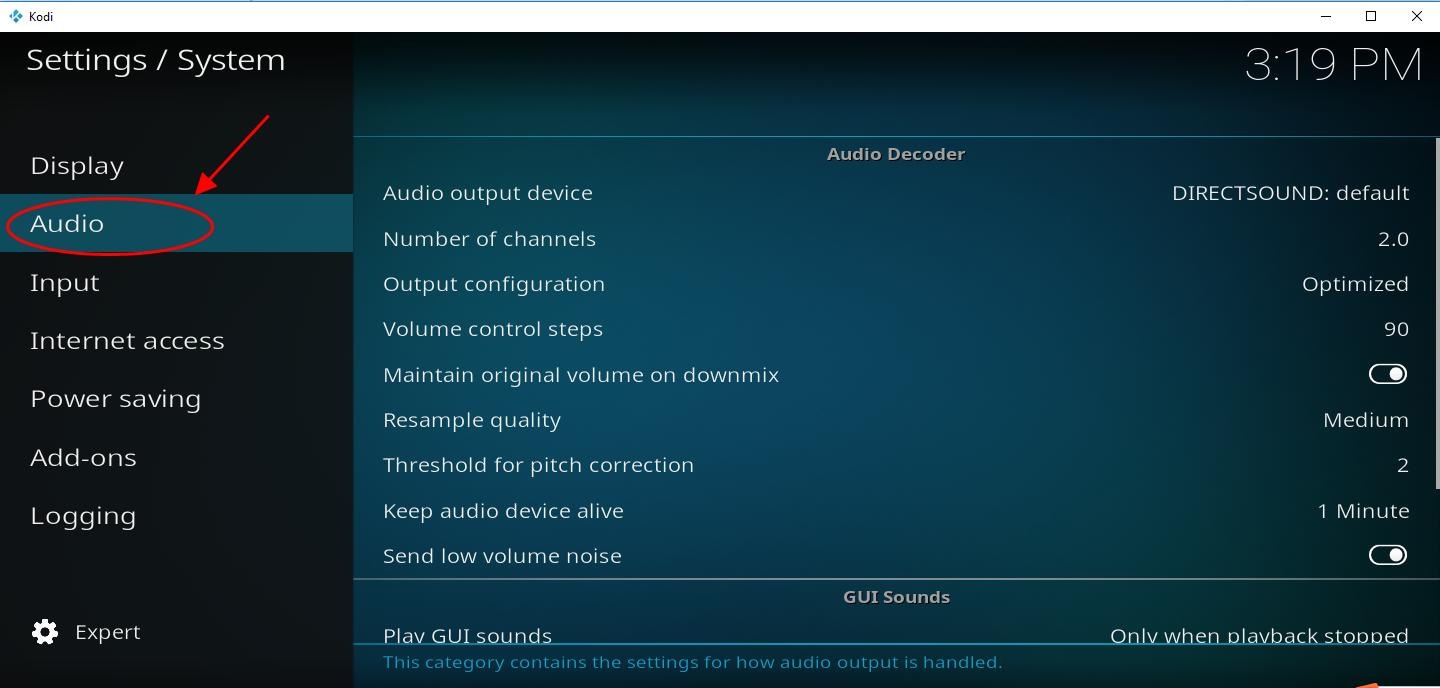
Step 1. On Kodi's home screen, open Settings > System > Audio. If Audio is difficult to find, choose System settings from the Settings screen and check the selected level in the lower-left corner.
Step 2. Under Audio output device, choose the actual headphones, speakers, TV or HDMI receiver you want to hear. On Windows, the official Kodi documentation generally favors WASAPI for capable devices, particularly high-definition passthrough, but DirectSound can be a diagnostic fallback if WASAPI has a compatibility issue. The exact available choices depend on your driver and device.
Step 3. Keep passthrough disabled temporarily and test a short stereo clip. If changing output restores the sound, note the working device before enabling more advanced audio features. On Windows 11, also open Settings > System > Sound > Volume mixer and check Kodi's app-specific volume and Output target if Kodi is listed.
Device check: For a Fire TV device, Amazon provides Settings > Display & Sounds > Audio and Video Diagnostics on supported models. Select the no-audio diagnostic rather than assuming Kodi caused the issue. For Android TV or an external receiver, confirm the TV speakers or intended HDMI output is active. If it still fails: use the stereo/channel test in Fix 3 and inspect your system audio route before reinstalling anything.
Fix 3. Match the Number of Audio Channels to Your Speakers
Channel settings matter when movies with 5.1 or 7.1 soundtracks play very quietly through a two-speaker television. If the center channel carrying most dialogue is mishandled, the soundtrack may sound nearly silent even though effects remain audible. The Number of channels setting applies to decoded audio rather than passthrough.
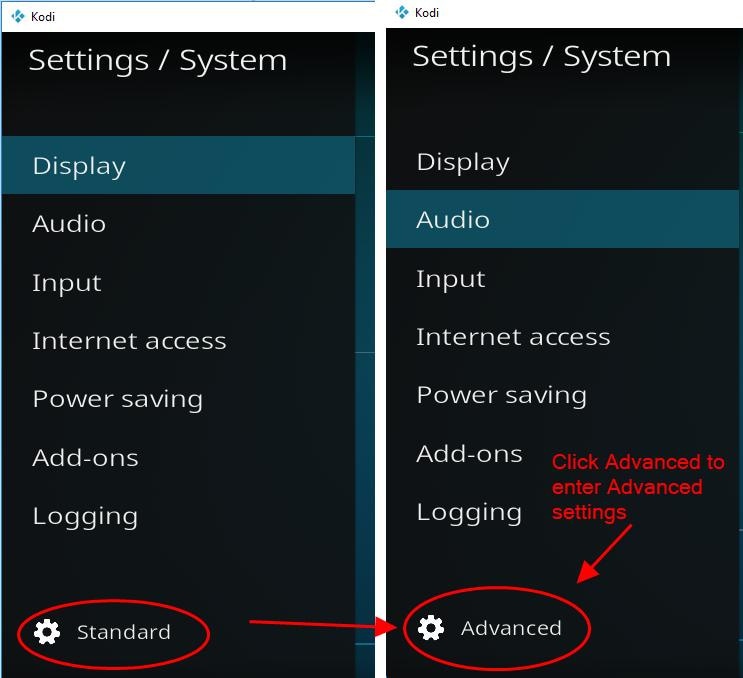
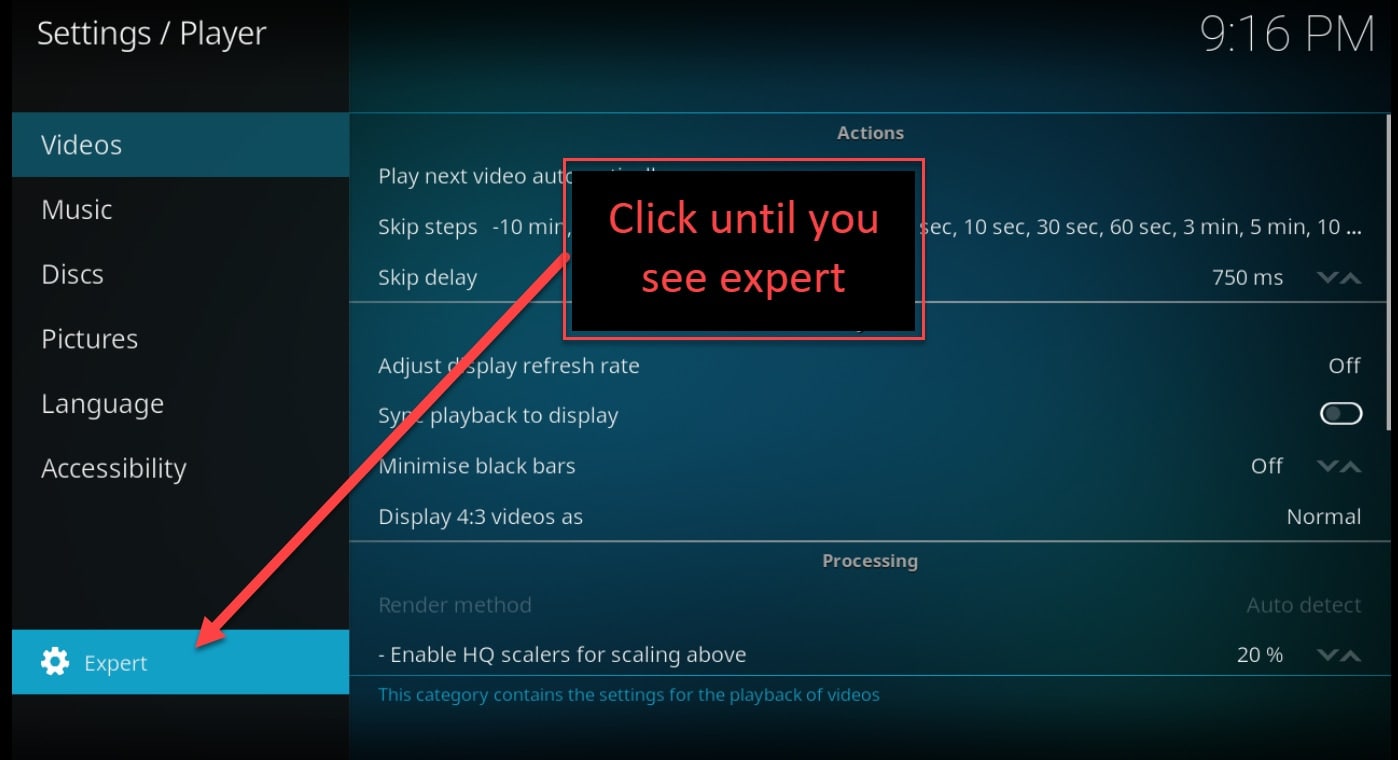
Step 1. Go to Settings > System > Audio. If you need a hidden option, select the settings-level gear in the lower-left corner to switch from Standard to Advanced or Expert. The image below shows where that control appears in the classic Estuary layout.
Step 2. For a TV with two built-in speakers, begin with 2.0 channels. If a real surround receiver and its connection support more PCM channels, follow the hardware's specification rather than selecting a larger number simply because the movie contains more channels.
Step 3. For low dialogue, compare the available downmix settings with passthrough off. Maintain original volume on downmix changes the behavior of downmixed material, and the Video playback audio menu may offer a Downmix - Center Mix level control for suitable multichannel-to-stereo playback. Change one setting at a time and replay the same spoken line.
Success check: The dialogue and left/right test sounds become balanced at normal volume. If the TV is still silent, restore your previous channel setting and investigate passthrough or the speaker connection. The Kodi audio setting reference explains the channel, downmix and output choices.
Fix 4. Disable Incompatible Audio Passthrough
Passthrough is useful when a compatible soundbar or AV receiver is supposed to decode AC3, DTS or a higher-quality bitstream. It is not a general cure for silence. Kodi warns that turning on unsupported receiver formats can produce no audio and poor video performance.
Step 1. Open Settings, select System, then enter the Audio section. The System settings tile is shown below; the audio options inside it vary with your platform and setting level.
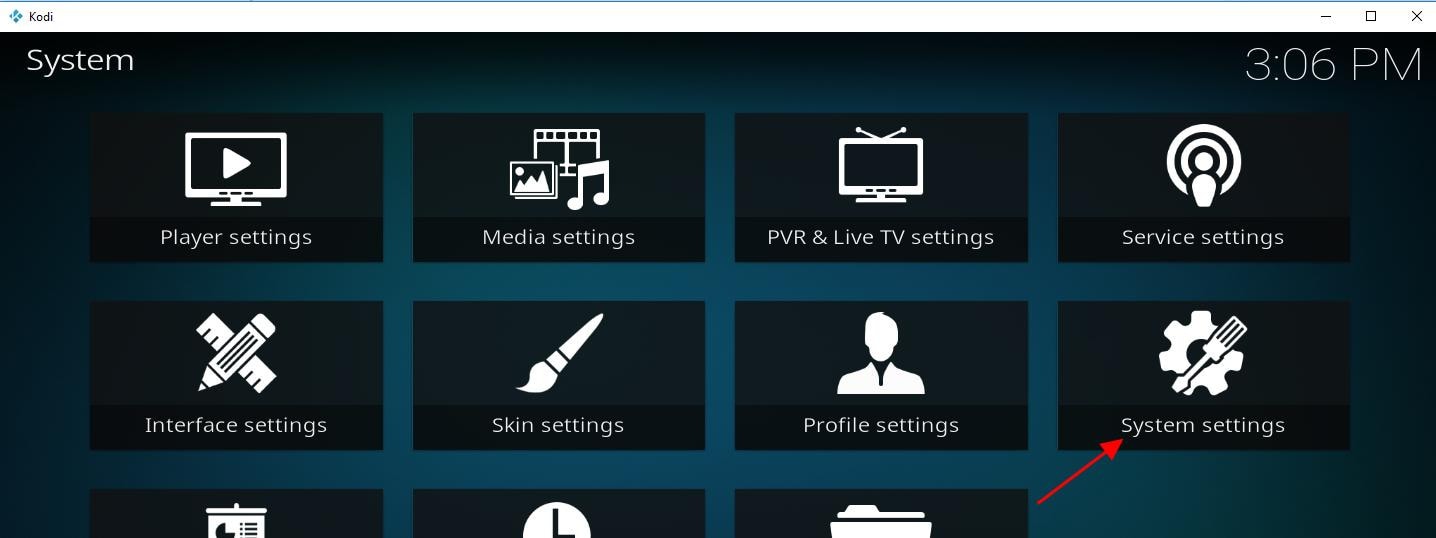
Step 2. Find Allow Passthrough under the Audio settings and switch it Off for a diagnostic test. If available, also check that an option for an encoded format such as DTS or TrueHD is not selected for a receiver that cannot decode it. You do not need to erase your Kodi profile or reinstall the application to try this.
Step 3. Play the same local file. If audio returns as decoded PCM, you have isolated a compatibility problem. Enable passthrough again only if you need it and your TV or receiver documentation confirms support; activate specific formats one at a time while testing matching files.
Success check: A video that was silent through bitstream decoding plays through PCM or a correctly supported receiver format. If it fails: verify the selected output device and examine whether HDMI is routed through a TV, soundbar or AVR. Also remember that Kodi's Sync playback to display setting can disable passthrough automatically; this is an interaction, not proof of broken sound.
Fix 5. Check the Audio Stream and Quiet Dialogue in a Movie
When Kodi's interface and other movies sound normal, investigate the affected video rather than changing every audio output setting. Some media containers include more than one audio language or commentary track. Other files may contain surround audio that is harder to hear through stereo speakers at the current mix level.
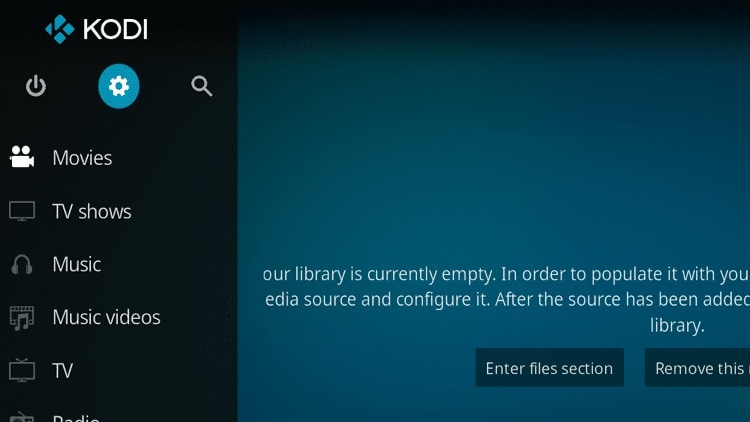
Step 1. Browse your Movies or Videos section and play a locally stored clip that works normally. Then open the video that becomes silent. The illustrated Movies screen is from Kodi's Estuary library interface.
Step 2. While the affected movie plays, open the on-screen display and choose the Audio settings control. Find Audio stream and select a different available track if the file includes one. Do not confuse this choice with the system-wide Audio output device.
Step 3. If the movie has audio but very quiet voices, test Volume amplification carefully at a modest value, then reduce it if distortion appears. This option does not work for passthrough audio. The available Downmix - Center Mix level setting can also help specifically when a multichannel source is being decoded to stereo.
Success check: Only the affected video becomes audible or its speech becomes easier to follow while other files remain unchanged. If every audio-stream choice is silent in Kodi, compare the same original file with a different legitimate desktop player. Kodi's video playback controls document stream selection and passthrough limitations.
Fix 6. Investigate Crashes or Decoder Failure Only When Kodi Also Freezes
If the app hangs, displays a black screen, closes unexpectedly or stops playback completely, that is a broader problem than no volume. The older article suggests disabling DXVA2 on all Kodi installations, but DXVA2 is Windows-specific video hardware acceleration. Avoid applying that step to Fire TV or Android simply because the video has no sound.
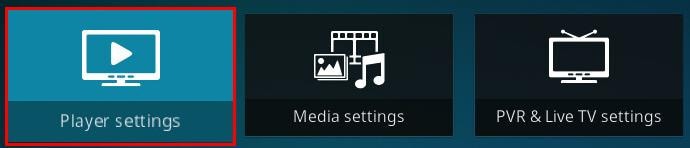
Step 1. Confirm that Kodi fails to play or crashes with more than one known-good local video. Then open Settings > Player. The following screen shows the Player settings tile.
Step 2. On a Windows installation where the option actually exists, change the Player settings level to Expert. Record the existing configuration before testing a change.
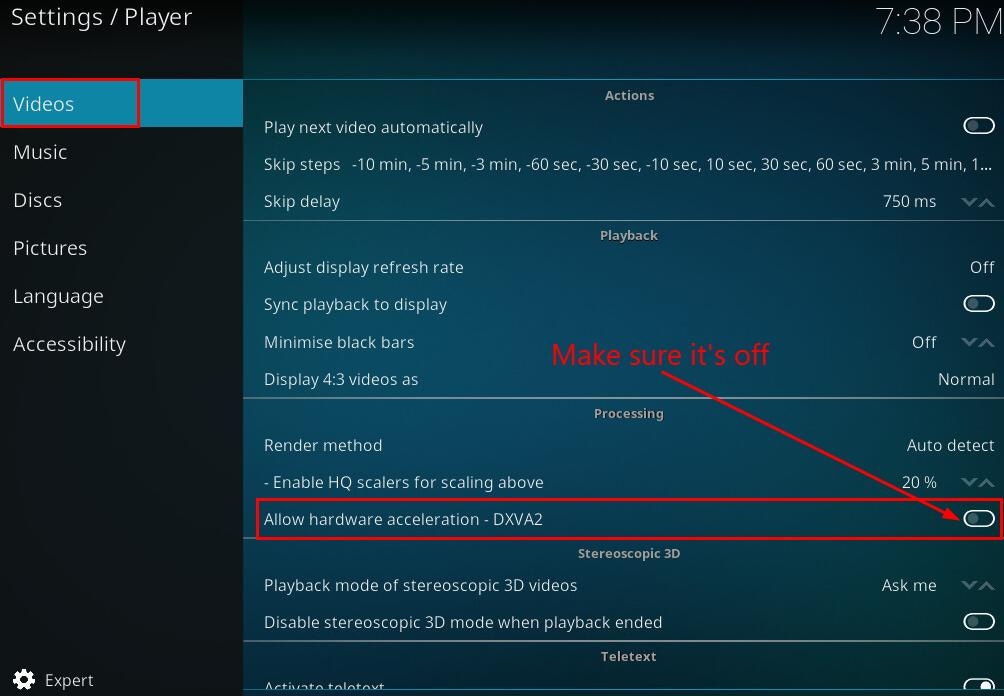
Step 3. Under Videos, check for Allow hardware acceleration - DXVA2 and temporarily disable it only if your Kodi Windows build presents that control and a decoder failure is suspected. The legacy screenshot below shows the exact type of option, but it is not a verified Kodi 21.3 capture.
Step 4. Restart Kodi and replay the local test file. If Kodi becomes stable, review the relevant video driver and application update instead of leaving an unexplained workaround in place. If disabling acceleration worsens playback, restore the previous setting. If Kodi never froze or crashed, skip this method entirely. Broad Kodi startup problems belong in Kodi videos not playing, rather than treating them as missing-volume issues.
Part 3. When a Local Video Still Has No Sound
Once a known-good video sounds normal in Kodi, the remaining problem may be a particular recording rather than the player. This is the point to separate a silent track from a damaged file. Software cannot reconstruct a performance or voice track that a camera never recorded.
Check Whether the Original File Contains Usable Audio
A local video can have a valid picture but an unsupported audio codec, the wrong language selected, damaged audio metadata, or no audio data at all. Compare a copy of the video in another trusted player and inspect its audio tracks or codec information. If it plays with sound elsewhere, revisit Kodi's stream selection and passthrough before modifying the file. If both players show no audio stream, audio repair may not be possible without an actual backup containing the missing sound.
For a recording that became unreadable after transfer interruption or storage trouble, preserve the original and test a copy. Avoid repeatedly exporting over the only source file; a failed conversion can permanently replace data. The distinction between an unsupported codec and genuine media damage also matters for video files with no sound. A missing or deleted original file calls for recovery, not for changing Kodi settings.
Repair a Demonstrably Damaged Local Video with Recoverit
If your local video stays silent in Kodi and other players, file corruption may be the culprit. Recoverit's File Repair can help restore playback when recorded audio data remains. Preview the repaired result before saving a separate copy.
Use this route only if a video you own has become corrupted, fails in multiple players, and still exists as an actual file. Recoverit offers a File Repair workflow for damaged videos. It does not repair Kodi's app settings, restore sound to streaming services or invent audio that was never captured. Keep a separate copy of the original video before attempting repair.
If your original recording is instead deleted or missing, Recoverit video recovery software is relevant to finding recoverable data on accessible storage, not adjusting a muted Kodi player. Stop writing new data to the affected drive and save recovered files elsewhere to reduce overwrite risk.
Step 1. Open Recoverit, choose File Repair, select the corrupted-video option and use the Add Video control to load a copy of the damaged file. The official interface is shown in the Recoverit user guide.
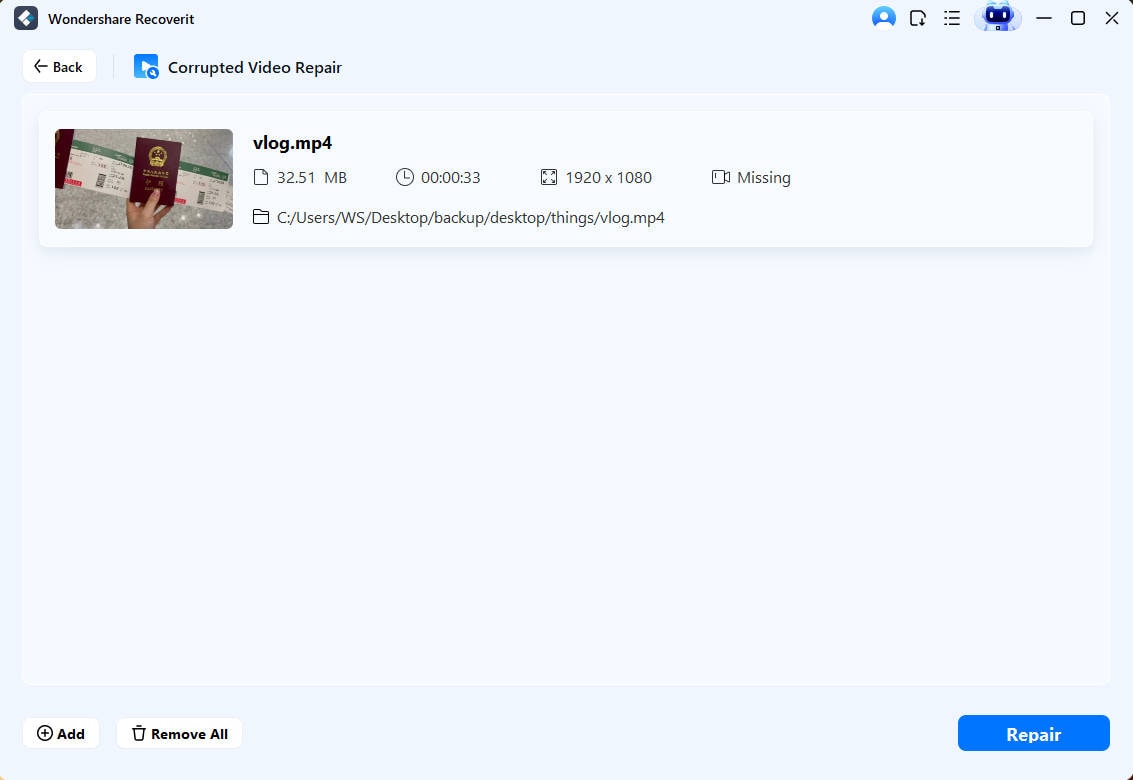
Step 2. Select Repair, allow processing to finish and preview the result. Listen for speech or soundtrack that was present before the damage. If standard repair cannot interpret the video, advanced repair may request a healthy reference recorded with similar device settings; it still depends on data existing in the file.
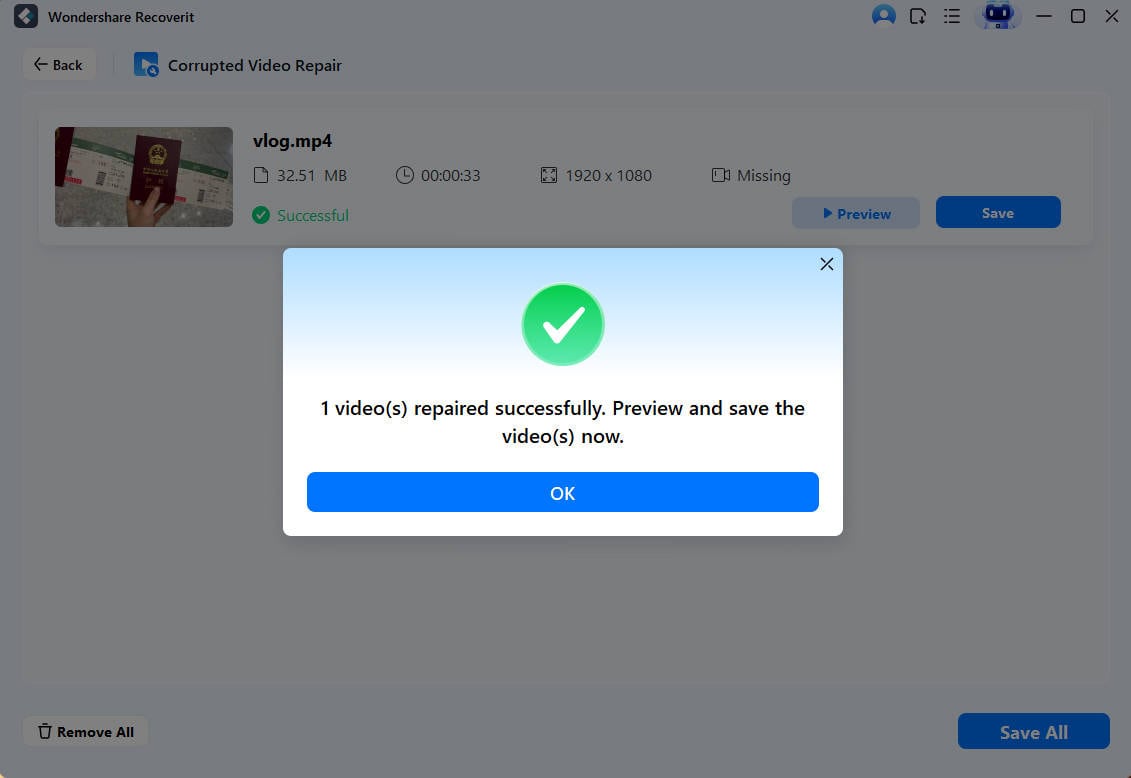
Step 3. Save the repaired video to a separate destination instead of overwriting the only original. Play the saved copy in another player and then import it into Kodi to verify both audio and video. These controls are documented in the official Recoverit guide.
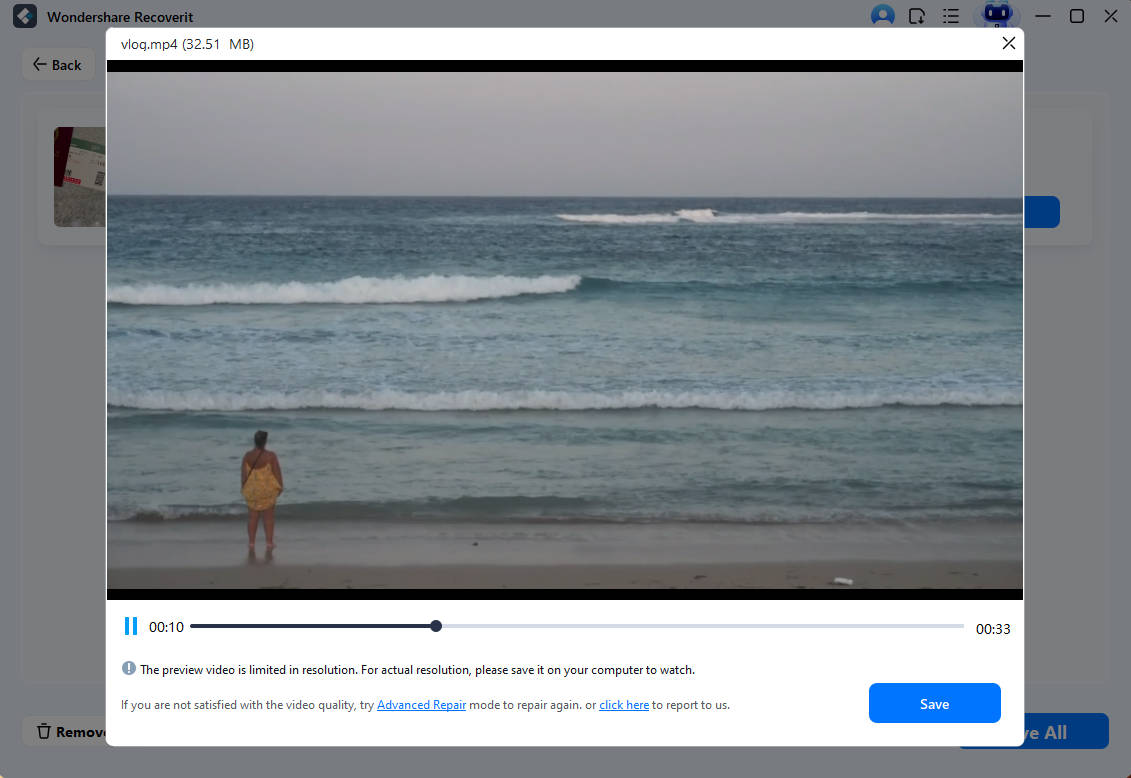
Success check: The repaired copy plays in a second player and then in Kodi with the previously recorded audio intact. If repair does not help: review whether the source has an audio stream and return to a healthy original or backup. Repair has limits when an audio stream was never recorded or the underlying information has been overwritten.
Part 4. Still No Sound? Check the Device and Avoid Risky Resets
When all the targeted Kodi checks fail, the next useful information is whether the same output path works in another application. Changing unrelated add-ons or reinstalling Kodi before capturing that comparison can make the problem harder to diagnose and may erase custom settings.
- Windows: In the Windows sound settings, select your intended speakers or HDMI device, then review the Kodi application in Volume mixer. The OS may route an app differently from the system default. If the output disappeared entirely, follow Microsoft device-driver troubleshooting and the device manufacturer's supported driver. The Microsoft app-audio guide covers per-app output and volume.
- Fire TV: Check that your television is not muted and test another app on the same Fire TV. On supported devices, Amazon's Audio and Video Diagnostics can identify a broader device-audio issue. Menu names depend on whether you use a Fire TV Stick, a Fire TV television or a soundbar.
- Android TV or a soundbar: Verify the selected television-speaker or external-audio setting, and test direct TV playback if the receiver chain is complicated. If audio works without the receiver, inspect supported decoding formats and the HDMI/ARC connections. Use the documentation for your exact model rather than forcing Dolby or DTS formats that may be unsupported.
- When Kodi itself crashes: Record the Kodi version, platform and whether a clean local sample also fails. An optional debug log can help identify which audio devices Kodi discovered. Update Kodi or a driver only when it is appropriate for the device, and keep a backup of your library and configuration before any reinstall or reset. Avoid enabling unknown add-on sources merely to fix sound; that changes security exposure without diagnosing audio.
A safer final test: Play one known-good stereo local video through the TV speakers with passthrough off, then reintroduce the receiver and your preferred settings one at a time. This isolates which change actually removes sound, rather than relying on unverified claims that a reinstall or one specific setting fixes every Kodi device.
Conclusion
For most Kodi no sound symptoms, the useful order is to unmute playback, confirm the audio output device, check speaker channels and temporarily disable incompatible passthrough. If only one movie is silent, inspect its audio stream and compare it in another player. A Kodi crash, a silent Fire TV and a damaged source file require different solutions, so do not skip the basic controlled test.
If sound returns, keep a note of the working device and codec configuration before making further changes. If a local recording itself is damaged, preserve the original and consider a file-repair workflow; otherwise, focus on Kodi and the audio hardware, not recovery software. These distinctions make troubleshooting safer and avoid unnecessary installs.
FAQ
-
Why is Kodi playing video but no sound?
Kodi may be muted, using the wrong audio output device, forwarding a codec your TV cannot decode, or selecting a silent audio track. Play a known-good local stereo file before assuming the recording is corrupted. -
How do I unmute Kodi and change its volume?
On a keyboard, F8 toggles Kodi mute and the + key increases playback volume. Check your physical TV or receiver volume too, because external audio devices can control sound independently. -
Should I turn on audio passthrough to fix Kodi no audio?
Not as a universal fix. First disable passthrough and test decoded stereo PCM. Enable it only when the connected soundbar or receiver supports the selected compressed-audio formats. -
Why is the sound so low in Kodi movies?
A surround recording mixed into stereo can make voices quiet. Check the channel configuration and center-channel/downmix controls; Kodi volume amplification can help some decoded tracks but does not affect passthrough. -
Why does Kodi have no sound on Fire TV but other apps work?
Compare Kodi volume and output settings with the Fire TV audio route, then try a local stereo sample and passthrough disabled. On supported Fire TV models, use Audio and Video Diagnostics to assess the device separately. -
Can Recoverit restore sound missing from a Kodi stream?
No. Recoverit handles local file recovery and supported damaged-file repair scenarios. It cannot fix Kodi output settings, a server-side stream, or audio data that was never recorded. -
What should I do when only one Kodi file is silent?
Select any alternate audio stream in Kodi, then inspect the original file in another player. If the second player also cannot decode the file, preserve a copy before attempting compatible remuxing or supported file repair.


