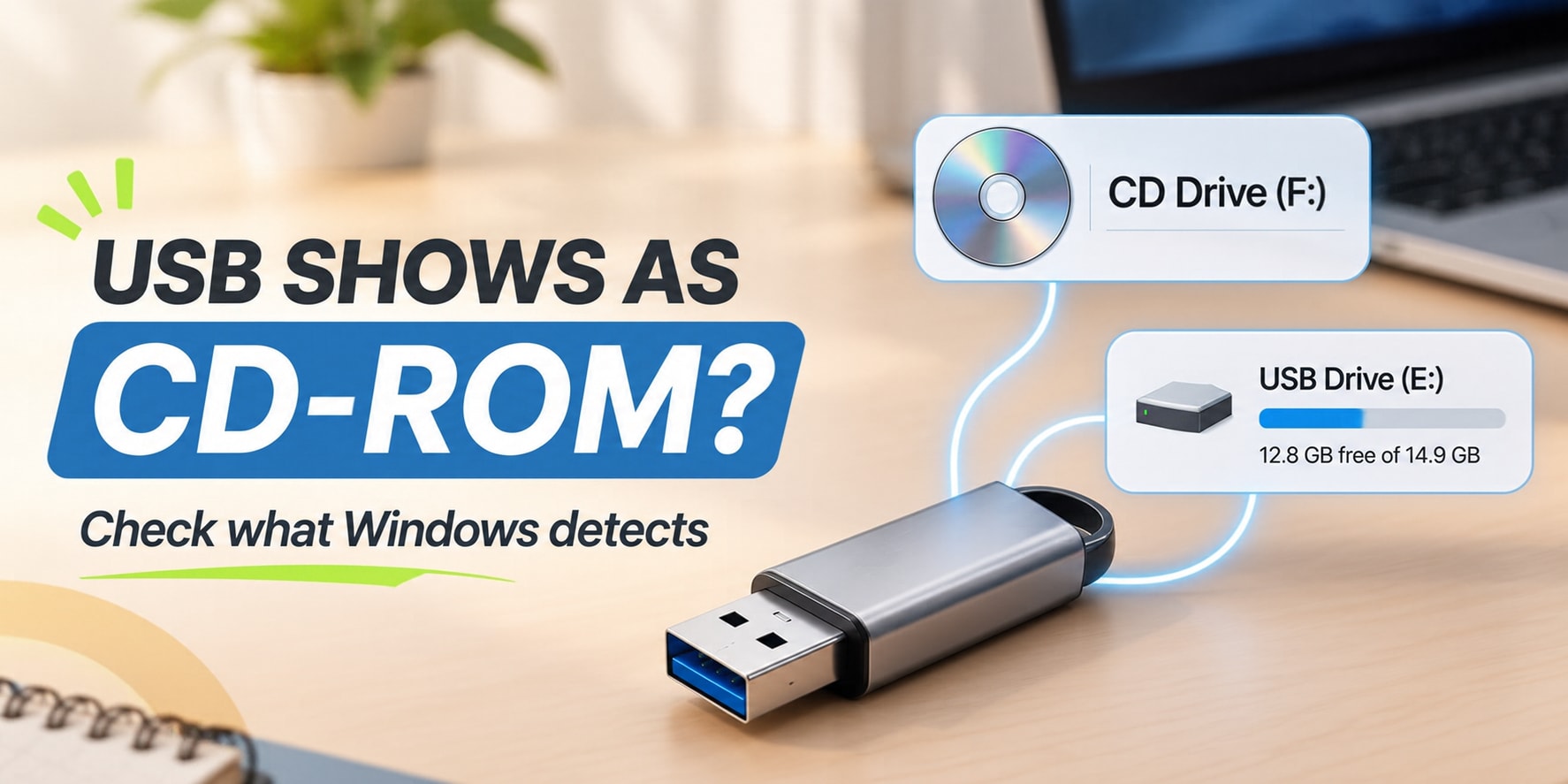
If a USB flash drive appears under CD/DVD drives in Windows instead of showing its usual storage space, do not start by erasing it. Some drives intentionally expose a read-only virtual CD-ROM for bundled software; others have a Windows detection problem or a failing controller. A CD icon alone does not tell you that the files are gone or that a partition is damaged.
First, check whether Windows also detects a normal, capacity-bearing USB disk. If that disk is accessible, copy important files to another location. If only a CD-ROM entry appears, investigate the device and its manufacturer before trying a recovery scan, formatting, or DiskPart clean.
In This Article
Part 1. Why a USB Flash Drive Can Appear as a CD-ROM
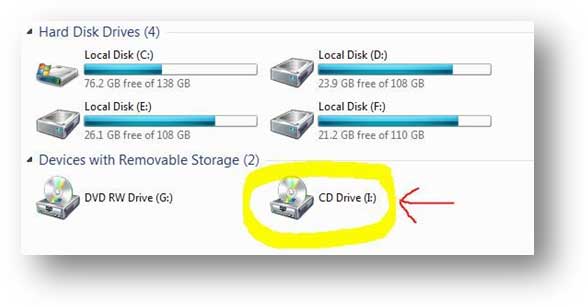
Windows reports the type of storage presented by the device. One physical USB device can present more than one logical storage unit, so a CD-ROM entry is not always a Windows error. The key question is whether an ordinary writable storage unit is present alongside it.
A Legacy Virtual CD Drive May Be Intentional
Some older USB sticks, including certain SanDisk Cruzer models with U3 software, were designed to expose a small read-only optical-drive-style area that launches bundled software. The rest of the device may appear separately as ordinary flash storage. Microsoft's USB mass-storage driver documentation explains how one USB device can expose multiple logical units.
SanDisk says U3 Launchpad is no longer supported and its application download services have been retired. Do not remove U3 or a vendor software area before backing up any accessible files. Its published removal procedure warns that the process can destroy data on the USB. See SanDisk U3 end-of-support notice.
When the CD-ROM Entry Is an Actual Problem
If the expected writable drive does not appear, there may be a local USB driver problem, a controller or firmware issue, a connection problem, or a failure to expose readable flash memory. The message "Please insert a disk" may refer to an empty optical-style unit; by itself it does not establish that a standard USB partition was deleted.
A bootable USB you made with an image-writing tool is another distinct case. Its storage layout may have changed, but a normal partition layout change is not the same as a controller presenting a separate optical logical unit. Identify the actual Windows device type before deciding what can safely be changed.
Part 2. Check What Windows Actually Detects
Use these inspection steps on Windows 11 or Windows 10. They do not require you to create partitions, uninstall the USB's software, or format it. If the device gets unusually hot, disconnects repeatedly, or contains irreplaceable data, stop prolonged testing.
Compare the CD-ROM and Disk Entries in Device Manager
Step 1. Right-click the Windows Start button and open Device Manager.
Step 2. Expand DVD/CD-ROM drives and Disk drives. Look for entries that appear when you connect the USB. Note their displayed names. If necessary, open the entry's Properties > Details and inspect its hardware IDs to help identify the manufacturer and model.
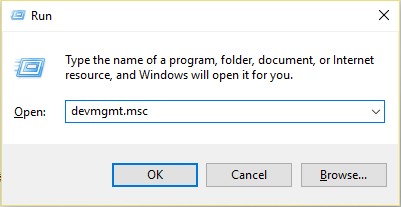
Step 3. If you see both a CD-ROM entry and a recognizable USB disk entry, that is an important clue that the device presents multiple storage units. If you see only a CD-ROM device, continue to Disk Management rather than assuming a disk partition is available to format.
What success looks like: You can distinguish the optical-style part from the actual flash-storage disk. A device entry that is only a CD-ROM is not evidence of a recoverable file volume.
Inspect Capacity and Volume Status in Disk Management
Step 1. Right-click Start > Disk Management. Alternatively, open Computer Management > Storage > Disk Management, or press Windows + R and enter diskmgmt.msc. These are documented Windows 10/11 paths in Microsoft Disk Management help.
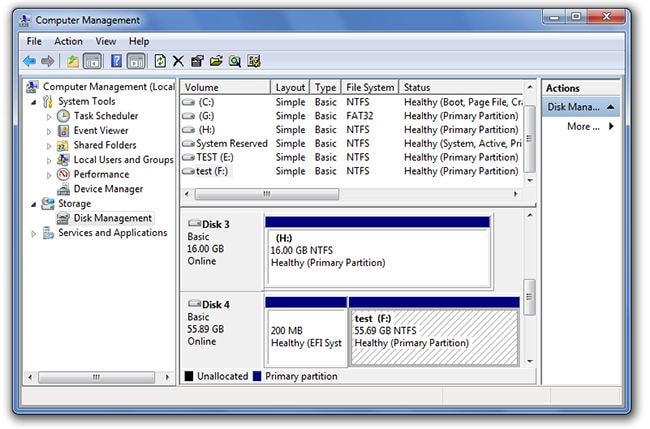
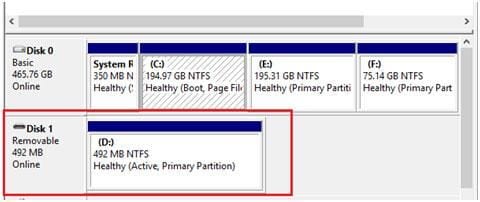
Step 2. Check the lower disk list and match the USB using its known capacity and model. Do not assume that the first small optical-style volume is the same disk as the USB's writable storage.
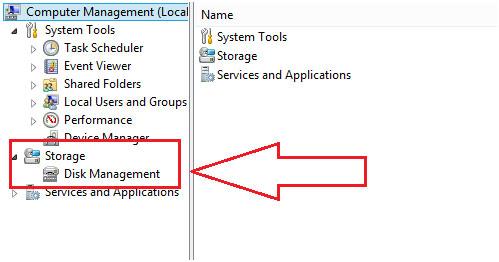
Step 3. Record the status: a normal volume, RAW, Unallocated, No Media, 0 bytes, or no disk at all. Do not choose Initialize, New Simple Volume, or Format during this inspection.
Match the Result to Your Next Safe Action
Use the result of Windows detection to decide whether you need to look for accessible files, refresh local hardware detection, or get hardware help.
| What Windows shows | Likely situation | Safest next action |
| CD-ROM and a normal USB volume with real capacity | Separate optical-style and writable storage units | Open the normal USB volume and copy important files |
| USB appears as a normal disk on another computer | Possible Windows-specific detection issue | Check ports and refresh Device Manager on the affected PC |
| Readable USB disk is RAW or Unallocated | Possible file-system or partition problem | Assess data recovery before any partition changes |
| Only a CD-ROM unit appears, without a writable disk | Virtual optical function, firmware state or missing storage unit | Check the exact model and manufacturer guidance; do not use DiskPart clean |
| No Media, 0 bytes, or repeated disconnection | Media not exposed or possible hardware failure | Stop destructive software attempts; seek professional help if files matter |
Part 3. Safe Ways to Handle a USB That Shows as a CD Drive
Choose a method only after matching the device's actual status above. A fix for a Windows-only detection glitch will not remove a virtual optical unit built into a flash drive.
If It Works on Another PC, Refresh Windows Detection
Step 1. Test the USB in another direct port on the computer, avoiding a hub. If the device is stable, also test a second trusted Windows PC. For a USB flash drive, the different port rules out some connection issues without modifying stored data.
Step 2. In Device Manager, select the computer name and choose Action > Scan for hardware changes. Return to Disk drives and DVD/CD-ROM drives and compare the entries.
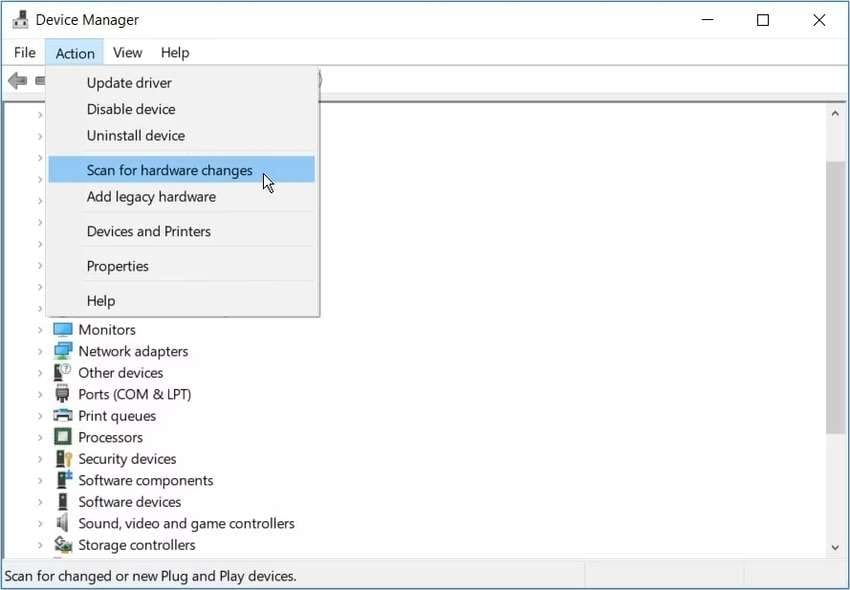
Step 3. If Device Manager displays a warning icon, open the problem device's Properties and note the error code. Follow Microsoft or the device maker's driver guidance for that exact device. Do not uninstall an unrelated system disk or run untrusted driver utilities. Microsoft's Disk Management troubleshooting documentation supports direct-port and Device Manager checks.
If Windows now exposes the expected USB volume, back up your files before doing anything further. If multiple PCs show the same optical-only state, stop treating the issue as a simple driver refresh.
If the USB Has a Separate CD-ROM and Writable Storage Area
Open the normal USB volume, not the CD-ROM entry. Copy important documents to the computer or another drive and open a few files to confirm the copies work. You can leave the optical-style unit alone if the manufacturer intended it as a software launcher; its presence alone does not mean the flash drive is damaged.
If you want to remove legacy software after backing up, check the drive's exact manufacturer and model. SanDisk's official U3 removal guidance warns that removal is destructive and that old tools may not work on newer Windows versions. A generic partition editor is not a substitute for manufacturer-specific instructions.
If Only the CD-ROM or Empty Disc Appears
Do not interpret "Please insert a disk" as proof that a removable USB partition merely needs a drive letter. If Disk Management shows no ordinary disk with readable capacity, file-recovery software cannot scan flash sectors that the device has not exposed. Check the model documentation and seek the manufacturer's advice. If the files are valuable, consider a reputable recovery specialist rather than repeatedly trying partition and firmware tools.
If Windows instead reports the device as an ordinary disk with RAW or unallocated storage, that is a different case addressed by USB drive repair and data recovery guidance. Preserve the files first; creating a new partition is not a recovery method.
Part 4. Recover Files Only When the USB Storage Is Readable
If the flash drive appears as an actual storage disk with readable capacity but some files have been deleted or the volume is inaccessible, a logical recovery scan may help. Recoverit cannot convert a CD-ROM device into a writable flash disk or bypass No Media and 0-byte states.
When Recoverit Can Help
Wondershare Recoverit USB Flash Drive Recovery can scan supported USB storage that Windows exposes as readable media. Its purpose here is to find recoverable files, not to change the USB's controller mode. If the CD-ROM is just one of the units and a separate USB disk is available, choose that disk for recovery. If only the CD-ROM appears, do not present the optical entry as a recoverable flash volume.
Before scanning: Stop saving data to the original USB, and install recovery software on your computer or another healthy drive. Prepare enough free space on a different disk for recovered files.
Select the USB, Scan It, and Save Results Elsewhere
Step 1. Select the actual USB storage disk. Launch Recoverit on Windows, connect the device, and choose the correct external storage volume by its label and capacity. Do not select the virtual optical-drive entry or your system disk in error.
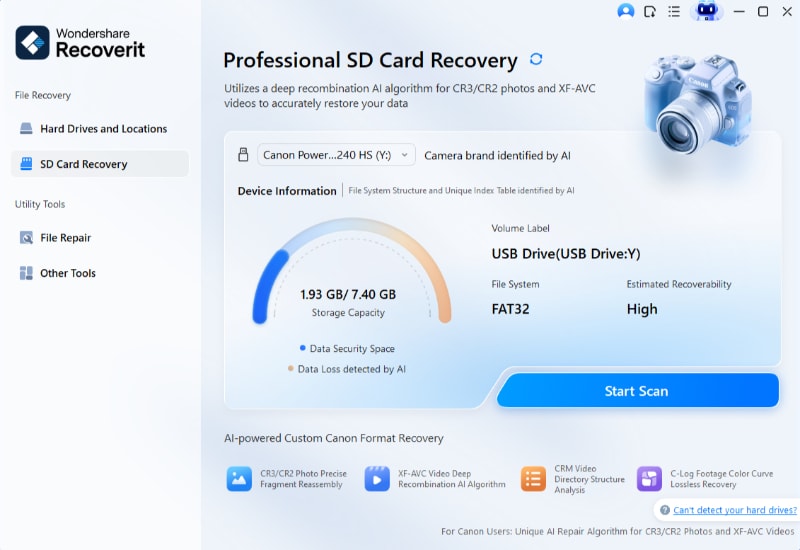
Step 2. Scan the available storage. Start scanning and allow the software to search for candidate files. If the drive repeatedly disconnects, stop attempts rather than running lengthy repeated scans.
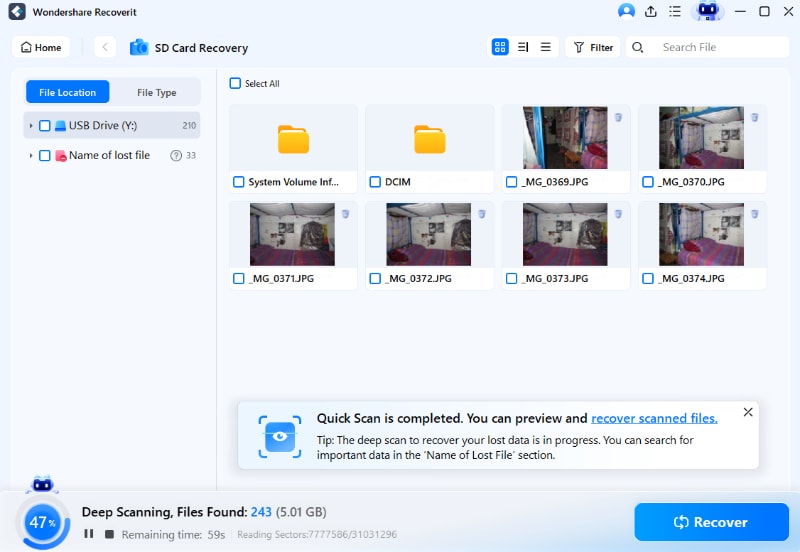
Step 3. Preview and recover. Preview candidate files if available, select those you need, and click Recover. Save the results to a separate healthy drive, never back to the affected USB. Open a few recovered files to check their contents. Results depend on the flash memory's condition, overwriting, and file integrity.
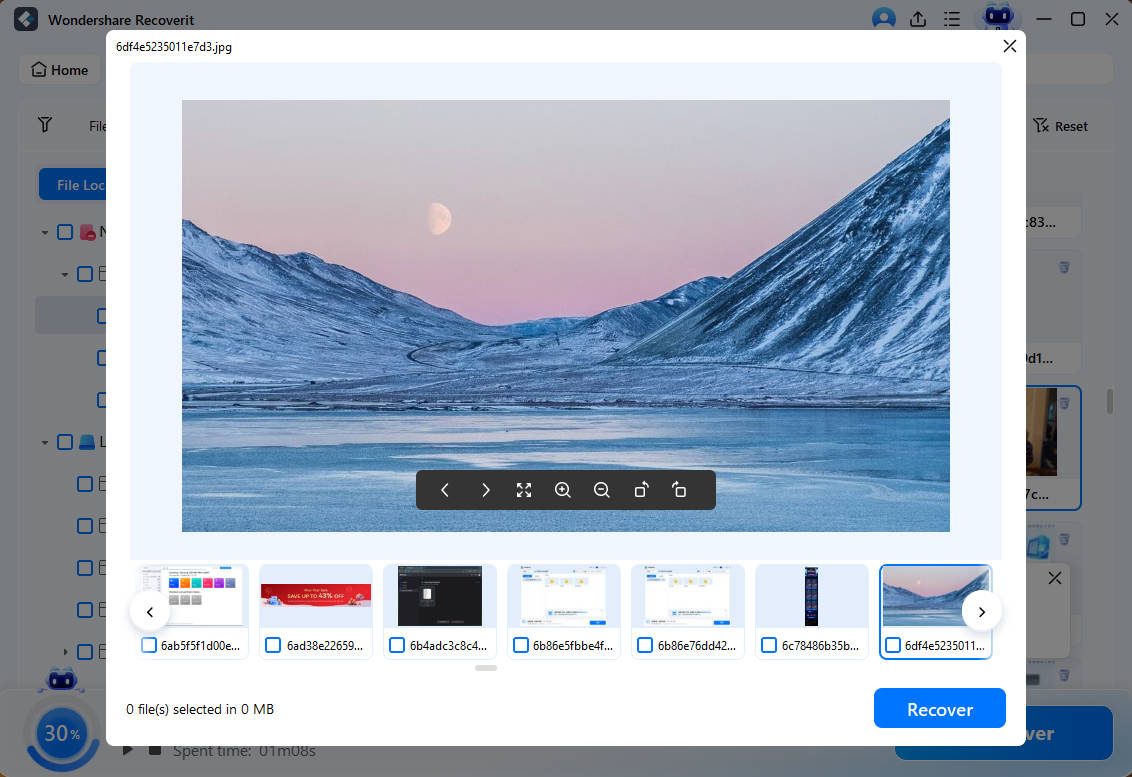
These steps follow the external-device workflow documented in the official Recoverit Windows Guide: connect, select, scan, preview, and save recovered files elsewhere. This workflow requires a device that can be detected and scanned.
Part 5. When to Format, Remove U3, or Stop Using DiskPart
Only consider changes to the USB's structure once you have recovered or backed up all needed files and checked the manufacturer documentation. Formatting makes ordinary writable storage reusable; it does not necessarily remove a firmware-provided virtual CD-ROM device.
Reformat an Ordinary Writable USB Volume Only After Data Is Safe
When this applies: Windows detects a normal USB disk with real capacity, you have verified any needed backup or recovered copies, and you want to reuse that ordinary storage volume. Do not use these steps on the optical drive entry or a device showing No Media.
Step 1. Open Disk Management and verify the correct physical USB disk, size, and writable volume before proceeding.
Step 2. If there is an existing ordinary writable volume and nothing on it needs to be retained, right-click that volume and select Format; follow Windows prompts. Microsoft explicitly warns that formatting destroys data on that volume. If the Format option is unavailable for an optical unit, do not force it with DiskPart.
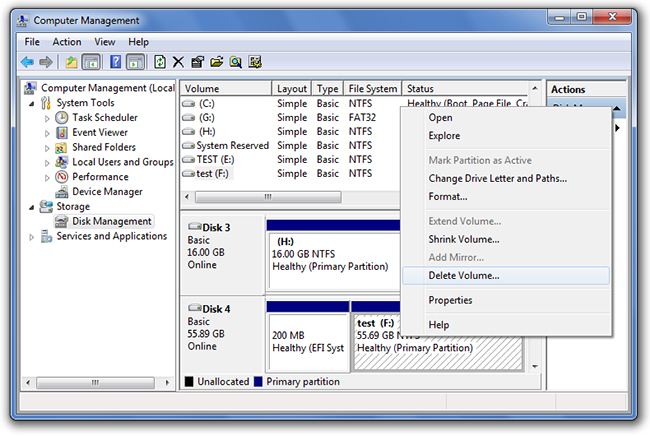
Step 3. After formatting, check whether the normal writable volume is usable. A separate virtual CD-ROM may remain because it is a different device function. If so, consult the device manufacturer rather than continuing to repartition it.
Why DiskPart Clean Is Not a CD-ROM Repair Shortcut
Microsoft defines clean as a command that removes partition or volume formatting information from the selected disk. It can erase the metadata needed to access your files, and the special clean all form overwrites every sector. Neither command is a general way to change what kind of logical device the USB controller reports. See Microsoft DiskPart clean reference.
If DiskPart reports "The specified disk is not convertible. CDROMs and DVDs are examples of disks that are not convertible", stop. Microsoft documents this as Virtual Disk Service error VDS_E_DISK_NOT_CONVERTIBLE. It indicates a conversion-type limitation, not a request to erase some other disk. Do not guess at disk numbers or use clean, convert, or create partition in response.
Removing U3 or Other Vendor Software Requires Model-Specific Instructions
For an older U3 drive, the optical-style area may be an intentional part of the product. SanDisk has retired U3 and warns that removal destroys data and that some legacy removal steps may fail on newer operating systems. Back up all accessible files first and use only instructions that match your exact model. If the USB contains employer security software or encrypted data, do not disable its management or assume a standard format will make protected data readable.
Part 6. When the USB Needs Other Troubleshooting or Professional Help
A USB CD-ROM entry is a device-type symptom. If your problem changes to an unreadable ordinary disk, a completely unrecognized device, or No Media, take the branch that matches that new state instead of repeating CD-ROM fixes.
Stop DIY Attempts for No Media, 0 Bytes, or Unstable Hardware
If Windows never exposes readable flash capacity, or the device becomes hot, disconnects repeatedly, or fails on multiple computers, avoid repeated firmware flashing, partition writing, and scan attempts. For important files, a professional recovery service may be appropriate. For low-value data with no required backup, consider replacing the failing USB.
For a different but related symptom, see USB not appearing in Disk Management or the Please Insert a Disk USB error. If Windows does not recognize the flash drive at all, use the separate USB flash drive not recognized guide.
Related Video: General USB Detection Troubleshooting
The original Recoverit tutorial below addresses a general flash-drive-not-detected issue. It is not a demonstration of removing a firmware-provided virtual CD-ROM, so use it only for broader Windows detection checks.

Conclusion
When a USB flash drive shows as a CD-ROM, start by identifying what Windows actually detects. A legacy software CD drive can coexist with working flash storage; a CD-only or No Media device is a different situation. Copy accessible files first, scan only an actual readable USB disk when data has been lost, and leave DiskPart clean, vendor removal tools, and formatting out of your initial troubleshooting.
FAQ
-
Why does my USB flash drive appear as both a CD drive and a normal USB drive?
Some older flash drives expose more than one logical storage unit, including a virtual CD-ROM used for bundled software and a separate writable flash volume. Use the normal flash volume for files, and verify the model before removing legacy software. -
Can DiskPart clean turn a USB CD-ROM back into a flash drive?
Not reliably. DiskPart clean removes partition information from the selected disk; it does not generally change a controller's virtual optical-drive function. It can also destroy metadata needed for recovery, so it is not a first step. -
What should I do when Windows says Please insert a disk?
First identify whether Windows is referring to an empty optical-style device or a normal USB drive that cannot expose readable storage. Use Device Manager and Disk Management to check. If the drive reports No Media or 0 bytes and files matter, stop destructive repairs. -
Can Recoverit recover files from a USB that appears only as a CD-ROM?
Recoverit needs accessible storage that the computer can detect and scan. If Windows exposes only a CD-ROM device and no readable flash storage, standard software cannot access absent flash sectors. If a separate normal USB disk is present, recoverable files on that disk may be scanned. -
Is it safe to remove SanDisk U3 Launchpad?
Only after saving all needed files and checking instructions for the exact drive model. SanDisk says U3 is no longer supported and its removal may erase all drive data. Do not use a generic partition wipe as a substitute for manufacturer guidance.


