The best encrypted USB flash drive is the one that protects your files and fits the computer, access policy, and recovery plan you actually use. For FIPS-validated protection, the Kingston IronKey D500S, IronKey Keypad 200, and several DataLocker and iStorage models offer independently documented options. For everyday business files without a FIPS module requirement, the Kingston IronKey Vault Privacy 50 may be a simpler fit.
A secure USB drive is not always an encrypted USB drive. A password on one folder, a retractable connector, or a rugged metal shell is not evidence of full-device hardware encryption. Compare the protection mechanism, authentication method, NIST certificate, and exact model before you buy.
The recommendations below are based on published manufacturer specifications and NIST Cryptographic Module Validation Program records checked on November 9, 2026. They are not independent hands-on benchmarks; neither transfer-speed results nor recovery success rates have been invented. Availability, supported firmware, and validated capacities can differ by SKU.
In This Article
-
- Kingston IronKey D500S: High-Assurance Business Storage
- Kingston IronKey Keypad 200: Built-In PIN Access
- Hardware-Encrypted USB-C: iStorage datAshur PRO+C
- DataLocker Sentry 5: Enterprise Policy and Smart-Card Options
- DataLocker Sentry K350: Secure Storage for Field Work
- Kanguru Defender 3000: Managed Secure USB Programs
- Kingston IronKey Vault Privacy 50: Everyday Business Encryption
- Apricorn Aegis Secure Key 3NXC: Software-Free USB-C with Historical Validation
Part 1. Best Encrypted USB Flash Drives at a Glance
If you need a shortlist, match the strongest reason for buying the device with its authentication method and documented validation. Certification status in this table applies to specific hardware and firmware versions, not automatically to every configuration sold under a product-family name.
| Secure USB drive | Best-fit need | How you unlock it | FIPS module status |
| Kingston IronKey D500S | High-assurance business storage | Password via supported host workflow | FIPS 140-3 L3 · #5029 |
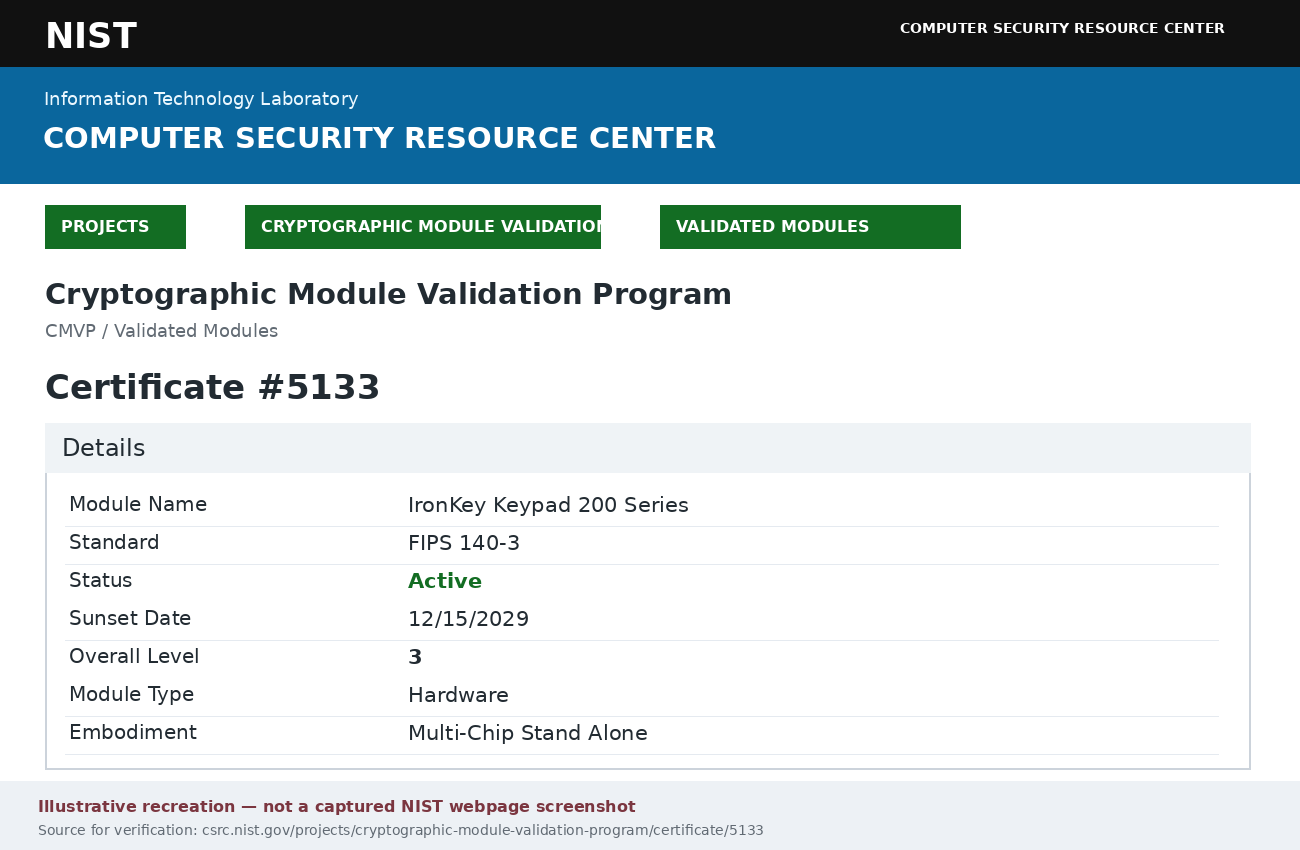
| Kingston IronKey Keypad 200 | PIN access without typing on the host | Built-in keypad | FIPS 140-3 L3 · #5133 |
| iStorage datAshur PRO+C | USB-C keypad access | Built-in keypad | FIPS 140-3 L3 · #4918 |
| DataLocker Sentry 5 | Managed removable media and smart cards | Password; configured smart-card options | FIPS 140-3 L3 · #5140 |
| DataLocker Sentry K350 | Rugged field use | On-device keypad/display | FIPS 140-3 L3 · #5092 |
| Kanguru Defender 3000 | Managed USB fleets | Vendor-supported secure authentication | FIPS 140-3 L3 · #5364 |
| Kingston IronKey Vault Privacy 50 | Lower-complexity business protection | Host password interface | FIPS 197 / AES; not FIPS 140-3 validated |
| Apricorn Aegis Secure Key 3NXC | Software-free USB-C with legacy certification | Built-in keypad | FIPS 140-2 L3 · Historical |
For personal records, an encrypted USB stick with an accessible recovery plan can be more useful than a centrally managed product your organization cannot support. If your buyer policy requires an active FIPS 140-3 validation, exclude models marked FIPS 197-only or Historical.
Part 2. Eight Secure and Encrypted USB Drives Compared
These eight selections serve different buyers; the order is not a measured speed or security ranking. Each recommendation explains its strength and the trade-off that could make another drive better for you. Use the linked NIST record and maker page to confirm the exact part number, firmware, and configuration.
Kingston IronKey D500S: High-Assurance Business Storage
The IronKey D500S is a good starting point when a company needs encrypted USB storage with an independently validated module and detailed administrative controls. Kingston lists XTS-AES 256-bit hardware encryption, a rugged USB-A design, and available capacities from 16GB to 512GB. The relevant module is FIPS 140-3 Level 3, certificate #5029.
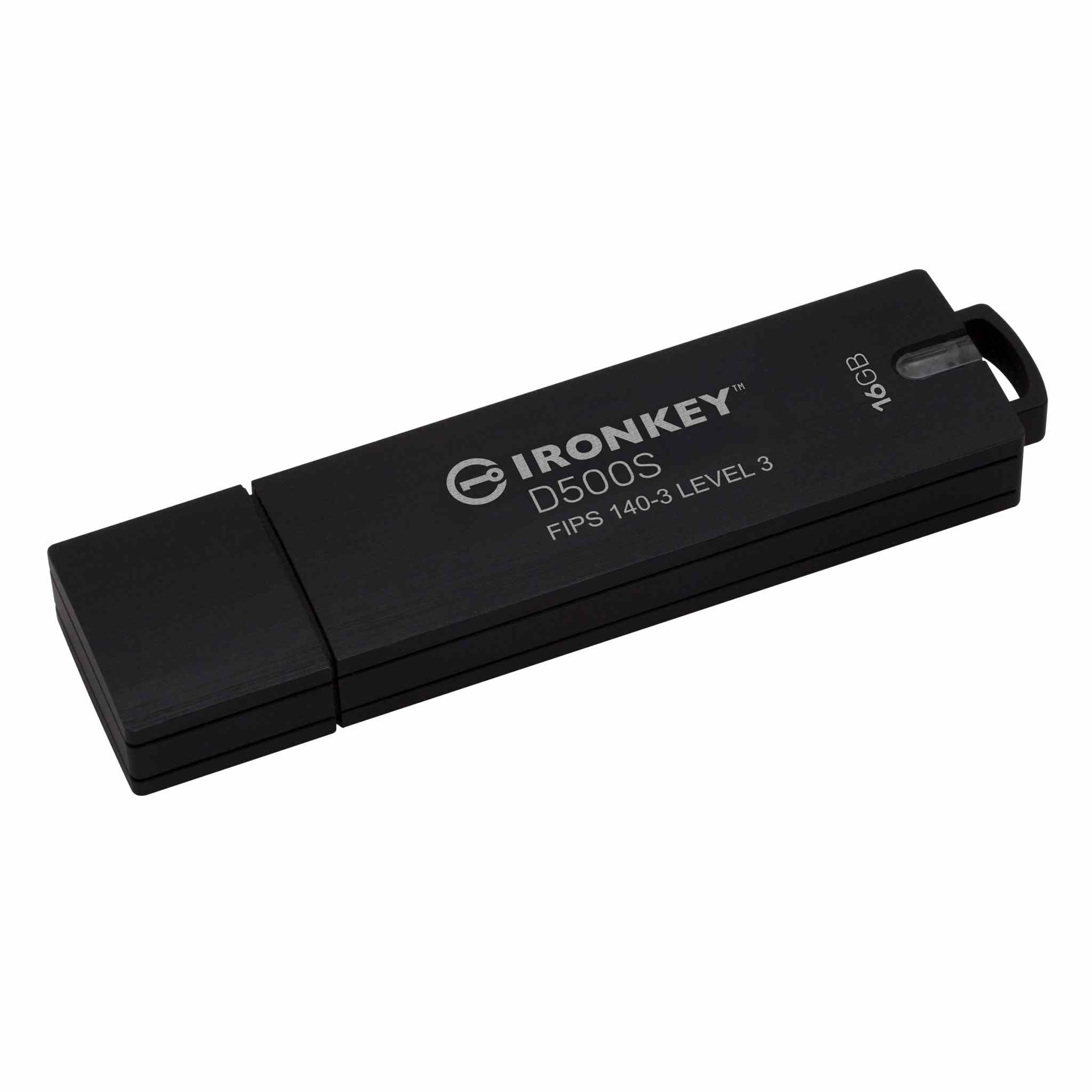
Its password-based workflow and business-oriented configuration options suit controlled Windows or Mac fleets better than an employee who wants to type a PIN before plugging a drive into a shared kiosk. The D500S uses USB-A; if your laptop has USB-C only, account for an appropriate adapter or choose a USB-C model.
Choose it for: managed or high-risk business records. Check before ordering: the validated hardware/firmware variant, administrator provisioning, supported OS, and whether centralized-management licensing is needed. See Kingston D500S specifications and NIST certificate #5029.
Kingston IronKey Keypad 200: Built-In PIN Access
The IronKey Keypad 200 (KP200) series offers a physical alphanumeric keypad. You enter a PIN on the drive rather than a potentially untrusted computer, then use it as USB mass storage after unlocking. Kingston sells USB-A KP200 and USB-C KP200C configurations. The series is validated under FIPS 140-3 Level 3, certificate #5133.
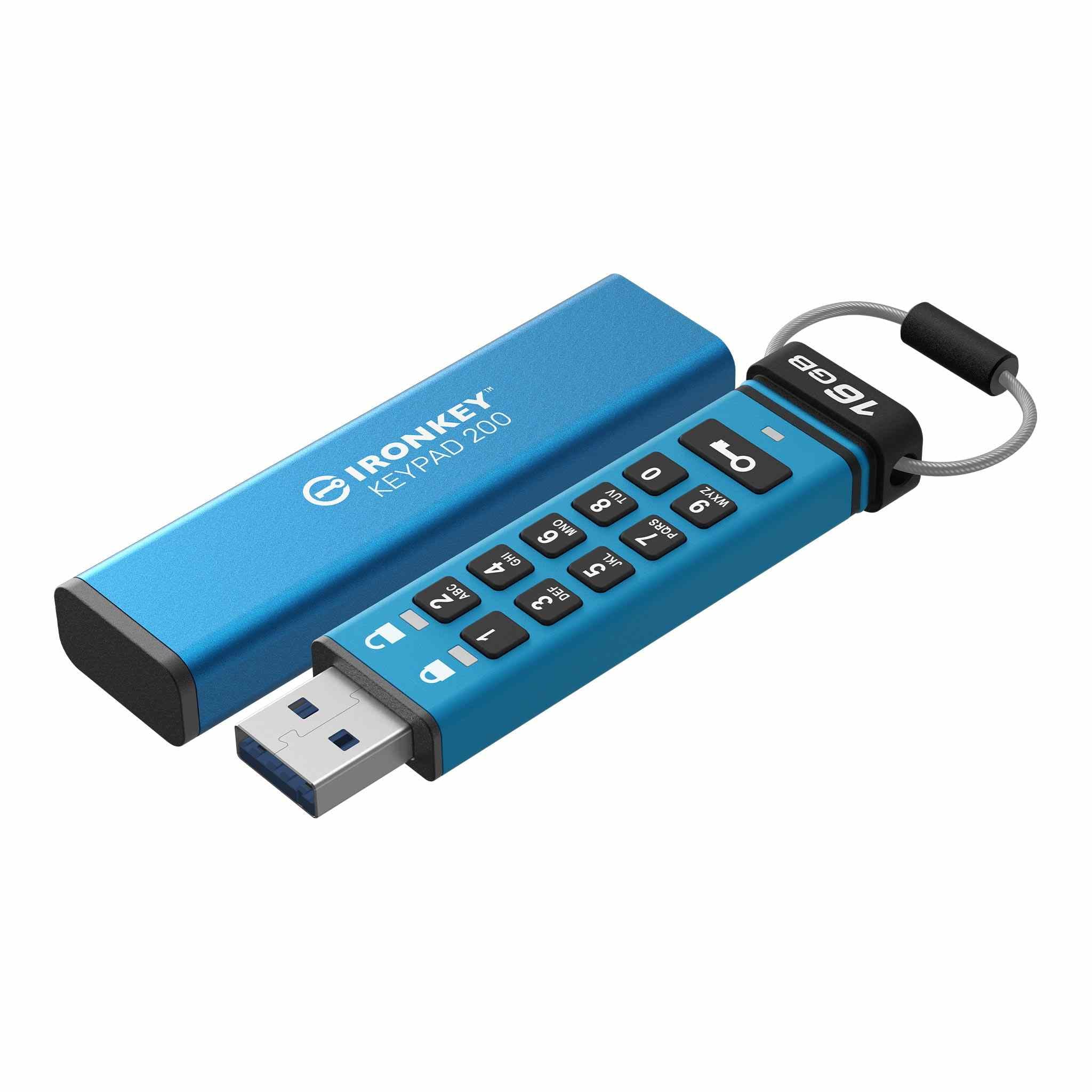
This makes it attractive for mixed-device work, shared computers, field visits, or systems that do not allow an extra unlock application. The independent keypad does not mean every host can read every file system; compatibility with the operating system, device policies, and USB port still matters.
Choose it for: software-free PIN entry. Check before ordering: the KP200 versus KP200C connector, the exact capacity/SKU on the certificate, battery/PIN setup, and how administrator access is arranged. Compare Kingston KP200 specifications with NIST certificate #5133.
Hardware-Encrypted USB-C: iStorage datAshur PRO+C
The datAshur PRO+C combines a USB-C connector with PIN entry on the device and AES-XTS 256-bit hardware encryption. Its USB-C to USB-A adapter is useful when you alternate between newer laptops and older machines. The relevant NIST entry is FIPS 140-3 Level 3, certificate #4918.
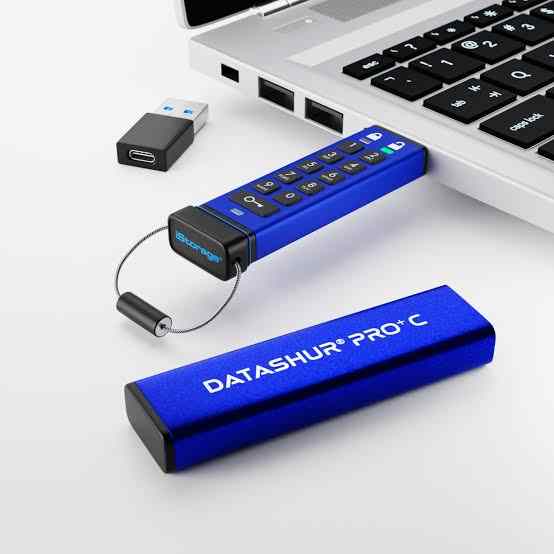
The certificate calls the cryptographic module datAshur PRO, but its hardware-version list expressly includes IS-FL-DA3C variants used by the PRO+C family. That distinction matters: a product-family name alone does not prove that every capacity or firmware build you can buy matches the validated listing.
Choose it for: USB-C, on-device PIN entry, and frequent cross-platform use. Check before ordering: the exact IS-FL-DA3C part number on the NIST entry and current capacity availability. See iStorage datAshur PRO+C specifications and NIST certificate #4918.
DataLocker Sentry 5: Enterprise Policy and Smart-Card Options
Sentry 5 is designed for organizations that need encrypted USB storage as part of a managed removable-media program. It uses hardware AES-256 encryption and has FIPS 140-3 Level 3, certificate #5140. DataLocker offers password authentication and, in supported managed configurations, smart-card options including CAC and PIV credentials.
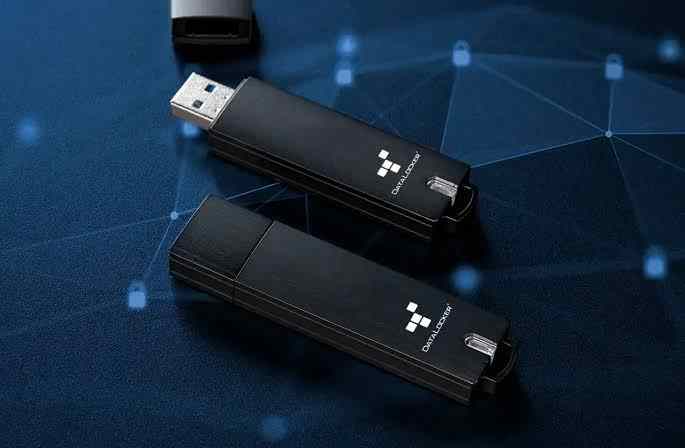
Its SafeConsole environment can help IT teams apply policy and respond to missing devices, but centralized controls and licenses must be provisioned. Smart-card functionality and remote commands are not properties of an arbitrary unconfigured flash drive. The NIST entry lists specific S5-...-FE-M managed SKUs.
Choose it for: centrally governed business fleets. Check before ordering: whether your organization has SafeConsole, the appropriate managed SKU and card reader, and the enrolled credential workflow. Consult DataLocker Sentry 5 specifications and NIST certificate #5140.
DataLocker Sentry K350: Secure Storage for Field Work
The Sentry K350 pairs a built-in keypad/display with AES-256 XTS hardware encryption, an IP68-rated rugged design, and FIPS 140-3 Level 3, certificate #5092. It is suited to professionals who move confidential documents between work sites and want the drive to resist dust and water exposure as well as unauthorized access.
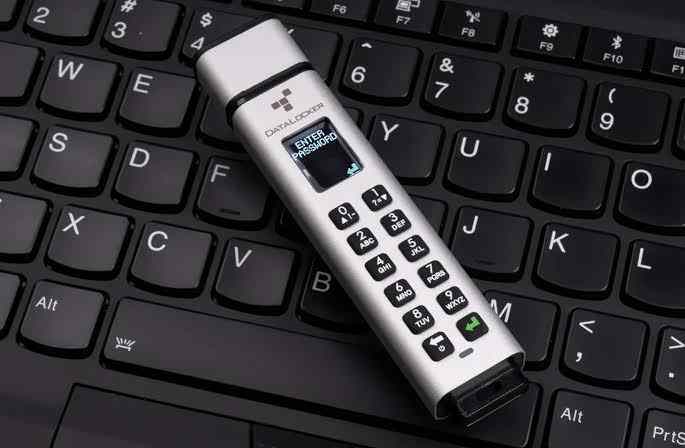
Ruggedness and encryption address different risks. The enclosure may help the drive survive everyday conditions, but neither certification nor an IP rating guarantees files will remain recoverable after extreme damage. DataLocker lists certified configurations in specific capacities; do not assume that every capacity shown in a store selector is covered.
Choose it for: field operations and physical durability. Check before ordering: a certificate-matched model, authentication setup, accessory needs, and your computer environment. See DataLocker K350 product details and NIST certificate #5092.
Kanguru Defender 3000: Managed Secure USB Programs
Kanguru Defender 3000 is another hardware-encrypted option for organizations that already use Kanguru deployment or security-management tools. It received FIPS 140-3 Level 3, certificate #5364 in June 2026; the vendor also describes AES-XTS encryption, secure firmware, and optional remote-management capabilities.
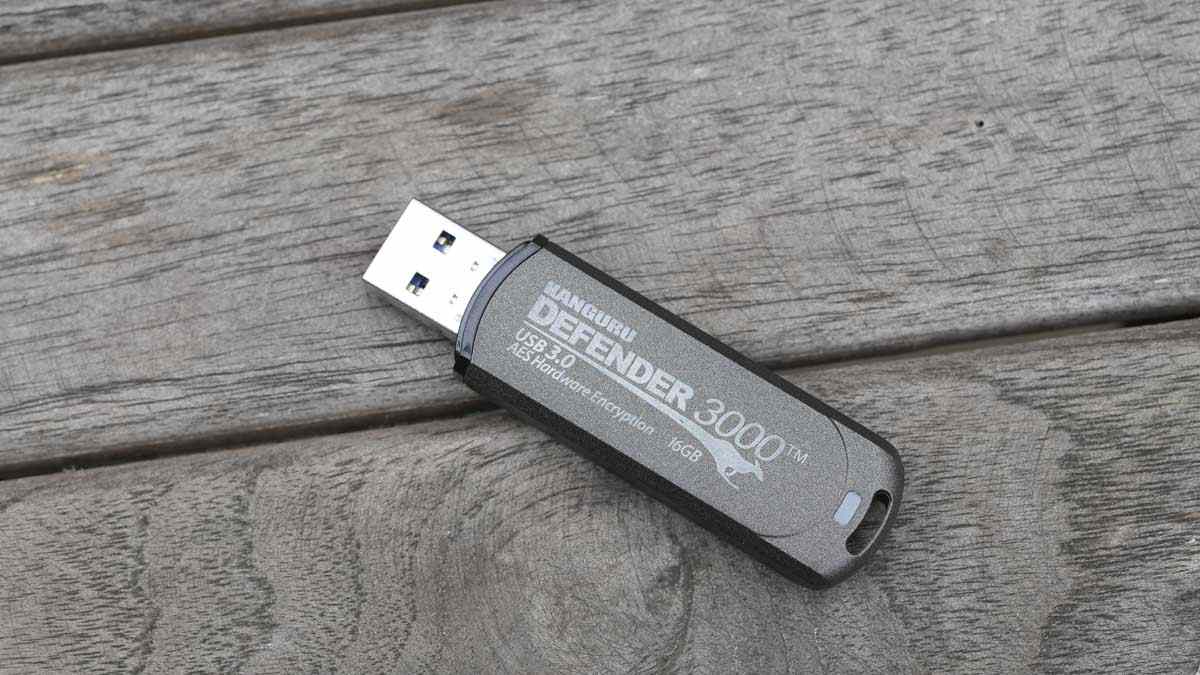
The NIST entry includes a configuration caveat: the validation applies when the module is installed, initialized, and configured as described in its Security Policy. That makes the deployment process a real purchase consideration rather than a line to skip in an IT checklist.
Choose it for: enterprises prepared to handle secure configuration and fleet processes. Check before ordering: the exact SKU, client compatibility, compliance configuration, and any separate management service. See Kanguru Defender 3000 specifications and NIST certificate #5364.
Kingston IronKey Vault Privacy 50: Everyday Business Encryption
IronKey Vault Privacy 50 is a sensible alternative when your organization needs hardware encryption but does not require FIPS 140-3 Level 3 module validation. The current line has XTS-AES 256-bit encryption, host password access, USB-A and USB-C options, and administrative password features.
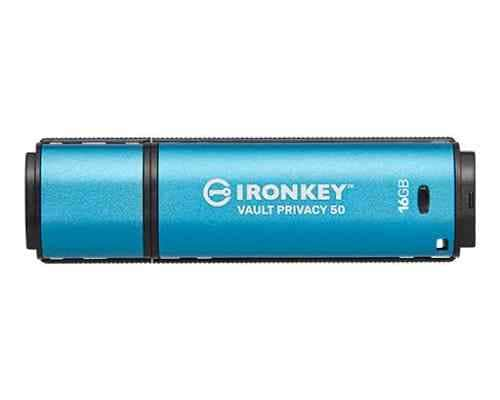
Kingston lists FIPS 197 for the AES implementation. That is not equivalent to an active FIPS 140-3 Level 3 cryptographic-module certificate. If you are buying for a regulated program with a specific validation requirement, this distinction can decide whether the drive qualifies.
Choose it for: routine business records with simpler provisioning. Check before ordering: current Windows/macOS compatibility, USB connector, capacity and whether a formal CMVP certificate is mandatory. Source: Kingston VP50 official product details.
Apricorn Aegis Secure Key 3NXC: Software-Free USB-C with Historical Validation
The Aegis Secure Key 3NXC offers a USB-C connector, on-drive keypad, hardware AES-XTS encryption, and a software-free unlock process. Apricorn documents administrator and user PIN options plus read-only modes that may help when moving files across different computers.
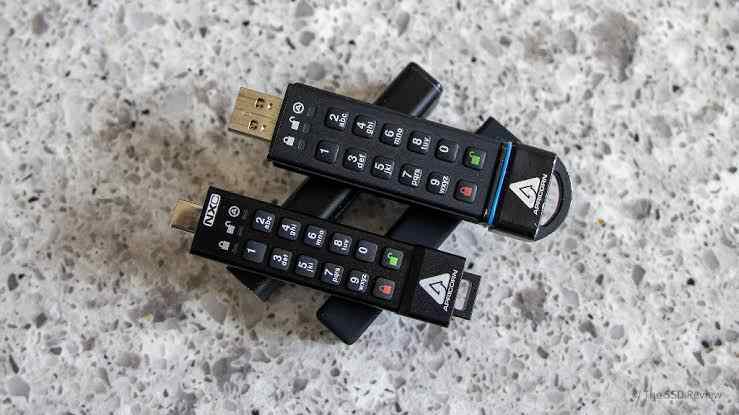
Its FIPS 140-2 Level 3 certificate #3943 is Historical, not an active FIPS 140-3 validation. It may still be useful in organizations or personal settings where that certificate status is acceptable, but it should not be sold as a current active-CMVP substitute when a purchasing policy specifically requires FIPS 140-3.
Choose it for: a keypad-equipped USB-C drive where your policy permits older validation. Check before ordering: the actual SKU, administrator PIN/recovery setup, and applicable procurement rules. See Apricorn 3NXC product information and NIST certificate #3943.
Part 3. Encrypted, Secure, and Lockable USB Drives: Key Differences
These labels often appear together in shopping results, but they answer different questions. Encryption protects stored data from being read without the correct key; a lock controls access; ruggedness protects the physical device. A flash drive can have one, two, or all three.
Hardware Encryption Versus Software Encryption
A hardware-encrypted USB drive performs its cryptographic operations within the device. Some models require a PIN on a built-in keypad; others use a password through a host utility. This can reduce reliance on software installed on the computer, but you still need a trusted workflow for opening, copying, and handling files.
A software-encrypted USB drive can also protect files. Windows BitLocker To Go and other supported encryption tools can encrypt an ordinary removable drive, provided the host edition, file-system rules, and keys are managed appropriately. For low-risk personal storage, this may be enough; for regulated deployments, validate the required solution against your policy.
If you want instructions for an ordinary USB stick rather than a new purchase, use the separate USB password-protection guide.
Does a Lockable Flash Drive Really Encrypt Its Files?
Not necessarily. A retractable connector, button lock, or password prompt is not proof of encryption. Verify whether the entire storage volume uses hardware encryption, whether the password is checked on the device or the host, and whether the encrypted volume stays inaccessible until authentication.
| Claim on the box | What it establishes | What you must still verify |
| Password protected | Access may be restricted | Whether all data is encrypted and where keys are held |
| AES-256 | An encryption algorithm or implementation is claimed | Whether a module is CMVP-validated and to what level |
| FIPS 140-3 Level 3 | A defined cryptographic module can be validated | Certificate status, matching SKU/firmware and caveats |
| IP67 / IP68 rugged | Resistance under specified environmental testing | Not proof of confidentiality, backups or recovery success |
Rugged USB Protection Is Not a Substitute for Encryption
A waterproof or crush-resistant flash drive protects against certain environmental hazards. If the drive is lost and its files are unencrypted, the enclosure does nothing to protect confidentiality. Similarly, hardware encryption cannot replace a second backup: it may keep stolen files private while leaving you unable to retrieve your only copy after damage or lost credentials.
For simpler explanations of physical connectors and everyday storage devices, see the different types of USB flash drives.
Part 4. FIPS 140-3, AES-256 and Certificate Status
Claims such as “military-grade encryption” are marketing language, not the certificate details an IT buyer needs. Use the NIST CMVP entry as the authoritative record for what was actually validated.
FIPS 140-3 Validation Is for a Specific Module
FIPS 140-3 defines security requirements for cryptographic modules and assigns security levels. A verified Level 3 listing addresses multiple cryptographic-module protections, but it does not automatically certify your entire organization, solve all malware risks, or make data indestructible. FIPS 197 specifies AES itself and must not be presented as a FIPS 140-3 module validation.
A product page saying “FIPS certified” may omit critical scope. The actual NIST validated-module database records the standard, status, overall level, hardware versions, firmware and any validation caveat. Product-name similarity is not enough to prove a match.
How to Check an Encrypted USB Drive Certificate
- Find the NIST record: Search the manufacturer or certificate number in the CMVP database, and confirm the certificate status is Active if your procurement requires it.
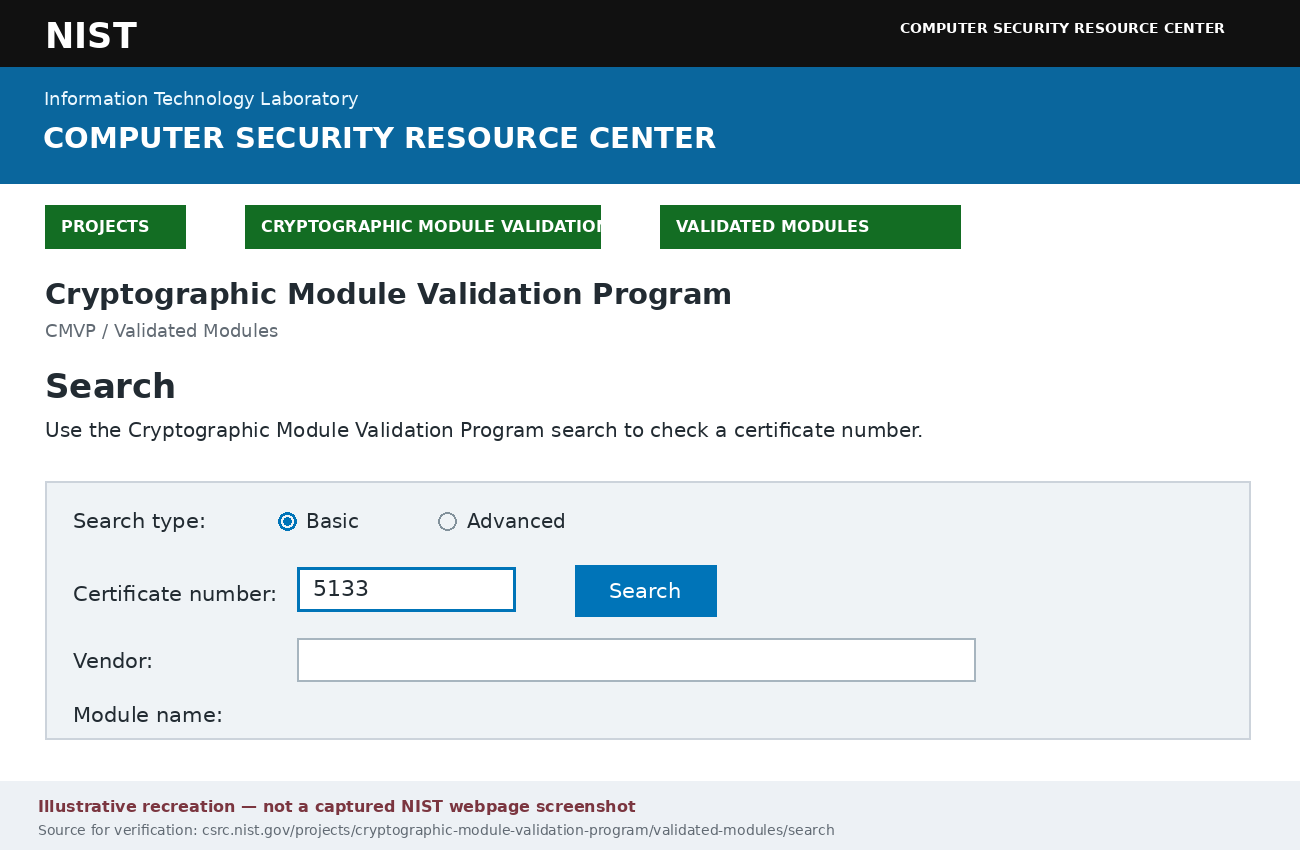
- Match the product: Compare module name and exact hardware version or SKU with the vendor quotation. For iStorage PRO+C, certificate #4918 uses the shorter module name “datAshur PRO” but includes IS-FL-DA3C variants.
- Check firmware and caveats: Ensure the shipped firmware and the initialization process fit the security policy. Certificate #5364 for Kanguru Defender 3000 contains a configuration condition.
- Confirm the environment: Ask whether enterprise management, admin passwords, CAC/PIV, USB-C adapters, and supported operating systems require extra setup or licensing.
- Record the evidence: Keep the certificate URL, part number, firmware and configuration with your procurement records. Recheck the certificate status before ordering.
Why a Historical FIPS 140-2 Label Matters in 2026
NIST states that remaining FIPS 140-2 certificates transitioned to its Historical list after September 21, 2026. A Historical listing is not the same as a revoked encryption algorithm, but it is not an Active validation for new federal purchases requiring current CMVP status. Existing deployments are a separate risk and policy decision.
For example, Apricorn Aegis Secure Key 3NXC has a genuine FIPS 140-2 Level 3 record, but certificate #3943 is Historical. Before a regulated purchase, use the current NIST CMVP FAQs and the device certificate rather than an undated retail badge.
Part 5. How to Choose a Secure USB Flash Drive
The most secure USB drive on paper can still be the wrong purchase when it needs an app you cannot install, lacks your connector, or provides no sensible administrator recovery plan. Use the following choices to narrow the shortlist.
| Your situation | Practical starting point | Reason to double-check |
| Government or high-assurance business procurement | D500S, KP200, or another Active FIPS 140-3 L3 configuration | Certificate status and exact SKU/firmware |
| No software installation permitted | KP200 or datAshur PRO+C | Keypad setup and USB/file-system compatibility |
| IT manages dozens of drives | Sentry 5 or Defender 3000 | Management licenses, policy enrollment and incident controls |
| Outdoor sites and frequent travel | Sentry K350 | Environmental rating does not replace backups |
| Routine private business documents | Vault Privacy 50 | Do not mistake FIPS 197 for FIPS 140-3 L3 |
| USB-C with legacy FIPS status acceptable | Aegis Secure Key 3NXC | Historical certificate and vendor-supported PIN policy |
Match Authentication to the People Using It
A built-in keypad is useful on computers where installing an unlock application is restricted. Password-based access may be easier in a managed desktop environment. Smart-card authentication can fit an existing CAC/PIV program, but first verify your exact reader, device SKU, management license, and enrolled credentials.
Before copying your first important file, set up available administrator credentials or documented recovery arrangements. A manufacturer may support an admin reset of a user PIN only when configured in advance; some reset actions deliberately erase the encryption key and all data.
Check USB-A, USB-C, Capacity and Actual Write Speed
The connector shape is separate from the interface transfer rating. A USB-C plug does not automatically mean USB4 speeds, and encrypted flash drives may transfer much more slowly than the theoretical port maximum. If you transfer large videos, ask for published sustained write-speed measurements for the specific capacity; avoid treating headline read speed as sustained write performance.
Match usable capacity to the files you need, leave room for growth, and check whether your recipient device can mount the file system after unlocking. A flash drive formatted for one operating system may not be writable on another without supported software or a compatible file system.
Plan for Loss, Remote Management and Backups
A hardware-encrypted flash drive reduces the exposure of files on a lost device, but that same protection can make recovery impossible when credentials or keys are destroyed. Keep a verified second copy of important files, record who can administer the drive, and confirm what an IT team can do if an employee leaves or a device disappears.
For business deployments, include licensing, device provisioning, admin recovery, decommissioning, firmware updates and the ability to audit missing drives in total cost. “Remote wipe” is a security response, not a data-recovery feature.
Part 6. What If Your Encrypted USB Drive Becomes Inaccessible?
The next step depends on whether the USB is locked, already unlocked but missing files, or physically failing. Protect the only copy of important data before attempting a reset, repair or scan.
| What you observe | First safe action | Can ordinary file-recovery software help? |
| PIN or password is unknown | Check vendor-supported admin/recovery process and existing backups | Not a way to bypass encryption |
| Drive unlocks, but files were deleted | Stop new writes; verify a healthy backup; assess a scan | Possibly, for recoverable logical loss |
| Unlocked volume requests formatting | Do not format or run CHKDSK before protecting data | May help if media remains detectable and readable |
| Device disconnects or has physical damage | Stop repeated attempts; seek specialist advice | Software-only scanning may worsen matters |
If You Forgot the PIN or Lost an Encryption Key
Do not keep guessing passwords. Some devices deliberately block access or perform a cryptographic erase after a model-specific number of failed attempts. Check the manufacturer manual and any preconfigured administrator or enterprise recovery path. If the encryption key has been destroyed, ordinary recovery tools cannot reconstruct it.
Never use an unspecified “master password” utility or factory reset on a device holding your only copy. A reset often makes the storage usable again by removing the old keys without restoring the original files. If the information is business-owned, contact the authorized administrator first.
If the Drive Unlocks but Files Are Missing
If the drive is unlocked, the operating system can read the volume, and no physical damage is apparent, deleted files may still be recoverable. Stop saving anything new to the USB. Check other verified copies first, then consider a read-only-oriented scan of the accessible, unlocked storage volume.
- Confirm access: Unlock the drive using its legitimate procedure. Check that the computer detects the volume consistently. If it repeatedly disconnects or reports hardware errors, stop.
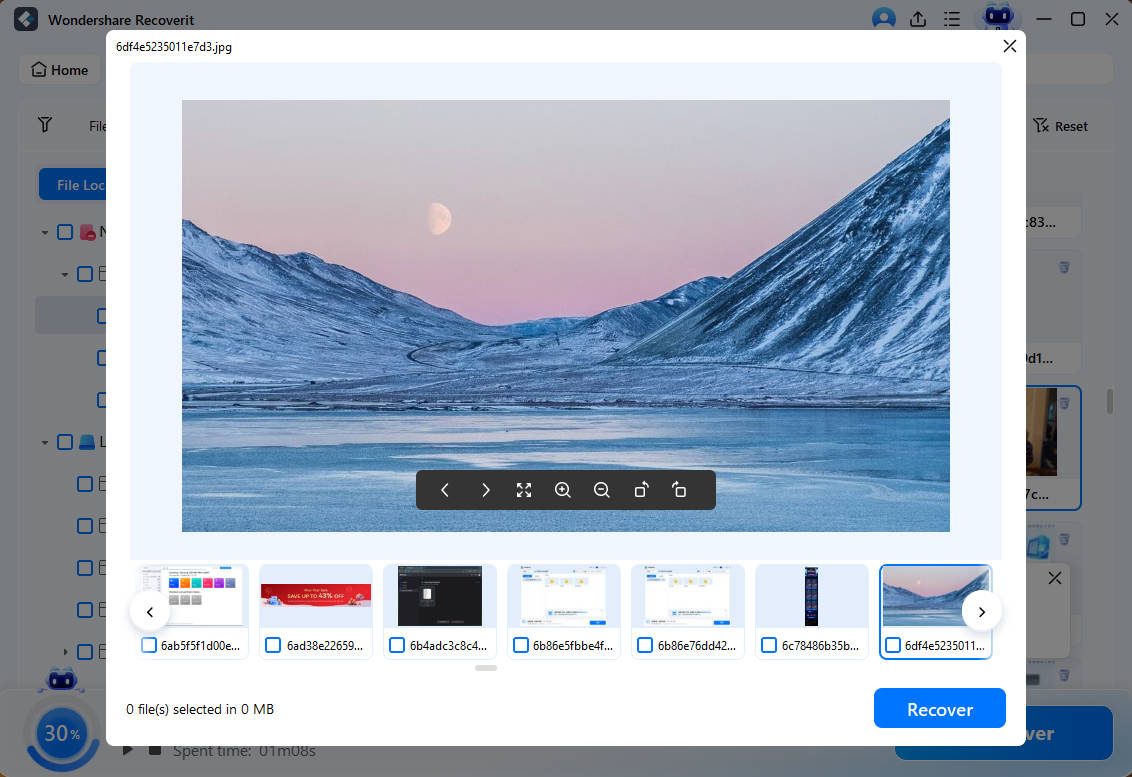
- Scan without modifying the source: Follow the current Recoverit Windows guide to select the USB storage location and scan. A scanner can only work on data made available through the legitimate unlocked device interface.
- Preview and verify: Where file previews are supported, inspect results before recovering. Recover files to a separate healthy disk, not back to the same encrypted USB stick.
- Validate the copy: Open the restored files from the destination and compare against any known originals. If an output is damaged or incomplete, do not assume a preview means successful restoration.
For the supported data-loss scenarios and current download options, see Wondershare Recoverit USB Flash Drive Recovery. The product cannot bypass the drive PIN, undo a cryptographic erase, or repair damaged flash-controller hardware.
If the USB Is Unstable, RAW or Physically Damaged
For an unlocked but unreadable logical volume, avoid formatting, initializing, rebuilding the partition table, or running CHKDSK until important files have been safely copied or recovered. If the drive repeatedly disconnects, feels unusually hot, is bent, or suffered water damage, stop retrying and consider a reputable professional recovery lab.
If the problem is recognition rather than missing files, the separate USB flash drive not recognized guide helps identify the next safe checks. Encrypted-device authentication failures remain subject to the vendor’s secure-key design.
Conclusion
Choose a secure USB drive according to the information you need to protect and the steps you can realistically manage. An Active FIPS 140-3 Level 3 configuration is worth investigating for regulated or high-risk environments; a properly administered hardware-encrypted model without that validation can suit less demanding work. Compare the exact certificate, hardware variant, connector, unlock method and recovery policy before you order.
Keep at least one separate, tested backup. Encryption protects confidentiality if a USB stick is lost; it does not replace copies of files you cannot afford to lose.
FAQ
-
What is the difference between a secure USB drive and an encrypted USB drive?
An encrypted USB drive protects stored data with cryptography. “Secure” is a broader marketing label that can describe encryption, password access, rugged design, or device management. Verify actual full-drive encryption rather than assuming the terms are equivalent. -
Is a password-protected flash drive always encrypted?
No. A password prompt might protect only a file, folder or software vault. Look for a description of hardware or full-volume encryption and, where necessary, a verifiable NIST CMVP certificate. -
Which encrypted USB drive is best for USB-C?
The Kingston KP200C and iStorage datAshur PRO+C provide USB-C options with built-in PIN pads. Their documented FIPS 140-3 validation applies to listed hardware variants; verify your exact SKU before buying. -
Does FIPS 197 mean a USB drive is FIPS 140-3 Level 3 validated?
No. FIPS 197 specifies the AES algorithm. A separate NIST CMVP record is needed to establish FIPS 140-3 module validation and its level. -
Can an encrypted USB drive be used on both Windows and Mac?
Some drives can, especially models unlocked by an onboard keypad. The host must recognize USB mass storage, and the formatted file system and any management software must also be supported. Check the vendor compatibility notes for the exact model. -
Can Recoverit recover files from a locked encrypted USB drive?
Recoverit cannot bypass a locked device or reconstruct a missing encryption key. If the drive has been legitimately unlocked, is detectable, and the loss is logical rather than physical, you can assess whether a scan finds usable deleted-file data. -
What happens when I enter the wrong PIN too many times?
Behavior varies by manufacturer and configuration. Some high-security drives lock temporarily or destroy encryption keys after a set number of wrong attempts. Consult that model’s manual and any administrator recovery policy before entering more guesses. -
Is a waterproof or rugged flash drive automatically secure?
No. IP protection and rugged construction concern physical conditions; data confidentiality depends on encryption and authentication. Use separate backups regardless of the enclosure rating.


