

 TL;DR:
To fix the "Windows was unable to complete the format" USB error, bypass standard Windows formatting attempts by disabling write protection or using advanced system command utilities to rebuild the drive structure.
● Disable system-level write protection before formatting by opening the Registry Editor, navigating to the `HKEY_LOCAL_MACHINE\SYSTEM\CurrentControlSet\Control\StorageDevicePolicies` path, and changing the `WriteProtect` entry value from 1 to 0.
● Force a clean format via Command Prompt by launching the `diskpart` utility, selecting your specific USB drive number, and executing the exact command sequence: `clean`, `create partition primary`, and `format fs=ntfs quick`.
● If Windows-native tools like CHKDSK or Disk Management fail to bypass the corruption, use a third-party formatting utility like Rufus to perform the task, but extract your files using recovery software like Recoverit beforehand as force-formatting permanently erases all data.
Ask AI for a summary
 ChatGPT
 Perplexity
 Gemini
 Claude
 Grok
Grok
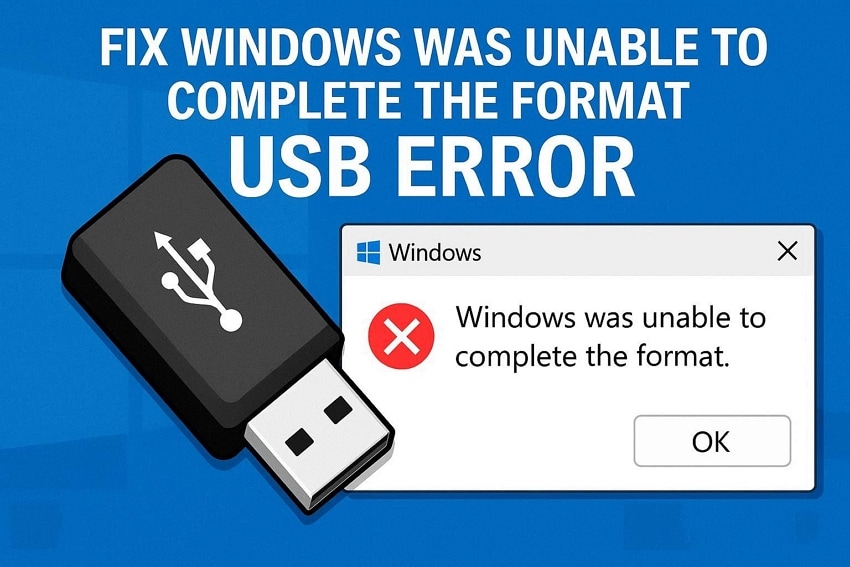
A USB drive is connected to a computer to save important files. The system starts formatting the device to clear old data quickly. Suddenly, a message appears saying Windows was unable to complete the format. The error prevents proper formatting and interrupts the normal workflow unexpectedly. Storage devices that cannot be formatted often become difficult to use. Understanding how to handle “Windows was unable to complete the format” becomes essential for restoring device usability quickly. In this article, you will learn why this error occurs and how to resolve it.
Try Recoverit to Perform Data Recovery
 Security Verified. 3,591,664 people have downloaded it.
In this article
- Fix 1: Use a Different USB Port or Computer
- Fix 2: Check and Remove USB Write Protection
- Fix 3: Format the USB Drive Using Disk Management
- Fix 4: Use Command Prompt Diskpart to Format USB
- Fix 5: Run CHKDSK to Repair the USB Drive
- Fix 6: Delete and Recreate the USB Partition
- Fix 7: Scan the USB Drive for Malware
- Fix 8: Update or Reinstall USB Drivers
- Fix 9: Use Third-Party Formatting Utility
Part 1. What Is “Windows Was Unable to Complete the Format”
The “Windows was unable to complete the format” error occurs when the Windows operating system fails to finish the file system formatting process on a storage device. During formatting, Windows attempts to erase existing data and create a new file system structure. If the system cannot complete these operations successfully, the process stops. This error commonly appears when a USB drive won't format through standard Windows formatting tools.
Why Won’t My USB Drive Format?
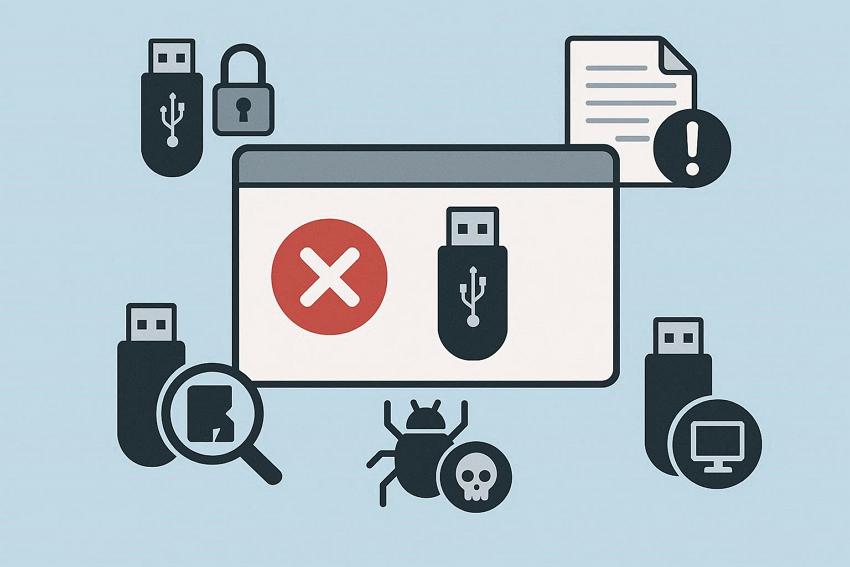
After understanding what the error means, it is important to explore why it happens. Below are some common reasons that explain why a USB drive fails to complete the process:
- Write Protection Enabled: Some USB drives have write protection enabled through hardware switches or system settings. When this protection is active, Windows blocks any attempt to modify or format the drive.
- Corrupted File System: A damaged or corrupted file system can prevent Windows from rebuilding the drive structure. As a result, the formatting process stops before completion.
- Bad Sectors on the USB Drive: Physical damage or worn-out storage cells may create bad sectors on the device. These sectors interrupt the formatting process and cause errors.
- Virus or Malware Infection: Malware can modify storage permissions or damage important file structures. This interference may prevent the USB drive from formatting normally.
- Drive in Use by Another Program: Sometimes another application or background process is still accessing the USB drive. Windows cannot format the device while it is actively being used.
Part 2. How to Fix the " Can't Format USB Error Without Losing Data
The following solutions explain how to fix a USB format error without losing data while keeping your files protected and restoring the drive’s functionality:
Fix 1: Use a Different USB Port or Computer
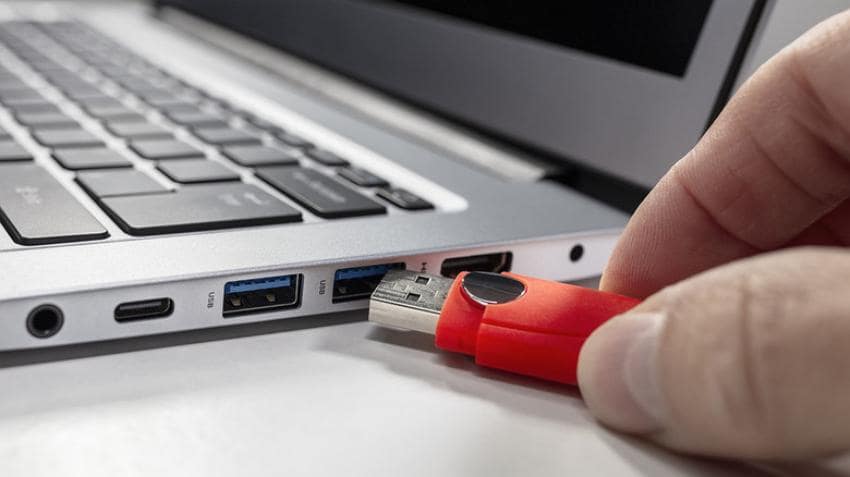
Sometimes the issue is not with the storage device itself but with the connection. Switching to another USB port or testing the drive on a different computer can quickly confirm this. Faulty ports, unstable power supply, or outdated drivers may interrupt the formatting process. Trying another system often resolves the “Windows was unable to complete the format” message without requiring advanced troubleshooting.
Fix 2: Check and Remove USB Write Protection
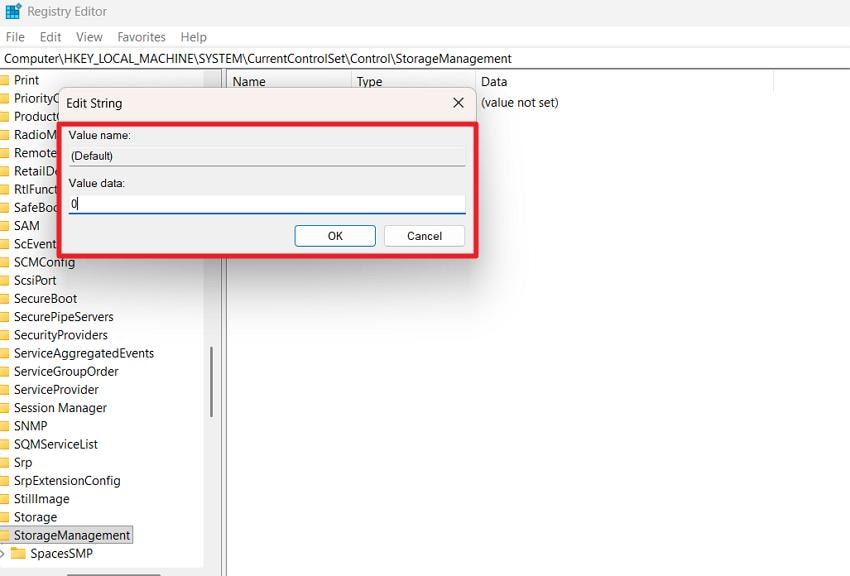
Another possible cause appears when the drive is protected from modification. Write protection prevents data from being deleted, changed, or formatted on the device. Some USB drives include a small physical switch, while others may have protection enabled through system settings. Removing this restriction can allow the format process to start normally when a USB drive won't format on Windows. To learn how to perform this fix, read the steps provided below:
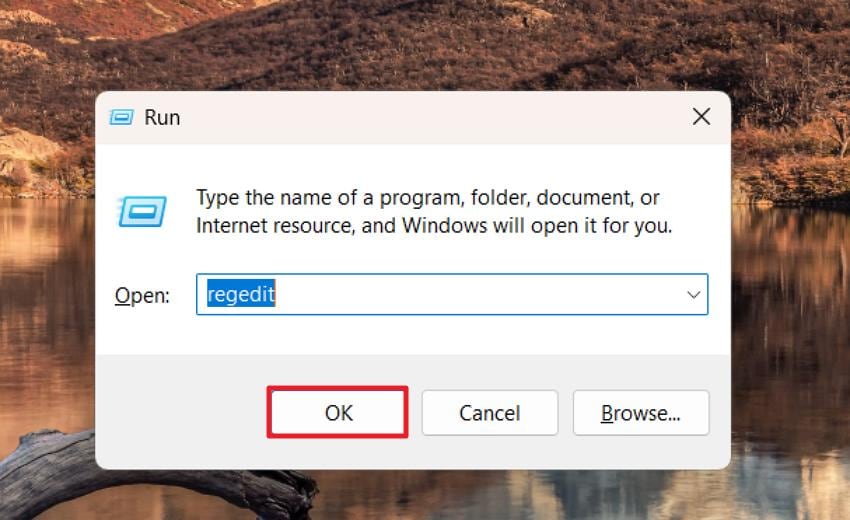
- Press Windows + R, type regedit, and open the Registry Editor.
- Navigate to: “HKEY_LOCAL_MACHINE\SYSTEM\CurrentControlSet\Control\StorageDevicePolicies.” Find the WriteProtect entry. If its value is 1, double-click and change it to 0.
Fix 3: Format the USB Drive Using Disk Management
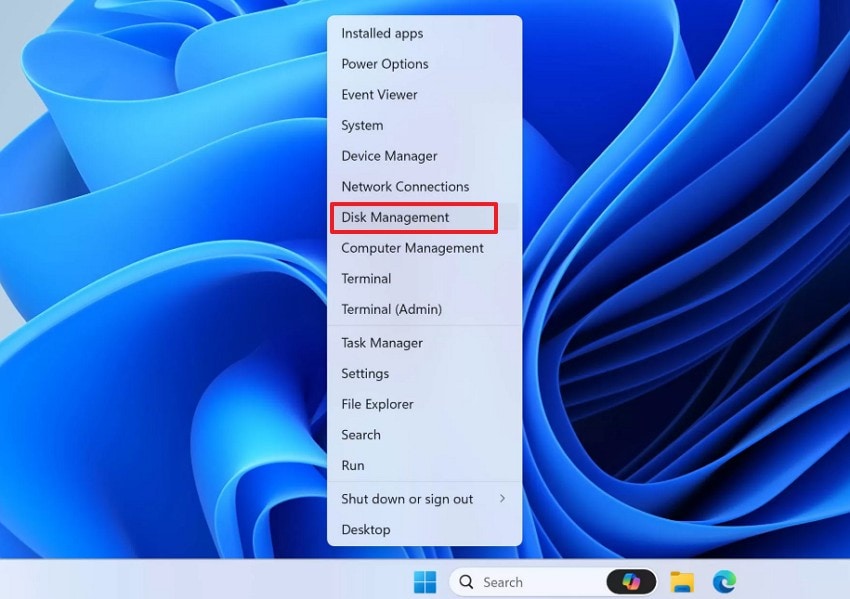
Windows provides a built-in storage management tool that allows deeper control over connected drives. Disk Management can detect devices that File Explorer fails to format correctly. Using this method is often recommended when searching for how to fix a USB format error without losing data while restoring device functionality. Read the steps provided below to learn how to format a USB with Disk Management:
- Press Windows + X and select “Disk Management” from the menu.
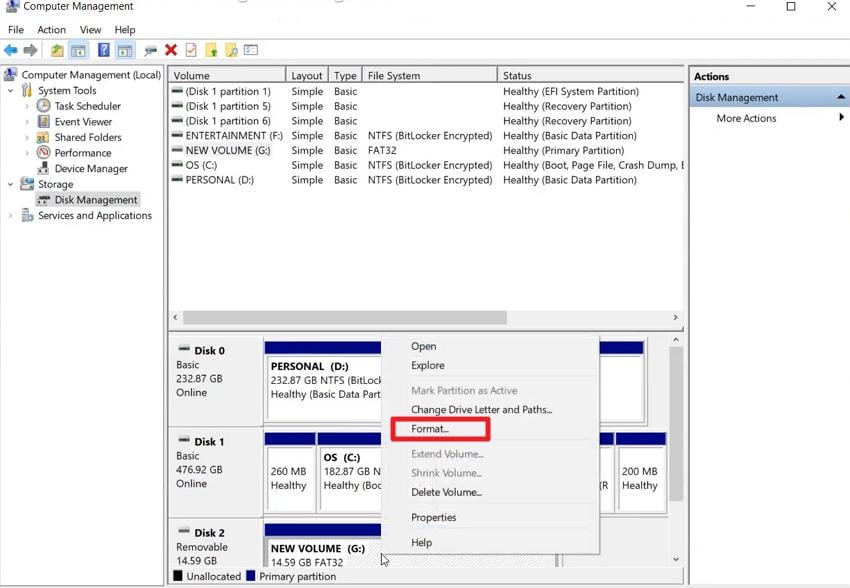
- In the Disk Management window, locate your USB drive in the list of drives. Right-click on the USB drive and choose “Format” from the options.
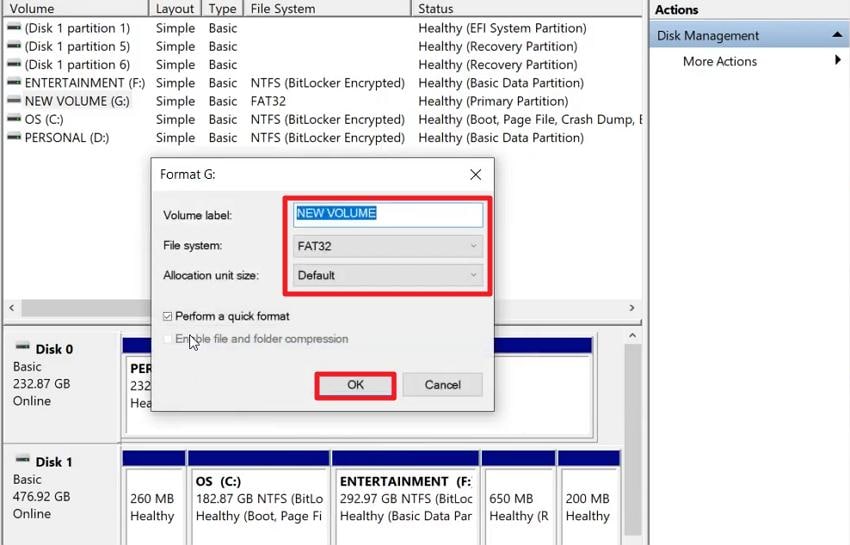
- In the formatting dialog, select a file system (NTFS, FAT32, or exFAT) and optionally name the drive. Click “OK” to begin the USB drive formatting process.
Fix 4: Use Command Prompt Diskpart to Format USB
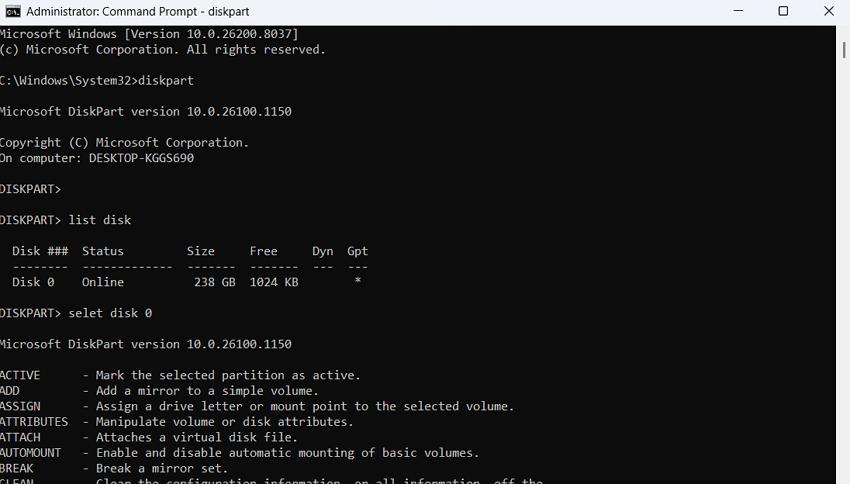
Advanced users often rely on the Diskpart command-line tool for storage troubleshooting. This utility communicates directly with the system’s disk management service. It is a useful method when trying to understand why won't my USB drive format during regular formatting attempts. Follow the instructions below to learn how to format a USB using the Command Prompt:
Instructions. Open the command prompt on your system and type "diskpart" and press Enter to launch the Diskpart utility. Enter "list disk" to see all connected drives, then "select disk X" (replace X with your USB drive number). Type "clean" to remove all partitions and data from the drive. Now enter "create partition primary" to make a new partition, then "format fs=ntfs quick" (or "fs=fat32") to format it.
Fix 5: Run CHKDSK to Repair the USB Drive
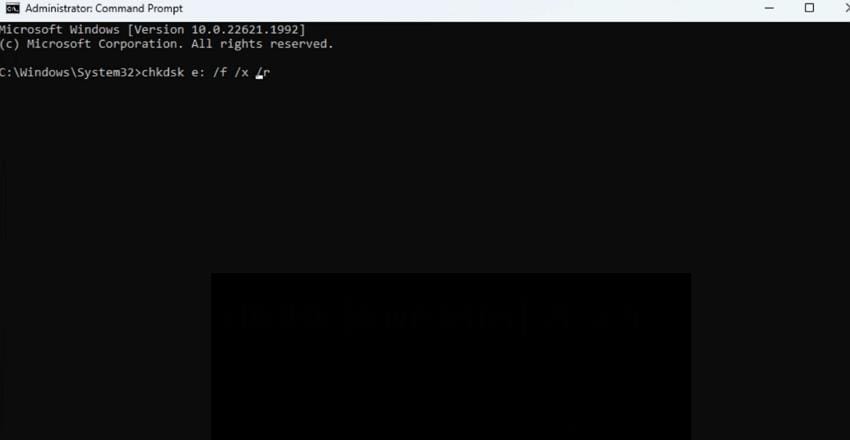
Storage devices sometimes develop file system inconsistencies that block formatting. The CHKDSK utility scans the drive for logical errors and attempts to repair damaged sectors automatically. Fixing these errors may restore normal functionality and help eliminate issues that trigger the “Windows was unable to complete the format" notification. Read the instructions provided below to learn how to run the chkdsk command to repair the USB drive:
Instructions. Connect your SD card to your computer through a card reader. Open Command Prompt and type the command: "chkdsk X: /f /r /x" (replace X with your SD card's drive letter). Press Enter, and CHKDSK will begin scanning the card, detecting errors, and attempting to repair any file system issues automatically.
Fix 6: Delete and Recreate the USB Partition
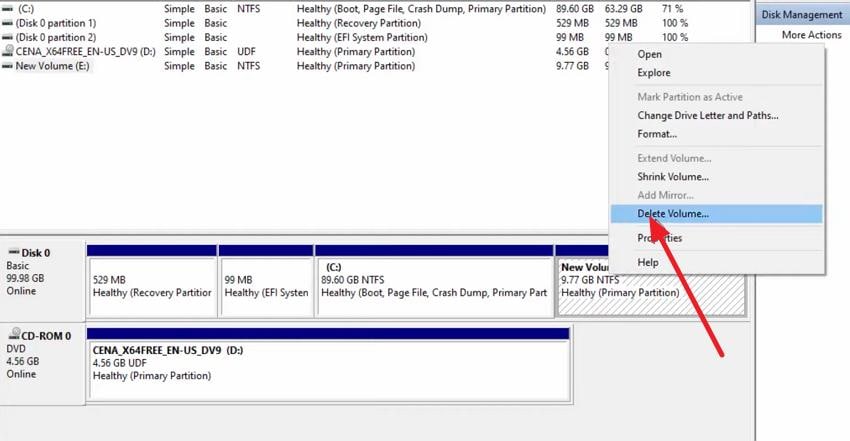
Partition corruption may prevent Windows from preparing the drive for formatting. Removing the existing partition and creating a new one allows the system to rebuild the entire storage structure from scratch. Recreating the partition can be effective when a USB drive won't format using standard formatting options. Read the steps next to learn how to delete and recreate a USB partition:
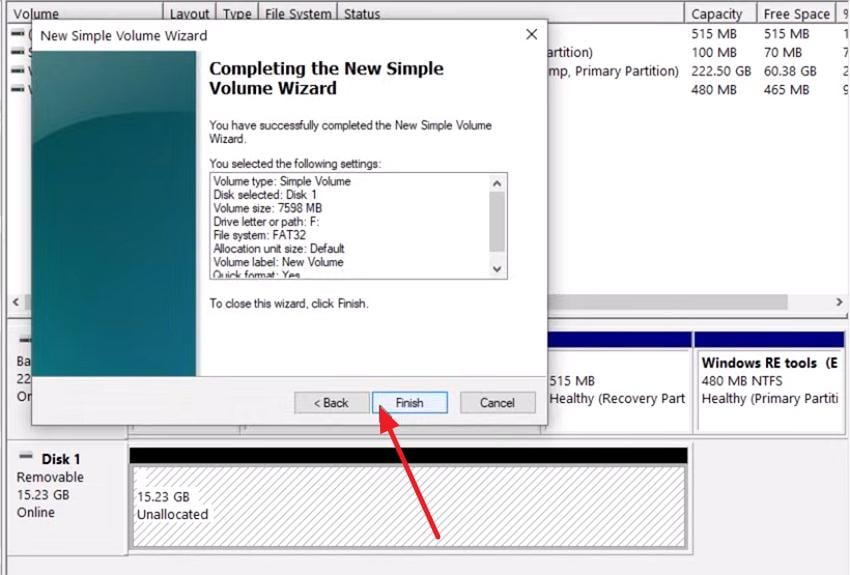
- After opening the Disk Management, locate your USB drive in the list, right-click on its partition, and choose "Delete Volume." Confirm the action to remove the partition.
- Right-click the unallocated space on the USB drive and select "New Simple Volume."
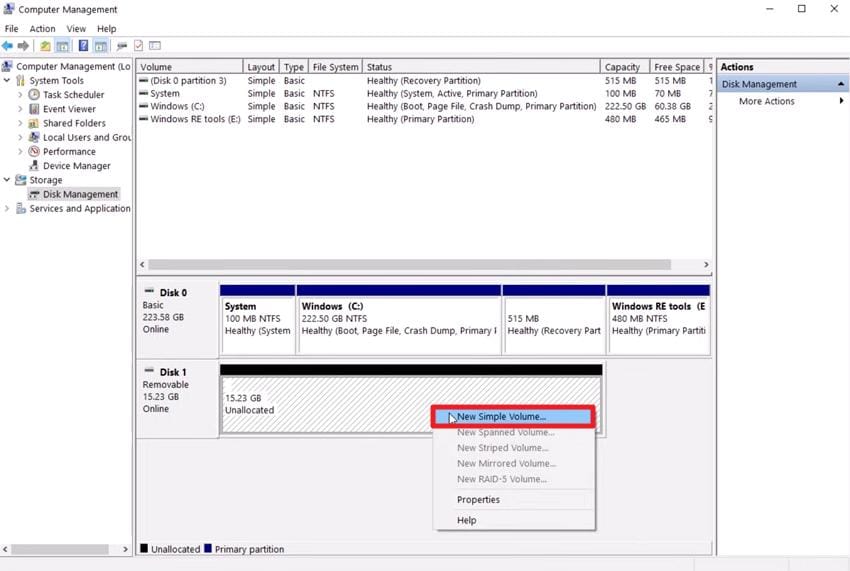
- Follow the prompts to assign a drive letter and choose a file system (NTFS, FAT32, or exFAT). Click “Finish” to create the new partition and complete the formatting process.
Fix 7: Scan the USB Drive for Malware
Malicious software sometimes alters system permissions or damages file structures on external drives. When malware infects a USB device, it may block formatting attempts or cause unexpected errors. Performing a complete security scan helps remove harmful files that interfere with normal operations. This approach is useful for those searching for how to fix a USB format error without losing data safely. Learn how to scan a USB for malware by following these steps:
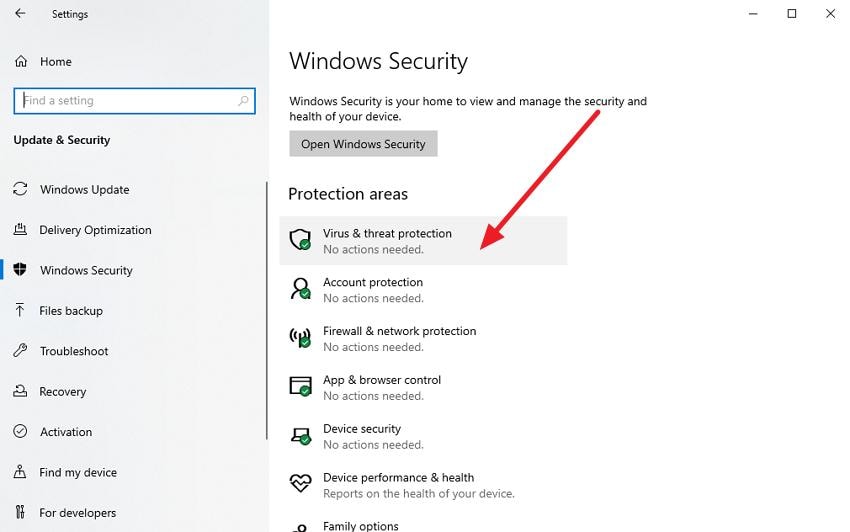
- Start by connecting your USB flash drive to your system. Now, go to Windows Security through your system settings and select the "Virus & Threat Protection" option.
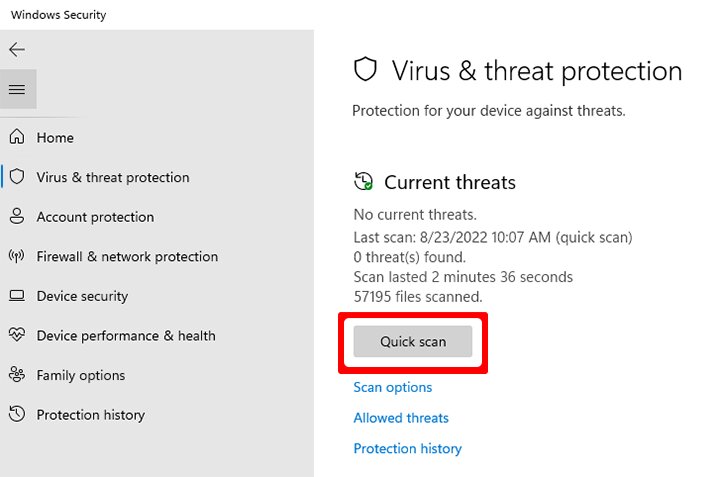
- As it follows through, click on "Quick Scan" to scan your computer along with the USB drive for any harmful malware or threats.
Fix 8: Update or Reinstall USB Drivers
Device drivers allow Windows to communicate properly with connected hardware. Outdated or corrupted USB drivers may cause recognition issues that affect formatting processes. Updating or reinstalling the drivers refreshes the communication between the operating system and the storage device. This step can clarify why won't my USB drive format when the device seems otherwise functional. Follow the steps provided below to learn how to update and reinstall USB drivers:
Update Driver
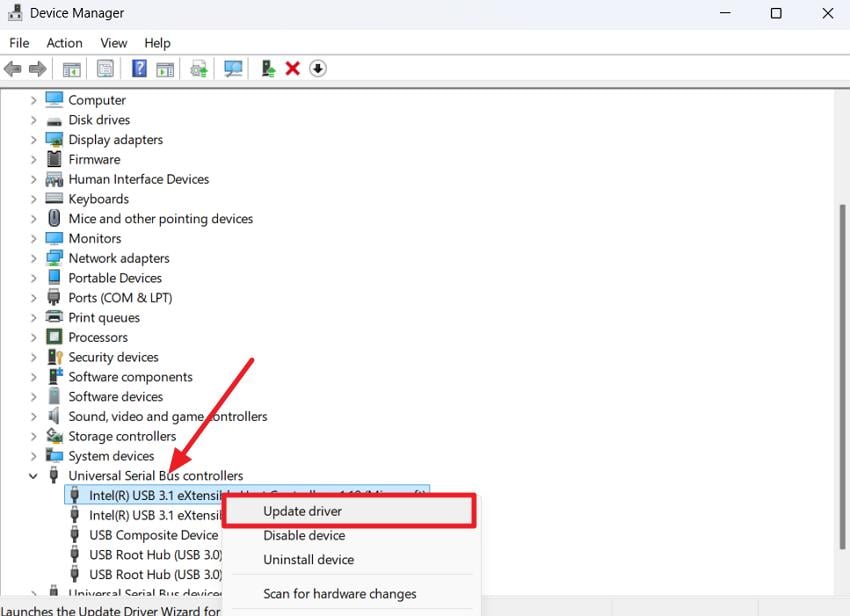
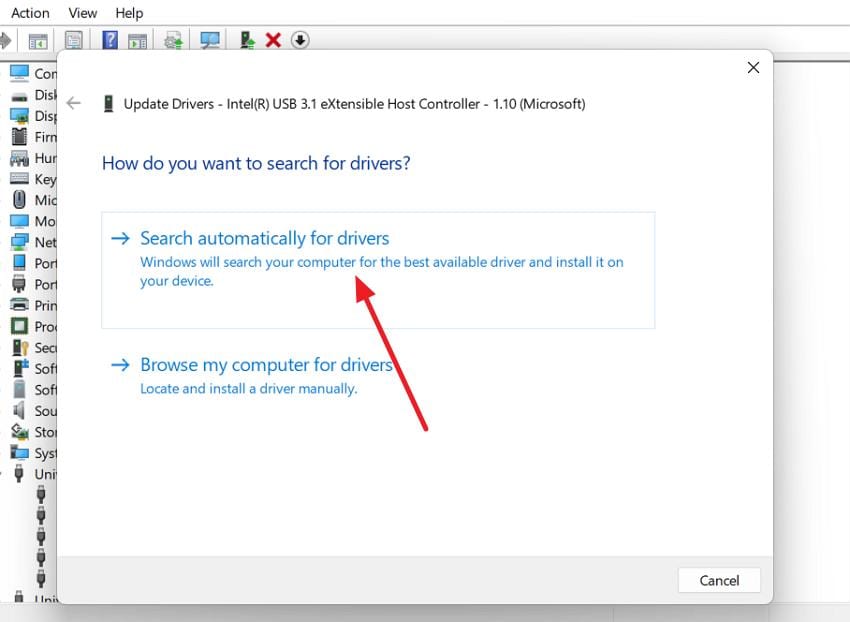
- Open Device Manager and expand the “Universal Serial Bus Controllers” section to view all USB ports and devices. To update a driver, right-click the USB device and choose "Update driver."
- Next, choose "Automatically Search For Drivers” to let the driver update automatically when a new update comes.
Reinstall Drivers
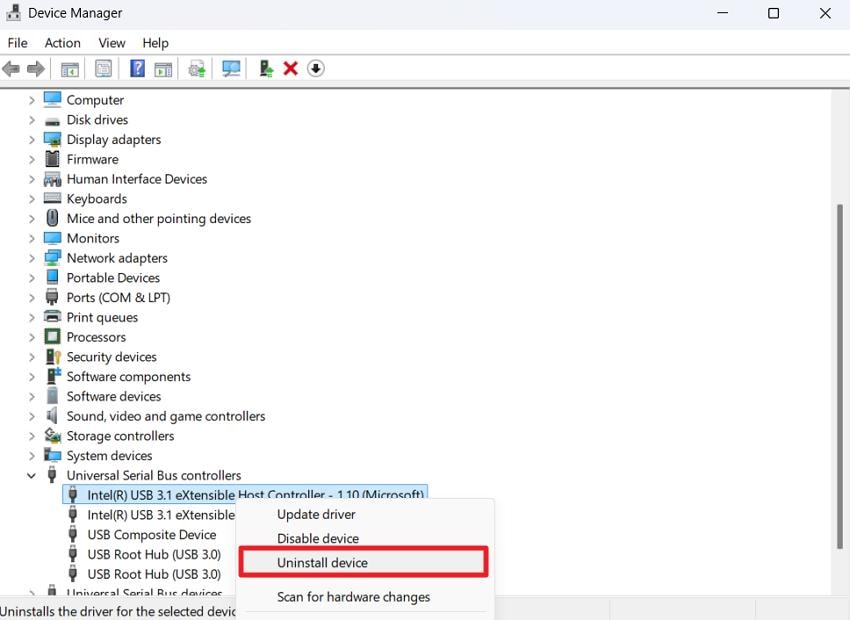
Instructions. To reinstall, right-click the USB device and select "Uninstall device." Afterward, disconnect and reconnect the USB drive, and Windows will automatically reinstall the driver.
Fix 9: Use Third-Party Formatting Utility
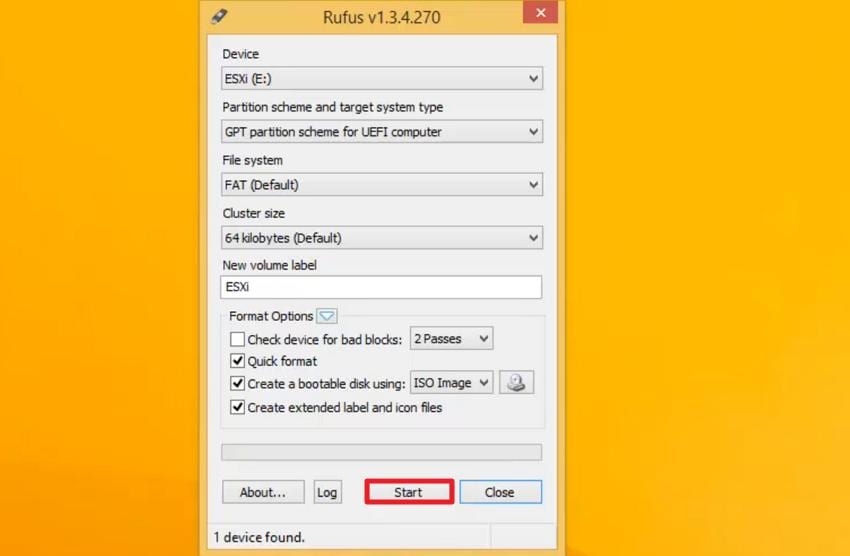
When built-in Windows tools fail to format a drive successfully, specialized utilities can help. Tools like Rufus are designed to create bootable drives and perform low-level formatting tasks. They may succeed where standard methods fail because they bypass some Windows limitations. Such utilities often resolve the “Windows was unable to complete the format" error effectively. To learn how to format a USB using Rufus, read the instructions provided next:
Instructions. To begin, install and launch Rufus on your device and connect the USB drive. Configure the settings and press the "Start" button to begin the formatting through this tool.
Pro Tip: Recover Lost Files from a Damaged/Formatted USB Drive
When a USB drive fails to format or becomes corrupted, losing important files can feel frustrating. In situations where “why won't my USB drive format” becomes a real concern, using a reliable data recovery tool is crucial. Recoverit is a professional application designed to restore files from damaged, corrupted, or accidentally formatted drives.
This tool features a user-friendly interface that guides users through the recovery process step by step, eliminating the need for advanced technical knowledge. Its deep scan technology analyzes the storage device thoroughly, detecting hidden or lost files that standard methods might miss. With Recoverit, users get the ability to recover data up to 500 MB for free.
Key Features Offered by Recoverit
- Preview Before Saving: The tool allows users to preview files before recovery, ensuring they restore only the data they need.
- Search Filter for Files: Its search and filter options help quickly locate specific files by name, type, or date, saving time.
- Highest Recovery Rate: Recoverit offers one of the highest recovery rates, i.e., 99.5%, maximizing the chances of retrieving lost or damaged files.
Comprehensive Steps to Recover Lost Files from a USB Drive
Having learned about this tool in detail, let us have a look at how to use it to recover lost data from a damaged USB Drive:
- Connect and Select the USB device.
Start by plugging your USB drive into the computer and opening Recoverit. On the tool’s main interface, find your USB device and click on it to initiate the scanning process.
- Locate the File After Scanning
Once the scan finishes, Recoverit will display all recoverable files from the USB drive. Browse through the results, select the files you want, and click the “Recover” button.
- Preview and Recover the File
Before restoring, preview the scanned file to confirm it’s the correct one. Then press the “Recover” button at the bottom to successfully retrieve your data.
Part 3. 6 Tips to Prevent USB Formatting Errors in the Future
Regular care and proper handling of your storage devices can reduce the chances that a USB drive will not format in the future. Implementing the tips mentioned below and using the right tools helps maintain the health and functionality of your USB drives over time:
- Safely Eject USB Device: Always use the "Safely Remove Hardware" option before unplugging your drive. This prevents data corruption that may cause formatting errors later.
- Keep Drives Virus-Free: Regularly scan USB drives with reliable antivirus software. Malware infections can damage file structures and block formatting.
- Avoid Physical Damage: Handle USB drives carefully and avoid bending or dropping them. Physical damage often creates bad sectors that prevent formatting.
- Regularly Back up Data: Keep copies of important files on another device or cloud storage. Backups reduce the impact if the USB drive fails.
- Update USB Driver: Ensure your system’s USB drivers are current. Outdated or corrupted drivers can interfere with proper formatting.
- Use Quality USB Driver: Invest in high-quality storage devices from trusted brands. Cheaper drives may degrade faster, and cause USB drives won't format errors.
Conclusion
To sum it up, this article provided a detailed guide on understanding and fixing “Windows was unable to complete the format” issues. From identifying why the error occurs to applying effective solutions, users can restore their drives safely. For cases where files might be at risk, using Recoverit is the right choice. This efficient data recovery tool ensures that data is recovered efficiently before attempting any repairs.
FAQ
1. Why won't my USB drive format in Windows?
This can happen due to write protection, corrupted file systems, bad sectors, or malware. Using Recoverit before troubleshooting ensures your files remain safe.2. Can I recover data if the USB drive fails to format?
Yes, you can restore files from a damaged or unformatted USB drive. Tools like Recoverit allow safe recovery before attempting formatting.3. Is it safe to force format a USB drive?
Forcing a format may erase important data permanently. It's recommended to use Recoverit first to recover files before proceeding.4. Which tool helps recover files from a USB drive that won’t format?
Recoverit is a professional data recovery tool that retrieves documents, photos, videos, and more from unformatted or corrupted drives.


