
Oct 23, 2026 • Filed to: SD Card Solutions • Proven solutions
⚡ Quick Answer: How to Delete Photos from a SanDisk Memory Card on Mac?
To delete files from an SD card on a Mac, insert the card into the card reader, open Finder, select the card under Devices, drag the files to Trash, then right-click the Trash icon and choose Empty Trash. To permanently erase the whole card and change its file system, use Disk Utility with the Erase tab (choose exFAT for camera compatibility). If you accidentally delete important photos, run Wondershare Recoverit for Mac immediately to scan and restore them.
Case: I want to use my camera to click more pictures, but the storage is already full. I don’t know how to delete photos from the SanDisk memory card on Mac. Can someone help me to do it?
It is not rocket science that sometimes people have to delete SD card files to free up some space. Typically, users can easily do that. But the ones who have bought new devices like a camera, handy cam, or any other device on which they are using the SD card might not know about it that much. That’s why it is a better alternative to delete the SD card files using Mac.
In this article, you will learn how to delete the SD card files and restore the deleted files from the SD card.
Part 1. Why Delete SD Card Files?
It is a debatable question. People often argue about the importance of formatting and erasing the data from a storage device. Whether it is hard to drive or an SD card, every storage media should be formatted from time to time to keep the optimal performance. You should know some things about the SD cards, which will assure you that you need to erase them frequently.
🔍 File Deletion vs. Partition Formatting: Which Method to Choose?
Depending on whether you are simply clearing space for an afternoon photo shoot or troubleshooting a corrupted memory card, select the proper storage optimization path below:
| Memory Card Use-Case Scenario | Recommended Method | System Impact on SD Card Sectors | Data Recovery Feasibility |
| Clearing room for extra photos | Simple File Deletion | Erases local directory file pointers; marks blocks as writable. | Extremely High (Until overwritten) |
| Moving card to a different camera | Full Disk Format | Rebuilds the root folder tree; maps device-specific directory blocks. | High (With standard quick format) |
| Card errors / Intermittent BSOD | Full Disk Format | Fixes logic table errors and isolates corrupted sectors. | High (With standard quick format) |
| Preparing to sell/gift the card | Secure Multi-Pass Erase | Overwrites blocks with zeros or random bit patterns across passes. | Permanently Irrecoverable |
- If the card is previously used for another device, then you better erase it to make it usable on the new device. If you’ve been using the same device, then deleting SD card files normally will do the trick.
- Some files get missing, and you don’t know how that means either the card has corrupted data or a virus/malware is causing the issue.
- If your card can’t be read by your camera or phone, or any other device, you should try erasing the data permanently.
- If you get any error while inserting the memory card on a device.
- If your storage space is full and you need to make space for new files.
- Incompatibility of the SD card with the device you intend to use it in.
Corrupted or damaged data often cause the irregular behavior of an SD card. In this case, it is better to format the SD card. But if everything is working fine, then simple erasure will do the job.
Part 2. How to Delete SD Card Files on Mac?
Mac has provided a very convenient method to delete files from any storage device. But you will have to access the files first. When you want to delete SD card files on Mac, it is an elegant and clean method. You only have to move the files to Trash, and the card will be empty and ready for use. To do this, you will have to follow the steps given below:
How to Delete SD Card Files on Mac Step by Step
macOS provides a clean, convenient way to delete files from an SD card: simply move the items to the Trash, then empty it. Follow the steps below.
- Connect the SD card to your Mac. A drive icon will appear on the desktop with the card's name (for example,
SANDISK). - Open the drive. Double-click the icon to view the files and folders. Hold the Apple (Command) key to select multiple files at once.
- Move the files to Trash. Drag the selected files into the Trash bin in the Dock.
- Empty the Trash. Hold the
Controlkey and click the Trash icon, then choose Empty Trash to permanently remove the items from both the card and your Mac.

Part 3. How to Erase SD Card Using Mac?
Another method you can use to delete files on the SD card using Mac is the Disk Utility feature. It is more like a formatting method instead of a simple erasure. The files deleted with this method may or may not be available for recovery. Plus, this method assures that the card will be free of errors, and it can be used on a device you like. Follow the steps below to erase the SD card permanently.
- Connect the SD card to Mac and open Disk Utility from the Applications. As the Disk Utility window opens up, you will be in the First Aid tab by default.
- Select the SD card from the left side panel and switch to the Erase tab.

- Now, you will have to give a name to the Card and choose the card's file format system. Typically, the appropriate format is exFAT as Windows, and Mac OS support it.

Then click on the Erase button and let the Disk Utility finish the task. You will be notified when the process is finished, and you can remove the card from Mac easily. This process is called formatting, and it is mostly used to change the file format system of storage media. This process consists of three important terms, which are explained below.
📐 Formatting Blueprint: Choosing the Right File System File System on Mac
When running formatting procedures inside the macOS Disk Utility panel, choosing the wrong allocation table can make your storage drive invisible to your camera, smartphone, or drone. Use this matrix to select the right setup:
| File System Target Option | Card Capacity Range | Device Compatibility Profile | Structural Pros & Cons |
| exFAT | 64GB to 2TB+ (SDXC) | Digital Cameras, Drones, GoPros, Windows, Mac. | Recommended standard. Supports file sizes larger than 4GB. |
| MS-DOS (FAT) / FAT32 | 2GB to 32GB (SDHC) | Older Mirrorless Cameras, Audio Recorders, Legacy Tech. | Maximum compatibility, but limited to a maximum 4GB individual file size. |
| Mac OS Extended (Journaled) | Any Capacity Layout | Exclusively for Mac backup storage or historical Time Machine systems. | Invisible to all cameras and Windows systems. Do not use for cameras. |
| APFS (Apple File System) | Any Capacity Layout | Native macOS SSD drives and high-speed encrypted external drives. | Completely incompatible with external cameras, drones, or recording tech. |
1. Disk Utility
In Mac OS X, the disk utility software helps users manage disks on their computer, including the SD card. The disk utility can be used to safely remove disks, burn DVDs, and erase the entire disk. Formatting the drive marks all data as deleted and prepares the drive for future use. Typically, formatting an SD card won’t require much time, but if you apply advanced security options, it will take a while.
2. Formatting
Within the format menu, you can select the specific format in which data is stored on the SD Card. You can select the format as per your intend to use the SD card for the device. If you plan to use the card on Mac, then the format should be kept as Mac OS Extended Journaled. If you plan to use the card on smartphones or digital cameras, you should prefer using the MS-DOS format.
3. Security Options
You can also set up the Security option inside the Erase tab before you begin the format. The choices are zero-out data, 7-Phase Erase, and 35-Pass Erase. Each pass provides more secure formatting to the card, and it is also time-consuming. Depending on the card's size, it will take some time, but the format will be successful. Keep in mind that the data erased using the 35-Pass will make the data files irrecoverable.
Part 4. How to Recover Deleted Files on Mac?
If you deleted the files mistakenly from the SD card, then you still have a chance to recover them. Recoverit Mac data recovery software is here to help you. So, whether you have intentionally deleted the files or you lost them due to some other problem, Recoverit can recover deleted files from SD card on Mac with just one click.
All you need to do is to download the software and install it on your Mac. then follow the steps below and get the files back:
🛡️ Wondershare Recoverit Mac Data Recovery: Success Probability Matrix
When files are deleted on macOS, the underlying media remains intact on the flash drive clusters. **Wondershare Recoverit for Mac** uses specialized sector reconstruction algorithms to salvage files across various data loss scenarios:
| Data Loss Event on Mac | Success Rate Status | Underlying Raw Recovery Mechanics |
| Emptied Trash Bin Extraction | 99% Recovery Rate | Scans raw unallocated block addresses to rebuild unlinked files. |
| Quick Format via Disk Utility | 96% Recovery Rate | Bypasses the new blank index to locate old image signatures. |
| Interrupted File Transfer Cut | 92% Recovery Rate | Matches orphaned cluster fragments into viewable photo/video files. |
| Secure Multi-Pass Format (35-Pass) | Irrecoverable | Blocks cannot be read due to intentional security zeroing patterns. |
Video Tutorial on How to Recover Files from SD Card on Mac

How to Recover Deleted SD Card Files on Mac with Recoverit
- Run Recoverit: Launch the software and connect the SD card to your Mac. From the main interface, select the drive whose data you want to recover and click Start.
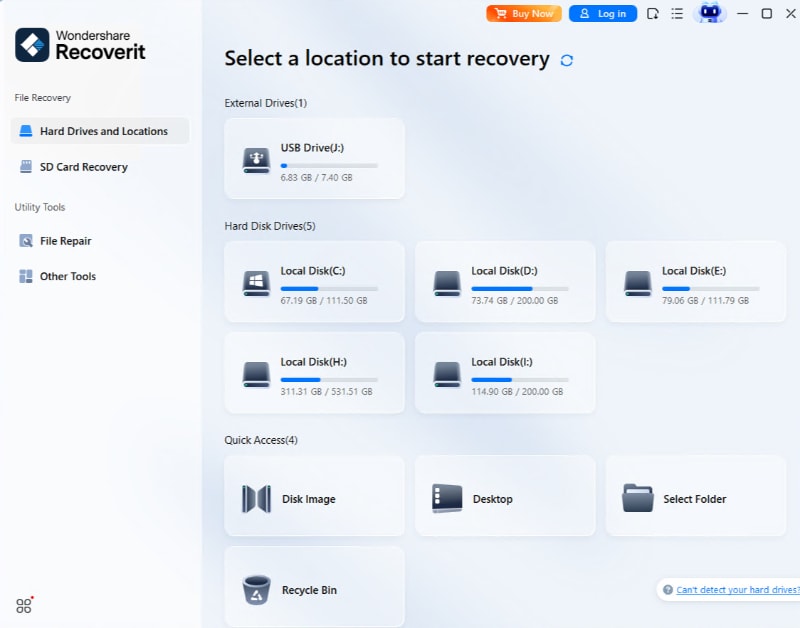
- Scan the card: Recoverit scans the SD card for lost or deleted files. You can stop the scan early if you have already found the files. Results are displayed by file type or file path.

- Preview and select files: Select the files you want to recover and preview them. Check each file's condition, as some may not be recoverable in good shape.
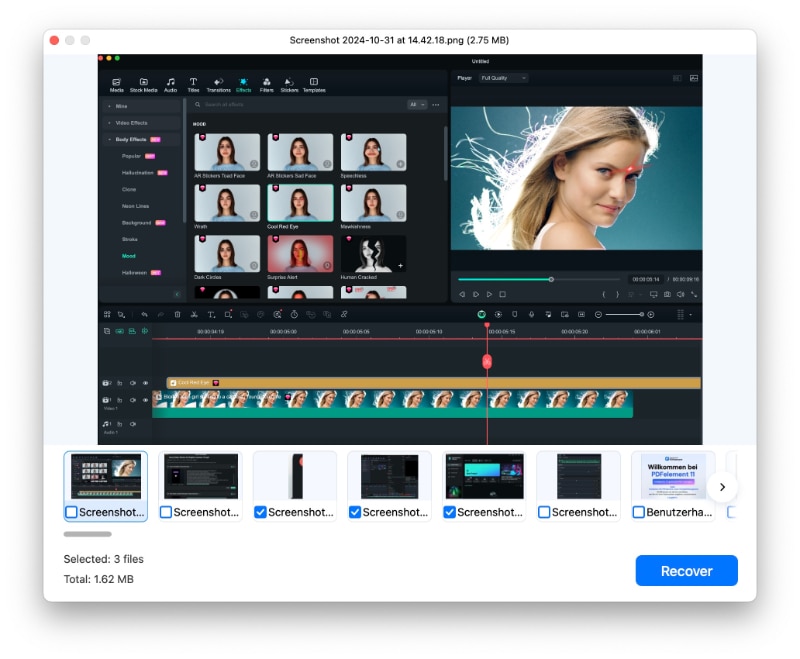
- Click Recover: Select all the files you need and tap the Recover button. Wait for the software to restore the deleted SD card files to your system in original quality.
Part 5. Tips for Deleting SD Card Files on Mac
Whether you are about to delete SD card files or trying to recover them somehow, there are some things that you should keep in mind. Data and files stored on the devices are important, and that’s why you can’t risk being careless with them. Take a look at these tips for deleting the SD card files, and the next time you can avoid deleting important files.
Key Tips for Safe SD Card File Management on Mac
- Keep the connection stable. Make sure the card is connected properly during deletion. An interrupted process can force you to start over.
- Choose the right file format. Be precise about the format you select for the card (e.g.
exFATfor cameras,MS-DOS (FAT)for older devices). - Use a reliable SD card. A low-quality card can leave you stuck in a formatting loop with no effective results.
- Pick recovery software wisely. Don't grab the first tool you find online — review the software and choose smartly.
- Back up before formatting. Create a backup of the files stored on the card, then format it to keep the card in optimal condition.
- Prevention beats cure. Stay careful from the start so you never delete the only copy of your data files.
Conclusion
Now you know several methods to delete SD card files. And if somehow you accidentally deleted some important files, then you’ll still have an option to recover them. Recoverit Mac data recovery can help you restore deleted files from an SD card or any other storage device. Thus, whenever you lost a file, you will have a tool that can effectively restore the file in original quality. Recommend Recoverit to your friends and family so they will also have access to Recoverit in case of emergencies.
People Also Ask
-
How do I delete files from my SD card on a Mac?
Insert the SD card into your Mac using a card reader, open Finder, locate the card under Devices, and click it. Select the files you want to delete and drag them to the Trash, or right-click and choose Move to Trash. -
Can I recover deleted SD card files on a Mac?
Yes. Use dedicated data recovery software such as Wondershare Recoverit for Mac, which scans the SD card for deleted files and restores them. Stop using the card immediately to prevent new data from overwriting the deleted files. -
What should I do if my SD card is not showing up after deletion?
Try reconnecting the card, using a different card reader, or checking whether the card is formatted correctly. If the problem persists, use Disk Utility > First Aid to repair the card, or run data recovery software to recover the data and resolve the issue. -
Can I permanently erase files from my SD card on a Mac?
Yes. Use the Secure Empty Trash option (available in macOS versions before macOS 10.11), or open Disk Utility > Erase and apply Security Options such as zero-out data, 7-Pass, or 35-Pass erasing. This ensures files cannot be recovered by recovery tools.
SD Card Troubleshooting
- Recover Data from SD Card
- 5 Best SD Card Recovery Software
- Restore CF Card Data
- Free SanDisk Data Recovery Software
- Recover Photos from Micro SD Card
- Easily Recover Corrupted SD Card Data
- Unformat SD Card and Recover Data
- Card Repair Solutions


Recoverit Editorial Team
chief Editor