

 TL;DR:
To effectively hide SD card files, use OS-specific visibility toggles like Windows Properties or Android .nomedia files to remove items from casual view, but you must apply full-volume encryption like BitLocker or FileVault to genuinely protect sensitive data against unauthorized readers.
● Applying the Windows hidden attribute or macOS chflags hidden command only masks files in default desktop interfaces, whereas dropping an empty .nomedia file into an Android folder specifically forces gallery apps to skip indexing the media while leaving it visible in file managers.
● True security requires BitLocker (restricted to Windows 10 and 11 Pro/Enterprise) or macOS FileVault, which rewrite sectors to ciphertext and render the data permanently unrecoverable if you fail to save the recovery key to your cloud account.
● Recovery tools like Wondershare Recoverit inherently bypass basic hidden file attributes by scanning the SD card's FAT32 or exFAT metadata, but they cannot restore data from locked or reformatted encrypted volumes without the original decryption password.
Ask AI for a summary
 ChatGPT
 Perplexity
 Gemini
 Claude
 Grok
Grok
Quick answer: To hide files on an SD card, pick the method that matches your privacy goal. Use the Windows hidden attribute (Right-click → Properties → Hidden) for Windows-only concealment. Drop a .nomedia file into a folder on Android to suppress the gallery. Use macOS Terminal chflags hidden for cross-platform concealment that survives camera-to-PC transfers. Encrypt the entire volume with BitLocker or FileVault for genuinely sensitive data. To show hidden files on the same SD card later, reverse the method you used (Folder Options → Show hidden items, delete the .nomedia, run chflags nohidden, decrypt the volume). Stop using the card and run Wondershare Recoverit first if you hid the wrong file — the recovery tool bypasses the hidden attribute and scans the SD card's pre-hidden sectors.
Hiding on SD cards is a different puzzle than hiding on the C:\ drive. SD cards host FAT32 / exFAT volumes that do not implement the NTFS access-control lists many Windows users assume. Across the four hiding methods covered here, only encryption (BitLocker or FileVault) actually protects against someone who can plug the SD card into a different reader. The other three methods simply make files invisible from a casual view of File Explorer or the gallery. Recoverit's companion guide to showing hidden files on an SD card addresses the reverse operation; this article pairs with it as the forward operation.
In This Article
Part 1. Pick the Right Hiding Method by Privacy Goal
Each method has a different threat model. Pick the wrong one and you have hidden nothing useful.
Privacy Goal Decision Matrix
| Goal | Best method | Why |
| Keep family / colleagues from seeing personal photos when they plug the card into their tablet | Method 2 Android .nomedia | Gallery stops showing the folder; card mounts as portable storage |
| Hide a business folder from your own File Explorer pane | Method 1 Windows hidden attribute | Toggle "Hidden" in Properties, file disappears from default views |
| Conceal files from both Windows and Android readers | Method 3 macOS chflags hidden | Survives Windows Explorer default view and macOS Finder default view |
| Encrypt sensitive data — medical, financial, business confidential | Method 4 BitLocker / FileVault | Only encryption makes the file truly irrecoverable if the card is lost |
| Suppress /Thumbs.db / Windows thumbnail cache | Method 1 Windows hidden attribute (use Folder Options to disable Thumbs.db) | Thumbs.db writes anyway; toggle "Always show icons, never thumbnails" |
| Keep kids' school tablet from seeing adult content | Method 2 .nomedia + Method 4 encryption | .nomedia removes from gallery; encryption enforces it |
What Each Method Actually Protects (and Does Not)
- Windows hidden attribute. Sets the
+Hflag in FAT32 / exFAT directory entries. File Explorer's default view hides the file; Show hidden items makes it visible in one click. Anyone with that knowledge recovers the file. Not encryption. - Android .nomedia. Drops an empty file into a folder. The Android media scanner skips any folder containing it. Anyone browsing the file system in the Files app or a USB connection can still see and open the files.
- macOS chflags hidden. Sets the
UF_HIDDENBSD flag. macOS Finder does not show the file in default view. Windows ignores the flag and shows the file normally. Same level of protection as the Windows hidden attribute. - BitLocker / FileVault. Actual encryption. The card's contents are unreadable without the unlock key. If you forget the password, the data is unrecoverable — back it up before encrypting.
Part 2. 4 Hiding Methods
Method 1. Windows Hidden Attribute (Right-click → Properties → Hidden)
The case: you have a folder on the SD card you do not want to delete but want to keep it from cluttering File Explorer views. This is the case most readers come in with.
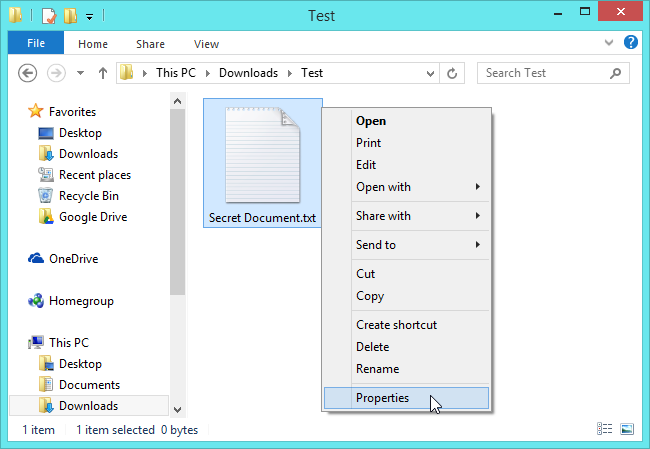
Step 1. Insert the SD card. Open File Explorer to the card's drive letter.
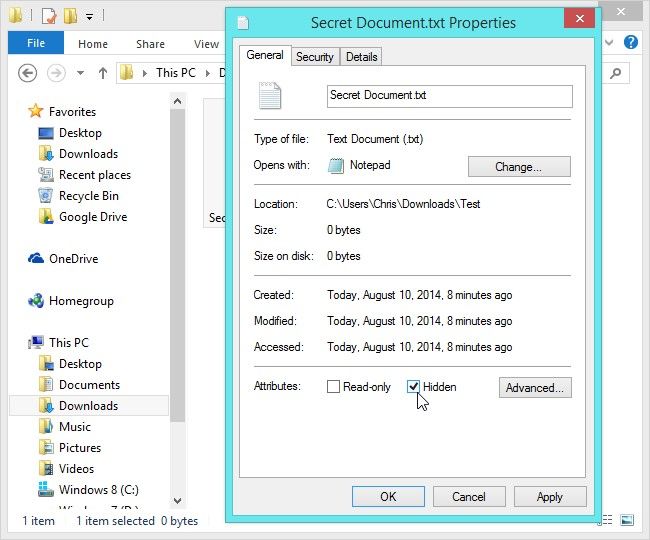
Step 2. Right-click the folder or file. Choose Properties. In the General tab, tick Hidden. Click Apply.
Step 3. Confirm. Windows now hides the file from default view.
Note on thumbnail cache: Windows createsThumbs.dbin any folder that has been viewed as thumbnails. To stop the cache file from reappearing after every folder opening, open Folder Options → View → Always show icons, never thumbnails. This applies immediately but does not remove existingThumbs.dbfiles.
Method 2. Android .nomedia File (Suppress Gallery)
The case: the SD card lives inside a phone or tablet and you want a folder of personal photos not to appear in the gallery. The gallery does not care about Windows hidden attributes or NTFS-style flags — it only cares about .nomedia.
Step 1. Open the phone's Files app. Navigate to the folder whose contents you want to hide from the gallery.
Step 2. Create a new empty file. Name it exactly .nomedia (with the leading period, no extension afterwards).

Step 3. Move the file into the folder you want to suppress. Refresh the gallery. Photos and videos in that folder disappear from the gallery view.
Android's media scanner reads .nomedia at the start of every scan; the folder's contents are skipped. The folder itself is still visible in the Files app — only the gallery, music player, and other media-aware apps hide the contents. Lifehacker's 2011 .nomedia tutorial and the Android Stack Exchange Q&A 92147 confirm the same behaviour across stock Android, One UI, HyperOS, and Pixel.
Reddit's r/AndroidQuestions thread 17624rc notes a closely related trick — naming a folder with a leading period (e.g., .private_photos) makes Android skip the entire folder from indexing.
Method 3. macOS Terminal chflags hidden (Cross-platform)
The case: you work on a Mac but the SD card moves between Mac and Windows / Android. Use macOS's BSD flag system; both Windows and Android default-explorer views will still see the file (the BSD flag is not portable), but you can pair it with a leading period in the filename to add a second layer of invisibility.
Step 1. Insert the SD card. Open Terminal from Applications → Utilities → Terminal.

Step 2. Switch to the SD card. If the SD is on /Volumes/SANDISK:
cd /Volumes/SANDISK
chflags hidden Private_Folder/
ls -lO Private_Folder/

Step 3. Confirm. macOS Finder hides the folder from default view. Windows Explorer still shows it (the BSD flag is not part of NTFS). To reverse:
chflags nohidden Private_Folder/
Method 4. BitLocker / FileVault Full-Volume Encryption
The case: the data on the card is sensitive enough that, if the card is lost or stolen, the data must be unreadable. Hide-by-attribute failures all share the same risk — anyone with technical knowledge can bypass them in seconds. Encryption is the only effective protection.
BitLocker on Windows. Available on Windows 11 Pro / Enterprise and Windows 10 Pro. Open Control Panel → BitLocker Drive Encryption → select the SD card → Turn on BitLocker. BitLocker formats the SD card to NTFS (BitLocker requirement) and prompts for a password.
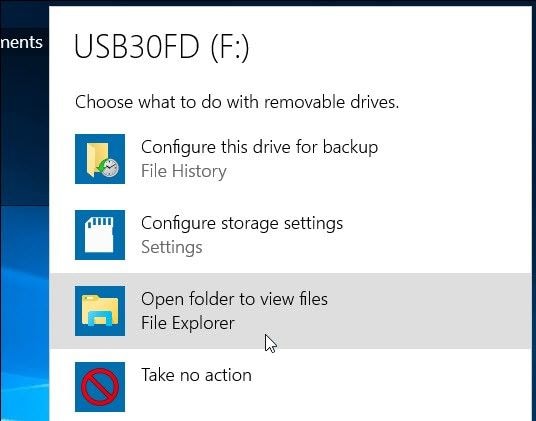
Step-by-step Windows encrypt:
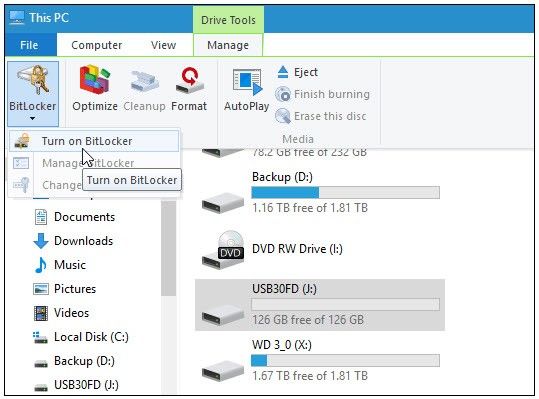
Choose Use a password to unlock the drive. Tick Encrypt entire drive. Click Start encrypting.

BitLocker encrypts every sector. Without the password, the card's contents appear as random bytes to any reader, including Windows itself.

FileVault on macOS. Available on macOS Sonoma / Sequoia. Open System Settings → Privacy & Security → FileVault → Turn On. macOS prompts for a recovery key. The card is encrypted with XTS-AES-128.
Cross-device portability: BitLocker is Windows-only and FileVault is macOS-only. If the card needs to move between Windows and macOS, use a third-party encrypted container like VeraCrypt — it writes a cross-platform AES volume that Windows, macOS, and Linux can all mount.
Part 3. How to Show Hidden Files on the Same SD Card
The reverse operation. Each hiding method has its specific reveal.
Windows: Folder Options → View → Show Hidden Items

Step 1. Open File Explorer → View tab → tick Hidden items. The previously hidden files appear with a slightly faded icon to indicate they are still flagged.
Step 2. To permanently un-hide, right-click each file → Properties → untick Hidden → Apply.
Common trap: When Hidden items is checked but the file still does not appear, the file's primary attribute may also include System. Windows hides system files regardless. To reveal those too, in Folder Options tick View → Show hidden files, folders, and drives AND uncheck Hide protected operating system files.
Android: Delete .nomedia File and Refresh Gallery
Step 1. Files app → navigate to the suppressed folder.
Step 2. Delete the .nomedia file. (Long-press → Delete.)
Step 3. Open the gallery → menu → Refresh or Rebuild library. The folder's contents return.
Mac: Cmd+Shift+Period (.) Toggle
In Finder, press Cmd + Shift + . to toggle hidden-file visibility at the folder level. Hidden files appear with a slightly dimmed icon. To selectively reveal a file, run chflags nohidden Private_Folder/ in Terminal.
Part 4. When Hidden Files Get Lost
Hiding is reversible. Losing is harder. Two scenarios where recovery matters:
You Hid the Wrong Folder — Recovery Path
If you marked the wrong folder as hidden, the file is still on the card — Windows just stopped showing it. As long as you have not overwritten that folder's sectors with new data, the file's bytes are intact across any platform. Wondershare Recoverit ignores the hidden attribute and scans the card's directory + free clusters for the file's signature. Use the Show hidden items option in Folder Options first; if the file is recoverable there, no scan is needed. If not, Recoverit.
Encryption Lock-out: Forgot the BitLocker Password
BitLocker and FileVault are designed to be unrecoverable without the recovery key. Microsoft and Apple do not store a copy of your password. If you forget the password:
- Check whether you saved the recovery key to your Microsoft Account (BitLocker) or iCloud (FileVault) when you set up encryption.
- If no backup, the data is gone. The card itself can be wiped and reformatted, but the data is unrecoverable without the key.
Workflow discipline: Always save the BitLocker / FileVault recovery key to the cloud account of the host system before encrypting an SD card. Recovery software cannot bypass encryption; they would just return random bytes.
Hidden Attribute Defeated by Recovery Software
Knowledge check for EDI readers: imagine Recoverit's scanning flow against the SD card's directory. Whatever the scanner writes back to the card does not depend on whether the file is hidden. The hidden attribute lives in the file-system metadata, not the file's sectors.
Step 1. Insert the SD card via a USB reader. Launch Recoverit and select the SD card letter under Hard Drives and Locations.
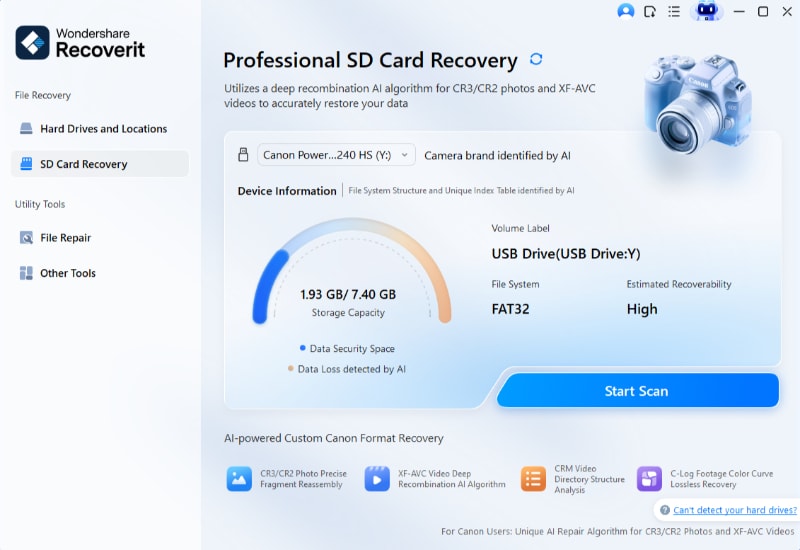
Step 2. Click Scan. Recoverit reads the card's directory — both visible and hidden entries — and the card's free clusters where deleted and pre-attribute-toggled files may still sit.
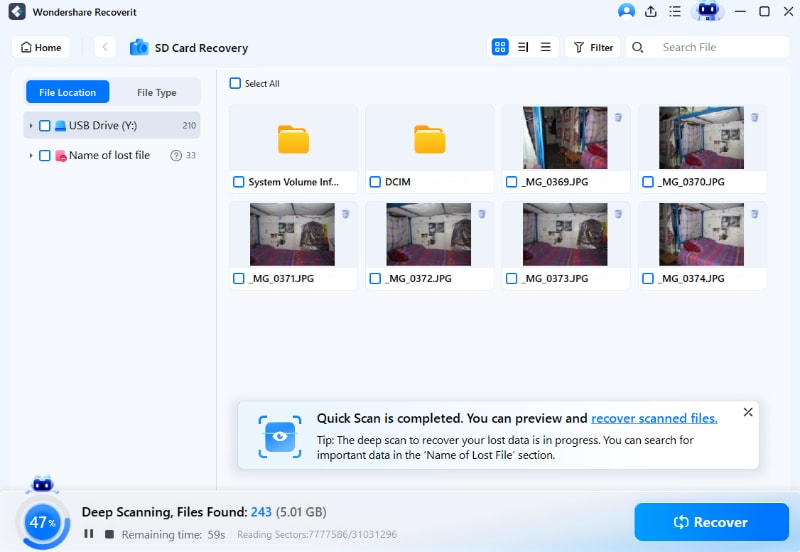
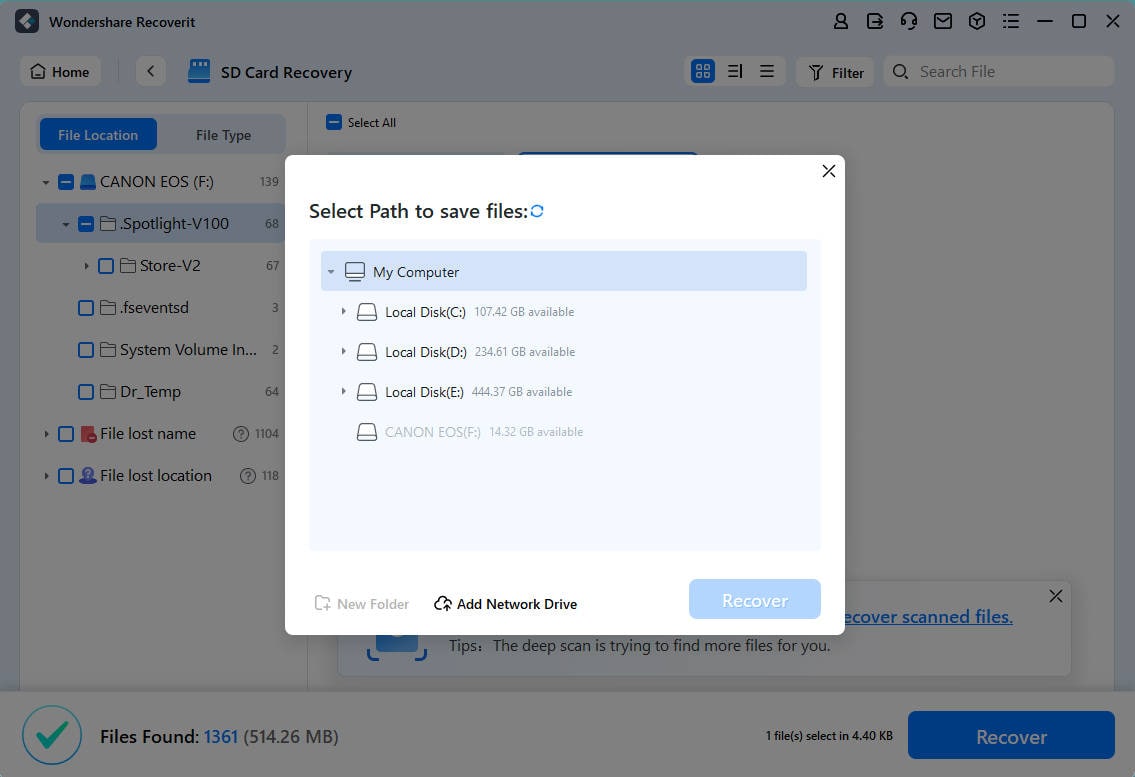
Step 3. Preview recovered files, select the ones you need, click Recover, and save them to a separate host drive, not the SD card.
Try Wondershare Recoverit to Perform Data Recovery
 Security Verified. Over 7,302,189 people have downloaded it.
If you encrypted the SD card with BitLocker, Recoverit will see the volume as a BitLocker To Go encrypted volume. Decrypt the volume in Windows first using the password — then run Recoverit on the decrypted card. For unauthenticated encrypted volumes (or if you do not have the password and the volume has been wiped and reformatted), the data is unrecoverable.
Part 5. Real-World Privacy Scenarios
- Shared family tablet. Use Method 2
.nomediaon the SD card's private folders. The kids see only the kid-friendly gallery without changing any other device behaviour. - Photographer needs to hand a client a card with project previews. Use Method 1 Windows hidden attribute. The client still gets the card with everything on it; the photographer's personal folder is invisible by default.
- Traveling with sensitive business documents. Use Method 4 BitLocker. Anyone grabbing the card cannot read the contents even if they have a card reader.
- Selling a used camera. Use Method 4 BitLocker before Wiping SD card (or use the Diskpart clean all entire-card wipe). NIST 800-88 Purge requires both encryption AND multi-pass overwrite.
- Parents' Netflix-style censorship on a kid's tablet. Combine Method 2
.nomediawith the tablet's Restricted profiles or the Google Family Link app's media filter.
Conclusion
To hide files on an SD card, match the method to your privacy goal. Windows hidden attribute for File Explorer tidiness, Android .nomedia for the gallery, macOS chflags for cross-platform visibility tweaks, BitLocker / FileVault for actual security. If you hid the wrong folder, run Wondershare Recoverit — it ignores the hidden attribute and recovers the file from the underlying sectors. Recovery software cannot bypass encryption; always save your BitLocker / FileVault recovery key before encrypting.
FAQ
-
Does the Windows hidden attribute work on FAT32 / exFAT SD cards?
Yes. The hidden attribute is part of the FAT directory entry, not NTFS-specific. Setting Hidden on a FAT32 / exFAT folder removes it from File Explorer's default view. Untick the Hidden attribute to reverse; or use Folder Options → View → Show hidden items with the toggle. -
How do I hide photos on a kids' tablet so they don't appear in the gallery?
Drop an empty file named .nomedia into the folder containing the photos. The Android media scanner skips any folder containing .nomedia, so the photos do not show in the gallery. To reverse, delete .nomedia and refresh the gallery. -
Is hiding a file the same as encrypting it?
No. Hiding only affects what an explorer shows. Anyone with basic technical knowledge can un-hide it in seconds. Encryption rewrites every sector to cipher-text; without the password, the data is random bytes. If the data is sensitive, encrypt; if it is just clutter, hide. -
Can BitLocker encrypt an SD card on Windows 11 Home?
No. BitLocker is restricted to Windows 11 Pro / Enterprise (and Windows 10 Pro / Enterprise). On Windows 11 Home, use VeraCrypt, Rohos Mini, or another third-party encryption tool. -
How do I show hidden files on an SD card in Windows 11?
Open File Explorer → View → check Hidden items. To also reveal system files, Folder Options → View → Show hidden files, folders, and drives, and uncheck Hide protected operating system files. -
What happens if I encrypt the card with BitLocker and forget the password?
The data is unrecoverable without the recovery key. Always save the BitLocker recovery key to your Microsoft Account before encrypting. If you saved it, sign in to account.microsoft.com/devices/recoverykey. If you did not, the card can still be wiped and reused, but the encrypted data is gone. -
Will recovery software see hidden files on an SD card?
Yes. Wondershare Recoverit reads the SD card's directory entries (visible and hidden) and the card's free clusters. The hidden attribute lives in the directory entry, not the file's sectors, so recovery software can locate hidden files during the scan. -
Does macOS's chflags hidden attribute carry over to Windows?
No. The BSD hidden flag is part of HFS+ / APFS metadata, not FAT32 / exFAT. When Windows reads the SD card, it shows the file normally. To hide a file cross-platform, name it with a leading period (e.g., .private) — both macOS and most Android gallery apps treat leading-period folders as invisible.


