USB Drive Data Recovery
- Recovers deleted or lost files USB Flash drive effectively, safely and completely.
- Supports data recovery from 500+ data loss scenarios, including computer crash, partition loss, accidental human error, etc.
- Supports 1000+ file formats recovery with a high success rate and without any quality loss.

Fixed! Problem Ejecting USB Mass Storage Device

Jul 21, 2026 • Filed to: USB Recovery • Proven solutions
 TL;DR:
To fix the "Problem Ejecting USB Mass Storage Device" error and prevent data corruption, you must safely sever the connection between the USB drive and any active Windows applications, background processes, or security software currently using it.
● If closing visible files or using the standard Taskbar ejection fails, force the ejection by uninstalling the drive via Device Manager (ensuring you do not delete driver software) or by right-clicking the drive in Windows Disk Management.
● Terminate hidden system locks by ending specific USB-related tasks in Task Manager, temporarily disabling computer security software, or logging out of your Windows account to automatically close hanging user processes.
● As a final system-level fix, you can format the drive from NTFS to FAT32 with the Quick Format option disabled, but you must first extract existing files using a tool like Recoverit Data Recovery if previous forceful removals already corrupted your data.
Ask AI for a summary
 ChatGPT
 Perplexity
 Gemini
 Claude
 Grok
Grok
USB flash drives have aided the storage and transfer of data since they were first introduced. Today it is hard to imagine life without them as they have become indispensable. As effective as USB drives have become, we often encounter difficulties with their use. The error "Problem ejecting USB mass storage device" rare their heads from time to time. Does this mean that you should stop using USB drives altogether? You don't have to stop its use for any reason. There are ways to address the issue and we will show you how in this article.
| Official Checkpoint | Why It Matters | Official Source |
| Safely remove hardware | Windows provides a Safely Remove Hardware and Eject Media path to stop removable drives before unplugging them. | Microsoft Support: Safely remove hardware in Windows |
| Device is currently in use | The eject error usually means a program or Windows process still has a file handle open on the USB device. | Microsoft Support: removable device handling |
| Quick removal policy | Windows external storage policy can affect whether write caching is enabled and whether safe removal is required for best data protection. | Microsoft Learn: default removal policy for external storage |
| Find open file handles | Process Explorer and Handle from Microsoft Sysinternals can help identify programs holding files open on a removable drive. | Microsoft Learn: Process Explorer |
| Data recovery before formatting | Formatting can erase files and make recovery harder, so recover important data before formatting a damaged or inaccessible USB drive. | Recoverit USB data recovery |
Part 1: Overview of the Error
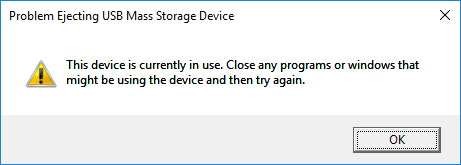
The Problem Ejecting USB Mass Storage Device message usually appears when Windows cannot safely stop a removable drive because something is still using it. The open item may be obvious, such as a Word document, video, ZIP file, File Explorer window, or copy progress dialog. It may also be hidden, such as antivirus scanning, Windows indexing, backup software, cloud sync, photo viewer, media player, Command Prompt, or another background process.
| Error Message | What It Means | Best First Fix |
| This device is currently in use | A file or program is still accessing the USB drive. | Close open files and apps, then eject again. |
| Windows can't stop Generic volume | Windows cannot stop the removable volume because a process has an active handle. | Find the process with Task Manager, Resource Monitor, or Process Explorer. |
| Device cannot be stopped now | The drive is still busy with reading, writing, syncing, scanning, or indexing. | Wait for activity to finish, then try again. |
Part 2: 12 Ways to Fix the Problem Ejecting USB Storage Device
| What May Be Using the USB Drive | How to Check | What to Do |
| Open document, photo, video, or archive | Check taskbar apps and File Explorer windows. | Save and close all files opened from the USB drive. |
| File Explorer | Look for windows showing the USB drive path. | Close all USB folder windows or restart Windows Explorer. |
| Copy, move, or download task | Check progress bars, browser downloads, or file transfer dialogs. | Wait until all transfers finish before ejecting. |
| Antivirus or backup scan | Check security software, backup software, or cloud sync status. | Pause the scan or wait for it to finish, then eject again. |
| Unknown background process | Use Resource Monitor or Microsoft Sysinternals Process Explorer to search the USB drive letter. | Close the related app safely instead of randomly ending system processes. |
Solution 1-5: Try Normal Safe Eject Methods First
Start with the safest fixes. These steps do not format the USB drive or change its file system.
- Close open files and folders: Save and close documents, photos, videos, installers, ZIP files, File Explorer windows, Command Prompt windows, and apps that opened files from the USB drive.
- Wait for file activity to finish: Make sure copy, move, download, sync, backup, antivirus scan, or indexing activity has stopped.
- Eject from the taskbar: Click Safely Remove Hardware and Eject Media, then choose the USB drive.
- Eject from This PC: Open This PC, right-click the USB drive, and choose Eject.
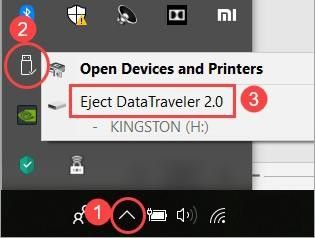
- Eject from Disk Management: Right-click Start, open Disk Management, locate the removable drive carefully, and use the available eject or offline option if Windows provides it.
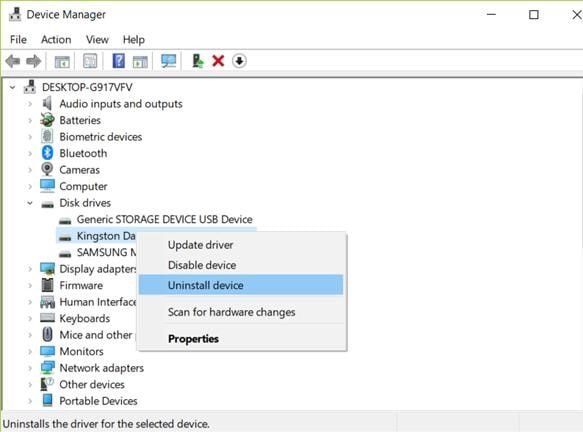
- Use Device Manager only when needed: If normal eject fails, open Device Manager, expand disk drives, identify the USB drive, and use device removal only when you are sure you selected the correct removable device.
Solution 6-11: Find and Close the Program Using the USB Drive
If normal eject still fails, identify what is holding the USB drive open.
- Check Task Manager: Press Ctrl + Shift + Esc, review open apps, and close programs that may be using the USB drive.
- Restart Windows Explorer: In Task Manager, select Windows Explorer and choose Restart if File Explorer is holding the USB path.
- Use Resource Monitor: Press Windows + R, type
resmon, open the CPU tab, and search the USB drive letter in Associated Handles if available. - Use Process Explorer for advanced checks: In Microsoft Sysinternals Process Explorer, use Find Handle or DLL and search the USB drive letter, such as
E:\. - Pause scans safely: If antivirus, backup, or sync software is actively scanning the drive, wait for it to finish or pause it temporarily from its own interface.
- Sign out: If you cannot identify the process, sign out of Windows and sign back in to close user-level apps.
- Restart Windows: If the eject error persists, restart the computer and remove the USB drive only after Windows fully shuts down or after it restarts and the drive is no longer busy.
Solution 12: Format the USB Drive Only as a Last Resort
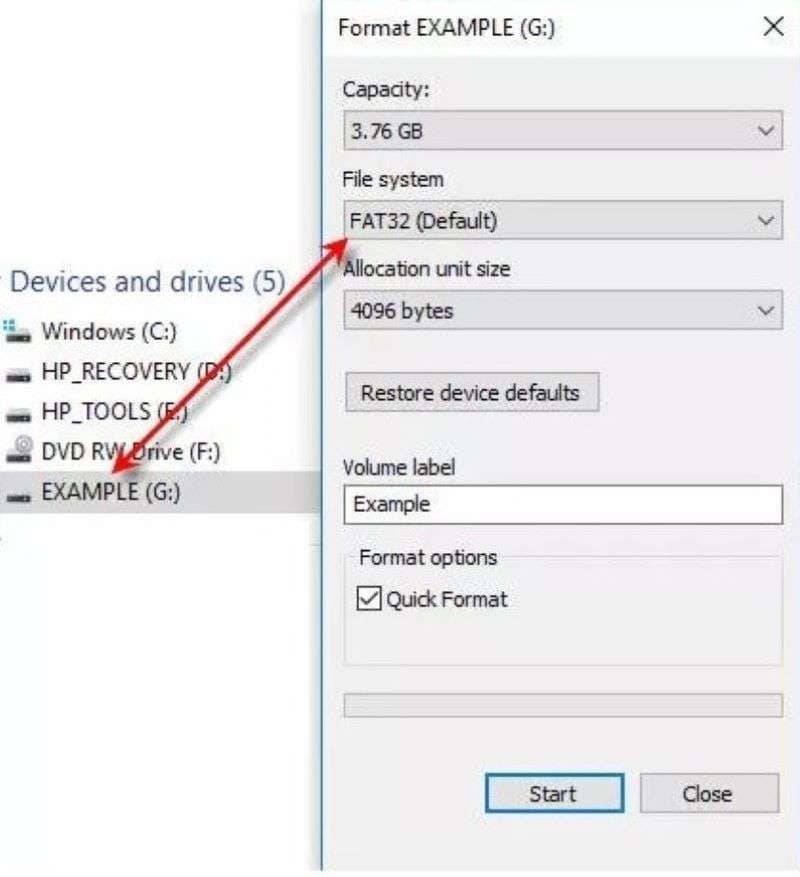
Formatting should not be the first fix for the eject error. It erases the USB drive and should be used only when the drive is corrupted, inaccessible, repeatedly asks to be formatted, or has file system errors that cannot be repaired after files are backed up or recovered.
| File System | Best Use | Limit |
| FAT32 | Best for broad compatibility with older devices, cameras, TVs, and small files. | Cannot store individual files larger than 4GB. |
| exFAT | Good for large USB drives used across Windows and macOS. | May not work with some older devices. |
| NTFS | Good for Windows-focused drives, permissions, and large files. | Some non-Windows devices may have limited write support. |
- Recover or back up important files first.
- Open This PC.
- Right-click the USB drive and choose Format.
- Select the file system that fits your device use case.
- Start the format only after confirming that the correct USB drive is selected.
As can be seen from this article, there are so many ways to fix the problem ejecting USB mass storage device error. All the methods and steps listed are effective but you can stick to anyone that works well for you.
Part 3: Recover Data from a Damaged or Improperly Removed USB Flash Drive
If you unplugged the USB drive without safely ejecting it, or the USB drive becomes corrupted, inaccessible, empty, RAW, or asks to be formatted, recover important files before trying format or repair operations.
| USB Data Loss Situation | Recommended Action |
| Files disappeared after forced removal | Stop using the USB drive and scan it with Recoverit. |
| USB drive asks to be formatted | Do not format first. Recover files to another drive. |
| USB drive shows RAW or inaccessible | Recover data before attempting file system repair. |
| Accidental deletion | Scan the USB drive before copying new files to it. |
| Corrupted documents, photos, or videos | Recover the files first, then repair damaged files from the recovered copy when needed. |
Recover Files from USB Drive with Recoverit
- Connect the USB drive: Plug the affected USB flash drive into the computer. Avoid opening, copying, or saving new files to it.
- Select the USB drive: Launch Recoverit and choose the USB drive as the scan location.
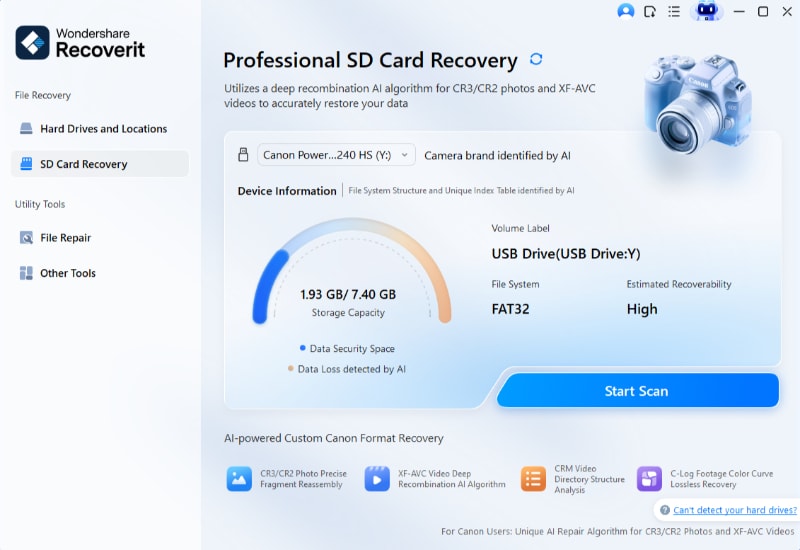
- Scan for lost files: Start scanning and filter by file type, file path, date, or size if the result list is large.
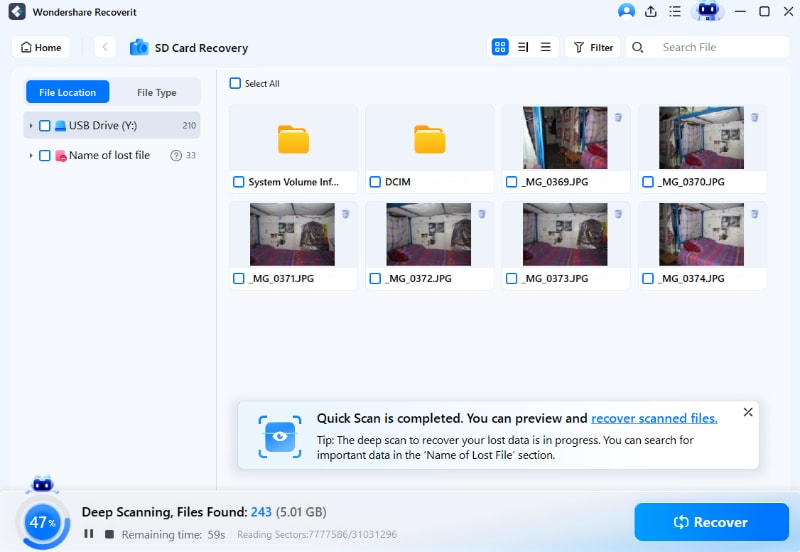
- Preview recoverable files: Preview documents, photos, videos, audio, archives, and other files when preview is available.

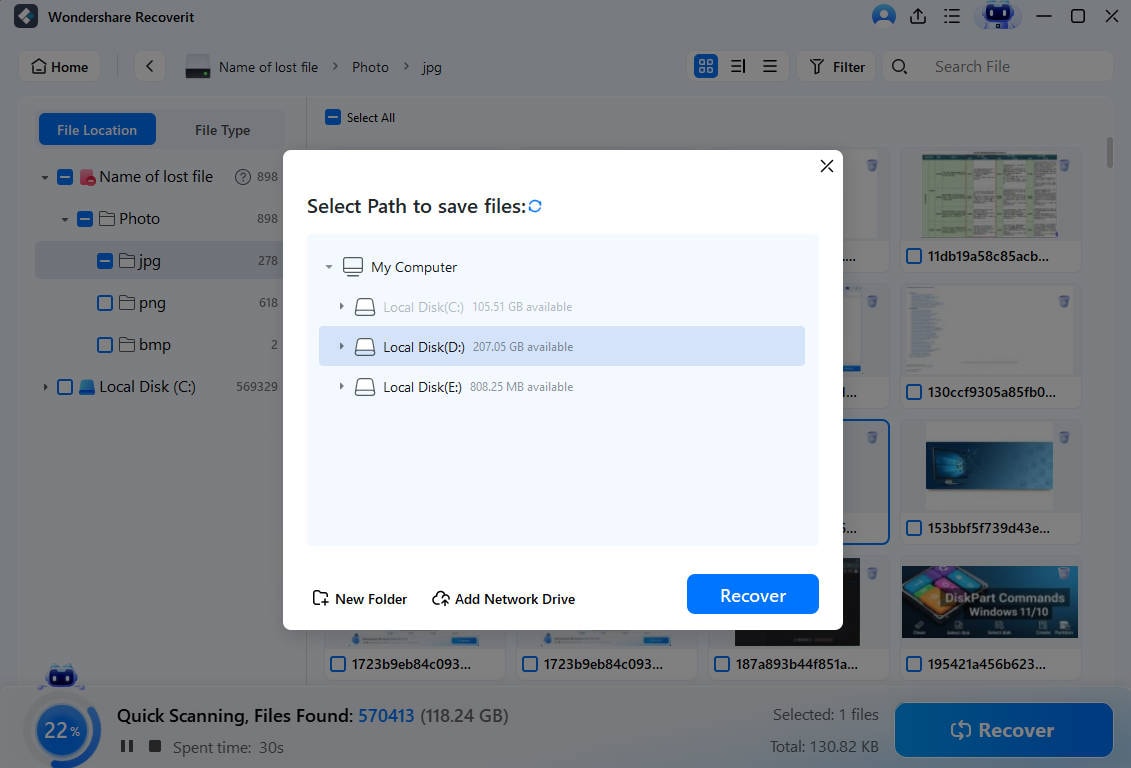
- Recover to another location: Save recovered files to your computer or another external drive, not back to the same damaged USB drive.
- Format only after recovery: After verifying recovered files, format the USB drive if it is still corrupted or unusable.
Video tutorial: How to Easily Recover Lost Files from Corrupted USB Drive?

| Prevention Tip | Why It Helps |
| Close USB files before ejecting | Open files are the most common reason Windows says the device is in use. |
| Wait for copy progress to finish | Removing a drive during write operations can corrupt files. |
| Keep a backup of important USB files | USB drives are portable and easy to corrupt, lose, or damage. |
| Avoid running apps directly from USB | Portable apps can keep hidden handles open on the drive. |
| Check removal policy before changing settings | Quick removal and better performance policies affect write caching behavior. |
| Use reliable USB ports and cables | Unstable connections can cause file system errors and failed eject attempts. |
People Also Ask
-
Why does Windows say Problem Ejecting USB Mass Storage Device?
Windows shows this message when a file, folder, app, scan, sync task, backup process, or system handle is still using the USB drive. Close the related program or wait for drive activity to stop, then eject again. -
Can I unplug a USB drive if Windows says it is in use?
It is safer to wait, close open files, and eject again. Forced removal during write activity can corrupt files or the USB file system. If you must remove it, restart or shut down Windows first. -
How do I find what program is using my USB drive?
Check open apps and File Explorer first. If the process is hidden, use Task Manager, Resource Monitor, or Microsoft Sysinternals Process Explorer to search for the USB drive letter and close the related app safely. -
Should I format the USB drive to fix the eject error?
No, not as a first fix. Formatting erases the USB drive and does not directly solve a program holding the drive open. Format only after backing up or recovering files and only if the drive is corrupted or unusable. -
Can Recoverit recover files after unsafe USB removal?
Recoverit may help recover deleted, lost, or corrupted files from an accessible USB drive after unsafe removal, accidental deletion, RAW file system, or formatting. Stop using the USB drive and recover files to another location. -
What is the safest way to remove a USB drive from Windows?
Close files and apps on the USB drive, wait for transfer activity to stop, click Safely Remove Hardware and Eject Media, choose the device, and unplug it only after Windows says it is safe.
USB Solution
- Recover USB Drive
- USB recovery | top tools.
- USB recovery | formatted.
- Data recovery | flash drive.
- Data recovery | pen drive.
- Data recovery | memory stick.
- Recover Virus Infected USB.
- Format USB Drive
- Fix/Repair USB Drive
- Repair corrupted USB drive.
- USB not recognized? Fixed!
- Fix unknown USB device.
- Pendrive not detected.
- Know USB Drive


Sue Wayne
staff Editor