
Oct 22, 2026 • Filed to: USB Recovery • Proven solutions
The Core Problem: A "USB Composite Device" error (often marked by a yellow exclamation triangle in Device Manager with Code 10 or Code 43) means Windows cannot properly communicate with a multi-function USB device (like a keyboard with an integrated trackpad or a webcam with a built-in microphone).
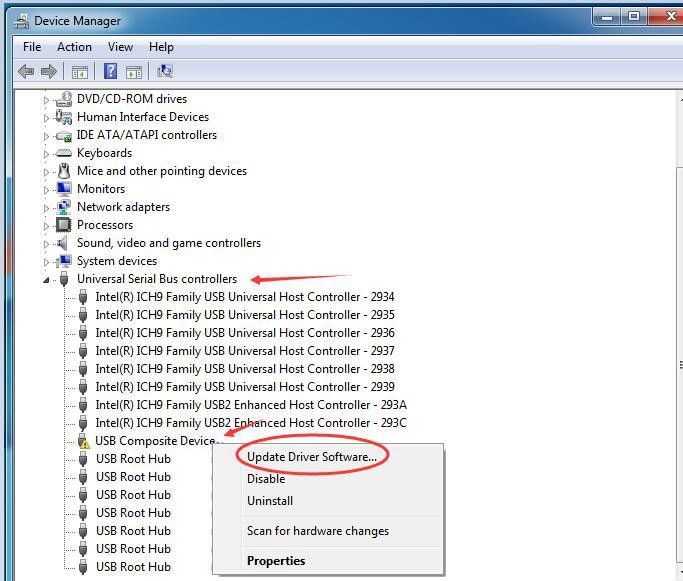
Fastest Automated Fix: Open the Run dialog (Win + R), type devmgmt.msc, and press Enter. Expand Universal Serial Bus controllers, right-click USB Composite Device, and select Update driver > Search automatically for drivers.
Fastest Hardware Power-Cycle Fix: Completely shut down your PC, disconnect all USB peripherals, remove the power cable for 30 seconds to drain residual motherboard capacitance, reconnect your components to a USB 3.0 or USB4 port, and boot back into Windows.
Advanced Fix for Corrupted Stacks: If updating fails, right-click the faulty device in Device Manager, choose Uninstall Device, disconnect the hardware, and restart your computer. Windows will automatically rewrite clean controller stack bindings upon reboot.
Your device driver plays an all-important role in Windows 10. It interacts with components and other peripheral units to ensure functionality. Some of these parts are the keyboard, network adapters, printers to name a few.
A situation may arise whereby you see a yellow prompt on your screen, telling you that your USB Composite Device Driver cannot work. While you may be lost with little or no idea about how to fix this problem, this article is essentially written to show you ways on how to fix a USB Composite device driver error.
Definition of this Error:
Windows download and install device drivers whenever they are available and without your active participation in the process. However, there are situations where you may need to install an update like when one of your hardware is not recognized or suddenly stops working.
To fix this problem, a new operating system is required. Updating the composite driver in your system will generally resolve this issue. In this article, you will learn how to fix this problem and make your composite driver functional again.
Diagnostic Matrix: USB Composite Device Failures & Symptoms
To quickly resolve your connection bottlenecks, match your system's current hardware state to the diagnostic chart below:
| Device Manager Status | Primary Underlying Cause | Hardware System Symptom | Targeted Solution Vector |
| Yellow Triangle (Code 10) | Outdated, conflicting, or missing structural configuration files (usb.inf). | Peripheral device fails to start; inputs are completely ignored by the OS. | Force manual path installation pointing to native .inf files. |
| Unknown USB Device (Code 43) | Motherboard electrical glitches; corrupted USB controller registry keys. | Windows displays a "USB device not recognized" popup notification. | Perform a full motherboard power-drain cycle or clear registry filters. |
| Driver Error (Code 28) | The missing proprietary configuration setup files were not loaded by Windows Update. | The device functions basic features but fails advanced multi-channel tasks. | Run automated optimization utilities or download local vendor packages. |
| Frequent Disconnections | Power management throttling active on the root hub controller ports. | Multi-function hubs randomly shut off under heavy processing loads. | Disable selective suspend rules within system power management. |
Troubleshoot: How to Fix USB Composite Device Driver Error
There are quite a few ways to resolve this problem but we will show you three beneficial solutions to fix the problem.
Solution 1- Update USB Composite Device Driver via Device Manager
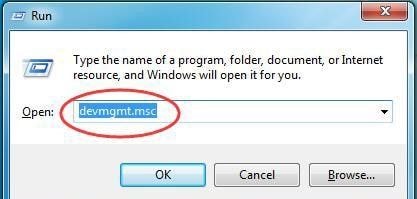
- Press the Windows key on your keyboard and tap R to reveal the Run box.
- Type in this code "devmgmt.msc" in the Run box and long tap Enter to display Device Manager.
- Click the Universal Serial Controllers and then click Composite device to update software.
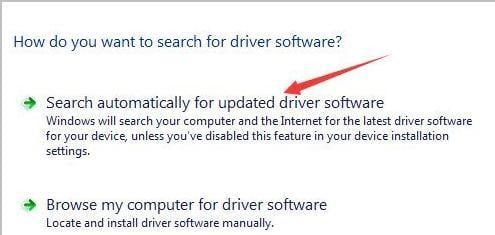
- Click search to update driver software automatically.
- While you wait Windows will detect the update. Just follow the instructions to install the update.
If this solution does not work for you, use the next two solutions. Also, to see more information about updating USB drive: USB 3.0 Driver Update Easily for Windows 10, 7 & 8
Solution 2 – Update Your USB Device Driver Manually
If your search for new driver updates is unsuccessful but you are certain that there is a new software version you will have to download it manually from the manufacturer's support website. If there are laid down instructions, please follow them accordingly to manually install the update. In the absence of instructions, you can follow this USB composite device driver update process on how to install USB composite device driver. First, you need to have a .exe or .zip file with your driver. Double click .exe self-extracting package or use our helpful tips to extract the content of the compressed file. After you are done with it, take these steps.
- Click "Start" button.
- Search for the Device Manager and click the top result you find to open.
- Expand the hardware you wish to update.
- Right-click on the device and select the "Update Driver" category.
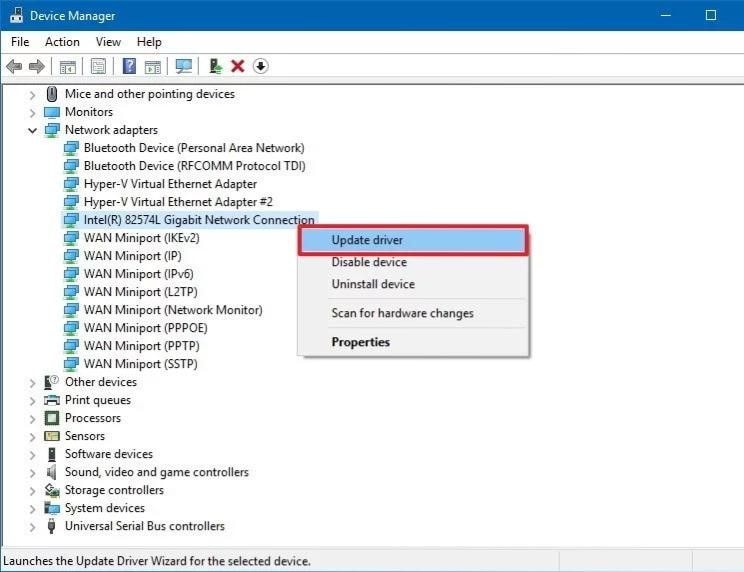
- Click on the Browse computer option for new driver software.
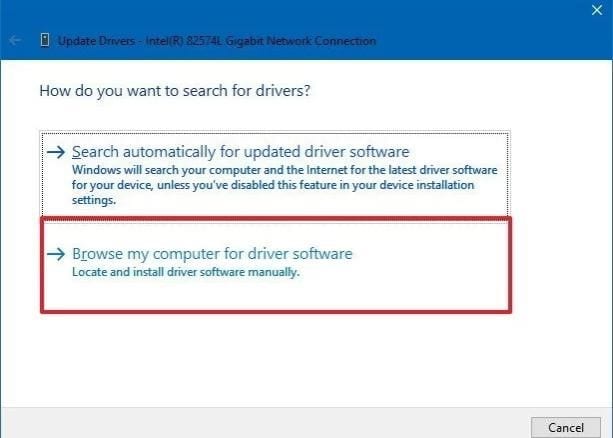
- Select the Browse button.
- Select the main folder with content you extracted before.
- Click the OK button.
- Check on the "Include Sub-folders to let Wizard I the correct .inf file with instructions to update the driver.
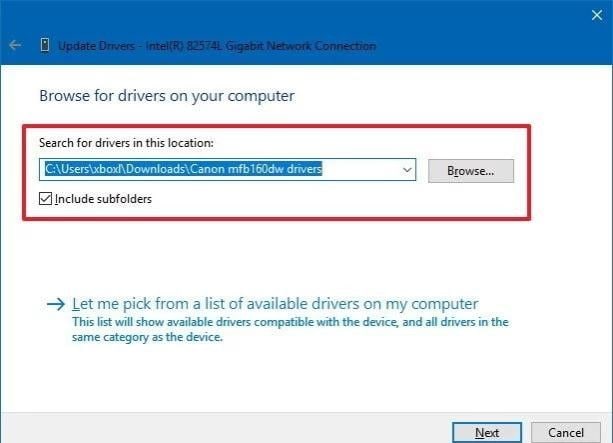
- Click the Next button.
Once you complete these listed steps a new driver version will be installed on your PC. Issues will be resolved, new functions will be introduced including more support for your Windows. This method works well for old hardware devices.
If manual driver installation does not clear the yellow exclamation error mark, the issue is likely caused by Windows turning off the controller port to save power. While still inside the Device Manager, expand the Universal Serial Bus controllers section, right-click your USB Root Hub, and open its Properties. Navigate to the Power Management tab and uncheck the box labeled "Allow the computer to turn off this device to save power." Click OK. If you are an advanced user dealing with a persistent Code 10 error, navigate to the system registry path:
HKLM\System\CurrentControlSet\Control\Class\{36FC9E60-C465-11CF-8056-444553540000}Look for any values named UpperFilters or LowerFilters in the right-hand panel. If found, delete them and restart your system to force Windows to rebuild clean peripheral software paths.
Solution 3 – Update USB Composite Device Driver with tools
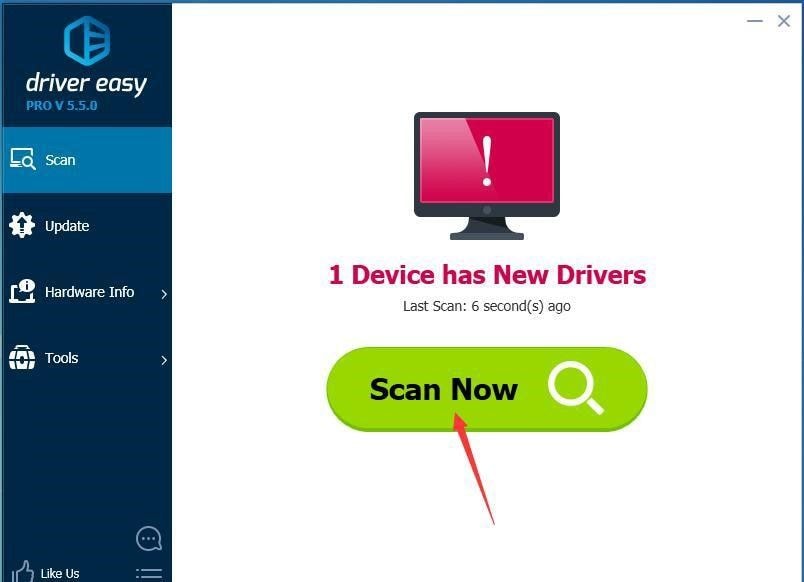
If you are unable to install a new driver with the device manager, you can do so using a USB composite device driver installer like Driver Easy. I recommend this program especially for users who are not too vast in the technicalities of computer usage and wonder how to install a USB composite device driver. With Driver Easy, you can automatically update the driver. You also avoid installing an incorrect driver by mistake. Here is how to do it.
- Install the Driver Easy program.
- Launch the program and click the "Scan" button to scan your PC to detect driver issues.
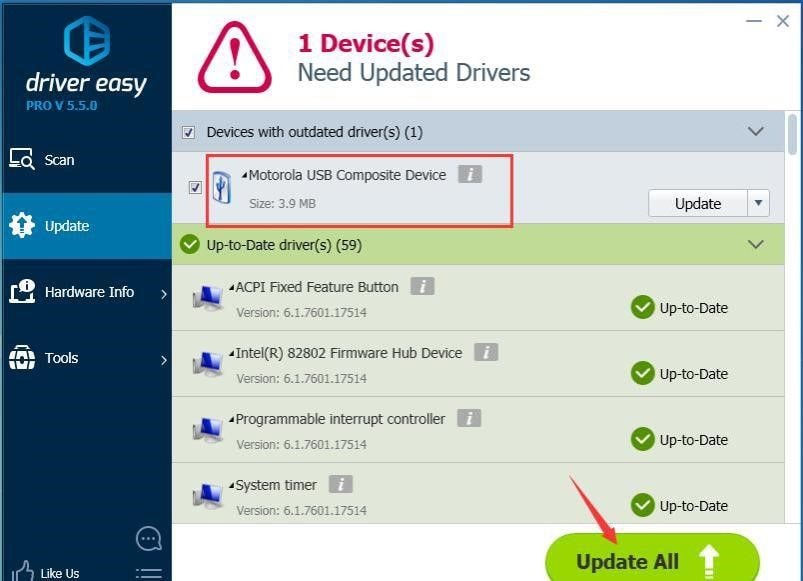
- Click the Update All to download new updates automatically and to install correct versions of all missing drivers or those that are already outdated. Driver Easy will prompt you to upgrade to be able to do this.
Your USB Composite Device Driver can work again if you adopt any of these solutions. This article will hopefully help you in fixing whatever errors your device driver may have. Just make sure you follow the steps carefully.
In some cases, you may find that your USB drive files are corrupted and fail to open, you should consider recovering your precious data with a data recovery software like Wondershare Recoverit.
Data Recovery Confidence Matrix: Restoring Corrupted USB Volumes
When a USB composite device or root hub controller crashes during an active file transfer pipeline, it can cause severe logical errors on your external storage nodes (such as flash drives and external hard drives). If your storage volumes read as RAW, inaccessible, or corrupted after a driver crash, use this operational checklist to restore your files safely:
| Target File System Corruption State | Recovery Probability | Root Failure Mechanism | Recommended Corrective Action |
| File System Shows as RAW | 99% (Excellent) | Driver crash interrupted the drive's master file table serialization loop. | Launch Wondershare Recoverit, select the raw volume path, and trigger a deep sector scan. |
| Accidental Drive Disconnection | 95% (High) | Cache data parsing was cut off before the system could finish writing files. | Avoid running Windows CHKDSK commands, as they can overwrite unlinked file shards. |
| Operating System Formatted Prompt | 90% (High) | The OS can no longer parse corrupted root headers, so it requests a fresh wipe. | Do NOT format the storage drive. Let Recoverit pull data segments from the raw sectors first. |
| Physical Controller Failure | Variable | Hardware components suffered electrical damage from a short circuit or power surge. | Check local port continuity; if the drive mounts at all, immediately extract data structures. |

Final Technical Checklist: Keeping Your USB Controller Ports Stable
- Turn Off Selective Suspend: Navigate to your PC's Advanced Power Options and change the "USB selective suspend setting" to Disabled to keep your ports from sleeping.
- Verify Port Physical Balance: Distribute power-heavy external accessories (like portable hard drives or webcams) across different port buses to avoid overloading a single hub controller.
- Update Motherboard Chipset Software: Regularly download the latest chipset installations from your motherboard manufacturer (such as Intel or AMD) to keep your USB root controllers stable.
- Run Core System Diagnostics: Open a Command Prompt as administrator and run the command msdt.exe -id DeviceDiagnostic to launch the automated Windows hardware troubleshooter.
- Keep a Local Recovery Plan Ready: Protect your external drives against structural data corruption by using Wondershare Recoverit to scan, verify, and preserve your critical files if a connection drops out.
USB Solution
- Recover USB Drive
- USB recovery | top tools.
- USB recovery | formatted.
- Data recovery | flash drive.
- Data recovery | pen drive.
- Data recovery | memory stick.
- Recover Virus Infected USB.
- Format USB Drive
- Fix/Repair USB Drive
- Repair corrupted USB drive.
- USB not recognized? Fixed!
- Fix unknown USB device.
- Pendrive not detected.
- Know USB Drive


Recoverit Editorial Team
chief Editor