 TL;DR:
To fix a phone that won't play videos, test a local camera clip against a streaming video to determine if the failure requires a network check, an app-specific update, or a different media player for an unsupported codec.
● On Android, resolve app freezes by clearing only the temporary cache, as selecting Clear storage or Clear data can permanently delete offline downloads and local app files.
● Treat an "unsupported format" error for saved MP4 or MOV files as a missing codec or incomplete download rather than immediate file corruption, and verify the untouched file on a different compatible player first.
● Use desktop recovery software like Wondershare Recoverit exclusively for lost videos on a readable, removable microSD card connected to a computer, as it cannot bypass encryption on inaccessible internal phone memory.
Ask AI for a summary
 ChatGPT
 Perplexity
 Gemini
 Claude
 Grok
If videos won't play on your phone, test a recent camera clip and one online video first. If the camera clip plays but streaming does not, focus on the connection, app, or browser. If only one saved clip fails, check whether it finished downloading and whether your player supports the format. These quick checks help you choose a fix without changing unrelated settings.
If a personal video has disappeared from an SD card, stop recording or downloading files to that card. If it is still present but cannot open, preserve an untouched copy before attempting repair. Neither situation should start with a factory reset.
In This Article
Part 1. Why Are Videos Not Playing on My Phone?
The best fix depends on whether every video fails, only online videos fail, or just one saved file refuses to open. Compare the symptoms before choosing a method.
| What you see | What to check first | Most relevant action |
| YouTube or social videos buffer, but camera videos play | Wi-Fi, mobile data, streaming service, or app | Try another connection and compare with a different streaming service |
| All videos fail in one app, but work elsewhere | App update or temporary app data | Restart or update the app; on Android, clear only its cache if needed |
| Videos fail in one mobile browser but play in an app | Browser version, site permissions, JavaScript, or stored site data | Update that browser and check its site settings before clearing any browsing data |
| One downloaded MP4 or MOV file cannot open | Codec compatibility, incomplete download, or corruption | Test a known-good copy or another compatible player |
| Gallery videos have disappeared from a microSD card | File loss, card disconnection, or storage damage | Stop writing to the card and investigate recovery |
| All apps struggle and the phone reports low storage | Limited free storage or broader system issue | Back up important files, free safe space, and check updates |
Check Whether the Problem Is Online or Offline
A camera video that plays normally is a useful reference: it shows the phone can decode at least one locally recorded video, even if an online service is failing.
Try a recently recorded clip in Photos or Gallery, then play a different video in your browser and the affected streaming app. If streaming fails only on Wi-Fi, retry over mobile data if your plan permits. If several devices fail on the same connection, investigate the network; if a single service fails on different connections, check that service's status before changing phone settings.
If only one app fails: Play the same clip or stream in a different app, when possible. An app-specific failure points toward an update, an account or service issue, or temporary app data rather than a corrupted recording. For YouTube-specific symptoms, use our YouTube playback troubleshooting guide.
If only a browser fails: Update that browser and test another website. On supported Samsung Galaxy devices, Samsung recommends checking JavaScript permissions in Samsung Internet or Chrome as well as connection and browser updates; see its official browser-video troubleshooting steps. Clear cached browser data only if the issue persists. Clearing cookies can sign you out, so keep your login details available.
Read the Error Message Before Changing Settings
Words such as unsupported format, can't play video, video unavailable, and loading do not prove the same cause. They provide clues for the next test.
An unsupported format message is a clue, not a diagnosis: the player may lack a compatible codec, or the file may be incomplete or damaged. Test an untouched copy with another compatible player before attempting conversion or repair. Endless buffering is more consistent with a network or streaming-service problem. If an SD card repeatedly disconnects, becomes unusually hot, or cannot be read reliably, stop attempts and seek specialist advice when the footage is important.
Part 2. Fix Videos Not Playing on an Android Phone
For Android phones, begin with reversible app and system checks. Menu names vary among Pixel, Samsung Galaxy, and other devices. If only a website fails but the corresponding app plays correctly, start with the browser checks in Part 1 before touching Gallery or phone storage. For more Android-only cases, see our Android video playback guide.
Fix 1. Restart Your Android Phone
A restart is appropriate when Gallery, YouTube, and other video apps suddenly freeze or refuse to load even though your files were playing earlier. It ends stalled processes without erasing personal videos.
Step 1. On a supported Pixel, press Power and Volume Up together to open the power menu; on other Android phones, use the manufacturer's power-button procedure.
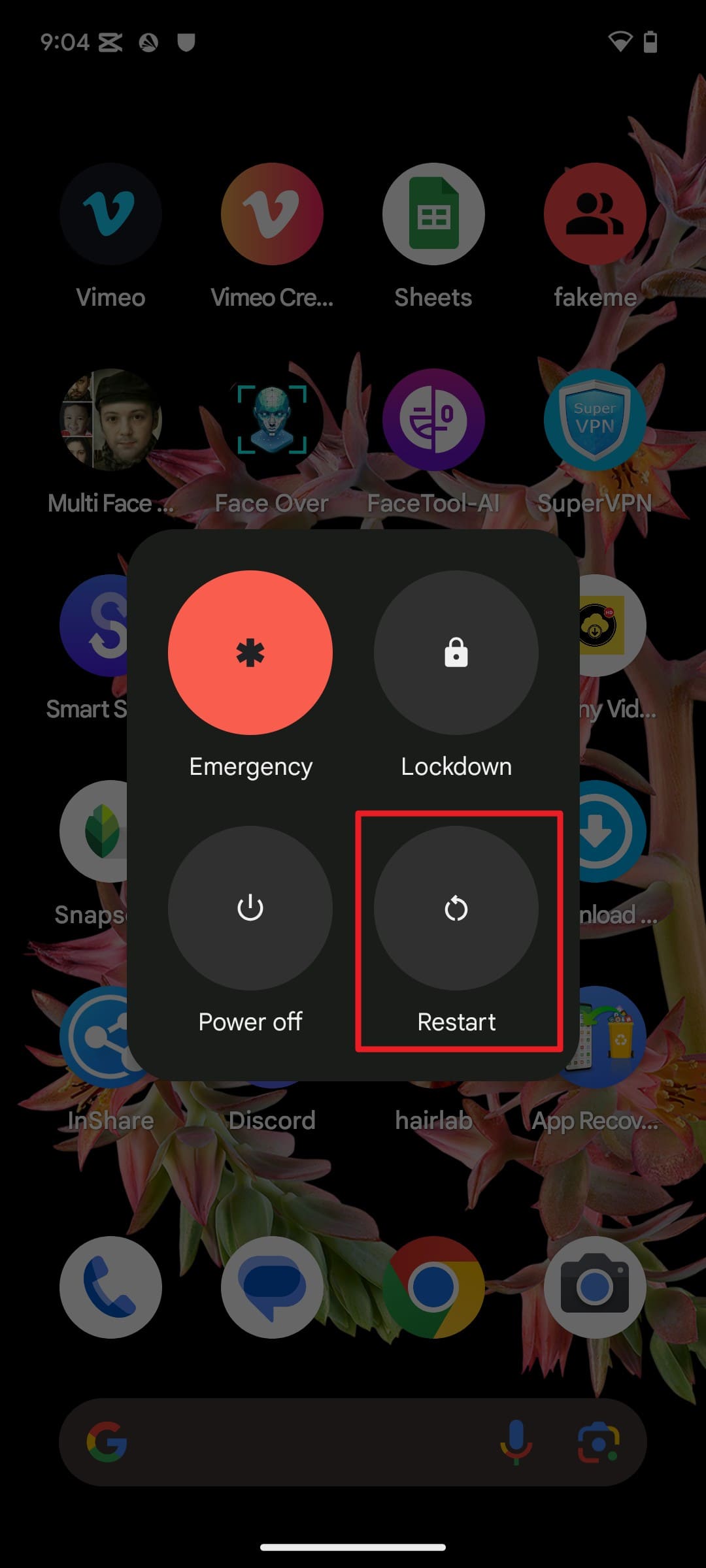
Step 2. Select Restart and let the phone finish starting. Reopen the same video and also test a second video app. If only one app still fails, move to its update and cache options below.
Fix 2. Update the Video App Through Google Play
When just one player or streaming app fails, an available app update is more relevant than a device-wide reset. Use the normal Play Store interface rather than older instructions referring to My Apps & Games.
Step 1. Open Google Play Store, tap your profile picture, and choose Manage apps & device.
Step 2. Under Updates available, open See details and look for the app that cannot play videos.
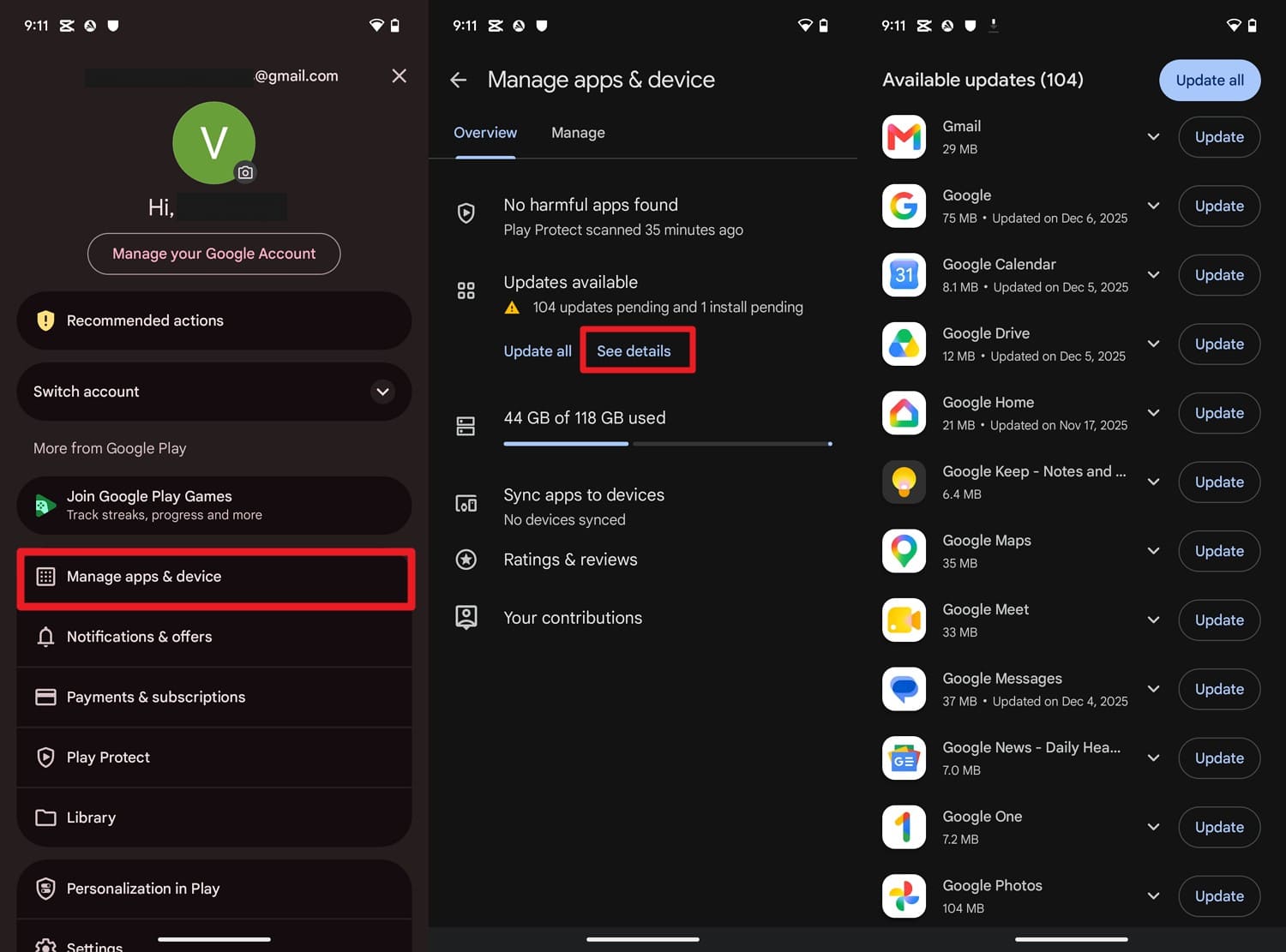
Step 3. Tap Update when one is offered and retry the same video. If the app is already current, compare playback in another app before uninstalling anything, because uninstalling may remove locally stored downloads.
Fix 3. Clear the Affected Android App's Cache, Not Its Storage
A broken thumbnail, frozen preview, or video app that keeps closing may be related to temporary app data. Clearing just the cache is less disruptive than clearing all app storage.
Step 1. Open Settings, select Apps, and choose the affected player, Gallery, or streaming app.
Step 2. Open Storage & cache or the manufacturer's equivalent and select Clear cache.
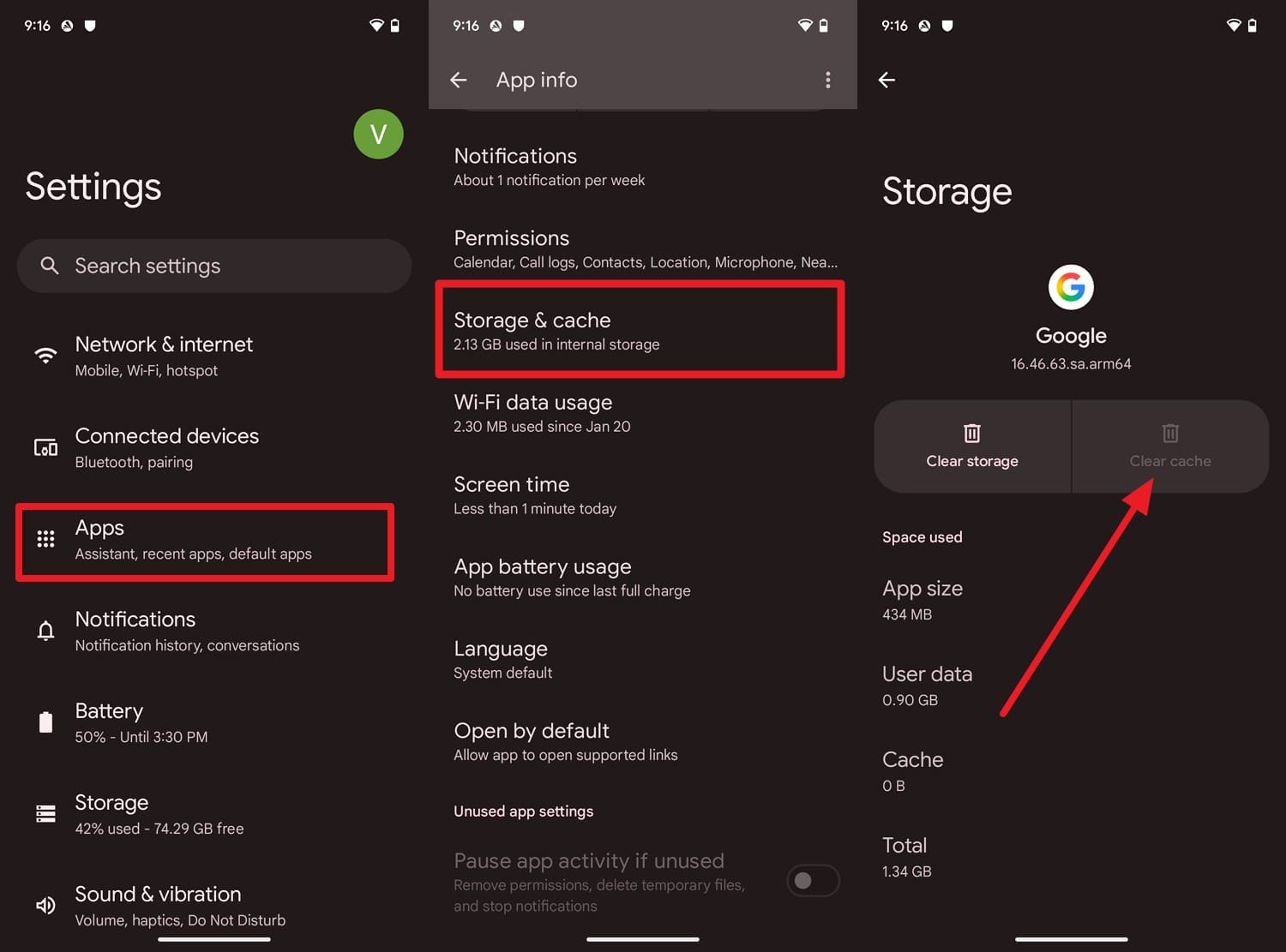
Step 3. Relaunch the app and retry the same video. Do not select Clear storage or Clear data as a routine playback fix; it can remove locally stored app data and offline downloads. Google's cache and storage guidance distinguishes temporary cache from app storage. If only one website fails, check browser updates and permissions as described in Part 1 rather than clearing Gallery data.
Fix 4. Check Available Storage Before Removing Files
Very low free storage can interfere with downloads, updates, and app behavior. The goal is to free space safely, not to delete original camera footage in an attempt to make it playable.
Step 1. Open Settings and check Storage to see whether the phone is nearly full.
Step 2. If you need room, open the Files app and review large, clearly unnecessary downloads before removing them. Back up any original videos and photos first.
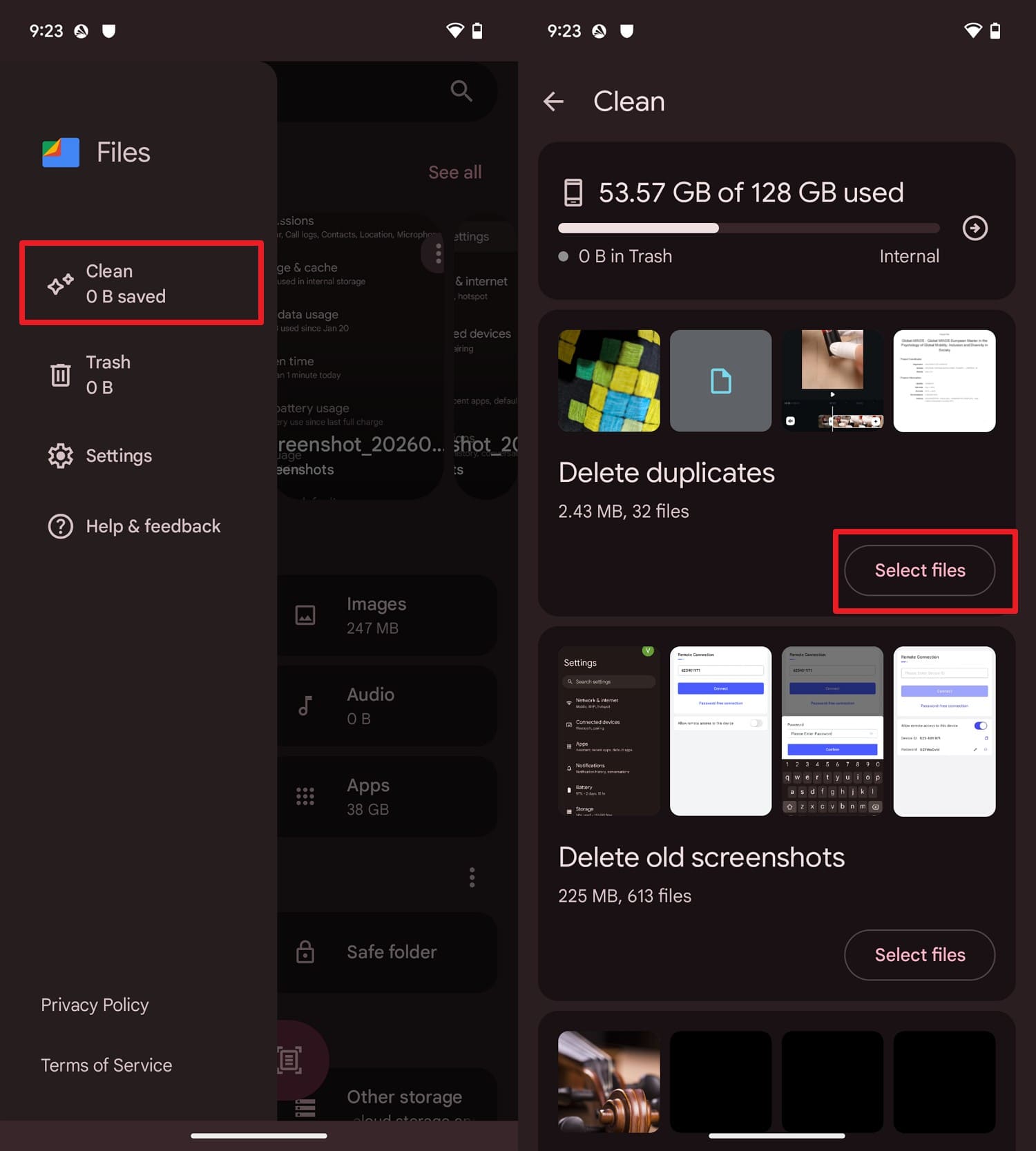
Step 3. Retry playback after making safe space. If videos still fail in every app despite healthy storage, check the device's available system updates and seek manufacturer support if broader crashes continue.
Part 3. Fix iPhone Videos That Won't Play
On iPhone, separate an app that has stopped responding from a cloud video that has not downloaded and from a local file in an unsupported format. The following app-level checks are unlikely to disturb your saved camera clips.
Fix 5. Close and Reopen the Problem Video App
If a video is frozen in one streaming or media app while other videos work, force-closing just that affected app can help distinguish a temporary app problem from a phone-wide failure.
Step 1. On an iPhone without a Home button, swipe up from the bottom and pause to display the App Switcher. On an older iPhone with a Home button, double-click it.
Step 2. Find the affected app's preview and swipe it upward to close it.
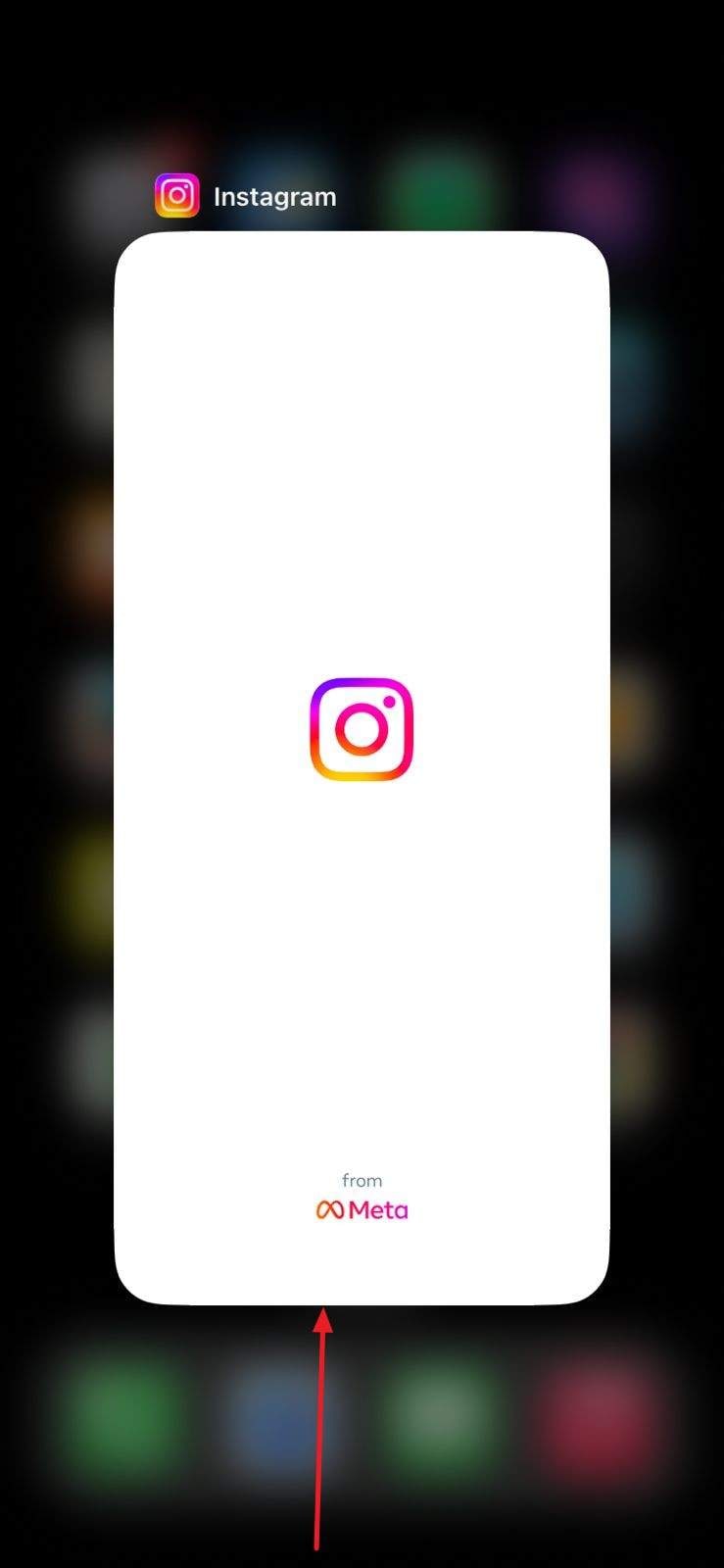
Step 3. Open the app again and play the original video. Apple's app troubleshooting instructions also recommend checking for updates and restarting the device if the issue persists.
Fix 6. Update the iPhone Video App and Check iOS
An app update can resolve an app-specific compatibility issue; an iOS update is more relevant if several native apps begin malfunctioning. Make a current backup before a major system update.
Step 1. In the App Store, find the affected app and tap Update if that button appears instead of Open.
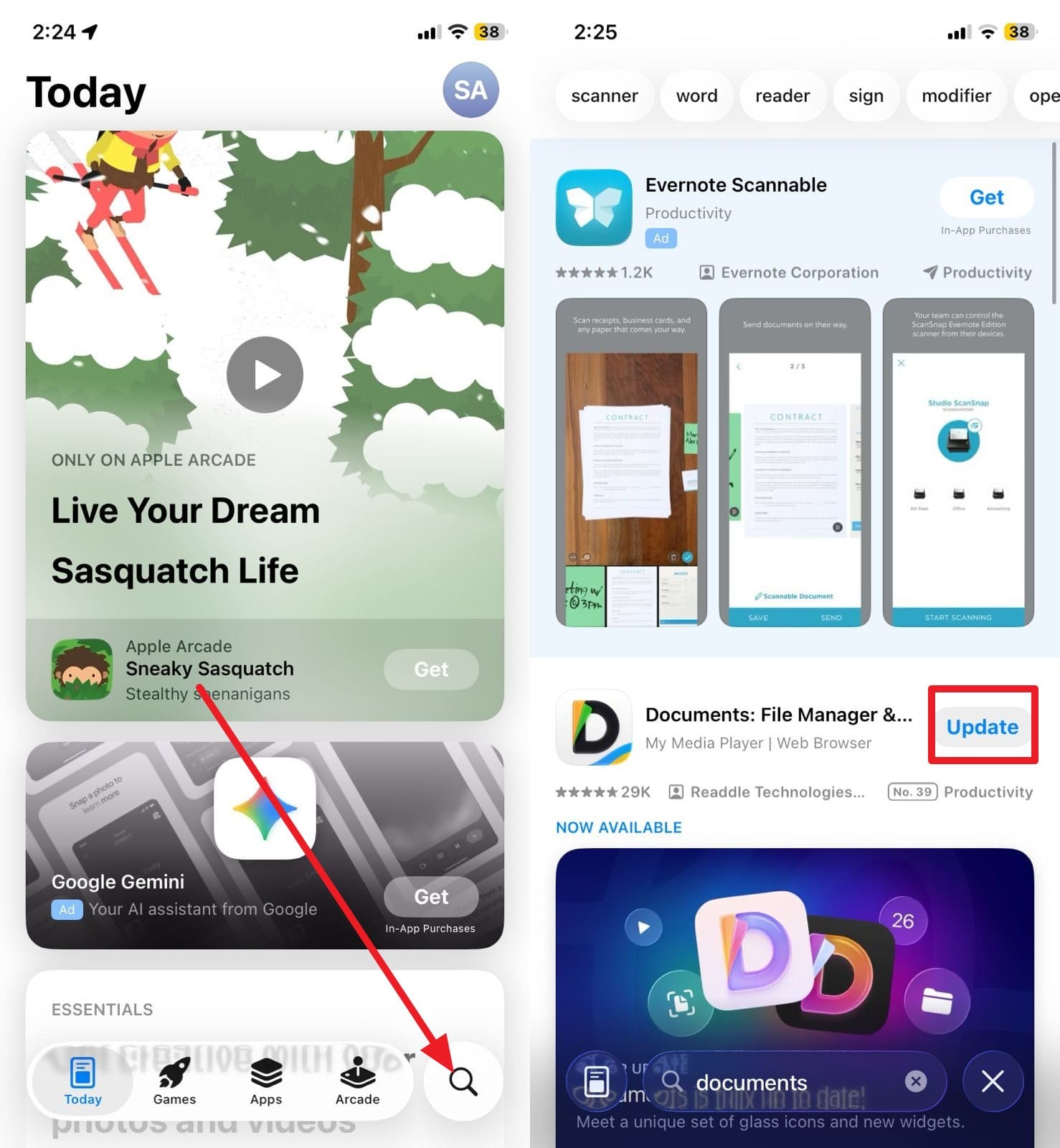
Step 2. If videos fail across several apps, open Settings > General > Software Update and check for an update supported by your iPhone.
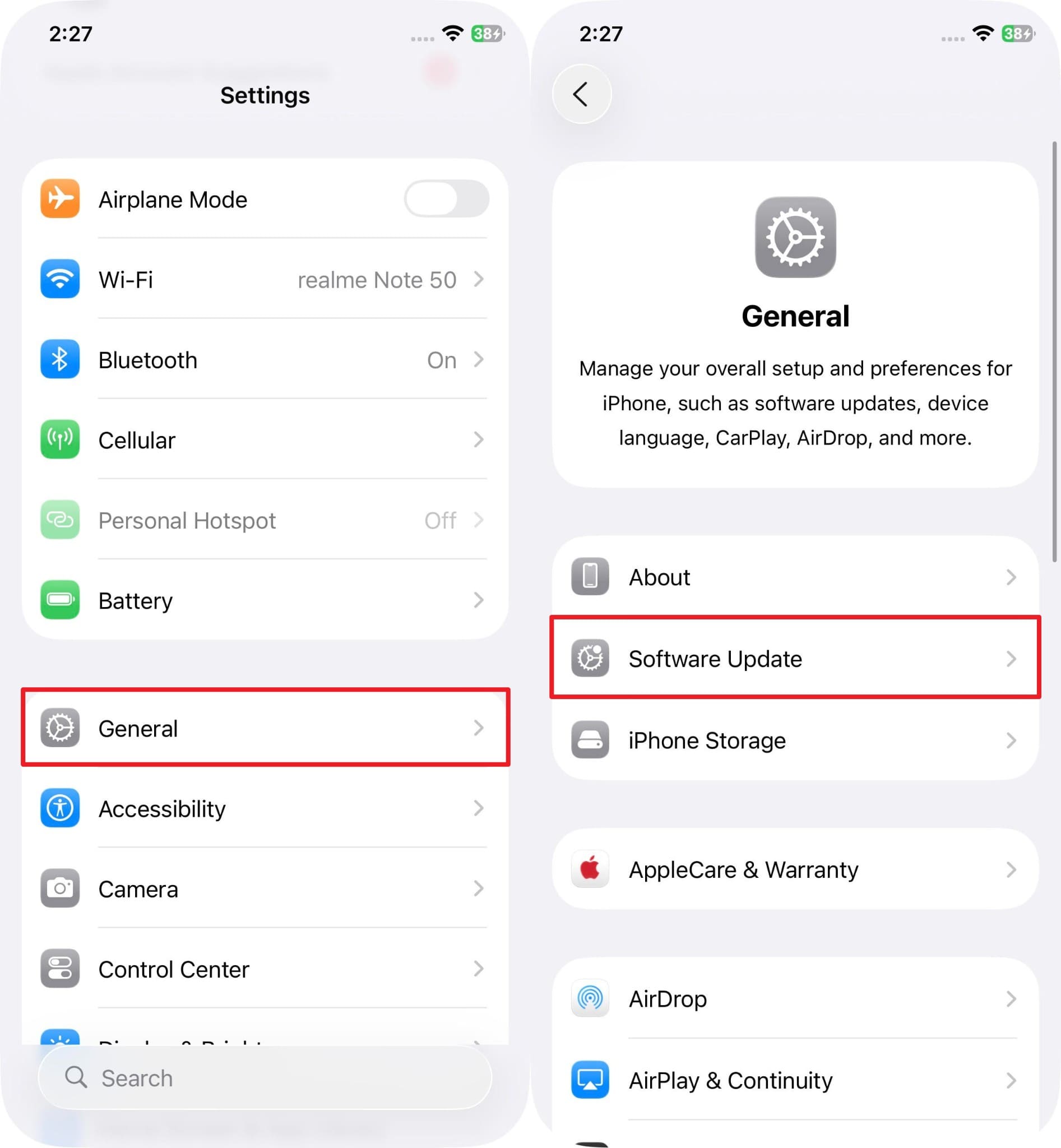
Step 3. Install an appropriate official update when convenient, then retest both a recent camera clip and the original problem video. If a clip only appears as a cloud thumbnail, allow time for its original to download over a stable connection before assuming corruption.
Part 4. When a Saved Phone Video Is Unsupported, Corrupted, or Missing
If online videos play normally but a personal recording will not open, investigate the actual file before running recovery software. A file that exists, a file that disappeared, and a file that never finished downloading require different responses.
Identify a Codec Issue Before Treating the Video as Corrupt
MP4 and MOV are file containers, not guarantees that every phone can decode the video inside. A player might lack support for a codec such as HEVC/H.265, but the recording could also be incomplete or damaged. An unsupported-format message alone cannot tell you which explanation is correct.
Compare the affected clip with a known-good camera video. If the problem recording opens in a compatible player on another device, leave the original untouched and try a supported player or make a separate compatible copy for your phone. If the download is incomplete, obtain the complete file first. Apple's media-format guidance explicitly notes that an unplayable file may be either damaged or unsupported. If the issue affects only videos recorded on Android, see our recorded Android video troubleshooting guide.
Fix 7. Recover Missing Videos from a Readable Android microSD Card
This path is for phone clips that were stored on a removable microSD card and have disappeared after deletion, a card error, or an interrupted transfer. It is not a fix for YouTube, for ordinary video buffering, or for files stored only in modern encrypted phone memory.
Step 1. Stop using the microSD card so new photos, videos, or downloads do not overwrite recoverable data. Power down the phone before removing the card if your device's instructions require it, and connect the card to a computer through a suitable reader.
Step 2. Open Recoverit for Windows and select SD Card Recovery. The following steps reflect the official Windows guide; menu labels and Mac screens can differ.
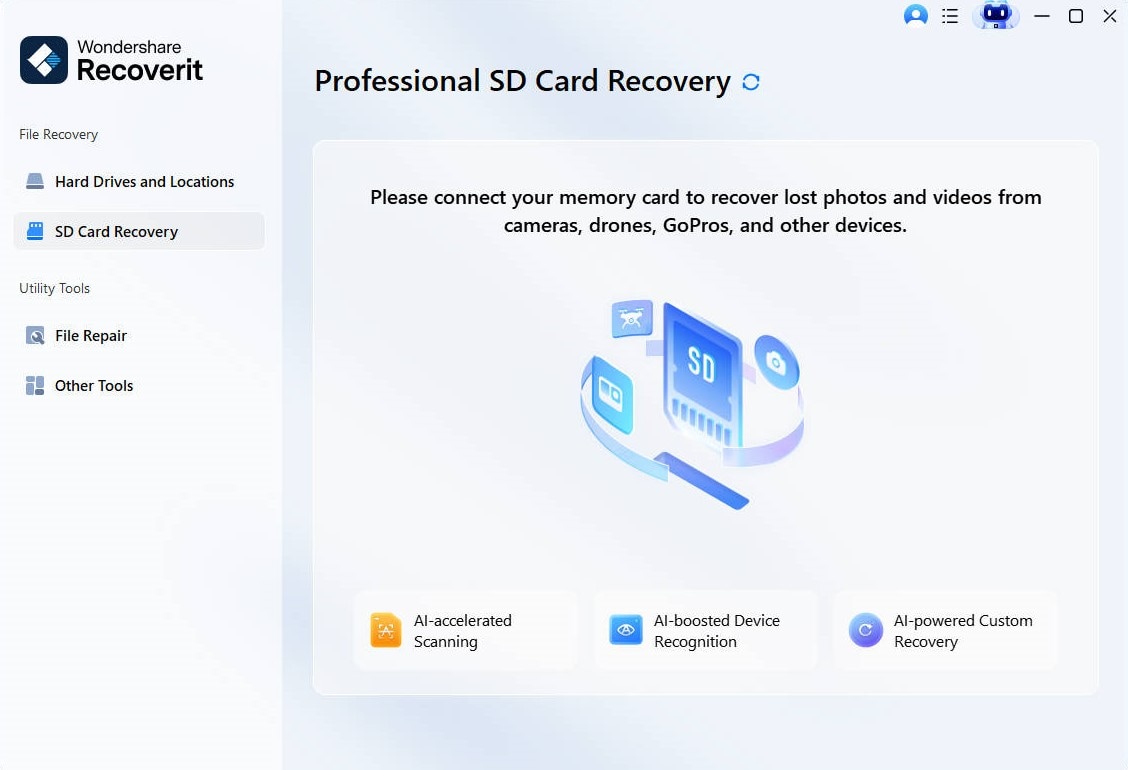
Step 3. Select the detected card, start Scan, and keep the reader connected. If the card is not detected reliably or shows signs of physical failure, stop instead of repeatedly scanning.
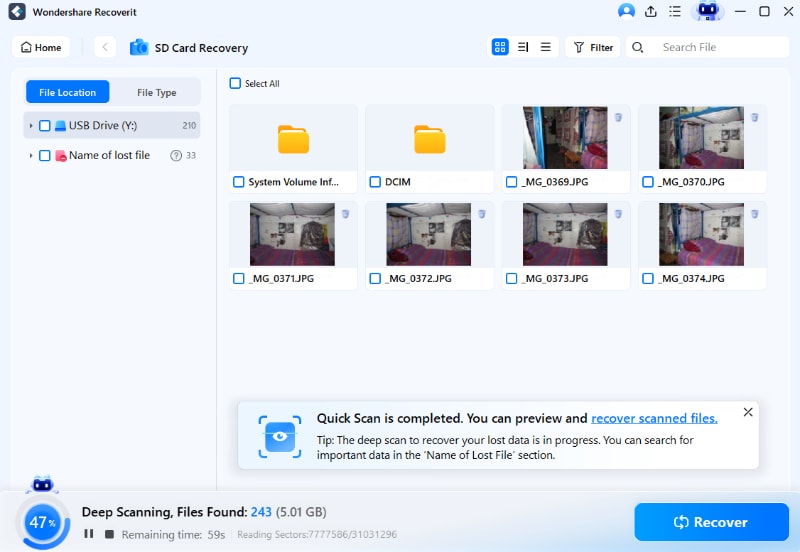
Step 4. Preview results where possible and save selected recoverable files to a different drive, never back to the source microSD card.
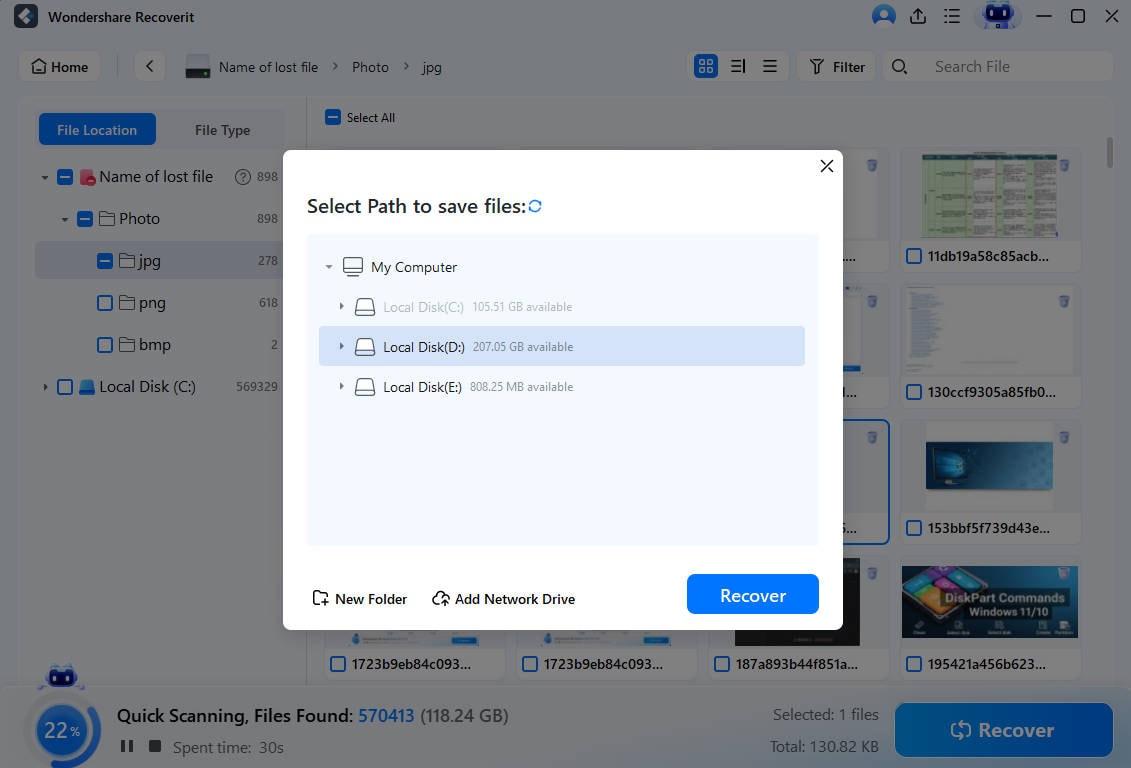
If the card is readable and the data has not been overwritten, Wondershare Recoverit SD card recovery may help locate lost clips. See also the video recovery feature for supported lost-footage scenarios. The desktop software can scan a removable card detected by your computer and let you inspect recoverable candidates, but no recovery result is guaranteed. Recoverit cannot bypass encryption on inaccessible iPhone or Android internal storage.
Download only for this removable-card recovery case: Install Recoverit on your computer, connect a supported readable card, and save recovered output to another drive. Do not install recovery apps or write data to the source card.
Fix 8. Try File Repair Only for an Existing Damaged Video Copy
Use file repair after you have ruled out playback-app and codec problems and you still have a video file that fails to open. Work on a copy stored safely on your computer. If the file is missing, first investigate recovery from its original readable storage instead.
Step 1. Keep the original video unchanged and transfer a copy to a computer. In Recoverit for Windows, open File Repair, choose video repair, and select Add Video or the equivalent add-file control.
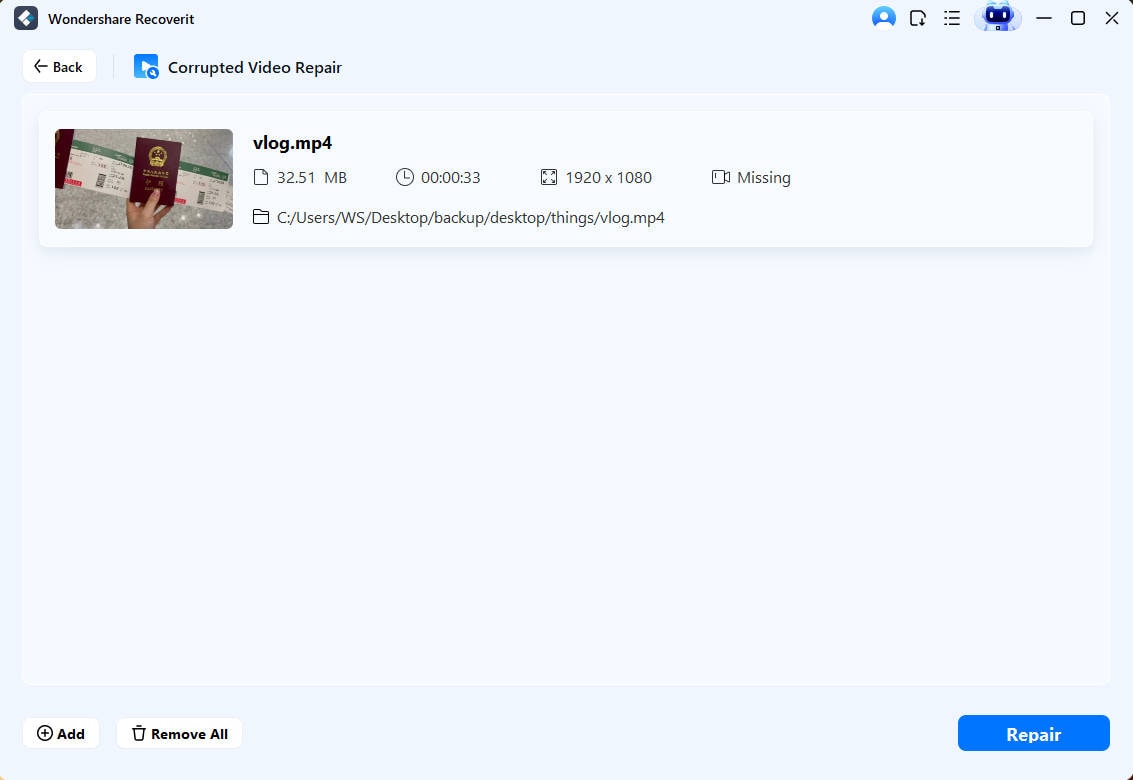
Step 2. Start Repair and use Preview to check whether the resulting video plays normally.
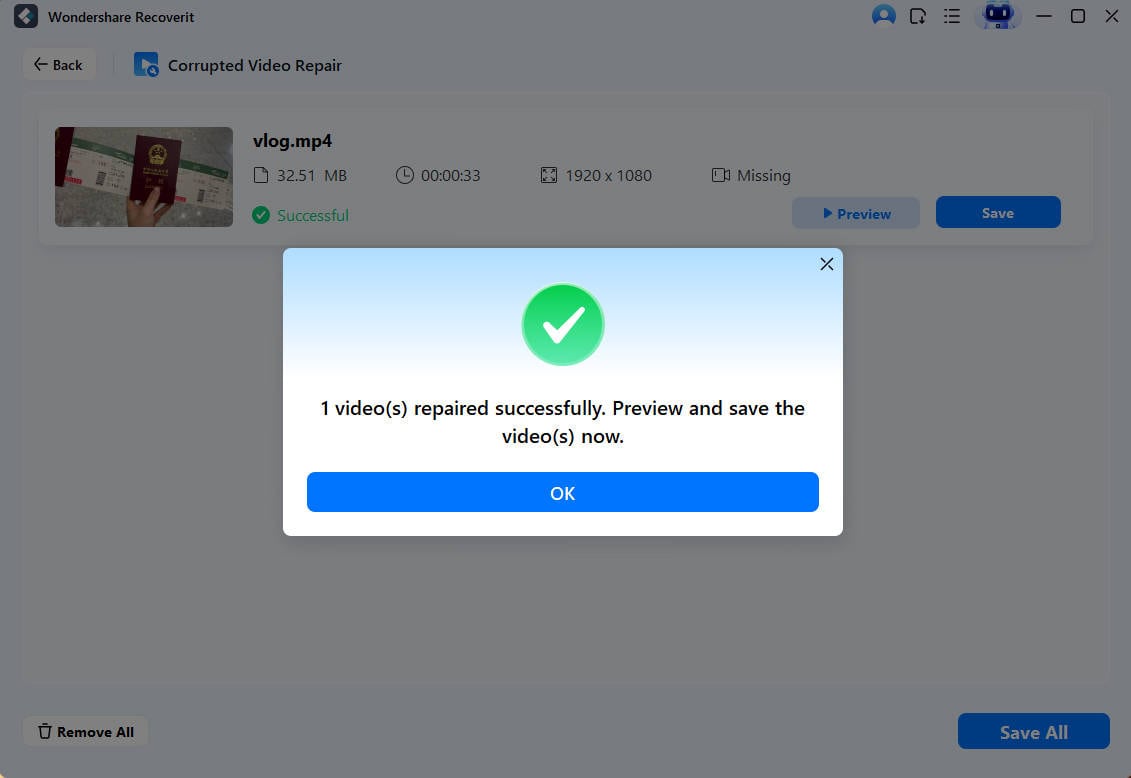
Step 3. If the preview is usable, save the repaired file to a safe destination rather than overwriting the only original copy.
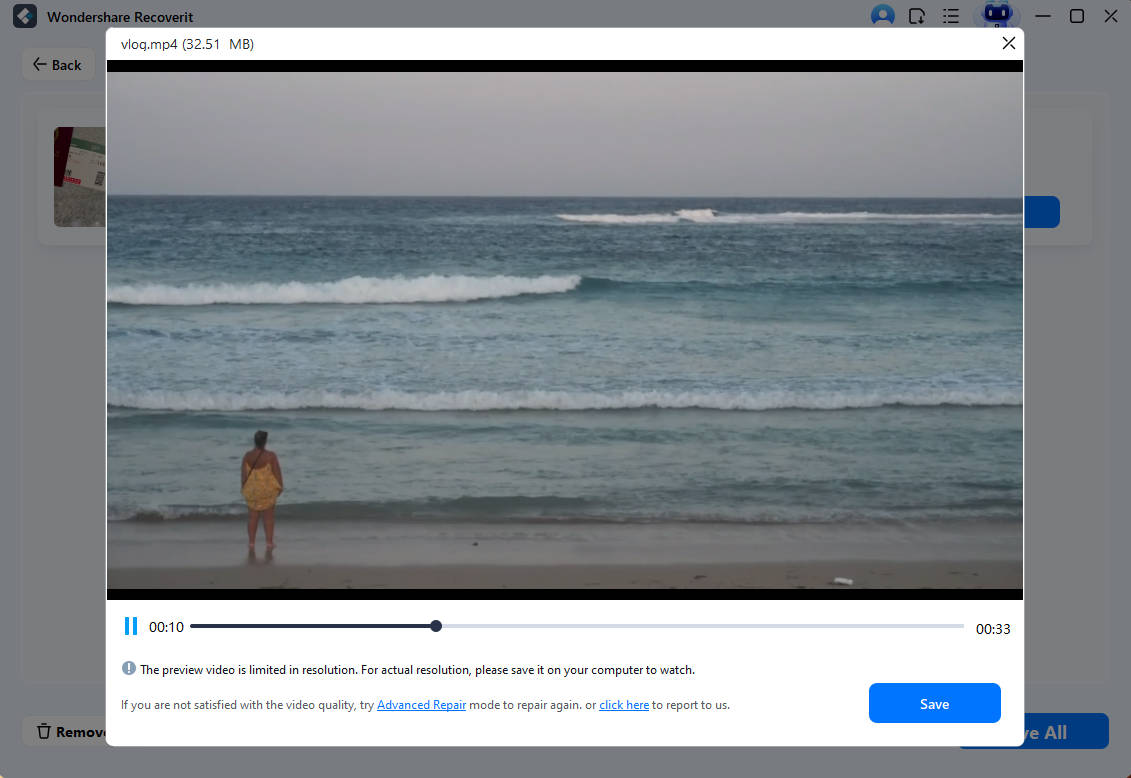
Recoverit's official File Repair guide describes its supported desktop repair workflow; the current Windows interface uses File Repair, followed by an add-file, repair, preview, and save sequence. For difficult damage, a healthy sample may be requested. Repair may fail when the underlying video content is missing, encrypted, or overwritten, and any repaired result still needs playback verification.
Part 5. What to Avoid When No Videos Play on Your Phone
Some popular troubleshooting suggestions can create extra data loss without addressing the cause. Follow these precautions when your videos matter.
- Do not factory-reset the phone first: confirm backups and exhaust reversible app, network, and compatibility checks before any destructive reset.
- Do not clear all app data casually: offline downloads, preferences, and locally cached content may disappear even if an app's cache can be safely cleared.
- Do not format a problematic microSD card: stop writing and recover or seek specialist advice before formatting or running file-system repair utilities.
- Do not rename MP4 to MOV as a repair: changing a file extension does not change its codec or reconstruct missing video bytes.
- Do not treat a service outage as file damage: if only one online service fails across multiple devices, wait for its operator or service status instead of scanning phone storage.
Once playback returns, keep original footage backed up separately and check that important clips actually open from the backup. A second copy is especially valuable before moving videos between a phone, SD card, and computer.
Conclusion
When videos will not play on your phone, first find out whether the failure affects a streaming service, one app or browser, or a saved recording. For online playback, compare connections and apps; for Android and iPhone app problems, try updates and other reversible checks. If only one personal file fails, confirm that it downloaded completely and test format support before considering repair.
Only use Recoverit when you have a genuinely missing video on readable storage or a copied, damaged file that may be repairable. Protect original data, save any recovered or repaired output elsewhere, and verify the result by actually playing it.
FAQ
-
Why won't any videos play on my phone?
If videos fail across multiple apps, check storage, app and OS updates, and whether a recent restart changes the result. If only internet video fails while a camera clip works, begin with network and streaming-service checks. -
Why are videos not playing on my Android phone, but photos still open?
Photos displaying normally does not verify video codec support. Try a known-good local clip, update the playback app, clear only its cache, and compare the problem video with another compatible player. -
Why won't MP4 videos play on my phone?
MP4 is a container that can carry different codecs. The phone may not support the codec used, the file may be incomplete, or its video data may be damaged. Test another compatible player and a known-good copy before assuming corruption. -
Does clearing cache delete the videos in my gallery?
Clearing an Android app's temporary cache is different from selecting Clear storage or Clear data. However, interfaces vary and some apps manage content differently. Confirm which app and setting you are using, and back up irreplaceable videos before troubleshooting. -
Can Recoverit fix YouTube videos not loading on my phone?
No. A YouTube or streaming-service connection issue is not a deleted or corrupted local file. Recoverit is relevant to recoverable lost files on supported accessible storage or to an existing damaged file copy in a supported repair workflow. -
Can I recover deleted videos from a phone's SD card?
Sometimes, when the removable card remains readable and the data has not been overwritten. Stop using the card, scan it from a computer if safe, and save any recovered files to a different drive. Results are not guaranteed.


