

 TL;DR:
Standard VLC 3.x natively supports 4K UHD video playback across H.264, HEVC, and AV1 formats without requiring a separate application, though smooth performance depends strictly on your hardware's specific codec and bit-depth decoding capabilities.
● If video freezes or shows corrupted blocks while audio continues playing, toggle Hardware-accelerated decoding from Automatic to Disable under Input/Codecs, fully restart VLC, and retain whichever setting minimizes CPU saturation.
● Increasing File or Network caching values only resolves data delivery stalls from slow external drives or network streams; it will not improve playback if your GPU lacks the physical decoding support for 4K60 or 10-bit HEVC profiles.
● When a 4K file consistently fails at the exact same timecode across multiple compatible media players, the source media is likely incomplete or damaged, requiring file repair or original footage recovery rather than VLC configuration changes.
Ask AI for a summary
 ChatGPT
 Perplexity
 Gemini
 Claude
 Grok
VLC can play 4K UHD video, including compatible H.264, HEVC/H.265 and AV1 recordings. You do not need a separate 4K VLC app. If playback freezes, stutters or produces sound without a picture, the cause is often the codec profile, graphics decoding path, driver, data source or playback setting rather than the 3840 × 2160 resolution itself.
Start by opening a complete local 4K file, identify its codec and compare a known-good clip. Then follow only the matching section below. Keep the original footage untouched and restore any VLC preference that does not measurably improve playback. The steps focus on VLC 3.x desktop; macOS and Windows expose some different menus and decoding backends.
In This Article
-
- Method 3. Check Hardware-Accelerated Decoding
- Method 4. Test VLC Video Output for Black Screens
- Method 5. Check GPU Driver and 4K Decoder Support
- Method 6. Reduce CPU Load and Check the Windows Power Plan
- Method 7. Adjust File or Network Caching Only for Delivery Stalls
- Method 8. Convert an Unsupported 4K Video to a Lighter Copy
Part 1. Can VLC Media Player Play 4K Videos?
Yes, VLC can play 4K UHD video. VideoLAN has supported high-resolution decoding for years; VLC 3.x added improvements designed for 4K and 8K. However, a video player that understands the file does not guarantee smooth playback on every computer. An outdated graphics driver, an unsupported 10-bit codec profile or a slow source drive can still make a valid 4K file lag.
Most consumer 4K UHD recordings are 3840 by 2160 pixels; some professional workflows use 4096 by 2160. A 4K file may contain H.264, HEVC/H.265 or AV1 video. The MP4, MOV and MKV suffixes refer to containers, not necessarily to the codec inside. To interpret the difference, the Recoverit overview of the AV1 video format covers that newer encoding family separately.
What You Need for 4K, 4K60, HEVC, and AV1 Playback
Use the table to decide whether to update VLC, investigate decoding, or adjust your display expectations. The exact graphics capabilities should be checked against your computer manufacturer rather than guessed from a GPU brand.
| Video characteristic | What matters | Practical check |
| 3840 × 2160 at 24 or 30 fps | Resolution and decoder load | Try a known-good local file first |
| 4K at 60 fps | Twice as many frames as 30 fps | Monitor dropped frames and CPU/GPU usage |
| HEVC Main 10 or AV1 10-bit | Bit-depth and profile support | Read the actual codec profile and GPU specs |
| HDR on an SDR screen | Tone mapping and operating-system output | Compare SDR and HDR samples, not just brightness |
| 4K video on a 1080p display | Player can scale the image down | No special 4K monitor is needed just to open it |
VLC is free and you do not need a separate official “VLC 4K Player” download. For the current security and video-rendering changes, consult VideoLAN's VLC 3.0.24 release notes; this release includes Direct3D11 fixes on Windows. The available installer and update route can differ by operating system.
Why Does VLC 4K Video Lag, Freeze, or Show a Black Screen?
A symptom tells you more than the phrase “VLC cannot play 4K.” Separate player errors from the file itself before making changes.
| Symptom | Likely first area to test | Start with |
| 4K60 or HEVC skips, 1080p works | Decoder and GPU capability | Methods 1, 3 and 5 |
| Audio plays but the VLC window stays black | Output/rendering path or driver | Methods 4 and 5 |
| Only network or external-drive playback pauses | Data delivery rather than decoded frames | Method 7 |
| All videos stutter while other apps are busy | CPU, disk, power or memory contention | Method 6 |
| A specific file fails at the same time on different capable players | Possibly incomplete or damaged media | Part 4 |
If a particular file cannot play in any compatible player, do not repeatedly transcode or overwrite it until you have checked the original recording and storage health. Ordinary player lag and actual data loss need different responses.
Part 2. How to Play 4K Video in VLC
Begin with a clean baseline: play one local 4K video using the normal VLC interface, learn its codec, then confirm that your VLC installation is current. These steps often rule out confusion about the file rather than requiring any aggressive performance changes.
Method 1. Open a 4K File in VLC and Check Its Codec
Use this when: You want to play a 4K MP4, MOV or MKV locally and need to know whether VLC can actually decode the file. Resolution alone does not reveal whether the video is H.264, HEVC, AV1 or an unusually demanding format.
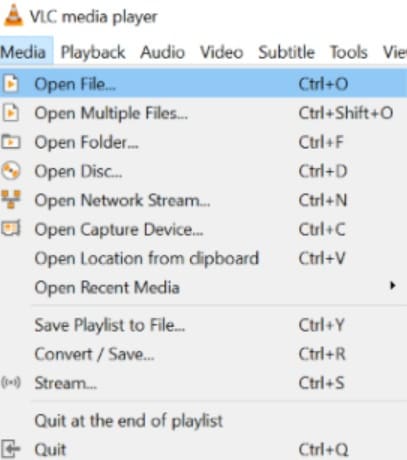
Step 1. Open VLC on Windows and choose Media > Open File. Select a complete, locally stored 4K file; on macOS, choose the corresponding File > Open File menu. VideoLAN's official Media instructions document this normal playback route.
Step 2. During playback on Windows, go to Tools > Codec Information; use the equivalent media information option on macOS. Read the codec, coded size and available track details. A filename ending in .mp4 is not proof of H.264, and it should not be renamed merely to change the perceived codec.
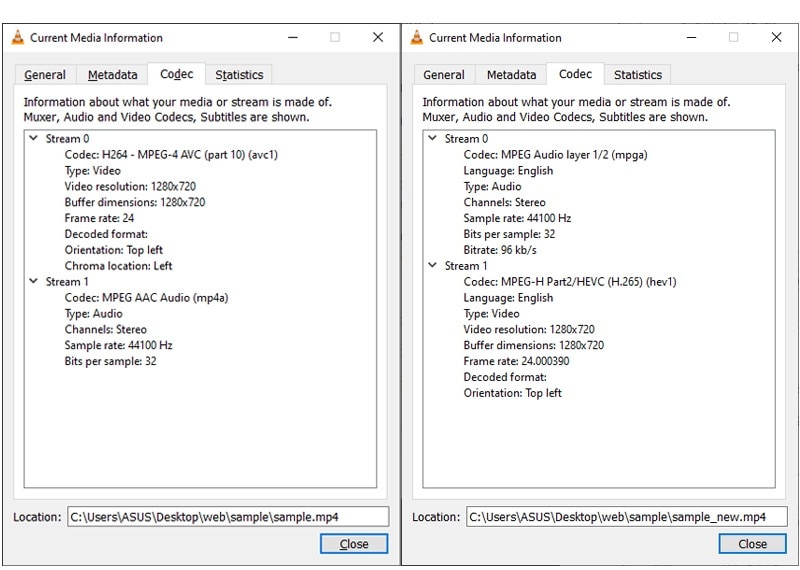
Step 3. Play a scene with movement for at least 30 to 60 seconds. Compare the same scene with a second known-good video of similar resolution, preferably one using another codec. Check both video continuity and audio synchronization.
Success check: The test clip plays normally, the codec is identifiable, and motion is smooth. If only an HEVC or AV1 file stutters, investigate supported decoding profiles rather than replacing VLC blindly. If a specific file fails on more than one capable player, investigate its integrity in Part 4 before changing it.
Method 2. Update VLC to a Supported Stable Release
Use this when: VLC has not been updated in some time, 4K videos started failing after an operating-system update, or the problem might involve a fixed renderer bug. VLC has a history of desktop improvements for UHD playback, but installation behavior differs by platform.
Step 1. On VLC for Windows, open the Help menu and choose Check for Updates if your installation offers it. If you cannot find that command, check the version through VLC's About dialog and obtain an appropriate stable installer from VideoLAN rather than a third-party codec-download site.
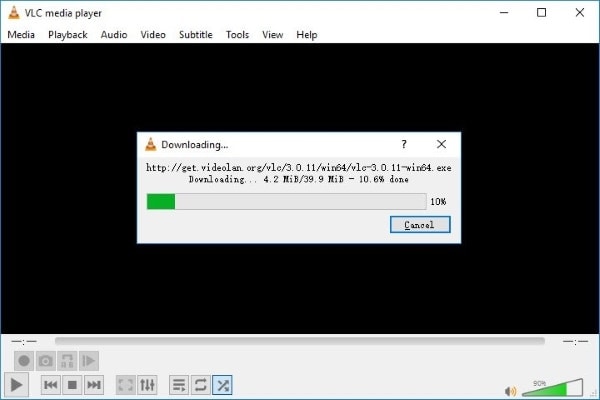
Step 2. If the update is offered, follow the prompts, close VLC completely and complete the installation. Keep your user preferences or note any special custom settings before a major upgrade. On macOS, use VLC's available application-update path or the signed installer supported by your system.
Step 3. Relaunch VLC and replay the same 4K clip at the same timecode. Do not conclude that an update solved a codec limit unless the actual playback result changed.
Success check: Previously failing frames now appear without repeated stutter or black screen. If the installed release is already current or the result is unchanged, inspect hardware decoding next. The screenshot is a genuine older VLC update dialog and illustrates the update workflow, not the latest installer branding.
Part 3. Fix VLC 4K Lag, Stuttering, and Black Screens
Only apply the next fix if its symptom matches yours. Record each initial setting and compare the same portion of the same file afterward. A setting that works on one GPU may make another computer slower or less stable.
Method 3. Check Hardware-Accelerated Decoding
Use this when: HEVC, AV1 or 4K60 footage freezes while audio keeps playing, CPU use is abnormally high, or the video goes black on one computer. Hardware acceleration can reduce CPU load, but only where the GPU supports the exact codec profile and bit depth.
Step 1. On Windows, open Tools > Preferences and select Input / Codecs under Simple settings. The VideoLAN preferences manual explains how to enter and reset these menus.
Step 2. Find Hardware-accelerated decoding and note the current option. Start with Automatic when using a supported GPU. If VLC draws corrupted blocks or shows a black frame, make one controlled comparison with Disable; this tests whether the GPU-specific path is the problem, not whether disabling is globally better.
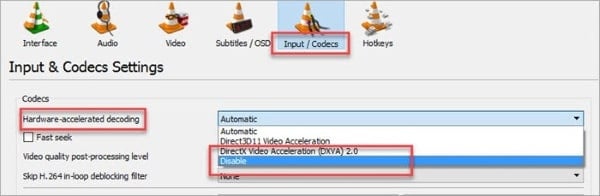
Step 3. Save, exit VLC fully, restart and play the same demanding scene again. Compare stutter and CPU/GPU utilization against the original setting. Restore the better result; a processor may be unable to decode 4K60 or 10-bit HEVC smoothly in software.
Success check: Stable picture and sound without severe CPU saturation. If neither choice helps and several 4K files fail, confirm hardware support and driver health. The older advice to set FFmpeg Threads from automatic 0 to a fixed 2 is not a universal performance fix; leave automatic threading unless you have a reproducible reason and a measured improvement.
Method 4. Test VLC Video Output for Black Screens
Use this when: You can hear audio but see a blank playback window, video artifacts appear after attaching an external monitor, or hardware decode changes alone do not restore the picture. The rendering path and video decoder are related but not identical.
Step 1. On Windows, open Tools > Preferences > Video. Find the Output field and note the existing choice. Start with Automatic; check whether video is enabled in the same panel.
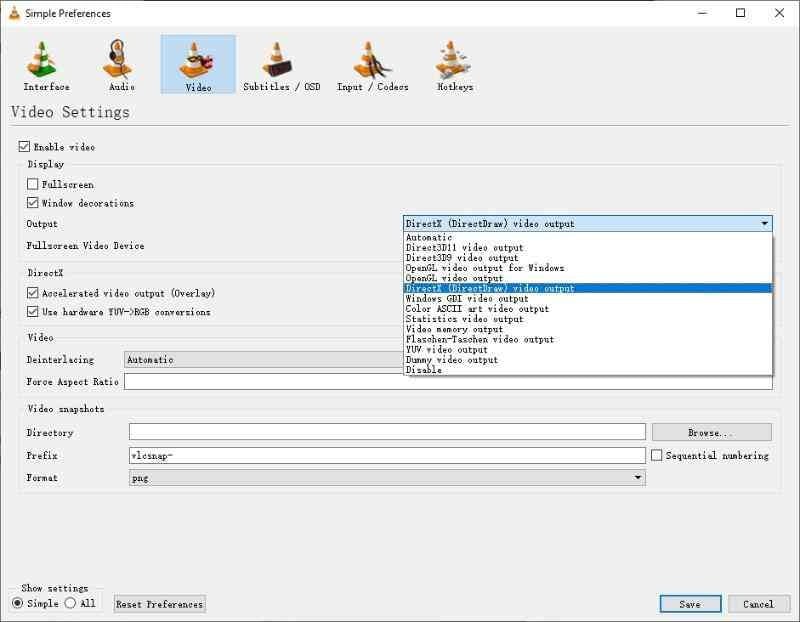
Step 2. If the output is still black, change to one alternative module actually offered by your installed version, save and restart. Do not follow an old DirectDraw-only instruction on macOS, where the renderer choices and system paths differ.
Step 3. Retry both the affected 4K video and a known-good file. On an external HDR display, briefly compare playback using an alternate display configuration to separate display-handshake issues from media decoding.
Success check: The clip's image appears normally and stays visible during seeking. If the entire desktop or multiple players also show defects, investigate graphics drivers and monitor output. If VLC alone remains black, keep a record of which renderer was tested rather than trying every undocumented option.
Method 5. Check GPU Driver and 4K Decoder Support
Use this when: All 4K HEVC or 4K60 videos struggle while 1080p plays, the issue began after a system update, or GPU acceleration choices behave inconsistently. Driver updates can fix a broken acceleration path but cannot add a missing physical decoding block.
Step 1. On Windows, press Windows + X and open Device Manager, then expand Display adapters. Record the exact graphics model and current driver version. The older screenshot shows the same Windows utility and driver-update context menu.
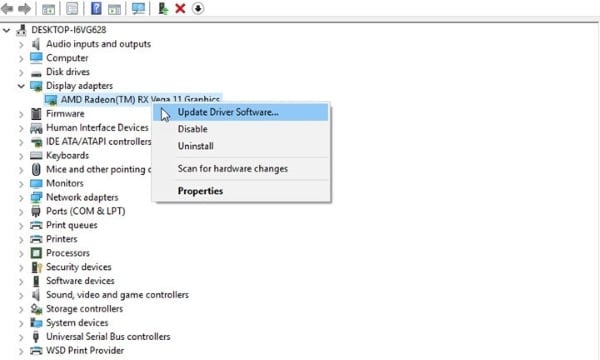
Step 2. Compare that GPU model with the laptop/GPU manufacturer's documented HEVC Main 10 or AV1 decode capability. A GPU may accelerate H.264 but not 10-bit HEVC or AV1. On macOS, check the Mac model and supported operating-system media codecs rather than using Windows Device Manager directions.
Step 3. For an outdated or recently broken Windows driver, first use the manufacturer or supported Windows update route; reboot if required. If the problem began immediately after an update, use the vendor's supported rollback path rather than an arbitrary third-party driver downloader.
Success check: Playback of the same 4K clip improves after an actual compatible update. If the underlying GPU does not support the codec or frame rate, try the transcoding option in Method 8 rather than repeatedly reinstalling drivers.
Method 6. Reduce CPU Load and Check the Windows Power Plan
Use this when: VLC 4K playback is smooth with other applications closed but drops frames while games, cloud sync, rendering or background scans are running, or your laptop slows down drastically on battery. Power saving can affect available performance, but forcing every computer into a permanent high-power mode is unnecessary.
Step 1. On Windows, open Task Manager using Ctrl + Shift + Esc. Replay the 4K file and check the CPU, GPU, Memory and Disk columns. Close only recognizable unnecessary applications after saving their work; do not terminate unfamiliar system processes.
Step 2. On a laptop, connect a compatible power adapter for a short controlled test. If Windows exposes Power mode under Settings, compare your existing mode with a higher-performance choice as appropriate. In older Control Panel installations, the Power Options screen may list Balanced and High performance plans.
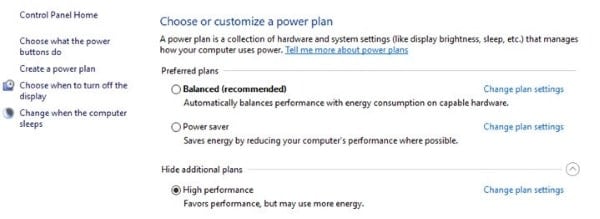
Step 3. Repeat the same 4K scene under the two conditions and record whether frame drops change. Do not automatically force advanced CPU maximum processor state values, ignore battery temperature, or disable system power protections simply to play one video.
Success check: The clip plays smoothly only when the system has enough available performance. If it remains slow at low CPU/GPU load, try a local-disk test and distinguish read buffering from decode throughput. For more general PC-wide problems, Recoverit's article on videos lagging on a PC covers broader background causes.
Method 7. Adjust File or Network Caching Only for Delivery Stalls
Use this when: Your 4K movie pauses while loading from a slow USB drive, NAS or network stream, but an otherwise identical copy on a healthy internal SSD plays normally. Caching absorbs uneven data delivery; it does not accelerate HEVC or AV1 decoding.
Step 1. First copy a permitted test file to a healthy local drive, if your source device is not failing. Compare local playback with the original network/external path. If both copies stutter identically on high-motion frames, move back to decoder and GPU diagnosis.
Step 2. In VLC for Windows open Tools > Preferences, choose All under Show settings, and inspect Input / Codecs for File caching (ms) or Network caching (ms), depending on the source. The screenshot is an older real VLC Advanced Preferences interface; exact placement can differ in newer builds.
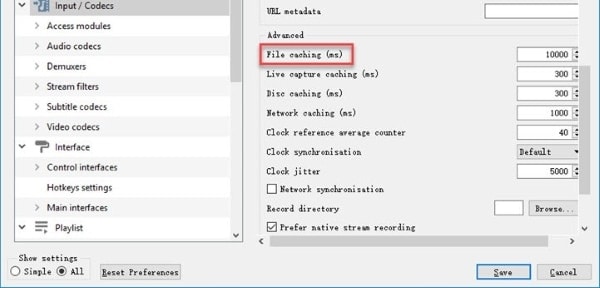
Step 3. Record the original millisecond value. If the source is genuinely slow, make a moderate single change, save and restart VLC, then compare the pause behavior and seeking latency. Return to the old value if the change has no benefit or increases delay.
Success check: Repeated stalls during reads are reduced and playback starts reliably, without excessive delay. Do not blindly change 300 ms to 1000 ms on every PC. When streaming over the internet, the server, available bandwidth and connection quality may still be limiting factors.
Method 8. Convert an Unsupported 4K Video to a Lighter Copy
Use this when: A healthy 4K HEVC, AV1 or high-bitrate recording plays correctly on a more capable device but your PC cannot sustain decoding. Create a new, more compatible copy; transcoding is not a fix for missing original frames or a failing storage drive.
Step 1. Preserve the original video and confirm that it has normal playback on another compatible device. On VLC for Windows choose Media > Convert / Save, add the original, and enter the conversion dialog. The official VLC conversion directions describe the selection flow.
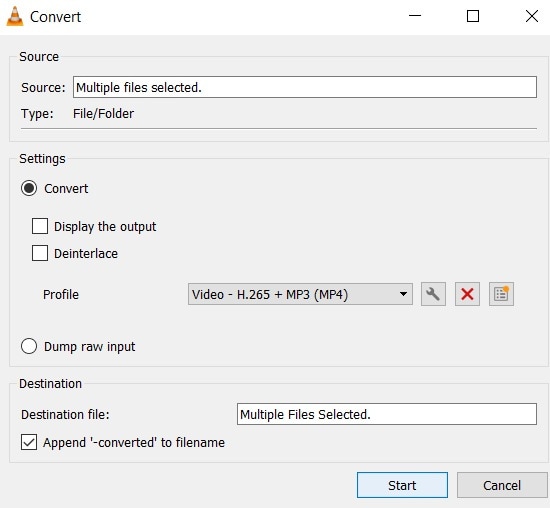
Step 2. Choose a supported profile that actually encodes H.264 video with a compatible audio track, preferably AAC, in an MP4 container where available. If the chosen profile or device is especially limited, make a lower-resolution 1080p copy. Merely renaming .mkv to .mp4 is not conversion.
Step 3. Set a new output location and filename, then start the process. Check the resulting codec and audio track and play the converted file past the previously problematic scene. Conversion quality and runtime depend on source and selected settings; avoid overwriting your only copy.
Success check: The lighter encoded copy plays smoothly where the original does not. That suggests the player/device decode budget is a factor. If a conversion fails because the original cannot be read, preserve the source and investigate damage rather than repeatedly attempting to re-encode it.
Part 4. When a 4K Video File Is Actually Damaged or Missing
VLC playback is a software and hardware task; file corruption and deleted footage are storage/content problems. If a healthy copy plays in another application, fixing the VLC decoder is the priority. If the original cannot be read or no longer exists, protect the source before starting any recovery work.
- When the file opens but stutters everywhere: Compare the same source in two compatible players and, if possible, a second device that supports the codec. Consistent freezes at exactly the same timecode, missing duration information or a truncated transfer can indicate source problems. The Recoverit guide on damaged MP4 video files explains different file-level repair scenarios, but a repair workflow cannot manufacture footage that was never recorded.
- When VLC alone fails: Recheck the file's codec, video output mode and installed driver. The separate Recoverit troubleshooting article about VLC videos not playing covers broader player failures outside this page's specific 4K scope. If clips consistently skip or jerk even outside VLC, choppy video playback provides a wider source-versus-device diagnosis.
- When the original 4K recording has been deleted: Stop copying files, recording footage or installing software on the storage device. The dedicated Recoverit Video Recovery feature page is relevant for investigating recoverable deleted videos on supported cards and drives. Work from a healthy computer, scan the original storage, preview what is found and save recovered copies to a separate drive. Success depends on whether the original data is still present and readable; no recovery is guaranteed.
If only a less-detailed replacement copy survives, distinguish missing high-resolution original footage from a clip with damaged encoded frames. Recovering a deleted original, repairing corrupt video content and enhancing an intact low-resolution copy are different tasks. Do not equate any of them with fixing the VLC playback engine.
Conclusion
VLC is a capable 4K video player, including for compatible HEVC and AV1 content, but performance depends on the precise codec, frame rate, graphics decoding path and data source. Start by opening and identifying a known-good 4K file, then update VLC and test one reversible setting at a time. Do not force software decoding or fixed FFmpeg threads as a universal fix.
When only one file fails at a repeatable point across capable players, preserve the original before diagnosing possible corruption. When the original footage is missing, stop using the affected drive and evaluate recovery separately from VLC troubleshooting. A successful test means the same 4K segment now plays smoothly and consistently, not merely that its first frame appears.
FAQ
-
Can VLC Media Player play 4K and 4K60 video?
Yes. Standard VLC 3.x includes UHD playback capabilities. Smooth 4K60 playback depends on the actual codec, frame rate, graphics hardware, drivers and storage; support for 4K as a resolution does not guarantee support for every HEVC or AV1 profile. -
Do I need to download a separate VLC 4K player?
No. The regular VLC desktop application supports compatible 4K content. Use a stable, current VideoLAN build and avoid unnecessary third-party codec bundles or a supposed special 4K-only player. -
How do I play a 4K MP4 video in VLC?
Open VLC, choose Media > Open File on Windows (or the corresponding File menu on macOS), select the MP4, and inspect Codec Information if playback is unstable. MP4 is a container, so check whether the video track is H.264, HEVC or AV1. -
Should I disable VLC hardware-accelerated decoding for 4K?
Not by default. Automatic is a sensible starting point with a compatible GPU. If black screens or artifacts appear, compare with Disable as a reversible test, restart VLC and restore whichever setting performs better. -
Why is VLC choppy with 4K HEVC but fine with 1080p?
HEVC 4K, especially high-frame-rate or 10-bit footage, can exceed the software or hardware decoding capability of an older computer. Check GPU profile support and CPU/GPU load, then try a separately transcoded H.264 copy if necessary. -
Will adding VLC file caching fix 4K stuttering?
Only in delivery-related cases such as a slow network or external drive. Caching cannot repair damaged video data or make a CPU decode HEVC faster; compare a local source before changing this setting. -
Do I need a 4K screen or HDMI cable to open a 4K video?
No 4K display is required for VLC to open or downscale a 4K file. A compatible display and connection are needed to see its native UHD output; the monitor, cable and port must support the desired resolution and refresh rate. -
Can Recoverit fix VLC 4K playback lag?
Recoverit is not a VLC configuration optimizer. It is relevant when the original video has been deleted or a supported, genuinely damaged local file requires appropriate repair. Player stutter from decoding or slow hardware must be addressed through playback and system checks.


