


 TL;DR:
To fix video lag without risking your original file, first test the same clip in a second media player to determine if the issue is a damaged recording or a playback bottleneck.
● If 4K or HEVC files lag specifically in VLC, set Hardware-accelerated decoding to Automatic under Input/Codecs, and only increase file or network caching if you are playing media from a slow USB drive or network stream.
● For iPhone videos that pause in the Photos app, verify your available local storage and allow sufficient time for the full-resolution original to download from iCloud before altering sync settings.
● If a clip stutters at the exact same time code across all tested apps and devices, the original source recording contains missing frames that cannot be restored by faster hardware, player tweaks, or data recovery tools.
Ask AI for a summary
 ChatGPT
 Perplexity
 Gemini
 Claude
 Grok
Grok
Is a video lagging, freezing, or playing in jerky bursts? The right fix depends on where the delay occurs. A VLC player lagging with one 4K file is different from an iPhone clip waiting for its iCloud original or a YouTube stream buffering over Wi-Fi.
Before installing a new tool or modifying the video, compare the same unchanged copy in another media player. If the second player is smooth, the file may be fine. This guide starts with that distinction and provides targeted steps for VLC, Windows, iPhone and online playback.
In This Article
Part 1. Why Is My Video Lagging? Identify the Cause First
A laggy video can look the same on screen even when the underlying causes are different. Compare the same clip in another player and on another device before changing any settings; the pattern you see determines the safest next action.
| What you see | Likely category | Best first check |
| One 4K/HEVC file stutters in VLC, while lighter files work | Decoding or video-output bottleneck | Inspect VLC hardware decoding and test a compatible output module |
| A network stream or video from a slow USB drive pauses to buffer | Unsteady read speed or network delivery | Try a copy on a healthy local drive, then test VLC caching |
| Every video app is choppy on the same Windows laptop | CPU/GPU load, background processes, driver or power conditions | Compare Task Manager while playback is running |
| An iPhone video pauses while its full-resolution original loads | Local storage or iCloud Photos retrieval | Check iPhone Storage and Photos sync status |
| Only YouTube or another website buffers | Connection, stream adaptation or browser conditions | Reduce the stream quality temporarily |
| The file stutters at the same time code on multiple devices | Source frames or file integrity may be at fault | Compare with the unedited original before attempting changes |
One-minute decision rule: If the same file plays smoothly in another player, do not label it corrupted. If both players struggle only with 4K HEVC, investigate decoding. If only a web stream buffers, start with network delivery. If a clip itself contains repeated, frozen or missing frames on every device, the recording may already have those defects.
Part 2. Fix VLC Player Lagging and 4K Stuttering
Start here when VLC video lagging occurs on your computer but the file can still be opened. The steps below apply primarily to VLC 3.x desktop interfaces; the labels and available decoding backends may differ by operating system and build. Change one preference at a time and compare the same clip after restarting VLC.
Set Hardware-Accelerated Decoding to Automatic
VLC 4K video lagging often involves HEVC or other high-resolution footage that requires sustained decoding. For a compatible GPU, automatic hardware decoding is usually a better first test than blindly disabling it.
Step 1. In VLC for Windows, open Tools > Preferences (or press Ctrl + P). On macOS, open VLC settings or preferences from the application menu.
Step 2. Select Input / Codecs. Find Hardware-accelerated decoding and choose Automatic if available. The screenshot shows the Windows desktop menu; macOS uses different decoder options.
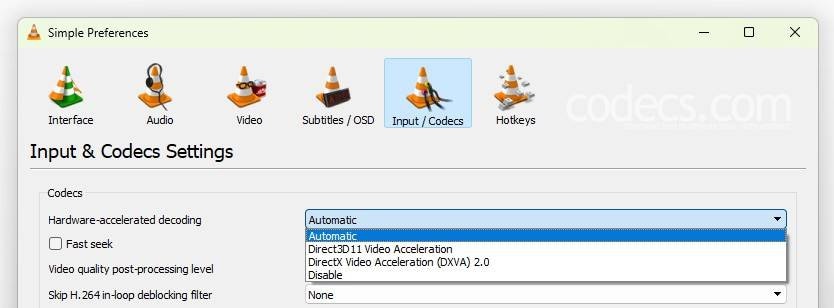
Step 3. Choose Save, close VLC completely, reopen the problem video and observe whether dropped frames or audio desynchronization decrease.
If this fails: If Automatic causes a green/black frame or worse stuttering, temporarily test Disable as a diagnostic comparison, then restore the better setting. Disabling hardware acceleration forces more CPU work and may make high-bitrate 4K playback worse. A GPU that lacks the required codec profile cannot be fixed by a setting alone.
Increase VLC File or Network Caching Only When Delivery Is Slow
Caching can smooth uneven reads from a network share, NAS or slow external drive, but it will not make a processor decode HEVC faster. Test it only after you identify buffering rather than a steady frame-rate limitation.
Step 1. First save or copy a noncritical copy of the clip to a healthy internal drive, if the source is accessible. If it runs smoothly locally but not from your USB drive or network share, investigate the connection before changing VLC.
Step 2. Open Tools > Preferences, select All under Show settings, then choose Input / Codecs. Locate File caching (ms) for file sources or Network caching (ms) for network streams.
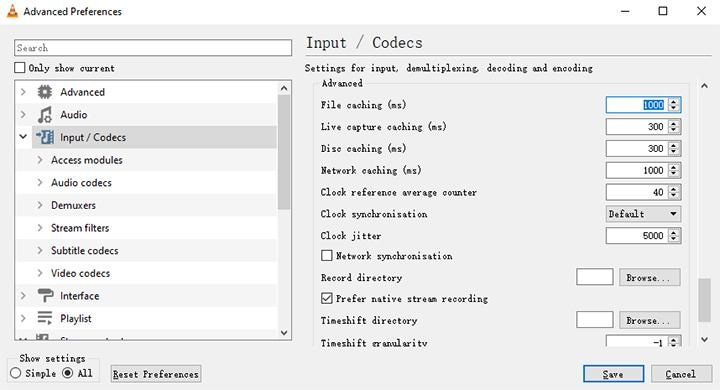
Step 3. Note the starting number, increase only the relevant value modestly (for example, try 1000 ms), save and restart VLC. Play the same part of the clip to compare.
If this fails: Restore the original value. Higher caching may delay the start of playback and is not a universal fix. If the original storage makes clicking noises, disconnects or becomes unreadable, stop repeated scans and protect the source rather than repeatedly replaying the file.
Test a Different VLC Video Output Module
When the audio remains smooth but picture frames are choppy or inconsistent, VLC may be using a display output path that does not cooperate well with the current graphics driver.
Step 1. Open Tools > Preferences > Video. Find the Output menu.
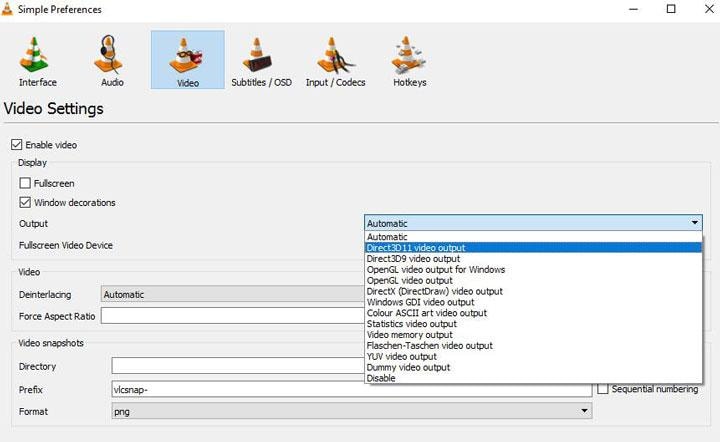
Step 2. Test Automatic first. If it is already selected, try an output module that is actually listed for your operating system, such as Direct3D11 on supported Windows systems or an OpenGL option where present. Save and restart VLC after each change.
Step 3. Replay the same 30-second section and compare the video and audio. Revert to the previous output if picture quality or playback becomes worse.
If this fails: Return to Automatic and check whether the GPU driver is current. The screenshot shows a VLC desktop output menu from an earlier 3.x interface; not every listed renderer will appear in newer builds. This is a conditional test, not a recommendation to force legacy Direct3D9.
Reset VLC Preferences After Multiple Failed Tweaks
If lag began after changing several VLC settings, returning to defaults can be safer than continuing to modify unrelated codec and network parameters.
Step 1. Open Tools > Preferences on Windows or the equivalent preferences menu on your Mac.
Step 2. Locate Reset Preferences in the simple preferences panel. This removes custom VLC settings, so record anything important first.
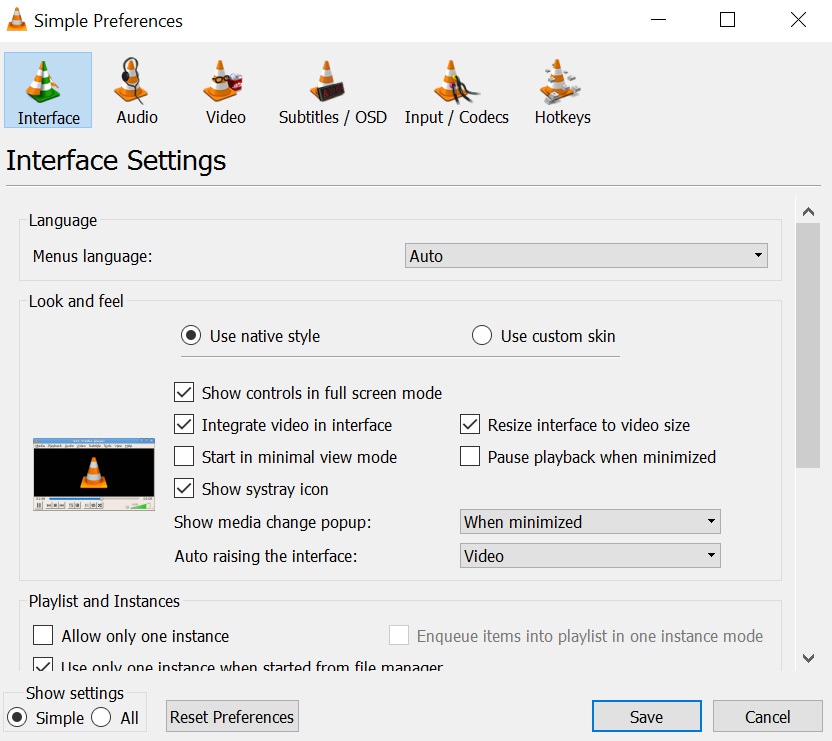
Step 3. Confirm the reset, fully quit VLC and reopen it. Play the original file again before reinstalling plugins or changing other options.
If this fails: A clean preferences reset does not change the encoded video frames, network speed or hardware capabilities. Use the official VLC Preferences documentation for the interface relevant to your VLC build, then move to the next diagnostic branch.
Part 3. Fix Laggy Video on a Windows Laptop or Desktop
When several different players lag with ordinary local video files, VLC may not be the cause. Check whether Windows is already short of CPU, memory or GPU resources while the file plays, then change only the component that appears overloaded.
Check Resource Use in Windows Task Manager
A CPU pinned close to full utilization or heavy background GPU/video-engine activity during playback can explain why a video looks choppy even though the file is intact.
Step 1. Start playing a known-good local clip. Press Ctrl + Shift + Esc to open Task Manager and select Processes.
Step 2. Compare the CPU, Memory and available GPU columns. If GPU is hidden, right-click the column header and enable it when your Windows build offers that option.
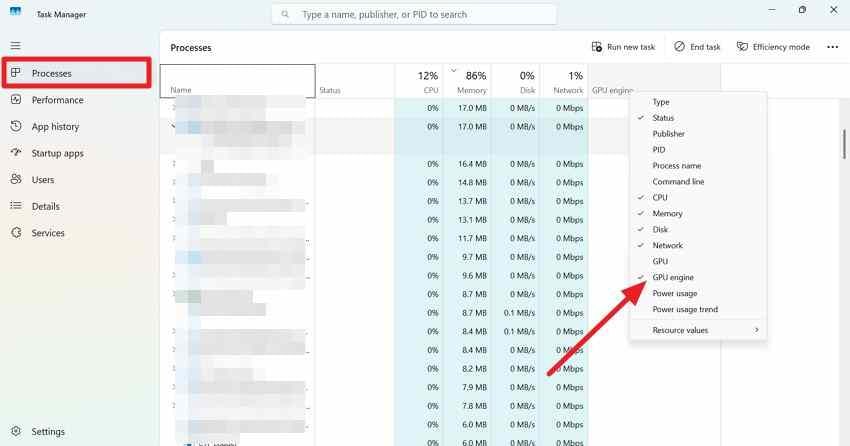
Step 3. Close only nonessential heavy apps that you recognize, replay the clip, and check whether the resource load and lag both decrease. Restore the usual workload afterward to confirm the difference.
If this fails: Do not turn off antivirus protection as a general video-lag fix. Compare a 1080p H.264 clip with the lagging 4K HEVC file and check your actual graphics drivers, cooling and power mode. A stable high load identifies a performance condition, not proof of file corruption.
Part 4. Fix iPhone Videos Lagging in Photos
When iphone videos lagging happens mainly in Photos, first determine whether the clip is already on the device or the full-resolution original is being fetched from iCloud. These steps refer to recent iOS interfaces; menu locations can vary by iPhone model and iOS version.
Check Available iPhone Storage
An almost-full device leaves less space for downloads and temporary data. Checking capacity is a low-risk diagnostic step before deleting videos, resetting settings or changing photo-sync options.
Step 1. Open Settings > General > iPhone Storage and wait for the capacity overview to load.
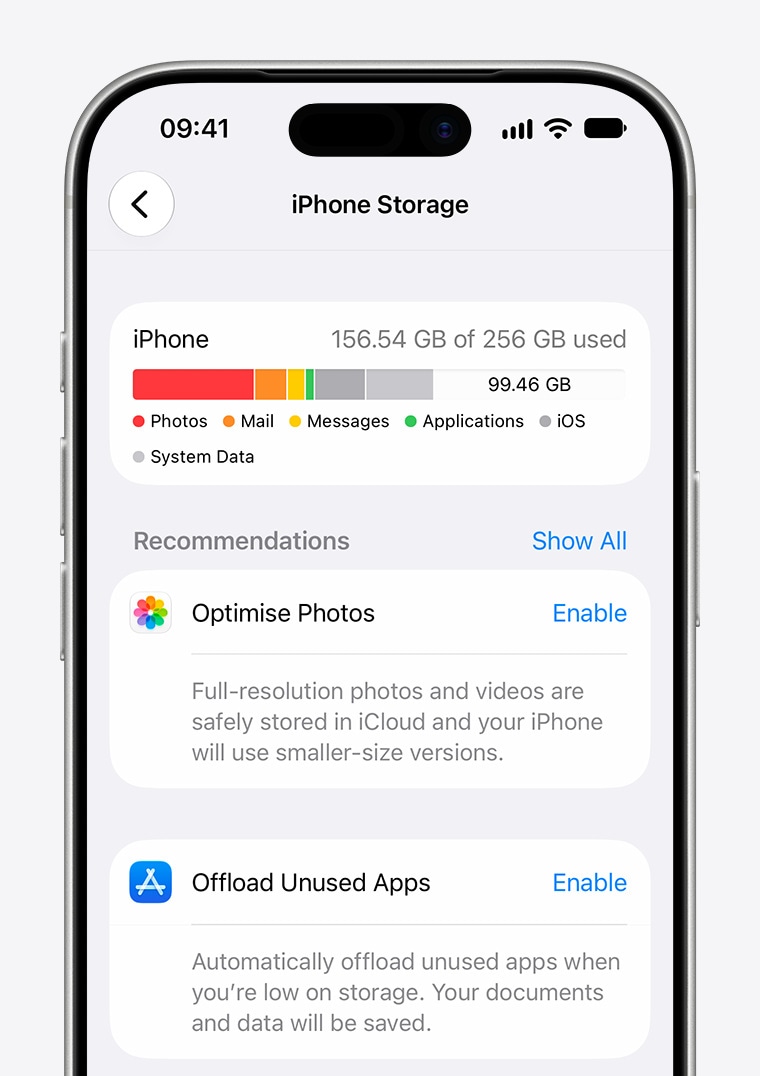
Step 2. If little space remains, review Apple’s recommendations and remove only files or apps you no longer need. Back up important recordings first. Do not delete the only copy of a lagging video.
Step 3. Restart Photos, open the clip again and verify whether playback improves.
If this fails: Free space alone does not guarantee smooth decoding of high-resolution Dolby Vision, HEVC or ProRes material. Test another clip and keep the original recording intact.
Check iCloud Photos Sync and Allow Time to Load Originals
With storage optimization enabled, Photos may keep smaller local representations while full-resolution video is available from iCloud. A video that pauses during retrieval is not necessarily a damaged file.
Step 1. Open the Photos iCloud settings from your Apple Account or iCloud settings and confirm that Sync this iPhone and the shown storage option match your intended configuration.
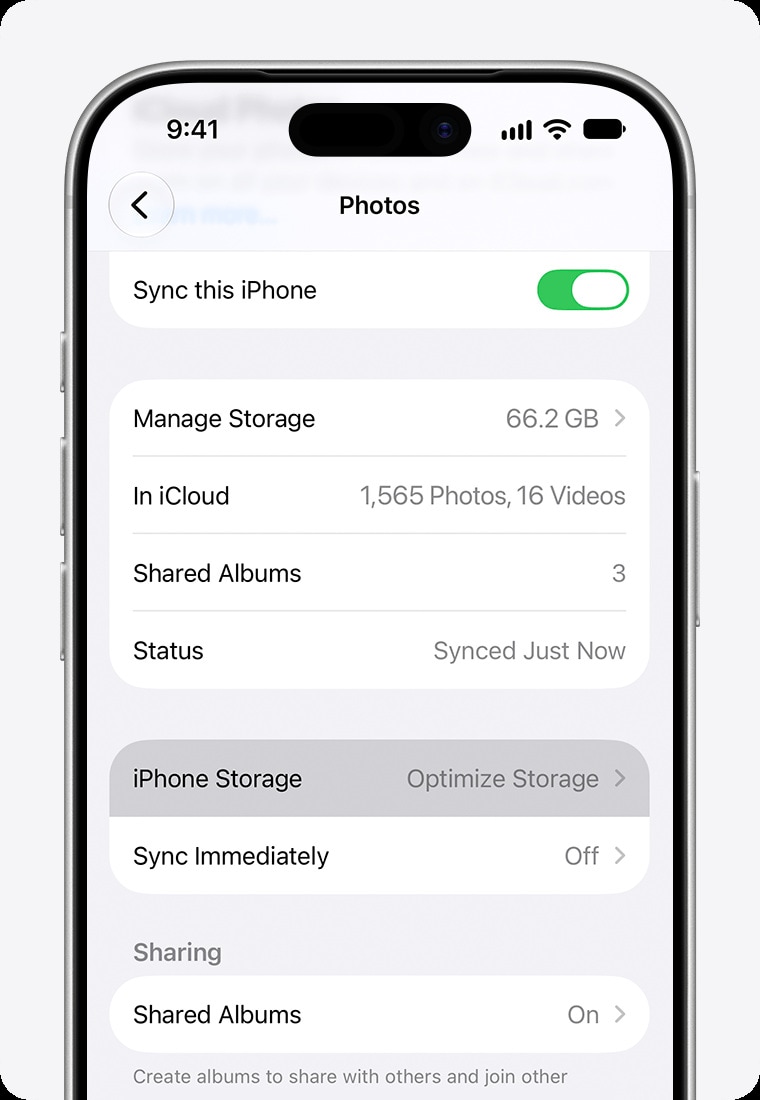
Step 2. Connect to reliable Wi-Fi and power if needed, open the affected video in Photos, and allow the full-quality file to finish loading before evaluating playback. The screen shown is a current iPhone Photos settings example; wording differs on earlier iOS versions.
Step 3. Compare with a video that is confirmed saved locally. If iCloud media loads but all high-resolution recordings still stutter, investigate format compatibility or device performance instead of turning sync off.
If this fails: Review Apple’s current iCloud Photos guidance. Do not select Download and Keep Originals unless you have enough space, and do not disable sync merely to treat playback lag.
Part 5. Reduce Lag in Online Video Without Changing Local Files
Online streams behave differently from downloaded video files. When only one website pauses or buffers, reduce how much data must arrive each second before troubleshooting codecs or file damage.
Lower YouTube Playback Quality for a Comparison Test
If the stream is not arriving quickly enough, dropping from 4K or 1080p to a lower resolution can reveal whether the connection is the limiting factor.
Step 1. Play the video on YouTube, select the player Settings gear, and open Quality (or the quality option shown on mobile).
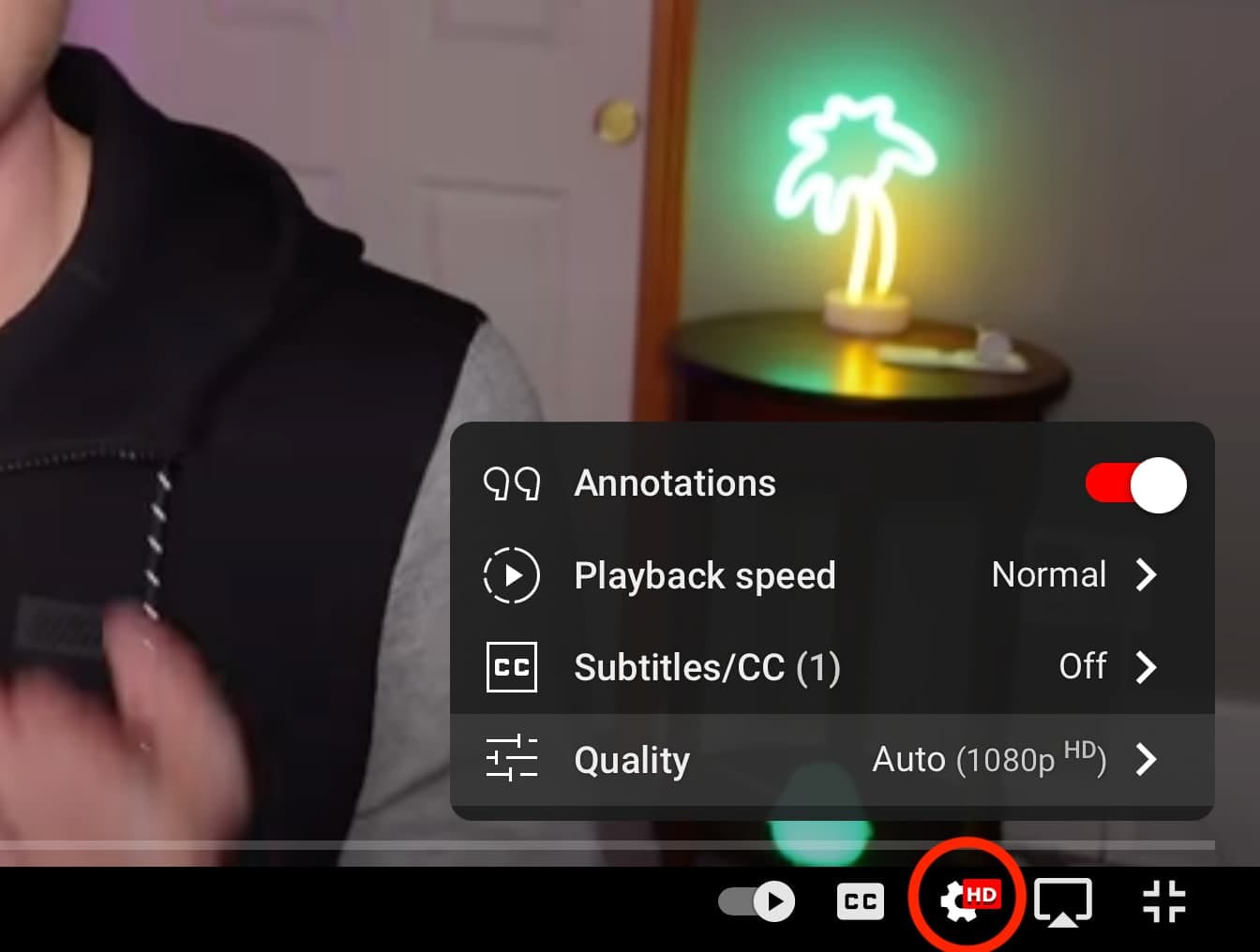
Step 2. Choose a lower available quality, such as 720p or 480p, for a short comparison. Let playback run long enough to observe whether the buffering pauses stop.
Step 3. Return to your preferred quality if it is stable, or test another network and browser. The exact player menu may vary between desktop and mobile versions.
If this fails: Follow YouTube Help on video quality. Player settings cannot recover a missing local file or repair already-damaged frames.
Part 6. What If the Video Is Still Choppy or the Original File Is Missing?
At this stage, decide whether you are dealing with a playback limitation, a bad source recording or a genuinely lost video. Those outcomes require different solutions and should not be treated as interchangeable.
- Only VLC lags: Keep the known-good file untouched, compare decoder settings and use the dedicated 4K VLC playback guide if your issue is specifically HEVC or Ultra HD.
- Every player stutters at the exact same time code: Compare with the original camera or phone recording and a safe copy. If dropped frames were recorded, changing VLC cache will not recreate missing source frames.
- Only a streaming site buffers: Check delivery speed, available quality and network stability. Avoid disk repair or installing unrelated codec packs.
- The original video was deleted or disappeared from the card or drive: Stop writing new files to that source. If it is still readable, Recoverit video recovery may help locate recoverable missing clips. Save recovered files to another drive; recovery is not guaranteed and it does not repair VLC settings.
- Video-game lag or FPS drops: Game frame rate and input latency are different from video-player buffering. Check the game and capture settings rather than treating the clip as a damaged media file.
Information-gain checkpoint: Playback lag, network buffering and permanent frame loss have distinct tests. If a locally saved original contains normal motion but the displayed copy jerks, diagnose playback first; if the original itself has missing frames, neither network caching nor a faster decoder can restore unrecorded motion.

Conclusion
To fix video lag without risking the recording, test the same file in another player, then follow the branch that matches your symptom. For VLC and VLC 4K video lagging, compare hardware decoding, buffering conditions, output modules and preferences one at a time. For laggy video on Windows, inspect resource use; for iPhone Photos, check storage and iCloud loading; for YouTube, try a lower stream quality. Do not assume that a jerky preview means the underlying video is corrupted.
If the original clip is truly missing, preserve its source storage before considering data recovery. Otherwise, avoid download CTAs and repair claims unrelated to the actual playback problem.
FAQ
-
Why is my VLC player lagging even on a fast laptop?
Check whether VLC is decoding a demanding HEVC or 4K file on the CPU, using an incompatible video output module, or reading slowly from a network/external source. Compare a lighter local H.264 clip and change one setting at a time. -
Should I disable hardware acceleration in VLC for 4K videos?
Not automatically. Compatible GPU decoding often reduces CPU load for 4K HEVC. Try Automatic first; test Disable only if the hardware path produces visible glitches or stutter, then use whichever setting actually works better. -
Can increasing VLC cache fix every laggy video?
No. File or network caching can help uneven delivery from a slow source, but it cannot raise a weak decoder's frame rate or restore frames missing from the recording. -
Why do my iPhone videos lag while they load in Photos?
Photos may be retrieving an iCloud original, or local capacity may be tight. Check storage, Wi-Fi connectivity, and Photos sync status. Do not delete or reset your only copy. -
Why is a recorded video stuttering in every player?
The original footage may contain irregular or missing frames, or the codec may be difficult for both devices. Compare with an unedited camera original before assuming file damage. -
Will Recoverit fix VLC video lagging?
No. Recoverit is for recovering recoverable lost or deleted videos from accessible source storage. It does not change VLC decoding, fix network buffering or recreate frames that were never recorded.


