If an online video keeps pausing to load, first lower its playback quality, pause large downloads on your network, and replay the same section. Then compare another device or connection. Change one condition at a time so you can tell what helped. If a fully downloaded personal video freezes without a loading indicator, check the local file in Part 3 instead of changing your internet settings.
A fast speed-test result does not rule out unstable Wi-Fi, a browser problem, or trouble reaching one streaming service. Use the comparisons below before buying equipment or changing system settings. The main checks apply to viewers on computers, phones, and TVs; desktop screenshots illustrate the named steps.
In This Article
Part 1. What Is Video Buffering, and Why Does It Happen?
Video buffering means loading video data ahead of playback. The player keeps some upcoming content ready so it can continue through brief delivery delays. The frustrating pauses happen when the next portion is not ready in time. Cloudflare's buffering explanation distinguishes this normal loading process from the interruptions viewers notice.
Common causes include an unstable connection, competing network activity, a quality setting that is too demanding, browser interference, and a problem with the streaming service. Similar-looking stutter can also come from a device that cannot process the video smoothly. Vimeo's playback guidance separates insufficient bandwidth from processing limitations and dropped frames.
| What you notice | What to investigate | First useful comparison |
| An online video repeatedly pauses with a loading indicator | Data delivery, selected quality, or the service | The same video at a lower quality |
| Only one browser or app struggles | That app's session, extensions, updates, or playback support | The same video in another supported browser or app |
| Motion is jerky while audio continues, including in local videos | Decoding or device performance | The same file in a compatible second player; see the video lag and decoding guide |
| A fully downloaded personal video fails at the same point in several players | The file, its encoding, or an incomplete transfer | A healthy original or a fresh transfer, then Part 3 |
Why does a video keep buffering when the internet seems fine? A speed test measures one connection at one moment; it cannot confirm that a streaming service will deliver data steadily throughout a movie. YouTube provides recommended sustained speeds by resolution. If only one title or service pauses, compare another title before blaming the whole home network.
Part 2. How to Stop a Video from Buffering
Change one condition at a time and replay the same section. Start with quality, then separate a connection problem from a device or app problem; stop once playback remains stable at a quality you can use.
Method 1. Lower the Quality and Compare the Same Video
Use this when: A stream pauses repeatedly, particularly at a higher resolution.
Step 1. Open the video's settings. In the YouTube desktop player, select the gear, then find "Quality". The example below shows that control before a different resolution is selected.
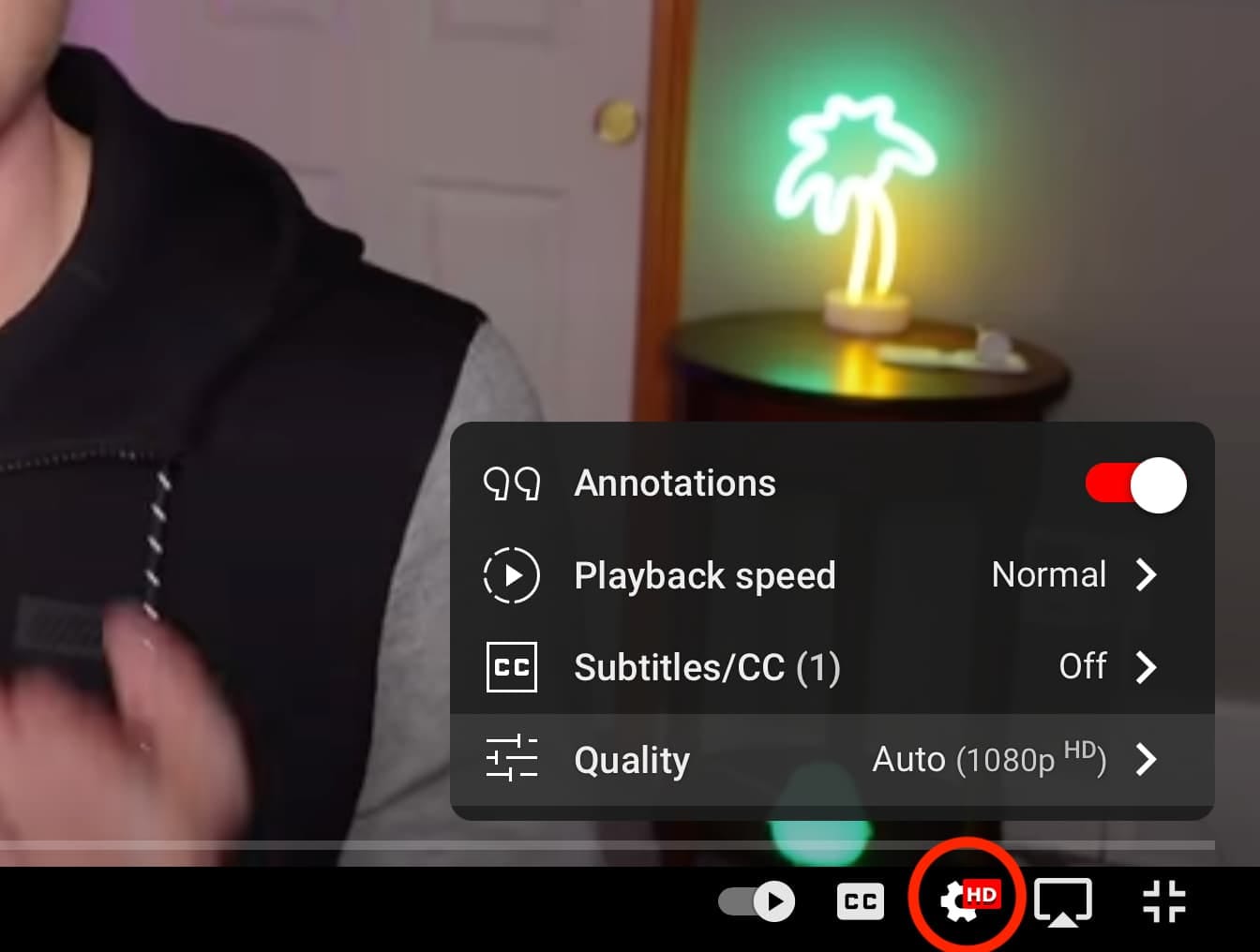
Step 2. Select a lower available resolution, such as 720p instead of 1080p, and replay the troublesome section. Keep the device and connection unchanged. YouTube's video quality instructions cover computers and TVs; mobile menus can differ.
Step 3. If playback becomes stable, keep that setting temporarily. Later, try "Auto" or raise the resolution and compare again. Also play another video on the same service to check whether the problem is limited to one title.
What the result means: Improvement at a lower resolution narrows the problem to the demands of that playback path. It does not, by itself, prove your internet plan is too slow: device processing and browser support can also change the result.
If it still buffers: Continue with the connection comparison below. Repeatedly pausing and restarting is a temporary workaround, not a diagnosis.
Method 2. Check Network Load, Wi-Fi, and Other Devices
Use this when: Several streams pause, or you need to check why video keeps buffering but the internet appears fine.
Step 1. Look for other active downloads, cloud uploads, or streams. On Windows, press Ctrl + Shift + Esc, open "Processes", and inspect the "Network" column while the problem occurs. Microsoft documents Task Manager's resource monitoring. This Windows 11 example shows the available columns; it is not a measurement of your connection.
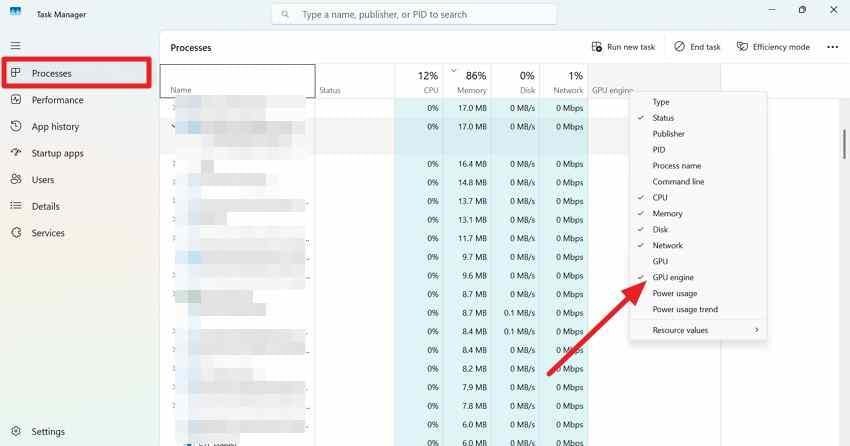
Step 2. Pause a large transfer in its own app or close an extra stream, then replay the video. Save work before closing an application. On a phone or TV, check other active devices sharing your connection as well. A low reading on one PC does not show what the rest of the household is using.
Step 3. Compare the same video at the same quality over Wi-Fi and, if supported, Ethernet. Move a wireless device closer to the router for a separate test. On a phone, you can compare Wi-Fi with mobile data if your plan and circumstances allow it; keep data charges in mind. On a smart TV, test a wired connection if the model supports one, or compare the TV with another device on the same Wi-Fi. Keep the playback quality unchanged while testing the connection.
Step 4. Try a second device on the original network. Compare another streaming service too, using a similar quality where possible. Treat these outcomes as clues:
| Comparison result | Next action |
| The same device plays smoothly over Ethernet or another connection | Investigate the original Wi-Fi or network path; keep the video file unchanged |
| Other devices work on the same network, but one device still buffers | Check that device's app, browser, and playback support |
| Several devices struggle across services on one network | Check network load, router status, and your ISP's service information |
| Only one service or title fails across devices and connections | Check the service's support information and report the affected title or error |
If the home connection remains unreliable: Restart the modem and router using the manufacturer's power-cycle instructions, then wait for connectivity to return. A restart is different from a factory reset; do not press a recessed Reset button for this comparison. Netflix's buffering guide also covers Wi-Fi placement and the device/connection details to provide to your ISP.
Method 3. Isolate Browser or App Problems
Use this when: The connection works elsewhere, but one browser or streaming app continues to buffer.
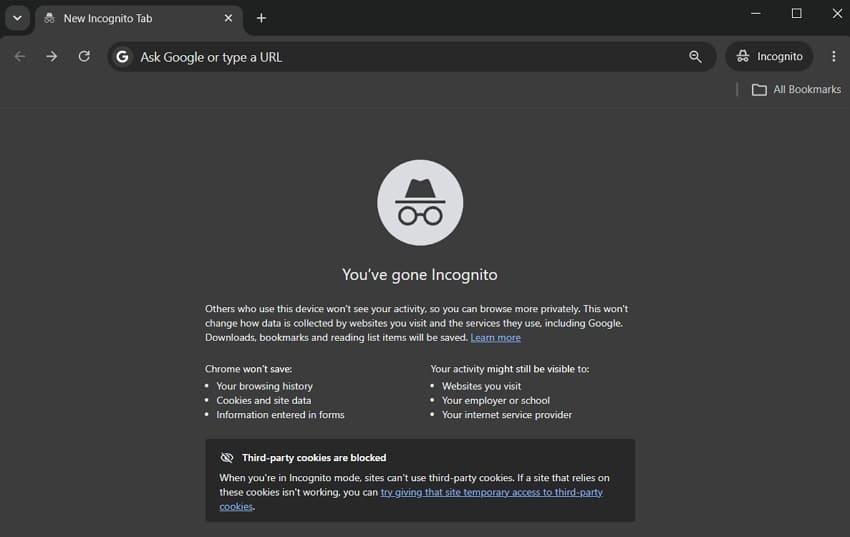
Step 1. In desktop Chrome, open "More > New Incognito Window". The new window should show an Incognito indicator, as below. For this test, disable any extensions you have explicitly allowed in Incognito, then open the same video at the same quality.
Step 2. If it works there, return to a normal window and open "More > Extensions > Manage extensions". Turn extensions off for a comparison, reload the video, and re-enable them individually to identify a conflict. Chrome's video troubleshooting instructions describe this sequence.
Step 3. If extensions do not explain the difference, open "More > Delete browsing data" in a normal window. Choose a time range, select "Cached images and files", leave unrelated data unchecked, and select "Delete data" for an initial cache test. If you also remove "Cookies and other site data", expect sign-outs and lost site preferences. Retest after each change.
What the result means: Incognito changes session data as well as extension behavior. Success there points toward the regular browser environment, but does not prove that one extension is responsible. Some services also need you to sign in before a comparison is meaningful.
If it still buffers: Restart or update the affected app through its official update route and compare another supported browser or app. For detailed platform steps, use the YouTube playback troubleshooting guide for Chrome or the Android and iPhone video playback guide. If every browser fails on the same connection, return to Method 2.
Part 3. What If a Downloaded Video Still Freezes?
A saved video that freezes is a different problem from an online stream waiting for data. Check the actual downloaded file first, not a streaming app cache or an online-only shortcut. Before using repair software, confirm that the transfer finished and try the file in another compatible player.
| What happens to the downloaded video? | Safest next step |
| The download or transfer stopped early, or the file is incomplete | Preserve the current copy; finish or repeat the transfer from the original source if it is still available |
| One app freezes but a second compatible player works | Check that app, supported codecs, and updates rather than repairing the file |
| Several complete videos stutter on one device | Investigate decoding or device performance using the video lag guide linked above |
| The same complete video fails at a similar point in multiple compatible players | Preserve the original, compare another intact export, and consider file repair on a separate copy |
If these checks point to a damaged file that still contains usable video data, you can try Recoverit File Repair on a copy. The Windows workflow below follows the official Recoverit guide. Menu labels may vary by installed build. Recoverit cannot make an unstable streaming connection deliver video faster, and file repair cannot reconstruct footage that was never downloaded or no longer exists.
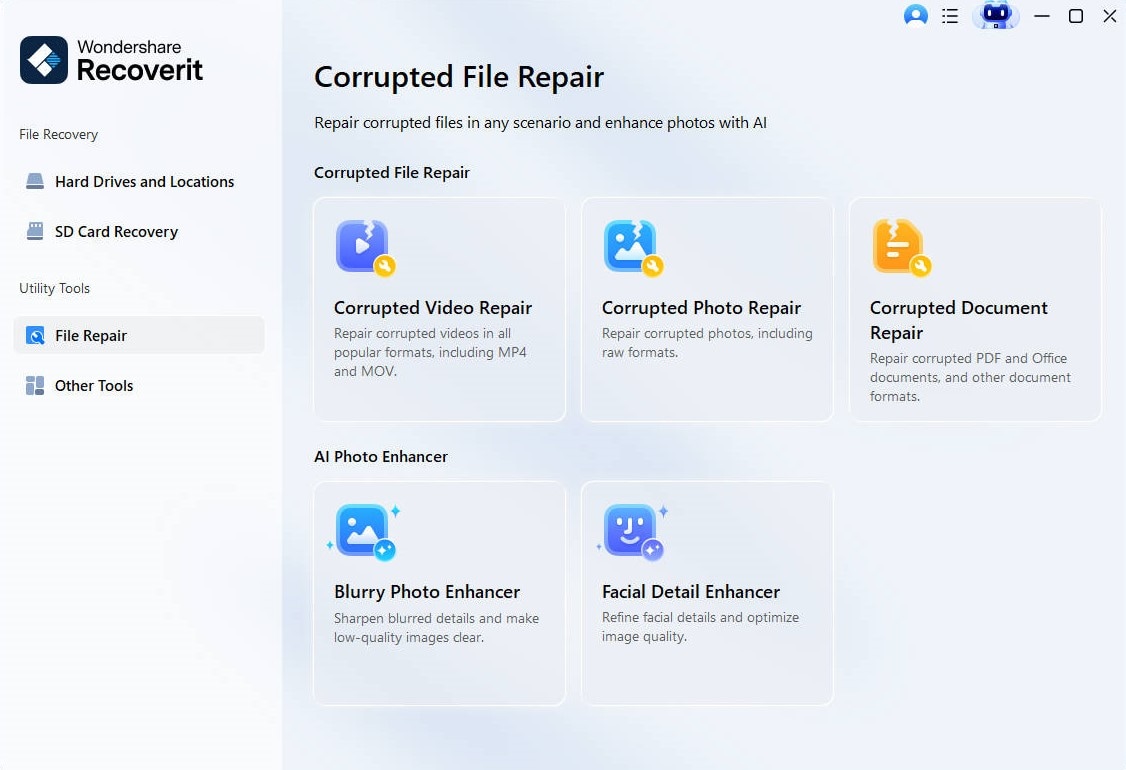
Step 1. Open Recoverit and select "File Repair > Corrupted Video Repair".
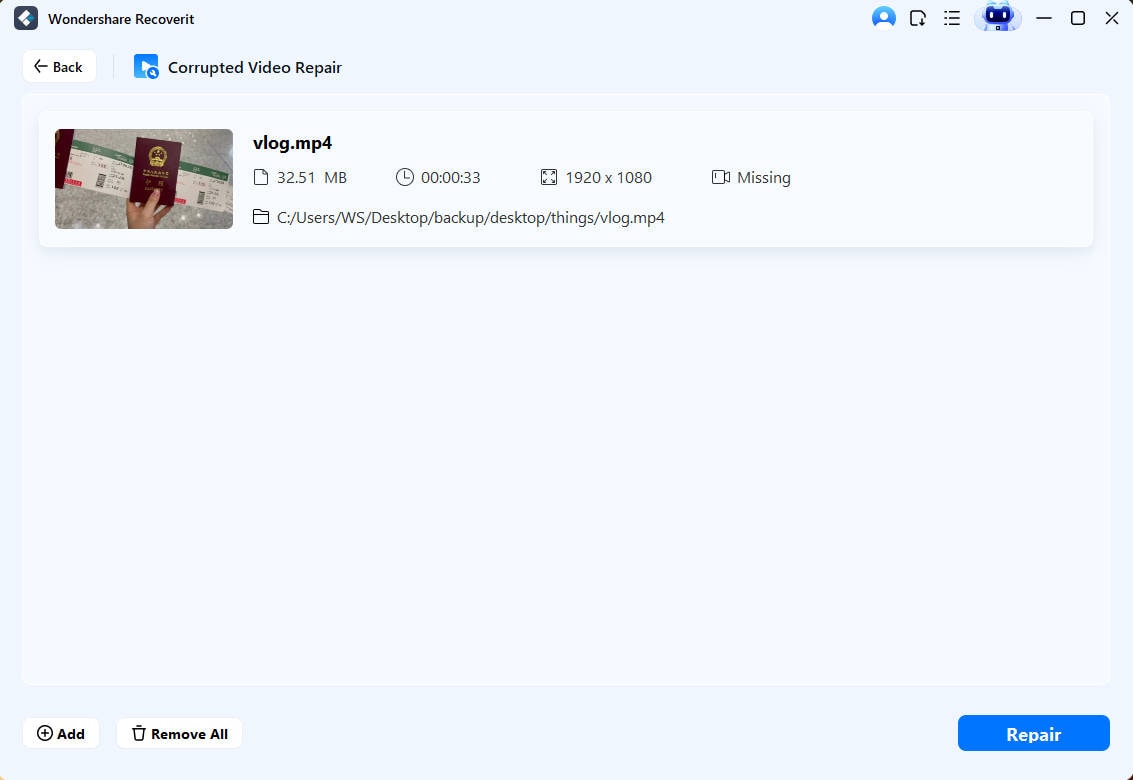
Step 2. Use "Add" to select a separate copy of the damaged local video, then click "Repair". Keep the original file unchanged while you evaluate the result.
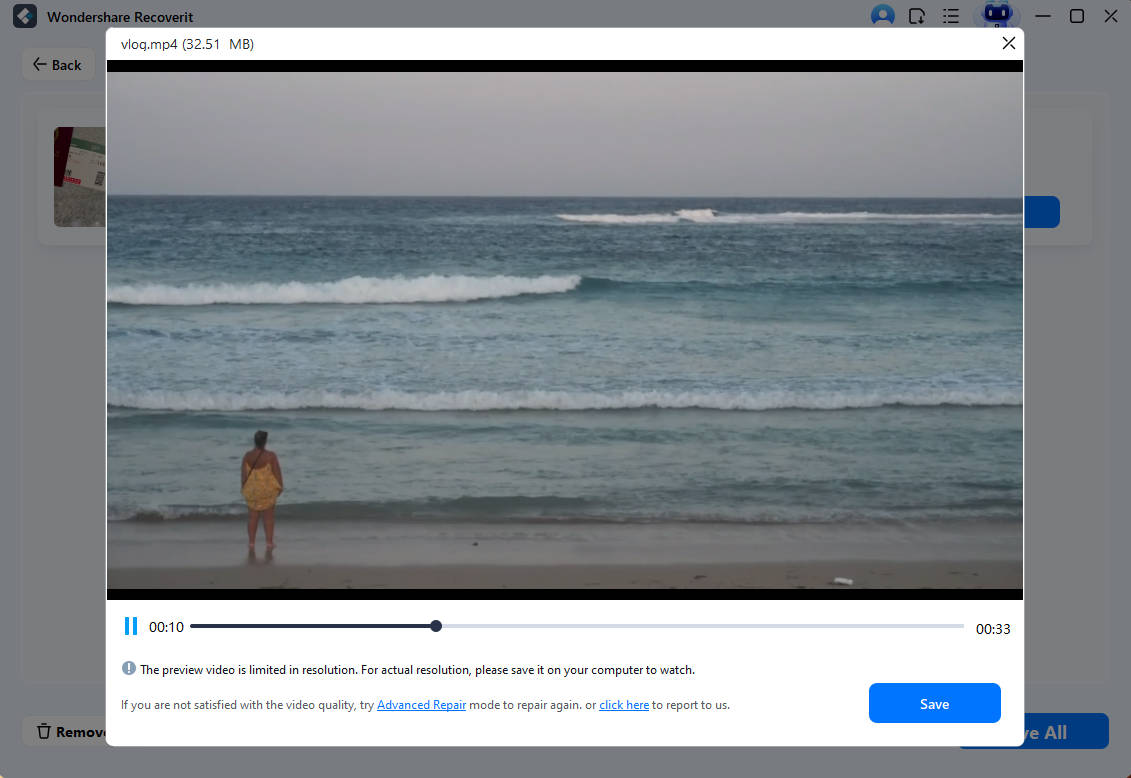
Step 3. Preview the repaired video, including the section that failed. Select "Save" to a different location, then play the saved output in your usual player to check duration, picture, and audio.
If repair is unsuccessful: Keep the original and compare another intact copy or backup. A repair attempt does not guarantee a playable result.
Have a damaged video saved on your computer? Download Recoverit and try File Repair on a separate copy, then preview the result before saving. The installer is free to download; check the current plan and save limits before relying on paid functions. If your problem is a streaming video that keeps loading, use Part 2 instead.
If the original video was deleted or disappeared from a card or drive, use the Recoverit video recovery workflow instead. Stop writing to the source and save recovered files elsewhere; overwritten data may be unrecoverable. Repeated disconnects or signs of physical damage call for a storage specialist.
Part 4. Verify the Result or Get Targeted Help
Replay the section that kept pausing and continue beyond it at your chosen quality. Confirm that the picture advances normally and audio stays in sync. Record which change helped, then restore paused transfers or extensions one at a time to see whether the problem returns.
If buffering continues, note whether it happens only on one smart TV or phone, in one app, or across several devices and services. Update the affected device app through its official store or built-in update settings; do not factory-reset the device as a first test. When asking the service or ISP for help, include the title or error, device and app version, time, playback quality, Wi-Fi or wired connection, and results from another device or network.
Conclusion
When a stream keeps buffering, compare the same video at a lower quality, then test your network, device, and browser one at a time. Keep the setting that produces stable playback. If a separate downloaded video freezes in multiple players, investigate the local file; only then consider repair. Recovering a deleted recording from a drive is a different task from fixing an online stream.
FAQ
-
How fast should my internet be for streaming without buffering?
Check the service and resolution. YouTube recommends sustained speeds of about 5 Mbps for 1080p and 20 Mbps for 4K. Netflix recommends a stable connection of 5 Mbps for 1080p and 15 Mbps for 4K. These are platform recommendations, not guarantees; shared usage and connection stability still matter. -
Why do my videos keep buffering at night?
More simultaneous streaming or transfers on your network can increase demand; problems may also occur farther along the delivery path. Compare the same quality at busy and quiet times, and record whether a wired connection helps. The time of day alone does not establish which provider or device is responsible. -
Why does the TV buffer when my phone plays normally?
The devices may use different quality settings, Wi-Fi locations, apps, or playback capabilities. Compare the same title and network at similar quality first. If only the TV struggles, follow its streaming app's device-specific support steps; replacing your broadband plan is not the first conclusion from this result. -
Why can a live stream buffer more than a recorded video?
A low-latency live stream has less content buffered ahead, making interruptions harder to absorb. YouTube documents this latency trade-off. Viewers can compare quality and connections. Any available broadcast latency setting is controlled by the broadcaster. -
Can video repair software stop a streaming video from buffering?
No. Online buffering depends on data delivery, the service, playback quality, and the app or device. File repair software works with an existing local video file, not a stream that has not arrived. Only consider Recoverit File Repair when a fully downloaded copy is damaged and still has usable data; it is not a replacement for checking the network.


