 TL;DR:
To recover files from an inaccessible or accidentally formatted EMTEC USB flash drive, immediately stop writing data to the device, decline any operating system format prompts, and use software like Wondershare Recoverit or Windows File Recovery to scan and extract your files to a separate destination disk.
● Do not run the EMTEC Restore utility to retrieve lost photos or videos, as this specific manufacturer tool is meant for logical failures like write-locks and will delete unrecovered data.
● For S600 SpeedIN, Click Fast, and X600 SpeedIN models using EMTEC Security, standard recovery software cannot bypass the password, and data may be permanently formatted after six incorrect guesses or if partition sizes are altered.
● Software scans are only viable if Windows Disk Management or macOS Disk Utility detects the USB at its expected capacity; if the device overheats, repeatedly disconnects, or shows 0 bytes, stop scanning to avoid worsening physical hardware failure.
Ask AI for a summary
 ChatGPT
 Perplexity
 Gemini
 Claude
 Grok
If your EMTEC USB flash drive is not working, asks to be formatted, or no longer shows your photos and videos, stop saving anything to it. Files may still be recoverable when the device is readable and the original data has not been overwritten or otherwise erased. Check for an existing backup first; if the computer detects the USB at its expected capacity and it remains stable, a recovery scan may help.
For example, if you accidentally formatted an 8GB EMTEC flash drive containing family photos, do not format it again to try to undo the mistake. Do not click Format or Initialize or run a repair utility before protecting your files. Formatting, file-system repairs, and some manufacturer tools can change what remains on the flash drive. Recovery is not guaranteed, especially after a full format, new writes, or hardware failure.
In This Article
Part 1. Why Is Your EMTEC Flash Drive Not Working?
Different symptoms call for different actions. A flash drive that was accidentally formatted is not the same as one that has lost its USB controller or has an inaccessible password-protected partition. Identify what you see before choosing a recovery tool or attempting a repair.
| What You See | What It May Mean | Safest Next Step |
| You formatted the EMTEC USB and the old files disappeared. | The previous file-system records or file data may have changed. | Stop writes. Check backups, then scan a stable, detectable drive. Do not reformat. |
| The drive opens, but some files or folders are missing. | Files may have been deleted, hidden, or affected by file-system problems. | Copy accessible files to another disk; recover the missing ones without writing to the USB. |
| Windows asks you to format the USB or shows RAW. | The file system may be inaccessible even though the hardware is detected. | Do not accept the format prompt. Confirm the device capacity and choose a read-only recovery path. |
| The flash drive is missing from File Explorer but has its expected size in Disk Management. | The volume may have a mounting, letter, or file-system issue. | Assess the source safely before changing any partition or drive-letter settings. |
| The USB shows 0 bytes, No Media, or repeatedly disconnects. | The flash memory or device electronics may be failing. | Stop repeated scans and seek professional diagnosis if the files matter. |
| Only the public area appears on an EMTEC Security-equipped model. | The private area may be locked rather than deleted. | Use the legitimate password or saved hint; avoid repeated guesses or partition reconfiguration. |
A missing drive letter or a RAW label is not, by itself, proof of physical failure. Conversely, detecting a device name in Device Manager does not mean recovery software can read its storage. The next checks help you tell the difference without writing to the source.
Part 2. What to Check Before Recovering EMTEC Files
Start with checks that do not erase the USB or rewrite its file system. If you can open some important files, copy them to a healthy computer drive or another external disk. Leave the original EMTEC drive unchanged until you have verified those copies.
- Inspect the connector and connection: Try one known-working USB port directly on the computer, rather than an unstable hub. If appropriate, test another computer. Stop if the connector is broken, the drive gets unusually hot, or it drops offline repeatedly.
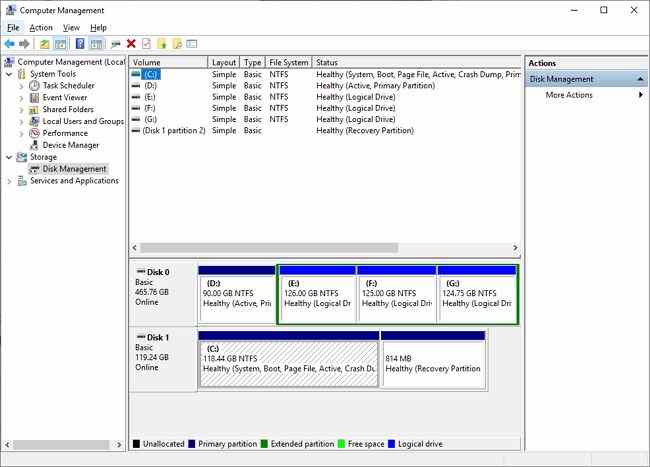
- Check detection on Windows: Right-click Start and choose Disk Management. Identify the EMTEC USB by its capacity and disk label, and see whether it reports the expected size, RAW, Unallocated, or No Media. Do not select Initialize or Format.
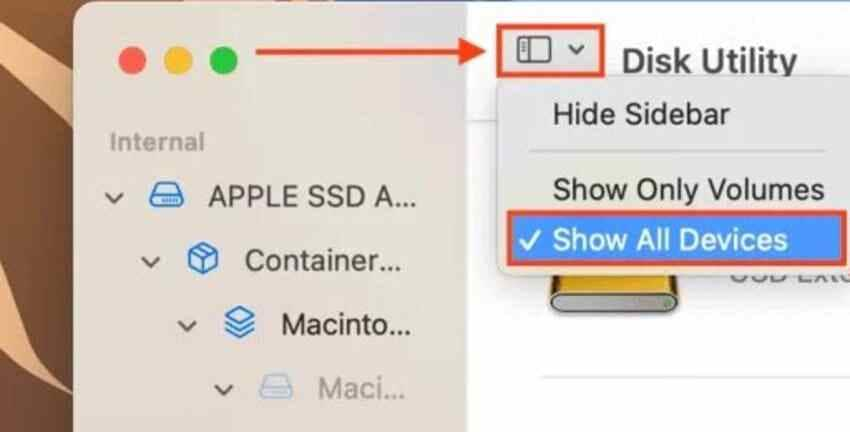
- Check detection on Mac: Open Disk Utility, select View > Show All Devices, and check whether the physical EMTEC flash drive appears in the sidebar. Do not select Erase or run First Aid while important files remain unprotected.
- Prepare a separate destination: Have enough free space on another healthy physical drive to store recovered files. The recovery destination must not be the source EMTEC USB.
If the drive is stable and visible at the expected capacity, use the recovery methods below. If it reports 0 bytes or No Media or keeps disconnecting, skip software scans and read the hardware-failure guidance in Part 5 instead.
Part 3. How to Recover Files from an EMTEC USB Drive
Recover files before trying to make the USB usable again. The best approach depends on whether a backup exists and whether Windows or macOS can still read the drive. These methods do not reverse a format operation or guarantee that every photo or video is intact.
Method 1. Restore Files from an Existing Backup
Best for: Files you previously copied to a computer, cloud account, or another external drive. Restoring an existing copy avoids scanning a possibly failing USB.
- Open the computer folder, backup drive, or cloud account where you saved copies of the EMTEC files before the incident.
- Find the latest intact copy of the missing photos, videos, and documents. Compare dates and open a few files to check that they work.
- Copy the files to a healthy destination and verify the folders you need. Keep the original EMTEC USB untouched until you know what is still missing.
On Windows, File History can help only if the relevant folders were included in an earlier backup. The following illustrations show where to find saved versions; they do not mean an EMTEC USB was automatically backed up.
File History step 1. If File History was set up before the files went missing, open it in Control Panel and choose Restore personal files.
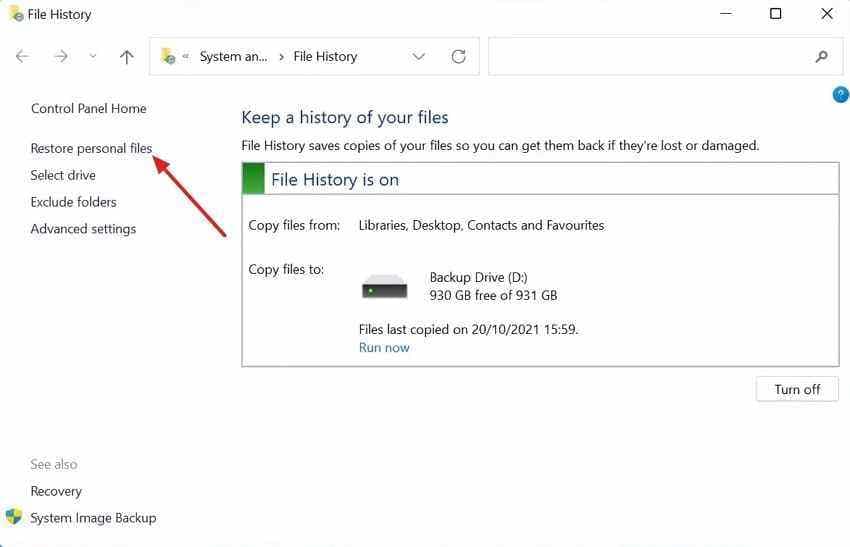
File History step 2. Browse available folders and backup dates, select the intact files, and restore them to a safe destination. Check the restore destination before proceeding; the green restore button may use the original location.
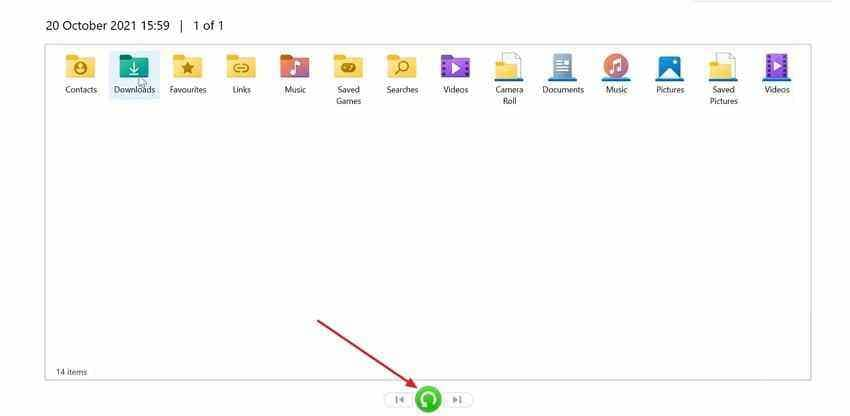
If no copy exists and the EMTEC flash drive remains readable and stable, continue with a recovery scan rather than attempting to format it.
Method 2. Scan a Detectable EMTEC USB Drive with Recoverit
Best for: Accidentally deleted or formatted files on an EMTEC USB that the computer still detects consistently. Wondershare Recoverit USB Data Recovery can scan supported external storage, show candidate files, and help you save selected recoverable data to a separate location. It does not repair broken flash-memory hardware, defeat EMTEC Security passwords, or guarantee that overwritten files can be retrieved.
Step 1. Connect and select the EMTEC flash drive. Install Recoverit on your computer, not on the affected USB. Connect the original flash drive and identify it by its actual device name and capacity under the available external storage locations. Choose the correct source drive and start the scan. Use the external-device recovery workflow for a USB flash drive rather than an SD Card-specific workflow.
Step 2. Scan for recoverable files. Let the scan examine the detected EMTEC device. Use the available paths, file types, or search controls to locate the files that matter. A filename in a result list does not prove the file content is intact. A stable drive and a completed scan generally give you more information to review than an interrupted scan.
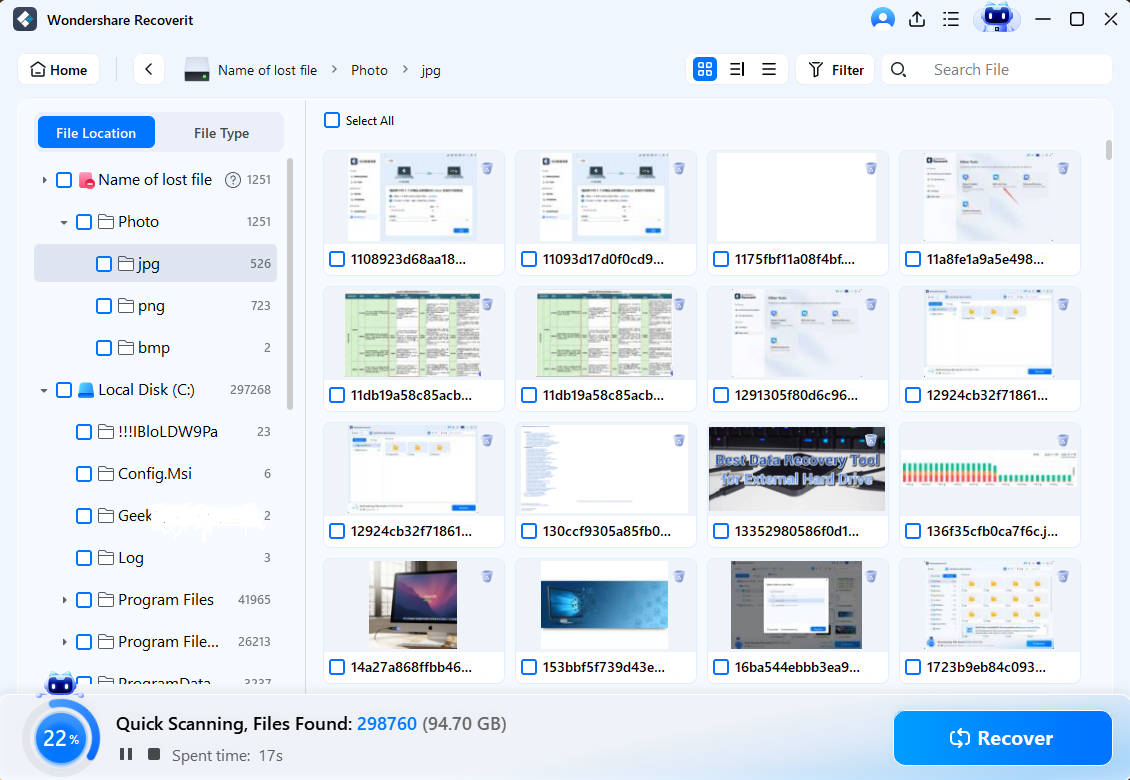
Step 3. Preview and recover to another disk. Where supported, preview important files and select the recoverable copies. Click Recover and choose your computer's internal disk or another healthy external drive as the destination. Never save the output back to the source EMTEC USB. After recovery, open a sample of the photos and videos from the destination to check that they work.
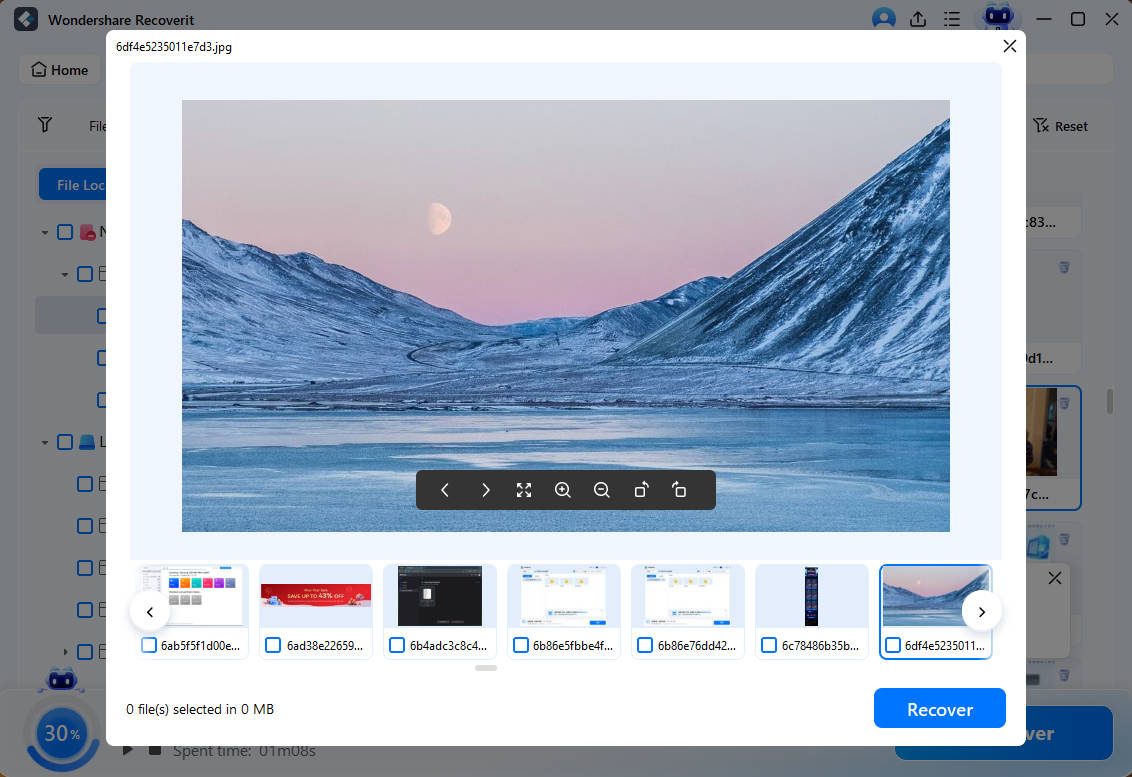
Note: Free download and scanning do not necessarily mean unlimited free recovery. Check the current plan's recovery limits before purchasing. If your drive is physically unstable or cannot be detected as usable storage, stop attempting repeated scans.
For a broader explanation of USB data-loss scenarios, see how to recover files from a USB flash drive.
Method 3. Try Windows File Recovery for Free
Best for: Windows users comfortable with Command Prompt whose EMTEC drive still has a usable drive letter, remains connected, and can tolerate a scan. Microsoft's Windows File Recovery is a separate command-line utility. It is not a hardware repair tool, and it does not run on macOS.
- Install Windows File Recovery on your computer from Microsoft's instructions. Do not install it on the EMTEC USB.
- Check the source and destination drive letters. In this example, E: is the affected EMTEC flash drive and C: is a different, healthy destination. Confirm both on your own PC before continuing.
- Open Windows File Recovery and run
winfr E: C: /extensive. Extensive mode is appropriate for FAT/exFAT storage and for a disk after formatting. Replace the letters with your actual drives and confirm the prompt.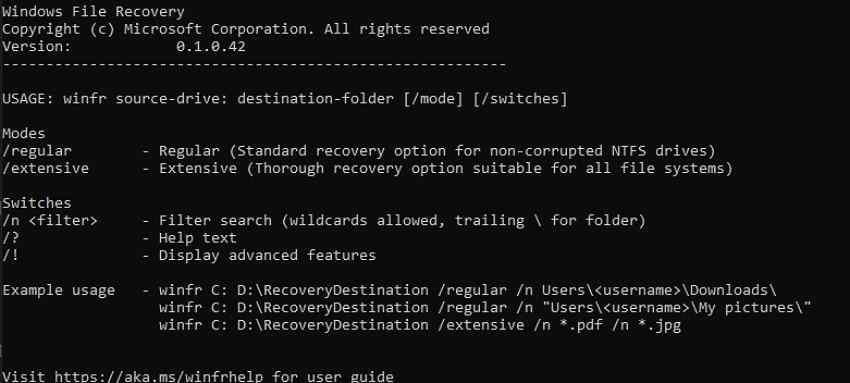
- Open the recovery folder created on the destination disk and test the recovered files. If the program cannot read the source, or the USB disconnects, stop instead of repeatedly retrying.
Windows File Recovery cannot make inaccessible hardware readable. Do not substitute CHKDSK /f or attrib for lost-file recovery: those commands address file-system consistency and file attributes, not the same recovery task.
Part 4. EMTEC Security and Restore: What to Avoid Before Recovery
EMTEC publishes optional utilities for selected products. They are not interchangeable with data recovery software, and they do not apply to every EMTEC USB model. Check the exact model and the utility's official instructions before using either one.
EMTEC Security: Check the Protected Partition
Some EMTEC products, including certain S600 SpeedIN, Click Fast, and X600 SpeedIN models, offer an optional EMTEC Security password-protected partition. If you see only the public area, your private files may be locked rather than deleted. Use the correct password or a previously configured password hint; ordinary recovery software cannot bypass the password to decrypt the private area.
Warning: EMTEC says that changing the secure/public partition sizes erases data in both partitions. Its documented security utility also warns before the sixth incorrect password attempt, after which the secured area's data may be formatted. Do not repeatedly guess passwords or reconfigure partitions to try to reveal missing files. These limitations apply to devices using this specific utility, not to every EMTEC flash drive.
EMTEC Restore: Do Not Run It on Unrecovered Data
EMTEC's Restore utility is described for certain logical USB failures, including write-lock problems. Its procedure includes an explicit warning about deleting data. Despite its name, it is not a tool for restoring accidentally deleted photos or videos. If your EMTEC USB still contains files you need, recover and verify them elsewhere before considering Restore or any formatting operation.
If you are unsure which EMTEC utility belongs to your particular device, check its original packaging or official model support details rather than trying different executables on the USB.
Part 5. What If Your EMTEC USB Is Still Not Detected?
If a simple port change does not help, the safest next action depends on whether Windows or macOS detects the USB as a storage device with its expected capacity. Do not use a format prompt as a detection test, and do not assume a driver update will fix failing flash memory.
Check Windows Drivers Only When the Data Is Protected
After you have backed up or recovered your important files, or confirmed that there is nothing left you need to recover, a Windows driver check may be useful if the device is visible in Device Manager but not behaving normally:
- Right-click Start and open Device Manager.
- Expand Disk drives or the relevant USB controllers category and identify the EMTEC device carefully.
- If Windows reports a driver problem, select the appropriate device and choose Update driver, then follow Microsoft's driver guidance. Recheck Disk Management afterward.

A driver update does not rebuild deleted files, correct a damaged controller, or restore data erased by an EMTEC utility. If the computer detects the drive only intermittently, avoid repeated installation or repair attempts.
Stop When the Symptoms Suggest Hardware Failure
If the connector is bent, the flash drive gets unusually hot, repeatedly disappears, or shows No Media or zero capacity on more than one computer, normal file-recovery software may have no readable storage to scan. Stop DIY attempts if the data is valuable. EMTEC also lists an official data recovery service route for users seeking professional assessment; that is a separate service, not an endorsement of Recoverit.
If the USB is consistently detected but remains logically inaccessible, compare its symptoms with this USB drive not recognized troubleshooting guide before considering further changes.
Part 6. Verify Recovered Files Before Reusing the EMTEC Drive
Once you have saved recoverable files somewhere else, open representative documents, photographs, and videos to confirm that they work. Compare your important folders against an earlier backup, if available, and keep at least one additional copy of irreplaceable files.
- Check the actual content: A recovered filename or file size alone does not prove that the photo, video, or document is usable.
- Do not reuse an unstable USB: A device that overheats, disconnects, or repeatedly corrupts files should be replaced rather than trusted with your only copy.
- Consider repairs only after data protection: File-system repair or reformatting may make a stable USB usable again, but it is not a substitute for recovering lost files.
- Eject the drive safely: Allow transfers to finish before unplugging it; keep backups outside the USB.
Conclusion
An EMTEC USB flash drive that stops working is not always beyond recovery. Start by stopping writes and checking how the computer detects the device. Restore existing backups first; if the drive is stable and readable, scan for recoverable files and save them to another disk. Treat EMTEC Security, Restore, CHKDSK, and formatting as separate operations with different risks. If the hardware is failing, stop experimenting and seek specialist help rather than risking the remaining data.
FAQ
-
Can I recover files after accidentally formatting an EMTEC flash drive?
Sometimes. Recovery depends on what the format operation changed, later writes, and whether the device remains readable. Stop using the EMTEC USB, check backups, and scan a detectable, stable drive before formatting it again. -
Do I need a special EMTEC USB driver to recover files?
Not normally for a USB flash drive that Windows or macOS already recognizes as readable storage. If a driver or connection problem prevents detection, identify the exact model and check the operating system's device status. Installing a driver does not recover deleted data. -
Can EMTEC Restore bring back deleted files?
No. EMTEC Restore is a manufacturer utility for selected logical device problems and its procedure warns about data deletion. Do not run it on a USB containing files that have not been protected. -
What if I cannot open an EMTEC Security private partition?
Use the correct password or the saved password hint for that particular Security-equipped model. Do not keep guessing passwords or change partition sizes; the official tool warns of data loss. General USB recovery tools cannot bypass its encryption. -
Should I format the EMTEC USB when Windows asks me to?
Not while it contains files you still need. Cancel the prompt, check whether the USB appears at its expected capacity in Disk Management, and protect or recover the files first. Formatting can make later recovery harder.


