Deleted a document, photo, or video from a USB flash drive? Recovery may still be possible, but your next action matters. Stop using the USB drive now so new files do not overwrite the data you are trying to recover. Then check whether another copy exists. If it does not, you can scan a readable USB drive with Windows File Recovery or Wondershare Recoverit and save any recovered files to a different drive.
A USB flash drive is also called a pen drive, thumb drive, or USB stick. The steps below focus on Windows 11 and compatible Windows 10 systems. If you deleted files while using a Mac, see our USB recovery guide for Mac.
In This Article
Part 1. Choose the Safest Recovery Path
Before trying a recovery tool, work out what actually happened. A file that was deleted is different from a file that is only hidden, and a USB drive that disconnects repeatedly needs a different response from one that opens normally.
| What you see | Likely situation | Safest next action |
| Files were deleted, but the USB drive opens normally. | Deleted data may still be recoverable. | Check an existing backup; otherwise use a recovery scan and save results elsewhere. |
| The USB looks empty, but its Properties window still shows used space. | Files may be hidden, or the directory may be damaged. | Check Hidden items first. Do not assume the files were deleted. |
| Windows asks you to format the drive or shows a RAW volume. | Windows cannot read the file system normally. | Cancel the format prompt and avoid repair commands until important files are protected. |
| The USB disconnects, overheats, or is not detected consistently. | A hardware or connection problem is possible. | Stop repeated scans or repair attempts; consider a qualified recovery service if the files matter. |
Do not format, initialize, run DiskPart clean, or use chkdsk /f as a shortcut to recover deleted files. Microsoft's CHKDSK documentation defines /f as a file-system repair option. It is not an undelete command, and repair activity can change the source volume. Recover or copy important files before considering repair. See Microsoft's CHKDSK reference.
If your USB drive is readable, leave it connected only while you make a deliberate, low-write recovery attempt. Avoid installing recovery software on it, editing its files, or saving recovered results back to it. On a standard removable USB flash drive, deleted files usually do not enter the Windows Recycle Bin, so checking for an existing copy is more useful than relying on Recycle Bin recovery.
Part 2. Restore a USB File from a Backup or Previous Version
A backup is the best first option because you can restore a separate copy without scanning the original USB. It only works if the relevant file was backed up, synced, or copied before deletion. Simply turning on a Windows backup feature after the loss cannot create an older copy.
Check File History or Previous Versions
If a copy of the USB file was previously saved in a Windows folder covered by File History, you may be able to restore an earlier version of that copy. File History normally protects selected folders and libraries on the computer; it does not automatically keep a history of every removable USB drive you connect.
- Open File Explorer and find the backed-up computer folder where the file or a copy of it was stored.
- Right-click that folder and select Properties, then Previous Versions where available.
- If a dated version appears, open it and look for the missing file. Use Restore to or copy the file to a safe location instead of overwriting your current folder.
- If no previous version appears, move to the other methods below; the absence of a backup is not evidence that the USB is physically damaged.
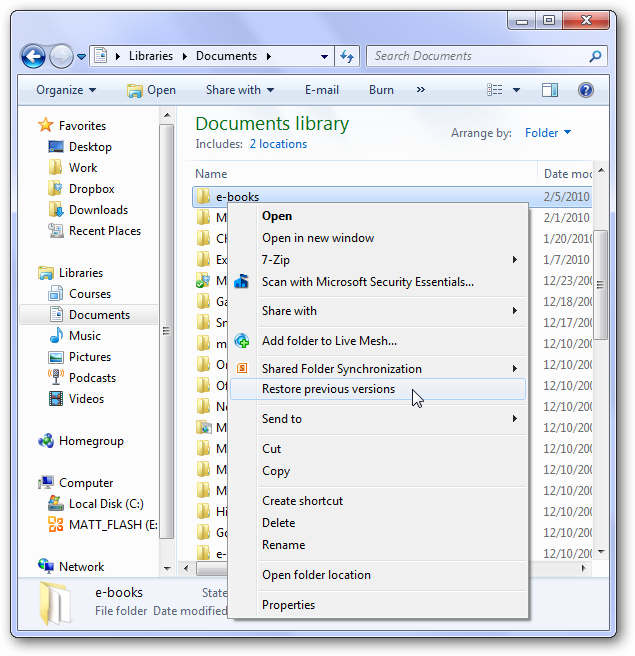
For the current Windows procedure and File History prerequisites, consult Microsoft's File History guide. The screenshot above is retained from the original article; the wording and placement of the controls may vary by Windows version.
Check Other Copies Before Scanning
Look for an earlier copy in OneDrive or another cloud service, an email attachment, the computer you originally copied it from, or a separate backup disk. Check that service's version history or deleted-items area if applicable. If you find the file, restore it to your computer or another healthy device, not to the USB you are investigating.
Part 3. Recover Deleted Files with Windows File Recovery
If you need a free Microsoft recovery utility and are comfortable with commands, Windows File Recovery can scan a USB drive for lost files. This is a separate app from the Microsoft Store, not a built-in Command Prompt undelete command. It requires a supported Windows version and a readable source drive.
Most removable USB flash drives use FAT32 or exFAT. Microsoft's guidance recommends Extensive mode for those file systems; Regular mode is designed for suitable NTFS cases. For an example where the USB is E: and your computer's internal drive is C:, use the following process.
- On your computer's internal drive, install Windows File Recovery using Microsoft's instructions. Do not install anything on the USB you are recovering.
- Open File Explorer, confirm that the USB really is E:, and make sure C: is a different physical drive with enough free space. Replace the letters in the example if yours differ.
- Open Windows File Recovery as administrator and enter the command below. It searches the E: USB drive and saves found files under a recovery folder on C:.
winfr E: C: /extensive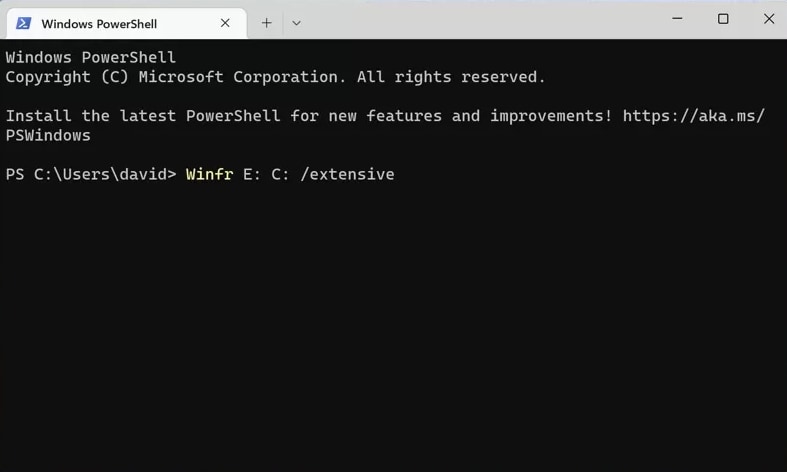
- Confirm the scan when prompted, and wait for it to finish. For a narrower search, Microsoft also supports file-type filters such as
/n *.jpgor/n *.docx. - Open the recovery folder created on C:. Check recovered filenames and open a sample of the photos, documents, or videos to determine whether they are usable.
If nothing useful appears: a scan cannot guarantee that deleted data remains available. Do not rerun unrelated repair commands on the USB. If the source is readable, a different recovery tool may offer a more visual way to review candidate files. If the drive repeatedly disappears or produces hardware errors, stop DIY scanning.
Part 4. Recover USB Files with Wondershare Recoverit

Accidentally deleted photos, videos, or documents from a USB stick? These files often bypass the Recycle Bin. Recoverit can scan a readable flash drive for recoverable data, help you find and preview supported files, and save selected results safely to another drive.
For a readable USB drive with no usable backup, Wondershare Recoverit USB Recovery provides a visual scan-and-preview workflow. The official Windows guide describes scanning external devices, finding candidate files, previewing supported formats, and saving recovered files to a separate location. Whether a particular file is recoverable depends on what data remains on the drive. For broader USB recovery scenarios and software guidance, see our USB flash drive recovery overview.
This option is especially useful if you would rather select photos or documents from a file list than work through a command-line recovery tool. Install Recoverit on your computer's healthy drive, not on the USB flash drive.
Scan, Preview, and Save the Files
Follow the current external-device workflow in the Recoverit Windows Guide.
- Connect and select the USB. Attach the readable flash drive to your Windows PC. Open Recoverit, identify the external device in the drive list, and select Start. Verify the capacity and name so you do not scan the wrong drive.
- Let the scan finish. Recoverit displays candidate files as it examines the selected device. Waiting for the scan to complete gives the software the best opportunity to assemble results before you choose files.
- Preview available results. Use file-type filters or the search controls to look for the missing files. Preview a supported photo or document if available; preview availability is not a guarantee that every byte of a recovered file will be intact.
- Recover to another drive. Select the desired files, choose Recover, and save them on the computer's internal drive or another healthy external disk. Do not select the source USB as the output location.
- Verify the saved files. Open documents, inspect photos at full size, and play videos to confirm what actually recovered before making changes to the original USB.
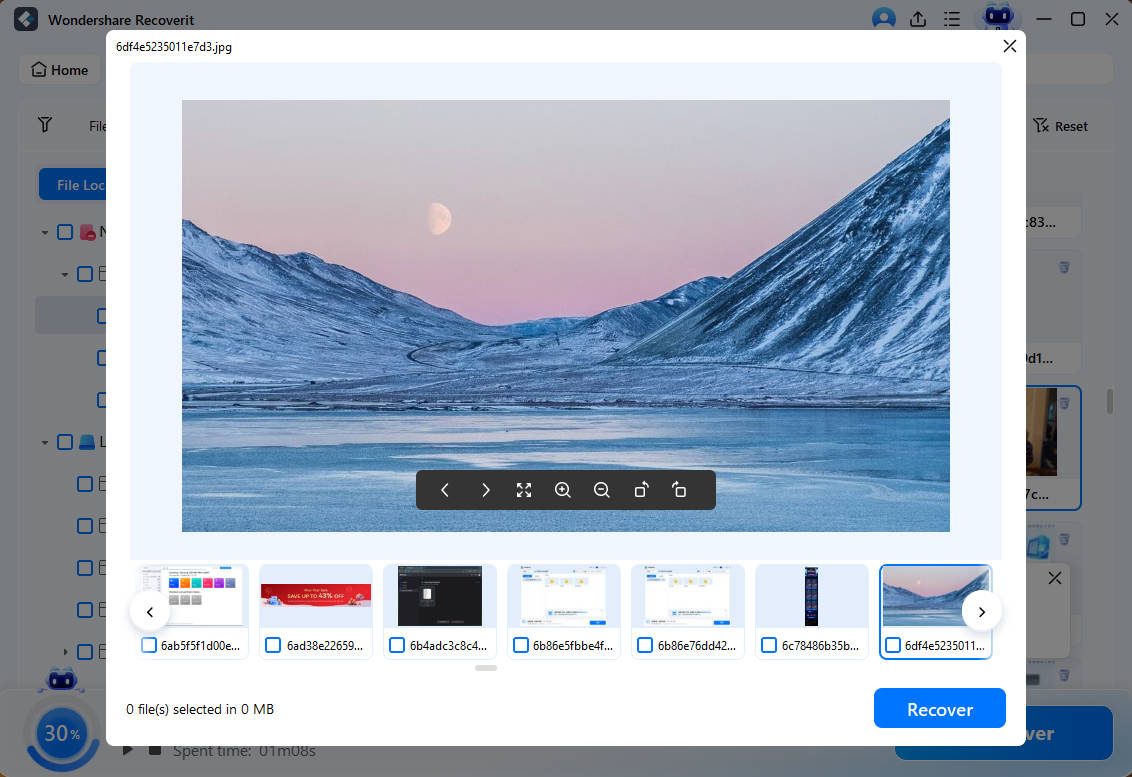
The preview image is retained from the earlier article as an illustration of file preview; use the current Guide for the exact on-screen controls in your installed build.
What If Recoverit Cannot Find the File?
Check that the scanned USB is the correct device and that the scan finished. If only thumbnails or partial files appear, do not assume the entire file can be recovered. An overwritten file, missing data blocks, a failed controller, or an unreadable source may limit the result. When the files are irreplaceable and the USB is physically unreliable, professional evaluation is a safer next step than repeated scans.
Part 5. What to Do If the USB Is Empty, RAW, or Not Detected
Not every empty-looking USB requires undelete software. Choose the path that matches the symptom, and avoid commands that write new file-system metadata while important files remain at risk.
The USB Shows Used Space but No Visible Files
First open File Explorer and choose View > Show > Hidden items in Windows 11. If files appear, copy them to another healthy drive. This is a visibility check, not deleted-file recovery. Do not run chkdsk /f to make hidden files reappear.
If a shortcut-virus or file-attribute problem is suspected, see our dedicated guide to USB files not showing despite used space. Microsoft's attrib documentation explains that attribute commands change file flags; they do not restore content that was truly deleted.
Windows Asks to Format the USB or Cannot Read the Volume
Choose Cancel if Windows prompts you to format the USB and you still need its files. If the drive is consistently detected, a recovery scan may be possible before any formatting or repair. If it is repeatedly disconnecting, getting unusually hot, or no longer responding, stop scanning and seek specialist help. Recoverit cannot repair broken flash-memory hardware.
For more specific device problems, see recovering files from a corrupted USB drive; do not treat formatting as a diagnostic test when the only copy of the data may still be on the drive.
Video Tutorial on How to Recover Files from Corrupted USB Drive
If the USB is still readable, this original Recoverit tutorial offers a visual walkthrough for a corrupted-USB recovery situation. It is not a reason to format, initialize, or repair a drive before protecting important files. Stop DIY attempts if the hardware is unstable.

Conclusion
To recover deleted files from a USB drive, protect the source first and look for an existing copy. If no backup is available, Windows File Recovery offers a free command-line scan, while Wondershare Recoverit offers a visual way to locate and preview candidate files on a readable USB. Save recovered files to a different drive and verify them. If the USB is failing physically, stop experimenting and consider professional recovery rather than risking the remaining data.
These answers address common differences between recovering deleted data, restoring a backup, and making files visible again.
FAQ
-
Can I recover deleted files from a USB drive without installing software?
You can restore an existing backup, cloud copy, or previous version without installing a recovery application. If the USB file was truly deleted and no copy exists, Windows normally has no simple built-in undelete command for removable storage. Windows File Recovery is a separate Microsoft Store app. -
Do deleted USB files go to the Windows Recycle Bin?
Files deleted directly from a typical removable USB flash drive usually bypass the Windows Recycle Bin. A copy deleted from a computer folder may still be in that computer's Recycle Bin, depending on where it was stored. -
Can CHKDSK or the attrib command recover a deleted file?
No. CHKDSK checks or repairs a file system, while attrib displays or changes file attributes. Neither is a substitute for deleted-file recovery. If the files are important, protect the source and attempt data recovery before repairs that modify it. -
Why can a recovered USB file be damaged?
The recovery tool may find a filename or some data without finding every part of the original file. Overwriting, missing sectors, and corruption can leave a recovered photo, document, or video incomplete. Check the output before reusing the USB.