Your Toshiba USB flash drive still connects, but the photos or documents you saved on it have disappeared. Or Windows asks you to format the drive before opening it. The next action matters: a scan may help when the flash memory is still readable, while formatting or repeatedly reconnecting a failing drive can make recovery harder.
The safest starting point: Stop copying files to the Toshiba USB, identify how your computer detects it, and check whether an existing copy is available. If the drive appears as readable storage, you can try recovery software and save any recovered files to a different healthy disk. If it shows No Media, 0 bytes, serious physical damage, or repeated disconnections, stop software attempts and consider a specialist.
In This Article
Part 1. Check the Toshiba USB Before Recovering Files
Do not start with a repair command. First check whether the flash drive is readable, simply hidden from File Explorer, or no longer responding as storage. These conditions require different next steps.
What Your Computer Detects Determines the Next Step
On Windows 11 or Windows 10, open File Explorer and then right-click Start and choose Disk Management. Compare the USB drive's reported capacity with the capacity printed on the Toshiba or TransMemory device. Identify the correct disk by size before touching any settings.
| What you see | What it suggests | Safest next step |
| The USB opens and your files are visible | The storage is accessible; you may not need recovery software. | Copy important files to another healthy drive now. Check that the copies open. |
| The USB opens but folders or files are missing | Files may be hidden, deleted, or the directory may be damaged. | Check hidden items without changing file attributes. If the files are still missing, stop writes and consider a scan. |
| Windows asks to format the USB, or Disk Management shows RAW | Windows cannot read the current file system, although storage may still be detectable. | Cancel the format prompt. If the USB is stable and selectable by recovery software, recover data before repairs. |
| The USB appears in Disk Management but has no drive letter | Windows detects the partition but cannot display it normally in File Explorer. | Review the detection status before modifying the volume; use a dedicated USB drive not recognized guide. |
| Disk Management shows No Media or 0 bytes; the device keeps disconnecting | The USB controller or flash memory may not be functioning as readable storage. | Stop repeated attempts. Software cannot scan an inaccessible storage medium; consider professional recovery if the files matter. |
| The connector is bent, the drive overheats, or there is visible damage | Possible physical failure rather than a normal file-system problem. | Disconnect safely and seek specialist advice. Do not run repair utilities or keep testing it. |
On a Mac, open Disk Utility and choose View > Show All Devices to see whether macOS detects the physical USB. Avoid Erase or First Aid while valuable files are missing. Mac menu labels and the Recoverit interface differ from the Windows screenshots below.
If a 64GB Toshiba USB Looks Empty
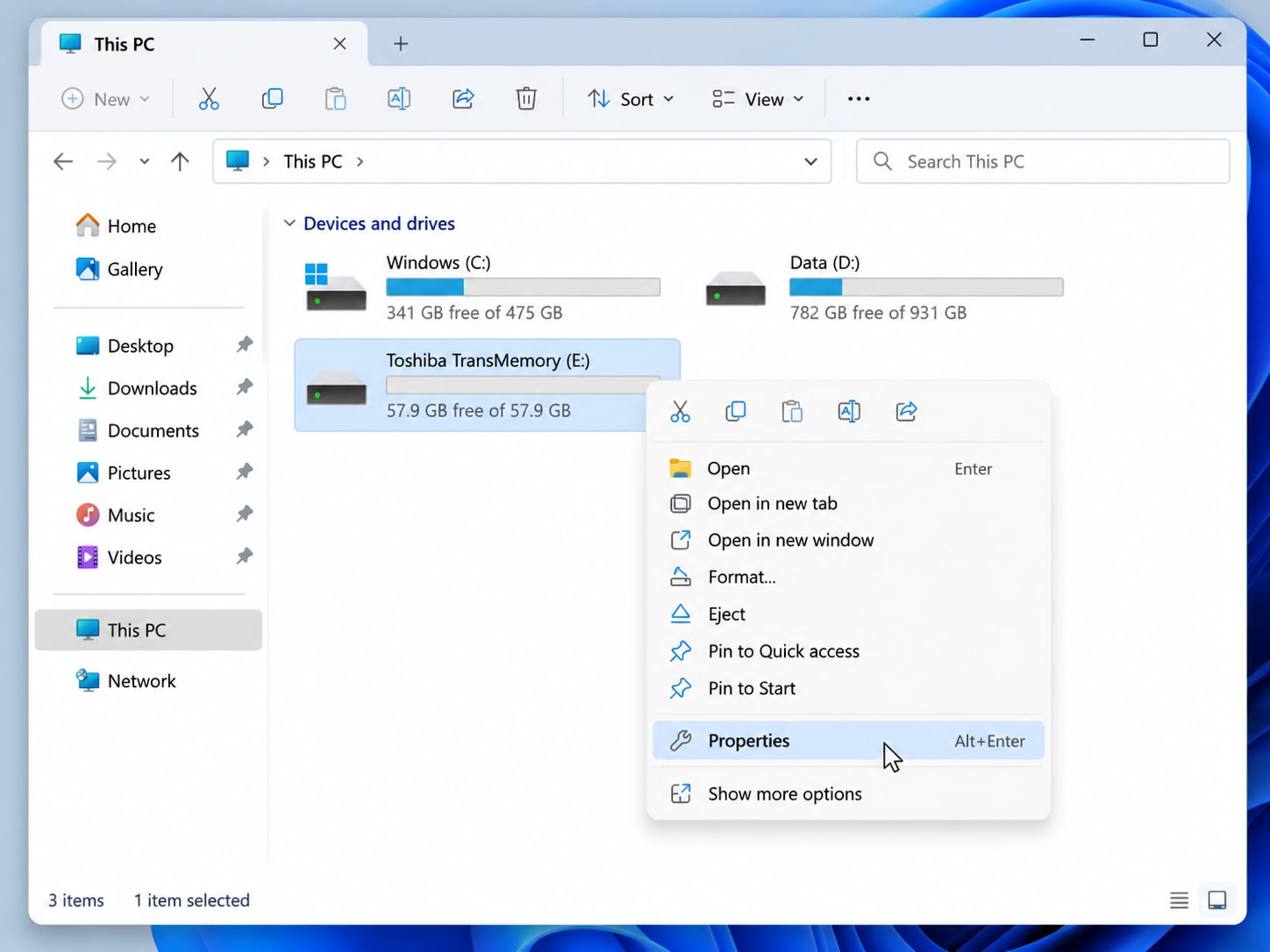
For example, a 64GB Toshiba TransMemory USB may show its expected capacity but display an empty folder after you reconnect it. That does not establish whether the files were deleted: Windows may be hiding them, or the USB's directory information may be damaged.
- Right-click the Toshiba drive in File Explorer, open Properties, and compare used space with the files currently visible.
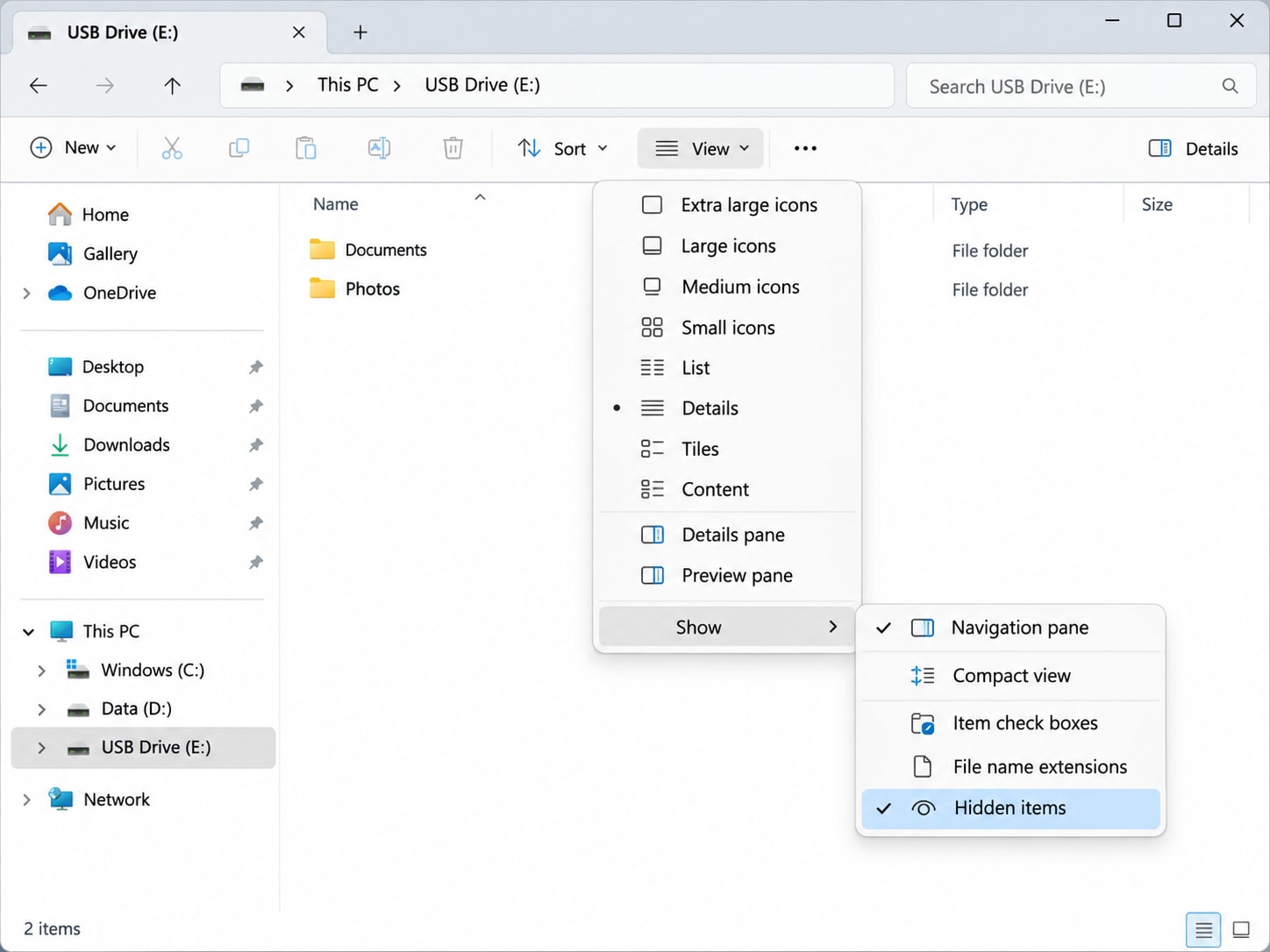
- In Windows 11, choose View > Show > Hidden items. If the missing files appear, copy them to another drive; avoid running commands that change all file attributes before making a copy.
- If the files remain missing, leave the USB unchanged. Use the recovery steps below if the drive is stably detected. For more symptom-specific checks, see USB files not showing but space used.
If the Toshiba USB is no longer detected as storage, skip the software tutorial and go to Part 4. Repeated scans cannot fix a failing USB controller.
Part 2. Recover Files from a Detected Toshiba USB with Recoverit
Wondershare Recoverit USB Data Recovery can scan a supported, detectable Toshiba USB flash drive for recoverable files after accidental deletion, formatting, or some logical file-system problems. It can preview supported scan results and save selected files elsewhere, but cannot guarantee success or repair a physically failed USB.
Use this method when the USB remains connected without repeated errors and appears as a selectable storage device. If you can already open the original files, back them up directly rather than scanning unnecessarily.
Prepare the Source Drive and a Safe Destination
Install Recoverit on the computer or another healthy disk, not on the Toshiba USB. Prepare a separate destination with enough available space for the files you hope to recover. Leave the USB connected directly to a reliable port during the scan.
Once your computer recognizes the Toshiba drive as storage, you can open Recoverit and check whether it lists the source drive. This is a useful decision point for trying a scan; software cannot make an electrically failed USB device appear.
These steps follow the USB/external-device workflow documented in the current Recoverit V15 Windows guide. Depending on the installed build and how the device is classified, the USB may also appear under SD Card Recovery. Select the detected Toshiba device itself rather than relying on an old menu label.
Step 1. Select the Detected Toshiba USB
Open Recoverit, locate the connected Toshiba USB by its capacity and device name, and select it as the recovery source. The original Recoverit article uses the SD Card Recovery device-selection view, which the current official guide also describes for connected USB drives. If your screen shows an external-device list instead, choose the same physical Toshiba USB there.
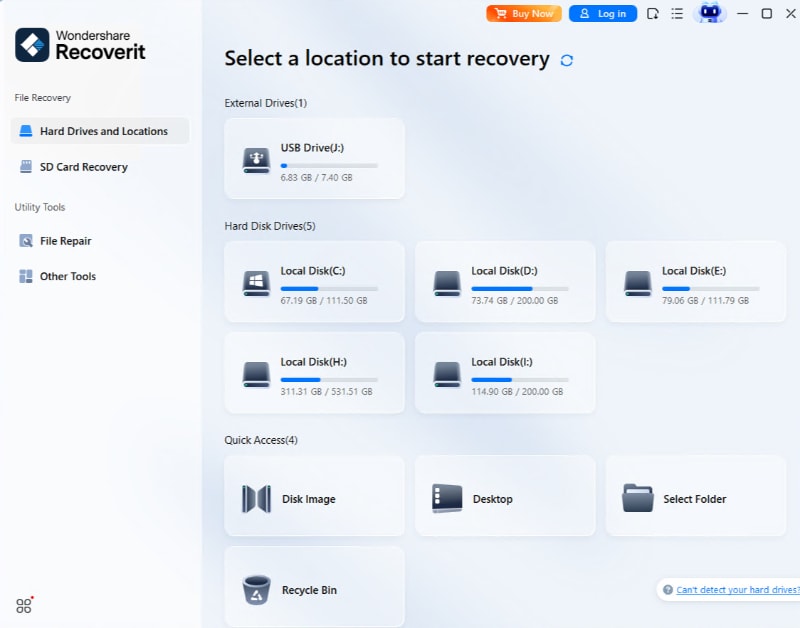
Success check: The correct USB drive appears as a selectable device with the expected capacity. If nothing appears, do not pick an unrelated internal disk or force a format; return to the device-status checks.
Step 2. Scan Without Writing New Data
Start the scan of the Toshiba device and let it complete where possible. Review any discovered folders, photo or document types, and file previews instead of assuming every result is intact. The scan can take longer when the file system is damaged or there are many files.
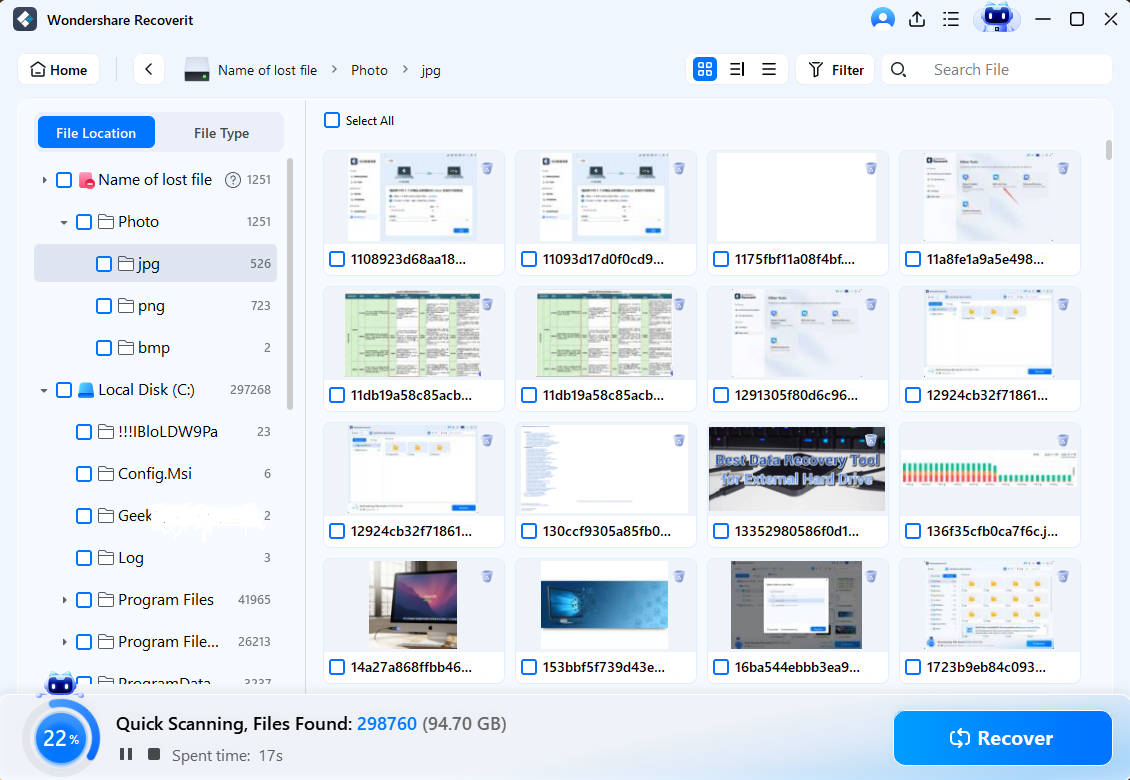
Success check: The file list contains plausible versions of what you need. A filename alone is not proof of recovery; the contents must still be usable. If the scan cannot read the USB, stops repeatedly, or the hardware becomes unstable, stop rather than making repeated attempts.
Step 3. Preview and Recover Files Elsewhere
Preview the available photos, documents, or other supported files. Select the files you need and click Recover. Choose your computer's internal drive or a second healthy external drive as the destination. Never save results back onto the original Toshiba USB.
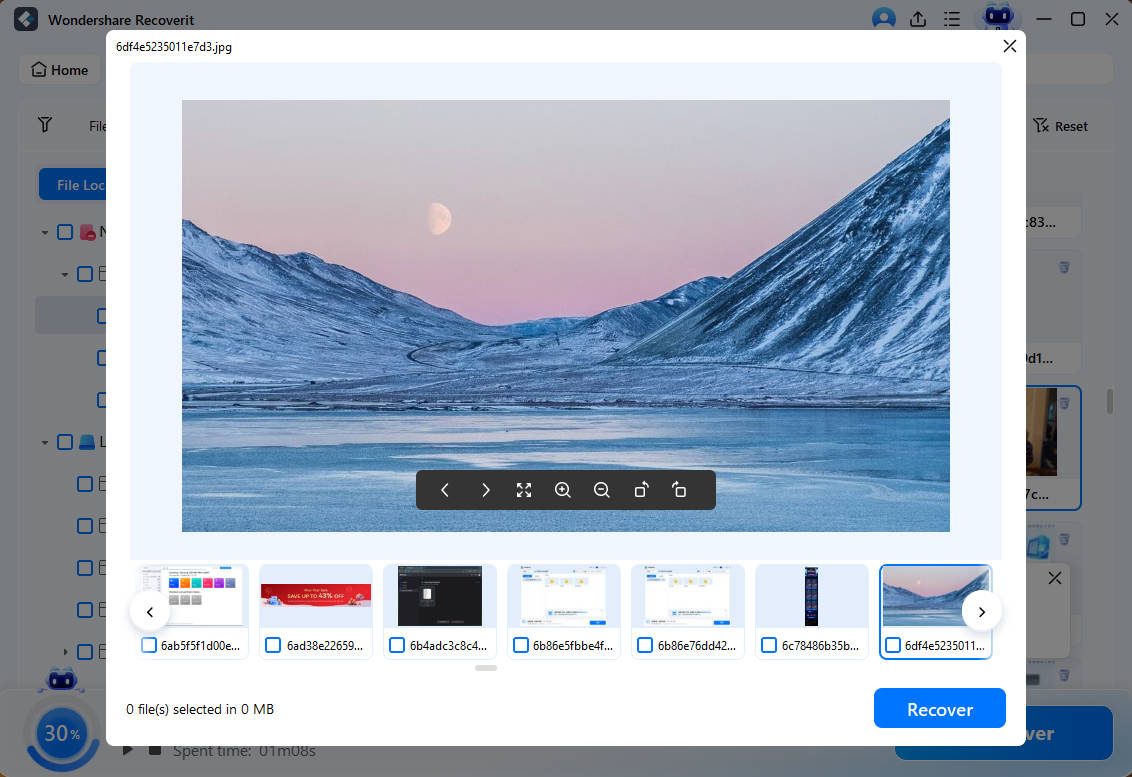
Open a sample of the recovered files, including a full-size photo and an office document if those are what you lost. Check file sizes, contents, and whether the files actually open. If a file will not open, a successful scan or preview may not mean the file's data survived intact.
Recoverit is also available for macOS through its Mac recovery page. The storage must still be recognized by the Mac, and the exact interface may differ from the Windows examples above.
Watch the Original USB Recovery Walkthrough
The USB recovery video is kept here beside the practical steps. Use the current written instructions above when the video's buttons or menu names differ from your installed Recoverit version.

Part 3. Try Windows File Recovery as a Free Alternative
If you prefer a Microsoft utility and can work with commands, Windows File Recovery is a free Microsoft Store app for supported Windows computers. It can scan USB storage that Windows can access, but it cannot repair a dead flash drive or guarantee that deleted files remain available.
Run a Scan on a Readable USB Drive
First confirm the USB's drive letter. The example below assumes E: is the Toshiba source drive and C: is a different, healthy destination with enough free space. Check both letters on your own computer before running any command.
- Install Windows File Recovery from the Microsoft Store on your computer, not on the Toshiba USB.
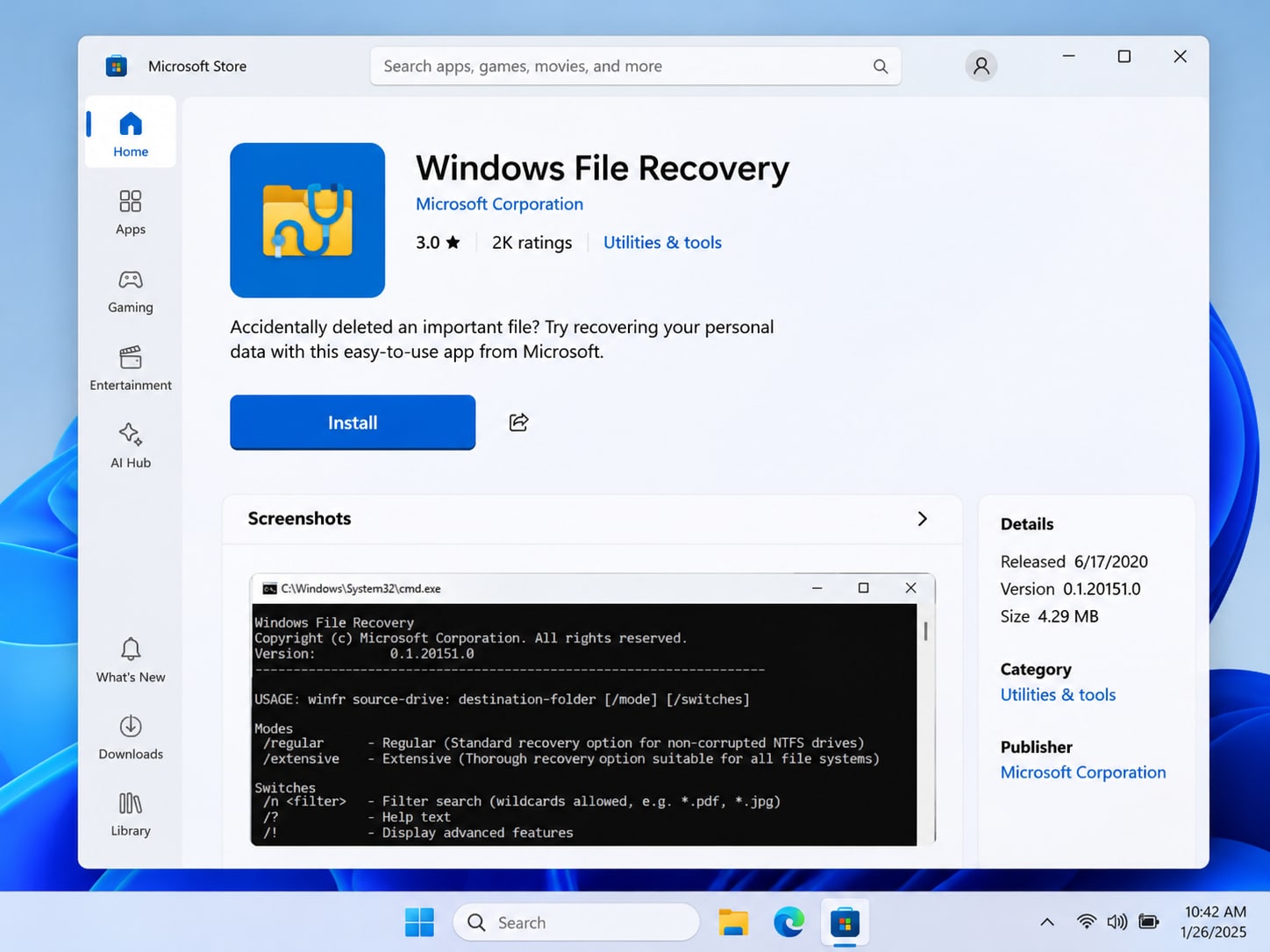
- Open Windows File Recovery and approve the administrator prompt.
- For a FAT32- or exFAT-formatted USB, use Extensive mode. For example, to look for JPG images and DOCX documents, enter:
winfr E: C: /extensive /n *.jpg /n *.docx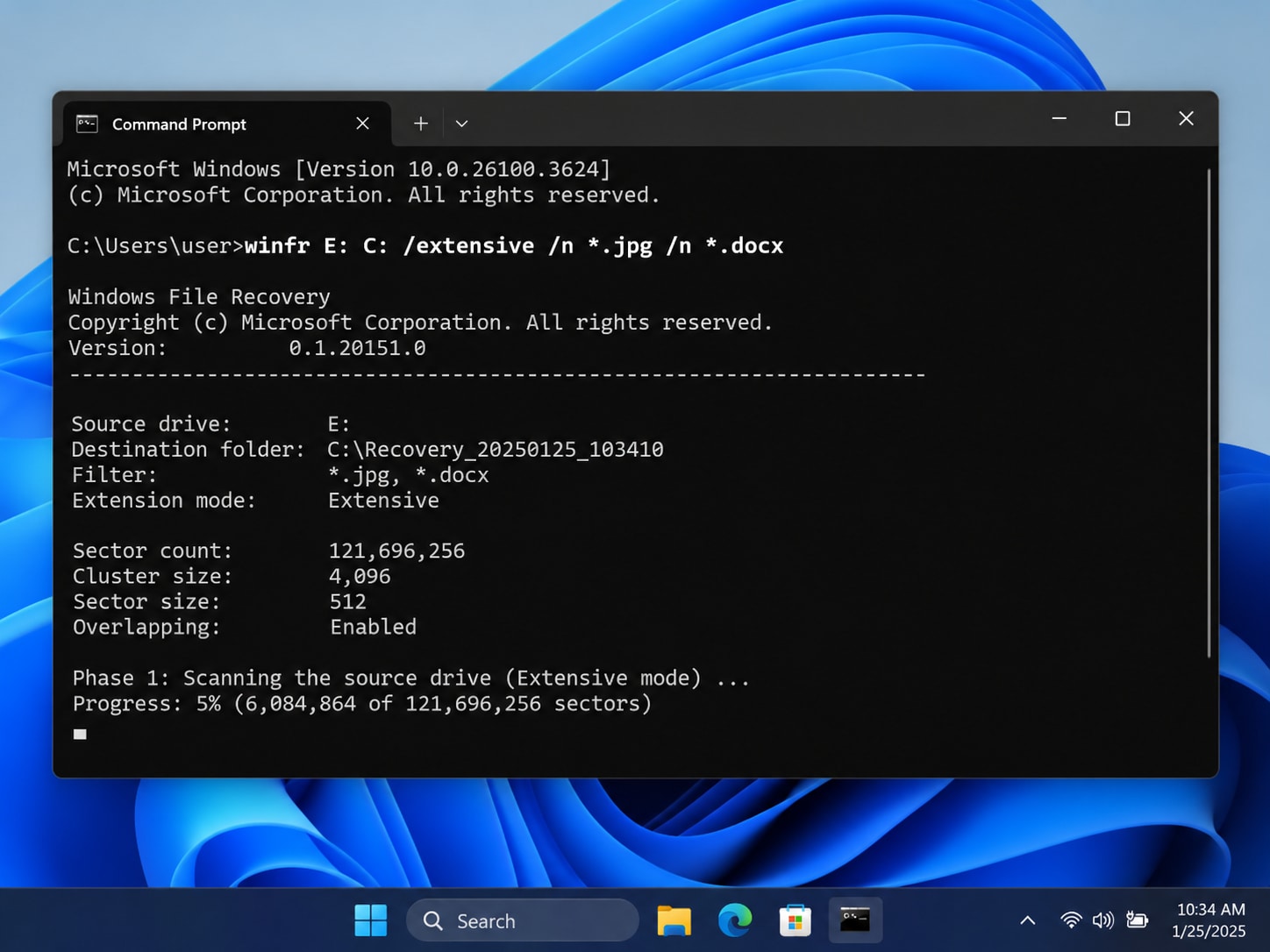
Replace E: and C: with the actual source and destination. The source and destination must be different drives. Microsoft documents Extensive mode for FAT and exFAT recovery; the correct mode for an NTFS USB depends on the loss scenario.
Check the Results Before Changing the USB
When prompted, confirm the scan and wait for the utility to finish. Microsoft creates a recovery folder on the destination drive. Open those files and check their contents before you consider repairing or reformatting the Toshiba USB. If the app reports that the USB is unavailable, return to the detection checks rather than trying destructive disk commands.
This method runs on Windows, not macOS. Its main advantage is that it is a native Microsoft option; its tradeoff is a command-line workflow and results that may need manual review.
Part 4. What to Do if the Toshiba USB Asks to Be Formatted or Is Not Detected
If you see "You need to format the disk before you can use it", choose Cancel. A format prompt means Windows cannot currently open the file system; it does not mean formatting is necessary to recover the files. If Disk Management still shows a stable USB device with the correct capacity, recover important data first.
- RAW or inaccessible file system: Do not format, initialize, or create a new partition to make the USB usable. A scan may be appropriate if recovery software can read the device.
- Not visible in File Explorer but visible in Disk Management: Use the existing USB detection troubleshooting guide for missing-letter and driver checks. Avoid applying repair commands to the wrong disk.
- No Media, 0 bytes, no stable device entry, or physical damage: Stop repeated scans, formatting attempts, and reconnects. Seek a professional service if the files have high value.
Only after you have recovered and verified the needed files should you decide whether to check the file system or reformat the USB for reuse. CHKDSK with repair switches, DiskPart clean, initialization, and formatting modify the storage; they are not substitutes for recovering irreplaceable files first.
Part 5. Toshiba TransMemory and KIOXIA: What Has Changed?
If your drive says Toshiba TransMemory but search results mention KIOXIA, that is not necessarily a different storage product family. The company formerly named Toshiba Memory adopted the KIOXIA name on October 1, 2019, as its official company history confirms. Older Toshiba-branded USB drives and newer KIOXIA TransMemory products may therefore appear in related help searches.
Do not assume a replacement USB should use the same formatting as your missing-data device. KIOXIA's TransMemory USB support FAQ discusses file-system formatting by model capacity and states that KIOXIA does not provide a USB data recovery service. Those formatting instructions concern normal device use, not a recommendation to format a USB before retrieving lost data.
This page is specifically about the USB flash drive. If your files were on a Toshiba Canvio external hard drive or Toshiba SSD instead, use the separate Toshiba data recovery guide. For storage sold under the KIOXIA name, there is also a distinct KIOXIA data recovery overview.
Conclusion
When files disappear from a Toshiba USB drive, the safest recovery strategy depends on what the computer can still read. Back up files that remain accessible, check for hidden items, and scan a stable, detectable USB only when data is genuinely missing. Recover to a different drive and verify the results. If the device reports No Media, 0 bytes, repeated disconnections, or physical damage, stop DIY software attempts rather than risking further loss.
FAQ
-
Can I recover deleted files from a Toshiba TransMemory USB flash drive?
Sometimes. If the USB is detected as readable storage and the deleted data has not been overwritten, recovery software may find recoverable files. Stop using the source drive, scan it, and save any recovered files elsewhere. No recovery is guaranteed. -
How do I recover files after formatting a Toshiba USB?
Stop writing to the USB immediately. If the device is still readable, a recovery scan may locate some files. Save results to another drive and open them to check integrity. Do not format the device again while trying to recover its old contents. -
Why is my Toshiba USB showing empty folders even though storage space is used?
The files may be hidden or the file-system directory may be damaged. First check the used-space figure and turn on Hidden items in File Explorer. If the files do not reappear, avoid writing new data and consider recovery before running repairs. -
Can Recoverit repair a Toshiba USB that shows No Media or 0 bytes?
No. If the USB no longer exposes readable storage, scanning software cannot access its memory. After one careful port or computer check, repeated attempts can be risky. A professional recovery specialist may be the appropriate next step for valuable data. -
Does Toshiba or KIOXIA provide recovery software for TransMemory USB drives?
KIOXIA's current USB support FAQ says it does not provide a data recovery service. Third-party recovery tools may be useful for logical file loss on a detected flash drive, but they cannot promise results or fix physical damage.


