 TL;DR:
To safely resolve the DiskPart access denied error without risking data loss, immediately stop repeating destructive commands like clean, launch Command Prompt as an administrator, and use the list disk command to verify the exact target drive before checking for physical locks or read-only attributes.
● Ensure external USB drives or SD cards do not have physical write-protection switches engaged, as administrator elevation cannot override hardware locks, BitLocker encryption, IT policies, or failing storage controllers.
● To clear software-based write protection on a confirmed drive, run select disk N followed by attributes disk clear readonly, but stop write attempts if the drive frequently disconnects or reports I/O errors in the System Event Log.
● Never use the partition-removing clean command to troubleshoot permissions; if files are missing on a stable drive, extract them to a different healthy disk using Wondershare Recoverit, which rescues data but cannot fix DiskPart permissions or broken hardware.
Ask AI for a summary
 ChatGPT
 Perplexity
 Gemini
 Claude
 Grok
If DiskPart displays "DiskPart has encountered an error: Access is denied. See the System Event Log for more information," stop repeating the failed command. First confirm which operation failed, check whether the drive contains important files, and use read-only checks to distinguish missing administrator privileges from write protection, device locking, or storage faults.
Quick answer: Open Command Prompt as administrator, then identify the correct disk with list disk and examine its properties. If the error happens with clean, do not retry it until your files are protected: clean is a partition-removal command, not a repair command. A drive can refuse a write even when Command Prompt is elevated.
In This Article
Part 1. What Does DiskPart Access Is Denied Mean?
DiskPart is a Windows disk-management command-line utility. The error tells you Windows could not complete the requested operation; the exact cause depends on the command, disk state, connection, and permissions. It is not proof of corruption or a reason to erase the drive.
Identify the command that failed
Note the exact command and device before doing anything else. For example, list disk inspects connected disks; attributes disk reports attributes; clean changes disk layout information. They do not have the same risk.
| When the error appears | What to check first |
| When opening DiskPart or using basic commands | Windows administrator elevation and organizational permissions |
| After clean, format, or create partition | Correct disk, files at risk, physical write protection, read-only state, and disk health |
| With an SD card or USB stick | Adapter lock switch, port, reader, connection, and device controller |
| On a system, BitLocker, or managed disk | Encryption/unlock state, another process, and IT policy; do not bypass controls |
| Alongside I/O or disconnection errors | Possible device faults; stop repeated writes and seek professional assessment when needed |
Protect files before changing the disk
If the drive contains files you need, avoid clean, clean all, format, convert, initialize, and partition deletion. Copy readable files to a different healthy disk first. If important files are missing, consider recovery from a detectable, stable source before performing any write operation.
According to Microsoft documentation for DiskPart clean, the command removes partition or volume formatting information from the selected disk. Its effect is different from diagnosing permissions.
Part 2. How to Diagnose and Fix DiskPart Access Denied
Work through the following checks in order. The early steps are non-destructive; the read-only-attribute step should be used only after confirming the target drive and preserving important data.
Method 1. Open an elevated Command Prompt and identify the disk
Use when: DiskPart itself or a basic disk-management operation fails, or you have not verified which disk is selected. These steps only inspect disks.
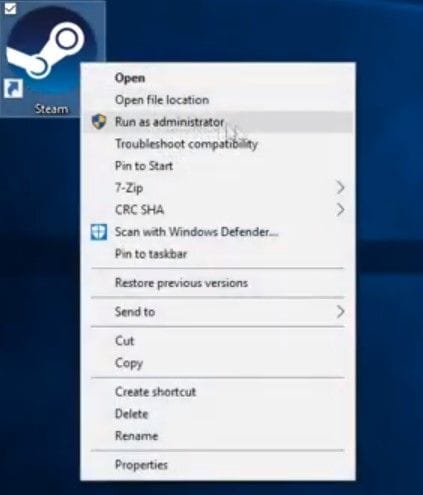
Step 1. In Windows 11 or Windows 10, search for Command Prompt, select Run as administrator, and approve the UAC prompt using an authorized administrator account.
Step 2. Enter diskpart, then list disk. Carefully check sizes and whether the target is connected. Disk numbers can change across sessions.
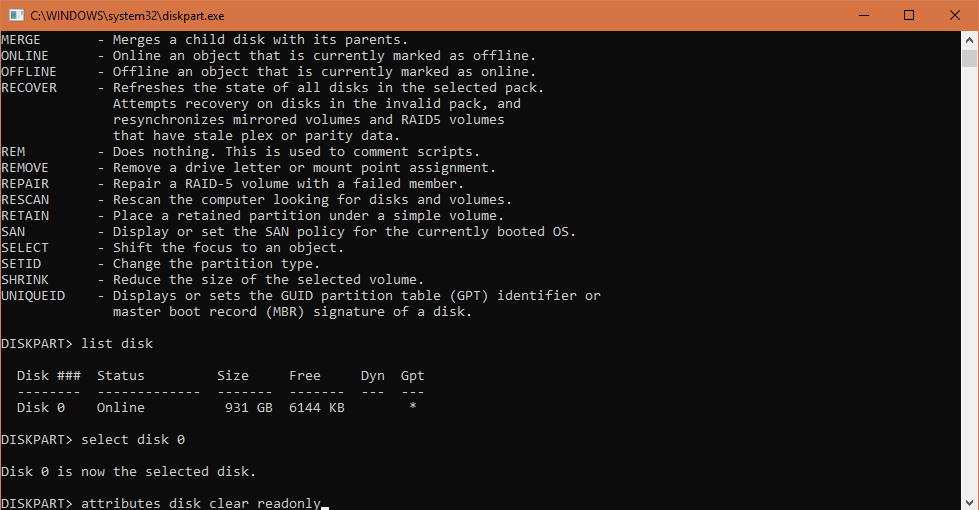
Step 3. For inspection only, enter select disk N with the verified disk number and then detail disk. Do not copy an example disk number without confirming the device.
Result: If commands work when elevated, the original failure may have involved privileges. If a write command remains blocked, do not assume that elevation authorizes erasing or unlocking the device. See Microsoft DiskPart command reference.
Method 2. Check cables, USB adapters, and physical write protection
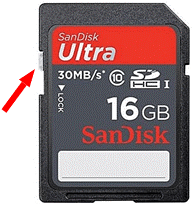
Use when: The error concerns a USB drive, memory card, or external enclosure. A card adapter may have a physical Lock switch, and unstable cables or readers can cause changing detection states.
Step 1. Safely stop the operation and disconnect the external device only after Windows is no longer transferring files. Inspect the adapter for a lock switch and return it to the unlocked position if the media is yours to modify.
Step 2. Reconnect through another known-good port or reader and check whether File Explorer and Disk Management recognize the device. Do not format a drive just because Windows asks you to.
Result: If the disk is stable and its files are readable, copy them elsewhere. If it repeatedly disconnects, reports zero capacity or I/O errors, or makes unusual noises, stop software repair attempts. Hardware-level read-only protection cannot always be cleared by commands.
Method 3. Check disk read-only attributes without erasing files
Use when: The correct, stable drive is identified, you have backed up its contents, and a legitimate write action is being blocked. First inspect its status; do not assume read-only is the cause.
Step 1. In elevated DiskPart, run list disk, select disk N, and attributes disk using your verified disk number. Read the Read-only and Current Read-only State fields.

Step 2. If the disk is your writable media, its data has been protected, and the configured software read-only attribute is the obstacle, you may run attributes disk clear readonly. Recheck with attributes disk. This only tries to clear a software attribute, not a hardware lock or encryption policy.
Result: If the current read-only state remains Yes or the same denial continues, do not repeatedly run clean. Investigate the controller, card adapter, security policy, or hardware failure instead. See Microsoft attributes disk command reference.
Method 4. Check Disk Management and the System event log
Use when: Elevation and simple connection checks do not explain the denial. Disk Management and the event log provide additional diagnostic context before any destructive change.
Step 1. Right-click Start and open Disk Management. Match the intended disk using its capacity and connection. Note whether it appears online, offline, read-only, or with an unexpected file system. Do not choose Initialize Disk or Format from a prompt if you need the files.
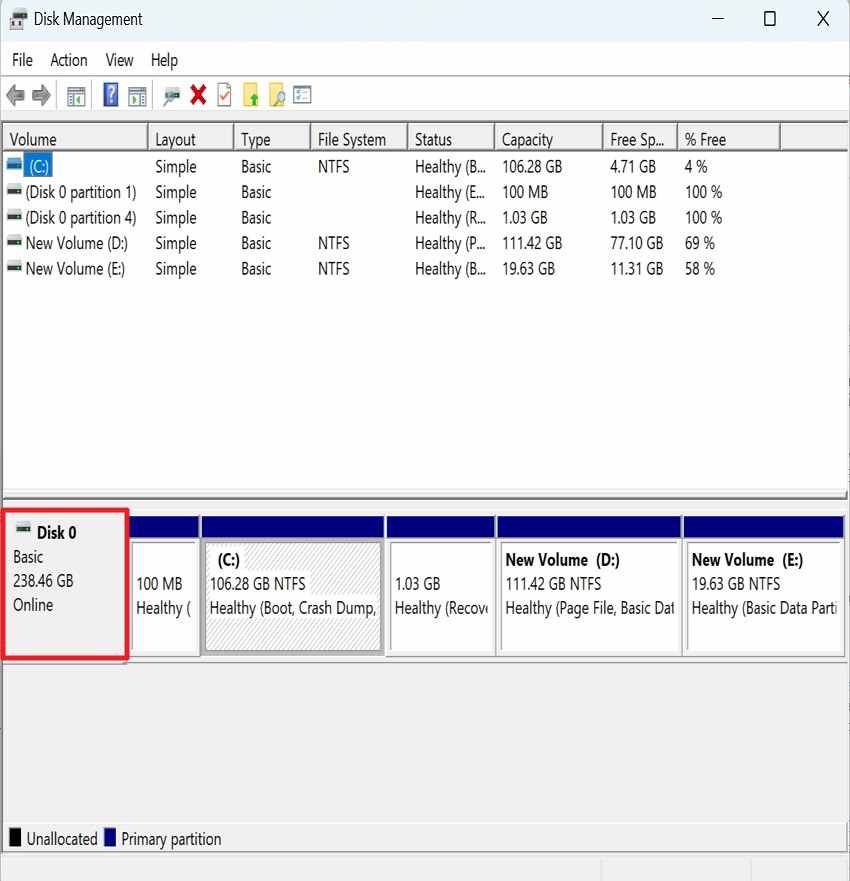
Step 2. Open Event Viewer and browse to Windows Logs > System. Look for events from the same time as the DiskPart error. Record the source, event ID, and full message. A disk or controller error may require a different response than a permissions error.
Step 3. If the disk is BitLocker-protected or organization-managed, verify its authorized unlock state and consult your administrator. Do not disable security software or bypass policy to force a write.
Result: An event citing persistent I/O failure or media errors is a reason to stop writing. See Microsoft disk management troubleshooting guidance.
Part 3. Recover Inaccessible Files Before Formatting or Cleaning
Fixing permissions and recovering lost files are separate tasks. If a stable disk is recognized by Windows but files are deleted, missing, or inaccessible after a logical problem, file recovery may be relevant. Do not scan drives that make abnormal noises or repeatedly disconnect; contact a qualified recovery lab.
Use Recoverit only when a readable disk has missing or inaccessible files
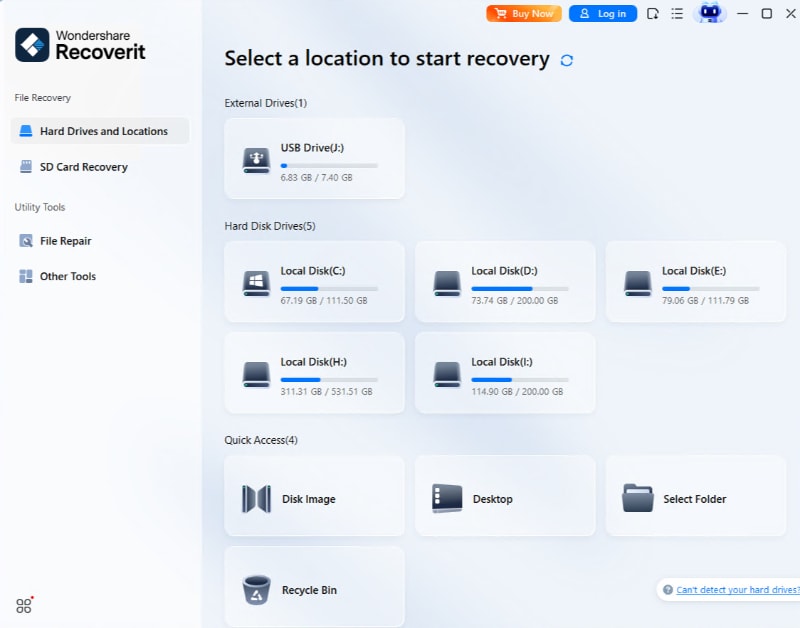
Step 1. Stop using the affected storage. Install Wondershare Recoverit hard drive recovery on a different healthy drive and connect the affected disk only if it is stable and detected.
Step 2. Choose the affected detected device in Recoverit, start a scan, and review the available results. The example below shows the scan interface; actual screens can differ by software version.
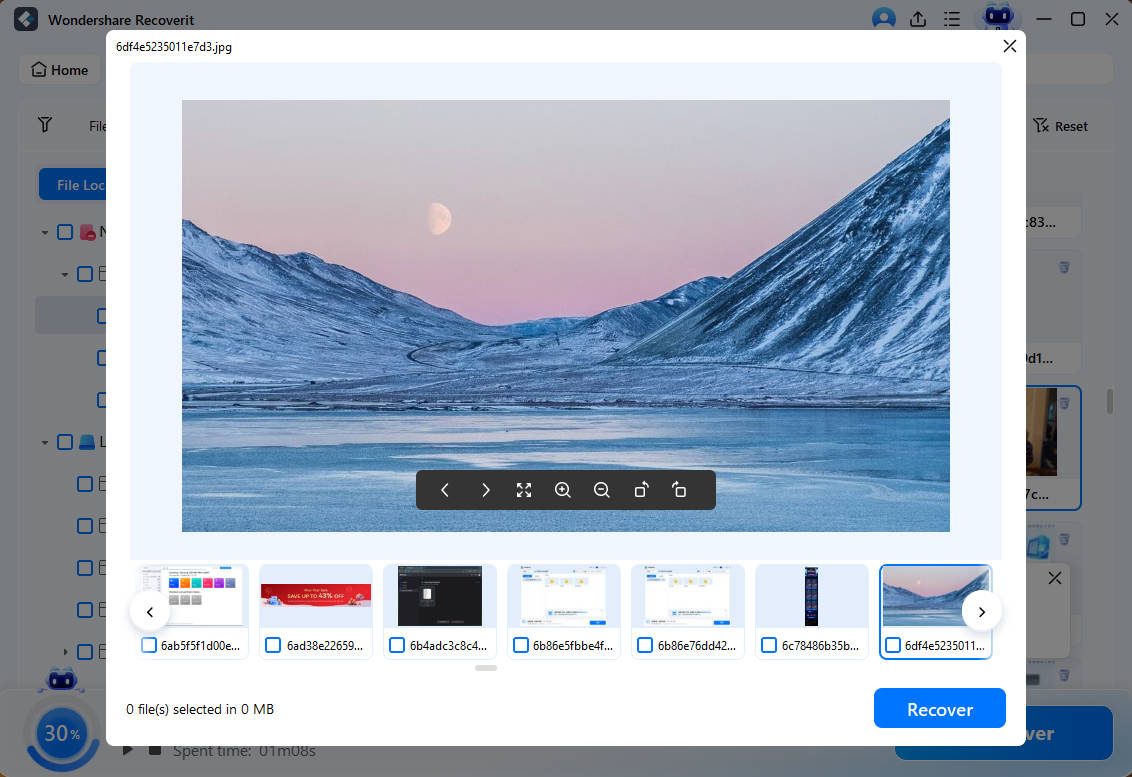
Step 3. Preview supported files when available, select the items you need, and save them to a different healthy drive. Open the recovered copies to check that they work before considering any repartitioning.
Limit: Recoverit does not repair DiskPart permissions, fix a failed USB controller, decrypt BitLocker, or guarantee that overwritten data will be recoverable. A drive that is not consistently detectable may require a professional service.

DiskPart says "Access is denied"? Don't risk your files with clean or format. If important data is missing or inaccessible on a stable, detectable drive, Recoverit can scan for recoverable files. Preview supported results and save them safely to another drive.
Part 4. What to Do If DiskPart Still Says Access Is Denied
After the diagnostic steps, choose the next action based on evidence rather than retrying the failed command. Preserve the error text, selected disk details, and relevant System event log entries.
- Admin privileges are missing: Ask an authorized administrator to run the task instead of changing unrelated folder permissions.
- USB or SD card is physically locked: Check the device or adapter, then copy accessible files once detection is stable.
- Read-only cannot be cleared: Suspect device policy or controller-level protection; avoid repeated writes.
- Disk contains needed files: Recover or back up those files to another destination before any repartitioning.
- Device disconnects or reports hardware errors: Stop and consider professional evaluation rather than destructive utilities.
Important: Do not use clean all, registry policy changes, or force-formatting as a universal fix. These actions may remove data, conflict with managed-device policy, or worsen the situation without addressing the actual cause.
Conclusion
When DiskPart says Access is denied, identify the disk and failed command, protect its files, and check administrator access, physical locking, read-only attributes, and system logs. Only plan a clean installation or new partition layout after you have secured anything important and confirmed the drive is healthy enough to reuse.
FAQ
-
Is DiskPart clean safe for files?
No. DiskPart clean removes partition or volume formatting information from the selected disk. If you need data on the disk, preserve it first and do not retry clean. -
Why does DiskPart say access is denied even as administrator?
A write-protected or locked device, another process, organizational restrictions, or a failing disk can still block an elevated session. Use read-only diagnostics and the System event log to narrow down the cause. -
Can I clear read-only attributes on a failing USB drive?
Not reliably. A physical lock or controller-level read-only state may remain after software changes. Back up accessible data and stop write attempts if the device disconnects, reports I/O errors, or keeps returning read-only. -
Will Recoverit repair a DiskPart permission error?
No. Recoverit is for recovering files from suitable detectable storage; it does not grant administrator rights, bypass encryption, or repair an unhealthy controller.


