


 TL;DR:
FoneLab Android Data Recovery is a practical desktop utility for retrieving deleted messages, contacts, and media from functional devices or Google Drive backups, provided the phone is recognizable, USB debugging is active, and the data has not been overwritten.
● Deep scanning internal phone storage requires authorizing the FoneGo helper app on devices running Android 4.0 to Android 16, but the software cannot bypass modern encryption, unlock screen protections, or salvage data wiped by a factory reset.
● Choose Wondershare Recoverit instead if you need to scan removable Android SD cards, OTG drives, or local computer backups, and consider Dr.Fone if you prefer a broader mobile management ecosystem for extracting internal app databases.
● Before attempting a paid recovery starting at $19.90, immediately stop writing new files to the device to prevent permanent data destruction and verify if the lost items are still within the 30-day or 60-day retention windows in Google Drive or Google Photos trash.
Ask AI for a summary
 ChatGPT
 Perplexity
 Gemini
 Claude
 Grok
Grok
FoneLab Android Data Recovery: The Quick Verdict
Is FoneLab Android Data Recovery worth using? Yes, if you need a desktop tool that can scan supported Android phones, SD cards, SIM-related data, and Google Drive backups for recoverable contacts, messages, call history, WhatsApp data, photos, videos, audio files, documents, and attachments. It is most useful when the phone is detected, USB debugging or the required app permissions can be enabled, and the lost data has not been overwritten.
- Overall editorial rating: 4.0/5 for Android device and SD card recovery workflows.
- Best for: users who need preview-based Android data recovery from a supported phone, Android SD card, or Google Drive backup.
- Not ideal for: permanently overwritten files, encrypted data without account/device access, phones that cannot be unlocked or detected, and users who only need to restore files already backed up to a computer.
“Oops! I accidentally deleted some important photos and messages from my Android phone. Is there a way to get them back? Has anyone tried FoneLab for recovering data on Android? Does it work well?”
Losing Android data is stressful because the missing files are often personal: photos, WhatsApp media, SMS conversations, call logs, documents, or videos from a trip or work project. But Android recovery is not as simple as scanning a normal USB drive. Modern Android phones use encryption, app sandboxes, cloud sync, flash storage cleanup, and permission controls that can limit what any recovery tool can access.
This updated FoneLab Android Data Recovery review explains what FoneLab does, how it works, what data types it supports, what its 2026 pricing looks like, where root/USB debugging and permissions matter, how it compares with Dr.Fone, and when Wondershare Recoverit is the better tool for Android SD cards, OTG drives, computer backups, and transferred phone files.

Data safety first: if you deleted important files, stop using the phone as much as possible. Do not take new photos, install random recovery apps on the phone, download large files, factory reset again, or save recovered files back to the same SD card. If the loss involves work data, legal evidence, a damaged phone, or a failing card, document what happened before trying any tool.
In this article

Part 1. FoneLab Android Data Recovery Review Verdict
FoneLab for Android is a legitimate Android recovery suite, but its real-world value depends on where the lost data was stored. Recovering a deleted photo from an Android SD card is very different from recovering a deleted app database from encrypted internal storage. FoneLab can help in supported scenarios, but no Android recovery software can get around encryption, recover overwritten data, or fully restore files from a locked or physically damaged phone.
The product is strongest when the device can be connected, USB debugging can be enabled, the companion permission workflow can run, and the user needs selective preview before exporting data to a computer. It is weaker when the user has no access to the phone, the phone was factory reset long ago, the data was never backed up, or new activity has overwritten the deleted storage blocks.
Review Scorecard
| Review Area | Rating | 2026 Review Notes |
| Android device recovery workflow | 4.1/5 | Clear desktop workflow with device connection, USB debugging, permissions, scan, preview, and export. |
| Supported data types | 4.2/5 | Official specs list contacts, messages, call history, WhatsApp, camera roll, photo library, videos, audio, documents, message attachments, and WhatsApp attachments. |
| SD card recovery value | 4.0/5 | Useful for Android SD card files, especially photos, videos, audio, and documents that have not been overwritten. |
| Google Drive backup recovery | 3.9/5 | Useful if the lost data exists in a Google Drive backup and the user can sign in and authorize access. |
| Ease of use | 3.8/5 | The interface is straightforward, but USB debugging, FoneGo permissions, and Android security prompts can confuse beginners. |
| Trial value | 3.5/5 | The free download helps test detection and preview, but practical recovery normally requires a paid license. |
| Internal storage recovery limits | 3.0/5 | Modern Android encryption, app sandboxing, root requirements, and overwriting can severely limit results. |
| Pricing value | 3.7/5 | The starting monthly price is accessible, but lifetime/toolkit pricing should be compared with Dr.Fone and backup-first options. |
How We Evaluated FoneLab
This review uses the original Recoverit source article, Aiseesoft's official product page, technical specifications, official tutorial, current purchase page, Google Android/Photos recovery documentation, and Wondershare product pages for Dr.Fone and Recoverit. The evaluation focuses on real Android recovery questions: detection, permissions, root/USB debugging limits, supported data types, Google backup value, SD card recovery, pricing, and whether Recoverit is a true alternative in each scenario.
| Evaluation Question | Why It Matters | Finding |
| Can FoneLab recover every deleted Android file? | Users often expect phone recovery tools to behave like Recycle Bin restore. | No. Recovery depends on storage location, overwrite status, encryption, permissions, backup availability, and device condition. |
| Does it support current Android versions? | Compatibility changes with Android security rules. | Aiseesoft's official specs list Android 16 included, with USB and wireless connection version requirements. |
| Does it need root? | Root can improve access but adds risk. | Basic workflows may work without root, but deeper recovery and some categories can require extra permissions or root-level access. |
| Is Recoverit a direct FoneLab replacement? | Recoverit is a computer/storage recovery tool, not primarily a phone-internal database extractor. | Recoverit is best for Android SD cards, OTG drives, computer backups, transferred files, and storage locations visible to a computer. |
Part 2. What Does FoneLab for Android Do?
FoneLab for Android is Aiseesoft's desktop Android data recovery software for Windows and Mac. It is designed to scan supported Android phones/tablets, Android SD cards, SIM-related data, and Google Drive backups, then let users preview and export recoverable items to a computer.
The official workflow is more involved than a normal desktop scan. You connect the phone, enable USB debugging if required, allow the software to detect the device, install or authorize the FoneGo helper app when prompted, choose the data types, scan, preview, and recover. That permission chain is important because Android does not freely expose all internal app data to a computer.
Supported Data Types and Sources
| Support Area | Officially Listed Details | Review Notes |
| Phone brands | Samsung, Sony, LG, HTC, Motorola, Huawei, Google Pixel, Xiaomi, ZTE, and others are listed in official specs. | Device lists do not prove recoverability; detection and permissions still matter. |
| Recovery sources | Internal Memory, SD Card, SIM Card, Google Drive. | Internal memory recovery is the hardest on modern Android; SD cards and backups are usually more practical. |
| Text content | Contacts, Messages, Call History, WhatsApp. | Messages and WhatsApp data may depend on app state, backup, permissions, and database accessibility. |
| Media content | Camera roll, Photo Library, Videos, Audio, Documents, Message Attachments, WhatsApp Attachments. | Photos and videos on SD cards are often more recoverable than app databases on encrypted internal storage. |
| Export and preview | Official tutorial shows preview and recovery/export after scanning. | Preview before purchase or recovery is valuable because Android recovery results vary. |
| Google Drive backup | Official tutorial includes Google Drive Data Recovery after sign-in and authorization. | Use backup restore first when available; it is usually safer than deep scanning. |
Pricing, Trial, and System Requirements
FoneLab's pricing changes with discounts, platform, license type, and whether you buy only Android Data Recovery or the full FoneLab for Android toolkit. The table below summarizes the official purchase page at the time checked.
| Item | Current Official Information Checked | Review Notes |
| 1 Month License | $19.90 for FoneLab Android Data Recovery, 6 devices / 1 PC, Windows Version. | Good for one urgent recovery case if preview shows useful data. |
| Lifetime License | $49.96 for FoneLab Android Data Recovery, 6 devices / 1 PC, Windows Version. | Better value if you expect repeated Android recovery needs. |
| Multi-user License | $79.00 for FoneLab Android Data Recovery, 18 devices / 3 PCs, Windows Version. | Relevant for small teams or repair shops, but check business terms. |
| Full toolkit pricing | FoneLab for Android toolkit pages list separate monthly, lifetime, and business bundles. | Do not confuse the toolkit price with the Android Data Recovery module price. |
| Windows support | Official tech specs list Windows 11/10/8.1/8/7/XP. | Use the current installer and verify compatibility before purchase. |
| Mac support | Official tech specs list Mac OS X 10.7 or above. | Check your current macOS version and security prompts before relying on a live job. |
| Android support | USB connection: Android 4.0 and above; wireless connection: Android 5.0 and above; Android 16 included. | Version support does not mean every app database or deleted item is accessible. |
Part 3. Main Reasons for Android Data Loss
Before choosing FoneLab, Dr.Fone, Recoverit, or a built-in restore option, identify where the lost data was stored and how it disappeared. This decision matters more than the brand name of the recovery tool.
| Data Loss Cause | Recovery Outlook | Best First Action |
| Accidental deletion from Gallery or Files | Possible if not overwritten and trash folders are empty or expired. | Check Recently Deleted/Trash first, then scan only if needed. |
| Google Photos deletion | Often restorable within the trash window. | Google says backed-up photos/videos remain in trash for 60 days; non-backed-up items may remain for 30 days on Android 11 and up. |
| Factory reset | Difficult, especially if no backup exists. | Restore from Google backup, Samsung Cloud, local backup, or app-specific backup first. |
| WhatsApp data loss | Depends on local and cloud backup status. | Check WhatsApp backup settings before using third-party tools. |
| SD card deletion or formatting | Often more recoverable than internal storage if the card is not reused. | Remove the card, connect it to a computer, and scan before writing new files. |
| Android update or rooting error | Uncertain. | Stop writing new data and check backups before trying repair or reset actions. |
| Phone is locked or cannot be unlocked | Very limited without legitimate access. | Do not use tools that promise to get around encryption or passwords; recover from backups where possible. |
| Physical damage or water damage | Unsafe for normal DIY software if the phone or card is unstable. | Stop power cycles and use professional help for critical data. |
Part 4. How to Use FoneLab to Recover Deleted Android Data
Use this workflow when the Android device can be unlocked or authorized, the computer can detect it, and the storage is stable. If the lost files were on an SD card, remove the card and avoid writing new data to it before scanning.
- Install FoneLab and connect your Android phone. Download FoneLab from the official Aiseesoft site, install it on your Windows or Mac computer, open the program, choose Android Data Recovery, and connect the phone with a USB cable. If prompted, enable USB debugging and approve the connection on the phone.

- Select the data types and grant permissions. Choose the categories you want to recover, such as contacts, messages, call history, photos, videos, documents, or WhatsApp data. Follow the on-screen prompts if FoneLab asks you to install or authorize the FoneGo helper app, then start the scan.

- Preview, select, and recover to your computer. After scanning, preview recoverable items where available, select only the files you need, click Recover, and save the exported data to a safe folder on your computer or an external drive.

Review note: if FoneLab finds previews, that is a useful sign, but it does not mean every selected file will export perfectly. Large videos, app databases, encrypted content, and long-deleted internal files are more likely to fail or return partial results.
Part 5. FoneLab Pros, Cons, and Recovery Limits
FoneLab is useful, but only when the scenario matches its access model. The most honest way to review Android recovery software is to separate tool features from Android platform limits.
| Pros | Cons |
| Supports many Android brands and current Android versions according to official specs. | Some recovery paths require USB debugging, app permissions, Google sign-in, or root-level access. |
| Covers phone storage, SD card, SIM-related data, and Google Drive backup recovery. | Internal storage recovery is limited by encryption, app sandboxing, and overwriting. |
| Supports contacts, messages, call history, WhatsApp, media files, documents, and attachments. | Not every data type is recoverable from every device or Android version. |
| Preview and selective recovery help avoid exporting unnecessary files. | The free download is mainly useful for testing; actual recovery may require payment. |
| Desktop workflow avoids installing random recovery apps from unknown sources. | The FoneGo helper permission process may concern privacy-sensitive users or managed devices. |
| Google Drive backup module can be safer than deep scanning when backups exist. | It cannot recover overwritten data or get around legitimate account/device encryption. |
| Scenario | Should You Try FoneLab? | Reason |
| Deleted photos/videos from Android SD card | Yes, but also consider Recoverit. | SD card recovery is a practical software case if the card has not been reused. |
| Deleted SMS, contacts, or call logs | Try if the phone can be authorized. | FoneLab lists these data types, but results depend on phone access and database state. |
| Google Drive backup exists | Yes, but backup restore should come first. | Backup recovery is safer than scanning internal storage. |
| Phone was factory reset with no backup | Low expectations. | Modern encrypted Android storage makes post-reset recovery very hard. |
| Phone is locked and cannot be accessed | Usually no. | Do not expect software to get around encryption or screen lock protections. |
| Phone has severe physical damage | No DIY scan. | Use a professional service if the data is critical. |
Part 6. Alternative 1: Dr.Fone Android Recovery
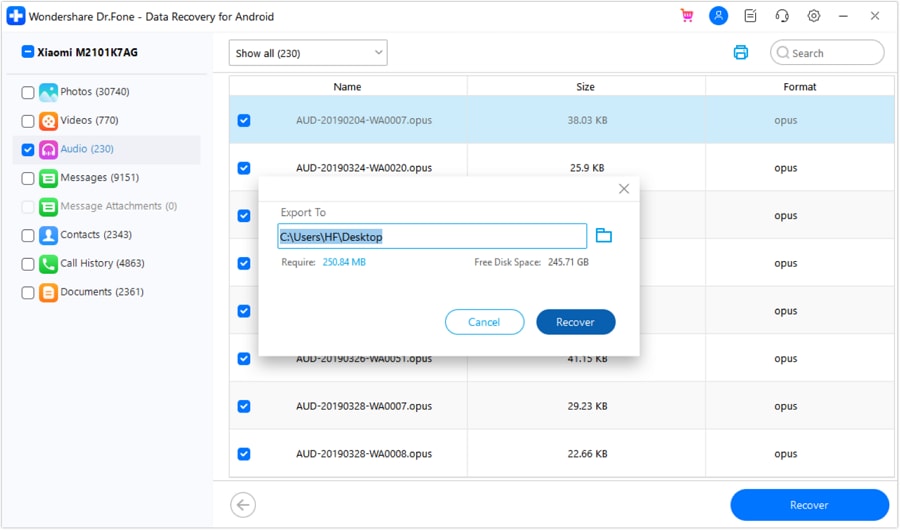
The original article also recommends Dr.Fone Android Recovery. This is a better alternative when you prefer Wondershare's mobile-device recovery ecosystem and need a guided Android recovery module rather than a general desktop file recovery tool.
Dr.Fone is positioned as a mobile device management and Android recovery solution. It can be a more natural FoneLab alternative for direct Android phone recovery, while Recoverit is better for storage media and computer locations related to Android files.
| Feature | Dr.Fone Android Recovery Review Notes |
| Mobile-first recovery workflow | Better suited than Recoverit when the target is Android phone data rather than computer storage. |
| Supported device range | Dr.Fone's product page lists broad Android model support; verify your exact phone before purchase. |
| Data categories | Useful for photos, videos, contacts, WhatsApp data, and other mobile categories where supported. |
| Broken-phone scenarios | May help in supported broken Android workflows, but severe hardware failure still needs professional handling. |
| Privacy and access | Use only on devices and accounts you own or are authorized to access. |
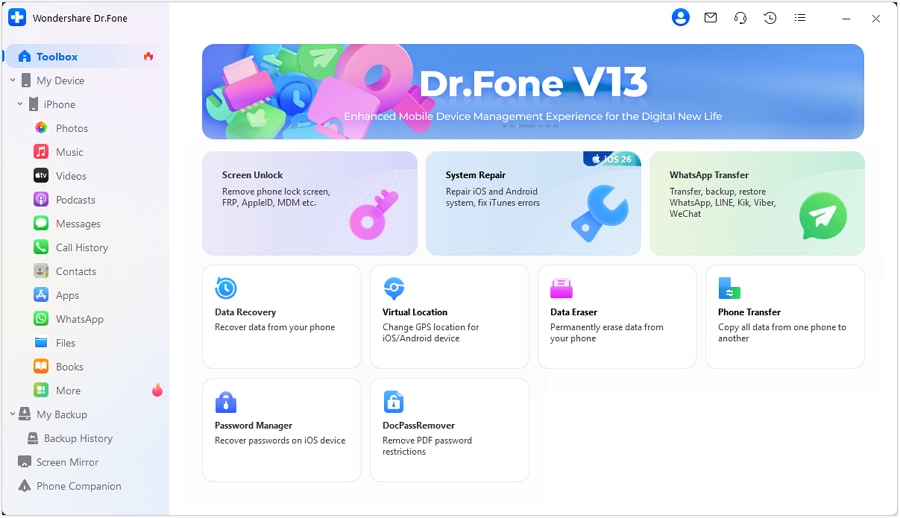
How to use Dr.Fone for Android data recovery:
- Install Dr.Fone and choose Data Recovery. Download Dr.Fone from Wondershare, install it on your computer, open the app, and select Data Recovery.
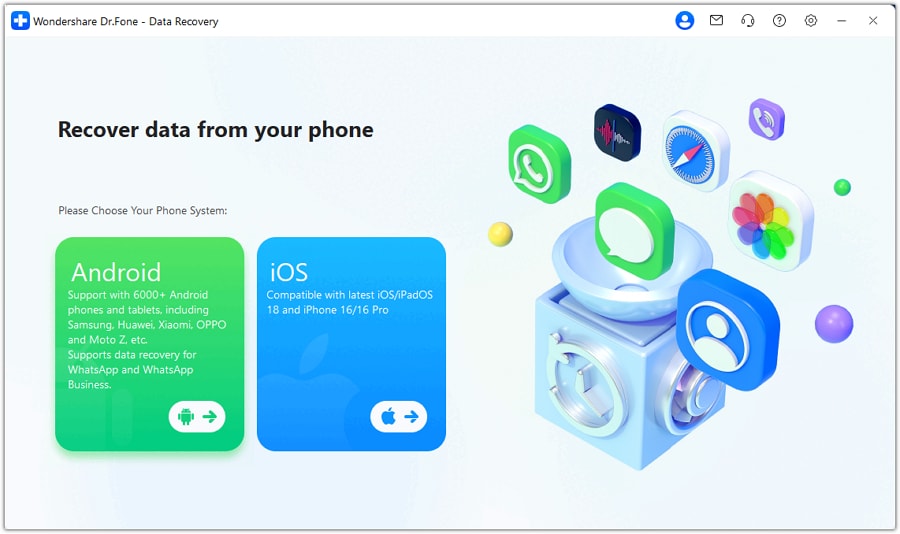
- Select Android as the target system. Choose the Android recovery option so the tool uses the correct mobile workflow.
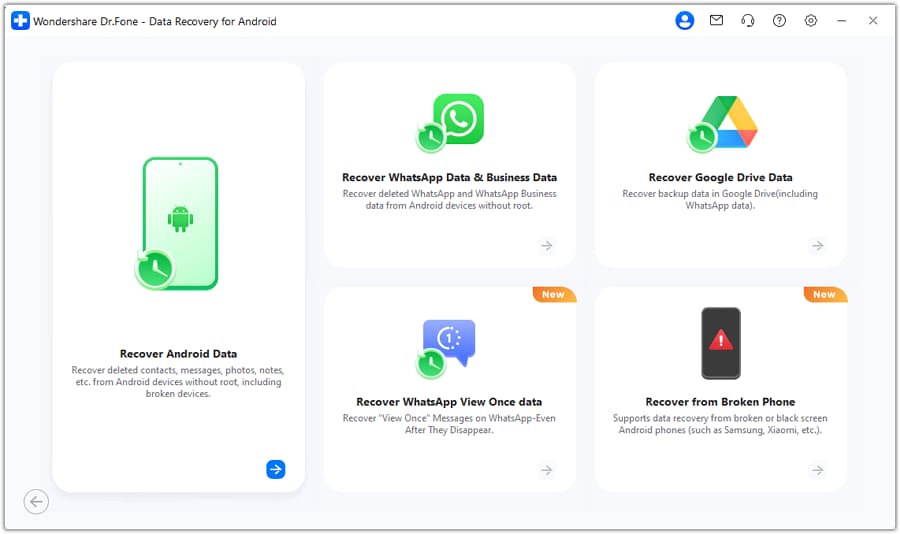
- Choose Recover Android Data. Select the recovery path for Android device data.
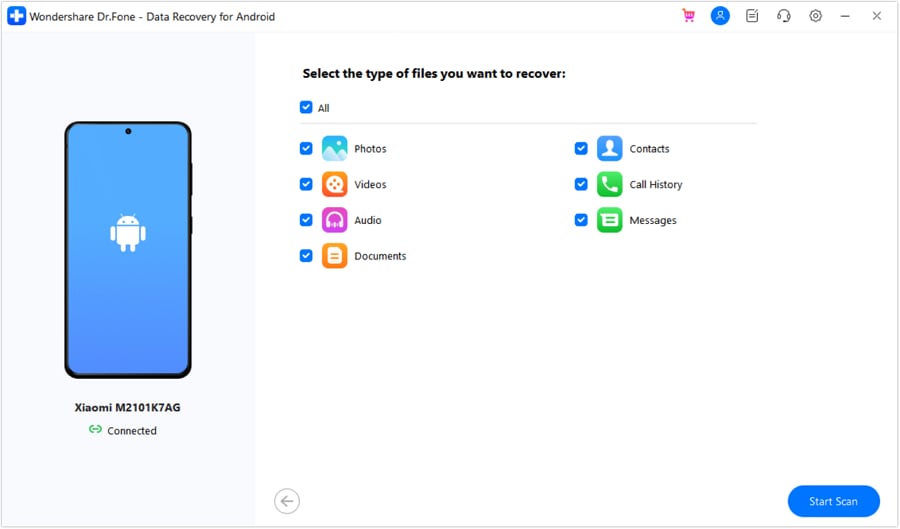
- Connect the phone and choose file types. Connect your Android phone with a stable USB cable, follow permission prompts, and choose the file types you want to scan.
- Preview and recover selected files. Preview recoverable files, select the items you need, and save them to your computer instead of the original phone storage.
Part 7. Alternative 2: Recoverit for Android SD Cards and Backups
Wondershare Recoverit is not positioned as a direct replacement for every Android internal-memory recovery case. Its stronger role is recovering Android-related files from storage that a computer can scan: SD cards, microSD cards through a reader, OTG drives, USB drives, external drives, local computer backups, transferred phone folders, and deleted files on a PC or Mac.
That distinction matters. If your lost Android photos or videos were on a removable card, Recoverit may be the simpler choice. If your lost data is SMS, WhatsApp databases, contacts, or app data inside encrypted phone storage, FoneLab or Dr.Fone is more directly aligned with that job.
| Recovery Need | Better Tool Fit | Reason |
| Deleted photos/videos from Android SD card | Recoverit or FoneLab | The card can be scanned from a computer if it is still readable. |
| Lost files from a computer backup of Android | Recoverit | Recoverit is designed for computer and external storage recovery. |
| Deleted SMS, contacts, call logs | FoneLab or Dr.Fone | These categories usually require a phone-aware mobile recovery workflow. |
| Google Drive backup data | FoneLab or direct Google restore | Backup restore is account-based and should be tried before raw scanning. |
| Formatted Android SD card | Recoverit | Desktop deep scan is appropriate when the card can be mounted by a computer. |
| Physically damaged phone | Professional service | Software scanning can worsen unstable storage or fail completely. |
How to use Recoverit for Android SD card or backup recovery:
- Choose the Android storage location. Insert the Android SD card, connect the external storage, or select the computer folder/drive where Android files were backed up or transferred.

- Scan the selected location. Let Recoverit scan for deleted or missing Android photos, videos, audio files, documents, and other file types.

- Preview and select files. Use filters and preview where available to identify the files you want.

- Recover to another drive. Save recovered files to a separate healthy storage location to avoid overwriting the original card or folder.

Part 8. Tips and Notes for Safer Android Data Recovery
The fastest recovery method is not always the safest. Follow the sequence below before scanning or paying for software.
- Check trash folders first: Google Photos says backed-up photos/videos deleted from Google Photos stay in trash for 60 days, while non-backed-up items may stay for 30 days on Android 11 and up.
- Check Google backup: Google says Android backups can include apps/app data, call history, contacts, device settings, SMS/MMS, and photos/videos through Google Photos where enabled.
- Stop using the phone: disable Wi-Fi/mobile data temporarily, avoid new photos/videos, and do not install recovery apps directly on the affected phone.
- Preserve removable media: remove SD cards and scan them from a computer with a reliable reader.
- Do not format before recovery: if Android asks to format an SD card, cancel and scan first.
- Avoid unsafe root attempts: rooting can increase data access in some cases, but it can also write to storage, void warranties, or cause more data loss.
- Save elsewhere: always export recovered files to a computer drive or external drive, not back to the source.
- Respect privacy and ownership: only recover data from devices, accounts, and backups you own or are authorized to access.
- Escalate physical damage: if the phone or card is unstable, overheating, water-damaged, or not detected, stop DIY recovery for critical files.
Part 9. Final Verdict
FoneLab Android Data Recovery is worth trying when you need a phone-aware recovery workflow and can preview useful results before paying. It is especially relevant for recoverable contacts, messages, call logs, WhatsApp data, media, documents, Android SD card files, and Google Drive backup data on supported devices.
Its limits are equally important. Modern Android recovery is shaped by encryption, root/permission access, app sandboxing, backup status, and overwriting. If the phone was factory reset, the device cannot be unlocked, or new data has overwritten the old storage blocks, software may not recover what you need.
Use the right tool for the storage source: FoneLab for Android phone and backup workflows, Dr.Fone for Wondershare's mobile recovery suite, and Recoverit for Android SD cards, external storage, and computer backups. No matter which tool you choose, stop using the affected storage first and save recovered files somewhere safe.
FAQ
-
Is FoneLab Android Data Recovery safe to use?
FoneLab is an established Aiseesoft desktop tool, but you should download it only from the official site, review permission prompts carefully, and use it only on devices and accounts you own or are authorized to access. -
Does FoneLab require root access?
Not always. Basic scans may work without root on supported devices, but deeper internal storage recovery and some data categories can require additional permissions, helper app access, or root-level access depending on the phone and Android version. -
Can FoneLab recover data after factory reset?
Only in limited cases. Modern Android devices use encryption, and a factory reset can make local internal data very difficult or impossible to recover without a backup. Check Google, Samsung, WhatsApp, and local backups first. -
Can FoneLab recover WhatsApp messages?
FoneLab's official specs list WhatsApp and WhatsApp attachments as supported categories. Actual recovery depends on phone access, app data state, backup status, permissions, and whether the data has been overwritten. -
Is Dr.Fone better than FoneLab for Android recovery?
Dr.Fone can be a stronger choice if you prefer Wondershare's broader mobile recovery toolkit. FoneLab is a focused Aiseesoft option. The better tool depends on your phone model, data type, backup status, and preview results. -
Is Recoverit a FoneLab alternative?
Recoverit is a practical alternative for Android SD cards, OTG drives, computer backups, transferred files, and other storage locations visible to a computer. It is not the best match for direct recovery of SMS, contacts, or app databases from encrypted internal phone storage. -
Can Android recovery software recover overwritten data?
No. If new data has overwritten the storage blocks that held the deleted files, FoneLab, Dr.Fone, Recoverit, and other software cannot restore those overwritten files.


