

 TL;DR:
A TF (TransFlash) card is simply the legacy name for the standard microSD card format, meaning any device with a "TF" slot physically accepts a modern microSD card.
● Physical fit does not guarantee data compatibility; a device slot labeled "TF up to 32 GB" is typically restricted to the microSDHC standard, while using a 64 GB or larger card requires host support for the microSDXC format and the exFAT file system.
● When selecting storage for dashcams or security cameras, prioritize high-endurance media and match the manufacturer's exact Video Speed Class requirement, rather than relying on maximum advertised read speeds.
● If a card suddenly appears as RAW, asks to be formatted, or is missing files, do not format it or run CHKDSK; extract the files using data recovery software first, noting that PC recovery tools cannot bypass Android Adoptable Storage encryption.
Ask AI for a summary
 ChatGPT
 Perplexity
 Gemini
 Claude
 Grok
Grok
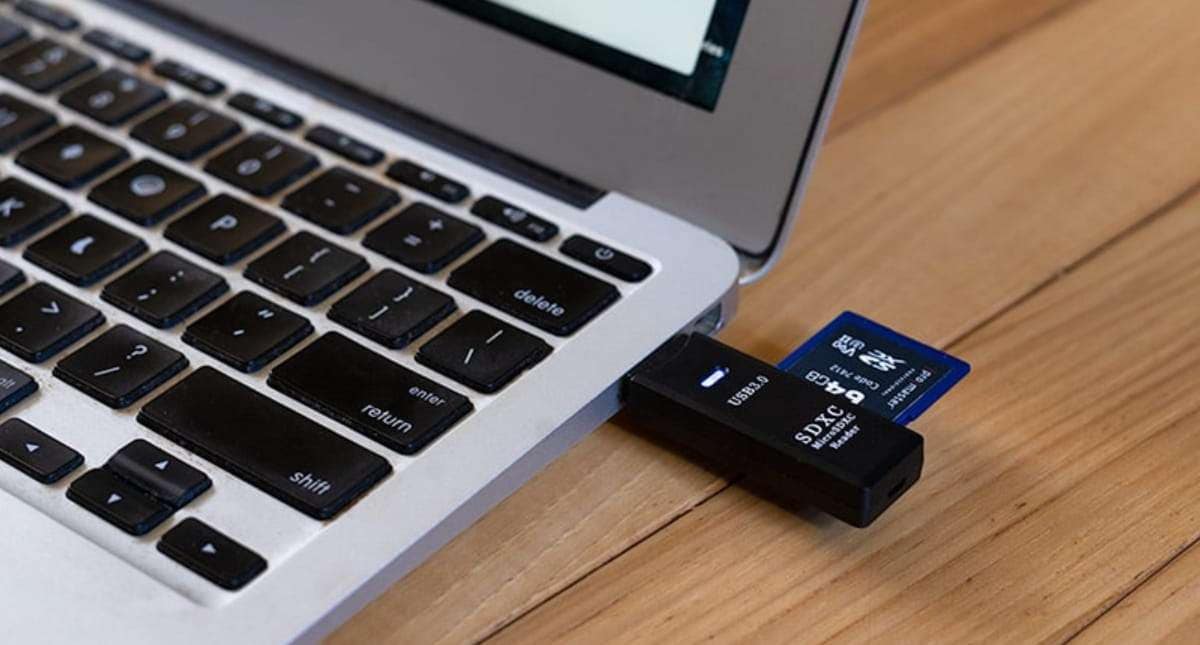
Quick answer: A TF card is a TransFlash memory card—the former name of the small flash-storage format now standardized as microSD. A device labeled with a TF card slot usually accepts a microSD-sized card. TF and microSD are not competing modern formats; compatibility depends on the device's supported capacity, card family, file system, and speed requirements.
The word “TF” remains common on dashcams, security cameras, speakers, GPS units, MP3 players, single-board computers, and inexpensive electronics. That label tells you the physical card size, but it does not promise that every microSDHC, microSDXC, or microSDUC card will work. This guide decodes the name, the slot, the symbols on the card, the real buying considerations, and the safest response when files go missing.
Try Wondershare Recoverit to Perform TF Data Recovery
 Security Verified. Over 7,302,189 people have downloaded it.
In This Article
Part 1. What Is A TF Card?
TF card means TransFlash card. SanDisk introduced TransFlash for small mobile devices, and the format became the basis of microSD. In March 2005, the SD Association announced the microSD specification, described it as fully compatible with SanDisk's TransFlash format, and said SanDisk would transition its TransFlash line to microSD later that year.
That history explains the naming confusion. “TransFlash” or “TF” survives as an informal retail and device-label term, while microSD is the current standardized name. A product sold today as a TF memory card is normally a microSD card, and the card may carry microSD, microSDHC, or microSDXC logos rather than a TF logo.
The microSD form factor measures 11 × 15 × 1.0 mm. It stores data in non-volatile flash memory, so files remain on the card without continuous power. A controller inside the card manages reading, writing, error correction, and communication with the host device. The host controls what capacity, file system, bus mode, and performance it can actually use.
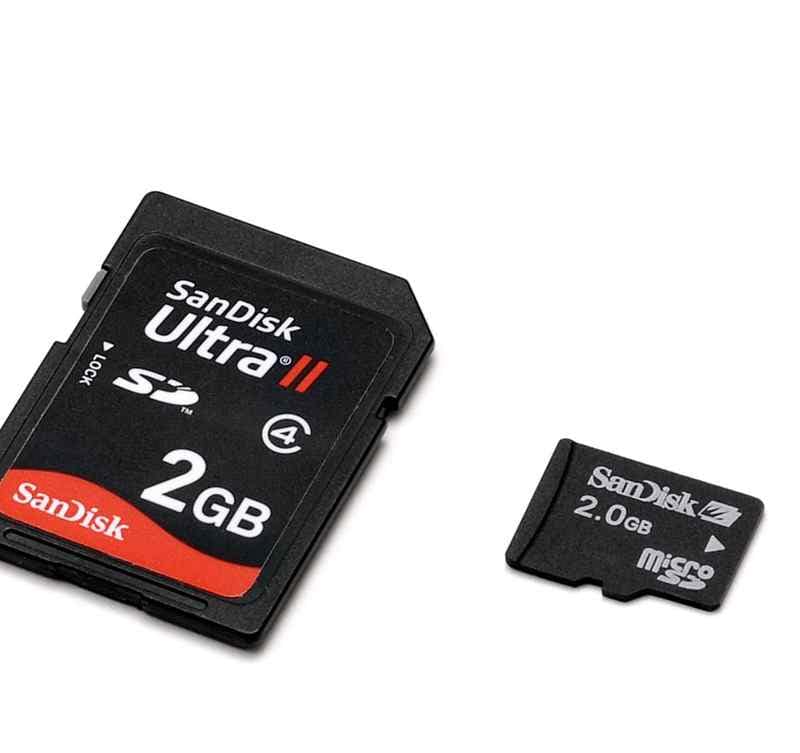
The most accurate definition: A TF card is the legacy TransFlash name for the microSD-sized memory-card format. “TF” does not identify a separate modern capacity, speed, durability, or price class.
Part 2. What Does A TF Card Slot Mean?
A TF card slot is normally a slot designed for a microSD-sized memory card. If a speaker, dashcam, security camera, GPS unit, projector, tablet, or other device says “TF,” look for a microSD card that matches the device manual. Do not try to insert a full-size SD card; it is physically larger.
The slot label alone does not reveal the maximum capacity. A device can have the correct physical slot but support only older card families. For example, a device limited to microSDHC may accept a 64 GB microSDXC card physically yet fail to mount it because the device does not support SDXC or exFAT.
| Manual Or Device Label | What It Usually Means | What To Verify Before Buying |
| TF or TF card | A microSD-sized removable memory card | Maximum capacity, required file system, and minimum recording speed |
| microSD | The current standardized name for the small SD form factor | Whether the host supports microSD, microSDHC, microSDXC, or microSDUC |
| SD/TF | The device may support a full-size SD card, a microSD card, or a microSD card through an adapter | The manual's slot illustration and exact card specification |
| TF up to 32 GB | The device likely expects microSDHC media | Do not assume a 64 GB or larger microSDXC card will work after reformatting |
| TF up to 256 GB, 512 GB, or 1 TB | The device supports a stated high-capacity microSD family | Use no more than the published limit and follow its format and speed requirements |
A spring-loaded slot may click when the card is fully inserted; a tray-style slot may require the card to sit in a shaped recess. Follow the device's orientation diagram. Forcing the card, inserting it upside down, or using a full-size card in a microSD opening can damage the slot.
Part 3. TF Card Vs microSD Card Vs SD Card
TF and microSD describe the same physical lineage, while a full-size SD card is a different form factor. Many comparison pages create a false distinction by assigning older capacities and slower speeds to TF cards and newer standards to microSD cards. In current use, those qualities depend on the individual microSD product, not whether a seller calls it TF.
| Feature | TF Card | microSD Card | Full-Size SD Card |
| Name | Legacy name: TransFlash | Current standardized name | Secure Digital full-size form factor |
| Dimensions | 11 × 15 × 1.0 mm | 11 × 15 × 1.0 mm | 32 × 24 × 2.1 mm |
| Modern product families | Usually sold under microSD family names | microSD, microSDHC, microSDXC, and microSDUC | SD, SDHC, SDXC, and SDUC |
| Built-in lock switch | No | No | Yes, on conventional full-size cards |
| Use in a full-size SD slot | Yes, with a compatible passive adapter | Yes, with a compatible passive adapter | Directly |
| Typical devices | Legacy label on compact electronics | Phones, tablets, drones, action cameras, dashcams, security cameras, handheld gaming, and embedded devices | Cameras, audio recorders, laptops, and other equipment with full-size slots |
| Price and performance | Determined by the actual microSD card | Determined by capacity, speed, endurance, brand, and seller | Determined by capacity, speed, endurance, brand, and seller |
The adapter is mechanical and passive: it connects the microSD card's contacts to a full-size SD layout. It does not add capacity, improve speed, convert the file system, or make an unsupported card compatible. Its side lock switch affects writing through the adapter; the microSD card itself has no lock switch.
Common TF Card Myths
- “TF cards are always cheaper than microSD cards.” False. The names often refer to the same product form. Compare the exact capacity, speed, endurance, warranty, and seller.
- “microSD has security but TF does not.” Misleading. Modern capabilities follow the SD specification and the card/host implementation, not the old name printed in a listing.
- “A TF card works in every SD reader.” False. An adapter solves size only. An older reader may not support SDXC, exFAT, newer bus modes, or the card's capacity.
- “A full-size SD card can be converted into TF.” False. A full-size card cannot physically shrink into a microSD slot.
- “Higher advertised read speed guarantees recording.” False. Continuous video depends on minimum sustained write performance and host support.
Part 4. TF Card Capacity And File-System Standards
A TF label does not define capacity. Modern cards use the microSD versions of the SD capacity families. The SD Association capacity specification defines the following ranges and default file-system families.
| Card Family | Capacity Defined By The Standard | Standard File System | Compatibility Note |
| microSD / SDSC | Up to 2 GB | FAT12 or FAT16 | Common in older devices; verify the manual |
| microSDHC | More than 2 GB through 32 GB | FAT32 | An SDHC host does not automatically support SDXC |
| microSDXC | More than 32 GB through 2 TB | exFAT | The host must support SDXC, the chosen capacity, and exFAT |
| microSDUC | More than 2 TB through 128 TB | exFAT | The standard defines the range, but device and retail availability remain separate questions |
The maximum printed in the device manual overrides the theoretical standard limit. A “TF card slot” rated for 32 GB should be treated as a 32 GB limit even though larger microSDXC cards exist. Reformatting a larger card to FAT32 does not guarantee that an older controller can address it correctly.
Capacity labels also use decimal units: manufacturers define 1 GB as 1,000,000,000 bytes. The operating system may display a smaller number because it reports capacity differently and reserves space for file-system structures. A small difference is normal; a card that corrupts data beyond a much lower hidden capacity may be counterfeit.
Part 5. What Is A TF Card Used For?
A TF memory card adds removable storage where a full-size SD card would take too much space. Its role varies by device, so “the fastest card” is not automatically the best choice. The correct card meets the host's capacity and performance requirements without paying for capabilities the host cannot use.
| Device Or Workload | What The TF Card Stores | Selection Priority |
| Android phone or tablet | Photos, videos, downloads, music, documents, and supported app data | Published capacity support; A1 or A2 only when app performance is relevant and supported |
| Dashcam | Continuous or loop-recorded driving video | Manufacturer-approved capacity, required Video Speed Class, and a high-endurance product designed for repeated writes |
| Security camera or video doorbell | Continuous, motion-triggered, or event video | High endurance, environmental tolerance, supported capacity, and reliable sustained writing |
| Drone or action camera | High-bitrate video, photos, telemetry, and proxy files | The exact UHS/Video Speed Class specified by the manufacturer; capacity alone is not enough |
| Handheld game system | Downloaded games, updates, screenshots, and captures | Platform-approved card family and capacity; random-read performance may affect loading |
| MP3 player, GPS, speaker, or projector | Audio, maps, firmware, playlists, images, or presentations | Compatibility with older capacity and file-system limits |
| Raspberry Pi or embedded device | Operating system, logs, applications, and project data | Reliable random I/O, endurance, backups, and the board maker's compatibility guidance |
A TF card expands storage; it does not add RAM. On Android, portable storage is mainly for files, while supported devices may offer Adoptable Storage for some apps and app data. Adoption erases and encrypts the card for one phone, so read the SD card as internal storage guide before choosing that mode.
Part 6. How To Choose A TF Memory Card
Start with the host device, not a marketplace title. A genuine premium card can still be the wrong choice if its capacity or performance standard is unsupported.
- Read The Exact Device Manual: Record the supported card family, maximum capacity, file system, and required speed class. Do not rely only on the words “TF slot.”
- Choose Capacity Within The Limit: Leave room for future files, but do not exceed the host's published maximum. For continuous recording, also check the device's estimated recording time by capacity.
- Match Sustained Write Requirements: For cameras and recorders, use the same or higher matching class symbol required by the device. Peak read-speed marketing is not a substitute.
- Choose Endurance For Continuous Recording: Dashcams and security cameras repeatedly overwrite storage. Use a card sold for endurance workloads when the device maker recommends one.
- Buy From A Reputable Seller: Prefer an authorized retailer, a traceable model number, a real warranty, and packaging that matches the manufacturer's current listing.
- Test Before Trusting It: Format the card in the target device, make a representative recording, play it back, copy it to a computer, and verify that the file opens correctly.
How To Read TF And microSD Speed Markings
The SD Association's current Speed Class specification distinguishes Speed Class, UHS Speed Class, Video Speed Class, and SD Express Speed Class. These symbols indicate defined minimum sequential performance under their respective standards; the host must support the relevant bus mode.
| Marking | What It Indicates | When It Matters |
| C2, C4, C6, C10 | Legacy Speed Class with minimum sequential write levels of 2, 4, 6, or 10 MB/s | Older hosts and basic recording requirements |
| U1 or U3 | UHS Speed Class 1 or 3, corresponding to defined minimum write levels of 10 or 30 MB/s | UHS-compatible cameras and recorders that specify the matching symbol |
| V6, V10, V30, V60, V90 | Video Speed Class for sustained video-writing requirements | Video recording; select the class required by the camera or recorder |
| A1 or A2 | Application Performance Class for random and sequential app workloads | Supported phones, tablets, handhelds, and embedded systems; A2 needs an A2-capable host for its intended benefits |
| UHS-I, UHS-II, or SD Express bus marks | The card's physical bus/interface capability | High-performance hosts; the device controls which interface speed is available |
For app workloads, the Application Performance Class specification states that A2 performance requires both an A2 card and an A2-supporting host. Buying A2 does not guarantee an A2 result in every phone or reader.
What Affects TF Card Price?
There is no separate “TF card price” category: current listings normally price the underlying microSD product. Prices change frequently by country and promotion, so compare cards at the same capacity and performance tier rather than treating one temporary price as universal.
- Capacity: Higher capacity usually raises the total price, although cost per gigabyte often falls at mainstream capacities.
- Sustained Performance: Higher Video Speed Class, faster bus support, and professionally tested recording performance can cost more.
- Endurance: Cards designed for dashcams, surveillance, or industrial workloads may cost more than general-purpose cards.
- Warranty And Support: Established brands and authorized sellers may charge more but provide clearer authenticity checks and replacement terms.
- Included Hardware: An SD adapter or USB reader can affect the bundle price, but it does not increase the card's performance by itself.
An unusually cheap high-capacity “TF card” with no recognizable SD family or speed logos is a warning sign. Counterfeit cards can report a fake capacity to the device, then overwrite or corrupt earlier files when their true storage fills. Do not use an unverified bargain card for irreplaceable video, photos, or security footage.
Part 7. How To Use A TF Card Safely
A new card should be matched, inserted, formatted, and tested in the device that will use it. Formatting erases existing data, so never assume a card is empty simply because it was sold as new or previously used elsewhere.
Method 1. Set Up A New TF Card
- Confirm Compatibility: Check the device manual for maximum capacity, microSD family, file system, and speed requirement. If the manual says “TF up to 32 GB,” choose a genuine card no larger than that limit.
- Choose The Correct Connection: Insert the microSD/TF card directly into a matching slot. For a full-size SD slot, place the card fully into a compatible microSD-to-SD adapter with the contacts aligned.
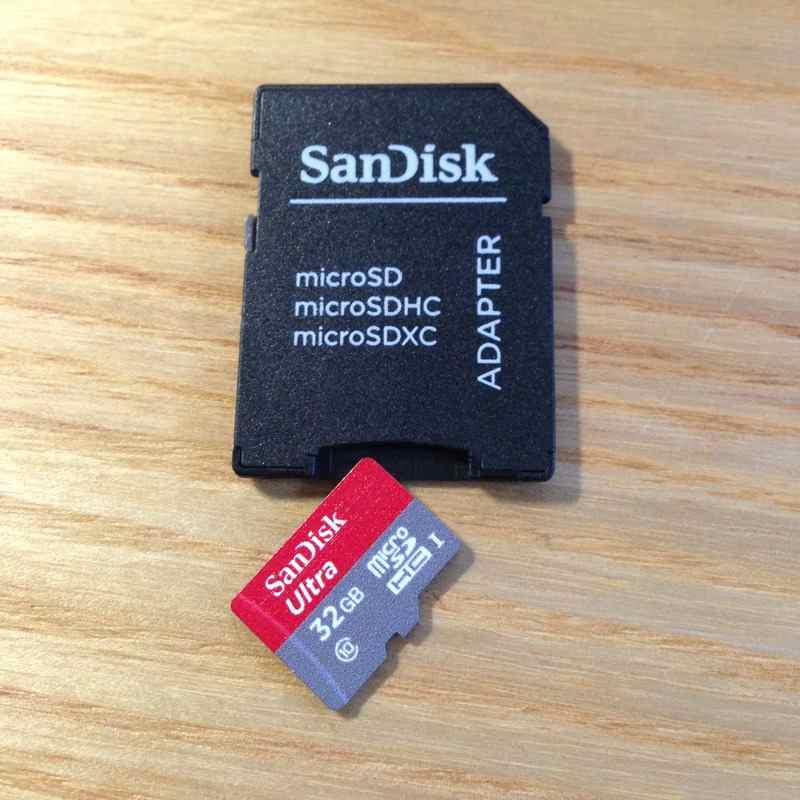
- Insert Without Force: Power off first if the manual requires it. Follow the orientation diagram and stop if the card or tray does not seat naturally.
- Format In The Main Device: If the card contains no needed files, use the device's own format command. Device formatting creates the layout that the host expects. Android users can follow the Android SD card format guide; computer and camera users can use the broader microSD formatting guide.
- Run A Real-World Test: Record or save enough data to exercise the intended workload, then play back or open several files. A camera card should be tested at the required resolution, frame rate, and clip length.
- Create A Backup Routine: A memory card is working storage, not the only copy. Transfer important files regularly and verify the backup before deleting or reformatting the card.
Do not format when files are missing. If a used TF card appears empty, RAW, corrupted, or unformatted, disconnect it and recover the files first. Formatting and new recordings can overwrite data that is still recoverable.
Part 8. Why A TF Card Is Not Detected
A TF card can fit correctly and still be unreadable. Separate connection problems from compatibility, logical corruption, and physical failure before applying a repair.
| What You See | Likely Cause | Safest First Action |
| The card is not shown in any device | Poor seating, dirty contacts, failed adapter/reader, or physical card failure | Power off if required, reseat once, try a known-good reader or device, and stop repeated attempts if the card disconnects or heats up |
| The card works directly but not through an SD adapter | Damaged, incompatible, or locked adapter | Try another compatible adapter and check its side lock switch |
| The device says “unsupported card” | Unsupported capacity family, file system, encryption, or corrupted metadata | Check the manual and copy or recover files before formatting |
| The card appears as RAW or asks to be formatted | The file system is damaged or unreadable | Do not format if files matter; recover data first |
| The card records briefly, then stops | Insufficient sustained write speed, counterfeit capacity, overheating, or failing flash | Copy readable files, test a manufacturer-approved card, and replace an unstable card |
| The phone used the card as internal storage | Android Adoptable Storage encryption ties it to the original phone | Return it to the original phone and export accessible files; a computer cannot bypass the missing encryption key |
| The card shows the wrong capacity or corrupts later files | Counterfeit or failing storage | Stop writing, recover important files, and replace the card |
If a computer does not recognize the card, use the dedicated SD and microSD card not recognized guide for reader tests, Disk Management checks, and operating-system fixes. If the card is readable but reports corruption, protect the files before following the corrupted SD card recovery workflow.
Avoid running CHKDSK, First Aid, reformatting, initializing, or creating a new partition before important files are recovered. These tools can be appropriate later, but they modify storage structures and are not the safest first response to data loss.
Part 9. Recover Deleted Or Formatted TF Card Files
When a TF/microSD card is still detected by Windows or macOS through a reliable reader, Wondershare Recoverit can scan the removable card for deleted, formatted, lost, or inaccessible files. Recoverit is desktop data recovery software for Windows and Mac; it does not recover data from a phone's built-in storage or bypass encryption on an Android-adopted card.
Use recovery before repair when photos, videos, audio, documents, or project files matter. Stop recording, downloading, formatting, or copying new files to the card because new writes can overwrite recoverable content.
Method 2. Recover TF Card Files With Recoverit
- Connect And Select The TF Card: Install Recoverit on a Windows PC or Mac. Connect the TF/microSD card through a stable reader, open SD Card Recovery, and select the detected card. Verify its capacity and device name before starting.
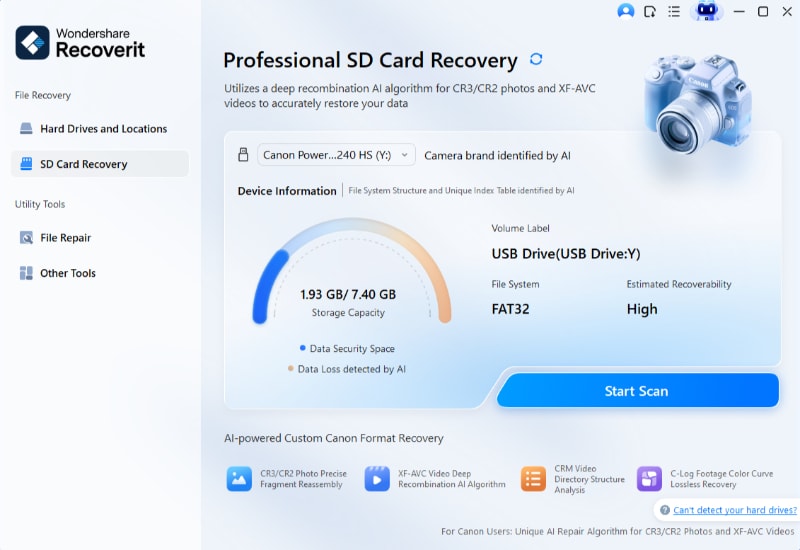
- Scan Without Writing To The Card: Start the scan and let Recoverit search the card. Use file type, path, date, size, or other available filters to narrow the results. Keep the source card connected and do not save new data to it during the scan.
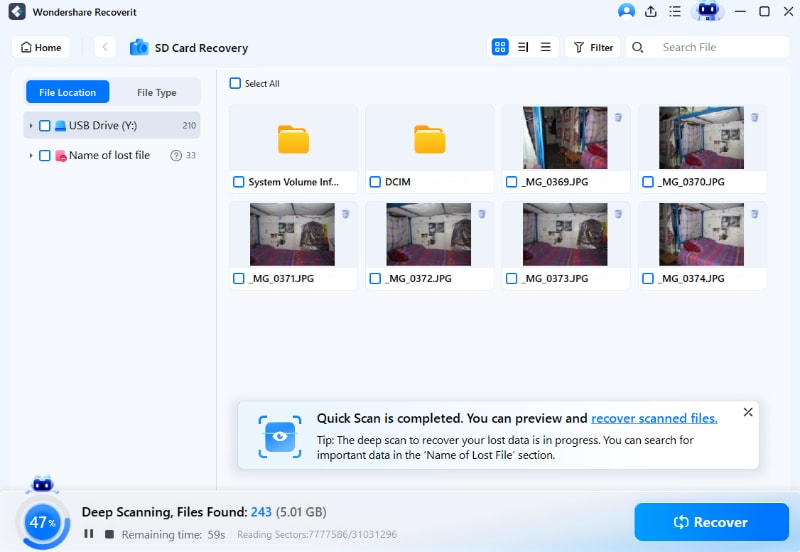
- Preview And Recover To Another Drive: Preview supported files when available, select what you need, and save the recovered data to the computer or another external drive. Do not save it back to the same TF card until recovery and verification are complete.

For more recovery cases, see the complete memory card recovery workflow. If the card was already formatted, use the focused guide to recover files from a formatted SD or microSD card.
Know when software cannot help: If the card is cracked, burned, severely corroded, repeatedly disconnects, becomes unusually hot, or is not detected by any reader or device, stop DIY attempts. High-value data may require a professional recovery laboratory. No software can scan storage that the computer cannot detect at the hardware level.

Part 10. Protect A TF Card From Data Loss
- Eject Before Removal: Stop recording and use the device's eject or shutdown process before removing the card.
- Format In The Primary Device: After backing up, format a camera or recorder card in that device instead of switching file systems repeatedly across computers.
- Keep Multiple Copies: Follow an SD card backup workflow for valuable media. The card in the device should not be the archive.
- Do Not Fill It Completely: Offload files before the card is full, especially during long recordings or continuous-write workloads.
- Replace Unstable Media: Repeated errors after a successful format, sudden read-only behavior, capacity mismatches, and recurring disconnections are reasons to retire the card.
- Store Cards Properly: Keep loose cards in a case and protect the contacts from dust, liquids, static, bending, and abrasion.
- Label By Device And Date: For creators and operators using several cards, a simple rotation and backup log reduces accidental reuse and premature formatting.
Conclusion
A TF card is not a mysterious alternative to microSD. It is the legacy TransFlash name for the small card format that became microSD. A TF card slot therefore normally accepts a microSD-sized card, but physical fit is only the beginning: the device must also support the card's capacity family, file system, and required performance.
Choose from the device manual, buy from a reputable seller, match sustained performance to the workload, and use high-endurance media for repeated recording when required. If the card asks to be formatted or files disappear, stop writing to it and recover the data before repair. That order protects the one thing no replacement card can restore—the files that existed only on the original.
FAQ
-
What Does TF Card Mean?
TF card means TransFlash card. TransFlash was the original name for the 11 × 15 × 1 mm flash-memory format that became the microSD standard. “TF” remains common in device manuals and marketplace listings, but current cards are normally sold as microSD, microSDHC, or microSDXC. -
Is A TF Card The Same As A microSD Card?
In modern use, yes. TF is the legacy TransFlash name, while microSD is the standardized name. The important differences are between individual card families, capacities, file systems, speed classes, endurance ratings, and host compatibility—not between the words TF and microSD. -
What Is A TF Card Slot?
A TF card slot is normally a microSD-sized slot. Check the device manual for the maximum supported capacity, card family, file system, and minimum speed. A card can fit physically but still be incompatible with the host. -
Can I Put A microSD Card In A TF Slot?
Usually yes, because TF and microSD use the same small form factor. However, the card must stay within the device's supported capacity and SD generation and meet its file-system and performance requirements. -
Can I Use A TF Card In A Full-Size SD Slot?
Yes, with a compatible microSD-to-SD adapter. The adapter changes the physical connection only. It does not increase capacity or speed and cannot make an SDXC card work in a reader that supports only SDHC. -
What Is A TF Card Used For?
TF or microSD cards store photos, video, audio, maps, downloads, games, firmware, logs, and other files in phones, tablets, dashcams, security cameras, drones, action cameras, GPS devices, speakers, handheld game systems, and embedded computers. -
How Much Does A TF Card Cost?
A TF card has no separate price category because the term normally refers to a microSD card. Price changes by capacity, speed, endurance, warranty, brand, country, seller, and promotions. Compare genuine cards with the same specifications, and treat an unusually cheap high-capacity listing as a counterfeit risk. -
What Is The Maximum TF Card Capacity?
The TF name does not set a capacity limit. The microSD standard includes microSD/SDSC up to 2 GB, microSDHC above 2 GB through 32 GB, microSDXC above 32 GB through 2 TB, and microSDUC above 2 TB through 128 TB. The actual device limit can be much lower and must be checked in its manual. -
Which TF Card Is Best For A Dashcam Or Security Camera?
Choose a genuine high-endurance microSD card within the device's supported capacity and with the exact minimum Video/UHS Speed Class required by the manufacturer. Continuous recording creates far more write cycles than ordinary file storage. -
Why Is My TF Card Not Detected?
The card may be incorrectly seated, too large for the device, formatted with an unsupported file system, used through a faulty adapter or reader, encrypted by another device, corrupted, counterfeit, or physically damaged. If files matter, do not format before backup or recovery. -
Should I Format A New TF Card?
Format it when the target device requests setup or when its manual recommends device formatting. First confirm the card contains no needed files. Formatting in the main camera, recorder, or phone usually creates the file system and folders that device expects. -
Can Recoverit Recover Deleted Files From A TF Card?
Recoverit can scan a TF/microSD card that Windows or macOS can detect through a reader. Stop using the card, scan it before repair or formatting, and save recovered files to another drive. Recoverit cannot scan phone-internal storage, bypass Android Adoptable Storage encryption, or recover from a card that no computer can detect at the hardware level. -
Does A TF Card Increase Phone RAM?
No. A TF/microSD card adds storage capacity, not physical RAM. It can hold media and files, and some supported Android devices may move eligible apps to adopted storage, but it does not increase the phone's working memory.


