


 TL;DR:
When an SD card suddenly stops working, stop all new writes and perform a cross-test with a known-good card and reader to isolate the hardware fault before you format or run repair commands.
● If Windows or macOS detects the correct card capacity but files appear RAW or inaccessible, recover the data to a different drive using software like Wondershare Recoverit before attempting to mount or fix the volume.
● Run CHKDSK /f or use the SD Memory Card Formatter only after verifying your recovered files, because these actions modify the FAT allocation data and erase the current file-system structure.
● Cease DIY software scans and consult a professional recovery lab if the card displays zero bytes, reports "No Media," repeatedly disconnects, causes computer freezes, or becomes unusually hot.
Ask AI for a summary
 ChatGPT
 Perplexity
 Gemini
 Claude
 Grok
Grok
When an SD card suddenly stops working, do not format it, initialize it, run CHKDSK, or keep reconnecting it at random. First isolate whether the failure is in the card, microSD adapter, card reader, USB port, phone, camera, or computer. If any device can still read the card, copy the files immediately. If Windows or macOS detects the card but the files are missing, RAW, or inaccessible, recover them to a different drive before attempting repairs.
⚡ TL;DR: The Safe Order When an SD Card Quits Working
● Stop new writes: Cancel format or repair prompts and stop taking photos, recording video, moving apps, or saving files to the card.
● Run a controlled cross-test: Test the card in one known-good reader and test one known-good card in the original reader to separate card failure from reader failure.
● Recover before repair: If the card is detected with the correct capacity but files are missing or inaccessible, copy or recover them before CHKDSK, First Aid, partition changes, or formatting.
● Stop when hardware looks unstable: A cracked, wet, overheating, zero-capacity, or repeatedly disconnecting card needs a recovery lab rather than repeated scans.
In This Article
Part 1. Find Out What Actually Stopped Working
A message such as "SD card not detected" does not prove the card itself is dead. A failed microSD adapter, worn card reader, disabled laptop reader, loose phone tray, unsupported capacity, missing Windows drive letter, corrupted file system, or failing flash controller can produce similar symptoms. The fastest safe diagnosis is a controlled cross-test rather than trying every repair command.
1.1 Use the Two-Card, Two-Reader Cross-Test
Use only a small number of deliberate tests. Repeatedly reconnecting a physically unstable card can make it less readable.
Step 1. Remove the Card Safely
Stop the camera, phone, computer, or recorder from writing to the card. Use the device's eject or unmount control when available, power the host off, and remove the card. Do not accept any prompt to format, initialize, erase, repair, or create a new volume.
Step 2. Test the Problem Card in One Known-Good Reader
For microSD, use a direct USB microSD reader when possible instead of reusing the same full-size adapter. Connect the reader directly to the computer rather than through a hub. SanDisk lists a faulty adapter, damaged slot, improper seating, unsupported file system, corruption, and card damage among the common reasons a card is not detected. See its current memory card detection guidance.
Step 3. Test One Known-Good Card in the Original Reader or Device
Use a spare card that is compatible with the host. Do not use an irreplaceable card for testing. The two results identify the failing layer:
| Cross-Test Result | Most Likely Fault | Next Safe Action |
| The problem card works in a second reader | The original reader, adapter, USB port, slot, or host is failing | Copy the files immediately, then troubleshoot or replace the reader |
| A known-good card also fails in the original reader | The original reader, driver, port, slot, or host is the likely problem | Try another port, check the reader driver, and inspect host compatibility |
| The problem card fails in every reader, but appears with the correct capacity in Disk Management or Disk Utility | The card may have a mount, partition, or file-system problem | Recover inaccessible files before repair or formatting |
| The problem card shows zero capacity, "No Media," disappears repeatedly, or heats up | Controller, contact, or physical media failure is more likely | Disconnect it and consider a professional recovery lab |
1.2 Match the Symptom to the Safest Next Step
| What You See | What It Usually Means | Do This Next |
| The card opens normally in another reader | The original card reader, adapter, slot, or host is at fault | Copy the data, then replace or repair the reader |
| The card appears in Windows Disk Management but not File Explorer | The volume may be missing a drive letter or may not be mountable | Check the partition status; assign a drive letter only when a valid volume exists |
| The card appears as RAW or Windows asks to format it | Windows cannot mount the current file system | Use the corrupted SD card recovery path before CHKDSK or formatting |
| The phone stopped reading the microSD card, but a computer detects it | The phone tray, storage mode, compatibility, or Android mount state may be the issue | Copy or recover the files, then follow the phone not reading SD card guide |
| No device detects the card at all | The card, controller, contacts, or adapter may have failed physically | Try one known-good reader; stop DIY work if the result does not change |
| Only the laptop's built-in reader fails with every card | The reader may be disabled, unsupported, disconnected, or missing a driver | Check the laptop manual, BIOS/UEFI setting, and manufacturer driver |
This page owns the "worked before, then suddenly failed" diagnosis. For a card that has never appeared on the computer, use the dedicated SD card not detected guide. For a card that is detected but cannot be read, use the narrower SD card will not read guide.
1.3 Know When to Stop DIY Troubleshooting
Stop home troubleshooting when the card is cracked, bent, burned, wet, unusually hot, or missing part of its casing. Also stop when it repeatedly disconnects, causes the computer to freeze, reports zero bytes, or never shows its real capacity in any known-good reader. Recovery software normally needs the operating system to detect and read the device. A lab may be the safer first attempt for unique wedding footage, client work, legal evidence, research data, or the only copy of family photos.
For a card with confirmed physical damage, see the Recoverit overview of damaged SD card recovery options. Do not open the card shell or attempt chip-level repair at home.
Part 2. Protect and Recover the Files First
A repair is successful only when the needed files are safe and verified. A card that becomes readable for a few minutes may be giving you a limited opportunity to copy data, so do not spend that window testing write speed or taking new photos.
2.1 Copy Accessible Files Without Changing the Card
If the card opens in File Explorer, Finder, the camera, or the phone, copy the most important files first to a healthy internal or external drive. Start with irreplaceable photos, videos, project files, and documents. Copy in smaller batches if the card is slow or unstable.
- Do not move files: Copy them. A failed move can remove the source entry before the destination is complete.
- Do not save back to the card: New writes can overwrite deleted data or stress failing flash memory.
- Verify the copy: Open photos at full size, play videos beyond the first seconds, and open several documents.
- Keep the original card unchanged: Do not delete, rename, organize, or repair folders until the copy is verified.
If the files are already missing, inaccessible, or behind a format prompt, move to recovery rather than forcing the card to mount.
2.2 Recover a Detectable SD Card With Recoverit
Wondershare Recoverit Memory Card Recovery is appropriate when Windows or macOS detects the SD or microSD card, but files are deleted, formatted, RAW, corrupted, missing, or inaccessible. It is not a repair for a broken reader, a card that is not detected anywhere, or the built-in storage of a phone.

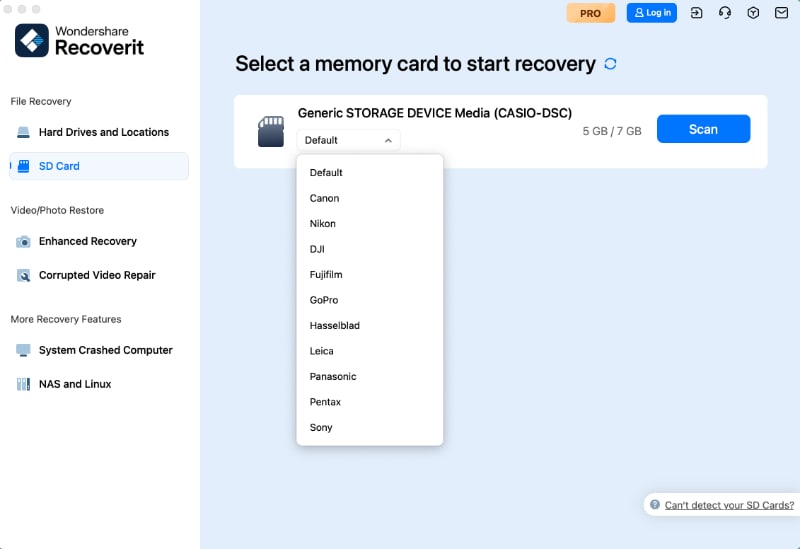
Step 1. Select the Detected SD or microSD Card
Connect the card through the most stable known-good reader. Launch Recoverit and select the card by matching its capacity and device label. Do not select the computer's system drive.
Step 2. Scan the Card Without Writing to It
Start the scan and keep the reader connected directly to the computer. Use file type, path, date, size, and filename filters to narrow the results. Do not run CHKDSK or format the card while the scan is in progress.
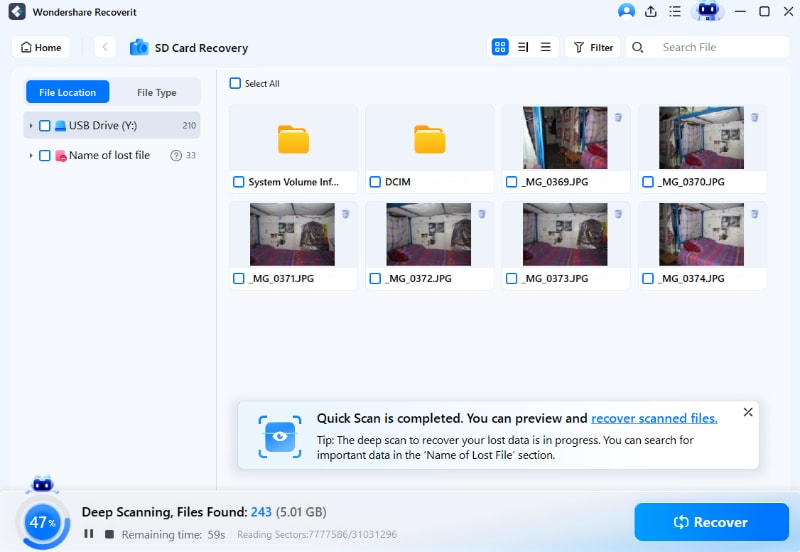
Step 3. Preview the Important Files
Preview supported photos, videos, documents, and other files. A filename alone does not prove that a file is usable; inspect the actual content and check multiple points in long videos.
Step 4. Recover to a Different Healthy Drive
Choose the computer's internal drive or another healthy external drive as the destination. Never recover files back to the problem card because those writes can overwrite additional recoverable data.
Recover a Detectable SD Card With Recoverit
 Security Verified. Over 7,302,189 people have downloaded it.
Recovery limits: No software can guarantee recovery after data has been overwritten. If the card disconnects repeatedly, freezes the computer, shows the wrong capacity, or becomes hot, stop scanning and preserve it for professional evaluation.
2.3 Use a Recovery Lab for Physical Failure
A professional lab is the more appropriate option when the card is not detected by any known-good reader, has visible physical damage, or contains files too valuable to risk on repeated DIY attempts. Record what happened before the failure, including drops, water exposure, interrupted recording, formatting prompts, and commands already tried. Ship the card in a rigid antistatic container and ask the lab about diagnosis fees, privacy terms, approval before work, and how recovered data will be returned.
Part 3. Fix a Card Reader or Host Device That Stopped Working
If the problem card works in another reader or a known-good card also fails in the original host, the card may be healthy. Troubleshoot the connection layer before modifying the card's file system.
3.1 Check the Lock Switch, Adapter, Reader, Port, and Slot
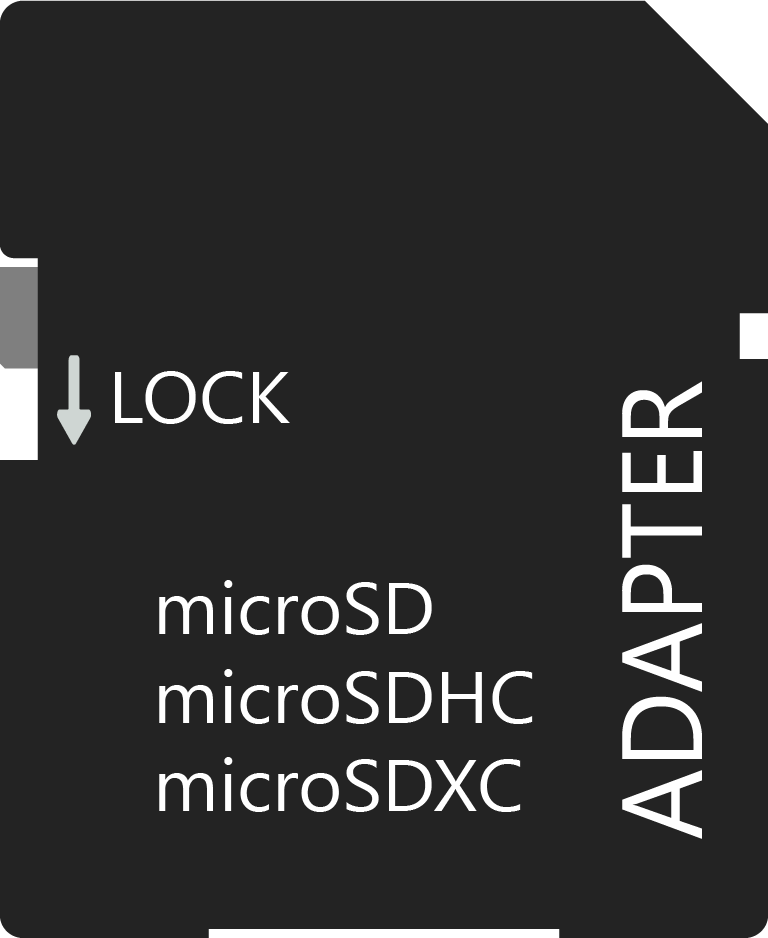
Step 1. Check the Correct Lock Switch
Full-size SD cards and microSD-to-SD adapters may have a sliding lock tab. A microSD card itself does not have this switch. The tab requests write protection from compatible readers; it should not normally make a healthy card invisible. Move the tab to the unlocked position only when you need to write to the card.
Step 2. Replace the Adapter or Reader
A worn microSD adapter can fail even when the microSD card is healthy. Use a direct microSD reader or a different adapter. For full-size cards, use a known-good external reader that supports the card family and capacity.
Step 3. Change the USB Port and Remove Hubs
Connect the reader directly to another port. Avoid unpowered hubs during diagnosis. If another card also fails in the same port or reader, replace the reader before touching the problem card.
Step 4. Inspect Without Scraping
Check for debris, a cracked shell, bent plastic, or dirty contacts. Use a dry, lint-free cloth for loose dust. Do not scrape contacts, use household cleaners, bend the card, or force it into a tight slot.
3.2 Restore a Missing Drive Letter in Windows
This method applies only when Windows Disk Management shows a recognizable volume on the SD card but File Explorer does not show it. A missing drive letter does not explain a card that is absent from Disk Management.
Step 1. Right-click Start and open Disk Management.
Step 2. Locate the removable disk by matching its capacity. Do not guess by disk number.
Step 3. If the volume is present and the Change Drive Letter and Paths option is available, right-click the volume, choose that option, and assign an unused letter.
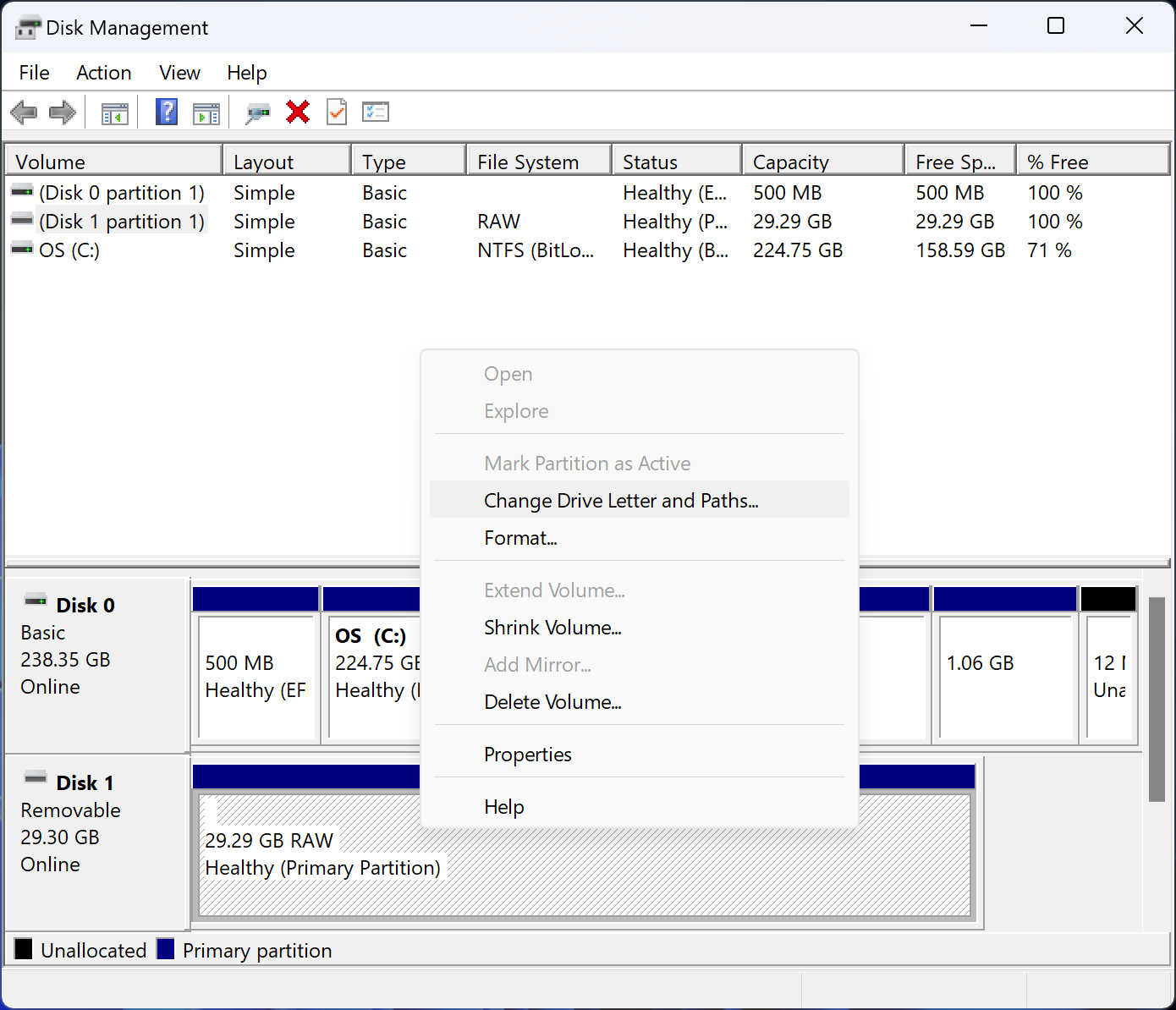
Microsoft documents this process in its current drive letter management guidance. Do not initialize, create a volume, delete a partition, or format a RAW or unallocated card while the files still matter. If the card is absent from Disk Management, use the SD card not recognized troubleshooting guide.
3.3 Refresh the Card Reader Driver in Windows
Use this branch when several known-good cards fail only in the same built-in or USB reader. Do not treat a driver refresh as a repair for a single failing card.
Step 1. Right-click Start and open Device Manager.
Step 2. Expand Memory technology devices, Disk drives, or Universal Serial Bus controllers, depending on how the reader appears.
Step 3. Right-click the reader and choose Update driver. If the issue began after an update, check the device's Properties > Driver tab for a rollback option.
Step 4. If the device remains faulty, uninstall the reader device, restart Windows, and let Windows attempt to reinstall it. Use the laptop or reader manufacturer's official driver rather than a third-party driver site.
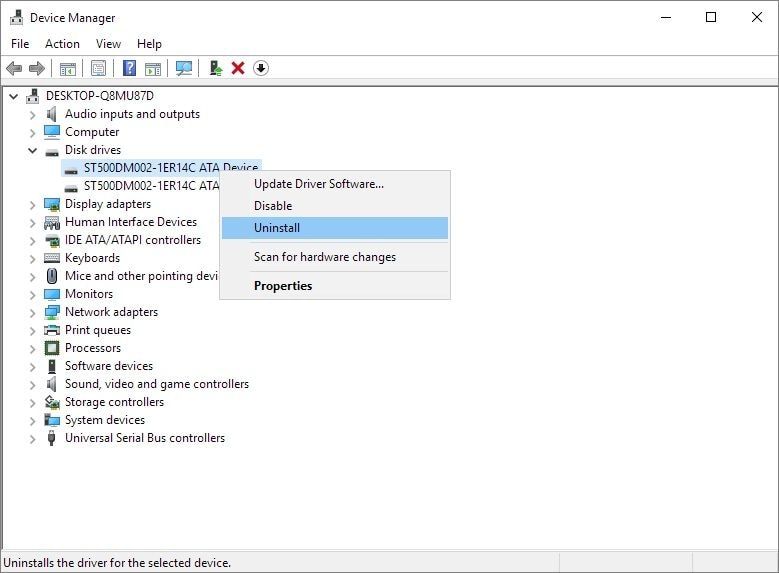
Microsoft's current Device Manager driver guidance covers update, reinstall, and rollback paths for Windows 10 and Windows 11.
3.4 Check a Phone When Its SD Card Stops Working
Step 1. Cancel any "corrupted," "unsupported," or format prompt.
Step 2. Power the phone off completely before removing the microSD card. Inspect and reseat it, then restart the phone.
Step 3. Test the card in a compatible reader. If a computer detects it, copy or recover the files before returning it to the phone.
Step 4. Identify whether the card was portable storage or adopted/internal storage. Google's Android SD card guidance states that portable cards can move between devices, while cards formatted as internal storage cannot. Formatting permanently deletes the card's data.
If Android specifically reports corruption or asks to format, use the dedicated Android corrupted SD card guide. Do not factory-reset the phone to repair a removable card; a reset can erase phone data and may remove access to adopted storage.
3.5 Check Whether a Mac Can See the Physical Card
Open Disk Utility and choose View > Show All Devices. If the physical card appears but its volume is not mounted, protect or recover the files before running First Aid. If the card does not appear at all, try one known-good reader and another port. Apple notes that Disk Utility cannot repair every problem and recommends backing up and replacing a disk that is reported as failing. See Apple's current Show All Devices instructions.
Part 4. Repair or Reformat Only After the Files Are Safe
The methods in this section modify the card. Use them only after accessible files have been copied or missing files have been recovered and verified.
4.1 Run CHKDSK Only After Recovery
CHKDSK checks a Windows volume's file system and metadata. Without repair parameters, it reports status; with /f, it fixes file-system errors. Microsoft also warns that repairs on FAT file systems usually change the file allocation table and can sometimes cause data loss. That is why CHKDSK belongs after recovery.
Step 1. Run a Read-Only Status Check
Open Command Prompt as administrator and run chkdsk X:, replacing X: with the SD card's correct drive letter. Do not guess the drive letter.
Step 2. Repair Only When the Files Are Safe
If the card is stable, Windows recognizes the file system, and the important files are already safe, run chkdsk X: /f. Let it finish without disconnecting the reader.
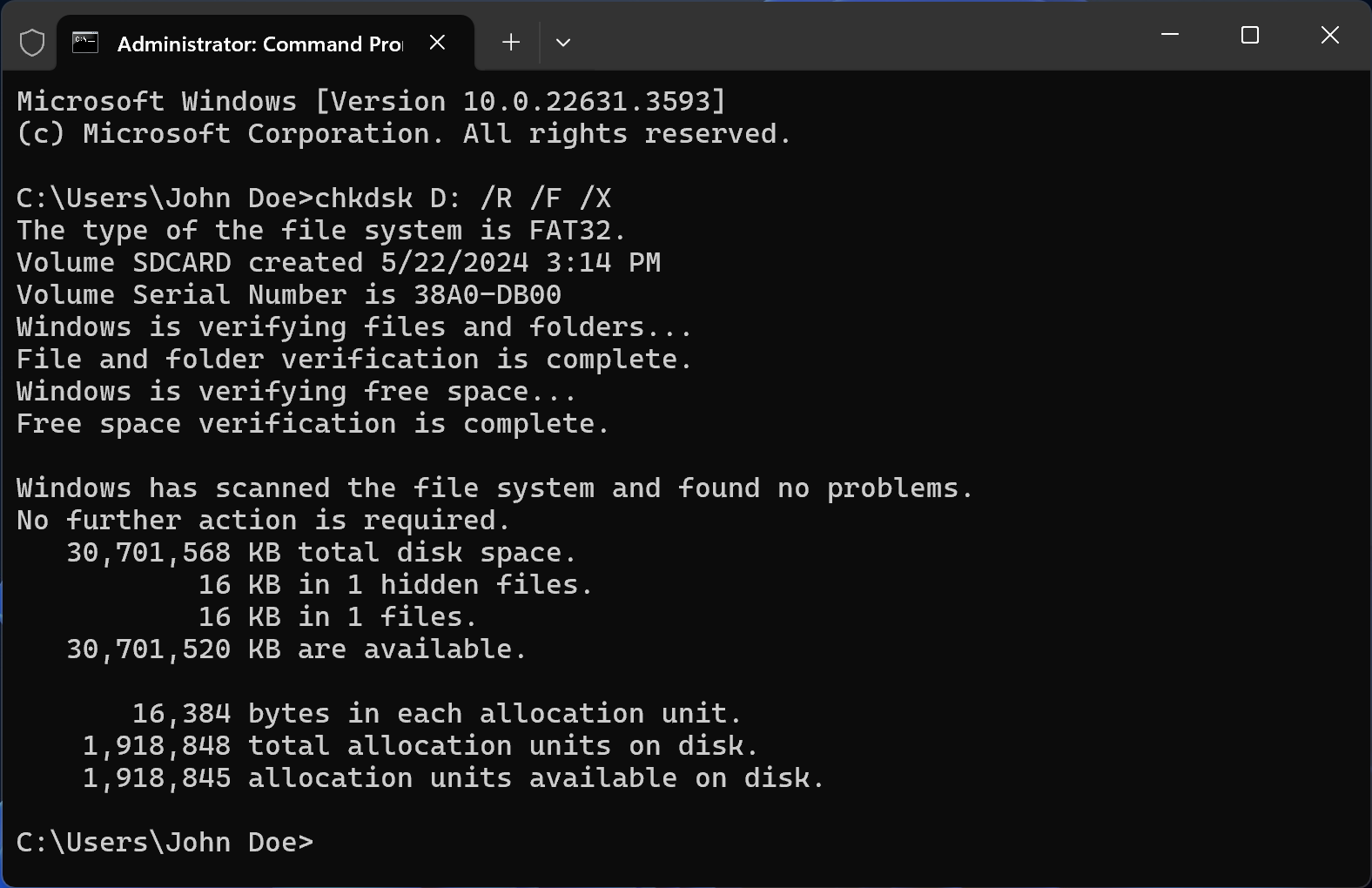
If CHKDSK says it is unavailable for RAW drives, stop. Do not create a new file system until recovery is complete. Microsoft explains the command behavior in its official CHKDSK documentation. For a focused walkthrough, see the Recoverit guide to run CHKDSK on an SD card.
4.2 Reformat the Card in the Host Device or SD Formatter
Format only after you have verified the recovered copy and accepted that formatting erases the card's current file-system structure. If the card belongs to a camera, dashcam, drone, game console, or recorder, format it in that device using the manufacturer's current manual. The host normally creates the file system and folder structure it expects.
For a general Windows or Mac fallback, use the official SD Memory Card Formatter. The SD Association recommends it for SD, SDHC, SDXC, and SDUC cards instead of generic operating-system format tools because it is designed for SD card specifications.

If Windows cannot complete the format, do not loop the same attempt. Use the dedicated Windows was unable to complete the format guide after confirming that the files are safe.
4.3 Retire a Card That Fails Again
After formatting, copy several noncritical files to the card, safely eject it, reconnect it, and open the files. Test it again in the original host. Replace the card if it disconnects, becomes read-only without explanation, reports the wrong capacity, fails another format, or repeats the original error. A successful format can rebuild a logical file system; it cannot restore worn flash cells, a failing controller, cracked contacts, or counterfeit capacity.
Part 5. Why an SD or Memory Card Suddenly Stops Working
| Cause | Typical Sign | Best Response |
| Failed reader, adapter, port, or host slot | The card works elsewhere, or multiple cards fail only in one reader | Replace or repair the connection layer; do not modify the card |
| Interrupted write or unsafe removal | The card worked until recording, transfer, or ejection was interrupted | Recover or copy files first, then repair or reformat |
| File-system corruption | RAW status, format prompt, unreadable folders, or mounting failure | Recover files before CHKDSK, First Aid, or formatting |
| Compatibility mismatch | The card works on a computer but not in a specific camera, phone, or reader | Check the exact host manual for card type, capacity, speed, and file system |
| Missing Windows drive letter or reader driver problem | Disk Management sees the device, or several cards fail in the same reader | Assign a letter to a valid volume or update the reader driver |
| Flash wear or controller failure | Read-only behavior, wrong capacity, repeated disconnects, freezes, or zero bytes | Stop writes, recover once if stable, then replace or use a lab |
| Physical or environmental damage | Cracks, bent casing, corrosion, water exposure, heat, or burned contacts | Disconnect and use professional recovery for valuable data |
The physical lock tab is often misunderstood. It requests write protection on a full-size SD card or adapter; it does not normally explain why a card is completely absent from every reader. Likewise, an old USB port may reduce transfer speed, but speed alone does not prove that the card stopped working because of a "power fluctuation." Diagnose with cross-tests rather than unsupported assumptions.
Part 6. Prevent Another Sudden SD Card Failure
- Keep more than one copy: Treat memory cards as capture media, not as the only archive of important files.
- Stop the device before removal: End recording, wait for the activity light to stop, and use eject or unmount where available.
- Format in the host after backup: Cameras and recorders usually work best when they create their own file system and folders.
- Use compatible cards and readers: Check the device manual for supported card family, capacity, speed class, and file system.
- Replace unreliable adapters: A cheap or worn microSD adapter can create intermittent faults that look like card corruption.
- Retire media after unexplained failure: Do not return a card to client work, travel, surveillance, or one-time events after it has failed unpredictably.
- Verify backups: Open a sample of copied files and keep a second copy of irreplaceable data before erasing the card.
Conclusion
When an SD card suddenly stops working, the safest first job is to identify the failed layer, not to repair the card immediately. Cross-test the card and reader, copy anything still accessible, and recover files from a card that remains detectable but unreadable. Only after the files are verified should you assign a drive letter, refresh a reader driver, run CHKDSK, or reformat. Replace the card if the failure returns, and stop DIY attempts early when the media is physically unstable.
FAQ
-
Why did my SD card suddenly stop working?
The cause may be the card, adapter, reader, USB port, phone tray, camera slot, Windows driver, missing drive letter, file-system corruption, flash wear, or physical damage. Use a known-good card and a known-good reader to identify which layer failed before modifying the card. -
Can a card reader stop working while the SD card is still healthy?
Yes. If the problem card works in a second reader, or several known-good cards fail in the original reader, the reader, adapter, port, driver, or host slot is the likely problem. Copy the files while the card is readable and replace or repair the reader. -
What should I do if my microSD card stopped working in my phone?
Cancel format prompts, power the phone off, reseat the card, and test it in a compatible reader. If a computer detects the card, copy or recover the files first. A card formatted as Android internal storage may be encrypted for the original phone and may not be readable elsewhere. -
Should I format an SD card when Windows or a phone asks me to?
Not while needed files remain on the card. Formatting changes the file-system structure and erases the card's accessible directory. Copy or recover the files to another drive first, verify them, and format only when data loss is no longer a concern. -
Can CHKDSK fix an SD card that suddenly stopped working?
CHKDSK can fix some Windows-readable file-system errors, but it modifies the volume and can change FAT allocation data. Run it only after important files have been copied or recovered. It will not repair a broken controller, cracked card, failed reader, or other physical damage. -
Why does the SD card show zero bytes or No Media?
After one known-good reader test, zero capacity or No Media often points to a controller, contact, or hardware-level problem rather than a simple missing drive letter. Repeated scans and repair commands are unlikely to help; use a professional recovery lab when the files are valuable. -
Can I keep using the SD card after it starts working again?
You may use it for a short noncritical verification test after the files are safe and the card is reformatted. Replace it if the original error returns, the capacity is wrong, it becomes read-only, or it disconnects. A card that failed unpredictably should not be trusted as the only copy of important data.


