
 TL;DR:
To safely recover lost videos from an SD card, immediately stop recording to prevent overwriting data, verify the card is detectable on a computer, and use recovery software to extract the files to a different healthy drive before attempting any file system repairs like CHKDSK.
● Software recovery only applies to logical data loss on stable media; if the SD card is cracked, overheating, reports No Media, or repeatedly disconnects across multiple readers, abandon DIY scans and use a professional data recovery lab.
● For free tool options, Windows File Recovery requires command-line usage and Extensive mode for FAT/exFAT SD cards, while the open-source PhotoRec is effective for damaged file systems but drops original filenames and frequently fails to reconstruct fragmented MOV and MP4 camera footage.
● Because high-bitrate camera and drone footage is often stored in multiple fragments, a recovered video that freezes or will not open is usually incomplete; search the scan results for a larger alternative file version or deeper scan result before applying a video repair tool.
Ask AI for a summary
 ChatGPT
 Perplexity
 Gemini
 Claude
 Grok
Grok
Lost a video from an SD card, microSD card, camera, drone, or dashcam? Stop using the card first. Deleted or formatted video data may remain recoverable until new recordings overwrite it, but large camera videos can be harder to reconstruct because they may be stored in fragments.
Quick Answer
● Stop recording: remove the SD card and do not format, repair, or save anything to it.
● Check detection: if the card is readable and stable on a computer, software recovery is a reasonable next step.
● Recover elsewhere: preview the footage when possible and save recovered videos to another healthy drive.
● Escalate physical failure: if the card is cracked, overheating, repeatedly disconnecting, or not detected anywhere, stop DIY scans and use a professional recovery service.
In This Article
Part 1. Can You Recover Lost Videos From an SD Card?
Yes, SD card video recovery is often possible when the card is still detectable and the missing video data has not been overwritten. The best approach depends on what happened: accidental deletion, quick formatting, a RAW or corrupted file system, missing folders, or physical failure.
If the card was formatted, do not format it again. Follow a recovery-first workflow such as this formatted SD card recovery guide. If the card shows RAW status, unreadable folders, or file system errors, treat it as a recovery problem before trying repairs; see the corrupted SD card recovery workflow.
How Recoverability Changes by Scenario
| What Happened | Safest First Action | Free Option Worth Trying? | Main Limitation |
| Video was deleted recently; card is readable and stable | Stop using the card and scan the original card through a reliable reader | Yes | New recordings may overwrite deleted video blocks |
| SD card was quick formatted but not reused | Cancel any new format prompt and recover before repair or reformatting | Yes | File names, folders, or fragments may be missing |
| Card is RAW or folders are inaccessible but capacity looks normal | Recover files first, then repair or format only after verifying the recovered data | Yes, if the operating system assigns the card a usable device or drive entry | File-system damage can reduce metadata quality |
| Recovered video exists but freezes, has no sound, or will not open | Look for another recovered copy or deeper result before repairing a copy of the file | Sometimes | Missing or overwritten video blocks cannot be recreated by file repair |
| Card shows 0 bytes, No Media, repeated disconnects, heat, or physical damage | Stop DIY attempts and use a professional recovery service | No | Software cannot repair a failed controller or physically damaged flash |
Why Camera Videos Are Harder to Recover Than Photos
Video recovery is not always the same as undeleting a photo. Large recordings can be stored in multiple fragments across a memory card. The official PhotoRec documentation on memory-card video recovery explains that some digital cameras write fragmented MOV or MP4 files, which can cause ordinary file carving to return unreadable clips. Its documentation also notes that some GoPro models use more than two fragments, making simple reconstruction insufficient.
This is why the best recovery route depends on the recording source. For short, recently deleted clips, a free file-carving tool may be enough. For long camera, drone, action-camera, or high-bitrate footage, a recovery workflow that can identify recoverable video fragments may be more useful. Recoverit currently positions its Video Recovery workflow for readable cards containing deleted, formatted, lost, or fragmented footage, without claiming that every video can be reconstructed.
Part 2. Before SD Card Video Recovery: Protect the Footage
The first few minutes after video loss matter more than which tool you choose. Microsoft notes that deleted file space can remain recoverable until it is overwritten, so continuing to write to the source can reduce recovery potential. The same principle applies to removable media.
What Not to Do Before Recovery
- Do not record another clip: one new video can overwrite a large amount of deleted data.
- Do not format the SD card: cancel format prompts until important footage is recovered.
- Do not run repair tools first: repair operations can modify the source file system. Recover important data before CHKDSK, First Aid, or similar repairs.
- Do not recover files back to the same card: use the computer's internal drive or a different healthy external drive.
- Do not keep scanning unstable hardware: if the card drops offline, overheats, hangs the computer, or is not detected consistently, repeated DIY attempts can add risk.
Check Whether the Card Is Stable Enough to Scan
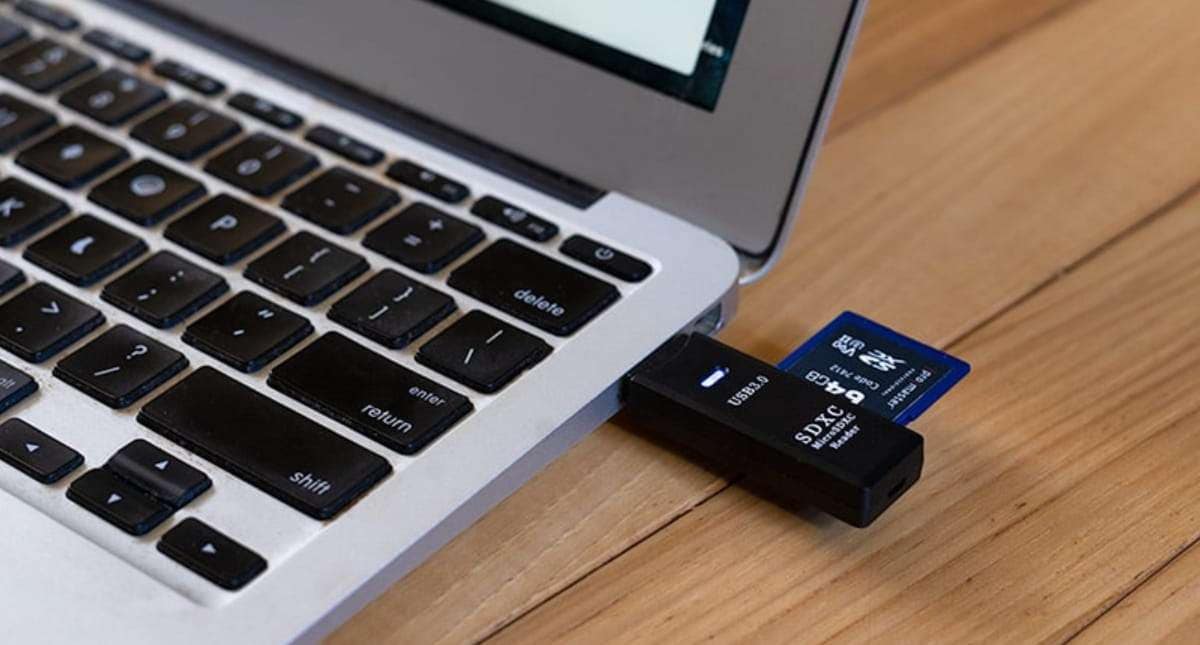
Remove the card from the camera, phone, drone, or dashcam and connect it through a reliable reader. If possible, cross-test it with another reader or computer. A card that appears with approximately the expected capacity and remains connected is a much better software-recovery candidate than one that repeatedly disconnects.
If the videos are visible on the camera but not on the computer, do not assume they are deleted. Use the dedicated videos on camera but not computer troubleshooting path first. If the entire card suddenly stopped working, use the SD card suddenly stopped working guide to separate a reader problem from a card problem before scanning.
Part 3. Recover Lost Videos From an SD Card With Recoverit
Use this method when the SD or microSD card is still detected by Windows or macOS and videos were deleted, formatted, hidden, lost after file-system errors, or are no longer visible in the original folder. Recoverit supports guided memory card recovery with scan, filter, preview, and recovery to another location.
Important: No recovery software can guarantee files that have been overwritten, and software is not the right first choice for a physically damaged or completely undetected card.
Step 1. Connect the SD card through a stable card reader. Open Recoverit, go to the SD Card Recovery section, and select the card that contained the lost videos. Confirm the capacity and device name before starting so you do not scan the wrong disk.
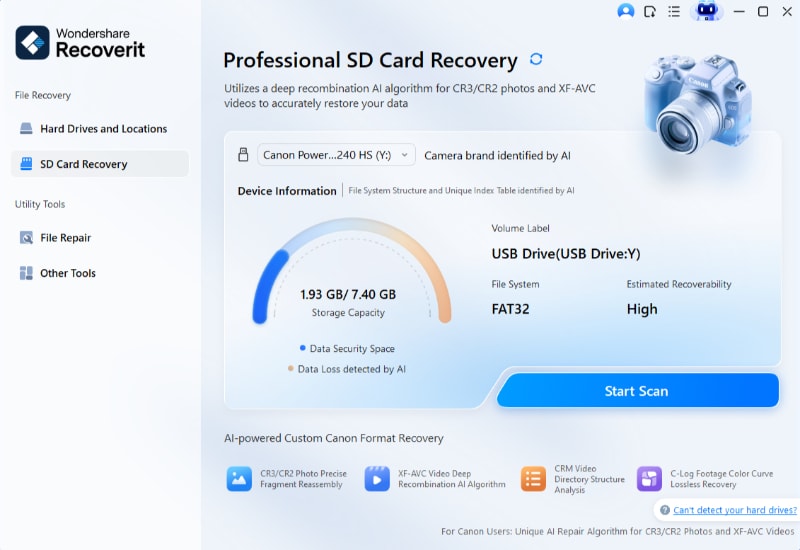
Step 2. Start the scan and keep the card connected. Use the video file-type view, size, date, or file-name filters when available to narrow the results. For camera footage, check common containers such as MP4, MOV, MTS, M2TS, MXF, or the format used by your recording device.
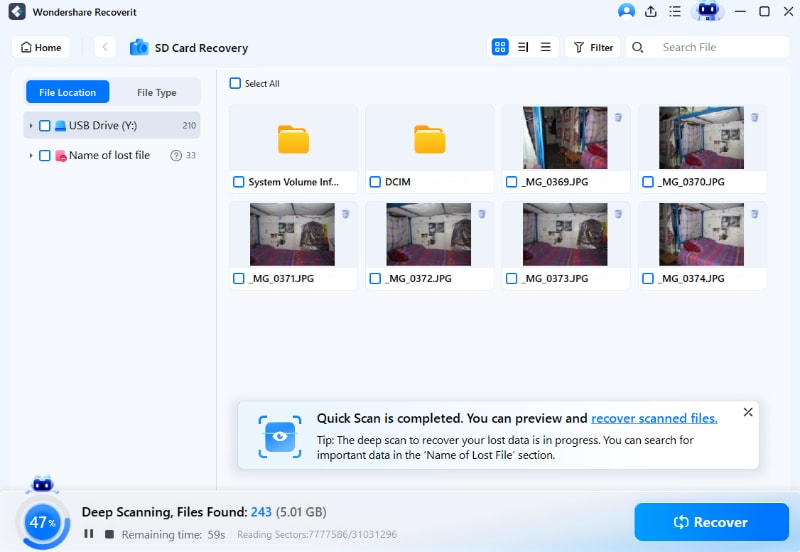
Step 3. Preview supported videos before recovery when possible. For long or professional footage, do more than check the first frame: confirm the expected file size, duration, timestamp, and whether the preview reaches the section you need.
If the scan finds several versions of the same clip, keep the alternatives. A larger file or a result from a deeper scan may contain more complete video data than the first item you find.
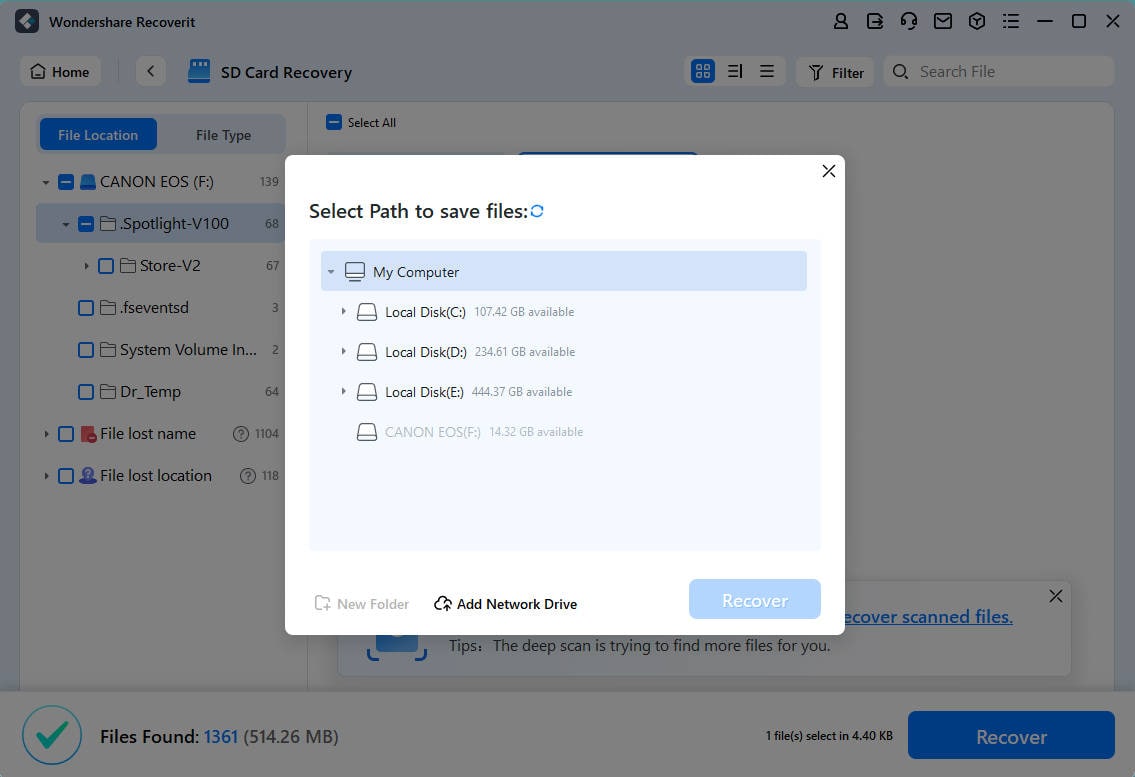
Step 4. Select the videos you need, click Recover, and choose a healthy destination that is not the source SD card. After recovery, play the files from beginning to end and seek through several points before you reuse or format the original card.
Recover Lost Videos From an SD Card With Recoverit
 Security Verified. Over 7,302,189 people have downloaded it.
If you specifically need to restore MP4 footage, the narrower restore MP4 files from SD card guide covers MP4-specific failure branches without repeating the full recovery workflow here.
Part 4. Free SD Card Video Recovery Options
If you are searching for SD card and disk video recovery free tools, start with the option that matches the loss scenario. Free recovery is most practical when the card is stable, the data has not been overwritten, and you accept the limitations of command-line tools or file carving.
| Free Option | Best For | Main Advantage | Main Limitation |
| Existing backup or cloud copy | Videos that were imported or synced before deletion | No scan of the original card is needed | Only works if another copy exists |
| PhotoRec | Deleted or lost files on readable or file-system-damaged media | Free and open source; can carve files even when file-system metadata is damaged | Does not restore original filenames or folder structure; fragmented camera video can be difficult |
| Windows File Recovery | Windows users comfortable with command-line recovery | Free Microsoft tool for local and removable storage | For FAT/exFAT SD cards, Microsoft requires Extensive mode; source and destination must differ |
| Recoverit Free | Users who want a guided scan, filters, preview, and a limited free export | Current official page advertises free recovery up to 500 MB | Large video projects can exceed the free recovery allowance |
PhotoRec: Free and Open Source, With Fragment Limits
PhotoRec is a free, open-source file carver. Its official documentation states that it does not recover the original filenames or file structure, and warns users not to save recovered files to the source file system. It can be useful when file-system metadata is damaged.
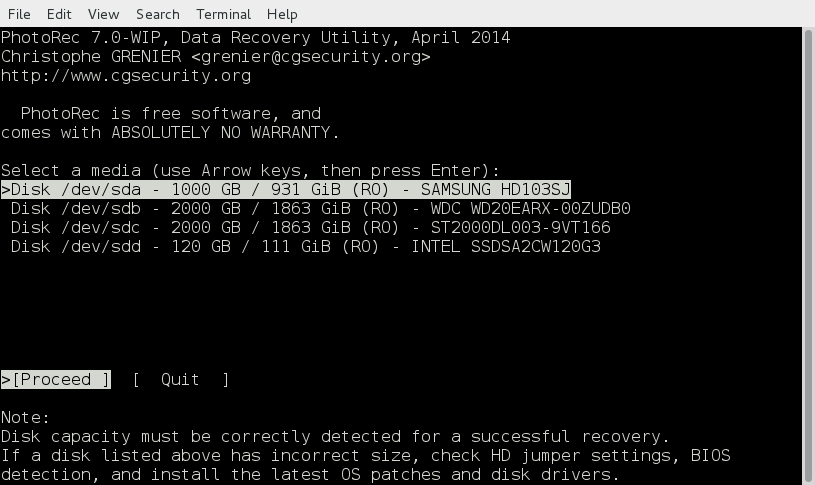
For video specifically, PhotoRec's own documentation warns that some camera-recorded MOV and MP4 files are fragmented. If the recovered clips are unreadable, fragmentation may be the reason. This makes PhotoRec useful as a free option, but not automatically the best choice for every long camera or action-camera recording.
Windows File Recovery: Free for Windows Command-Line Users
Microsoft's Windows File Recovery is a free command-line app for deleted files on local and removable storage. Microsoft requires the source and destination drives to be different. It also specifies Extensive mode for FAT and exFAT, the file systems commonly used by SD cards.
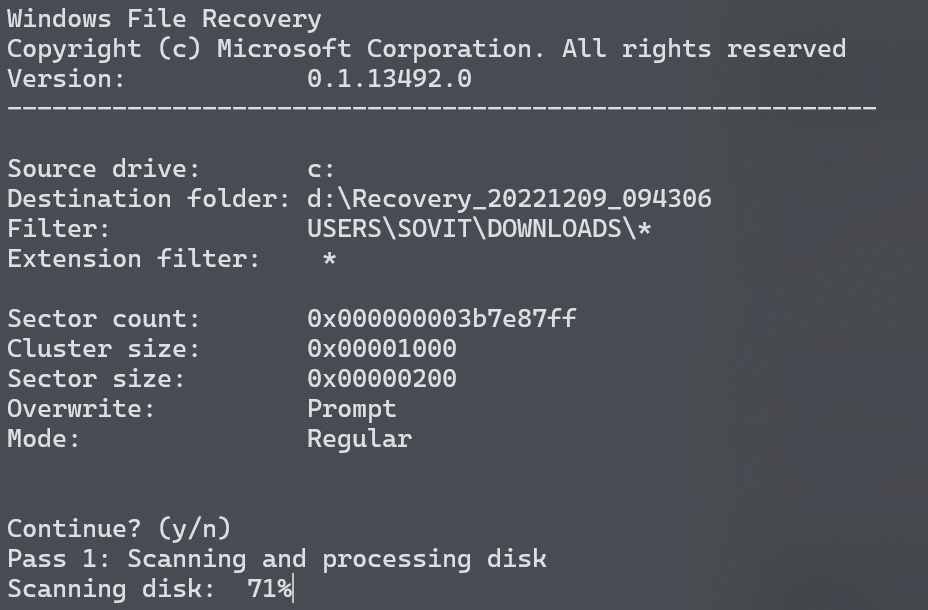
This is a good no-cost choice for users comfortable with the command line. It is less convenient when you need a visual preview or when large fragmented videos require more specialized handling.
Backups and Existing Copies: The Safest Free Check
Before scanning, check whether the video was already imported to a computer, editing project, external drive, NAS, cloud library, camera companion app, or phone gallery. If a valid copy already exists elsewhere, restoring that copy is safer than modifying or repeatedly scanning the original card.
For broader no-cost removable-media recovery options, see the free memory card recovery guide. Recoverit's current free data recovery page advertises free scan and preview plus recovery of up to 500 MB under the current product terms; verify the live allowance before publishing or promoting a fixed limit in campaign copy.
Part 5. What If Recovered Videos Do Not Play?
A recovered file that exists on disk is not automatically a complete video. Before using a repair tool, first check whether the recovery result itself is complete.
- Check multiple recovered versions: sort by size, timestamp, extension, and scan result location. Another copy may contain more complete data.
- Play the entire clip: seek near the beginning, middle, and end; confirm audio synchronization and expected duration.
- Recover related segments: long recordings may be split into multiple files by the camera. Restore all related clips before judging the result.
- Keep the original recovered file unchanged: make a copy before trying any repair workflow.
- Use repair only after recovery: repair can rebuild supported file structures, but it cannot recreate video blocks that were overwritten or never recovered.
If the recovered file is an MP4 that still will not open, use the dedicated MP4 recovery guidance to rule out an incomplete recovery before moving to file repair.
Part 6. When Software Recovery Is the Wrong Choice
Stop software recovery when the problem looks physical rather than logical. Typical warning signs include a cracked or bent card, water or fire exposure, unusual heat, repeated disconnects across multiple readers, a card that reports No Media or an obviously wrong capacity, or complete non-detection on every computer and reader you test.
Recoverit is designed for logical data loss on storage that remains detectable. The current Memory Card Recovery guidance likewise separates deleted, formatted, RAW, and inaccessible-but-detectable media from severe physical damage. If the video is irreplaceable and the card is unstable, a professional data recovery lab is safer than repeated scans.
Part 7. How to Reduce Future SD Card Video Loss
- Back up footage before formatting: copy important clips to at least one independent location and verify playback.
- Format in the recording device when appropriate: after the footage is backed up, use the camera, drone, dashcam, or recorder's supported format workflow.
- Do not remove the card while recording or writing: wait until the device finishes saving the clip.
- Retire unreliable cards: replace media that develops repeated write errors, slowdowns, disconnects, or unexplained missing files.
- Keep recovery separate from repair: recover missing data first; only repair a recovered copy if the file itself is damaged.
Conclusion
The safest way to recover lost videos on an SD card is to stop writes, confirm that the card is stable and detectable, recover to a different drive, and verify the footage before doing anything destructive to the source. Free tools such as PhotoRec and Windows File Recovery can help in suitable cases, while Recoverit provides a guided workflow for readable cards and fragmented video scenarios. If the card is physically damaged or cannot be detected reliably, stop DIY recovery and use a professional service.
FAQ
-
Can I recover lost videos from an SD card?
Often, yes. Recovery is most practical when the SD card is still detectable and the missing video data has not been overwritten. Stop using the card immediately, connect it through a stable reader, and recover files to another drive. -
Can I recover video from an SD card for free?
Yes, depending on the case. PhotoRec is free and open source, Windows File Recovery is free on supported Windows systems, and backups cost nothing to restore. Recoverit Free currently advertises free scan and preview with a limited free recovery allowance. Free tools can be less convenient for large or fragmented camera videos. -
Can I recover videos after formatting an SD card?
Recovery may still be possible after a quick format if the card has not been reused heavily. Stop recording, do not format the card again, and recover to another drive before attempting any file-system repair. -
Why are my recovered videos corrupted or unplayable?
The recovered file may be incomplete, fragmented, or partially overwritten. Check for another recovered version, a deeper scan result, or related recording segments before repairing a copy. File repair cannot recreate video data that no longer exists. -
Can I recover old videos after reusing the SD card?
Possibly, but every new recording increases overwrite risk. Once the storage blocks that contained the old video are overwritten, software cannot restore the overwritten data. -
How do I recover videos from a microSD card?
Remove the microSD card from the device when possible, connect it to a computer through a reliable adapter or reader, confirm that it remains detected, scan it for lost videos, and save recovered files to a different drive. -
Should I run CHKDSK before SD card video recovery?
No when the footage matters. CHKDSK is a repair tool that can modify the file system. Recover or copy important files first, verify them on another drive, and only then consider repairs to the SD card.


