Drone Data Recovery
- Recovers deleted or lost files from DJI Osmo effectively, safely and completely.
- Supports data recovery from 500+ data loss scenarios, including computer crash, partition loss, accidental human error, etc.
- Supports 1000+ file formats recovery with a high success rate and without any quality loss.
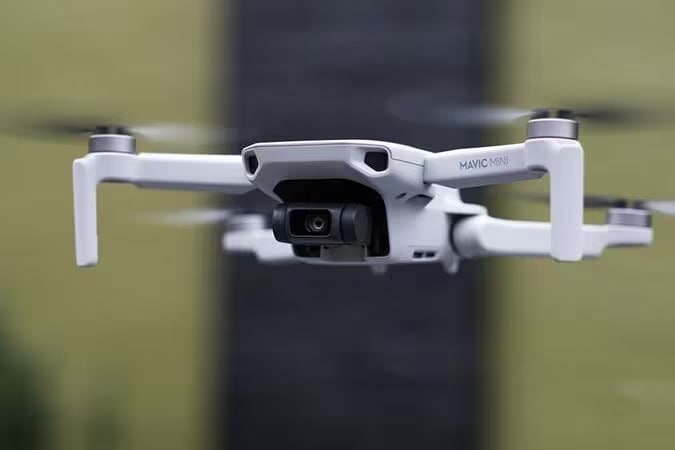
DJI Osmo File Recovery: How to Restore Videos from DJI Osmo Camera

Sep 02, 2026 • Filed to: Photo/Video/Audio Solutions • Proven solutions
 TL;DR:
To recover deleted photos and videos from a DJI Osmo, immediately stop using the camera to prevent data overwriting and either scan the microSD card using third-party data recovery software like Wondershare Recoverit or retrieve temporarily cached versions via the DJI Go App.
● Retrieving files through the DJI Go App requires the video cache feature to be enabled before the data loss occurs, and the recovered videos will be incomplete and of lower quality than the original recordings.
● For full-quality recovery using Wondershare Recoverit on Windows OS or Mac, you must remove the microSD card from the DJI Osmo, connect it to a computer, and save the recovered files to the computer's hard drive instead of the original memory card.
● To minimize future data corruption risks, format the memory card directly inside the Osmo camera after backing up files, avoid shooting on a low drone battery, and do not swap the SD card between different strange devices.
Ask AI for a summary
 ChatGPT
 Perplexity
 Gemini
 Claude
 Grok
Grok
Can I Recover Videos and Photos from DJI Osmo?
Drone cameras are great for capturing videos and photos from the view of a bird's eye. Because of the preference for such high technology, they are more popularly used in areas like robotics, electronics, aeronautics, and so on. More so, considering the aerial perspective pictures are taken, the results tend to be breathtaking.
In a situation where you lose such amazing images and videos, solutions have been provided for you in this article with which you can recover lost data from DJI Osmo drone. You will be shown how to use the recovery tool, Recoverit, in ultimately retrieving your lost DJI Osmo data.
Part 1: An Introduction to DJI Osmo Pocket
DJI Osmo Pocket is a compact handheld 3-axis stabilized camera, not a drone camera. It records photos and videos mainly to a removable microSD card, which means most DJI Osmo file recovery cases should start with the microSD card rather than the camera body itself.
| Feature | Why It Matters for File Recovery |
| microSD storage | Deleted or formatted footage is usually recovered by scanning the microSD card with a computer recovery tool. |
| MP4 and MOV video | Recovery scans should filter for DJI video formats such as MP4 and MOV. |
| JPEG and DNG photos | Photo recovery should include both compressed JPEG images and raw DNG files if Pro mode or raw capture was used. |
| High-bitrate video | Large 4K files can fragment on the card, so stop recording immediately after deletion to avoid overwriting. |
| DJI Mimo connection | The app can help view or download media, but recovery-quality originals are usually best copied from the microSD card. |
| DJI Osmo Checkpoint | Recovery-Relevant Detail | Official Source |
| Export original files | DJI support lists common export routes such as connecting the device to a computer, using a microSD card reader, or downloading original files through DJI Mimo when supported. | DJI Support: Osmo Pocket FAQ |
| File formats | Osmo Pocket supports video formats such as MP4 and MOV and photo formats such as JPEG and DNG, which matters when filtering scan results. | DJI Osmo Pocket Specs |
| microSD card capacity | Osmo Pocket official specs list supported microSD cards up to 256GB, while newer Osmo Pocket models may support larger cards depending on model specs. | DJI Osmo Pocket Specs |
| DJI Mimo app | DJI Mimo can help transfer, view, and manage compatible Osmo camera media, but cached files are not the same as full original files. | DJI Mimo download page |
Part 2: How to Recover Videos and Photos from DJI Osmo
| File Situation | Recommended Action | Recovery Boundary |
| Deleted from Osmo microSD card | Scan the card with Recoverit on a computer. | Recovery is more likely if deleted data has not been overwritten by new recordings. |
| Camera still recognizes the file | Use a card reader, Type-C cable, or DJI app export workflow to copy the original file. | This is transfer, not data recovery. Copy files before formatting the card. |
| Only phone preview exists | Check DJI Mimo or DJI app cache and local phone albums. | Cached media may be compressed, incomplete, or lower quality than the original recording. |
| File cannot play or import | Use video repair software for corrupted MP4 or MOV files. | Data recovery and video repair are different tasks; recover the file first, then repair it if needed. |
| Formatted card or RAW card | Stop using the card and scan it with recovery software. | Do not reformat, initialize, or run destructive disk repair before recovery. |
Using DJI Osmo is an amazing experience revealed in the high-vision videos and photos that provide a better view than shots from regular photography equipment. However, it cannot prevent your files from getting lost. This implies that if you lose any of your drone camera recordings, you will need other practical solutions to retrieve them back.
The solutions provided here are centered on the recovery of lost camera recordings from both the DJI Osmo and the SD card you use to save camera shots. You can recover lost videos and photos from DJI Osmo using the following methods:
Method 1: Check DJI Mimo, Phone Albums, and App Cache
If the original DJI Osmo file is missing from the microSD card, check whether a preview, edited clip, or downloaded copy still exists in DJI Mimo, the phone album, or the app cache.
- Open DJI Mimo or the DJI app used with your Osmo camera.
- Check the album, editor, cache, downloads, and project areas for saved photos or videos.
- Check the phone's Photos, Gallery, Files, Downloads, or DJI folder.
- If the app shows an original download option, download the original file before formatting the card.
- If only a cached preview exists, export it as an emergency backup.
Method 2: Recover Deleted DJI Osmo Videos and Photos from the microSD Card with Recoverit
Use Recoverit Data Recovery when DJI Osmo videos or photos were deleted, the card was formatted, the file system became RAW, or the media files disappeared during transfer. The most important rule is to stop using the card before new footage overwrites the deleted files.
- Stop recording immediately: Turn off the Osmo camera and remove the microSD card safely.
- Connect the card to a computer: Use a reliable microSD card reader instead of recording more footage through the camera.
- Select the microSD card: Open Recoverit and choose the DJI Osmo card as the scan location.
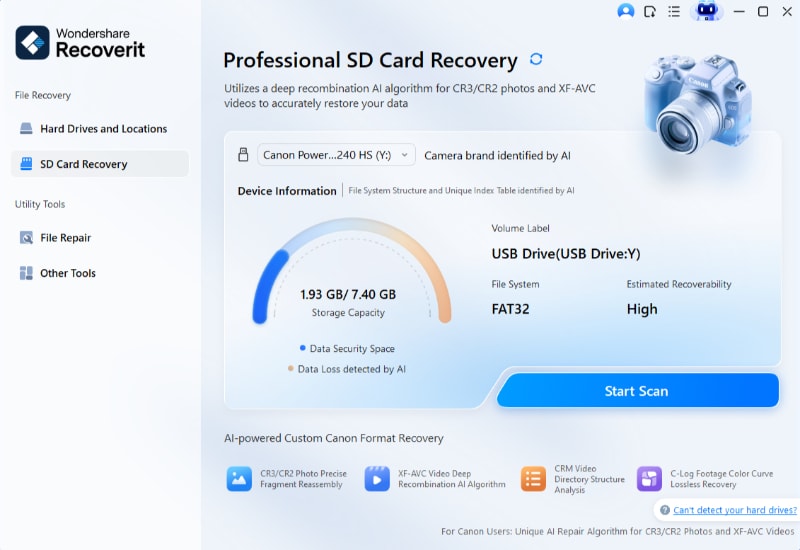
- Scan for DJI media files: Filter results by formats such as
.mp4,.mov,.jpg,.jpeg, and.dng.
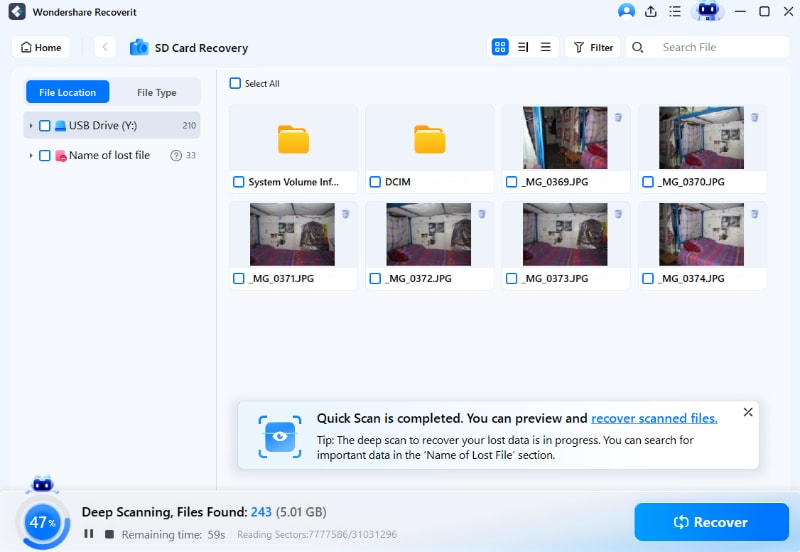
- Preview recoverable files: Preview photos and playable videos when available. If a recovered video cannot preview, recover it first and repair it later.

- Recover to another drive: Save recovered files to your computer or external drive, never back to the same microSD card.
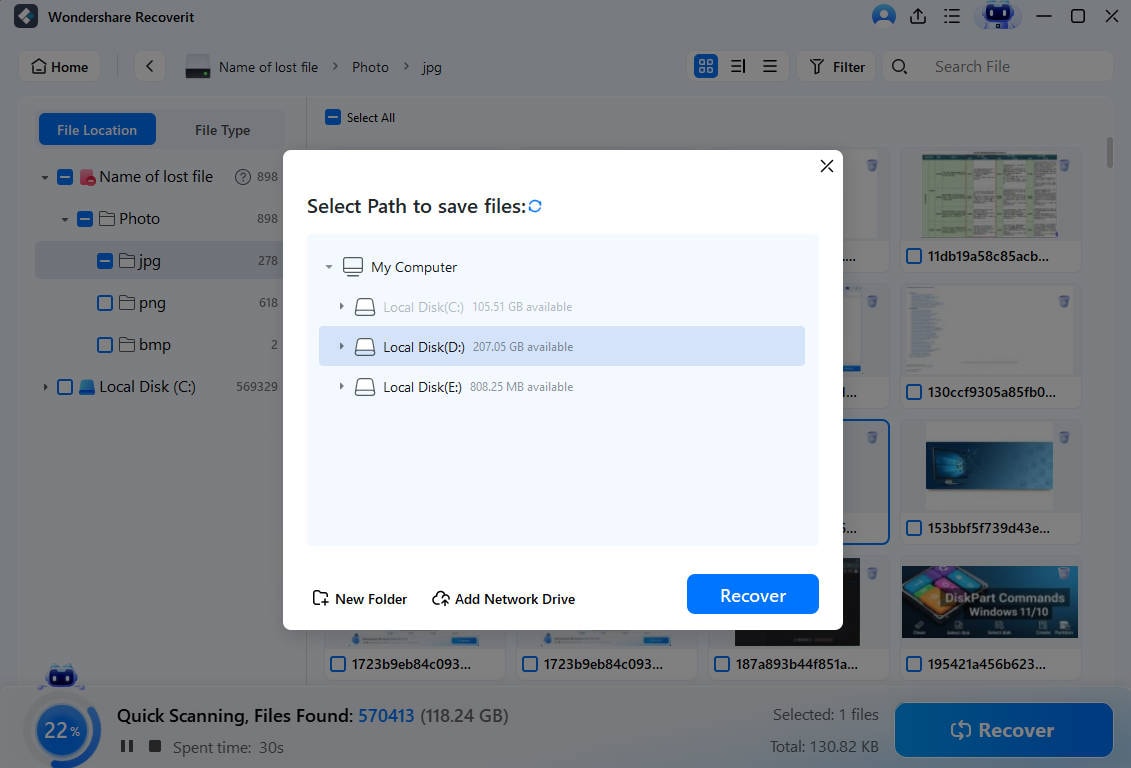
chkdsk on the DJI Osmo card before recovery if the goal is to restore deleted or lost footage.Method 3: Repair Corrupted DJI Osmo MP4 or MOV Videos
If the video file is recovered but cannot play, cannot import, freezes, has missing audio, or shows a broken duration, the problem may be video corruption rather than file deletion.
| Corruption Situation | Recommended Fix |
| Recording stopped because of battery loss | Put the card back into the DJI Osmo camera and power it on to see whether the camera finalizes the file automatically. |
| Recovered file cannot play | Recover the file to a computer first, then run video repair software on the copied file. |
| MP4 or MOV imports with errors | Repair the video before converting, editing, or uploading it. |
| Severely damaged video | Use advanced repair with a sample video recorded by the same DJI Osmo model and settings if the repair tool supports it. |
Part 3: How DJI Osmo Videos and Photos Get Lost
| Data Loss Cause | What Happens | What to Do |
| Accidental deletion | Videos or photos are removed from the card but may remain recoverable until overwritten. | Stop recording and scan the card with recovery software. |
| microSD card formatting | Formatting removes the visible file structure and can hide previous media files. | Do not format again. Scan the card immediately. |
| Interrupted transfer | Files may disappear, become incomplete, or fail to copy because of cable, reader, or computer issues. | Check the original card, then recover missing files if they are no longer visible. |
| Corrupted card | The card may show RAW, ask to be formatted, disconnect, or fail to open media folders. | Avoid disk repair before recovery. Make a recovery scan first. |
| Low battery or sudden power-off | MP4 or MOV files may not finalize properly and can become unplayable. | Try opening the card in the Osmo camera, then repair corrupted files if needed. |
| Using the card across many devices | Different devices may create incompatible folders, file system errors, or accidental formatting prompts. | Use a dedicated card for DJI Osmo whenever possible. |
Part 4: Tips to Protect Your DJI Osmo microSD Card from Data Loss
| Prevention Tip | Why It Matters |
| Use a compatible high-speed microSD card | High-bitrate 4K recording needs a card that matches the Osmo model's speed and capacity requirements. |
| Format the card in the DJI Osmo camera | Camera-side formatting helps create the expected file structure for recording. |
| Back up after every important shoot | Copy original files to a computer and another backup drive before deleting or formatting the card. |
| Do not remove the card during recording | Removing the card too early can corrupt video files or damage the file system. |
| Keep enough battery and storage | Low battery or full storage can interrupt recordings and create incomplete video files. |
| Eject the card safely on computer | Safe removal reduces the chance of file system corruption during transfer. |
| Avoid recording after deletion | New footage can overwrite deleted DJI Osmo videos and reduce recovery success. |
Conclusion
DJI Osmo file recovery should start with the original storage location. If the videos or photos are still visible, export the originals through a microSD card reader, a Type-C connection, or DJI Mimo when supported. If the files were deleted or the card was formatted, stop using the microSD card and scan it with Recoverit Data Recovery before recording anything new.
If a recovered DJI Osmo MP4 or MOV file cannot play, treat it as a video repair case after recovery. If only an app cache exists, save it as a backup, but understand that it may not match the original recording quality.
People Also Ask
-
I deleted a Dji Osmo file by mistake. Can I get it back?
Yes, but act fast. Stop using the camera immediately. The file is still on the memory card until it gets overwritten by new footage. Use data recovery software like Wondershare Recoverit on a computer to scan the card and get it back. -
What's the best way to recover lost DJI Osmo files?
1. Remove the microSD card from your Osmo.
2. Connect the card to a computer using a card reader.
3. Use a reliable data recovery program (like Wondershare Recoverit) to scan the card.
4. Save the recovered files to your computer, not back to the memory card. -
Does DJI have its own cloud backup or recovery tool?
No. DJI does not offer a dedicated data recovery tool or a cloud service that automatically backs up your raw footage from the Osmo. You must use third-party recovery software. -
Why can't I see my recovered Dji Osmo video files?
The file might be corrupted. The recovery process isn't always perfect. Some files may be partially overwritten. Always preview files in the recovery software before purchasing a license to save them. -
How can I prevent data loss on my DJI Osmo in the future?
1. Regular Backups: Frequently transfer files from the SD card to your computer or an external hard drive.
2. Safe Ejection: Always use the "Safely Remove Hardware" option on your computer before unplugging the SD card.
3. Format in-Camera: Periodically format the memory card in the Osmo itself (after backing up data) to keep it error-free.
Solve Media File Problems
- Recover & Repair Photos
- What's picture recovery?
- SD card pictures are lost?
- Top 5 free photo recovery software.
- Restore photos from recycle bin.
- Recover & Repair Videos
- Recover SD card videos.
- Repair MOV/M4V/MP4 videos.
- Repair MKV videos.
- Solve video black screen.
- Repair restored videos.
- Recover & Repair Audio
- Repair video without sound.
- Fix audio sync problems.
- MP4 No Sound?
- Repair corrupt WAV files.
- Corrupted video repair guide.
- Recover & Repair Cameras
 > Resources > Photo/Video/Audio Solutions > DJI Osmo File Recovery: How to Restore Videos from DJI Osmo Camera


Eleanor Reed
staff Editor