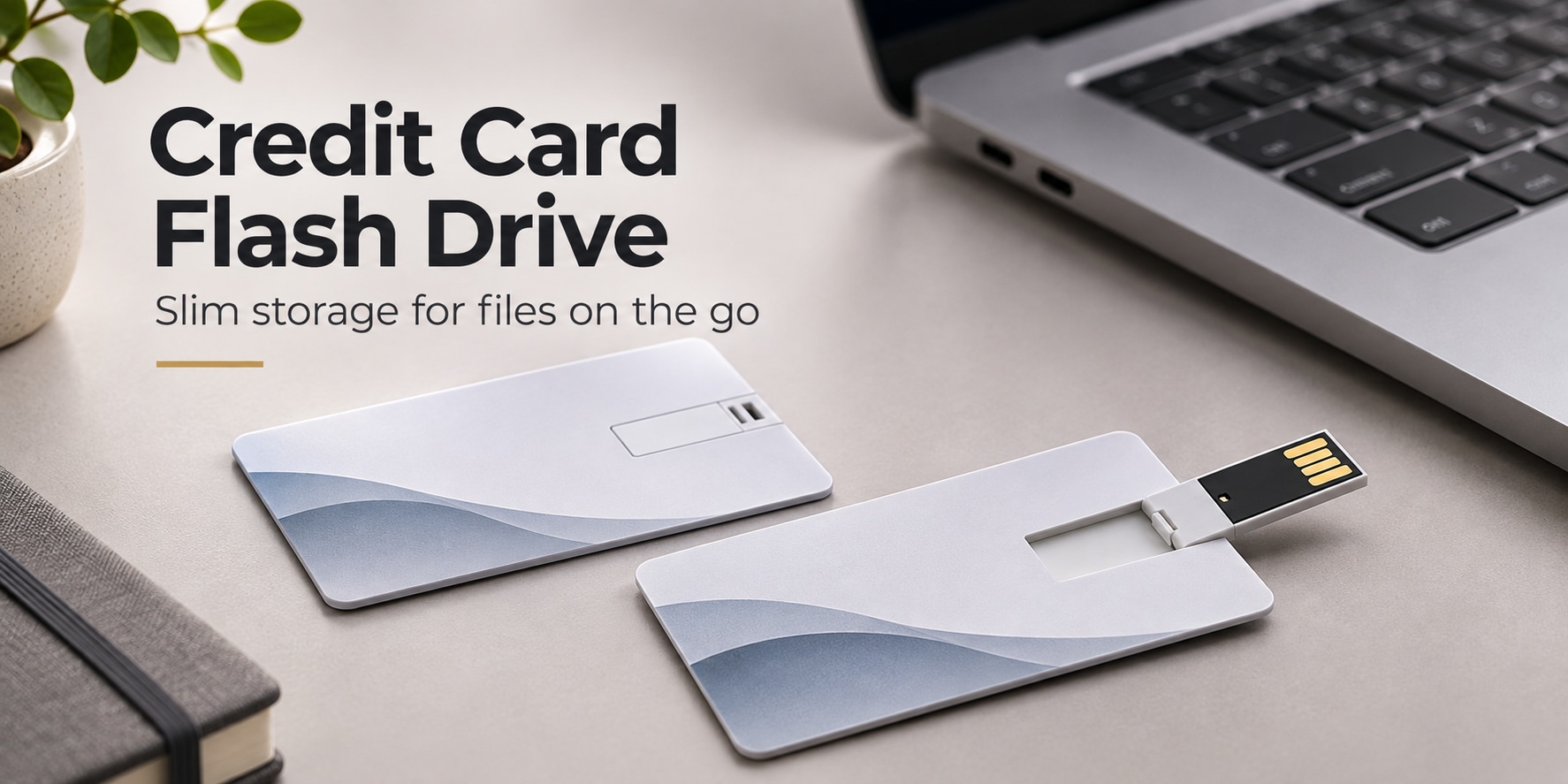
A credit card flash drive is a USB storage device built into a thin, card-shaped shell. Most models hide a USB connector that folds, slides, or swivels out of the card. To use one, reveal the connector, plug it into a compatible USB port, open the removable drive on your computer, copy the files you need, and eject it safely before putting the connector away. It is a storage device, not a bank card.
If you received one as a conference giveaway or are ordering customized USB cards, the important details are the connector, actual capacity, transfer speed, and how the USB mechanism holds up to everyday use.
In This Article
Part 1. What Is a Credit Card Flash Drive?
Unlike a conventional stick-shaped flash drive, a credit card USB spreads the body across a flat surface about the size of a wallet card. The larger face is useful for printing artwork, a logo, or contact details. Inside, it still stores files in flash memory, just like an ordinary USB stick.
The Card Shape and Hidden Connector
Some cards have a USB-A plug that swings out from the edge; others use a sliding tab or a rotating assembly. These are different mechanical designs, so look for a small notch or hinge before trying to open the card. Not every model opens in the same direction.

For example, the Flashbay Wafer USB Card hides a USB-A connector in its thin body, while its Wafer Duo sibling has both USB-A and USB-C connectors. Neither shape makes the drive a payment card or gives it any built-in banking features.
What People Use Credit Card USB Drives For
The card format is popular for event handouts, business portfolios, catalogs, welcome packs, photos, and presentations. A company may preload product information before distributing the cards, while a personal user can move the same types of documents and media they would store on a regular USB drive.

A card that fits in a wallet is convenient for carrying a second copy of documents, but it should not be the only place you keep important files. Its compact design does not protect against accidental deletion or hardware failure.
Part 2. How to Use a Credit Card Flash Drive
You do not need special software for ordinary file transfers on a compatible Windows PC or Mac. The main difference from using a standard flash drive is finding and safely opening the connector.
Unfold the USB Connector and Connect It
Step 1. Examine the card edge for a hinge, rotating plug, or sliding tab. Gently extend the USB connector until it is in the operating position. If it does not move freely, check the manufacturer's instructions rather than bending the card or forcing the plug.

Step 2. Match the plug to a compatible computer port. A USB-A card needs a USB-A socket; a USB-C card needs USB-C. If you need an adapter, choose one intended for data transfer, not a charging-only accessory. Plug the connector in straight and avoid putting sideways pressure on the thin card.
Open the Drive on Windows or Mac
After connecting it, give the operating system a moment to recognize the storage device. The card should appear as a removable drive or volume if the connector, controller, and file system are working.
Windows 11 or 10: Open File Explorer (Windows + E), select This PC, and open the removable USB drive. Its letter might be D:, E:, or another available letter.

Mac: Open Finder and select the USB volume under Locations. If the USB is missing from Finder, open Finder > Settings (or Preferences) > Sidebar and enable External disks under Locations or Devices, depending on your macOS version. The screenshot below illustrates the older Finder Preferences interface. If the USB still does not appear, use Disk Utility to check whether the Mac detects it without erasing it.

If Windows or macOS immediately asks you to erase or format a card containing valuable files, cancel the prompt. Formatting is not a required first step for recovering missing files.
Transfer Files, Check Them, and Eject Safely
Step 3. To copy files onto the USB card, open your source folder and the card's drive window, then copy and paste or drag the files to the card. To retrieve files, copy them from the card to a folder on your computer. A copy is safer than moving the only original when the data matters.
Step 4. Wait until copying finishes. Open a couple of transferred files and confirm their names and sizes make sense. If a file cannot be opened, check the source copy before deleting anything.
Step 5. Eject the drive before removing it: on Windows use Safely Remove Hardware and Eject Media; on Mac click the Eject icon next to the volume in Finder. Once the operating system indicates the device can be removed, unplug it and fold the connector back into its card. These removal steps are also described by Microsoft and Apple.
Part 3. How to Choose a Credit Card USB Drive
The flat design is only one purchase criterion. Two cards that look almost identical may have different ports, capacities, flash memory, and transfer speeds. Use your devices and files to narrow the options.
Check USB-A, USB-C, and Dual-Connector Designs
Look at the computer or phone you intend to use. Many older laptops have USB-A ports, while newer devices may use USB-C. A dual-connector card can be more convenient when you move between devices. The Flashbay Wafer Duo, for example, offers both connector types on one rotating assembly.
Connector shape is not the same as USB speed. A USB-C plug does not automatically make a drive USB 3.x, and a USB-A design is not necessarily slow. Read the supplier's actual interface and read/write specifications.
Choose Capacity and Speed for Your Files
Available capacity depends on the specific model, not on the credit card shape. For example, Flashbay's Wafer has USB 2.0 capacities from 2GB to 128GB, while the PROMOrx custom card lists 4GB through 64GB options. These are product examples, not a universal range.
| What you want to store | Capacity to consider | What to check |
| A few PDFs, menus, or simple documents | 8GB to 16GB | Enough room for your actual files and updates |
| Presentations, photos, and mixed project files | 32GB to 64GB | Estimated folder size and the maker's available options |
| Larger photo sets, video files, or archives | 128GB or more, where offered | Actual read/write performance and file size limits |
These are starting points, not promises about how many photos or hours of video will fit. Video bitrate, photo compression, and file sizes vary widely. If you regularly transfer large videos, compare the maker's real read and write speeds rather than relying on a USB version label alone. For more storage planning, see what size USB flash drive you need.
Check Durability, Printing, and File Security
Check how firmly the connector folds into its housing, whether it is exposed to bending in a wallet, and whether the card has a warranty. A tough outer shell helps with handling, but it does not guarantee that stored data will survive a lost device or controller failure.
For printed business cards, ask for a proof showing artwork placement and the unfolded connector. If you plan to preload confidential files, choose a product with an appropriate verified encryption method; a printed logo or a thin shell does not provide encryption. Never plug in a found or untrusted promotional USB device: CISA warns that unknown portable media can carry malware.
Other physical designs are covered in the types of USB flash drives guide; a card-shaped model is a form factor, not a separate data-storage technology.
Part 4. Common Problems with Credit Card USB Drives
When the card does not behave as expected, decide first whether the problem involves the connector, computer recognition, or missing files. The safest response changes with the symptom.
| What happens | Safe first action | Avoid |
| The connector will not fold or swivel | Inspect the hinge and check the model instructions | Forcing the plug or bending the card |
| Nothing appears when you plug in the card | Try a known-good port and inspect detection in Disk Management or Disk Utility | Initializing or formatting a card with important data |
| The card opens but files are missing | Stop writing to it; check an existing backup | Copying new files onto the card |
| Transfers are unexpectedly slow | Check the port, adapter, and maker's actual speed specification | Assuming USB-C guarantees high speed |
| The card becomes unusually hot or disconnects repeatedly | Stop using it and seek hardware assessment if data is important | Repeated scans or repair attempts |
The Card Is Not Detected or Will Not Open
If the connector is physically stuck, do not pry it out with a tool. If it opens normally but the storage is not visible, try another compatible, known-good USB port and, when safe, another computer. On Windows, check Disk Management; on Mac, use Disk Utility for inspection only. A device that does not appear in either system may have a connection or hardware problem, not merely a missing drive letter.
If the device appears but prompts you to format it, stop before making changes to the file system. You can find a separate diagnosis in USB flash drive recovery.
Files Are Deleted or the USB Card Was Formatted
If photos or documents were accidentally deleted or the credit card USB was formatted, stop using the drive. First check whether you have copies on your computer, another USB drive, or in cloud storage. If the computer still detects the USB and the missing data has not been overwritten, a recovery scan may be appropriate.
Wondershare Recoverit can scan a detectable external USB drive for potentially recoverable files. The current Recoverit user guide describes selecting the external device, scanning it, previewing results, and saving recovered files somewhere else:
- Connect the credit card USB to your computer and confirm that the device is detected without repeated disconnects.
- Open Recoverit and select the correct USB drive under the available external devices or locations. Start the scan only after confirming that you have selected the original USB card.
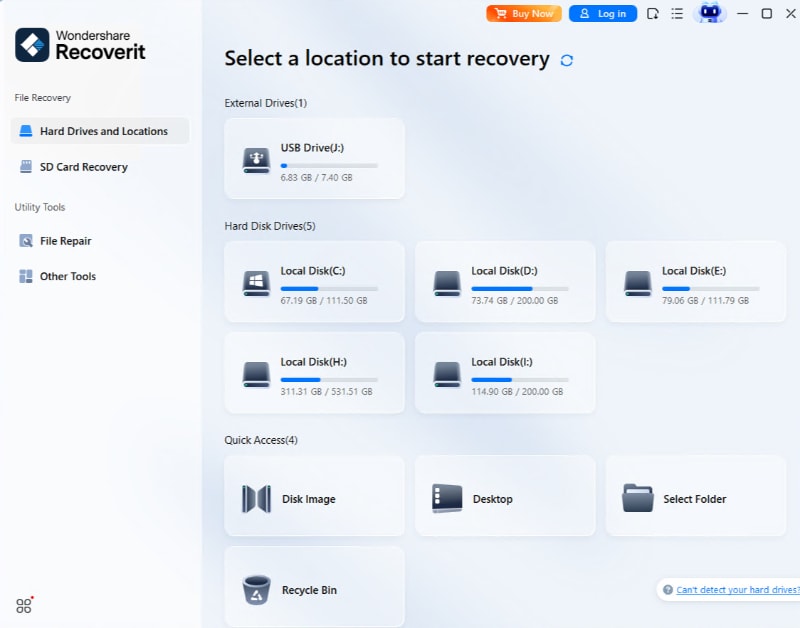
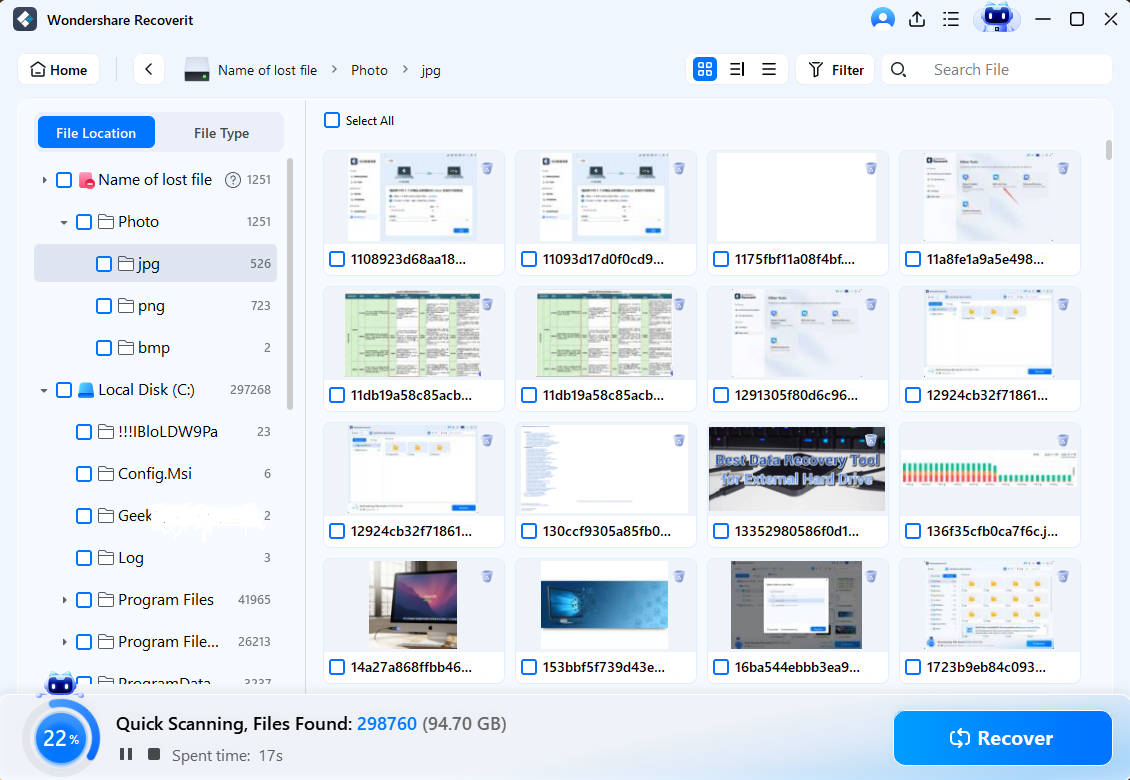
- Allow Recoverit to scan the USB card for files. You can review discovered items and use the available file filters to narrow the results; keep the original device connected during scanning.
- Preview the files you need, when preview is available. Choose the files to recover and save them to your computer or another healthy disk, not back to the original USB card. Then open the recovered copies to verify them.
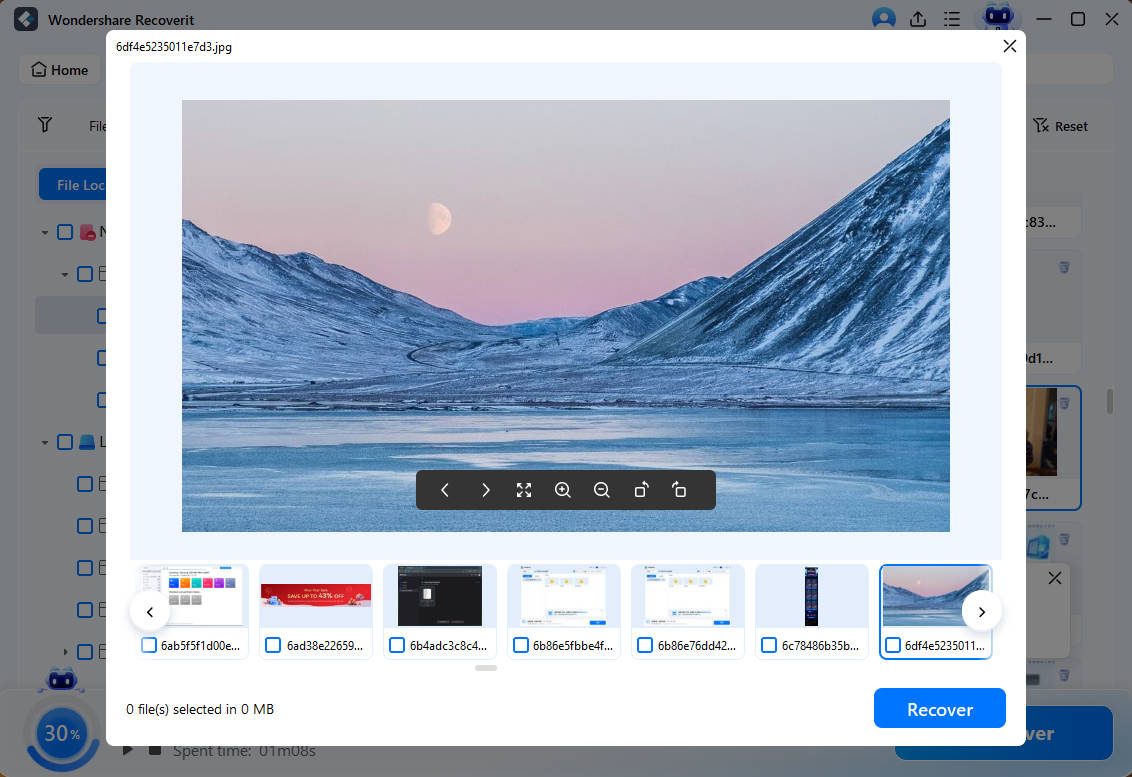

These are logical data-loss steps, not a way to repair broken connectors or recover overwritten information. Recovery depends on the condition of the device and the remaining file data; results cannot be guaranteed.
The Connector or Storage Hardware May Be Damaged
A card that overheats, has a visibly bent connector, repeatedly drops its connection, or cannot be detected by any computer may require a professional data recovery service. Avoid repeated plugging, formatting, or repair commands when irreplaceable files are involved. Software needs an accessible storage device to scan.
Conclusion
A credit card USB flash drive works like a regular USB stick in a thinner shell. Open its connector carefully, use a matching port, copy and check your files, then eject the drive before folding it closed. When buying one, choose the correct USB connector and enough real storage for your files; the appearance alone does not tell you its speed or security. If files go missing, stop writing to the card and assess whether the computer can still detect it before attempting recovery.
FAQ
-
How do I open a credit card USB flash drive?
Check the edge for a hinged, sliding, or swivel USB connector and extend it gently. Designs vary by manufacturer, so do not force a mechanism that does not move as expected. -
Can a credit card USB work with a USB-C laptop or phone?
Yes, if the card has a compatible USB-C connector or you use a data-capable adapter. The device also needs to support external USB storage. A USB-A-only card will not plug directly into a USB-C-only port. -
Do I need to format a credit card flash drive before using it?
Usually not if the card is already formatted with a compatible file system. If the computer prompts you to format a card that may contain files you need, cancel and check its condition before making changes. -
Can I reuse a credit card flash drive?
Yes. A working USB card can store and transfer files repeatedly, provided it is compatible with your device. Flash memory has a finite lifespan, so keep important files backed up elsewhere. -
Can I recover deleted files from a credit card USB?
Sometimes. If the card is still detected and the deleted data has not been overwritten, recovery software may find usable copies. Stop saving new files to the card and recover any results to a different drive. Physically failed storage may require professional help.


