

 TL;DR:
To recover fragmented files from a desktop external drive, start with basic hardware checks and built-in repair tools, and use professional recovery software like Recoverit if those methods fail.
● **Basic Checks & Built-in Tools:** Try different cables, ports, or computers first. For minor logical errors, use Windows' Check Disk (CHKDSK) or macOS's Disk Utility First Aid to repair the file system, or restore files from backups like File History or Time Machine.
● **Deep Recovery with Recoverit:** If built-in tools fail or files are badly scattered, use Wondershare Recoverit to deep scan the drive and reconstruct fragmented photos, videos, and documents.
● **Critical Precaution:** When using recovery software, always save the recovered files to a different healthy drive or partition, as saving them back to the original drive can overwrite remaining unrecovered file fragments.
● **Physical Damage Warning:** If the external drive exhibits clicking noises, repeated disconnects, or extreme slowness, stop using it immediately to avoid permanent physical damage, as DIY recovery attempts can worsen the condition.
Ask AI for a summary
 ChatGPT
 Perplexity
 Gemini
 Claude
 Grok
Grok
Introduction about recovering fragmented file from Desktop External Drive
When documents, photos, or videos suddenly open with errors or appear partially corrupted on an external drive, file fragmentation or corruption may be to blame. This guide shows you how to recover fragmented file from Desktop External Drive safely, using simple system checks, built-in repair tools, and professional recovery software so you can restore as much data as possible without risking further damage.
Try Recoverit to Recover Lost Data
 Security Verified. Over 7,302,189 people have downloaded it.
In this article
Data Loss Scenarios about fragmented file in Desktop External Drive
Common fragmented file symptoms on external drives
When you try to recover fragmented file from Desktop External Drive, it helps to recognize the typical warning signs that indicate fragmentation or corruption:
- Videos that freeze halfway, show green blocks, or cannot be played at all.
- Photos that appear half gray, pixelated, or show "invalid image" errors.
- Office documents that open with missing pages, unreadable characters, or prompt to repair.
- Archive files (ZIP, RAR) that refuse to extract due to "file corrupt" messages.
- Folders that suddenly display fewer files than you remember saving.
Typical causes of fragmentation and corruption
Files stored on an external drive can become fragmented or corrupted in many everyday situations:
- Frequent edits and deletions: Constantly saving and deleting files scatters data across the disk, increasing fragmentation.
- Low free space: When the external drive is almost full, the system must break new files into small pieces wherever space is available.
- Unsafe removal: Unplugging the USB cable without safely ejecting the drive may interrupt write operations and corrupt file fragments.
- Sudden power loss: A power cut or system crash while copying files can leave them incomplete or fragmented.
- Bad sectors and aging hardware: Worn-out platters or flash cells create unreadable areas that break file structure.
- Virus or malware attacks: Malicious software may overwrite, encrypt, or partially delete data on the external disk.
Understanding these scenarios will guide your recovery strategy and help you decide whether simple system tools are enough or you need specialized software.
How To Recover Lost fragmented file from Desktop External Drive
Before using professional tools, try these safe and straightforward ways to recover fragmented file from Desktop External Drive. They can fix minor logical errors and restore usable copies without complex steps.
Method 1: Basic connection and hardware checks
Start by ruling out simple connection issues that can make files look missing or corrupted even when they are still intact.
- Reconnect the drive: Unplug the external drive, wait a few seconds, then plug it into a different USB port on your desktop.
- Try another computer: Connect the same drive to a different PC or Mac to check if the issue is machine-specific.
- Use a different cable or adapter: A faulty USB cable can cause read errors that resemble file fragmentation.
- Listen and observe: Clicking noises, repeated disconnects, or very slow responses may indicate physical damage. In that case, stop using the drive and avoid any write operations.
If your drive becomes stable and accessible after these checks, copy all important data to another disk immediately to minimize further risk.
Method 2: Use built-in disk check and repair tools
Windows and macOS both include utilities that can fix minor file system errors and sometimes restore partially fragmented files to a readable state.
Run Check Disk on Windows
- Connect the external drive to your Windows desktop.
- Open "This PC", right-click the external drive, and choose "Properties".
- Go to the "Tools" tab and click "Check" under "Error checking".
- Allow Windows to scan and repair file system problems and bad sectors.
After the scan, check if previously unreadable files can now open. If so, back them up to a different drive immediately.
Use First Aid on macOS
- Connect the external drive to your Mac.
- Open "Disk Utility" from Applications > Utilities.
- Select your external drive in the sidebar and click "First Aid".
- Run First Aid to verify and repair file system errors.
Once repairs are complete, open your folders and test the corrupted files. Even if only some files are fixed, copy all healthy data off the drive as soon as possible.
Restore from a backup or previous versions
- If you use File History, Time Machine, or another backup tool, look for earlier copies of your fragmented files.
- On Windows, right-click a file or folder, select "Restore previous versions" if available, and restore a healthy version.
- On macOS, open Time Machine, navigate back in time, and restore the intact copies of your files.
If these basic approaches cannot fully recover fragmented file from Desktop External Drive, move on to professional recovery software such as Recoverit for deeper scanning and file reconstruction.
How to Use Recoverit to Recover Lost fragmented file from Desktop External Drive
When built-in tools fail, a specialized recovery program gives you a much better chance to recover fragmented file from Desktop External Drive. Recoverit by Wondershare is designed to dig deep into external drives, locate scattered file fragments, and rebuild photos, videos, and documents into usable form. You can download it safely from the Recoverit official website and follow the steps below, even if you are new to data recovery.
- Supports recovery from external HDDs, SSDs, USB drives, memory cards, and desktop internal disks.
- Reconstructs corrupted or fragmented photos, videos, and documents with advanced algorithms.
- Provides file preview before recovery so you only restore the data you actually need.
Step-by-step guide to recover fragmented files from a desktop external drive
-
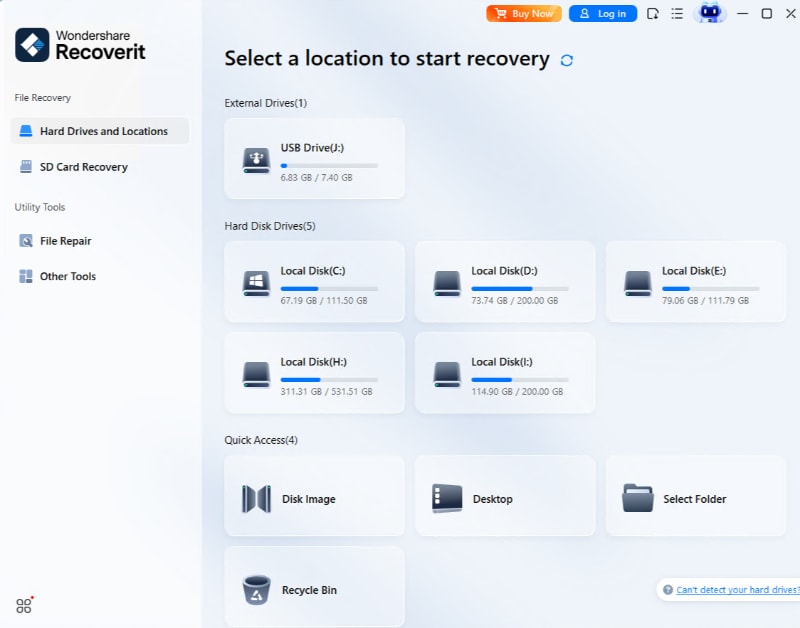
Choose a Location to Recover Data
Install and launch Recoverit on your computer. On the main interface, locate the "External Devices" or "External Drives" section and select your desktop external drive that contains the fragmented or corrupted files. Make sure you choose the correct drive letter or name, then click "Start" to begin scanning that location.
-
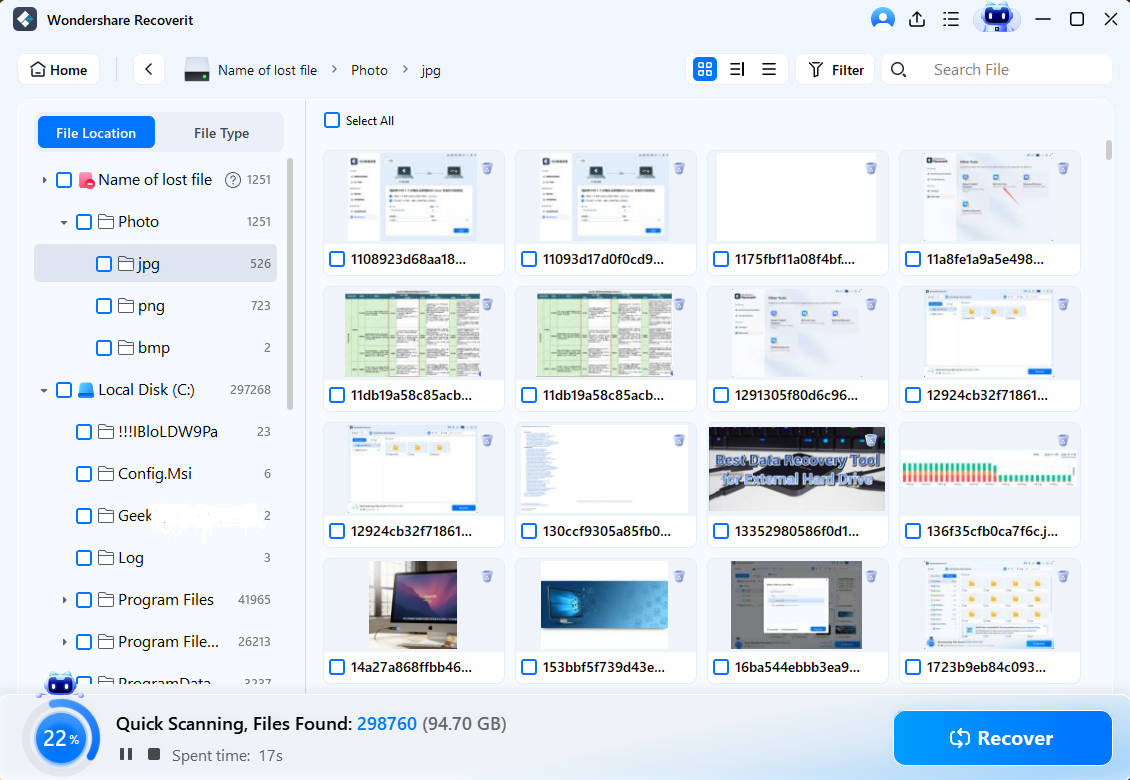
Deep Scan the Location
Recoverit will automatically perform an all-around scan of the selected external drive. During this deep scan, the software looks for deleted items, lost partitions, and scattered fragments that may belong to your damaged files. You can watch the progress bar, filter by file type, or pause the scan if necessary, but for the best results let it finish completely so all possible data can be located.
-
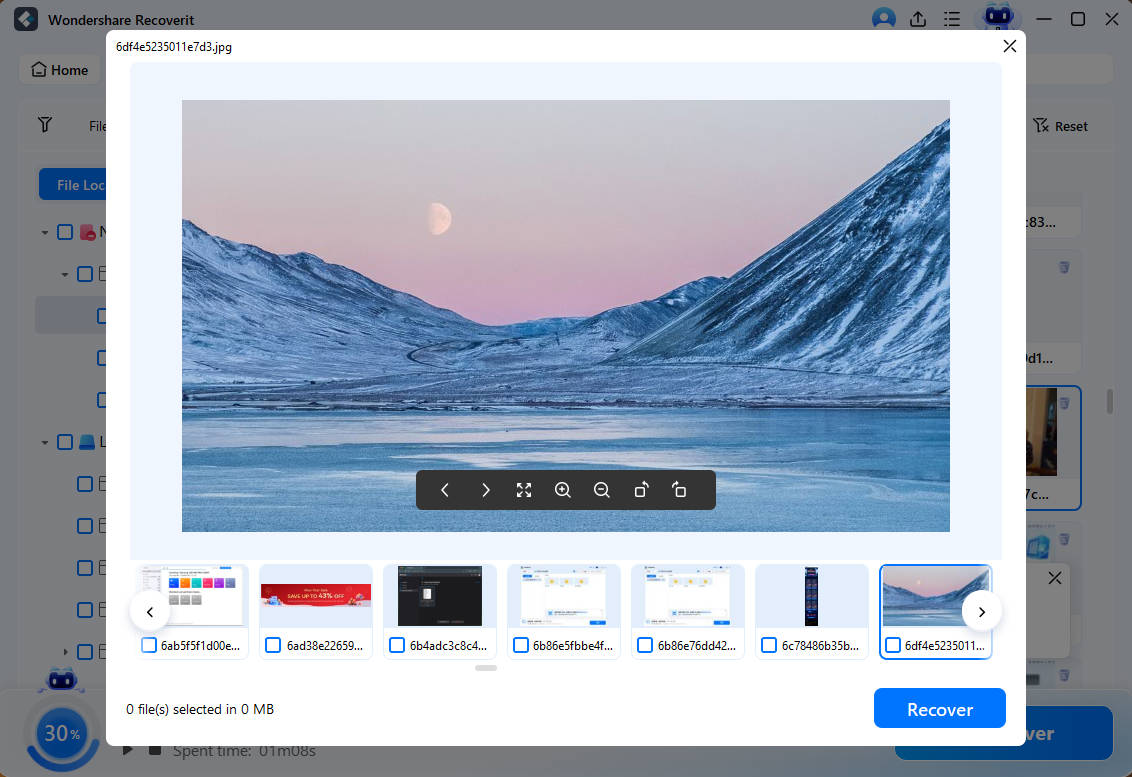
Preview and Recover Your Desired Data
After the scan ends, browse the results by file path or category. Use the Preview window to open images, videos, documents, and other files so you can verify whether Recoverit has successfully reconstructed your fragmented data. Select all items you want to restore, click "Recover", and save them to a different healthy drive or partition. Avoid saving recovered files back to the same external drive to prevent overwriting any remaining fragments.
Practical Tips to Avoid Fragmentation and Data Loss
Following a few best practices will greatly reduce the chance that you will need to recover fragmented file from Desktop External Drive again.
- Always eject safely: Use "Safely Remove Hardware" on Windows or "Eject" on macOS before unplugging your drive.
- Maintain free space: Keep at least 15–20% of the external drive capacity free so the system can store files contiguously.
- Avoid frequent on-the-go editing: Instead of continually editing large files directly on the external drive, copy them to the internal disk, edit, then move them back.
- Run periodic disk checks: Use CHKDSK (Windows) or Disk Utility First Aid (macOS) occasionally to detect and fix errors early.
- Use reliable power and cables: Avoid cheap hubs and unstable power sources that may interrupt data transfers.
- Back up regularly: Enable File History, Time Machine, or another backup solution so you always have an extra copy of important files.
- Replace aging drives: If your external drive is old or shows frequent errors, migrate data to a new device before it fails completely.
Conclusion
Recovering fragmented files from a desktop external drive is achievable if you act carefully and avoid overwriting data. Start with simple steps like checking connections, running built-in disk repair tools, and restoring from backups when possible.
When those options are not enough to fully recover fragmented file from Desktop External Drive, a dedicated solution such as Recoverit can deeply scan your drive, piece together scattered fragments, and give you a clear preview of what can be saved. Combined with safe handling habits and regular backups, this approach offers the best protection for your external drive data.
Next: Recover Large Video File From Desktop External Drive
FAQ
-
1. What causes fragmented files on a desktop external drive?
Fragmented files typically result from frequent file edits and deletions, low free space, unsafe drive removal, sudden power loss during transfers, bad sectors, or malware activity. These issues force data to be written in separate pieces across the drive, making files harder to read and increasing the risk of corruption. -
2. Can I recover fragmented files without third-party software?
In mild cases, you may repair or access fragmented files using tools like CHKDSK on Windows, First Aid on macOS, or by restoring from backups and previous versions. However, when file structure is badly damaged or pieces are scattered widely, specialized recovery software such as Recoverit is usually needed to reconstruct the data. -
3. Is it safe to run data recovery on a failing external drive?
If your drive makes clicking or grinding noises, disconnects frequently, or is not recognized reliably, it may have physical damage. In that situation, every additional scan can worsen the problem. Stop using the drive, avoid DIY experiments, and consult a professional data recovery service if the data is critical. -
4. Why should I avoid saving recovered files back to the same drive?
Saving recovered data to the same external drive can overwrite remaining fragments that have not yet been recovered, permanently destroying additional files. Always export recovered items to a different internal disk, external drive, or cloud location to keep the original device unchanged during the recovery process. -
5. How can I prevent file fragmentation and corruption on my external drive?
To minimize fragmentation and corruption, always eject the drive safely, avoid abrupt power loss, keep enough free space available, use quality cables and hubs, run periodic disk checks, and create regular backups of important data. Replacing older drives proactively also helps avoid sudden hardware failures.


