TL;DR:
You can recover lost NTFS data from a hardware-encrypted drive using recovery software like Recoverit, but only if you first successfully authenticate and unlock the device in Windows using your password, PIN, or vendor utility.
● Recovery tools cannot bypass hardware encryption, crack passwords, or recover lost encryption keys; if the drive remains locked, software recovery is impossible and you must contact the manufacturer or an IT administrator.
● If the successfully unlocked drive appears as RAW or Windows prompts you to format it, do not format the volume or run repair tools like CHKDSK, as this can overwrite file structures and reduce recovery chances.
● When scanning the unlocked NTFS partition, you must save all restored files to a completely separate internal drive, external disk, or network share to prevent overwriting the affected volume.
Ask AI for a summary
 ChatGPT
 Perplexity
 Gemini
 Claude
 Grok
Grok
Can You Recover NTFS Data from a Hardware-Encrypted Drive?
You can often restore NTFS data from a hardware-encrypted drive as long as the device is properly unlocked, mounted in Windows, and detected as an accessible NTFS volume. Once the encryption layer is authenticated with the correct password, PIN, recovery key, or vendor utility, tools like Recoverit can scan the unlocked NTFS partition for deleted or lost files.
Recovery is not possible on a locked device, and results depend on factors such as file system damage, whether data has been overwritten, and how safely you handle the drive after noticing the problem. Avoid formatting, running aggressive repairs, or writing new data to the unlocked NTFS volume until you have tried safe recovery methods.
In this article
Common Reasons NTFS Data Gets Lost from Hardware-Encrypted Drives
Even when a hardware-encrypted drive unlocks successfully, NTFS data can still disappear or become inaccessible for several reasons related to user actions, file system issues, or connection problems.
- Accidental deletion of files or folders on the unlocked NTFS volume while working from the hardware-encrypted drive.
- Formatting or reinitializing the unlocked drive or NTFS partition after a prompt to format, often when Windows misdetects the file system.
- NTFS file system corruption on the accessible encrypted volume due to improper ejection, sudden power loss, or system crashes during read/write operations.
- Interrupted file transfers between the hardware-encrypted drive and another disk, leading to incomplete or corrupted files.
- Connection instability, such as loose USB cables or insufficient power, causing the mounted hardware-encrypted drive to disconnect while data is being written.
- Malware or problematic software that modifies, encrypts, or deletes NTFS data stored on the unlocked hardware-encrypted drive.
How to Recover NTFS Data from Hardware-Encrypted Drives
To recover NTFS data from a hardware-encrypted drive safely, start by confirming the device is unlocked and visible as an NTFS volume in Windows, then check for existing backups before scanning the unlocked partition with data recovery software.
Method 1. Confirm the Hardware-Encrypted Drive Is Unlocked and Accessible
Before attempting NTFS data recovery, you must ensure the hardware-encrypted drive is properly connected, authenticated, and exposed to Windows as an accessible NTFS volume with a drive letter. Recovery is only possible after the encryption layer is unlocked.
- Connect the hardware-encrypted drive directly to your computer, using the original cable or dock, and ensure any required external power supply is stable.
- Use the vendor utility, password prompt, PIN, or corporate authentication method to unlock the hardware-encrypted drive, waiting until it reports a successful unlock.
- Open File Explorer and check whether a new drive letter appears. If visible, try opening it and note any errors such as access denied, RAW, or the need to format.
- Open Disk Management in Windows and confirm the unlocked drive shows an NTFS partition or a volume with a drive letter, even if some folders appear inaccessible.
- If you cannot unlock the drive due to a forgotten password or failed authentication, contact the manufacturer, IT administrator, or a professional lab before proceeding further.
Method 2. Look for NTFS Data in Backups, Previous Versions, and Synced Copies
If the unlocked NTFS volume is visible but files are missing or damaged, you may still have usable copies in backups, File History, Previous Versions, or cloud sync folders created before the issue occurred.
- Check any external backup drives or network locations you regularly use, looking for NTFS partition backups, exported folders, or full-system images created before data loss.
- In Windows, right-click the affected folder on the unlocked NTFS volume or another location, choose Properties, and review the Previous Versions tab for restorable snapshots.
- Open File History or other backup software you use, select the relevant library or folder, and restore specific files or directories rather than performing a full system restore.
- Sign in to services like OneDrive, Google Drive, or corporate sync platforms to see whether important NTFS data folders from the encrypted drive were mirrored to the cloud or another device.
- If the drive cannot be unlocked at all, prioritize restoring from existing backups or consulting your administrator or manufacturer, as software recovery on a locked device is not feasible.
Method 3. Use Recoverit to Recover NTFS Data from a Hardware-Encrypted Drive
When the hardware-encrypted drive is successfully unlocked and the NTFS volume appears in Windows, Recoverit can scan that volume for deleted, lost, or inaccessible NTFS data and let you restore selected files to another safe location.
Recoverit is a dedicated data recovery solution that can scan unlocked NTFS volumes on hardware-encrypted drives for deleted, lost, or inaccessible files before you attempt risky repairs or formatting. You can download it from the Recoverit official website and work through recovery in a guided, user-friendly interface.
- Scans unlocked NTFS partitions on hardware-encrypted drives for deleted or lost data before you attempt repairs or formatting.
- Supports full-volume and deep scanning on Windows to locate files by path, type, or search keywords from the affected NTFS file system.
- Allows preview of many recovered files and selective restoration to another safe location without modifying the original encrypted drive.
- Choose a Location to Recover Data. Open Recoverit on a stable Windows system. Ensure your hardware-encrypted drive is already unlocked and mounted, then select its NTFS volume from the Hard Drives and Locations list as the recovery target.

- Deep Scan the Location. Start the scan and let Recoverit perform a deep analysis of the selected NTFS volume. Avoid copying new files to the encrypted drive or running repair tools while scanning is in progress.

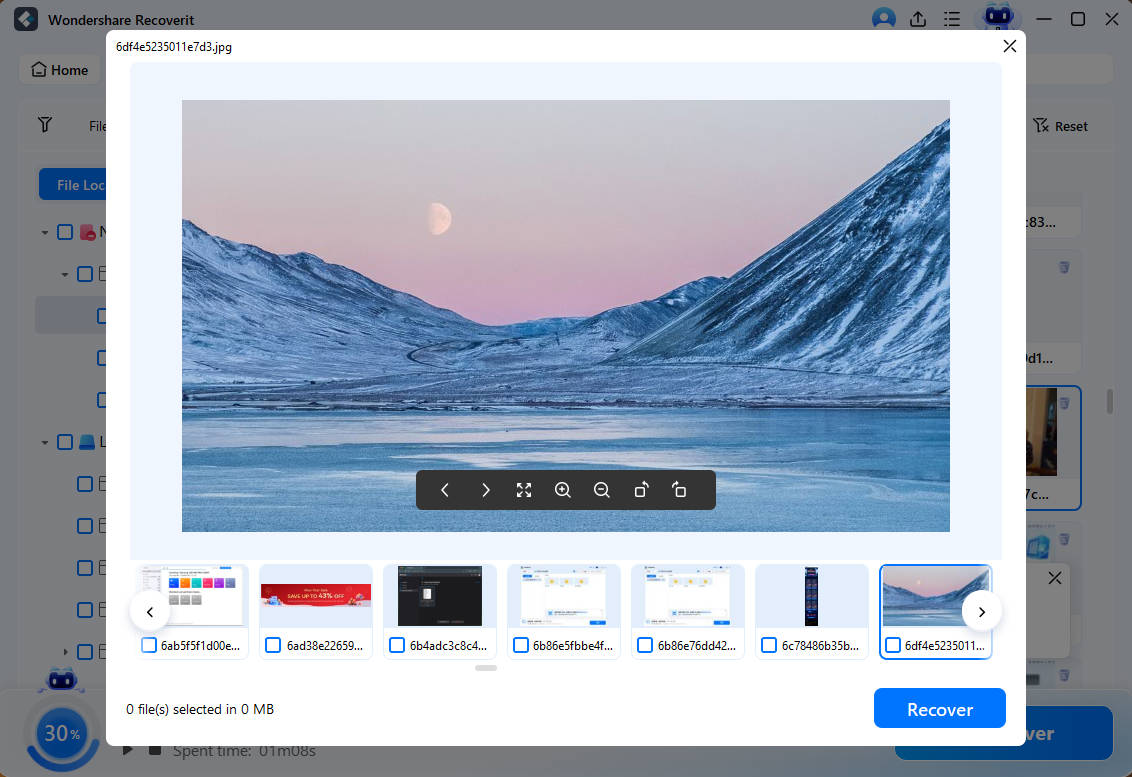
- Preview and Recover Your Desired Data. When the scan finishes, filter and search for needed NTFS data, preview supported files to verify content, and recover selected items to a different disk or partition, not to the same hardware-encrypted drive.
Try Recoverit to Recover NTFS Data from Hardware-Encrypted Drives
 Security Verified. 3,591,664 people have downloaded it.
What to Check Before and During Recovery
Before you run any recovery software on an unlocked hardware-encrypted drive, verify several technical and safety details to reduce the risk of further data loss.
- Verify the Drive Is Fully Unlocked: Ensure the hardware-encrypted drive has been authenticated with the correct password, PIN, or utility and appears in Windows as an unlocked NTFS volume before attempting any software-based recovery.
- Confirm NTFS Volume Visibility: Use Disk Management to check that the unlocked device shows an NTFS partition with a drive letter. If it appears as RAW or unallocated, avoid formatting and focus on data recovery first.
- Check Connection Stability: For external hardware-encrypted drives, use a reliable USB port and cable, avoid hubs if possible, and ensure the drive has sufficient power so it does not disconnect during scanning or recovery.
- Prepare a Separate Destination Drive: Before scanning, confirm you have enough free space on another internal drive, external disk, or network share to store recovered NTFS data, so you never write new data to the affected volume.
- Avoid Quick Fixes That Alter the Disk: Do not format, convert, or run heavy repair tools on the NTFS volume until you have attempted recovery. Such actions may overwrite file structures and reduce the chance of restoring your data.
- Understand Encryption Limitations: Software recovery tools work only after the device is unlocked. They cannot decrypt, unlock, or recover lost passwords or recovery keys for hardware-encrypted drives.
Tips to Improve the Recovery Success Rate
Following best practices while working with an unlocked hardware-encrypted drive can improve the likelihood of getting usable NTFS data back.
- Stop Writing New Data to the NTFS Volume: Once you notice missing files, avoid copying, downloading, or editing data on the unlocked NTFS partition. New writes may overwrite deleted entries and reduce the amount of recoverable data.
- Keep the Hardware-Encrypted Drive Mounted During Recovery: Do not disconnect or power off the hardware-encrypted drive while scanning or restoring files. Unexpected disconnections can interrupt the process and risk further corruption of NTFS metadata.
- Work From a Healthy System Drive: Install and run recovery software from a stable system drive, not from the affected NTFS volume on the hardware-encrypted drive, to avoid accidental overwrites and performance issues.
- Recover in Stages for Large NTFS Volumes: On large NTFS partitions, first restore the most critical project folders, documents, and archives, verify them, then continue recovering less important data to manage time and storage more effectively.
- Verify Recovered NTFS Data Carefully: After recovery, open a sample of documents, archives, and project folders from the new location to confirm they work as expected before deleting anything from the original encrypted drive.
- Document Encryption and Recovery Details: Record the drive model, encryption method, and steps already taken. This information is valuable if you later consult the manufacturer, IT team, or a professional recovery service.
Conclusion
Recovering NTFS data from a hardware-encrypted drive is realistic when you can still unlock the device and see the NTFS volume in Windows. Focus first on confirming that authentication works, checking for any backups or synced copies, and avoiding risky actions like formatting or aggressive repairs before you attempt data recovery.
Once the drive is authenticated and mounted, tools such as Recoverit can scan the NTFS partition on the unlocked hardware-encrypted drive for deleted or lost files and help you copy important data to a safer location. If you cannot unlock the device or lack the required credentials, turn to the manufacturer, your IT administrator, or a professional data recovery service, because software alone cannot bypass hardware encryption.
Try Recoverit to Recover NTFS Data from Hardware-Encrypted Drives
Security Verified. 3,591,664 people have downloaded it.
Next: Recover APFS Data from Hardware-Encrypted Drives
FAQ
-
1. Can I recover NTFS data from a locked hardware-encrypted drive without the password?
No. To attempt NTFS data recovery, the hardware-encrypted drive must be unlocked and accessible. Recoverit cannot decrypt, unlock, bypass, crack, remove, or recover passwords, PINs, recovery keys, or encryption keys for such devices. -
2. Why does my unlocked hardware-encrypted drive show as RAW or ask to be formatted?
The underlying NTFS file system may be corrupted. Do not format the drive. Instead, unlock it, confirm it appears in Disk Management, then use data recovery software to scan the RAW or problematic volume first and attempt to restore your files before considering repairs or reformatting. -
3. Can Recoverit fix a damaged NTFS file system on a hardware-encrypted drive?
Recoverit is designed to recover data from an unlocked NTFS volume, not to repair or convert file systems. It is best to extract your important files from the accessible NTFS partition first, then consider running repair tools or reformatting once your data is safely stored elsewhere. -
4. Is it safe to run CHKDSK on an unlocked hardware-encrypted NTFS drive before recovery?
Running CHKDSK can sometimes correct errors, but it may also modify or remove file records, making some data harder to recover. In many cases it is safer to attempt data recovery from the unlocked NTFS volume first, then run CHKDSK or other repair utilities afterward if needed. -
5. What should I do if my hardware-encrypted drive no longer prompts for a password or cannot be unlocked?
If the drive will not accept authentication or no unlock prompt appears, contact the drive manufacturer, your IT administrator, or a professional data recovery lab. Software tools, including Recoverit, cannot override failed hardware encryption or missing credentials, and they cannot decrypt or unlock a drive that remains locked.