

 TL;DR:
To safely recover deleted files from an Android microSD card, immediately stop writing new data to prevent overwriting and determine whether the card was configured as portable storage or encrypted adopted internal storage.
● For portable storage, safely remove the card, connect it to a Windows PC or Mac with a stable reader, scan it using tools like Recoverit Memory Card Recovery, and strictly save the recovered files to a different drive.
● For adopted internal storage, leave the card inside the original Android phone to export any accessible data, as Android encrypts this media specifically for that device and desktop recovery software cannot independently decrypt it.
● Check the native Android Trash or Google Photos backups before attempting a deep scan, and completely halt software recovery if the card overheats, repeatedly disconnects, or is physically undetected by multiple known-good readers.
Ask AI for a summary
 ChatGPT
 Perplexity
 Gemini
 Claude
 Grok
Grok
If photos, videos, or other files disappeared from the microSD card in your Android phone, stop using the card before trying to fix it. The safest recovery path depends on one critical detail: whether the card was used as portable storage or formatted as internal/adopted storage. A portable card can often be removed and scanned on a computer. An adopted card is encrypted and tied to the phone that adopted it, so treating it like an ordinary removable drive can make recovery harder.
Quick Answer
● Stop new writes: do not take more photos, download files, format the card, or save anything new to the affected microSD card.
● Check easy restores first: look in your phone's Trash/Recently Deleted area and any cloud backup that was enabled before the files disappeared.
● For a portable SD card: remove it safely, connect it to a Windows PC or Mac with a stable card reader, and recover files to a different drive.
● For adopted storage: keep the card with the original Android phone because Android encrypts adopted media for that device; desktop SD card recovery software cannot independently decrypt it.
In This Article
Part 1. Is Android SD Card Recovery Possible?
Yes, Android SD card recovery is often possible when the missing files were stored on a removable microSD card and the card is still readable by a computer. Deleted or formatted data may remain recoverable until new writes overwrite the same storage areas. Recovery becomes much less predictable when the card is physically unstable, no device can detect it, or Android previously formatted it as encrypted internal storage.
The most important first step is not choosing software. It is identifying what kind of storage you are dealing with and whether the card is stable enough for DIY recovery.
Portable and Adopted Storage: The Recovery Difference
Google's current Android SD card guidance distinguishes portable storage from internal storage. Portable storage is designed for files such as photos and videos and can be moved between compatible devices. Internal or adopted storage is treated as part of the phone's storage.
The Android Open Source Project explains that when external media is adopted as internal storage, Android formats and encrypts it so that it works with the device that adopted it. That distinction changes the recovery strategy.
| SD Card Setup | Can You Remove and Scan It on a Computer? | Best Recovery Direction |
| Portable storage | Usually yes, if a computer detects the card through a reader | Stop using the card, check backups, then scan the removable card directly |
| Internal/adopted storage | Not as an ordinary readable card; the data is encrypted for the original phone | Keep the phone-card pair intact and export any files the original phone can still access |
| Unknown | Do not format it to find out | Check Android Storage settings and whether another computer recognizes the card without initializing it |
If you intentionally used the card as phone storage, review the dedicated guide to using an SD card as internal storage on Android before removing, reformatting, or scanning it.
Choose the Right Recovery Path by Symptom
| What You See | Likely Situation | Safest Next Step |
| Deleted photos or files still appear in Trash/Recently Deleted | Logical deletion with an existing temporary copy | Restore them on the phone first; no deep scan is needed |
| Files are gone, but the portable microSD card is detected on a computer | Deletion, formatting, or logical file-system loss | Scan the card with recovery software and save recovered files elsewhere |
| Android asks to format the card, but a computer still detects it | Possible file-system corruption or an unreadable partition | Recover accessible or lost files before formatting or repair |
| The card is missing in Android but appears normally on a computer | Phone slot, compatibility, mount, or file-system issue | Copy or recover important data first, then troubleshoot the phone |
| The card was adopted as internal storage | Encrypted device-bound storage | Keep it in the original phone and export accessible data; do not format it on a PC |
| The card disconnects, overheats, is cracked, or is not detected anywhere | Possible controller or physical damage | Stop repeated scans and consider a professional data recovery lab |
Part 2. Protect the SD Card Before Recovery
Before any Android SD recovery attempt, protect the source. Recovery software can search for data that is still present, but no tool can restore sectors that have already been overwritten.
- Stop using the affected card: do not take new photos, record videos, download files, move apps, or copy data onto it.
- Do not accept a format prompt: if Android, Windows, or macOS says the card must be formatted, cancel until important files are copied or recovered.
- Do not repair first: CHKDSK, First Aid, formatting, or other write operations can change the source. Recover important data before attempting repair.
- Use a stable reader: if the card is portable, connect it directly to a computer with a reliable microSD/SD reader instead of repeatedly reinserting it into the phone.
- Recover somewhere else: save restored files to the computer's internal drive or another healthy external drive, never back to the same SD card during the recovery session.
If the phone suddenly stopped seeing a card that still matters, use the separate Android phone not reading SD card guide after protecting the data.
Part 3. Recover Recently Deleted Files on the Android Phone
Start with phone-side recovery only when the files may still exist in a Trash, Recently Deleted folder, or cloud copy. These options are low risk because they restore an existing copy rather than scanning deleted sectors.
Check Trash or Recently Deleted
Many Android file managers and gallery apps keep recently deleted items temporarily. Menu names vary by phone brand. In Files by Google, Google's current instructions use Menu > Trash, and Files by Google says items remain in Trash for 30 days before automatic deletion. See the official Files by Google Trash instructions for the current path.
Step 1. Open your phone's file manager or gallery and look for Trash, Recycle Bin, or Recently Deleted.

Step 2. Select the missing files and choose Restore or Recover. Confirm that the files reopen from their restored folder before doing anything else to the SD card.

If the file is not in Trash, do not fill the card with new data while trying random cleanup or recovery apps. Move to the backup check below or, for a portable card, the computer-based recovery workflow in Part 4.
Check Google Photos and Existing Backups
If you are trying to recover deleted photos from an SD card on an Android phone, check whether Google Photos backed up the camera or SD-card folder before the loss. Google's current Find lost photos and videos instructions recommend checking the correct Google Account, Trash, Archive, and Collections > On this device. Google also notes that device folders are backed up only when backup is enabled for those folders.
If a complete cloud copy exists, download or restore that copy instead of scanning the SD card. If no backup exists and the portable card is still detectable, continue with a direct card scan.
Part 4. Recover Files From a Portable Android SD Card With Recoverit
When This Method Fits
Recoverit Memory Card Recovery is relevant when the Android microSD card was used as portable storage and the computer can still detect it through a card reader. Typical cases include accidental deletion, a formatted portable card, missing folders, RAW or inaccessible file systems, and other logical data-loss situations.
Do not use this workflow for a microSD card that Android formatted as internal/adopted storage. Recoverit does not bypass Android's device-specific adopted-storage encryption. Also stop software attempts if the card is physically cracked, badly water-damaged, overheating, or repeatedly disconnecting.
Step-by-Step Android SD Card Recovery
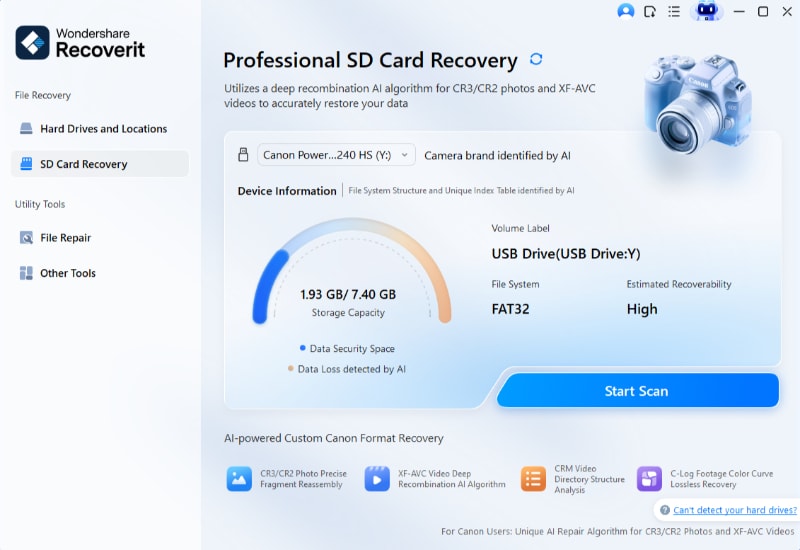
Step 1. Remove and Connect the Portable microSD Card
Safely eject or power off the Android phone, remove the portable microSD card, and connect it to a Windows PC or Mac through a stable reader. Open Recoverit and choose the SD Card Recovery area. Confirm the card by label and capacity before scanning so you do not select the wrong drive.
Step 2. Scan the SD Card for Lost Files
Start the scan and let Recoverit search the selected card. As results appear, avoid writing anything to the card. If you are mainly looking for deleted photos, narrow the results to image formats or likely Android camera folders such as DCIM.
Step 3. Filter and Preview the Files You Need
Use file type, path, date, size, or search filters to reduce noise. Preview supported photos, videos, and documents before recovery when possible. A successful preview is useful evidence that you found the right file, but it is not a guarantee that every recovered file will be complete after export.
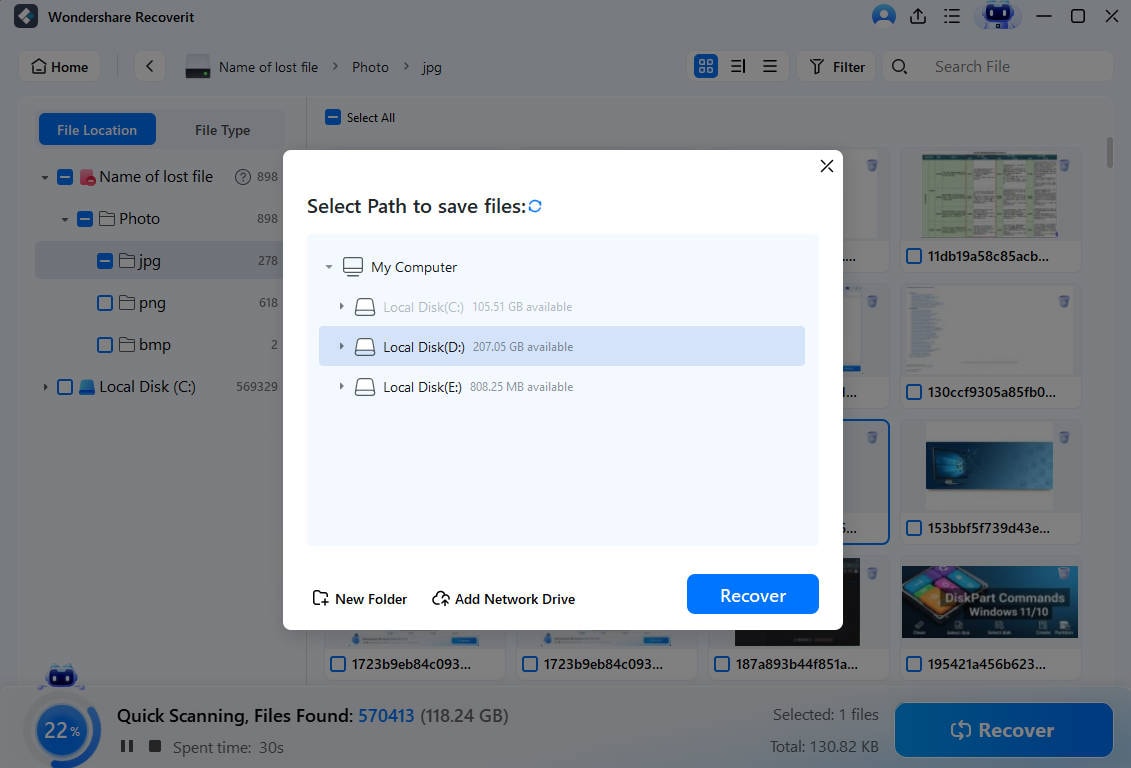
Step 4. Recover to a Different Drive
Select the files you want and recover them to the computer's internal drive or another healthy external drive. Do not use the original microSD card as the destination. After export, open a sample of the recovered photos, videos, and documents from the destination drive to verify that they work normally.
If the missing content is specifically photos that vanished while the card still shows used space, see the focused guide for pictures that disappeared from an SD card.
Recover Files From a Portable Android SD Card With Recoverit
 Security Verified. Over 7,302,189 people have downloaded it.
Part 5. What If the SD Card Was Formatted, Corrupted, or Not Detected?
The Card Was Formatted
If Android formatted a card that had been used as portable storage, stop using it immediately. Do not copy new files to the card. A direct reader-based scan may still find recoverable data if the computer detects the card and the old data has not been overwritten. Use the dedicated formatted Android SD card recovery guide for the full branch.
If the format operation converted the card to internal/adopted storage, the situation is different because Android's adopted-storage encryption is tied to the phone. See Part 5.4 before removing or reformatting it again.
The Card Is Corrupted but Still Detected
If a computer sees the card but it opens as RAW, asks to be formatted, shows missing folders, or reports file-system errors, treat this as a recovery-first situation. Scan or copy important data before running repair commands. The corrupted SD card data recovery guide covers the recovery branch, while the Android corrupted SD card guide covers repair only after data is protected.
The Phone Does Not Detect the Card
First determine whether the card or the phone is the failing layer. Power off the phone if the model requires it for tray removal, reseat the card, and test the microSD card in a known-good reader on a computer. If the computer recognizes the card, protect or recover the data before changing the file system or formatting it.
If neither the Android phone nor multiple known-good readers can detect the card, software may have nothing stable to scan. Repeated connection attempts are especially risky if the card is hot, intermittently disconnects, or causes the reader to freeze.
The Card Was Formatted as Internal Storage
This is the most important Android-specific exception. Android's official adoptable-storage documentation states that adopted media is formatted and encrypted to work with a single device. A computer may see partitions on the card but cannot mount the protected contents as ordinary portable files.
If the original phone still mounts the card, keep the card installed and export whatever data the phone can still read to a cloud account, computer, or other storage device. Do not initialize or reformat the card on a computer. If the original phone no longer mounts the adopted card and the data is important, stop destructive troubleshooting and seek device-specific professional assistance.
Part 6. When Software Recovery Is Not the Right Choice
DIY Android SD card recovery is designed for logical data loss on media that remains stable enough to read. Stop software recovery and consider professional service when you see any of the following:
- The card is cracked, chipped, badly bent, corroded, or water-damaged.
- The card or reader becomes unusually hot during connection.
- The card repeatedly connects and disconnects or disappears during scans.
- Multiple known-good readers and computers cannot detect the media at all.
- Scanning causes severe system freezes or repeated I/O errors.
Continuing to scan unstable hardware can increase stress on a failing controller or memory connection. If the files are irreplaceable, stop before repair, formatting, or repeated full scans.
Part 7. Prevent Future Android SD Card Data Loss
- Keep more than one copy: an SD card is working storage, not a backup. Keep important photos and videos on another drive or a verified cloud service.
- Verify Google Photos device-folder backup: Android camera folders and app folders are not necessarily backed up unless the relevant folder backup is enabled.
- Eject before removal: avoid pulling a card during photo capture, recording, transfer, or app activity.
- Replace unreliable cards: repeated read errors, disconnects, capacity anomalies, or write failures are warning signs, not problems to ignore.
- Use portable storage when computer access matters: adopted storage adds capacity for supported devices but binds the card to the phone and makes off-device recovery much harder.
Conclusion
Android SD card recovery is most successful when you first identify how the card was configured and then protect it from new writes. Restore an existing Trash or backup copy when one is available. For a portable microSD card that is still detected by a computer, remove it from the phone, scan it through a stable reader, preview the files you need, and save recovered data to a different drive. If the card was adopted as internal storage, keep it with the original phone because Android's encryption changes what off-device recovery can do.
The key rule is simple: recover important files before repair or formatting. If the card is physically unstable or undetected everywhere, stop DIY attempts rather than forcing another scan.
FAQ
-
Can I recover deleted photos from an SD card on an Android phone without a computer?
Yes, if the photos still exist in your phone's Trash/Recently Deleted area or in a cloud backup such as Google Photos. If a file was permanently deleted from a portable microSD card and no backup exists, a direct card scan on a computer is usually the more appropriate recovery path. -
Can Recoverit recover files directly from Android internal storage?
No. This workflow is for a removable SD or microSD card that a Windows PC or Mac can detect through a card reader. Recoverit is not a tool for scanning a phone's built-in encrypted Android storage. -
Can Recoverit recover an SD card formatted as internal storage on Android?
Not as an ordinary removable card. Android encrypts adopted storage and ties it to the phone that adopted it. Keep the card with the original phone and export any files the phone can still access instead of formatting the card on a computer. -
Can I recover an Android SD card after formatting?
A portable card may still contain recoverable data after formatting if the card remains detectable and the old data has not been overwritten. Stop using the card and scan it before writing new files. An adopted/internal card is different because its encryption is tied to the original phone. -
What should I do if Android says the SD card is corrupted?
Do not format it immediately if important files are missing. Test whether a computer detects the card through a reliable reader. If it does, copy or recover the data first, verify the recovered files, and only then move to repair or formatting. -
Why should recovered files be saved to a different drive?
Writing recovered files back to the source SD card can overwrite other deleted data that has not yet been recovered. Save to a healthy computer drive or another external device until the recovery session is complete. -
What if my microSD card is not detected by any phone or computer?
If multiple known-good readers and computers cannot detect the card, or the card disconnects, overheats, or is physically damaged, stop repeated software scans. The problem may be physical or controller-level and may require a professional data recovery service.


