TL;DR:
SDHC (Secure Digital High Capacity) is a memory card format offering 4 GB to 32 GB of storage that relies on the FAT32 file system and requires host devices explicitly labeled for SDHC or SDXC compatibility.
● For standard Full HD video recording, select cards with a Class 10 or U1 speed rating, but choose U3 or V30 ratings if capturing high-bitrate or advanced codec video.
● Always format a new SDHC card directly inside your camera or host device to ensure the correct FAT32 structure, because computer-based formatting in exFAT or NTFS can render the card unrecognizable to older hardware.
● To successfully restore accidentally deleted files using software like Wondershare Recoverit, immediately stop saving new data to prevent sector overwriting and output the recovered files to a completely different storage drive.
Ask AI for a summary
 ChatGPT
 Perplexity
 Gemini
 Claude
 Grok
Grok
SDHC, short for Secure Digital High Capacity, is a type of SD memory card widely used in digital cameras, camcorders, handheld consoles, and other portable devices. Designed to store more data than standard SD cards, SDHC typically ranges from 4 GB up to 32 GB, offering an affordable way to keep photos, videos, and documents with you. Understanding what an SDHC card is, how it works, and how it differs from newer formats like SDXC can help you choose the right card, avoid compatibility problems, and protect your data from accidental loss or corruption.
Try Recoverit to Perform Data Recovery
 Security Verified. 3,591,664 people have downloaded it.
In this article
What Is SDHC
SDHC stands for Secure Digital High Capacity. It is a memory card standard introduced as an extension of the original SD (Secure Digital) specification, created to handle larger storage sizes and higher data throughput.
An SDHC card is defined by the official SD Association as having a capacity between 4 GB and 32 GB. Cards below 4 GB belong to the older SD standard, and cards above 32 GB are part of the SDXC (Secure Digital eXtended Capacity) family.
Typical uses for SDHC include:
- Digital cameras and DSLRs for photo and Full HD video storage
- Camcorders and action cameras that record to removable media
- Handheld gaming consoles and portable media players
- Car dashcams and home security cameras
- Embedded devices like drones, smart projectors, and IoT gadgets
Because SDHC cards follow the same physical form factor as standard SD cards, they look almost identical. The main visual difference is the "SDHC" logo printed on the label, which tells you that the card falls in the 4 GB to 32 GB range and follows the SDHC specification.
How Does SDHC Work
At a high level, an SDHC card is a small flash memory storage device that communicates with your camera, computer, or other host device using standardized SD protocols. When you insert the card, the host controller reads information from the card's internal firmware to identify its capacity, supported features, and speed.
Several key technical aspects define how SDHC functions:
- Flash memory cells: SDHC cards store bits of data using NAND flash memory. Data is organized into pages and blocks, which the controller manages for wear leveling, error correction, and performance.
- File system: SDHC cards typically use the FAT32 file system. This affects maximum file size (up to 4 GB per file) and compatibility across operating systems, cameras, and TVs.
- Controller and firmware: A small controller chip inside the card handles read/write operations, error correction, and mapping of logical sectors to physical memory cells. It also reports the card's SDHC capacity and speed class to the host.
- Bus interface and speed mode: SDHC uses the SD bus interface and can support different modes such as Default Speed (up to 12.5 MB/s), High Speed (up to 25 MB/s), and in some cases faster UHS modes, depending on both card and host device.
When you save a photo or video, the host device sends data to the SDHC card in blocks. The card writes these blocks to available memory cells and updates its internal tables. When you delete a file or format the card, the file system marks those sectors as free, but the underlying data may remain until it is overwritten, which is why SDHC data recovery is often possible with specialized software like Recoverit.
| Specification | Typical SDHC Characteristics |
|---|---|
| Capacity range | 4 GB to 32 GB |
| Default file system | FAT32 |
| Common use cases | Digital cameras, camcorders, game consoles, dashcams |
What are the Types of SDHC
All SDHC cards share the same basic form factor and capacity range, but you will see different types based on capacity tiers, speed ratings, and physical size (full-size SD vs. microSDHC). Understanding these categories helps you pick the right camera memory card or storage for your device.
SDHC Capacity Classes
Within the official 4 GB to 32 GB range, SDHC cards are commonly grouped by advertised capacity. While these are not formal "classes" defined by the SD Association, shoppers often compare:
- 4 GB to 8 GB SDHC: Suitable for basic photography or light usage. Ideal for small point-and-shoot cameras, MP3 players, and firmware updates.
- 16 GB SDHC: A balanced option for casual photographers, dashcams, and portable game consoles that need room for apps and media.
- 32 GB SDHC: The upper limit of the SDHC standard. Offers plenty of space for Full HD video, burst-mode photography, and large libraries of music or documents.
Remember that the actual usable space will be slightly less than the labeled capacity due to file system overhead and how manufacturers define gigabytes.
| Labeled Capacity | Typical Usage Scenario |
|---|---|
| 4 GB / 8 GB | Light photo storage, firmware, simple media playback |
| 16 GB / 32 GB | Full HD video recording, burst shots, app and game storage |
SDHC Speed Ratings and Performance
Besides capacity, the most important factor when choosing an SDHC card is its speed rating. Write speed in particular determines how quickly your device can save photos or record video without dropping frames.
There are several overlapping systems used to describe SDHC speed class:
- Speed Class (C symbol): Indicates minimum sustained write speed. Examples:
- Class 2: at least 2 MB/s
- Class 4: at least 4 MB/s
- Class 6: at least 6 MB/s
- Class 10: at least 10 MB/s
- UHS Speed Class (U symbol): Used with UHS-I and UHS-II capable cards and devices.
- U1: at least 10 MB/s
- U3: at least 30 MB/s (recommended for higher bitrate Full HD and some 4K)
- Video Speed Class (V symbol): Primarily marketed for video recording:
- V10, V30, V60, V90 respectively guarantee minimum write speeds of 10, 30, 60, and 90 MB/s.
For most SDHC use cases:
- Class 10 or U1 is usually enough for standard Full HD recording.
- U3 or V30 is safer if your camera records at high bitrates or uses advanced codecs.
- For simple still photos and occasional video, Class 4 or Class 6 may be sufficient, although Class 10 has become the de facto baseline.
When comparing SDHC vs SDXC, note that many of the same speed classes apply to both formats. The key difference is capacity and the file system, not the basic speed labeling system.
Practical Tips for SDHC
Using an SDHC card correctly helps prevent errors, extends its lifespan, and reduces the risk of data loss that might require SDHC data recovery. Keep the following best practices in mind.
Check Compatibility and Format Properly
Because SDHC, SD, and SDXC share a similar physical connector, it is easy to assume any card will work in any slot. That is not always true.
- Verify SDHC support: Look for "SDHC" or "SDHC/SDXC" logos on your device or check the manual. Very old devices that only support standard SD may fail to recognize SDHC cards.
- Use the device's format function: Before first use, insert the new card and format it using your camera, console, or recorder. This ensures a compatible FAT32 structure that matches what the device expects.
- Avoid formatting in incompatible systems: Some operating systems may try to reformat SDHC cards using exFAT or NTFS, which can break compatibility with older cameras.
Handle SDHC Cards Safely
Physical and electrical stress are common causes of SDHC corruption or failure. Simple precautions go a long way:
- Use the write-protect switch: Many full-size SDHC cards include a small lock switch. Set it to "Lock" when you want to prevent accidental deletion on cameras or shared computers.
- Eject properly: On computers, always use "Safely Remove Hardware" or "Eject" before pulling the card. This allows pending writes to finish and reduces file system errors.
- Avoid sudden power loss: Do not remove the battery or power off the device while it is actively writing. Wait for activity LEDs to stop blinking.
- Protect from extremes: Keep cards away from moisture, strong magnets, direct sunlight, and very high or low temperatures.
Prevent and Respond to Data Loss
Even with proper handling, data loss can still occur due to accidental deletion, quick formatting, or corruption. Knowing how to respond can determine whether recover SDHC data is possible.
- Stop using the card immediately: Once you notice missing files, avoid taking new photos or saving new data. New writes overwrite the old sectors, making SDHC data recovery more difficult or impossible.
- Do not reformat repeatedly: A single quick format may still allow recovery. Multiple formats or low-level formatting reduce the chance of restoration.
- Use reputable recovery software: Connect the card via a card reader to your computer and use a dedicated tool like Recoverit instead of random free utilities that may not handle camera-specific formats correctly.
- Back up regularly: Copy important photos and videos from your SDHC card to at least two separate locations (e.g., external drive and cloud storage).
How to Use Recoverit to Recover Lost Data
Recoverit by Wondershare is a professional data recovery program designed to restore deleted or lost files from SDHC cards, SDXC cards, microSD, USB flash drives, external hard drives, and computers. It uses a powerful scanning engine to search for recoverable photos, videos, and documents, even when the card appears corrupted or accidentally formatted. To learn more, access the installer, and check system requirements, visit the Recoverit official website.
Key Features Offered by Recoverit
- Supports data recovery from SDHC, SDXC, microSD, USB drives, and computers so you can handle multiple storage devices with one toolkit.
- Restores photos, videos, documents, and many other file formats, including RAW camera images, office files, and archived project folders.
- User friendly workflow with advanced deep scan and file preview, allowing you to verify files before recovery and save only what you truly need.
Step-by-Step Guide on How To Recover Lost Data
1. Choose a Location to Recover Data
Install and launch Recoverit on your Windows or Mac computer, then connect your SDHC card via a card reader or directly through the camera if supported. On the main interface, look under "External Devices" or "External Drives" and select your SDHC card as the target location. Confirm your choice so Recoverit knows exactly where to search for lost or deleted files.

2. Deep Scan the Location
Click "Start" to let Recoverit perform an all-around scan of the selected SDHC card. The software will analyze the file system and then dig deeper into raw sectors to locate deleted, formatted, or inaccessible data. You can track progress in real time, pause or stop the scan if you already see the required files, and apply filters by file type or path to narrow down the list of potential recoverable items.

3. Preview and Recover Your Desired Data
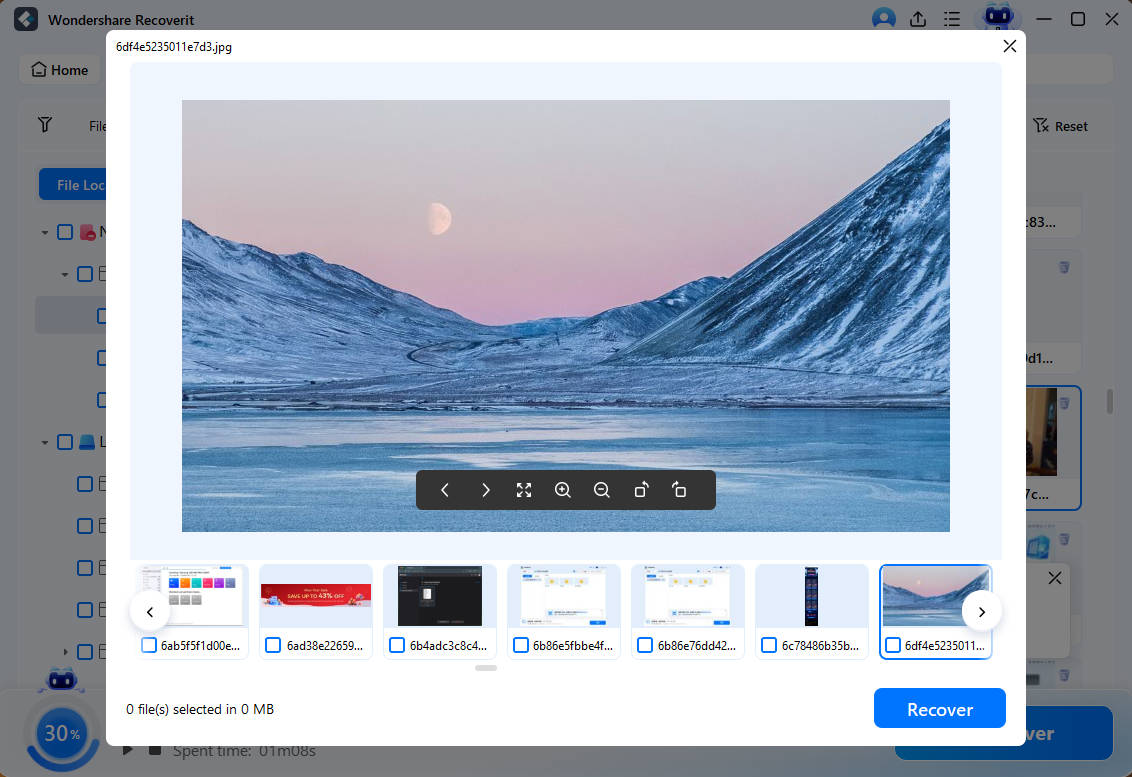
After the scan completes, Recoverit will display a structured list of files found on the SDHC card. Browse by category (Images, Videos, Documents, etc.) or original folder path, and use the built-in preview feature to open photos, play videos, or view documents before restoring them. Select the files you want to keep, click "Recover", and choose a safe save destination on a different drive or partition instead of the same SDHC card to avoid overwriting data.
Conclusion
SDHC cards bridge the gap between older standard SD cards and higher capacity SDXC cards, offering up to 32 GB of storage and reliable performance for cameras, camcorders, and other portable devices. By understanding how SDHC works, its capacity limits, and how SDHC speed class ratings relate to real-world performance, you can choose the right card for your device and recording needs.
Compatibility and safe handling are equally important. Check that your device explicitly supports SDHC, format cards in the host device, and always eject them properly from computers. Even with careful use, file deletion, formatting, or corruption can still occur on an SDHC card. Acting quickly, stopping further writes, and using a dedicated recovery tool like Recoverit gives you a strong chance of restoring important photos, videos, and documents before they are permanently overwritten.
Next: Sdxc
FAQ
-
What does SDHC mean and how is it different from standard SD
SDHC stands for Secure Digital High Capacity and covers cards from 4 GB to 32 GB. Standard SD cards are 2 GB or smaller. Although they share the same physical shape, older devices that only support SD may not recognize SDHC cards. -
What is the capacity range of an SDHC card
An SDHC card officially ranges from 4 GB up to 32 GB. Below 4 GB the card is classified as SD, and above 32 GB it belongs to the SDXC category, which can reach up to 2 TB. -
Can I use an SDHC card in any device with an SD card slot
Not every SD slot supports SDHC. Devices labeled SDHC or SDXC are usually backward compatible with SDHC, but very old SD-only devices might not detect the card at all. Always confirm SDHC support in the product manual or specifications. -
What is the difference between SDHC and SDXC
Both formats use the SD form factor, but SDHC supports 4 GB to 32 GB capacities and typically uses FAT32, while SDXC starts at 64 GB and can go up to 2 TB, usually formatted with exFAT and often offering higher potential performance. -
How can I recover deleted photos or videos from an SDHC card
Stop using the card immediately to prevent overwriting deleted data. Connect the SDHC card to a computer via a card reader, then run a recovery program like Recoverit to scan the card, preview found files, and restore them to a different storage location.