


 TL;DR:
Error code 0xc000014c indicates a missing or corrupted Boot Configuration Data (BCD) file, which can typically be resolved by forcing your PC into the Windows Recovery Environment (WinRE) to rebuild the startup instructions.
● If the automated Startup Repair fails, open Command Prompt in WinRE and execute bootrec /fixmbr, bootrec /fixboot, bootrec /scanos, and bootrec /rebuildbcd to manually restore the boot sector.
● For errors triggered by abnormal shutdowns or disk issues, run chkdsk C: /f /x /r to repair bad sectors and sfc /scannow to replace damaged system files.
● Prioritize rescuing your files with a bootable recovery tool like Recoverit before attempting a full Windows reinstallation, as clean installing will overwrite existing data on the drive.
Ask AI for a summary
 ChatGPT
 Perplexity
 Gemini
 Claude
 Grok
Grok
- Quick Checks: Confirm whether the boot error appeared after a sudden shutdown, update failure, disk issue, or hardware change. If Windows cannot boot, enter WinRE first and avoid reinstalling the OS before checking your important files.
- What 0xc000014c Means: This error usually indicates that the Boot Configuration Data (BCD) file is missing, corrupted, or unreadable, so Windows cannot complete startup.
- How to Fix It: Start with Startup Repair, then rebuild BCD, run CHKDSK, use SFC, disconnect recent hardware, try System Restore, and reinstall Windows only as a last resort.
- Pro Tip: If your computer contains important files and you cannot boot into Windows, recover data first with Recoverit before running advanced repair or reinstall steps.
Seeing error code 0xc000014c on startup can be alarming, especially when your PC suddenly fails to boot and only shows a blue recovery screen. In most cases, this error means Windows can no longer read critical boot information needed to load the operating system. It is commonly related to a damaged Boot Configuration Data (BCD) file, system file corruption, disk errors, or an interrupted shutdown.
The good news is that this startup problem is often repairable. In this guide, you'll learn what 0xc000014c means, what causes it on Windows 10/11, and the most effective solutions to fix it without losing data. If you have important documents, photos, or project files stored on the affected PC, you'll also learn when to recover them first before attempting deeper repairs.
Quick Answer: How to Fix Error Code 0xc000014c?
Boot into the Windows Recovery Environment and start with Startup Repair. If that doesn't work, open Command Prompt and run bootrec /fixmbr, bootrec /fixboot, bootrec /scanos, and bootrec /rebuildbcd. If the problem is caused by disk or system corruption, continue with CHKDSK and SFC. Recover important data first if you may need to reinstall Windows.
In this article
Part 1. What Does Error Code 0xc000014c Mean?
Error code 0xc000014c is a Windows boot error that usually appears on a recovery screen with messages such as "Your PC needs to be repaired" or "The Boot Configuration Data for your PC is missing or contains errors." In plain terms, Windows cannot continue booting because its startup data is missing, damaged, or unreadable.
The error is commonly associated with the following file paths:
- \Boot\BCD
- \EFI\Microsoft\Boot\BCD
- \Windows\System32\Config\System
If your PC shows one of these messages, it does not always mean the operating system is completely lost. In many cases, the issue can be fixed through Windows Recovery tools, boot repair commands, or file system repair steps.
Part 2. What Causes 0xc000014c on Windows 10/11?
Before you start fixing the error, it helps to understand what may have caused it. The most common reasons behind 0xc000014c include:
- Corrupted or Missing BCD: This is the most common cause. If the BCD store becomes unreadable, Windows loses the instructions needed to boot.
- Disk or File System Corruption: Bad sectors, file system errors, or interrupted writes can prevent Windows from reading startup files correctly.
- Damaged System Files: Important Windows files may be corrupted after failed updates, malware, or improper shutdowns.
- Power Loss or Forced Shutdown: Turning off a PC while Windows is writing to the disk may damage boot-related files.
- Recent Hardware or Firmware Changes: Newly connected hardware, changed boot order, or conflicting BIOS/UEFI settings can sometimes trigger the error.
Because the error can result from both software and hardware conditions, the safest approach is to begin with automated repair, then move to manual boot repair commands, and only reinstall Windows if all other methods fail.
Part 3. How to Fix Error Code 0xc000014c
If your PC is stuck on the recovery screen, follow the solutions below in order. Start with the least risky repair methods first, and only move to reinstall options after you've ruled out BCD or disk issues.
Way 1. Run Startup Repair
Startup Repair is the best first step because Windows can automatically detect and repair many startup-related problems without requiring you to enter commands manually. Microsoft recommends trying Startup Repair before using Bootrec commands in Windows Recovery.
- Step 1. Force your PC into the Windows Recovery Environment by interrupting the boot process two or three times, or boot from a Windows installation USB.
- Step 2. Go to Troubleshoot > Advanced options > Startup Repair.
- Step 3. Select your Windows installation and let the tool scan for startup issues automatically.
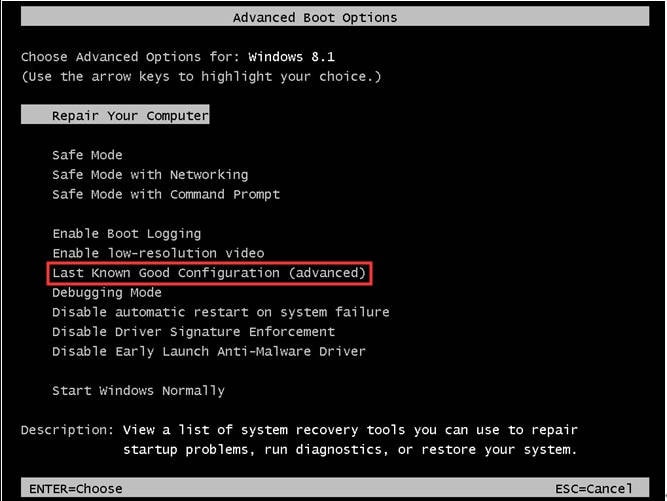
If Startup Repair cannot fix the issue, continue with the command-line methods below.
Way 2. Rebuild the Boot Configuration Data (BCD)
If the error is caused by a damaged or missing BCD store, rebuilding it is one of the most effective solutions. Microsoft documents the main Bootrec.exe options used to repair the MBR, boot sector, and BCD store in Windows Recovery.
- Step 1. Boot into WinRE and open Command Prompt.
- Step 2. Run the following commands one by one:
bootrec /fixmbr
bootrec /fixboot
bootrec /scanos
bootrec /rebuildbcd- Step 3. Restart your PC after the commands finish.
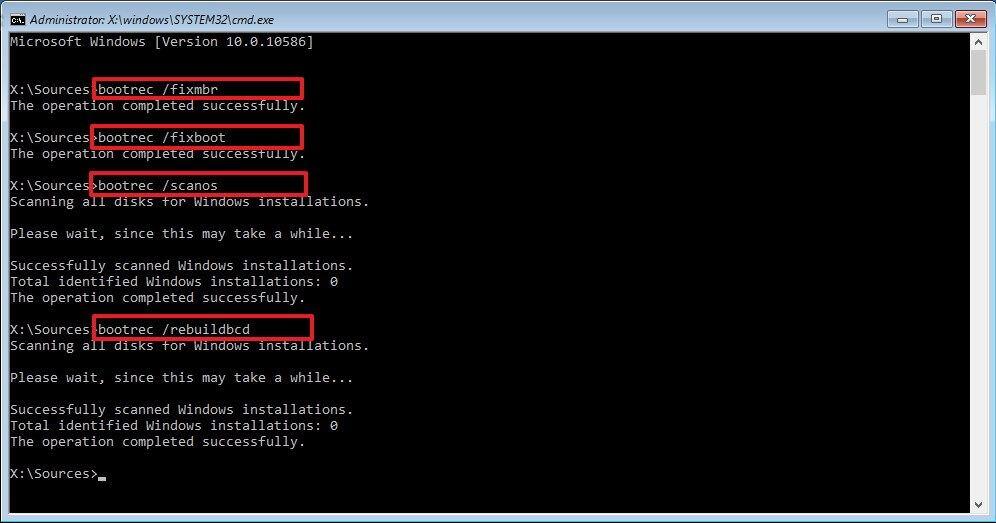
If Windows still does not boot, Microsoft also suggests exporting and renaming the old BCD store before rebuilding it again:
bcdedit /export C:\BCD_Backup
attrib C:\boot\bcd -h -r -s
ren C:\boot\bcd bcd.old
bootrec /rebuildbcd
Way 3. Run CHKDSK to Check Disk Errors
If the startup error is related to a damaged disk structure or file system corruption, running CHKDSK may help repair the drive and recover readable data from bad sectors. This method is often recommended when the error appears after abnormal shutdowns or storage issues.
- Step 1. Open Command Prompt from Advanced options in WinRE.
- Step 2. Run the following command:
chkdsk C: /f /x /r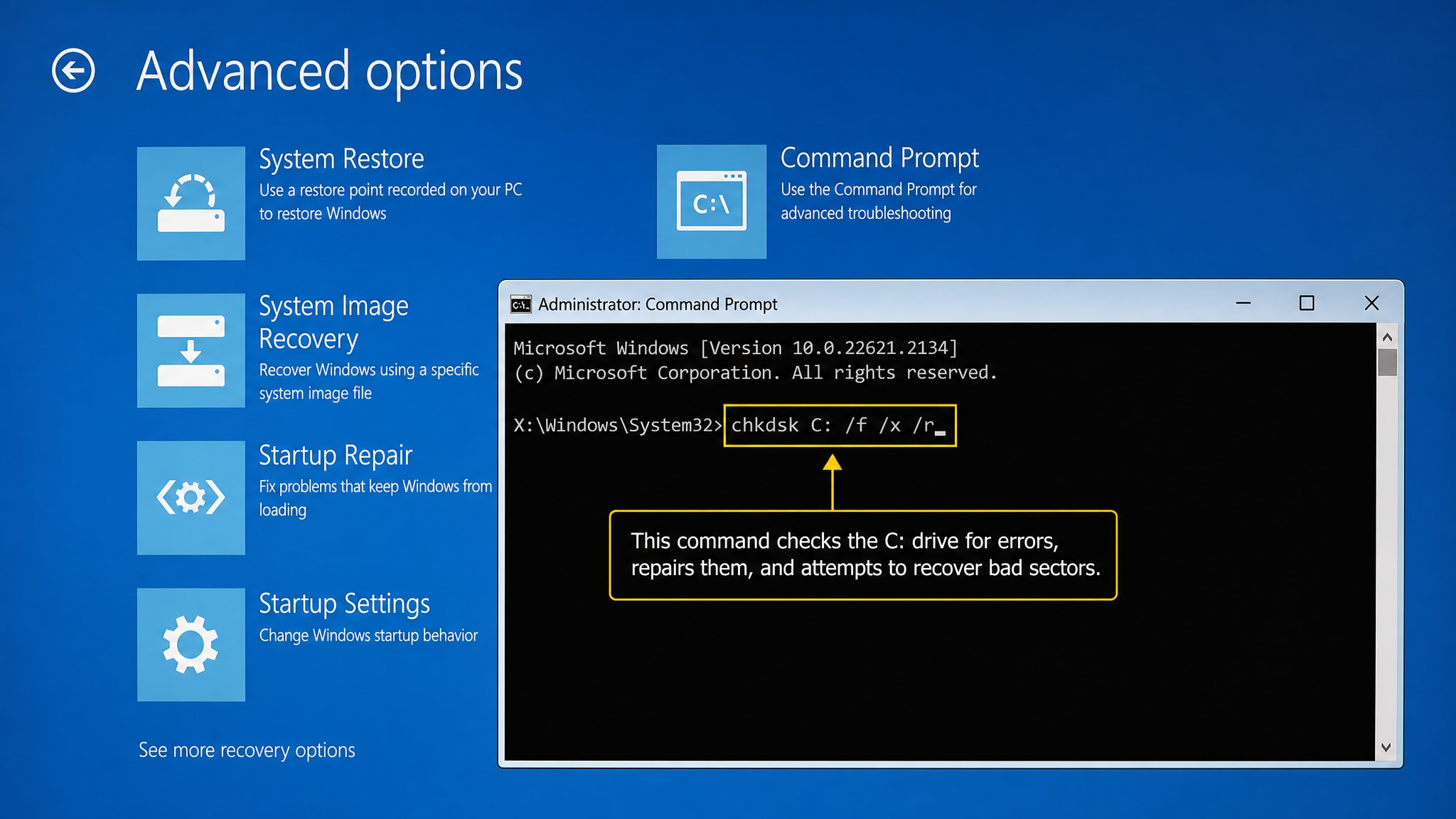
- Step 3. Wait for the scan to complete, then restart your computer.
If your Windows partition uses a different drive letter in WinRE, replace C: with the correct one.
Way 4. Run SFC to Repair Corrupted System Files
The System File Checker (SFC) tool scans protected Windows files and replaces damaged ones if possible. This fix is useful if the boot problem is related to corrupted system components rather than only BCD or disk issues.
- Step 1. In the Windows Recovery Environment, open Command Prompt.
- Step 2. Enter the following command:
sfc /scannow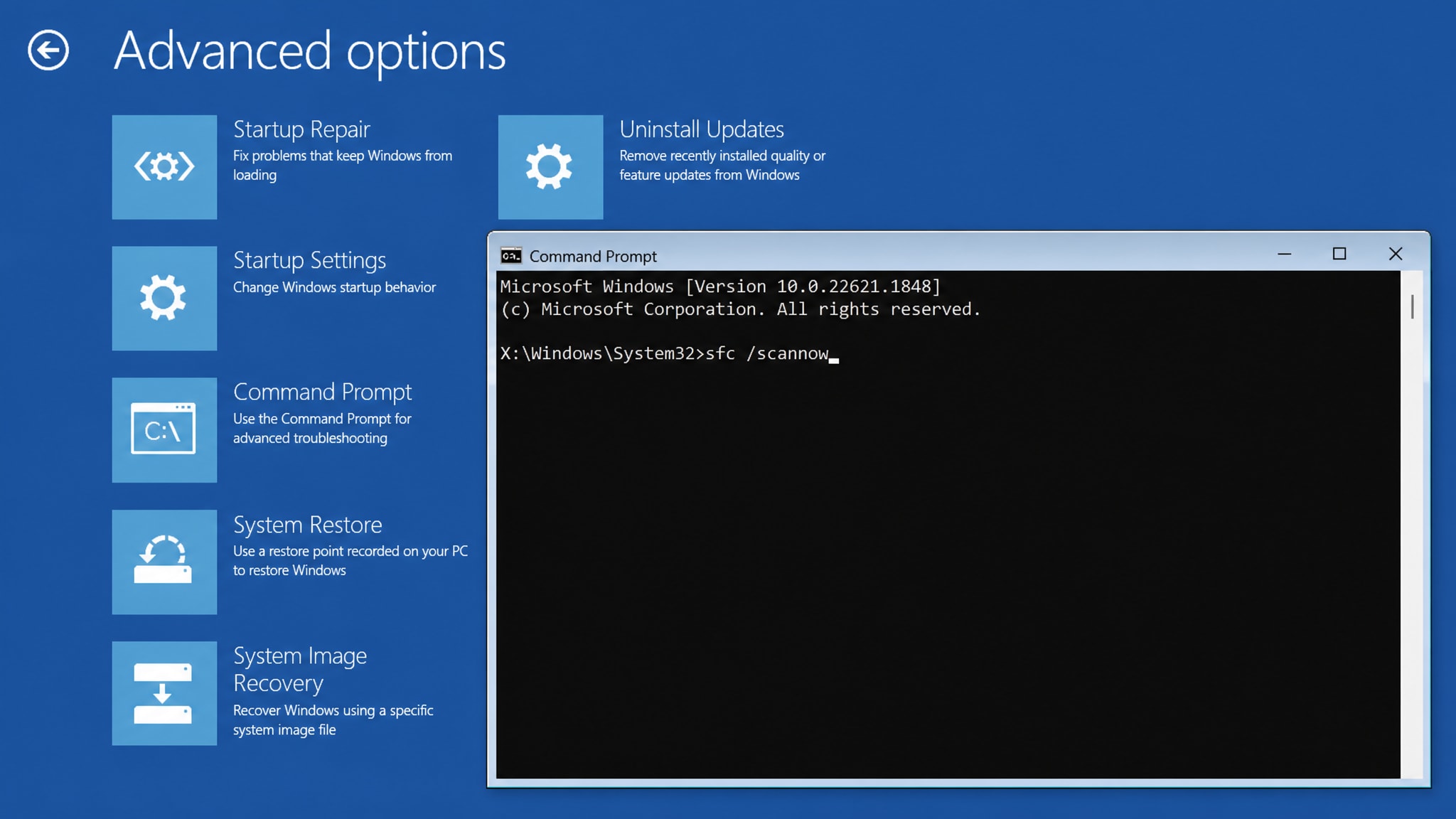
- Step 3. Let the scan finish and restart the PC.
If your Windows installation is offline or not detected properly, advanced offline SFC syntax may be required. For most users, though, the standard command is the right first attempt.
Way 5. Disconnect New Hardware and Check BIOS/UEFI
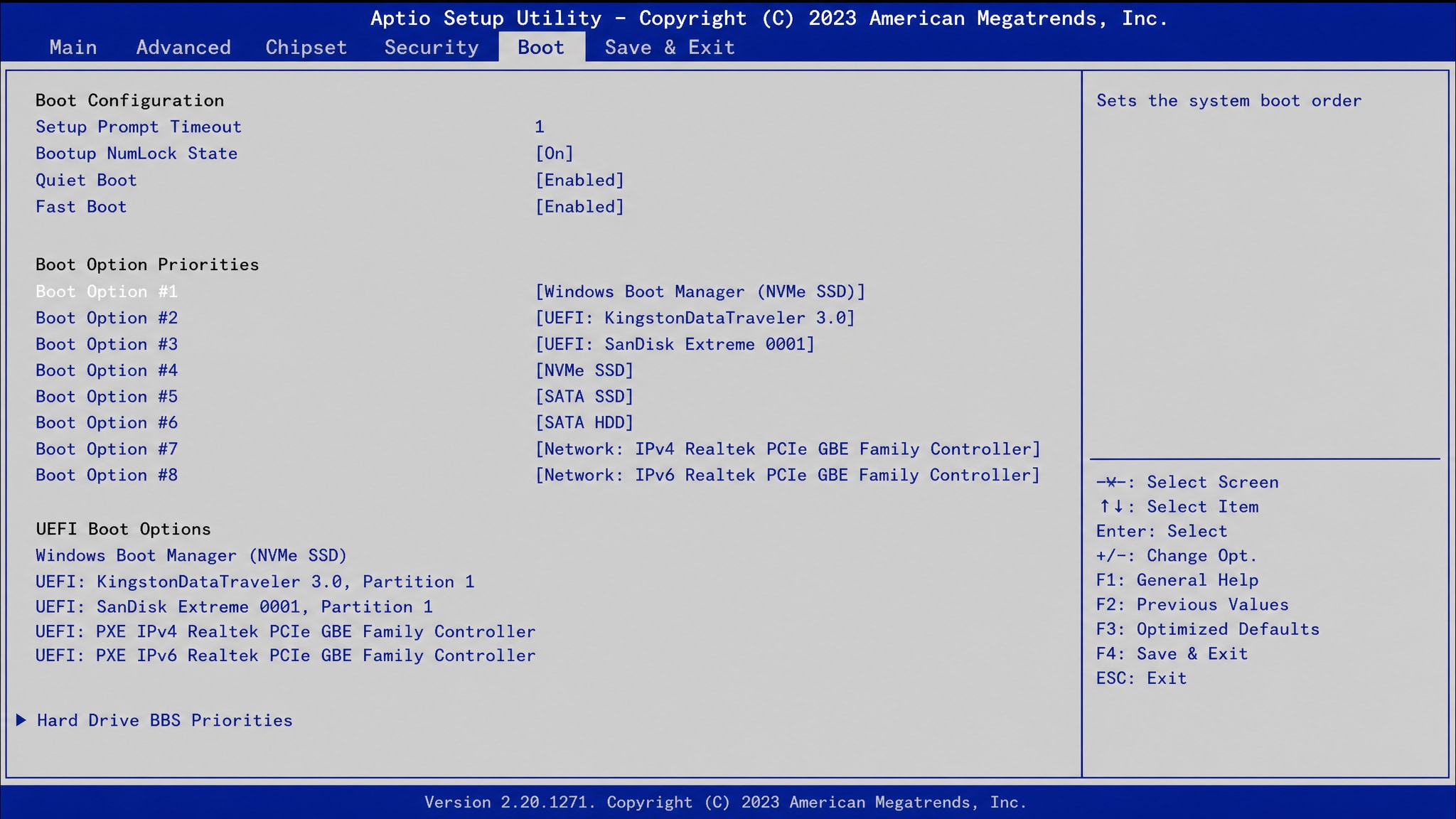
Sometimes the error is triggered by a recent hardware change, a boot priority problem, or conflicting BIOS/UEFI settings. If the issue started after adding a drive, changing firmware settings, or using external storage, this quick check may save a lot of time.
- Step 1. Disconnect recently added USB drives, SSDs, HDDs, or other peripherals.
- Step 2. Check whether the correct system drive is listed first in the boot order.
- Step 3. Restore BIOS/UEFI settings to default if you recently changed them, and verify UEFI mode and boot configuration if your system was recently reinstalled or dual-booted.
After making these changes, restart the PC and see whether Windows boots normally.
Way 6. Use System Restore
If your computer has restore points enabled, System Restore can roll Windows back to a previous working state. This is helpful if the error began after a driver installation, update, or registry-related system change.
- Step 1. Enter WinRE and go to Troubleshoot > Advanced options > System Restore.
- Step 2. Select a restore point created before the error appeared.
- Step 3. Follow the on-screen instructions to restore the system.
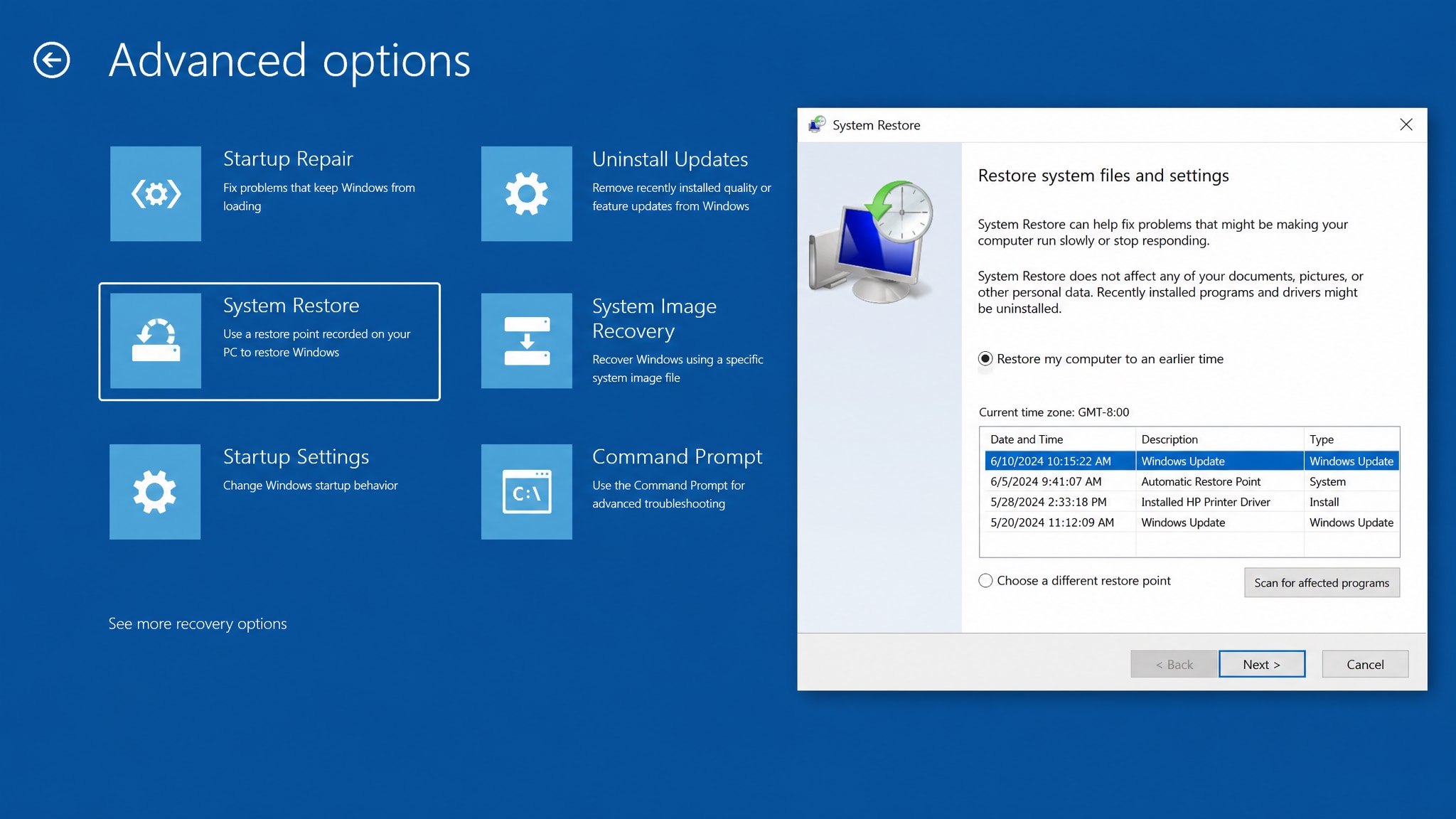
This process typically does not delete your personal files, but it may remove recently installed apps, drivers, or updates.
Way 7. Reinstall Windows
If none of the repair methods above work, reinstalling Windows may be the last option. However, because reinstalling can put your personal files at risk, it should only be done after backing up or recovering important data first. Microsoft also notes that recovery or installation media can be created on another working PC if your current computer cannot access WinRE normally.
- Step 1. Create a Windows installation USB on another computer.
- Step 2. Boot the affected PC from that USB.
- Step 3. Choose Install now for a clean install, or click Repair your computer if you want to attempt recovery one more time.
Only choose a clean installation if you are prepared for possible data loss or have already secured the files you need.
Part 4. Recover Important Files Before or After Repair
If your Windows PC contains work files, personal photos, videos, or project data, you should think carefully before using advanced repair commands or reinstalling the operating system. In some situations, the system can be fixed, but the data may become harder to recover afterward. For that reason, recovering files first is often the safest decision.
- The PC cannot boot and you need access to Desktop, Documents, or Downloads files.
- You suspect disk corruption or bad sectors are involved.
- You may need to reinstall Windows if repair attempts fail.
- You do not have a recent backup of important files.
Recoverit Data Recovery can help recover files from an unbootable Windows computer by creating bootable media, scanning accessible drives, and restoring documents, images, videos, and other important files before deeper system repair. This gives you a safer path forward when the startup error is severe.
Key Features
- Recover Data From Unbootable PCs: Access files even when Windows no longer starts properly.
- Preview Before Recovery: Check recoverable files before saving them.
- Support Multiple File Types: Recover documents, photos, videos, archives, and more from internal or external drives.
- Step 1. Choose the affected disk or storage location and click the Start button to begin scanning.

- Step 2. Recoverit will automatically perform a comprehensive scan and display recoverable files in real time.

- Step 3. Preview the scan results, select the required files, and click Recover to save them to a secure location.

Part 5. Create a Recovery Drive or Installation Media
If your PC cannot enter Windows Recovery normally, you can create repair media on another working computer. Microsoft recommends using a recovery drive or installation media so you can boot the failed PC, access repair tools, or reinstall Windows if needed.
- Use an Empty USB Drive: Creating a recovery drive erases the USB, so avoid using a drive that contains important files.
- Create the Recovery Drive on Another PC: Search for Recovery Drive in Windows and follow the wizard to create repair media.
- Boot the Affected Computer From USB: Change the boot order in BIOS/UEFI if necessary.
- Open WinRE Tools: From the recovery media, choose repair options such as Startup Repair, Command Prompt, or System Restore.
Conclusion
In conclusion, error code 0xc000014c usually points to corrupted boot data, damaged system files, or disk issues that prevent Windows from starting normally. The most effective repair sequence is to start with Startup Repair, then rebuild BCD, run CHKDSK, use SFC, and check hardware or BIOS settings before considering a full Windows reinstall.
If the affected PC stores important files, don't rush into reinstalling Windows first. Use Recoverit to recover critical data before major repair attempts, especially when disk corruption or repeated startup failure is involved. That way, you can fix the system problem without turning it into a permanent data loss problem.
Frequently Asked Questions
-
Q1. Is 0xc000014c a hard drive failure?
Not always. The error often points to BCD corruption or damaged system files, but it can also be related to disk or file system issues. Running CHKDSK is one of the best ways to check whether the drive has serious errors. -
Q2. Can I fix 0xc000014c without an installation disk?
Yes. In many cases, you can force Windows into the Recovery Environment by interrupting startup several times. If that does not work, create a recovery drive or Windows installation USB on another PC. -
Q3. Will reinstalling Windows delete my files?
It can. Depending on the installation method, you may lose apps, settings, and personal files. If your files are important, recover them first before performing a clean installation.


