
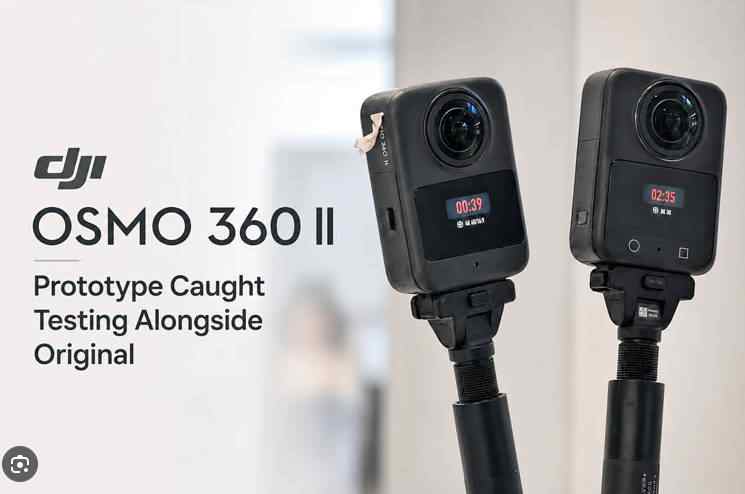

 TL;DR:
Wait for the expected August 13, 2026 reveal of the DJI Osmo 360 II if your schedule allows, but purchase a currently available and tested camera if you have an immediate project because official specifications, pricing, and global availability remain completely unconfirmed.
● The original DJI Osmo 360 sets the required baseline with native 8K video, 105GB of available built-in storage, and 1TB microSD support, meaning the unreleased model is best suited for travel vloggers and action creators only if it actively resolves workflow bottlenecks like thermal limits and low-light quality.
● Built-in camera storage centralizes data-loss risks for massive 360 files, dictating a strict prerequisite that if footage vanishes, you must instantly stop recording and avoid formatting the device before scanning readable media with recovery software like Recoverit.
● Final purchase decisions should depend strictly on post-launch independent tests verifying real-world continuous recording time, specific microSD speed class requirements, and DJI Mimo app transfer stability rather than leaked teaser resolutions.
Ask AI for a summary
 ChatGPT
 Perplexity
 Gemini
 Claude
 Grok
Grok
DJI Osmo 360 II: Quick Pre-Launch Verdict
Is the DJI Osmo 360 II worth waiting for? Yes, if you are shopping for a 360 camera in August 2026 and can wait for DJI's expected August 13 reveal. No, if you need a camera today and your project cannot wait for final specs, pricing, regional availability, and independent tests.
- Editorial status: pre-launch review preview, not a final hands-on review.
- Latest fact-check date: August 10, 2026.
- What is confirmed: media coverage reports a DJI teaser pointing to an August 13, 2026 reveal. DJI has not published a complete Osmo 360 II specification sheet yet.
- Best fit if the launch delivers: travel vloggers, action creators, ski and bike shooters, virtual tour creators, and DJI users who want reframable 360 footage.
- Main buying risk: all key Osmo 360 II performance claims remain unconfirmed until DJI publishes the product page or reviewers test the camera.
- Storage warning: better 360 cameras usually create larger, more valuable video files. If footage is deleted, formatted, corrupted, or lost during transfer, stop using the storage device before trying recovery.
The DJI Osmo 360 II review search is already active because creators want to know whether DJI's next 360 camera is worth waiting for. The problem is timing: as of August 10, 2026, Osmo 360 II has not been fully announced with official specifications. That means a responsible review should not claim confirmed sensor size, bitrate, battery life, frame rates, storage capacity, price, or U.S. availability.
This article is a pre-launch review preview. It explains what the current teaser tells us, what remains unknown, how the original DJI Osmo 360 sets the baseline, which launch details creators should watch, and why 360 video workflows create real storage and recovery risks. It also shows when camera recovery software is relevant after deleted, formatted, missing, or unreadable DJI camera footage.
Important disclosure: This is not a final hands-on review. The article separates confirmed public information from launch-day watch points so readers do not confuse a teaser analysis with tested product performance.
In this article
Part 1. DJI Osmo 360 II Review Preview: What We Can Judge Now
Searchers who type "DJI Osmo 360 II review" usually want a direct buying answer. Should they wait for DJI's next 360 camera, buy the current Osmo 360, compare it with Insta360, or hold off until full tests arrive? A normal review would answer that with tested footage, battery measurements, heat behavior, transfer speed, file samples, app workflow, and pricing. A pre-launch review cannot honestly do all of that.
What it can do is still useful. A teaser window is when creators decide whether to pause a purchase. That decision depends on the credibility of the launch signal, the confirmed baseline from the current Osmo 360, the likely pain points of 360 video, and the questions DJI must answer on launch day.
What We Can Evaluate Before Launch
| Review area | Can it be judged now? | Why it matters |
| Launch timing | Partly | Digital Camera World reports that DJI's Hong Kong teaser points to an August 13, 2026 reveal. |
| Product category | Yes | The teaser and naming context point to a 360 camera aimed at action, travel, and creator workflows. |
| Expected buyer intent | Yes | 360 buyers care about reframing, stabilization, low-light quality, heat management, transfer reliability, storage, and editing speed. |
| Data-loss risk | Yes | Large 360 videos, microSD cards, built-in storage, USB transfers, and mobile app imports all create practical recovery scenarios. |
| Final performance | No | Resolution, bitrate, battery life, thermal limits, audio quality, and stitching quality need official specs and hands-on testing. |
What We Cannot Claim Yet
Until DJI publishes the official Osmo 360 II product page, avoid writing the article as if the camera has already shipped. That means no confirmed claims about:
- sensor size or sensor type;
- maximum 360 video resolution and frame rate;
- bitrate, codec, or file format changes;
- battery capacity and real recording time;
- built-in storage capacity;
- microSD capacity limit or required speed class;
- waterproofing, operating temperature, or durability;
- price, bundle names, region availability, or shipping dates.
This is the main editorial risk. A pre-launch review can rank expectations and buying considerations, but it should not turn rumored specifications into facts.
Part 2. Confirmed vs Unconfirmed Osmo 360 II Details
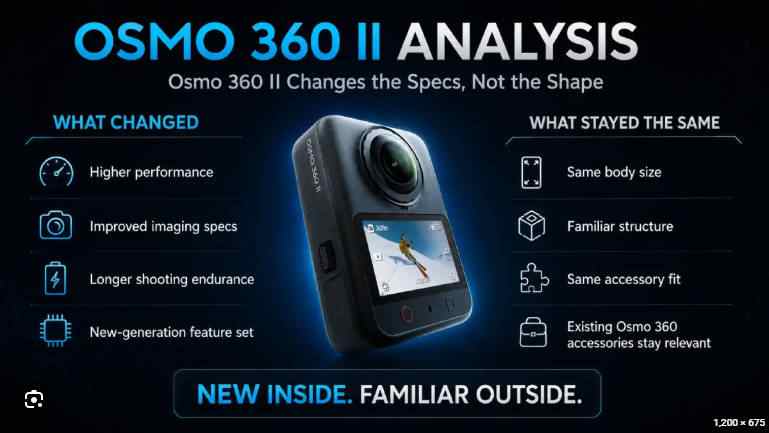
Here is the safest way to read the current Osmo 360 II situation as of August 10, 2026:
| Topic | Status as of Aug. 10, 2026 | Editorial treatment |
| Osmo 360 II teaser | Reported by camera media | Can be discussed as a reported teaser, with attribution. |
| August 13 reveal | Reported as expected timing | Use "expected reveal" or "reported teaser date," not "officially launched." |
| Full specifications | Not published at the time of writing | Do not claim final specs before DJI confirms them. |
| Original Osmo 360 specs | Published by DJI | Can be used as the comparison baseline. |
| U.S. availability | Not confirmed for Osmo 360 II | Tell readers to verify regional DJI Store availability after launch. |
| Recoverit relevance | Confirmed by workflow risk, not by camera launch status | Recoverit is relevant if users lose files from readable camera storage, SD cards, external drives, or transferred folders. |
This distinction helps the page satisfy both SEO and trust. It answers the user quickly, but it also makes the limitation visible. That is especially important for a camera product that can change significantly between teaser, regional launch, and global availability.
Part 3. Original DJI Osmo 360 as the Baseline
The original DJI Osmo 360 announcement and DJI's official Osmo 360 specifications provide the clearest baseline for what creators will expect from a second-generation model. DJI lists features such as native 8K 360 video, 120MP panoramic photos, OSV and MP4 HEVC video formats, exFAT formatting, 128GB built-in storage with 105GB available, and microSD support up to 1TB for the current Osmo 360.
Those details are not Osmo 360 II specs. They are the bar DJI has already set. If Osmo 360 II is a true successor, creators will judge it against this baseline in several areas:
| Baseline from original Osmo 360 | Why creators care | Osmo 360 II launch-day question |
| Native 8K 360 video | Higher resolution gives more flexibility when reframing for vertical, horizontal, and widescreen exports. | Does DJI improve frame rates, dynamic range, low-light quality, or bitrate? |
| 120MP panoramic photos | High-resolution stills matter for virtual tours, travel scenes, and real estate shots. | Are photo stitching, noise handling, and RAW workflow improved? |
| 105GB available built-in storage | Internal storage reduces immediate dependence on a card, but it also puts more original footage in one place. | Does DJI change capacity, speed, or export behavior? |
| microSD expansion up to 1TB | 360 creators still need removable media for long trips, paid shoots, and fast card swaps. | What exact card types and speed ratings will DJI recommend for Osmo 360 II? |
| OSV and MP4 HEVC formats | File format affects compatibility, editing, recovery workflows, and whether clips can be repaired after corruption. | Does DJI keep the same formats or add workflow changes? |
| DJI Mimo and desktop editing workflow | Reframing is only useful if export and editing are fast enough for real production. | Does software make large 360 projects easier to manage? |
For readers, the key is not "will Osmo 360 II be better?" A successor is expected to improve something. The practical question is whether it improves the bottlenecks that 360 shooters feel every day: low light, heat, file size, transfer stability, battery life, mounting, editing speed, and storage reliability.
Part 4. Why Osmo 360 II Matters for 360 Creators
360 cameras are different from regular action cameras because they move the framing decision from the shoot to the edit. A creator can ski, ride, walk, drive, or travel without constantly pointing the lens at the subject. Later, the editor can export a vertical TikTok clip, a horizontal YouTube shot, a tiny planet clip, a first-person angle, or an invisible selfie-stick shot from the same original recording.
360 Capture Changes the Editing Decision
That flexibility is exactly why Osmo 360 II matters. A second-generation DJI 360 camera would likely compete for creators who want:
- one camera angle that can become multiple edits;
- better stabilization for skiing, biking, motorcycling, and walking;
- immersive travel clips without setting up a larger camera;
- third-person action shots without a visible camera operator;
- quick mobile edits for social platforms;
- higher-quality 360 masters for later reframing;
- a DJI ecosystem workflow with Mimo, accessories, and desktop editing.
This search intent is not only about hardware curiosity. Many users are deciding whether to spend money now or wait a few days. The article should make that decision easier without pretending to have test data that does not exist yet.
The Real Upgrade Test Is Workflow Reliability
Resolution headlines get clicks, but reliability decides whether a 360 camera is useful on a trip or client shoot. Creators should watch for these launch details:
| Launch detail to watch | Why it matters for creators | What to verify after August 13 |
| Recording modes | High resolution is less useful if frame rates or stabilization are limited. | Check final resolution, frame rate, field-of-view, and stabilization details. |
| Bitrate and codec | Large 360 files can stress cards, computers, phones, and recovery tools. | Check whether DJI keeps HEVC, changes OSV behavior, or offers easier export formats. |
| Thermal behavior | Long 8K sessions can stop early if the camera overheats. | Wait for hands-on recording tests in real temperatures. |
| Battery and charging | 360 travel shoots often happen far from power. | Compare DJI's rating with real continuous recording tests. |
| Internal storage | Built-in storage is convenient but harder to swap than cards. | Check capacity, export speed, and whether files are easy to access by USB-C. |
| microSD support | Card stability affects missing clips, corrupted files, and recovery chances. | Confirm DJI's recommended card list and capacity limit. |
| App and desktop workflow | 360 footage is editing-dependent, not just capture-dependent. | Test mobile reframing, batch export, project backup, and desktop compatibility. |
Part 5. Storage Review: Built-In Storage, microSD, and Data-Loss Risk
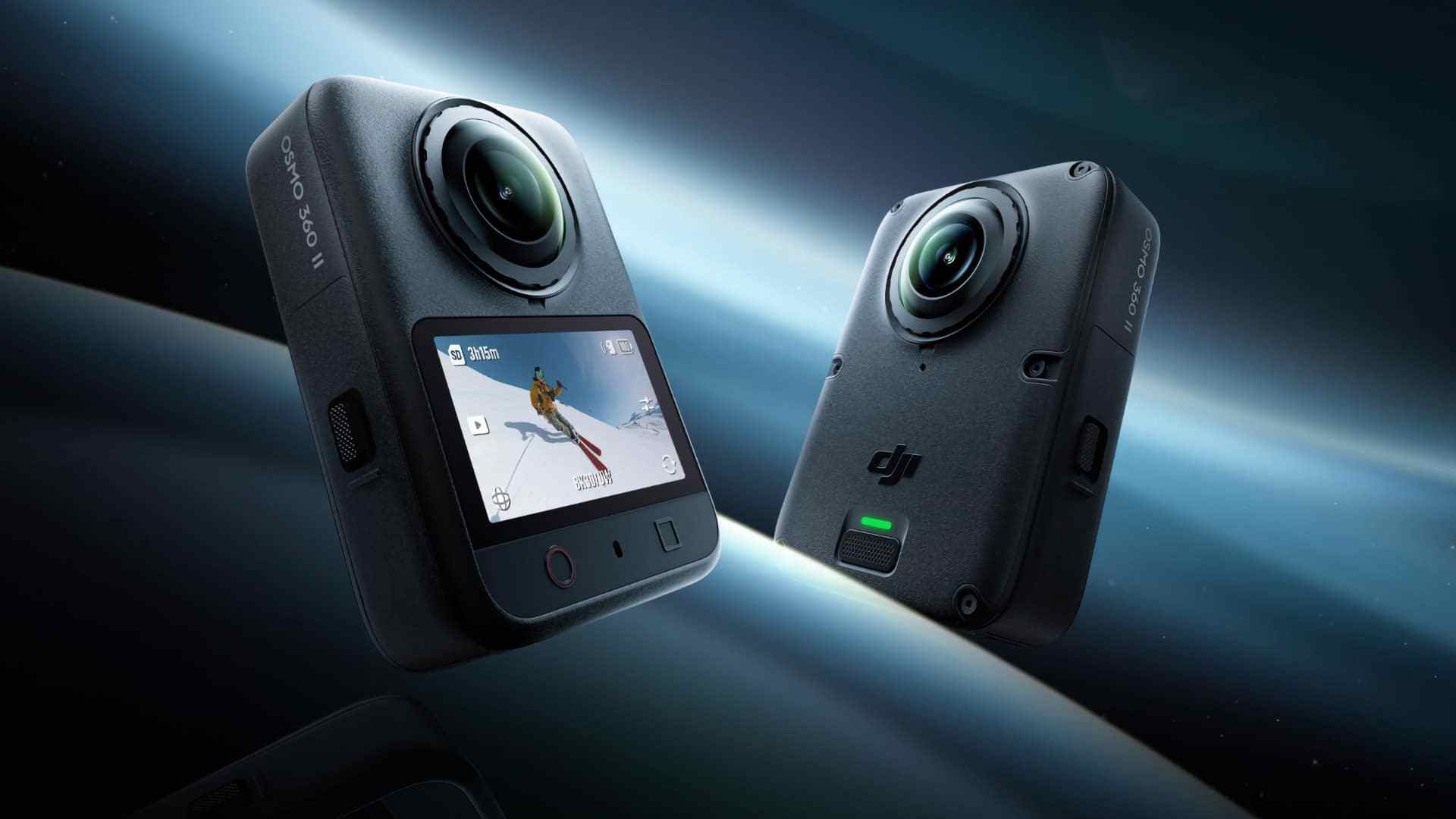
Storage is where a Recoverit article can add real value. 360 videos are large, hard to recreate, and often recorded in once-only settings such as travel, skiing, cycling, weddings, real estate visits, or client shoots. Losing a normal phone clip is annoying. Losing an 8K 360 master can remove every possible angle from a scene.
DJI's official Osmo 360 FAQ says footage on the current Osmo 360 can be saved to built-in storage or an inserted microSD card. DJI's recommended storage card list is also relevant because unsupported or slow media can increase recording and transfer problems.
Built-In Storage Is Convenient but Concentrates Risk
Built-in storage reduces friction. A creator can record without buying or swapping a card, and it is useful when a card is full, missing, or unreliable. But bigger internal storage can also change user behavior. When creators trust the available capacity, they may store more video and photos before backing up. If the camera fails to mount, files disappear after transfer, or a trip's footage remains only on the camera, the recovery urgency becomes higher because more original work is concentrated in one device.
That does not mean built-in storage is bad. It means creators need a clear backup habit:
- transfer footage after each shooting day;
- verify that exported MP4 or project files open before deleting originals;
- avoid filling built-in storage to the last gigabyte;
- keep a second copy on an external SSD or computer;
- do not reset, format, or overwrite storage after discovering missing footage.
microSD Cards Still Matter for 360 Video
Even if Osmo 360 II improves internal storage, microSD cards will still matter for long trips and professional workflows. Cards are removable, easy to rotate, and easier to scan on a computer when files go missing. However, they also introduce failure points: fake cards, unsupported cards, worn NAND, sudden removal, file system errors, bad card readers, and interrupted transfers.
For card reuse after all footage is safely backed up, the official SD Memory Card Formatter is a better reference than random formatting tools. But if the card already contains missing files, do not format it first. Recovery should come before reuse.
Common Osmo 360 Footage Loss Scenarios
| Scenario | Likely cause | Safer next step |
| Deleted 360 clips while clearing space | User deletion from camera, app, card, or computer folder | Stop recording and scan the storage before saving new files. |
| microSD card asks to be formatted | File system corruption, unsupported reader, unsafe removal, or card wear | Do not format if footage matters. Try recovery from the card first. |
| Camera storage not recognized by computer | Cable, USB mode, driver, camera state, or storage error | Try another cable/port first. If storage mounts, scan before modifying it. |
| Large HEVC video is missing after transfer | Interrupted copy, app export failure, or destination drive issue | Check both source and destination; scan the original storage if the source copy is gone. |
| Recovered DJI video will not play | Fragmented, partially overwritten, or interrupted recording data | Keep the recovered file and consult a DJI video repair workflow. |
| Files vanished after formatting | Quick format or accidental format on card/computer | Stop using the device immediately and scan before any new recording. |
Part 6. How Recoverit Fits Into a DJI 360 Workflow
Recoverit should not be introduced as a generic advertisement in a camera review. It fits when the article reaches a real data-loss moment: deleted 360 clips, formatted microSD cards, missing travel footage, unreadable camera media, or recovered video files that need further handling.
Recoverit camera recovery can help scan readable camera storage, SD cards, external drives, and computer folders for recoverable files. Recovery depends on storage condition, overwriting, encryption, file fragmentation, and whether the device can be detected. It cannot repair a physically failed card, bypass encryption, or guarantee recovery of overwritten footage.
| Where the lost footage was stored | Relevant Recoverit workflow | Important limit |
| microSD card from a DJI camera | Camera memory card recovery | The card must be readable by the computer or card reader. |
| SD or microSD card with format errors | SD card recovery | Do not run a new format or save new files before scanning. |
| Transferred 360 videos on PC, Mac, SSD, or external drive | Video recovery software | Save recovered files to a different drive, not the original location. |
| Panoramic photos or still-image files | Photo recovery | Recovery chances drop after new writes overwrite file data. |
| Recovered DJI video files that do not play | Repair recovered video files and repair corrupt DJI video | Repair is separate from recovery and depends on file damage and available video data. |
If Osmo 360 II keeps a dual-storage workflow like the original Osmo 360, users should identify the original storage location before scanning. Recovering from a microSD card is different from recovering from a computer folder after a failed transfer. The safest sequence is:
- Stop recording, exporting, or formatting as soon as footage is missing.
- Remove the microSD card if the lost footage was on the card.
- Connect the card, camera storage, SSD, or computer drive to a stable computer.
- Scan the affected storage with Recoverit.
- Preview recoverable photos or videos when possible.
- Save recovered files to another drive with enough free space.
- Only format or reuse the card after recovery and backup are complete.
Try Wondershare Recoverit to Perform Data Recovery
 Security Verified. Over 7,302,189 people have downloaded it.
Part 7. Osmo 360 II vs Original Osmo 360: What to Watch on Launch Day
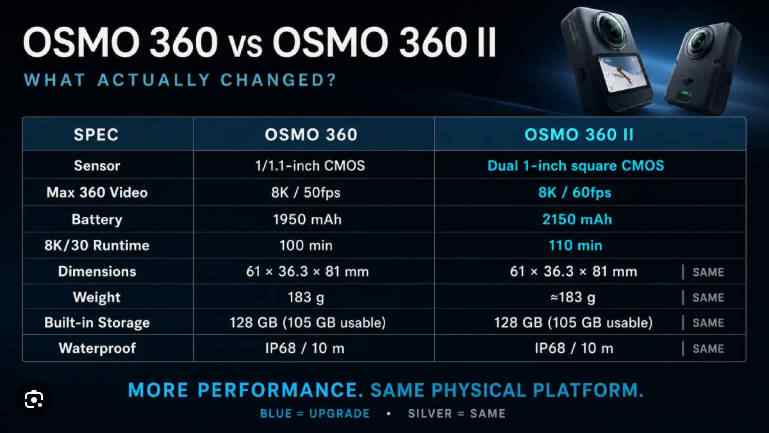
A useful Osmo 360 II comparison should not fill the page with imaginary specs. Instead, it should give readers a launch-day checklist. When DJI publishes the full page, compare Osmo 360 II against the original Osmo 360 in these areas:
| Comparison point | Original Osmo 360 baseline | What Osmo 360 II needs to prove |
| Image quality | Native 8K 360 video and 120MP panoramic photos are already strong headline specs. | Better low light, dynamic range, stitching, sharpness near seams, and less compression in motion. |
| Action use | Designed for action and immersive capture. | Improved stabilization, horizon behavior, mounting options, durability, and wind audio. |
| Workflow | DJI Mimo, DJI Studio, and 360 export tools are part of the current ecosystem. | Faster reframing, cleaner exports, better file management, and smoother desktop/mobile handoff. |
| Storage | 105GB available built-in storage plus microSD support up to 1TB. | Higher internal capacity, faster transfer, clearer card requirements, or better recovery-friendly file handling. |
| Reliability | Large 360 files require dependable recording and transfer habits. | Fewer interrupted recordings, better thermal behavior, stronger app stability, and easier backup verification. |
| Price and bundles | The original model created DJI's first 360 camera buying context. | Whether the upgrade is priced for existing Osmo 360 owners or mainly for first-time 360 buyers. |
The most important review score after launch should be based on the total workflow, not just resolution. A camera that records impressive files but makes them hard to transfer, back up, edit, or recover will frustrate creators in real use.
Part 8. Should You Wait, Buy the Current Model, or Choose Another 360 Camera?
The answer depends on urgency. If your shoot starts after August 13, waiting is rational because the reveal may change pricing, bundles, or upgrade value. If your shoot starts now, buying a known camera with confirmed specs and tested accessories may be safer than waiting for a teaser to become a product page.
| Your situation | Recommended decision | Reason |
| You are buying a 360 camera this week and can wait a few days | Wait for Osmo 360 II reveal | The expected August 13 reveal may affect specs, pricing, and current-model discounts. |
| You need a camera for a shoot before August 13 | Choose a currently available tested model | A real project should not depend on unconfirmed specs or shipping dates. |
| You already own the original Osmo 360 | Wait for hands-on comparisons | Upgrade value depends on real improvements, not model name alone. |
| You shoot paid travel, tours, sports, or client content | Wait for reliability tests, not just announcement specs | Thermal behavior, transfer speed, and file stability matter more than teaser claims. |
| You mainly want simple front-facing vlogs | Consider whether you need 360 at all | A pocket gimbal, phone, or action camera may be simpler if reframing is not part of your workflow. |
For serious creators, the best buying decision is usually made after three data points are available: DJI's official specifications, real-world review footage, and storage workflow tests using the same card or internal-storage approach you plan to use.
Part 9. Launch-Day Checklist for Creators
When DJI reveals Osmo 360 II, do not stop at the headline video mode. Check the details that affect real production and recovery planning:
- Storage: built-in capacity, available capacity, USB export behavior, and microSD capacity limit.
- Recommended cards: exact speed class, capacity, and models from DJI's official support list.
- Recording format: OSV, MP4, HEVC, bit depth, bitrate, and whether files are easy to edit.
- Thermal limits: how long the camera records at top settings in warm weather.
- Battery: real continuous recording time, charging speed, and battery-swap options.
- Transfer reliability: USB-C speed, app transfer stability, and whether partial transfers are easy to detect.
- Editing support: DJI Mimo, DJI Studio, Premiere workflow, mobile reframing, and batch exports.
- Backup habit: whether your trip workflow includes a laptop, SSD, cloud copy, or card rotation plan.
- Recovery readiness: stop using storage immediately if files vanish, then scan before overwriting.
This checklist also helps Recoverit's audience. The higher the resolution and the more convenient the storage, the more likely creators are to keep many important files in one place. That makes backup discipline and recovery awareness part of the buying decision, not an afterthought.
Conclusion
The DJI Osmo 360 II is worth watching, but it is not yet a product that can be fully reviewed. As of August 10, 2026, the most accurate editorial position is to call this a DJI Osmo 360 II review preview: a buying guide built around the reported August 13 teaser, the original Osmo 360 baseline, and the workflow risks that matter to 360 creators.
If you are about to buy a 360 camera, wait for the reveal if your schedule allows. If you need a camera immediately, rely on models with published specs, available accessories, and independent tests. After launch, the real Osmo 360 II review should test footage quality, heat, battery life, app reliability, transfer speed, card compatibility, and how easily creators can protect their original files.
For data safety, the recommendation is simple: treat 360 masters like irreplaceable source footage. Back them up before formatting, avoid editing directly from the only copy, and stop recording immediately if files disappear. Recoverit can help scan readable camera storage, memory cards, external drives, and computer folders for lost DJI footage, but recovery depends on whether the data has been overwritten and whether the storage device can still be detected.
Try Wondershare Recoverit to Perform Data Recovery
Security Verified. Over 7,302,189 people have downloaded it.
FAQ
-
Is DJI Osmo 360 II officially released?
No. As of August 10, 2026, public coverage points to a DJI Osmo 360 II teaser and an expected August 13 reveal, but DJI has not published a complete official Osmo 360 II specification sheet yet. -
Can this article be called a DJI Osmo 360 II review?
It should be called a review preview or pre-launch review. A final review should wait for DJI's official product page, sample footage, pricing, and hands-on tests. -
What DJI Osmo 360 II specs are confirmed?
Full Osmo 360 II specs are not confirmed at the time of writing. Do not treat sensor size, storage, bitrate, frame rate, battery life, or price as final until DJI publishes them. -
Why compare Osmo 360 II with the original Osmo 360?
The original Osmo 360 has official DJI specifications, including native 8K 360 video, 120MP panoramic photos, 105GB available built-in storage, and microSD support up to 1TB. Those verified facts set the baseline for judging any successor. -
Should I wait for DJI Osmo 360 II before buying a 360 camera?
If you can wait until the expected August 13 reveal, waiting is reasonable. If you need a camera for an immediate shoot, use a currently available model with published specs and tested reliability. -
Can Recoverit recover deleted DJI Osmo 360 or Osmo 360 II videos?
Recoverit may help recover deleted or lost videos from readable camera storage, SD cards, external drives, or computer folders if the files have not been overwritten. It cannot guarantee recovery, fix physically failed storage, or recover data from undetected media.


