

 TL;DR:
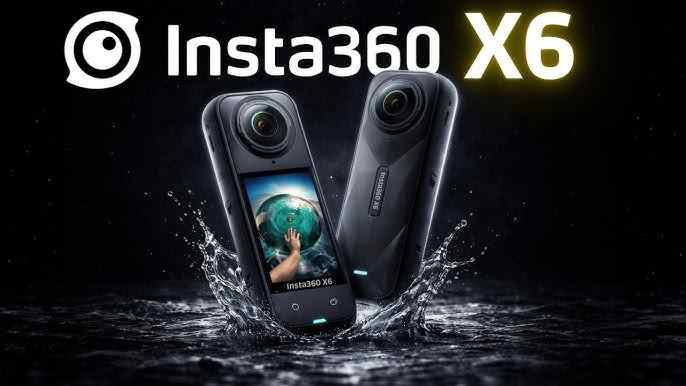
Creators shopping for a flagship 360 camera should delay their purchase until the expected August 12, 2026 reveal of the Insta360 X6 to evaluate the rumored 1-inch sensors and three AI chips.
● Wait for the official X6 launch if you frequently reframe 8K footage or shoot low-light action, but buy the currently available Insta360 X5 if you require a confirmed camera for an urgent project before August 12.
● Final specifications, pricing, thermal behavior, and microSD card capacity limits remain unverified, so avoid making purchasing decisions based solely on teaser-stage media reports.
● If heavy INSV source files disappear during app transfers or card errors, immediately stop recording and run recovery software before formatting to prevent new footage from overwriting the original 360 data.
Ask AI for a summary
 ChatGPT
 Perplexity
 Gemini
 Claude
 Grok
Grok
Insta360 X6 Rumors: Quick Verdict
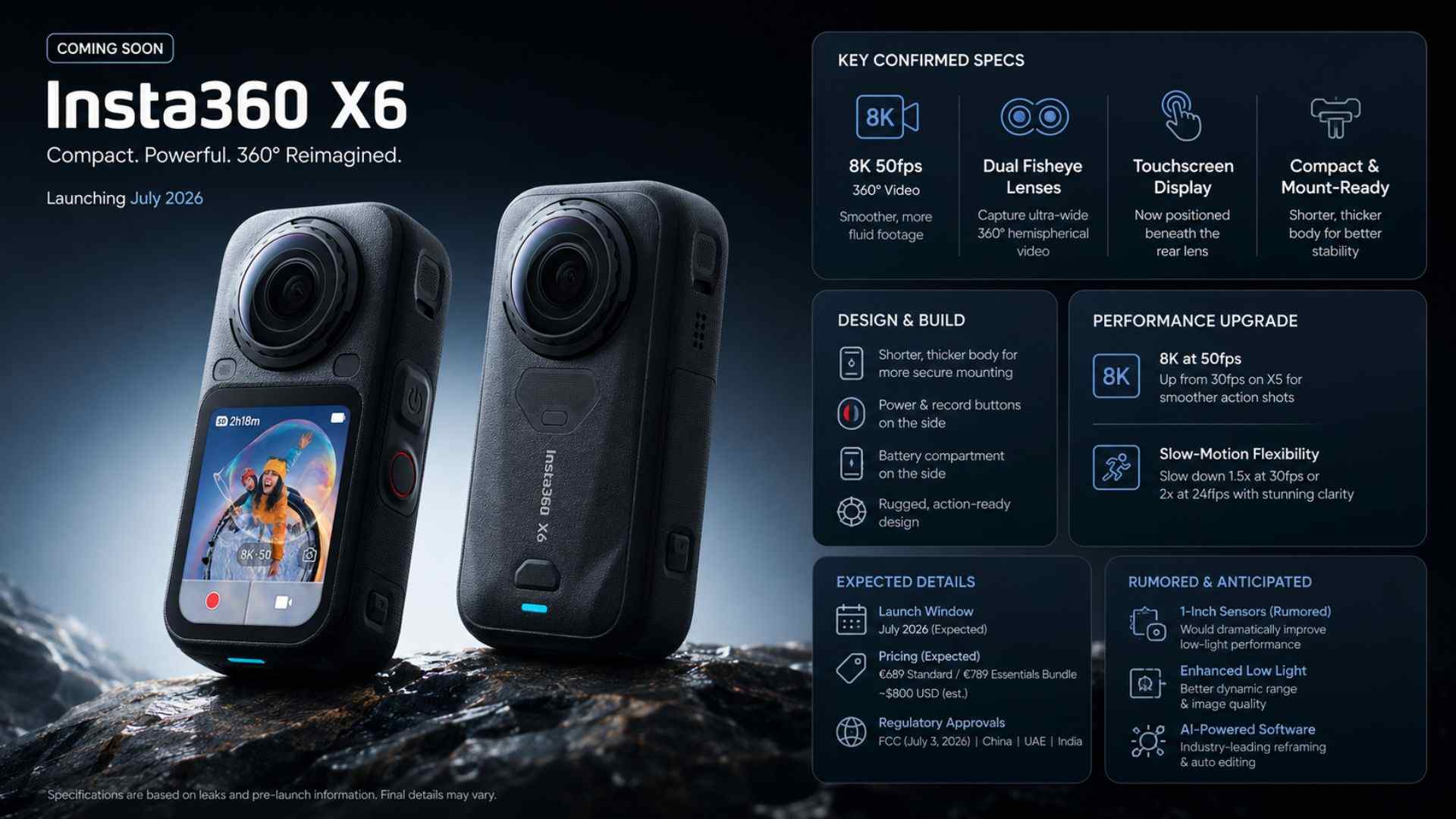
Should creators wait for the Insta360 X6? Yes, if you are shopping for a flagship 360 camera in August 2026 and can wait for the expected August 12 reveal. The rumored upgrades, including larger 1-inch sensors, 8K 360 video, and three AI chips, are directly relevant to action, travel, low-light, and reframed social video. But this is still a teaser-stage product, not an official hands-on review.
- Editorial status: rumor roundup and pre-launch buying guide, not a final review.
- Latest fact-check date: August 10, 2026.
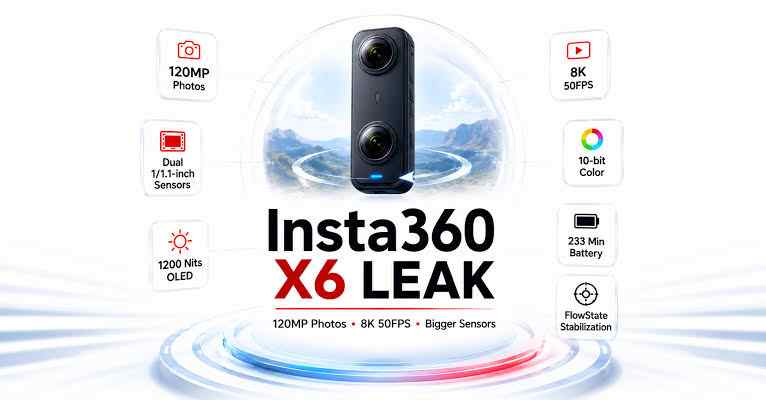
- What is reported: media coverage points to an expected August 12, 2026 reveal, larger 1-inch sensors, 8K 360 video, and three AI chips.
- What is not confirmed: final specs, price, storage support, bitrate, battery life, waterproofing, file formats, and regional availability.
- Best potential fit: action creators, travel vloggers, ski and bike shooters, virtual-tour creators, and editors who reframe 360 footage into vertical and horizontal clips.
- Storage warning: 8K 360 cameras create large source files. Back up before formatting, and stop using the card immediately if INSV or exported video files disappear.
The Insta360 X6 has not officially launched yet. As of August 10, 2026, Insta360 has not published a complete official X6 product page or final specification sheet. That means this article should be read as an Insta360 X6 rumors review preview: a careful pre-launch analysis of what is reported, what remains unconfirmed, how the current Insta360 X5 sets the baseline, and what creators should verify before buying.
The search intent behind "Insta360 X6 rumors" is clear. Creators want to know whether to wait for X6, buy X5 now, compare it with DJI's 360 camera push, or delay a planned action/travel setup until full specs arrive. This article answers that decision without turning rumors into official launch claims.
There is another reason X6 matters to Recoverit's audience. 360 cameras do not just produce simple clips. They create original source files, preview files, app projects, exported MP4s, and large 8K media that can be lost during deletion, formatting, card errors, app import, or transfer interruption. If Insta360 footage disappears, start with Insta360 video recovery or camera recovery software before recording anything new to the same storage.
Important launch-status note: This page does not state that Insta360 X6 is officially launched. Use terms such as "reported," "rumored," "expected," and "if confirmed" until Insta360 publishes the final product page.
In this article
Part 1. Insta360 X6 Rumors: What We Know and What Is Still Unconfirmed
A useful Insta360 X6 rumors page must answer the buying question first: should creators wait? In this case, the answer is mostly yes if your purchase is not urgent. The expected launch window is close, and the reported upgrades target exactly the pain points that matter in 360 video: sensor size, low light, AI processing, action workflow, and 8K reframing quality.
However, the page also needs editorial discipline. Rumor content can easily overstate facts. Before Insta360 publishes the official product page, X6 should not be written as a released product or a tested camera. It is more accurate to treat it as a teaser-stage successor to the current X5.
Current Status as of August 10, 2026
| Topic | Status | How to write it safely |
| Product name | Insta360 X6 appears in media reports and certification coverage | Use "Insta360 X6" as the reported product name, not as a fully launched product page. |
| Launch timing | Digital Camera World reports an expected August 12, 2026 reveal | Say "expected reveal" or "reported teaser date," not "official launch" until Insta360 confirms it. |
| Certification signal | Gadgets360 reports FCC and other certification activity | Use this as launch-proximity context, not proof of final specs. |
| Reported sensor upgrade | Media reports point to larger 1-inch sensors | Attribute the claim and write "if confirmed." |
| 8K 360 video | Reported/expected for X6; confirmed on X5 at 8K30 | Use X5 official specs as the confirmed baseline. |
| Three AI chips | Reported for X6; confirmed as a key X5 selling point | Explain why AI processing matters, but do not claim final X6 performance. |
| Price and storage support | Not officially confirmed for X6 | Avoid final price, bitrate, card size, or storage requirements before launch. |
What Not to Claim Before Launch
Until Insta360 publishes final X6 information, avoid phrases such as "Insta360 X6 has launched," "X6 comes with," or "X6 officially supports" for any unconfirmed feature. These details still need confirmation:
- exact sensor size and sensor supplier;
- maximum 360 video resolution and frame rate;
- video bitrate, codec, and file format behavior;
- whether INSV remains the source-file workflow;
- microSD speed class, max card capacity, and formatting rules;
- battery capacity and real 8K recording time;
- waterproofing, lens design, heat behavior, and durability;
- price, bundles, regional availability, and shipping dates.
This accuracy boundary improves E-E-A-T. Readers can still get a strong buying recommendation, but they also understand which details are verified and which are launch-day watch points.
Part 2. Insta360 X5 Baseline: Why X6 Expectations Are High
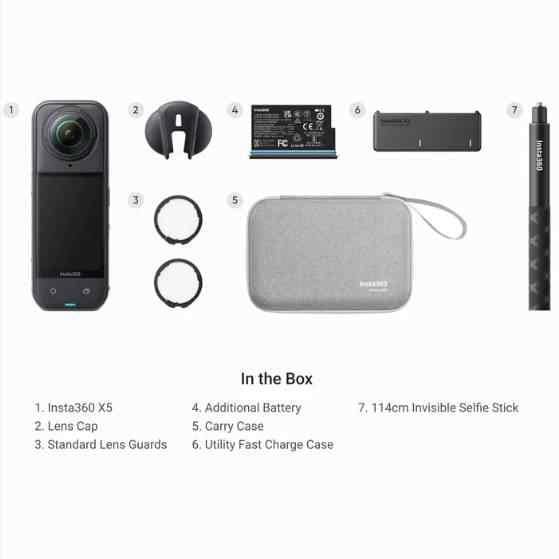
The current Insta360 X5 is the right confirmed baseline for X6 expectations. Insta360's official store page lists X5 with 8K30fps 360 video, dual 1/1.28-inch sensors, a triple AI chip system, PureVideo low-light processing, the invisible selfie stick effect, and InstaFrame mode. The X5 starts at USD $549.99 for the Standard Bundle on the U.S. store at the time of checking, though pricing and bundles can change by region.
That means X6 does not need to prove that 360 cameras are useful. The X series has already done that. X6 needs to prove whether it meaningfully improves the hard parts of 360 shooting:
- cleaner low-light footage;
- better reframed exports from 8K source files;
- faster AI-assisted editing;
- stronger heat and battery behavior during long 8K sessions;
- clearer storage rules for microSD cards;
- more reliable app and desktop project handling;
- more durable lens design for action creators.
| Area | Insta360 X5 confirmed baseline | Insta360 X6 launch-day question |
| Sensor | Dual 1/1.28-inch sensors | Are the reported 1-inch sensors real, and how much do they improve low light? |
| Video | 8K30fps 360 video | Does X6 keep 8K only, improve frame rate, or improve quality through larger sensors? |
| Processing | Triple AI chip system for low-light and processing support | Does X6 improve AI reframing, noise reduction, stabilization, or export workflow? |
| Storage | X5 requires UHS-I V30 or above microSD cards, exFAT, and cards no larger than 1TB | Will X6 keep the same microSD rules or require faster cards for higher bitrate video? |
| Editing | Insta360 app and Studio workflow for 360 editing and exports | Does X6 make source-file handling, proxy previews, and project export more reliable? |
| Action use | FlowState stabilization, invisible selfie stick effect, replaceable lens design, and creator modes | Does X6 improve lens durability, heat, battery, waterproofing, and mounting workflow? |
The strongest X6 rumor is not just "more specs." It is a potential quality jump for creators who shoot in difficult light and then crop aggressively from a 360 master. That is where larger sensors and smarter processing could matter most.
Part 3. Rumored X6 Upgrades That Matter for Creators
Rumor pages often list specs without explaining why they matter. For a 360 camera, that is not enough. The real value of X6 depends on whether reported hardware changes improve the final creator workflow, not just the spec table.
Reported 1-Inch Sensors
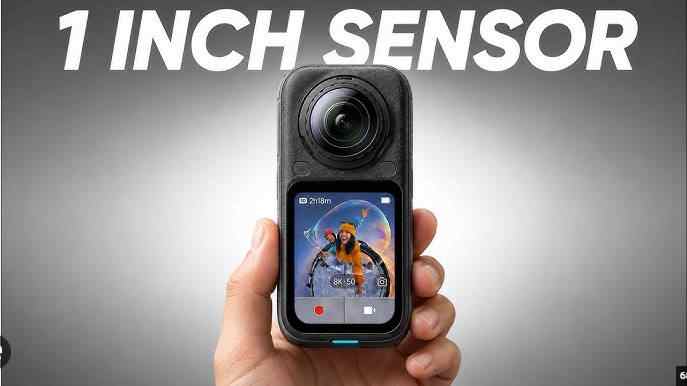
The biggest reported upgrade is a move to larger 1-inch sensors. If confirmed, this would matter because 360 video loses perceived detail after reframing. Larger sensors can help capture more light, reduce noise, and preserve more usable detail in the final flat export.
For action and travel creators, the benefit could show up in real scenes:
- cleaner city-night walking clips;
- better indoor travel shots;
- less noisy ski-lodge or hotel-room footage;
- more usable sunset and early-morning action scenes;
- better shadow detail after reframing into vertical video;
- cleaner virtual-tour footage in mixed lighting.
The caution is simple: sensor size alone does not guarantee better footage. Lens design, bitrate, stitching, HDR, heat control, app processing, and export quality also matter. Wait for official samples and independent tests before treating 1-inch sensor reporting as a real-world verdict.
8K 360 Video and Reframing
8K 360 video matters because creators rarely publish a raw 360 sphere only. They usually crop the footage into a normal flat video for YouTube, TikTok, Reels, Shorts, client delivery, or a travel vlog. Starting with a high-resolution 360 source gives more room to pan, tilt, zoom, track subjects, and export different frame sizes.
But 8K also creates friction:
- larger source files;
- heavier phone and desktop editing;
- more pressure on microSD card speed and health;
- longer transfer times;
- higher risk of interrupted app imports;
- more severe loss if the original INSV source files disappear.
This is why a Recoverit angle belongs in the article. The better the X6 is for 8K 360 capture, the more important storage discipline becomes. A single lost source file can remove multiple final edits from one scene.
Three AI Chips and Low-Light Processing
Insta360 already promotes a triple AI chip system on X5. If X6 keeps or improves that architecture, the value will likely be practical rather than abstract. AI processing can help with low-light noise reduction, subject recognition, auto reframing, stabilization assistance, preview handling, and AI editing suggestions.
For creators, the question is not whether the camera has "AI." The question is whether AI reduces the time from capture to usable export. Look for these launch-day signs:
| AI area | Why it matters | What to verify |
| Low-light processing | 360 cameras often struggle at night because each reframed view uses only part of the captured sphere. | Compare X6 night samples with X5 in the same scene. |
| Auto reframing | Creators need faster social edits from long 360 clips. | Check whether AI picks useful angles or just creates generic cuts. |
| Subject tracking | Action sports often require a rider, skier, or traveler to stay centered. | Test tracking through fast motion, low light, and occlusion. |
| Preview performance | 8K files can be heavy on phones and laptops. | Check whether proxy previews, exports, and app edits feel faster. |
| Project reliability | AI edits are useless if source files are moved, missing, or corrupted. | Check how the app manages original files, drafts, exports, and storage warnings. |
Part 4. Insta360 X6 vs X5: Should You Wait or Buy Now?

If you are reading this before August 12, waiting is the safer buying move unless you need a camera immediately. The X5 is already a strong, officially available 360 camera, but the X6 teaser window is close enough that buying X5 right now could feel premature if the successor brings a meaningful sensor or processing upgrade.
| Your situation | Best decision | Reason |
| You can wait a few days | Wait for the expected X6 reveal | Official specs, launch pricing, and bundles may change the buying decision. |
| You need a 360 camera for a shoot before August 12 | Buy a confirmed camera such as X5 | A real project should not depend on unconfirmed launch timing or stock. |
| You mainly shoot daylight travel | Wait if price is not urgent; buy X5 if discounted | X5 is already strong in good light, but X6 may improve flexibility. |
| You shoot night travel, indoor tours, or low-light action | Wait for X6 tests | The rumored sensor upgrade matters most in low light and high-detail reframing. |
| You already own X5 | Do not preorder on rumors alone | Wait for sample footage, heat tests, battery tests, and workflow comparisons. |
| You are building a paid workflow | Wait for independent reviews, not just launch specs | Reliability, storage, and export stability matter more than teaser highlights. |
The most defensible pre-launch verdict is this: X6 is worth waiting for, but not worth overclaiming. The final buying recommendation should be updated after Insta360 confirms specs, price, card requirements, file formats, and availability.
Part 5. Storage Risk Behind 8K 360 Video
For a Recoverit page, the strongest angle is not just "X6 has better specs." It is that better 360 cameras create larger, more valuable files. A creator who shoots a travel day, ski run, motorcycle ride, wedding BTS clip, or real estate tour may rely on one 360 source file to create several final edits. If that source file is lost, every possible crop can disappear with it.
Why INSV Source Files Matter
Insta360 users often talk about lost "videos," but the real recovery target may be the original source footage. Recoverit's INSV file recovery guide explains the file type behind Insta360 360 workflows. INSV source files can be more important than exported MP4s because they contain the data needed for reframing and full-quality exports.
A user may still see:
- a thumbnail in the app;
- a low-resolution preview;
- a short exported MP4;
- a mobile app project;
- a cached draft;
- a partially copied folder.
But if the original INSV files are missing, the creator may not be able to export the full-quality 360 edit. That is why recovery should focus on source files and original folder structure, not just visible preview media.
microSD Card Risk
If X6 follows the broader X-series pattern, microSD reliability will matter. Insta360's official X5 storage compatibility guide says X5 should use UHS-I microSD cards with V30 or above speed class and exFAT format. It also warns that incompatible microSD cards may cause recording issues or damaged footage and that cards larger than 1TB are not compatible with X5.
Those rules are confirmed for X5, not X6. Still, they show why X6 buyers should wait for official storage guidance instead of assuming any large card will work.
| microSD problem | What it can cause | Safer action |
| Using a slow or unsupported card | Recording stops, footage damage, or incomplete 8K files | Use the official card requirements after launch. |
| Formatting before backup | Deleted source files and missing projects | Recover first, then format only after verified backup. |
| Removing the card during writing | File system damage or corrupt recordings | Power down safely and wait for recording to finish. |
| Using cheap card readers | Interrupted transfers and partial copies | Use a stable card reader and copy to a drive with enough free space. |
| Reusing old cards across cameras | Folder confusion, formatting issues, and hidden compatibility problems | Format only after backup, and prepare cards for the specific camera. |
If a microSD card becomes unreadable or asks to be formatted, do not format it immediately. Start with an SD card recovery workflow or a camera-specific camera memory card recovery workflow. After all files are backed up and verified, the official SD Memory Card Formatter is a useful external tool for preparing cards for reuse.
App Transfer and Export Risk
Insta360 footage often moves through several places: camera card, phone album, app cache, app draft, desktop folder, exported MP4, and external SSD. Each handoff is a possible failure point. Insta360's app documentation on finding previously edited files in Drafts and switching preview modes also shows that previews, drafts, and original files are not the same thing.
Common user mistakes include deleting source files after seeing only a preview, exporting a lower-quality MP4 and assuming the original is no longer needed, moving project folders without related media, or editing directly from the original microSD card. For 8K 360 workflows, the safer rule is simple: keep the original source files until the final export and at least one backup are verified.
Part 6. How Recoverit Fits Into an Insta360 X6 Workflow
Wondershare Recoverit can help scan readable storage devices such as microSD cards, camera cards, computer drives, external SSDs, and transferred folders for recoverable files. Recovery depends on whether the storage can be detected, whether the data was overwritten, file fragmentation, file system condition, and whether the recovered file remains structurally usable. Recoverit cannot guarantee recovery, repair physically failed cards, bypass encryption, or recover overwritten footage.
| Problem | What Recoverit Solves | Key Caution |
| Deleted Insta360 camera videos | Insta360 video recovery | Stop recording immediately so new footage does not overwrite deleted files. |
| Missing INSV source files | INSV file recovery guide | Recover original source files and related folder structure, not only preview files. |
| Formatted or unreadable microSD card | SD card recovery | Do not format the card again before scanning. |
| Camera card loss after action shooting | Camera memory card recovery | Use a stable card reader and save recovered files to a separate drive. |
| Lost exported MP4s or 8K video files | Video recovery software | Scan the drive where the exported file was deleted or lost. |
| Recovered video file will not play | Repair recovered video files | Repair is separate from recovery and depends on how much valid video data remains. |
This recovery logic makes the product placement relevant. X6 is a camera rumor, but the recovery need is real because the X-series workflow already involves large source files, microSD cards, app imports, desktop projects, and high-value action footage.
Try Recoverit to Recover Deleted 8K 360 Videos from Insta360 Camera
 Security Verified. Over 7,302,189 people have downloaded it.
Part 7. Launch-Day Checklist for Creators
When Insta360 reveals the X6, do not stop at the headline resolution. A good launch-day review should answer the details that affect shooting, editing, storage, and recovery.
- Sensor: confirm whether X6 uses 1-inch sensors and how that affects low light.
- Resolution and frame rate: verify 8K 360 frame rate, lower-resolution high-frame-rate modes, and single-lens modes.
- Bitrate and format: check final codec, bitrate, INSV behavior, and MP4 export options.
- microSD requirements: confirm speed class, format, capacity limit, and recommended card list.
- Battery: compare rated runtime with real 8K recording tests.
- Thermal behavior: check whether long 8K sessions are stable in warm weather.
- Lens system: verify whether the lens design is replaceable, upgraded, or more durable.
- Waterproofing: check the official rating and caveats for diving, surf, rain, and snow.
- AI editing: test whether auto reframing and subject tracking save real editing time.
- Workflow safety: check whether the app clearly separates previews, drafts, source files, and exports.
- Price and bundles: compare X6 Standard Bundle price with discounted X5 bundles.
- Availability: confirm regional stock, warranty, shipping date, and accessory compatibility.
This checklist also helps prevent thin rumor content. It tells readers exactly what to verify when official information becomes available.
Part 8. Recovery-Safe Workflow for Future X6 Buyers
If you plan to buy X6 after launch, set up the storage workflow before the first trip or paid shoot. Recovery planning is not pessimistic; it is part of shooting high-value 8K 360 media.
- Use the official card type. Follow Insta360's final X6 card guidance after launch instead of guessing from X5 rules.
- Format only after backup. Never format a card because the camera or computer asks if it still contains important footage.
- Keep source files. Do not delete INSV files after exporting only a preview or social MP4.
- Preserve folder structure. Keep camera folders intact until editing and backup are complete.
- Back up in two locations. Use a computer plus an external SSD, or another reliable two-copy workflow.
- Verify before clearing cards. Open projects and exports before deleting source media.
- Avoid editing from the card. Copy footage to a working drive, then edit.
- Stop immediately after file loss. Do not record test clips, reformat, or import again before recovery.
- Scan the correct storage device. Scan the card, camera storage if applicable, phone folder, computer drive, or external SSD where the loss happened.
- Recover to a different drive. Never save recovered files back to the same device during recovery.
For creators who shoot travel and action content, this workflow is more important than it looks. The more capable a 360 camera becomes, the more likely users are to keep large and irreplaceable files on one card before backup. That increases recovery urgency when anything goes wrong.
Conclusion
The Insta360 X6 is one of the most important 360 camera stories to watch in August 2026, but it should still be treated as a teaser-stage product until Insta360 publishes official launch information. The reported 1-inch sensors, 8K 360 video, and three AI chips point to a camera aimed at serious action and travel creators, especially those who want cleaner low-light footage and more usable reframed exports.
The safest buying advice is practical: wait if you can, buy X5 only if you need a camera immediately or find a deal that makes sense, and update the decision after the August 12 reveal. Do not rely on rumored price, final specs, card requirements, or battery claims until they are official.
For Recoverit readers, the deeper lesson is storage safety. 8K 360 files are not disposable clips. They are source masters for multiple edits. If INSV files, exported MP4s, or camera-card folders disappear, stop using the affected storage immediately and use a recovery workflow before new files overwrite the missing data.
FAQ
-
Is Insta360 X6 officially launched?
No. As of August 10, 2026, Insta360 X6 has not officially launched with a complete product page. Media reports point to an expected August 12 reveal, but final specs are not confirmed yet. -
What are the latest Insta360 X6 rumors?
Current reports point to larger 1-inch sensors, 8K 360 video, and three AI chips. Treat these as reported or rumored details until Insta360 confirms them. -
Should I wait for Insta360 X6 or buy Insta360 X5?
If you can wait until the expected August 12 reveal, waiting is reasonable. Buy X5 now only if you need a camera immediately, find a strong discount, or prefer proven hardware and confirmed accessories. -
Why do 1-inch sensors matter for a 360 camera?
Larger sensors can help capture more light and detail, which may improve low-light footage and reframed exports. Real quality still depends on lens design, processing, bitrate, stabilization, and export workflow. -
Can Recoverit recover deleted Insta360 X6 videos?
Recoverit may help recover deleted or lost videos from readable storage if the files have not been overwritten. Stop using the card or drive immediately, then scan the affected storage and save recovered files to another drive. -
Why are INSV files important?
INSV files can contain the original Insta360 360 source footage used for reframing and full-quality export. A low-resolution preview or exported MP4 may not replace the original source file. -
What should I do if recovered Insta360 footage will not play?
First test the recovered file in Insta360 Studio if it is an INSV file. If it still will not open and the file is structurally damaged, keep the original recovered copy and try a video repair workflow.


