 TL;DR:
Dell error code 2000-0142 indicates an unsuccessful hardware self-test on your storage drive, requiring you to immediately back up accessible files to a separate device before replacing the failing hardware.
● Avoid running CHKDSK, updating firmware, formatting, or performing repeated restarts, as these actions cannot repair physical failures and add unnecessary stress to an already unstable drive.
● Record the complete 2000-0142 error, the Validation Code, and the Dell Service Tag via the F12 One Time Boot Menu to provide to Dell Support for hardware replacement.
● Use data recovery software only if the drive remains consistently detectable and stable, but immediately power off the device and consult a professional recovery lab if the drive clicks, overheats, or repeatedly disconnects.
Ask AI for a summary
 ChatGPT
 Perplexity
 Gemini
 Claude
 Grok
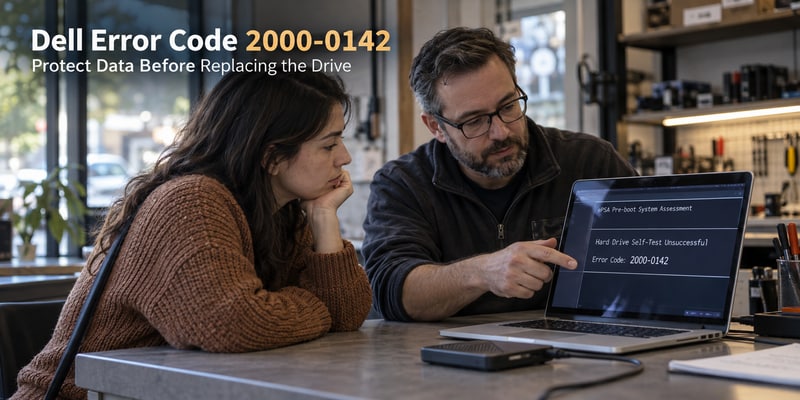
Dell error code 2000-0142 means the drive failed a Dell PSA or ePSA hardware self-test. It is a warning about the storage device, not proof that Windows or the Master Boot Record (MBR) is the cause. A drive may be failing, or a drive connection may need checking. Dell's official diagnostic error table lists this code as an unsuccessful hard drive self-test.
If the drive contains files you need, protect them before attempting repairs. Avoid running CHKDSK /r, repeatedly restarting or stress-testing the drive, updating storage firmware, formatting, or reinstalling Windows as a first response. These actions cannot fix a damaged read head or another physical failure and may add unnecessary reads or writes to a drive that is already unstable.
Use the following decision guide to choose your next move. If the drive clicks, disappears repeatedly, becomes unusually hot, or has been dropped or exposed to liquid, power off the computer and ask a professional data recovery service for an assessment instead of scanning it.
| Your situation | Safest next move |
| Windows starts and files are readable | Copy important files to a different healthy device immediately, then confirm the diagnostic result. |
| Windows does not start but the drive appears stable and detectable | Check backups and consider qualified data recovery help. Use recovery software only if the drive is stable and the problem is logical, not physical. |
| The drive makes noises, disconnects, or is not recognized reliably | Stop powering it on and contact a professional recovery lab before more testing. |
| Files are already safe and the Dell self-test still fails | Contact Dell with the error and validation codes, check warranty eligibility, and plan for drive replacement. |
In This Article
Part 1. What Does Dell Error Code 2000-0142 Mean?
Dell computers can run Pre-boot System Assessment (PSA), enhanced PSA (ePSA), or SupportAssist Pre-Boot System Performance Check without loading Windows. The code 2000-0142 is shown when the storage device does not complete its self-test successfully. The older PSA code 1000-0142 describes the same kind of self-test failure. A self-test failure warrants attention even when the computer can still occasionally boot.
The full code matters because a nearby diagnostic number may mean something different. Read the complete error and note the drive or component named on the diagnostic screen.
How 0142 Differs from Nearby Dell Error Codes
| Dell code | Official diagnostic meaning | Implication |
| 2000-0141 | No drive detected | Check the connection and system detection; do not assume this is a self-test result. |
| 2000-0142 | Drive self-test unsuccessful | Protect data and plan a hardware-focused diagnosis or replacement. |
| 2000-0143 | S.M.A.R.T. read command unsuccessful | A different storage diagnostic failure requiring model-specific follow-up. |
| 2000-0146 | Self-test log contains previous errors | Historical errors were recorded; the outcome is not the same as a current 0142 self-test failure. |
Dell documents these distinctions in its PSA/ePSA 2000-0NNN reference. The numbers should not be treated as interchangeable.
What the Error Does Not Prove
Error 2000-0142 does not by itself identify a damaged MBR, malware, an operating-system crash, or a CPU problem. Nor does it tell you whether the fault is a loose connection or an internal drive failure. The self-test reports a drive problem; the exact hardware diagnosis may require a technician.
Likewise, a computer that boots after one restart is not necessarily fixed. A failing drive may remain readable for a short time and deteriorate later. Preserve files first instead of assuming a temporary successful boot clears the warning.
Part 2. Protect Data Before Trying to Fix 0142
Before modifying firmware, running disk repair tools, removing the internal drive, or reinstalling Windows, determine whether important files are already backed up. The following checks apply only when the computer is stable enough to use without repeated restarts or unusual drive noises.
Check Whether Windows Still Detects the Drive
Use this check only if Windows is already running. It helps establish whether the drive is visible to Windows; it is not a replacement for Dell's hardware self-test.
Step 1. Right-click the Start button and open Disk Management.
Step 2. Find the disk by capacity and existing volume layout. Check whether the expected volume is visible; do not click Initialize Disk, format, create a volume, or change partitions.
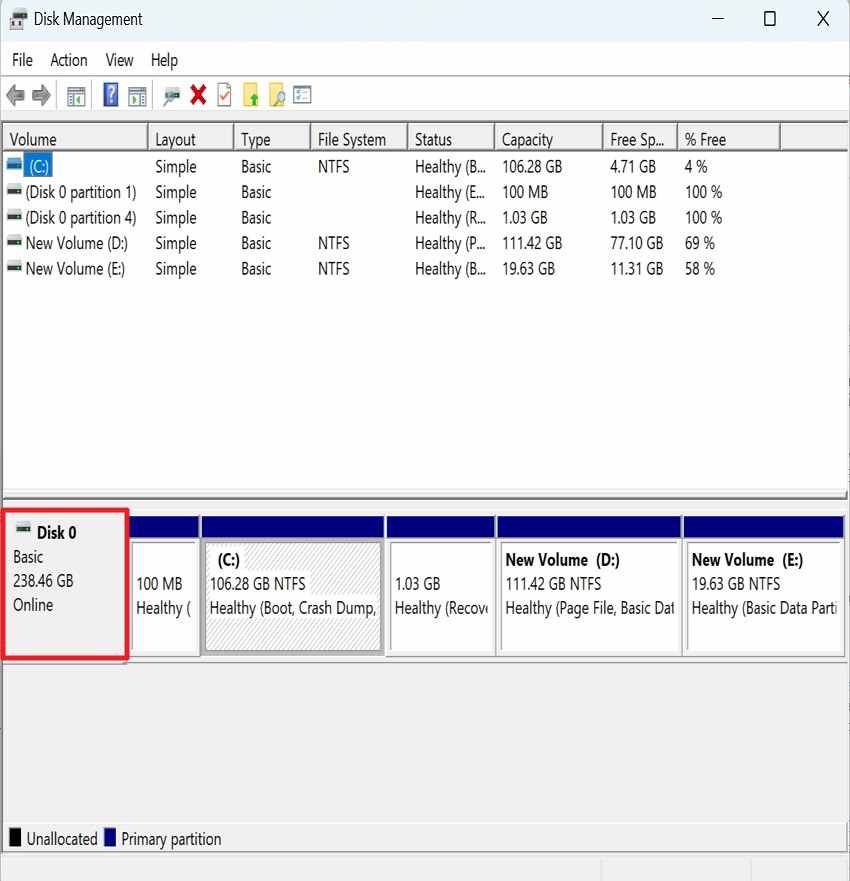
Step 3. If the disk is accessible, prioritize copying irreplaceable files to another healthy disk. If it is missing, repeatedly disconnecting, or showing severe read problems, stop here and consult Dell or a recovery specialist. More testing can make a weak drive harder to recover.
Expected result: You know whether Windows can see the storage device. If the drive is detected but its files are missing or inaccessible, the cause still needs to be evaluated; Disk Management visibility alone does not establish that software recovery is safe.
Copy Accessible Files or Check an Existing Backup
If Windows works and the drive responds normally, copy the most important documents, photos, and project files to a separate USB drive, external disk, or verified cloud location. Check several copied files before considering any repair. Do not install a new utility or save recovered files to the suspect drive.
If a file is missing but a previously configured Windows backup exists, you can check Previous Versions without changing the original drive:
Step 1. In File Explorer, right-click the folder that contained the file, select Properties, and open Previous Versions.
Step 2. If a version exists, select it and use Open to inspect the backup. Copy the needed files to healthy external storage. Avoid using Restore onto the suspect volume during this diagnostic stage.
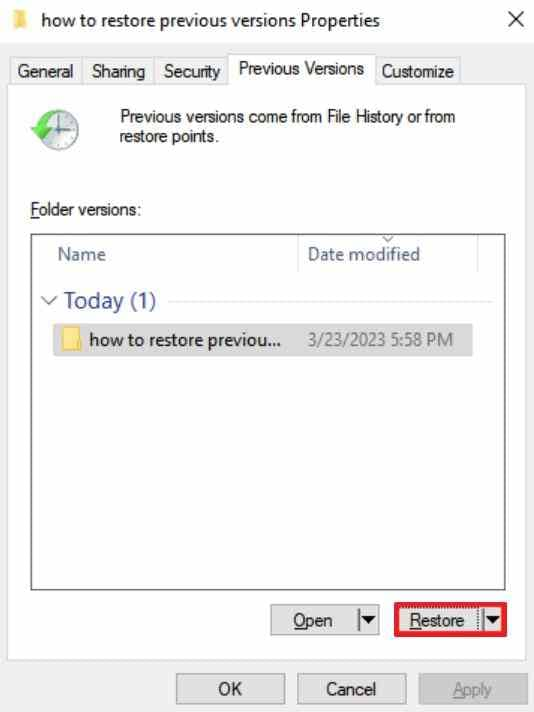
Expected result: You have a verified backup on a different device. If Previous Versions is empty, it means no applicable version is available through that Windows feature; it does not prove the missing files are unrecoverable.
If the disk is protected by BitLocker, retain the necessary credentials before removal or replacement. A recovery key may be required to unlock an encrypted Windows volume after hardware changes. Microsoft's BitLocker recovery-key instructions explain how to locate an existing key.
Part 3. Confirm the Dell 2000-0142 Diagnostic Result
Once your files are protected or you have decided to stop attempting access to an unstable disk, confirm the displayed code using the Dell diagnostic workflow. A single brief confirmation is useful for a support case; repeated or extended surface tests are not a data-preservation strategy.
Use the Dell F12 Diagnostics Menu
Step 1. If the system is stable enough for a controlled restart, shut it down normally and power it on. At the Dell logo, press F12 repeatedly to open the One Time Boot Menu.
Step 2. Select Diagnostics. The location and appearance of this option can vary by Dell model and BIOS version.

Step 3. Record the complete 2000-0142 error, the Validation Code, the affected drive or component, and the Dell Service Tag. These details help Dell Support identify the next action. See Dell's preboot diagnostics instructions for supported workflows.
Expected result: You have the exact diagnostic information to give the technician. If the drive starts clicking, disappears during testing, or hangs on a test, stop rather than rerunning exhaustive diagnostics. A second pass result should never replace evidence that a previous self-test failed.
Decide Whether a Connection Check Is Appropriate
Dell's code reference includes reconnecting the internal drive and checking for updated BIOS or drive firmware as potential technical follow-up actions. However, these steps are not the first choice when unbacked-up files matter, and they do not guarantee a fix for failed storage hardware.
If files are already safe, a qualified technician can inspect the applicable Dell service manual, warranty conditions, and model-specific connections. Do not open a sealed or in-warranty laptop without checking its service requirements. Do not perform a firmware update on an unstable, unprotected drive as an experiment.
If the self-test still reports 2000-0142 after an appropriate connection check, prepare for drive replacement or professional evaluation. Dell's error reference directs unresolved failures to its support process.
Part 4. Recover Files Only When the Drive Is Stable
File recovery and hardware repair are different tasks. A recovery program may find deleted or inaccessible files on a detectable, logically damaged drive, but it cannot replace a failed actuator, repair unreadable hardware, or make a severely damaged disk safe to scan.
When Recoverit May Help

Dell Error 2000-0142? Your Files Come Before a New Drive
A failed Dell drive self-test puts your files at risk. If the drive remains readable and physical damage has been ruled out, Recoverit can scan for lost files and save recoverable data elsewhere. If it clicks or disconnects, seek professional recovery instead.
Consider Wondershare Recoverit Hard Drive Recovery only if the drive remains consistently detected, reads stably, and a physical fault has been reasonably ruled out. Recoverit's official Windows guide explicitly excludes physically damaged storage devices and recommends professional recovery for hardware failures.
Step 1. Use a healthy Windows computer and install Recoverit on a healthy destination, not on the affected drive. Connect the suspect drive only if it remains stable and appropriate to access. If important files are on a working logical volume, open Recoverit and select the affected location.
Step 2. If the location is accessible in File Explorer, you can use the Scan for deleted files with Recoverit context-menu option illustrated below. Otherwise, select the detected disk under Hard Drives and Locations in Recoverit. The interface depends on the installed version.
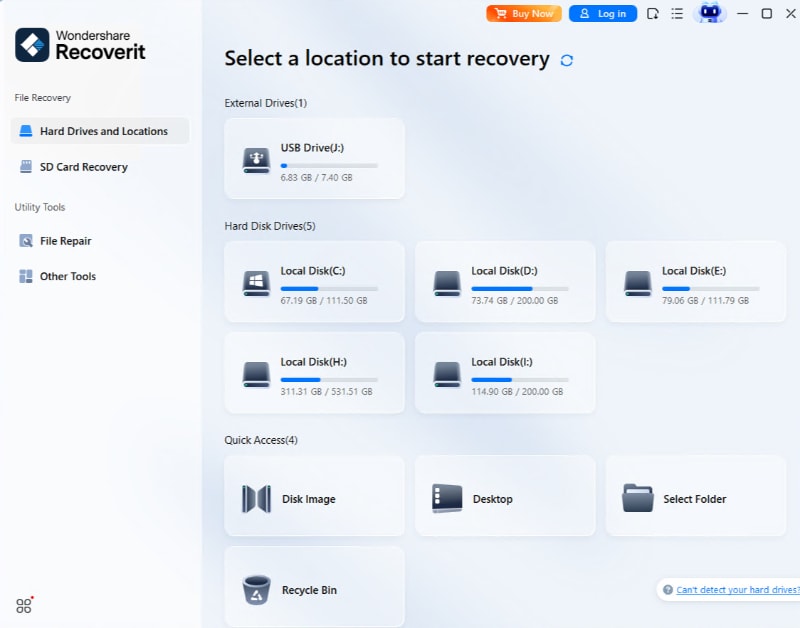
Step 3. Scan only while the drive remains responsive. Preview the files found and use Recover to save eligible files to a different healthy disk. Open several results at the destination to confirm they work. Stop if reading the source produces repeated errors or disconnects.
Expected result: Some accessible or logically lost files may be copied to separate storage. Recovery success depends on actual drive health and file condition; a 2000-0142 code alone does not establish that this procedure is suitable.
When to Choose Professional Recovery Instead
Do not use DIY scanning software if the device is physically damaged, intermittently detected, clicking, scraping, heavily overheating, or not spinning up normally. If you cannot risk losing its contents, request a professional recovery assessment before removing or testing the disk again. A lab can advise whether controlled imaging or hardware work is appropriate.
If the Dell will not boot, its current status does not automatically mean you should use a crashed-computer recovery workflow: that pathway still requires readable, adequately stable storage. For more general symptoms, use the site's hard drive detection troubleshooting guide, while respecting its data-preservation warnings.
Part 5. Replace the Failed Drive and Restore Your Computer
When Dell's drive self-test remains unsuccessful, plan for a replacement rather than assuming that a temporary Windows boot means the device is healthy. Use the recorded Dell error and Validation Code when contacting support. If the machine is covered by warranty, check the service terms before disassembling it or sending the disk away.
Before giving up possession of a disk, consider the privacy of any files stored on it and whether the warranty process offers a keep-your-drive option. Also keep your existing backups, installation credentials, application license information, and BitLocker recovery key if one applies.
Only after your data is secured should you install a replacement drive, restore Windows through Dell's documented process or verified Windows installation media, and restore files from a separate backup. Reinstallation to the same unhealthy drive is not a sound response to a failing drive self-test. Backups should be tested by opening representative files on the replacement system before disposing of the previous installation.
For a broader Dell storage issue that is not necessarily the 0142 code, see the separate Dell hard disk drive failure troubleshooting guide. This page focuses on the 2000-0142 decision path rather than unrelated Windows errors.
Conclusion
Dell error code 2000-0142 is a failed drive self-test. Record the complete diagnostic and Validation Code, protect your data, and take evidence of a hardware fault seriously. If files are still readable, copy them to healthy storage first. If the drive is unstable or physically damaged, stop DIY recovery and seek specialist assistance. Recoverit is a conditional file-recovery option for stable, detectable logical problems, not a cure for failing hardware. Repair or replace the drive only after your data needs are addressed.
FAQ
-
Can CHKDSK fix Dell error code 2000-0142?
CHKDSK works on file-system errors, but 2000-0142 reports an unsuccessful drive hardware self-test. CHKDSK cannot repair a failed physical drive and may create more disk activity. Secure your files and diagnose the hardware before considering it. -
Does error 0142 always mean I need a new hard drive?
It signals a real drive self-test failure. A technician may check a connection or model-specific issue, but a persistent 2000-0142 result commonly requires replacement or manufacturer support. Do not rely on a successful restart as proof the fault has disappeared. -
What is the difference between Dell errors 2000-0141 and 2000-0142?
2000-0141 means Dell did not detect a drive. 2000-0142 means a drive self-test was unsuccessful. The two codes lead to different diagnostic questions; record the exact code shown. -
Can I recover files after Dell error 2000-0142?
Possibly. First check existing backups. If the disk is consistently readable and the problem is logical, data recovery may be possible to a separate healthy disk. For clicking, intermittently detected, or physically damaged drives, use a professional recovery service rather than repeated DIY scans. -
What should I tell Dell Support when the drive self-test fails?
Provide your Dell model and Service Tag, complete error 2000-0142, Validation Code, the affected drive, whether the computer boots, and any unusual noise or detection problems. These details help Dell choose model-specific support or replacement options.