

 TL;DR:
Safely freeing up C: drive space on Windows 10 and Windows 11 requires identifying the specific storage category in System Settings and using built-in utilities like Storage Sense or Disk Cleanup instead of manually deleting unfamiliar folders.
● Never manually delete files within C:\Windows, C:\Program Files, C:\ProgramData, System32, or AppData, as doing so can permanently prevent the operating system or installed applications from starting.
● Removing the Windows.old folder using the Disk Cleanup utility recovers several gigabytes of storage but permanently eliminates the ability to roll back to a previous Windows version.
● If critical personal files are accidentally deleted during cleanup, immediately stop saving new data to the C: drive and run a data-recovery tool like Wondershare Recoverit from a separate physical drive to avoid overwriting the readable data.
Ask AI for a summary
 ChatGPT
 Perplexity
 Gemini
 Claude
 Grok
Grok
A full C: drive is not always caused by the files you can see in Downloads or Documents. Windows may be using space for temporary files, update cleanup data, installed apps, Recycle Bin contents, cloud files, or the previous Windows installation. To learn how to clear unwanted files in C drive safely, first identify the category consuming space, then use the Windows tool designed for that category.
The safest approach is selective: review personal files before deleting them, let Windows remove system-managed clutter, and avoid manually deleting unknown folders. This guide explains how to delete unwanted files from the C drive, what to leave alone, and how to recover important files if a cleanup mistake already happened.
Windows 10 reached the end of Microsoft’s regular support period on October 14, 2025. The cleanup steps below can still apply to Windows 10 and Windows 11, but use official Microsoft guidance and supported software when troubleshooting a low-storage problem.
Recover Important Files Deleted During C Drive Cleanup
 Security Verified. Over 7,302,189 people have downloaded it.
In this article
-
- Method 1. Use Windows Cleanup Recommendations
- Method 2. Delete Temporary Files From Storage Settings
- Method 3. Turn On Storage Sense
- Method 4. Use Disk Cleanup
- Method 5. Uninstall Large or Unused Apps
- Method 6. Remove or Move Large Personal Files
- Method 7. Free C Drive Space With OneDrive Files On-Demand
- Method 8. Remove Windows.old When You No Longer Need It
Part 1. What Is Taking Up Space on Your C Drive?
Before you decide how to remove unwanted files in C drive, check the storage categories instead of guessing which folders are safe. Open Settings > System > Storage and review the categories shown for the Windows drive. Microsoft’s Storage settings guidance explains that Windows groups usage into categories such as installed apps, temporary files, and system and reserved storage.
| Storage category | Typical examples | Safe to delete? | Best first action |
| Temporary files | App caches, thumbnails, delivery and update leftovers | Usually, after review | Temporary Files, Cleanup recommendations, or Disk Cleanup |
| Installed apps | Games, creative software, utilities, and their data | Only when unused | Uninstall from Windows Settings or the app’s own uninstaller |
| Downloads and personal files | Installers, archives, videos, photos, and documents | Only after opening or reviewing them | Delete unwanted items or move them to another drive |
| Recycle Bin | Files deleted from the local C: drive | Only after checking its contents | Restore anything needed, then empty the bin |
| Previous Windows installation | Windows.old |
Yes, if you no longer need rollback files | Remove it through Windows cleanup tools |
| System and reserved | Windows files, page file, hibernation data, and recovery data | Do not delete manually | Use Windows settings or a documented feature-specific option |
A category marked as temporary is not the same as a random folder that happens to be located under C:\Users or C:\Windows. Check the size and purpose first. If the largest category is system and reserved, manually deleting files is more likely to cause damage than to solve the problem.
Part 2. Files You Can Usually Remove From C Drive
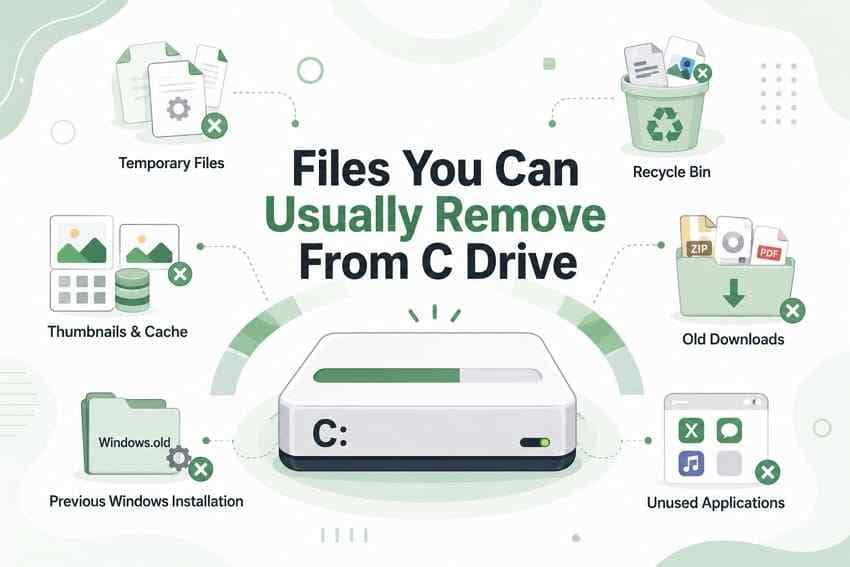
These categories are common starting points when learning how to remove unnecessary files from C drive. “Usually” matters: review names, dates, and contents before confirming deletion.
- Temporary app and system files. Windows and applications create working files that may no longer be needed. Use Storage settings or Disk Cleanup so Windows can identify eligible categories.
- Recycle Bin contents. The files still occupy space until the bin is emptied. Open the bin and restore anything you may need before permanent removal.
- Thumbnails and rebuildable caches. Windows and applications can recreate many caches, although a cache may be in use while an app is open.
- Old downloads. Review installers, ZIP archives, exported videos, and duplicate documents. Do not assume every file in Downloads is disposable.
- Previous Windows installation files. Remove
Windows.oldonly after the upgraded installation works and you are certain you will not use the rollback option. - Unused applications. Uninstall software you recognize through Windows Settings or its official uninstaller. Deleting an app folder does not reliably remove its services, settings, or registry entries.
Do not start by deleting everything inside AppData, ProgramData, or Windows. The next sections explain safer tools and the folders that need special care.
Part 3. How to Remove Unwanted Files From C Drive
The best answer to how to delete unwanted files from C drive depends on what Storage reports. Start with Windows’ review screens, then move to personal files and app management.
Method 1. Use Windows Cleanup Recommendations
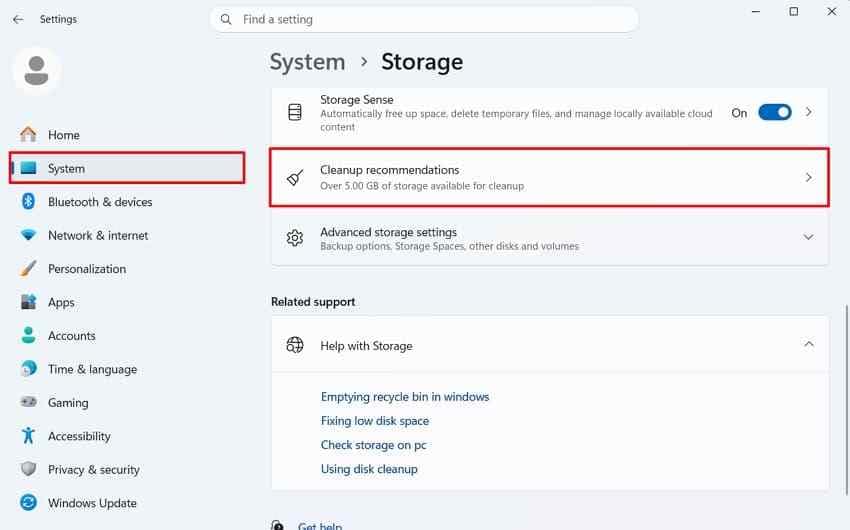
On Windows versions that provide Cleanup recommendations, the tool reviews temporary files, large or unused files, cloud-synced content, and unused apps. It shows what can be removed and the space that may be recovered before you confirm.
Step 1. Open Settings > System > Storage, then select Cleanup recommendations if it is listed.
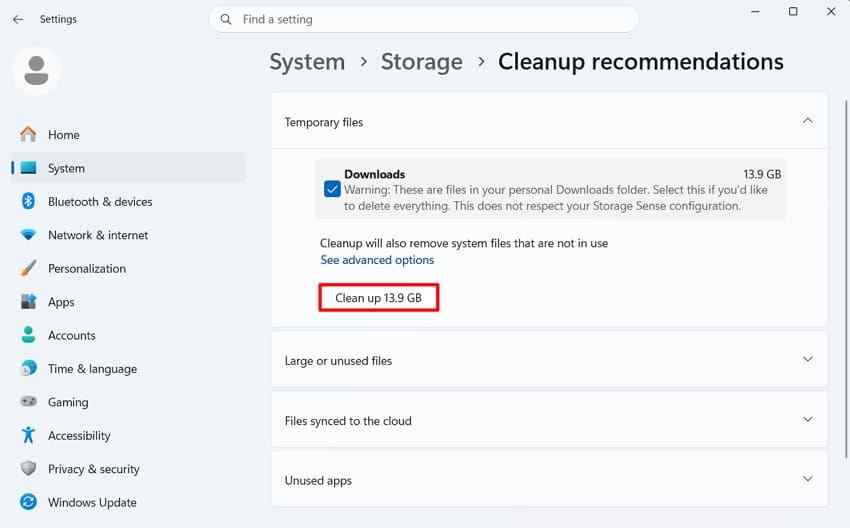
Step 2. Review each category. Open or verify personal files, especially Downloads and large files, before selecting Clean up.
Step 3. Recheck Storage after the cleanup. If the largest category did not change, use the matching method below instead of repeating the same cleanup.
Method 2. Delete Temporary Files From Storage Settings
Storage settings show the size of temporary-file categories and let you choose what to remove. This is safer than selecting unknown folders in File Explorer.
Step 1. Go to Settings > System > Storage > Temporary files.
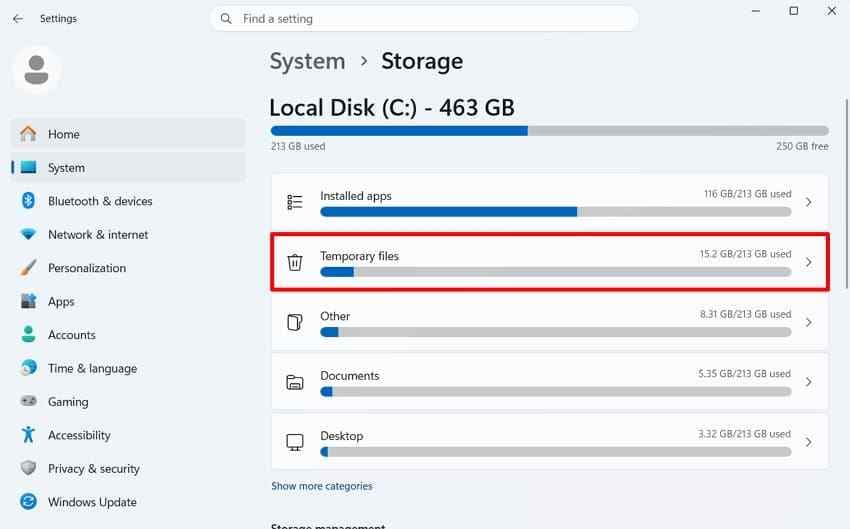
Step 2. Wait for Windows to calculate the categories. Select only items you understand, then choose Remove files.
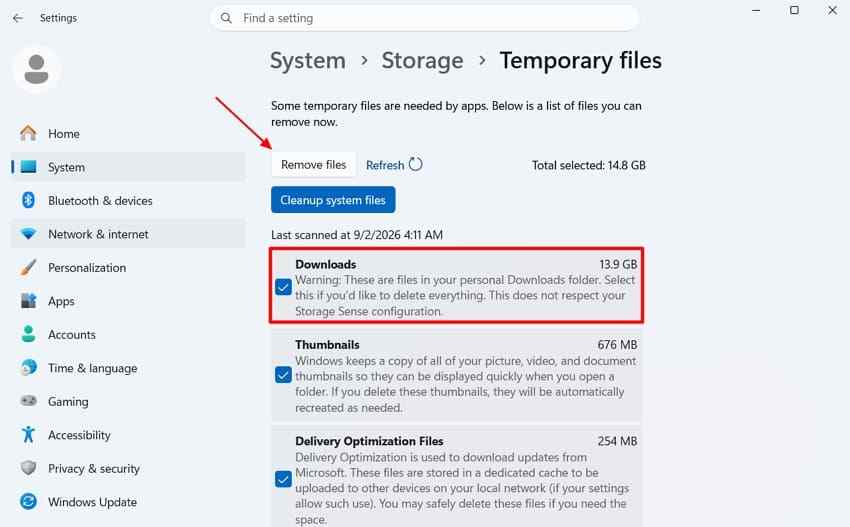
Step 3. Pay close attention to Downloads, Recycle Bin, and Previous Windows installation(s). These may contain data or rollback files that you still want.
On older Windows 10 builds, labels and locations may differ. If Temporary files is not available, use Disk Cleanup and the Windows support page for your build.
Method 3. Turn On Storage Sense
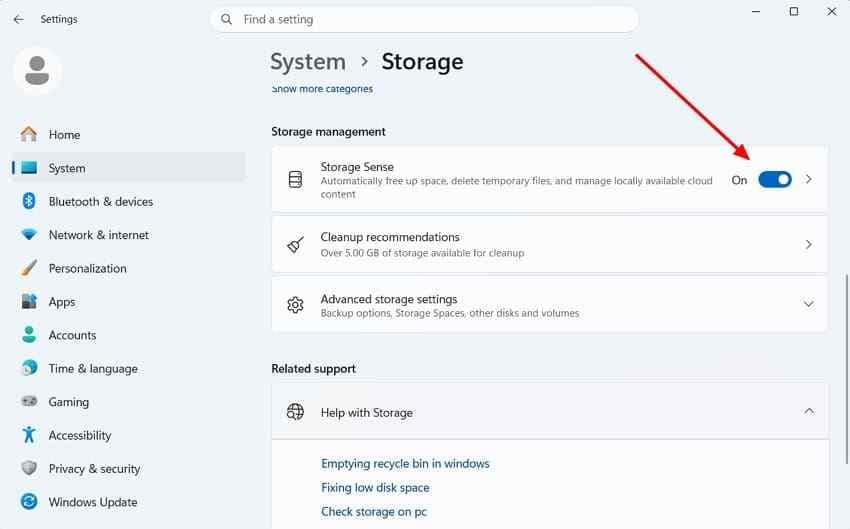
Storage Sense can automatically remove eligible temporary files and older Recycle Bin items. Microsoft’s Storage Sense documentation states that Downloads and cloud files are not touched unless you configure those behaviors. Storage Sense is not a substitute for reviewing irreplaceable personal files.
Step 1. Open Settings > System > Storage and turn Storage Sense on.
Step 2. Open Storage Sense settings and choose how often it runs and how long Recycle Bin items are retained.
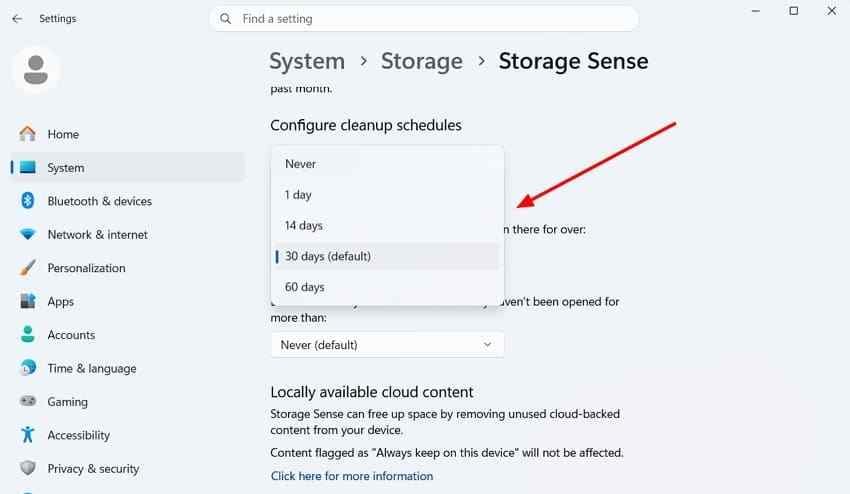
Step 3. Leave the Downloads cleanup setting at Never unless you have a deliberate retention policy and a separate backup of those files.
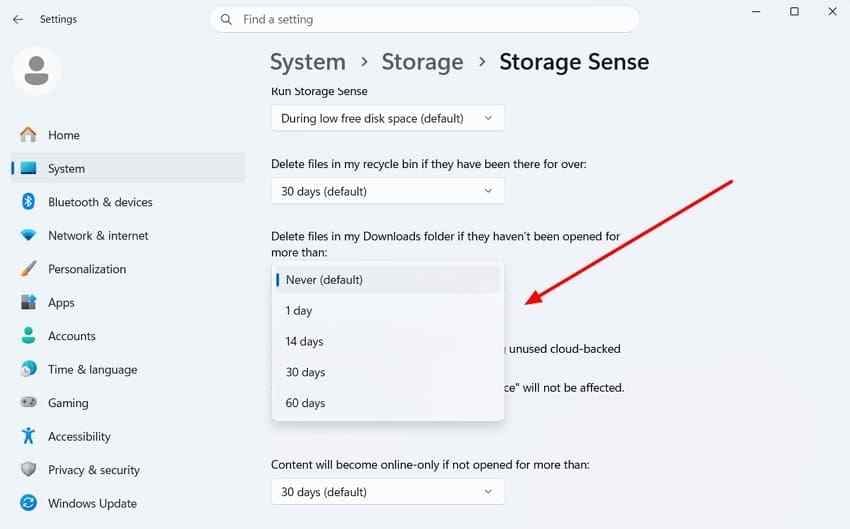
Storage Sense may run when space is low, depending on its settings. Check the configuration after a Windows update or when multiple people use the PC, because each user can have different storage preferences.
Method 4. Use Disk Cleanup
Disk Cleanup remains a useful Windows utility for temporary and system-file categories. Microsoft’s free-up-space guidance includes Disk Cleanup alongside Storage Sense and Cleanup recommendations. The original draft also linked to Microsoft’s Disk Cleanup reference, which is retained for source-link continuity.
Step 1. Search for Disk Cleanup, open it, select C:, and choose OK.
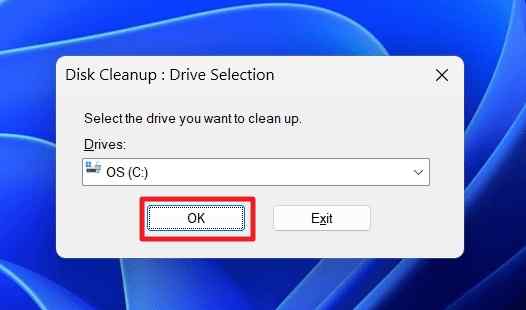
Step 2. Review the file categories and their sizes. Select Clean up system files when you need to review system cleanup categories, then select the drive again if Windows asks.
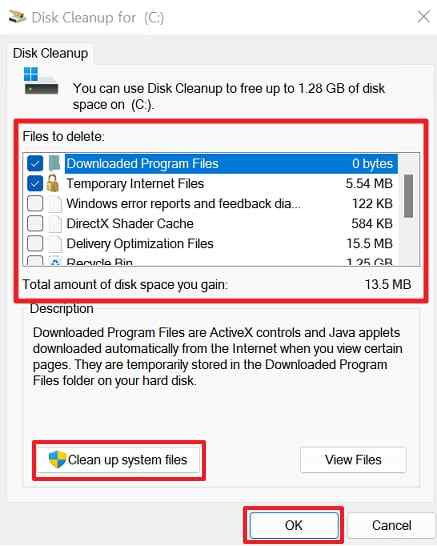
Step 3. Confirm the selected categories and choose OK > Delete Files. Do not select a category simply because it is large; read its description and consider whether it removes rollback or personal data.
Method 5. Uninstall Large or Unused Apps
Installed apps and games can use more C: drive space than temporary files. Uninstall them through Windows rather than deleting their folders.
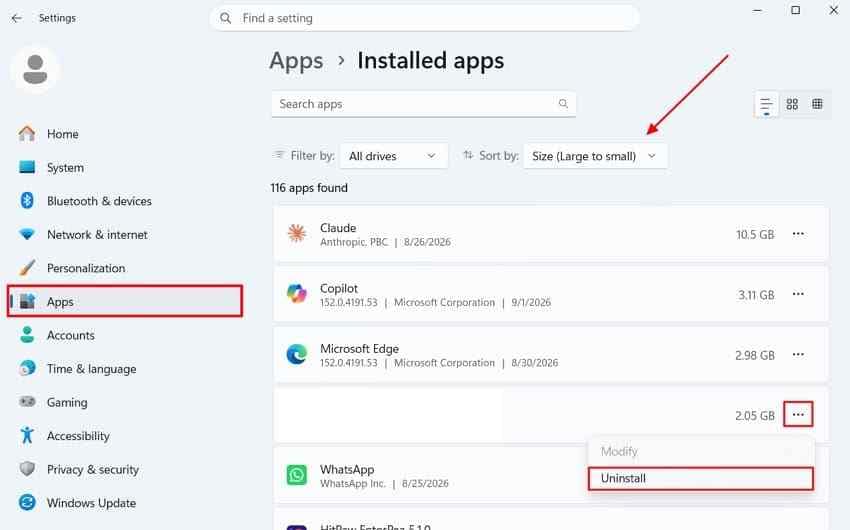
Step 1. Open Settings > Apps > Installed apps. Sort by size when the option is available.
Step 2. Confirm the app name, publisher, and whether you still need it. For Microsoft Store apps, choose the three-dot menu and select Uninstall. For desktop software, follow the vendor’s uninstaller when Windows directs you there.
Step 3. Restart if requested and recheck Storage. Do not uninstall a driver, security tool, backup agent, or recovery component just because its name is unfamiliar. Microsoft’s app removal guidance notes that some Windows apps cannot be removed through Settings.
Method 6. Remove or Move Large Personal Files
Videos, photos, installers, virtual machines, and project exports often explain a full C: drive even when the user has not installed a new program. This is the point where manual review is appropriate.
Step 1. Open File Explorer and check Downloads, Videos, Pictures, Documents, and Desktop. Use Details view and sort by Size.
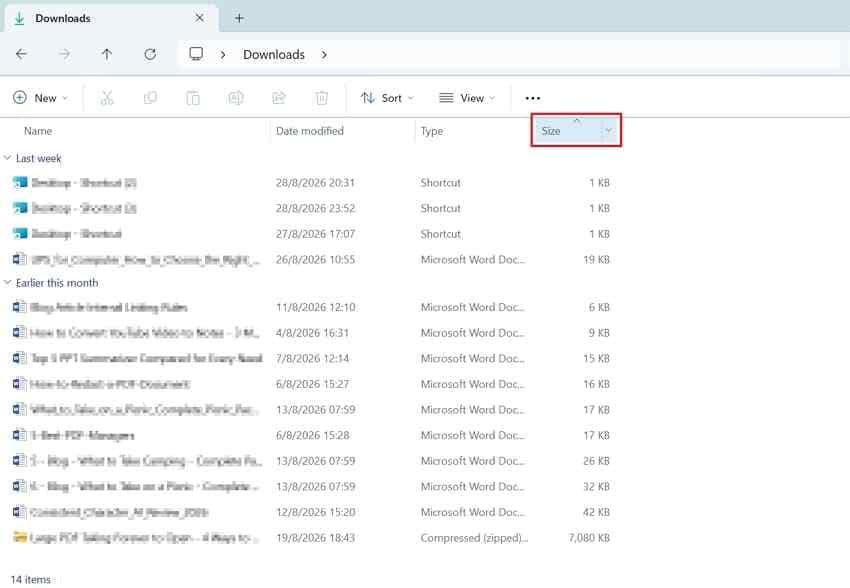
Step 2. Open important-looking files before deleting them. Remove only files you can identify as duplicates, installers, exports, or other content you no longer need.
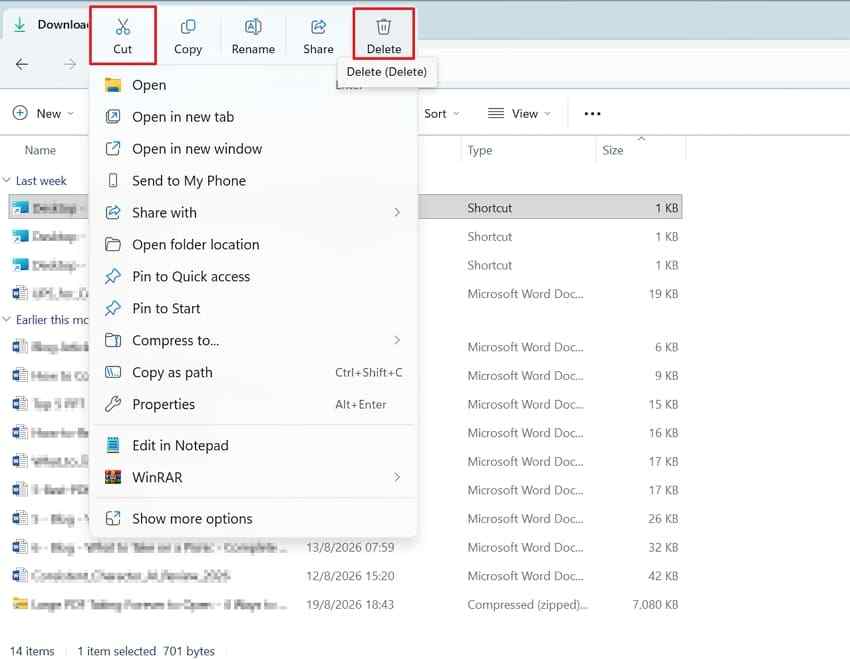
Step 3. For files you want to keep, use Cut and Paste to move them to another internal drive or external storage. Confirm that the destination copy opens before removing the original.
Step 4. Review the Recycle Bin before emptying it. Windows moves many locally deleted files there first, but files deleted from some removable, network, or synchronized locations may behave differently.
Method 7. Free C Drive Space With OneDrive Files On-Demand
OneDrive Files On-Demand can keep files visible in File Explorer while storing the full content in OneDrive instead of occupying local C: drive space. This works only for content that is safely available in the cloud and for a OneDrive setup that supports the feature.
Step 1. Select the OneDrive cloud icon in the taskbar, open Settings, and go to the OneDrive sync and backup settings.
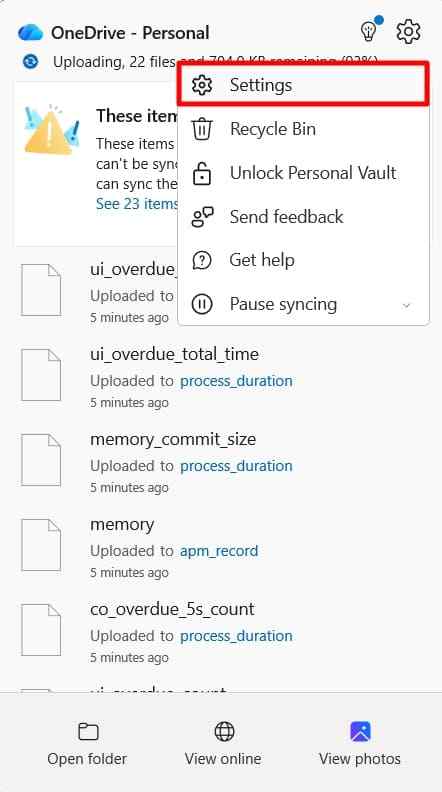
Step 2. Under advanced settings, confirm that Files On-Demand is enabled. Microsoft’s Files On-Demand guidance explains the online-only and locally available file states.
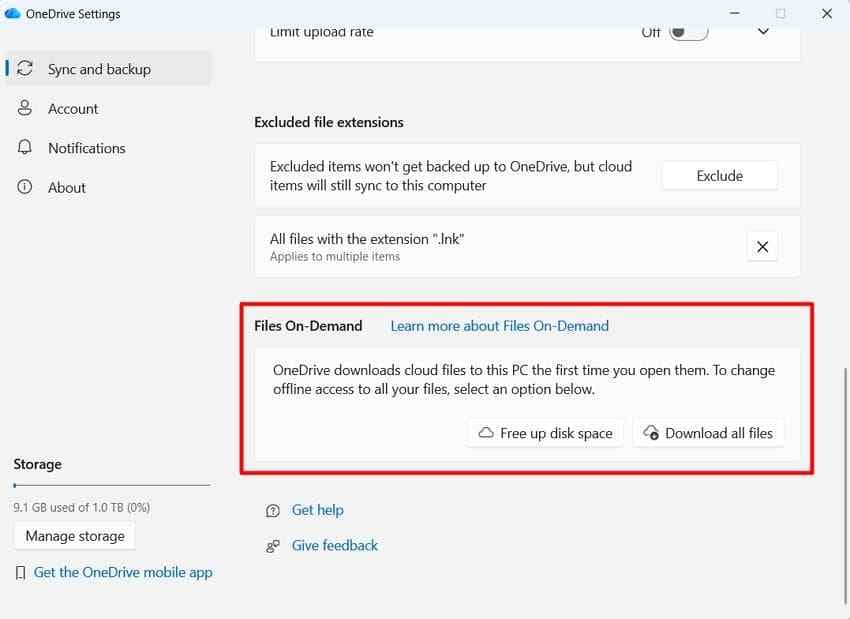
Step 3. In the OneDrive folder, right-click a file or folder you want to keep in the cloud and choose Free up space. Do not choose this for files that must be available offline until you have another local copy.
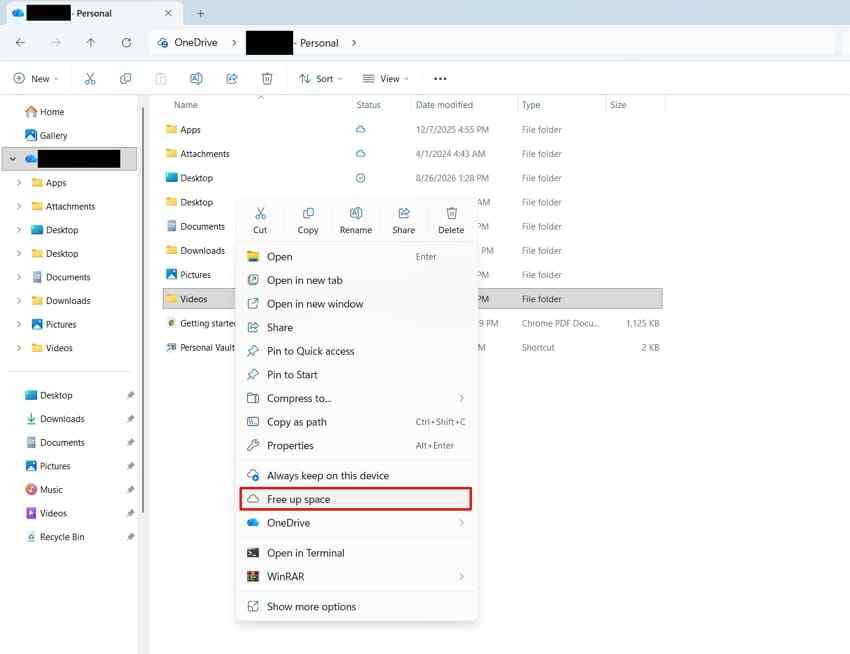
An online-only placeholder is not the same as a backup. If the file is deleted from OneDrive or the account becomes unavailable, local space-saving does not protect it by itself.
Method 8. Remove Windows.old When You No Longer Need It
Windows.old can remain after a feature upgrade and may take several gigabytes. It contains files used to return to the previous Windows version. Delete it only after the current installation is stable and you have no reason to roll back.
Step 1. Confirm that the current Windows installation, applications, drivers, and personal files work as expected.
Step 2. Open Disk Cleanup, select Clean up system files, and look for Previous Windows installation(s).
Step 3. Review the category, select it only when you accept losing the rollback option, then confirm the cleanup.
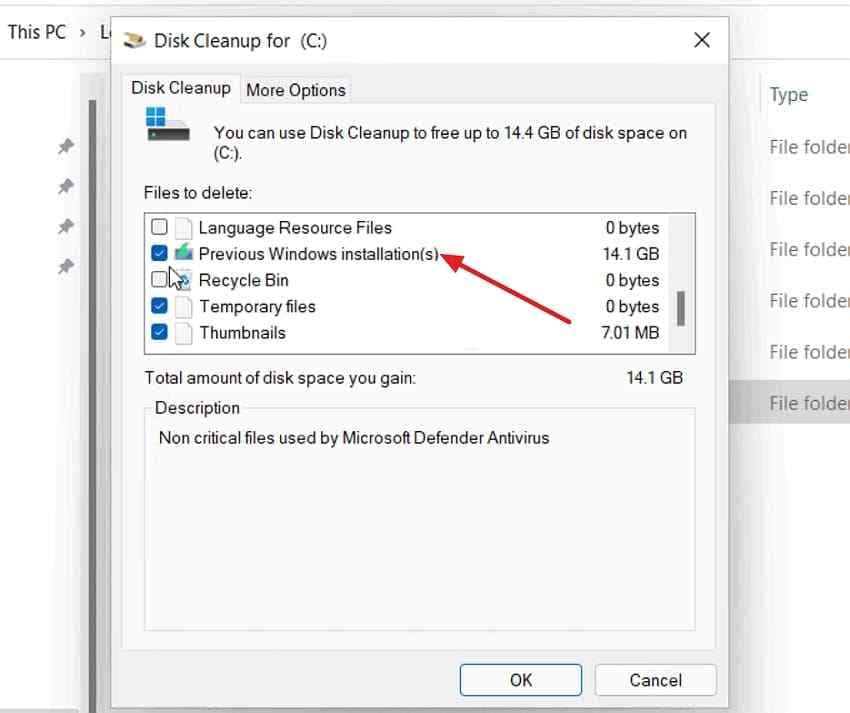
Microsoft says the previous installation can be listed as removable system data during the rollback period and that deleting it cannot be undone. Use the official free-space instructions rather than deleting Windows.old from File Explorer. The original draft also included Microsoft’s previous Windows version reference; it is preserved here even though Microsoft may redirect or retire older support URLs.
Part 4. Which C Drive Cleanup Method Should You Use?
Use the category reported by Storage to choose the shortest safe path. This avoids repeatedly deleting temporary files when an installed game or OneDrive folder is the real cause.
| What is consuming C: space? | Best method | Difficulty | Main caution |
| Temporary files | Storage settings or Disk Cleanup | Easy | Review Downloads, Recycle Bin, and previous-installation categories |
| Storage keeps refilling | Storage Sense, then inspect the growing category | Easy | Configure Downloads and cloud-file behavior deliberately |
| Large apps or games | Installed apps and the official uninstaller | Easy | Do not delete application folders by hand |
| Videos, photos, or Downloads | Review, delete, or move personal files | Moderate | Open files before deleting and verify moved copies |
| OneDrive files using local space | Files On-Demand and Free up space | Easy | Online-only files need an internet connection and are not a second backup |
Windows.old |
Disk Cleanup system files | Moderate | Rollback to the previous Windows version is lost |
Part 5. Files and Folders You Should Not Delete Manually
Learning how to remove unwanted files from C drive does not mean deleting every large folder. The following locations can contain components that Windows or installed applications need.
C:\Windows. This contains core operating-system components, services, drivers, and update files. Use Windows cleanup features instead of removing subfolders by hand.C:\Program FilesandC:\Program Files (x86). These contain installed application files. Uninstall the program properly so its services and settings are handled together.C:\ProgramData. Shared application settings, licensing data, databases, and configuration files may be stored here.C:\Windows\System32. This contains critical Windows libraries, executables, drivers, and services. Deleting files here can prevent Windows or applications from starting.- Recovery and boot files. Hidden recovery partitions and boot configuration files are not ordinary clutter. Do not modify them during a storage cleanup.
- Unknown content in
AppData. AppData can include caches, but it also stores profiles, saved data, extensions, databases, and application settings. Remove only content documented by the application or Windows.
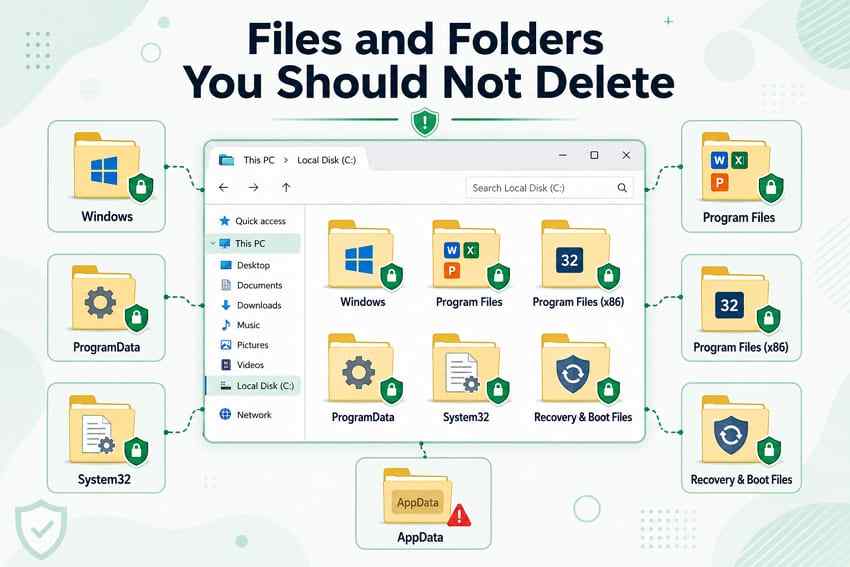
When a folder is large but its purpose is unclear, identify the owning app first. A storage analyzer can help locate large folders, but it does not make every folder safe to delete.
Part 6. What if C Drive Keeps Filling Up After Cleanup?
If you can clear unwanted files in C drive but free space disappears again, the cleanup may have removed symptoms rather than the cause. Check what category grows after a restart and normal use.
- Recheck Storage categories. Compare the category sizes before and after cleanup. A growing Installed apps, System and reserved, or Documents category needs a different response.
- Look for large app data. Browsers, games, creative tools, virtual machines, and messaging apps may keep caches, downloads, or project files outside the folders you normally review.
- Check whether temporary files regenerate. Microsoft notes that Microsoft Store
.appxfiles can sometimes refill the Temp folder. If that happens, use the Microsoft Store reset,wsreset.exe, and Windows Update troubleshooting steps in its low-disk-space guidance. - Scan with Windows Security. Malware or unwanted software can create files and consume storage. Use the built-in Windows Security app and investigate detections before deleting unknown system data.
- Check cloud sync behavior. OneDrive or another sync client may download files back to C: after you remove local copies. Review its online-only and always-available settings.
- Change where new content is saved. Windows Storage settings can let supported apps and personal content use another drive. This helps only when the destination has enough capacity and is included in your backup plan.
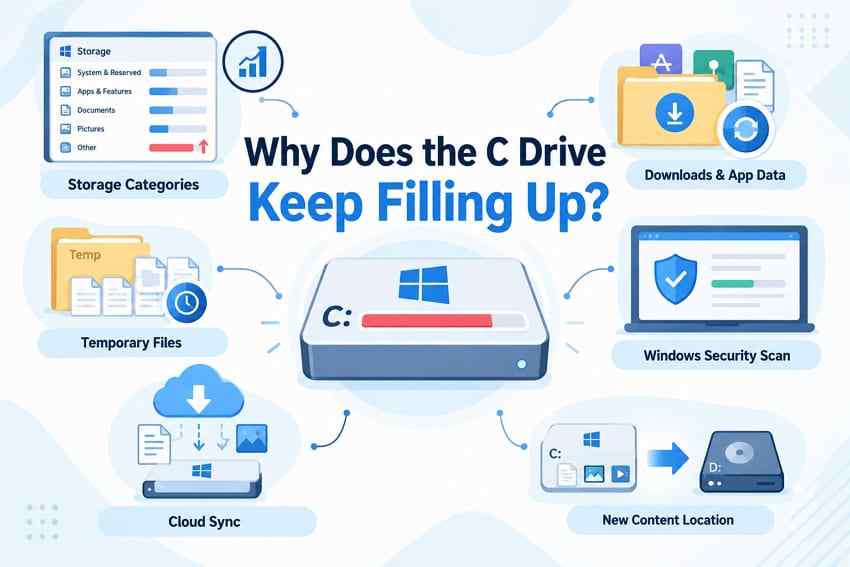
Do not jump to a reset or reinstall simply because the C: drive is full. Back up important files first. A reset, reinstall, or partition change can make later recovery more difficult.
Pro Tip. Recover Important Files Deleted During C Drive Cleanup

Cleanup can remove more than expected when you select Downloads, Recycle Bin, previous-installation files, or a large personal-file group. If an important document, photo, video, or project disappeared, stop saving new data to the C: drive and check the Recycle Bin and backups before doing more cleanup.
Recoverit Hard Drive Recovery can help scan readable storage for local files that still remain after deletion, formatting, or a file-system problem. It is a data-recovery tool, not a Windows cleanup, repair, reset, or malware-removal tool. Recovery depends on whether the lost data is still readable and has not been overwritten.
For the best chance of recovery, install the software on another physical drive when possible and save recovered files to a different destination. Do not save recovered files back to the C: drive while you are still scanning it.
Step 1. Select the C: drive.
Open Recoverit, choose Hard Drives and Locations, and select the Windows partition that held the deleted file.

Step 2. Scan for files that remain on the drive.
Start the scan and filter the results by file type, location, or filename when those options are available. A scan can find data that was deleted from the file system, but it cannot reconstruct content that was never written to disk or has already been overwritten.

Step 3. Preview and recover to another location.
Preview the files you need, select Recover, and choose another internal drive or external storage as the destination. Open several recovered files before you reuse or clean the original drive.

Recover Important Files Deleted During C Drive Cleanup
Security Verified. Over 7,302,189 people have downloaded it.
Recoverit cannot restore files that were permanently purged from cloud storage, repair a damaged Windows installation, bypass encryption, or guarantee recovery after overwriting. If the C: drive is failing, disconnecting, or making unusual noises, minimize use and consider a professional recovery service before repeated scans.
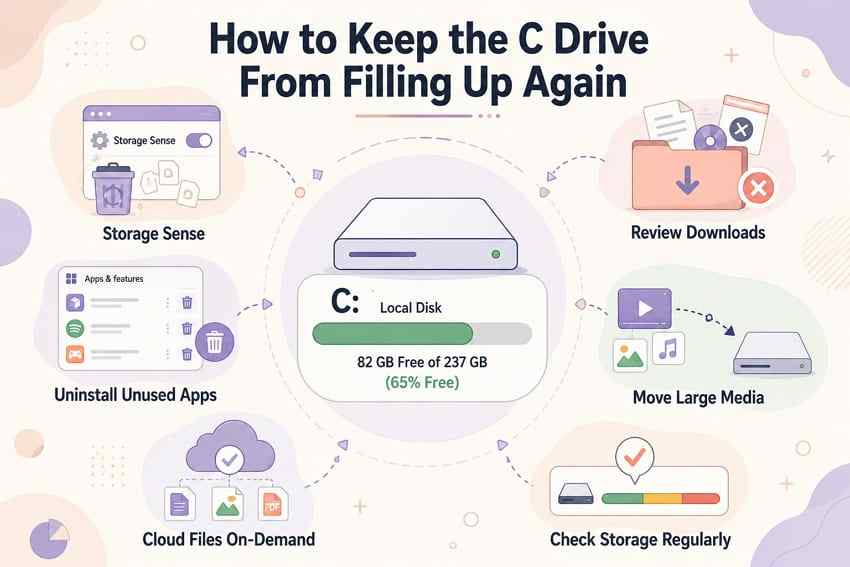
Part 7. How to Keep the C Drive From Filling Up Again
Once you know how to remove unnecessary files from C drive, prevent the same categories from rebuilding.
- Keep Storage Sense configured. Let it manage eligible temporary files and Recycle Bin items, but review its Downloads and cloud-file settings.
- Review Downloads regularly. Delete old installers and archives only after checking that you do not need them.
- Uninstall apps you no longer use. Remove large software through Windows Settings or the application’s uninstaller.
- Move large media and project files. Use another drive or external storage, then verify the destination copy and keep it in your backup routine.
- Use OneDrive Files On-Demand where appropriate. Online-only files reduce local usage but still depend on account access and an internet connection.
- Check Storage before the drive becomes critically full. Review growing categories after major app installs, Windows upgrades, large exports, and sync changes.
- Keep a separate backup. Cleanup tools are not backups. Maintain another copy of irreplaceable documents, photos, and projects before removing local files.
For Windows update storage questions, Microsoft’s free-up-space-for-updates guidance covers Storage Sense, Cleanup recommendations, and Disk Cleanup. Windows 10 users should also plan a supported migration or security-maintenance path because regular support ended in 2025.
Conclusion
The safest way to clear unwanted files from the C drive is to identify the storage category first. Use Storage settings, Cleanup recommendations, Storage Sense, or Disk Cleanup for system-managed clutter; uninstall unused apps through Windows; and review personal files before deleting or moving them.
Never delete unknown content inside Windows, System32, Program Files, ProgramData, Recovery, or AppData by hand. If cleanup removed an important local file, stop writing to the drive, check backups and Recycle Bin, and use Recoverit only for local data recovery. It cannot repair Windows or recover data that has already been overwritten.
FAQ
-
Is it safe to delete everything in the Temp folder?
Not necessarily. Many temporary files can be removed, but some are being used by Windows or an open application. Storage settings and Disk Cleanup are safer starting points than manually deleting unfamiliar Temp subfolders. Close applications first, review what Windows lists, and restart if a file is locked. -
How much free space should I keep on the C drive?
Microsoft does not set one percentage that fits every Windows PC. Keep enough free space for normal application use, temporary files, and updates, and avoid waiting until the drive is nearly full. The space required for an update varies by device and update, so check Windows Storage and the official update guidance rather than relying on a fixed number. -
Can I move installed programs from the C drive to another drive?
Some Microsoft Store apps offer a Move option in Settings, but many traditional desktop programs do not. Use the program’s own settings or uninstall and reinstall it to the other drive when supported. Do not drag a folder from Program Files to another drive and assume the application will continue to work. -
What should I recover first if I accidentally deleted important files?
Stop saving new data to the affected drive, then check the Recycle Bin, OneDrive or other cloud copies, File History, and external backups. Prioritize irreplaceable documents, photos, videos, and project files. If no backup exists, scan the readable local drive with data-recovery software and save recovered files to another drive.


